Llama
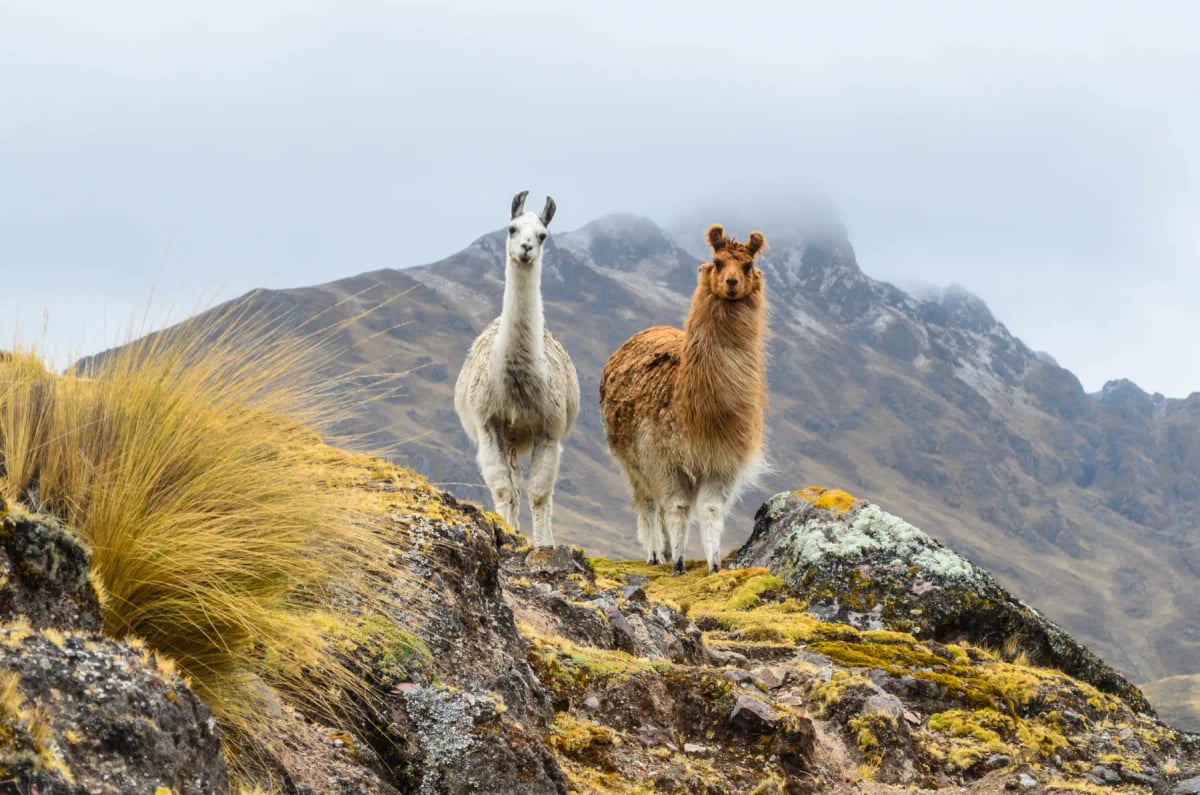
The llama (Lama glama) is a fully domesticated camelid native to the Andes of South America. Descended from the wild guanaco, it was first domesticated by Andean peoples roughly 6,000 years ago, making it one of the oldest domestic animals in the Americas. Llamas are built for life at altitude, thriving on the high plateau grasslands of the puna at elevations above 3,000 meters. They have thick, woolly coats that come in a wide range of natural colors, long necks, and expressive ears. Adults can carry loads of up to 30 kilograms across steep mountain terrain. Highly social, they live in herds with clear dominance structures and communicate through body posture and a range of vocalizations. Their wool, meat, hides, and dung fuel used as cooking fuel have supported Andean communities for millennia.
Habitat and distribution
Llamas are found across the Andean highlands of South America, with the largest populations concentrated in Peru and Bolivia. Smaller but significant numbers live in northwestern Argentina, northern Chile, and parts of Ecuador. They are at home on the puna, the vast plateau grassland that stretches above 3,000 meters in elevation, where thin air and cold temperatures would challenge most large mammals. Their thick coats and highly efficient red blood cells, which carry oxygen more effectively than those of most animals, allow them to thrive where others cannot. While llamas are kept almost entirely by human communities rather than living wild, they are strongly associated with open grasslands, rocky slopes, and Andean valleys where tough grasses and low shrubs dominate the landscape.
Diet
Grasses make up the core of the llama's diet, particularly the tough, wiry species that cover the puna at high elevations. They also browse on shrubs, mosses, and other low vegetation when grasses are scarce. Llamas are remarkably efficient feeders. Unlike cattle, they have a soft upper lip that lets them select individual plants rather than stripping everything in sight, which reduces damage to the land. They are modified ruminants with a three-chambered stomach, and they regurgitate and rechew their food to extract as much nutrition as possible from low quality forage. This ability to get by on sparse, tough vegetation makes them exceptionally well suited to the harsh conditions of the Andes, where rich pasture simply does not exist.
Behavior
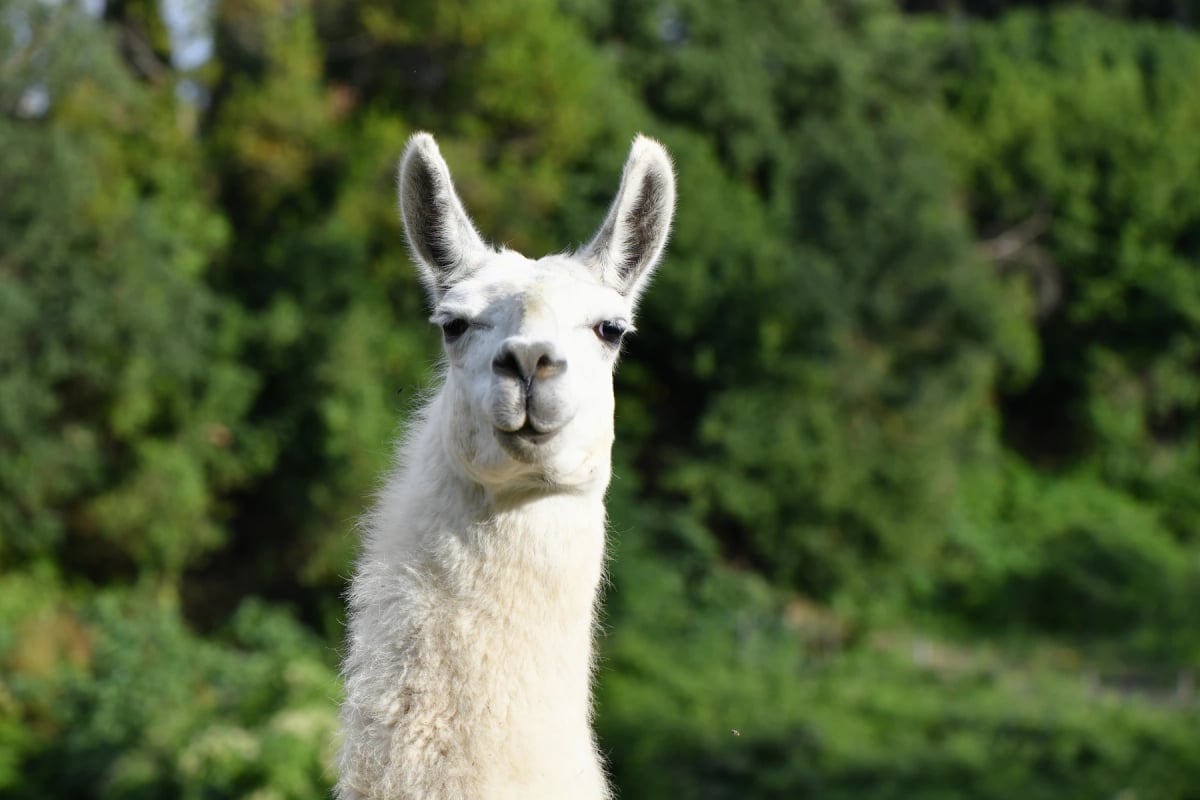
Social bonds are central to llama life. They live in herds and organize themselves around clear dominance structures, with males competing for status through neck wrestling and chest-to-chest pushing. Llamas are active during the day and rest in sheltered spots at night. They communicate through a rich mix of body language and sound. Ear position, tail angle, and posture all carry meaning within the group. They also hum frequently, a soft sound used to stay in contact with herd companions. When threatened or pushed too far, llamas spit a foul-smelling mix of stomach contents, a behavior directed mostly at other llamas rather than humans. Young llamas, called crias, are born already able to walk and begin interacting with the herd within hours of birth.

Uses by humans
For thousands of years, Andean communities have depended on llamas for survival. As pack animals, they can carry loads of up to 30 kilograms across steep, rugged terrain for many kilometers without tiring, making them invaluable in mountain regions where wheeled vehicles cannot go. Their wool is spun into warm textiles, their meat provides protein for highland families, and their hides are used for leather goods. Even their dung plays a role: dried llama dung has been used as cooking fuel across the Andes for centuries, particularly in areas where wood is scarce. Today, llamas continue to serve these traditional purposes, but they have also found new roles in ecotourism, therapy animal programs, and as pack companions for trekkers in several countries outside South America.
Domestication status
Unlike most animals on this site, the llama exists entirely as a domesticated species. It has no wild population. Descended from the guanaco, it was fully domesticated by Andean peoples around 4,000 to 6,000 years ago, and today every llama alive lives under human care. Because of this, the IUCN does not assign llamas a conservation status the way it does for wild species. Their numbers are stable and sustained through active breeding, with millions of individuals living across the Andes. While the llama itself faces no threat of extinction, there are ongoing efforts to preserve the genetic diversity within domestic herds, since different communities have bred animals with distinct traits in wool type, size, and temperament over many generations. Protecting that variety is considered important for the future of Andean heritage and rural livelihoods.
Researched and written by Juan Pablo. Sources: IUCN Red List, scientific literature and regional field guides. Last updated: .
Technical factsheet












Frequently Asked Questions
What do llamas eat?
Llamas are grazers at heart, living mainly on the tough grasses that grow across the high Andean plains. When grasses are hard to find, they also eat shrubs, mosses, and other low plants. They have a three-chambered stomach and rechew their food to squeeze out every bit of nutrition, which lets them survive on vegetation that most large animals would find too poor to bother with.
How long do llamas live?
Llamas typically live between 15 and 25 years when kept under good conditions. Animals that receive proper nutrition and veterinary care tend to reach the upper end of that range. Working pack llamas may age faster due to the physical demands of carrying loads over mountain terrain, but as a species they are generally hardy and long lived compared to many other domestic animals of similar size.
Why do llamas spit?
Spitting is a warning, not a first response. Llamas aim this behavior mostly at other llamas to settle disputes over food, space, or social rank. They spit a foul mix of stomach contents and saliva, and the smell is enough to make the point. Llamas rarely spit at people unless they have been provoked or handled poorly. A llama that spits at humans regularly has usually been trained that way by being teased.
Where do llamas live in the wild?
Llamas do not live in the wild. They are a fully domesticated species with no wild population anywhere in the world. Every llama alive today lives under human care. Their wild ancestor is the guanaco, which still roams parts of South America. Domesticated llamas are kept mainly in the Andean highlands of Peru, Bolivia, Argentina, Chile, and Ecuador, grazing on the high plateau grasslands known as the puna.
How do llamas communicate?
Llamas use a mix of sounds and body language to talk to each other. Their most common sound is a soft hum, used to stay in touch with other members of the herd. Ear position, tail angle, and the way they hold their neck all carry clear meaning. Mothers and their young hum back and forth constantly. When alarmed, llamas let out a loud, high pitched cry that puts the whole herd on alert.
Are llamas and alpacas the same animal?
They are close relatives but distinct species. Llamas are larger, standing around 120 centimeters at the shoulder and built for carrying loads. Alpacas are smaller and bred almost entirely for their fine, soft wool. Their faces also differ: llamas have longer, more pointed snouts, while alpacas have shorter, blunter faces with a cuddlier appearance. Both were domesticated from South American camelids, but for very different purposes.
How much weight can a llama carry?
A healthy adult llama can carry loads of up to 30 kilograms over long distances across steep mountain trails. They are not horses and should not be overloaded. If a load is too heavy, a llama will simply lie down and refuse to move until it is lightened. This stubbornness is actually a useful trait: it protects the animal from injury and signals to the handler that something needs to change.