Impala
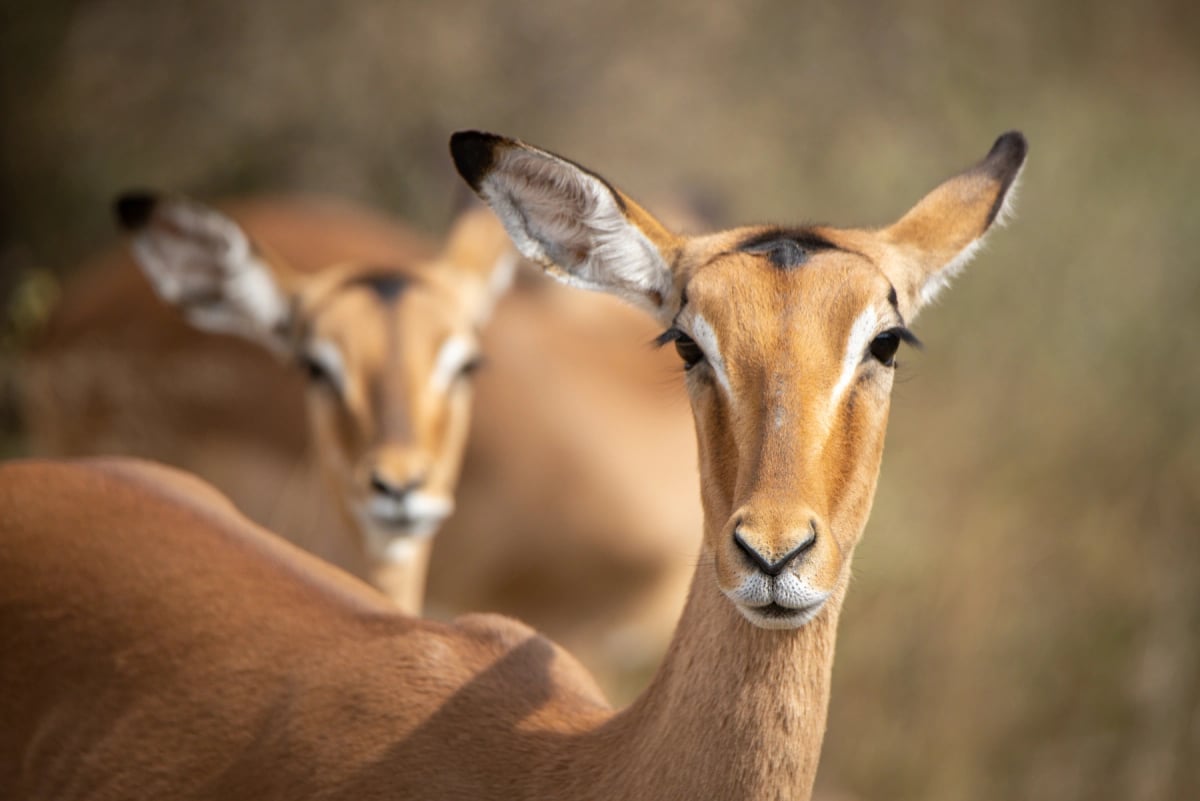
The impala is a slender antelope of medium build found across the savannas and open woodlands of eastern and southern Africa. Its coat is a warm reddish brown on the back, fading to pale buff on the flanks and white underneath, with neat black stripes along the tail and rump. Only males grow horns, which curve outward and upward in a lyre shape and can reach 90 cm. Impalas are mixed feeders, cropping fresh grass in the wet season and browsing shrubs and foliage when rain is scarce. When threatened, they can leap up to 10 metres in a single bound and reach speeds of around 60 km/h. The global population is estimated at roughly two million individuals, and the species is listed as Least Concern by the IUCN.
Appearance
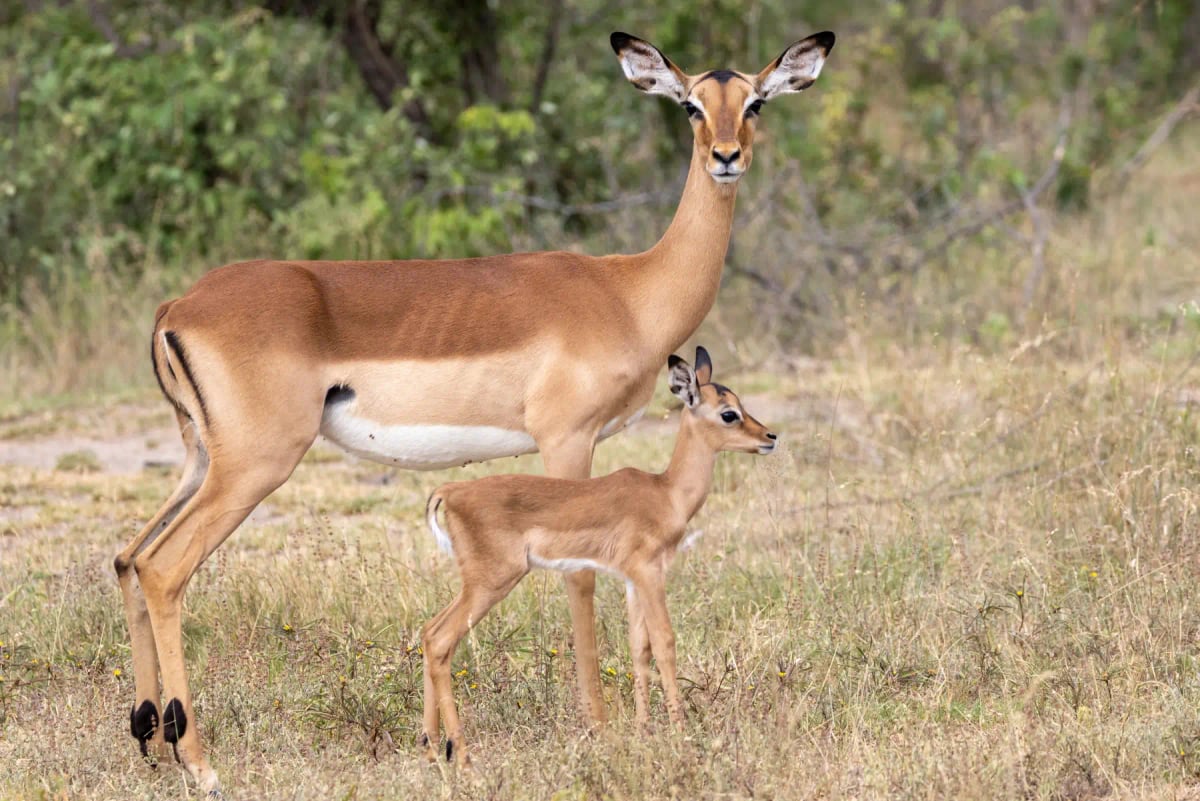
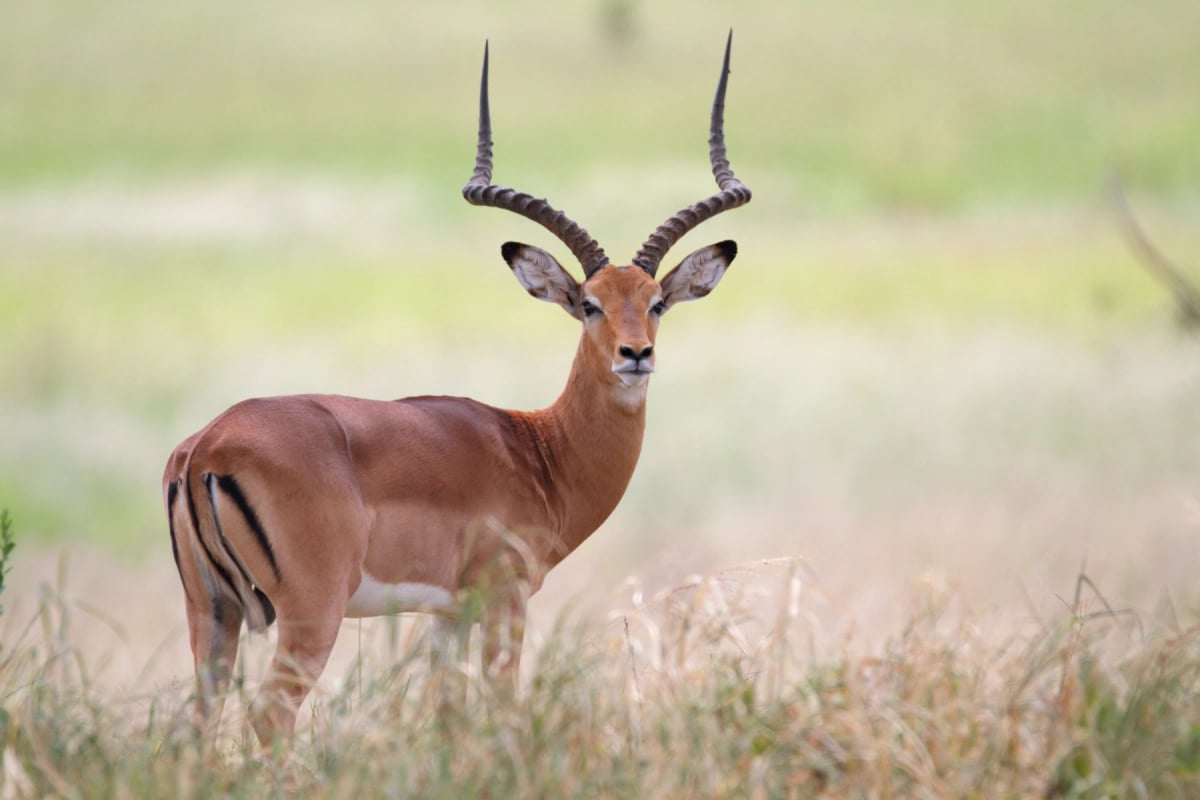
The impala is a slender, graceful antelope with a coat that shifts from warm reddish brown along the back to pale buff on the flanks and clean white on the belly. This graduated coloring is one of the most recognizable patterns on the African savanna. A pair of neat black stripes runs down the back of the tail and onto the rump, and there are small black patches just above each hind hoof. Only males grow horns, which sweep outward and then curve upward in a smooth lyre shape. These horns can reach around 90 cm in length in mature males. Females are hornless and tend to be slightly smaller in build overall. Adults typically weigh between 40 and 75 kg and stand roughly 75 to 95 cm at the shoulder.
Behavior
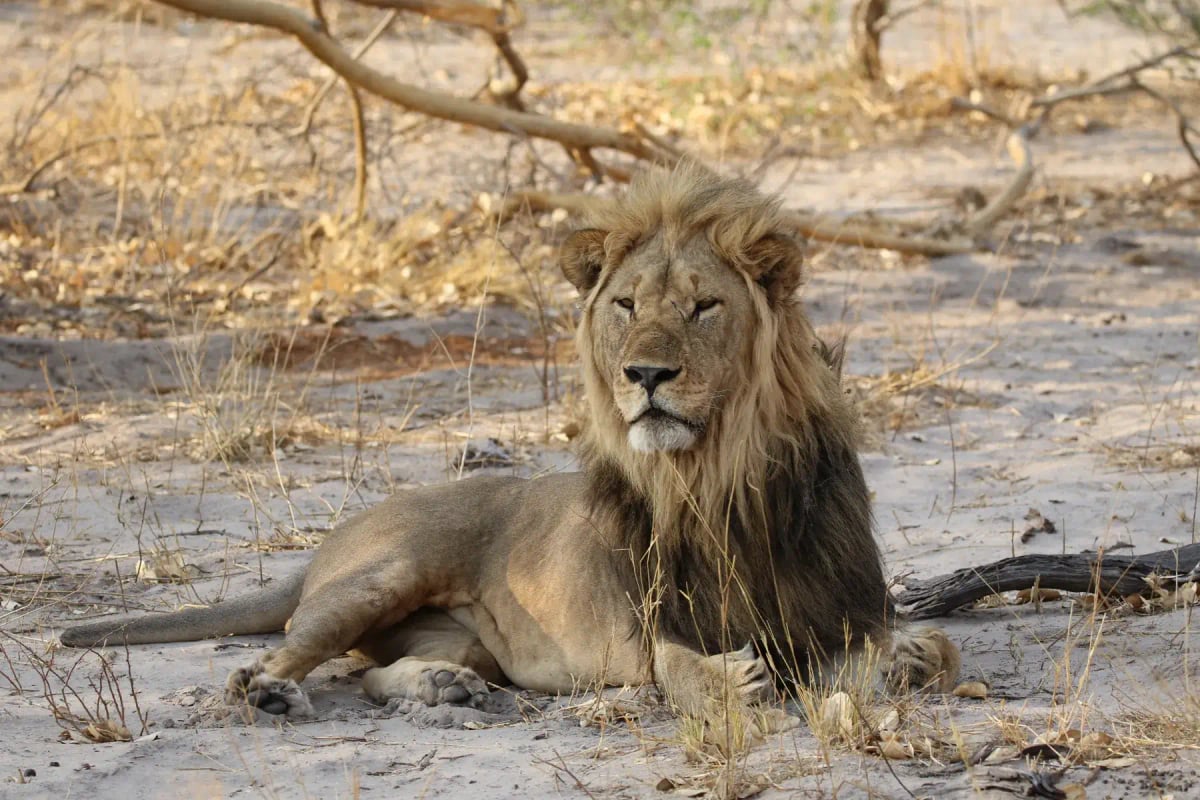
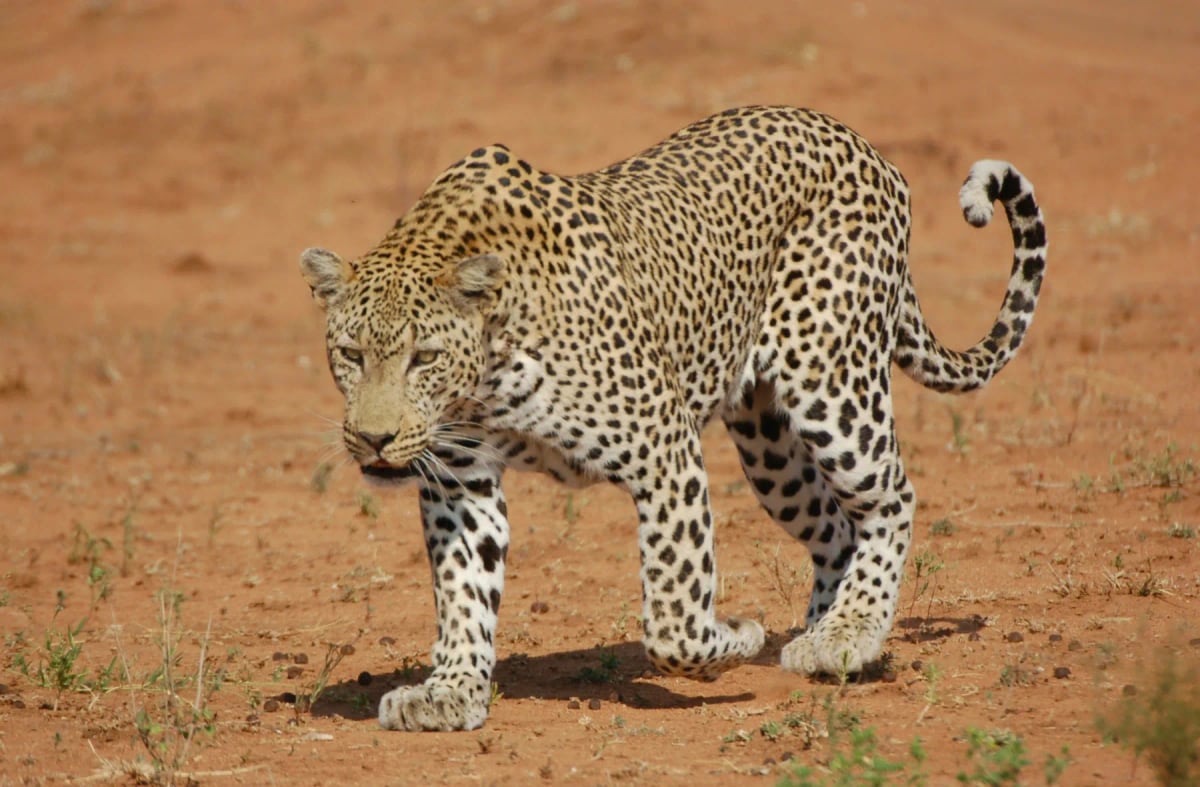
Few African antelopes are as socially flexible as the impala. Outside the breeding season, females and their young gather in herds that can number several hundred individuals, while young males form separate bachelor groups where they practice sparring to build strength and skill. When the rut arrives, dominant males establish territories and actively herd females, spending weeks defending their ground against rivals with loud vocalizations and dramatic horn clashes. This is an exhausting period, and males often lose significant body condition. Impalas are also highly alert animals, and herds rely on collective vigilance to detect lions, leopards, cheetahs, and wild dogs. A single alarm snort is enough to send an entire herd scattering in different directions, which makes it harder for a predator to single out one target.
Diet
What sets the impala apart from many other savanna grazers is its ability to switch freely between grazing and browsing depending on what the season offers. During the wet season, when fresh green grass is plentiful, impalas graze heavily to take advantage of the nutritious new growth. As the dry season sets in and grass becomes sparse and tough, they shift to leaves, shoots, and the foliage of shrubs and low trees. This dietary flexibility means impalas can thrive in a wider range of habitats than strict grazers or strict browsers. They do, however, need access to water and tend to stay within a few kilometres of a reliable water source. Mineral intake also plays a role in their health, and impalas are sometimes seen visiting areas with soil rich in minerals.
Agility and jumps
When a predator closes in, the impala's most spectacular defense is its explosive athleticism. These antelopes can reach speeds of around 60 km/h and cover up to 10 meters in a single bound, clearing obstacles like bushes and fallen logs with ease. Perhaps more importantly, they can change direction almost instantly while at full speed, which makes them genuinely difficult to catch even for a cheetah. Large herds will often scatter in every direction at once when startled, a tactic that creates confusion and gives each individual a better chance of survival. The powerful hindquarters that drive these leaps are also useful for delivering kicks to smaller predators. Interestingly, impalas sometimes leap even when no threat is present, a behavior researchers believe may help communicate alarm signals across a herd.
Conservation
Across its range in eastern and southern Africa, the impala remains one of the most abundant large mammals on the continent. The IUCN lists the species as Least Concern, supported by a total population estimated at roughly two million individuals spread across national parks, game reserves, and private wildlife areas in thirteen countries. Stable populations exist in well-managed protected areas such as the Serengeti, Kruger National Park, and Chobe. That said, impalas face ongoing pressure from habitat loss due to agricultural expansion, and they are heavily hunted in areas where bush meat trade goes unchecked. A separate subspecies, the black-faced impala found in Namibia and Angola, is considered a species of concern due to its much smaller population. Overall, the common impala stands as a conservation success story within properly managed ecosystems.
Where it is found
The Impala can be found in places such as:
Researched and written by Juan Pablo. Sources: IUCN Red List, scientific literature and regional field guides. Last updated: .
Technical factsheet

Frequently Asked Questions
What do impalas eat?
Impalas are flexible feeders that switch between grazing and browsing depending on the season. In the wet season they crop fresh green grass, and in the dry season they shift to leaves, shoots, and shrubs. This adaptability gives them an advantage over animals that rely on a single food source. They also need regular access to water and tend to stay within a few kilometres of a reliable water source throughout the year.
Where do impalas live?
Impalas are found across eastern and southern Africa, living in thirteen countries including Kenya, Tanzania, Botswana, Zimbabwe, and South Africa. They prefer savannas and open woodlands where both grass and shrubs are available. They tend to avoid dense forests and very open, dry plains. Access to water is essential, so they are usually spotted near rivers, waterholes, or seasonal streams rather than in purely arid areas.
How high and far can an impala jump?
Impalas are remarkable jumpers. They can leap up to 10 metres in length and clear heights of around 3 metres in a single bound. This ability helps them escape predators by vaulting over bushes and other obstacles at full speed. What makes them especially hard to catch is their ability to change direction almost instantly while running, which can throw off even a cheetah mid-chase. Sometimes they leap for no obvious reason at all.
Are impalas endangered?
No, impalas are not endangered. The IUCN lists the common impala as Least Concern, with a total population of around two million individuals. They thrive in well-managed protected areas across thirteen African countries. However, they do face pressure from habitat loss caused by farming and from uncontrolled hunting for bushmeat. A separate subspecies, the black-faced impala of Namibia and Angola, has a much smaller population and requires closer attention.
Why do impalas have black stripes on their rump?
The black stripes along the tail and rump of an impala are believed to serve as visual signals within the herd. When an impala flees, the high-contrast markings make it easier for other members of the group to follow and stay together during a chaotic escape. Some researchers also think the markings may help individuals recognize one another. The small black patches above each hind hoof may serve a similar purpose as group coordination signals.
Do female impalas have horns?
No, only male impalas grow horns. The horns curve outward and then sweep upward in a lyre shape and can reach around 90 cm in mature males. Males use them during the breeding season to fight rivals and defend territories. Females are hornless and are generally slightly smaller in build than males. This difference between the sexes is called sexual dimorphism and is common among antelope species found in Africa.
What animals hunt impalas?
Impalas are hunted by a wide range of predators, which reflects how central they are to African savanna ecosystems. Lions, leopards, cheetahs, and wild dogs all target them regularly. Crocodiles are also a threat near rivers and waterholes. To cope with so many predators, impalas rely on large group sizes, constant alertness, and a single alarm snort that sends the whole herd running in different directions at once, making it harder for any predator to focus on one animal.