Animals in Tanzania
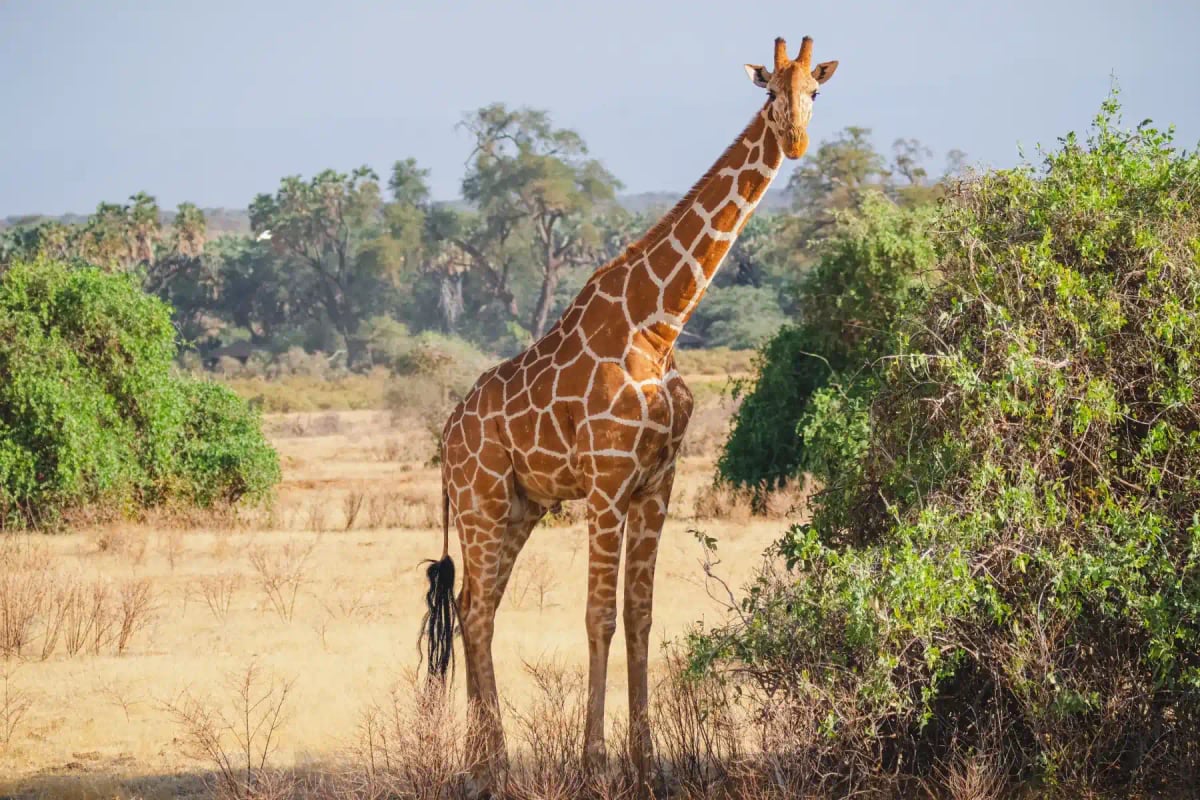
Giraffe
Giraffa camelopardalis
The giraffe, Tanzania’s national animal, inhabits savannas and woodlands across much of the country. Feeding on acacia leaves, it plays a vital role in seed dispersal and symbolizes harmony between nature and people. Its image appears in conservation efforts and tourism, representing the country’s natural heritage.
View details→Wildlife in Tanzania
Tanzania hosts some of Africa’s most diverse ecosystems, from the Serengeti and Ngorongoro to the slopes of Kilimanjaro. Elephants, lions, giraffes, zebras and black rhinos thrive in these landscapes. National parks protect large populations and support nature based tourism that connects visitors with authentic African wildlife.
Most Dangerous Animals in Tanzania
Wildlife in Tanzania commands respect. Hippos and buffalo cause most incidents, while lions, crocodiles and snakes also require caution. Safari guides emphasize keeping distance and following park rules. Awareness and respect make wildlife tourism both safe and deeply memorable for visitors.
Top 10 Animals in Tanzania
Tanzania’s celebrated wildlife includes the Big Five, lions, leopards, elephants, rhinos and buffalo, along with cheetahs, wildebeests, flamingos and hippos. Safaris through Serengeti and Ngorongoro attract travelers seeking authentic encounters with these animals and define Tanzania as a leading destination for wildlife tourism.
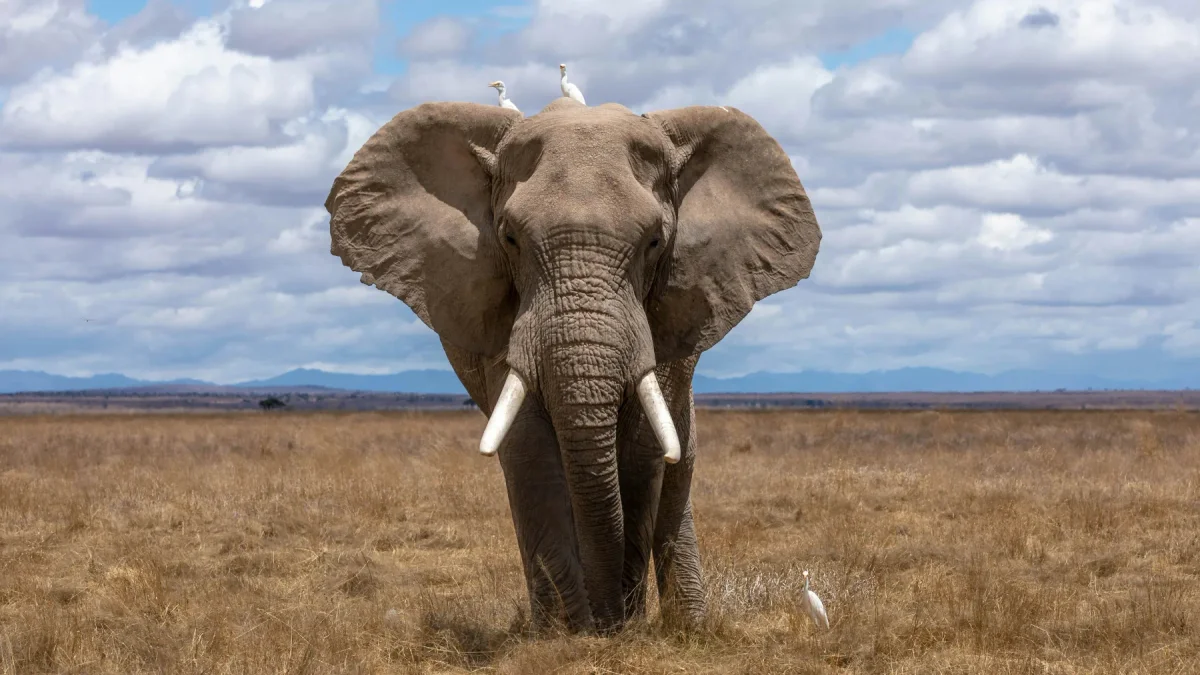
African Elephant
Loxodonta africana
Tanzania holds one of the largest elephant populations in Africa. Ruaha National Park in the center of the country is home to over 10,000 individuals, one of the single largest populations on the continent. The Selous-Ruaha ecosystem, covering over 150,000 square kilometers, is the largest protected elephant range in Africa. Serengeti and Tarangire national parks are also well known for their elephants. Tanzania lost tens of thousands of elephants to industrial poaching between 2009 and 2014 but has made significant gains since then.
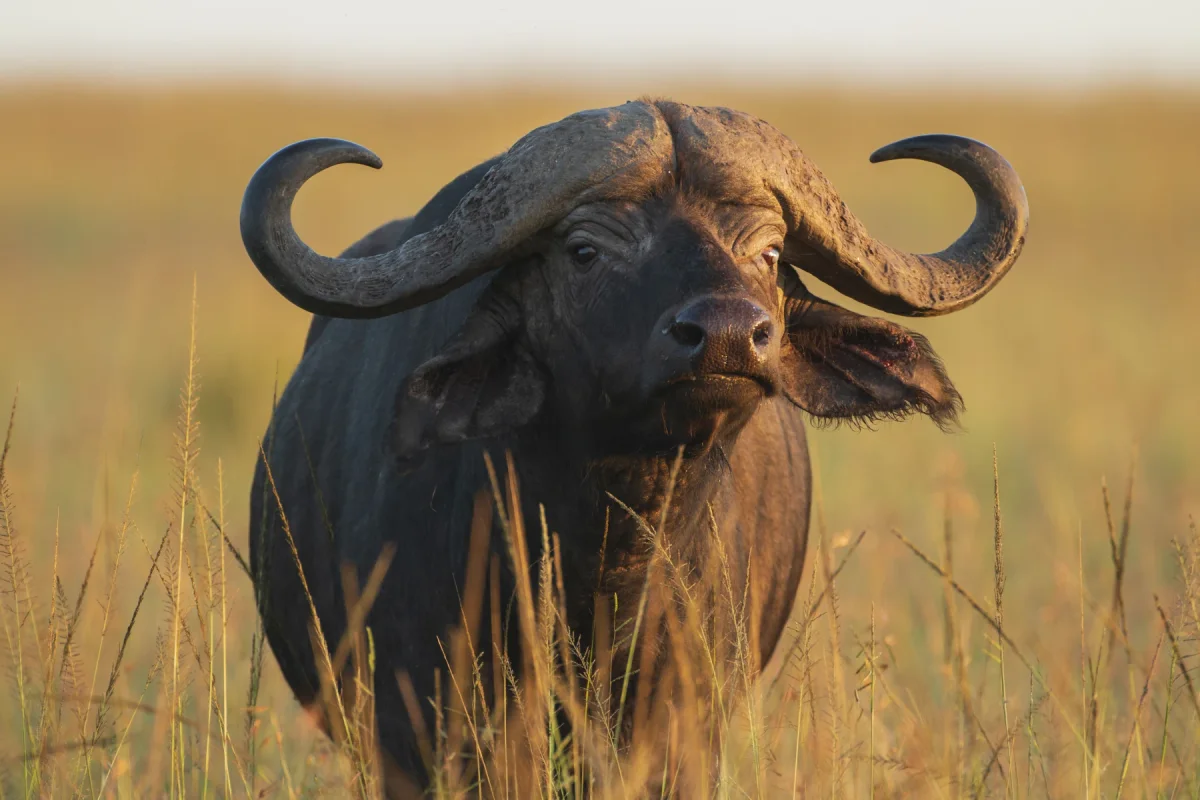
Buffalo
Syncerus caffer
Tanzania holds some of the largest buffalo populations in Africa. The Serengeti ecosystem and the Selous Game Reserve, one of the biggest protected areas on the continent, are home to thousands of individuals. Buffalo here form massive aggregations during the dry season, when they concentrate around permanent water sources. They are also a vital part of the predator-prey dynamics that define Tanzania's world-renowned wildlife. IUCN status: Least Concern.
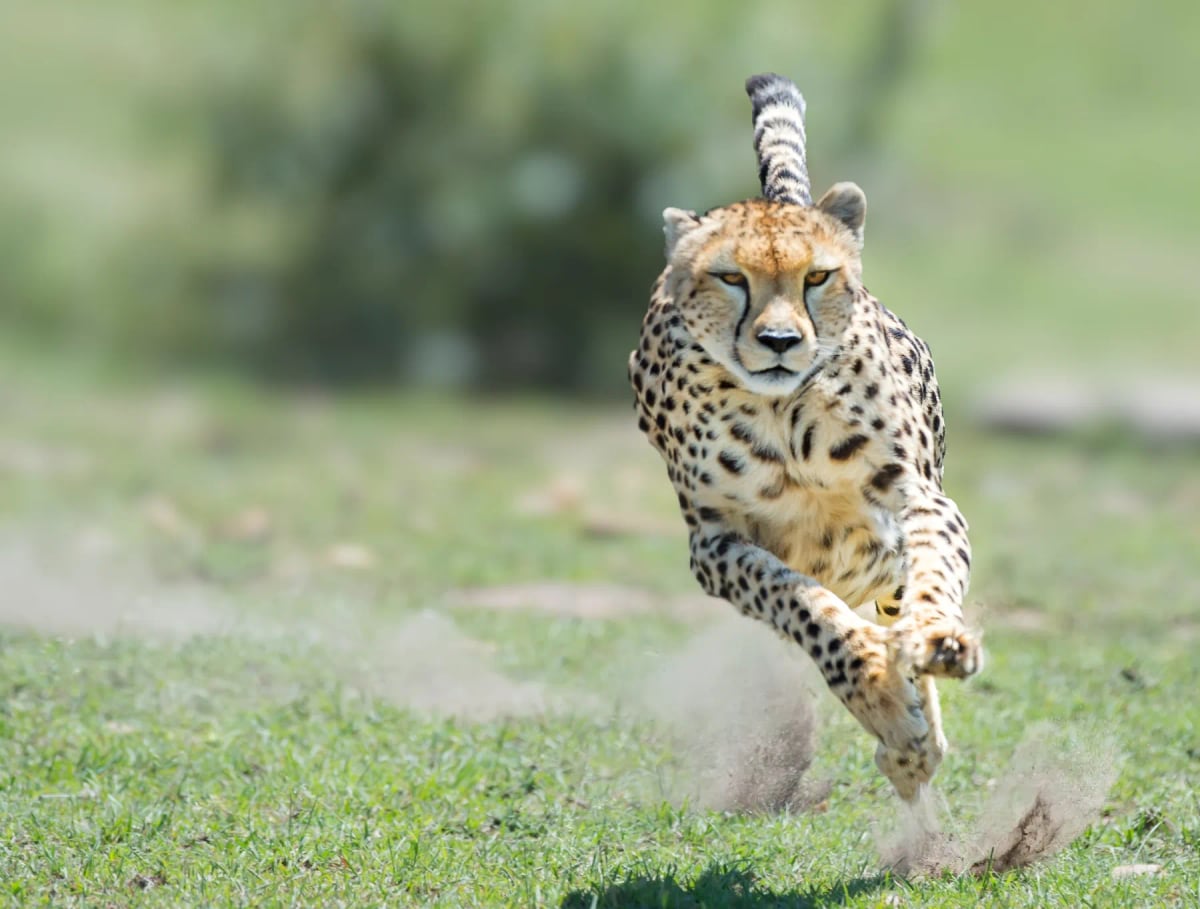
Cheetah
Acinonyx jubatus
Tanzania supports a notable cheetah population across its open savanna ecosystems, most visibly in the Serengeti National Park and the Ngorongoro Conservation Area. The wide grasslands of the Serengeti provide ideal conditions for hunting, though competition with lions and hyenas poses a constant challenge. Tanzania's cheetahs are among the most studied in Africa, contributing valuable data to global conservation efforts.
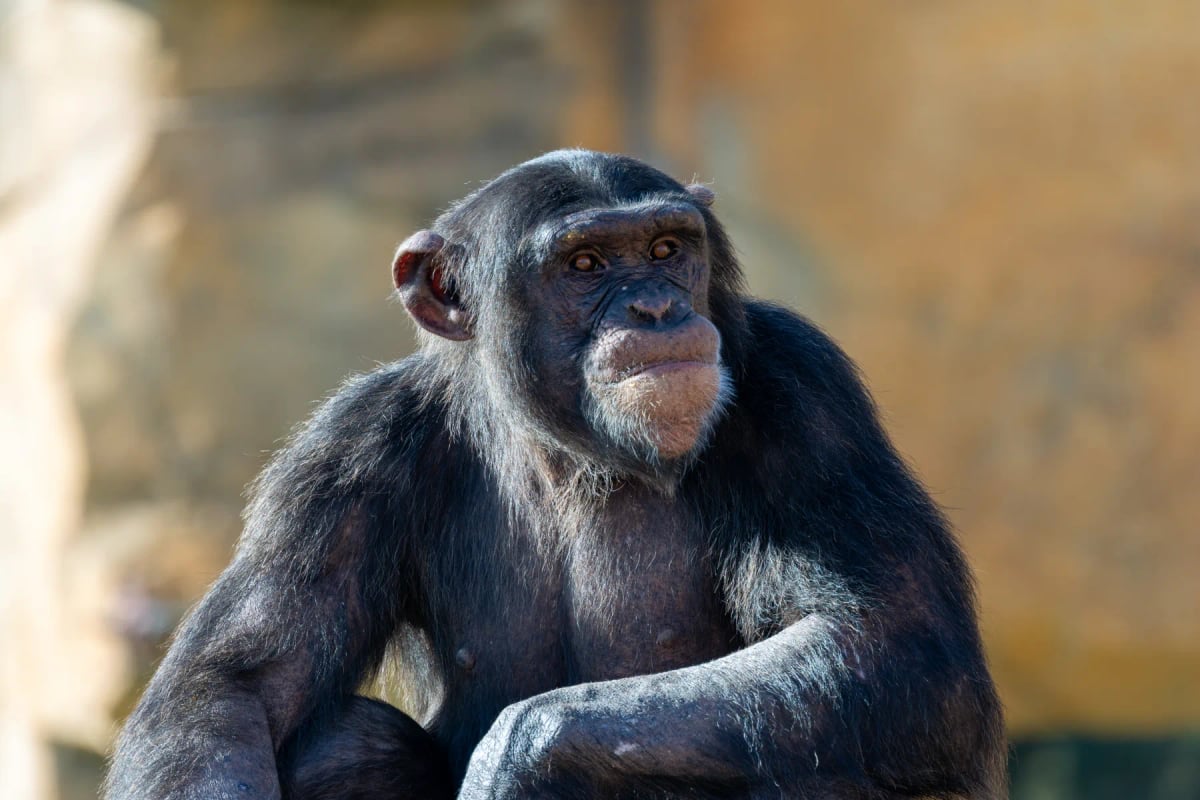
Chimpanzee
Pan troglodytes
Tanzania is home to some of the world's most studied chimpanzee communities, particularly in Gombe Stream and Mahale Mountains National Parks along the shores of Lake Tanganyika. Jane Goodall's pioneering research at Gombe revealed their capacity for tool use and complex social bonds. These populations live in montane and riverine forests, and tourism provides both funding and incentive for their ongoing protection.
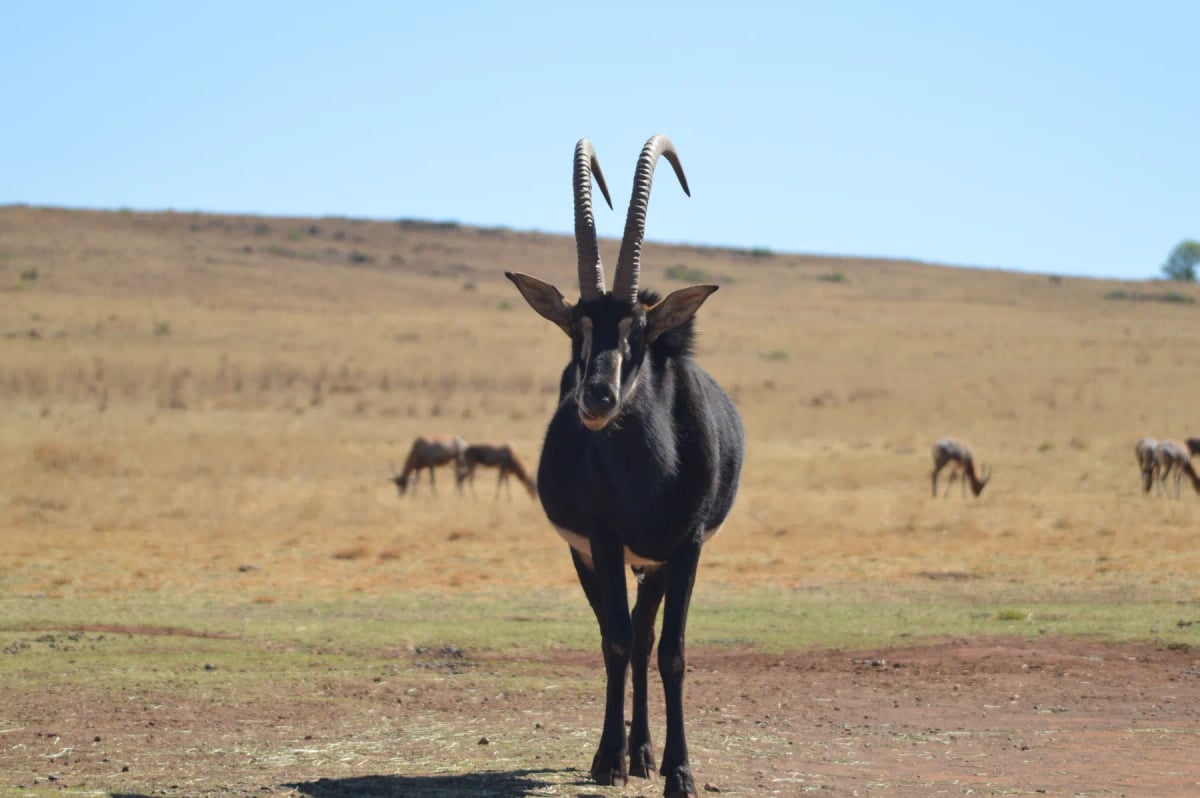
Sable Antelope
Hippotragus niger
Tanzania hosts sable antelopes in several protected areas, including the Selous Game Reserve, one of the largest wildlife reserves in Africa. The miombo woodlands of southern Tanzania provide ideal habitat, with open grassy clearings and reliable water sources nearby. The species is less commonly seen in the country's more famous northern parks, making the southern circuit a rewarding destination for those hoping to observe them.
Giraffe
Giraffa camelopardalis
Tanzania is one of the most important countries in Africa for giraffes, with large populations roaming the Serengeti plains, the Selous ecosystem, Ruaha National Park, and the Masai Mara border areas. The Masai giraffe, the subspecies native to Tanzania, is the most numerous in the world. Despite this, numbers have declined in recent decades due to poaching and habitat loss. The IUCN lists the giraffe as Vulnerable.
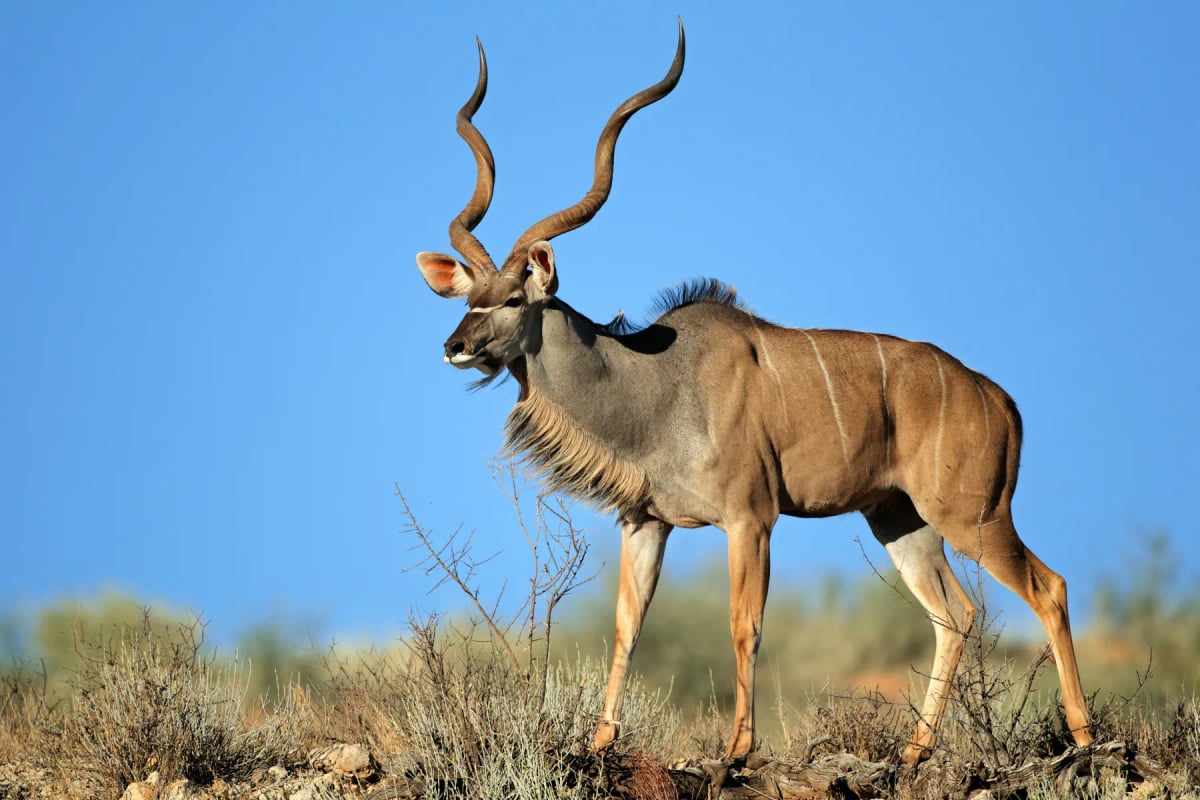
Greater Kudu
Tragelaphus strepsiceros
Greater kudus are present in Tanzania across areas of dry woodland and mixed bushland, particularly in the southern and western parts of the country. The Ruaha National Park and the Selous Game Reserve, one of Africa's largest protected areas, both support populations of this antelope. Males are recognized by their long spiral horns, which can exceed 1.8 meters along the curl. Their IUCN status is Least Concern.
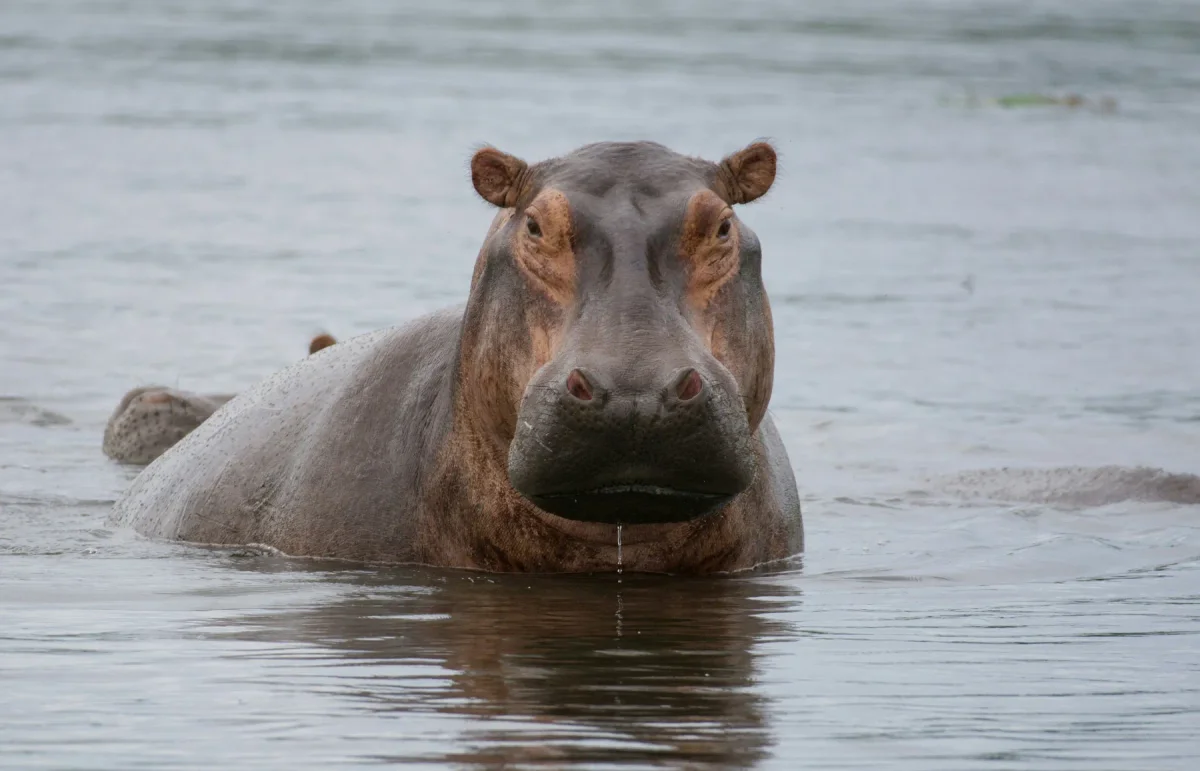
Hippopotamus
Hippopotamus amphibius
Tanzania supports a large and widespread hippo population, particularly in the Selous Game Reserve, the Ruaha River, and the shores of Lake Tanganyika and Lake Victoria. The Selous, one of Africa's largest protected areas, offers extensive river systems where hippos thrive in great numbers. They are a familiar sight on wildlife safaris across the country. The IUCN lists them as Vulnerable.
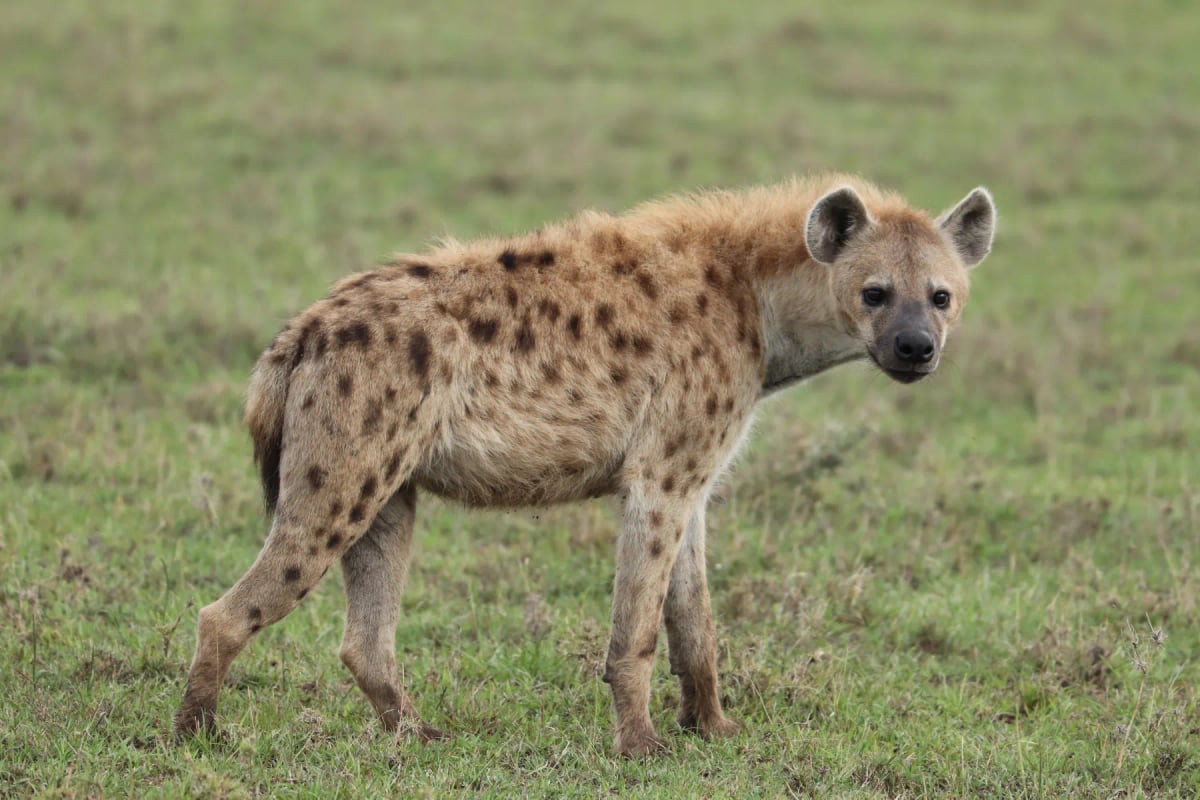
Spotted Hyena
Crocuta crocuta
Tanzania is home to one of the largest spotted hyena populations on the continent. The Serengeti ecosystem, Ngorongoro Crater, and Selous Game Reserve all support thriving clans. In the Ngorongoro Crater, hyenas are the most numerous large predator and do the majority of their own hunting rather than scavenging. Their complex social structure and vocalizations have made them a focus of wildlife research for decades. Their IUCN status is Least Concern.
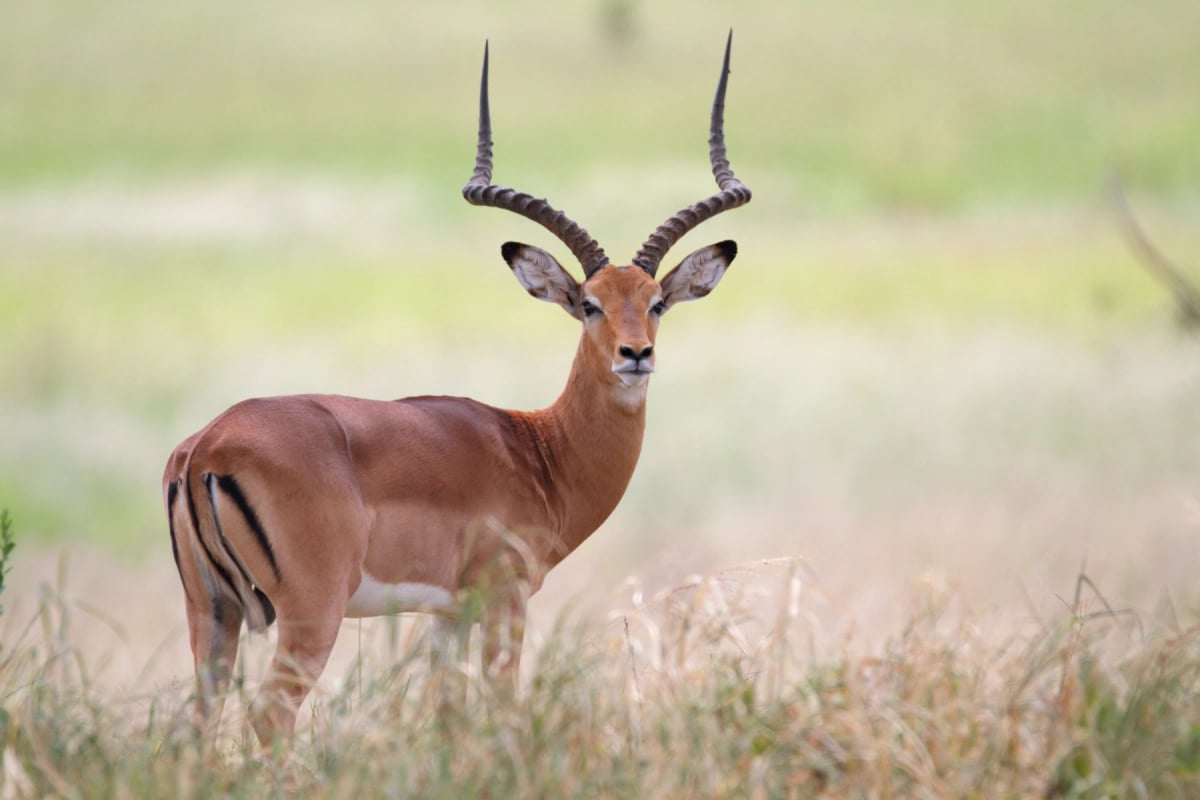
Impala
Aepyceros melampus
Tanzania's vast protected areas, including the Serengeti, Ruaha, and Selous, support thriving impala populations. These medium-sized antelopes are a common and important prey species across the country's savannas and open woodlands. During the wet season they graze on fresh grass, switching to shrubs and foliage in drier months. Males carry lyre-shaped horns reaching up to 90 cm. Impalas can leap up to 10 metres in a single bound. The IUCN lists the species as Least Concern.
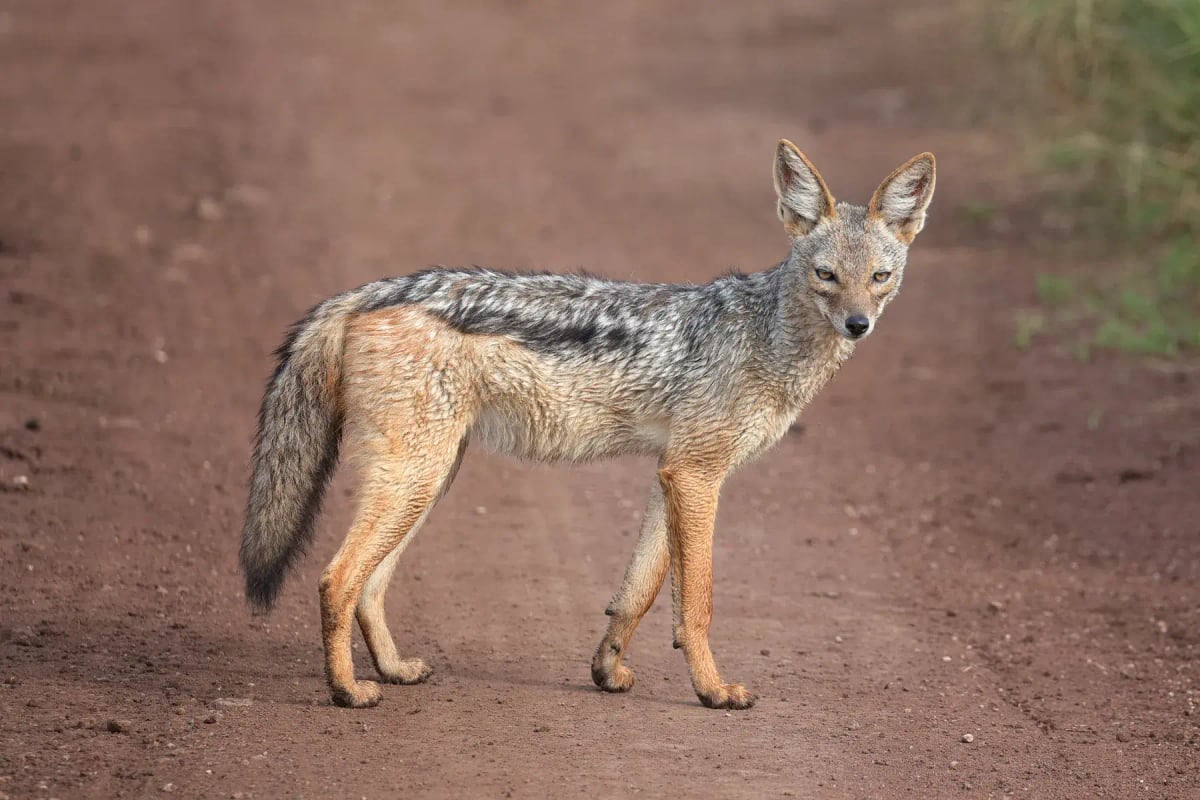
Black backed Jackal
Canis mesomelas
Tanzania's black backed jackals are found across the Serengeti plains, the Ngorongoro Conservation Area, and the semi arid zones of the north and northeast. In the Serengeti, they are well studied and known for their complex family structures, where pups from prior seasons help raise the next litter. Their IUCN status is Least Concern. They are opportunistic omnivores, adjusting their diet across seasons to include prey, fruit, and carrion depending on availability.
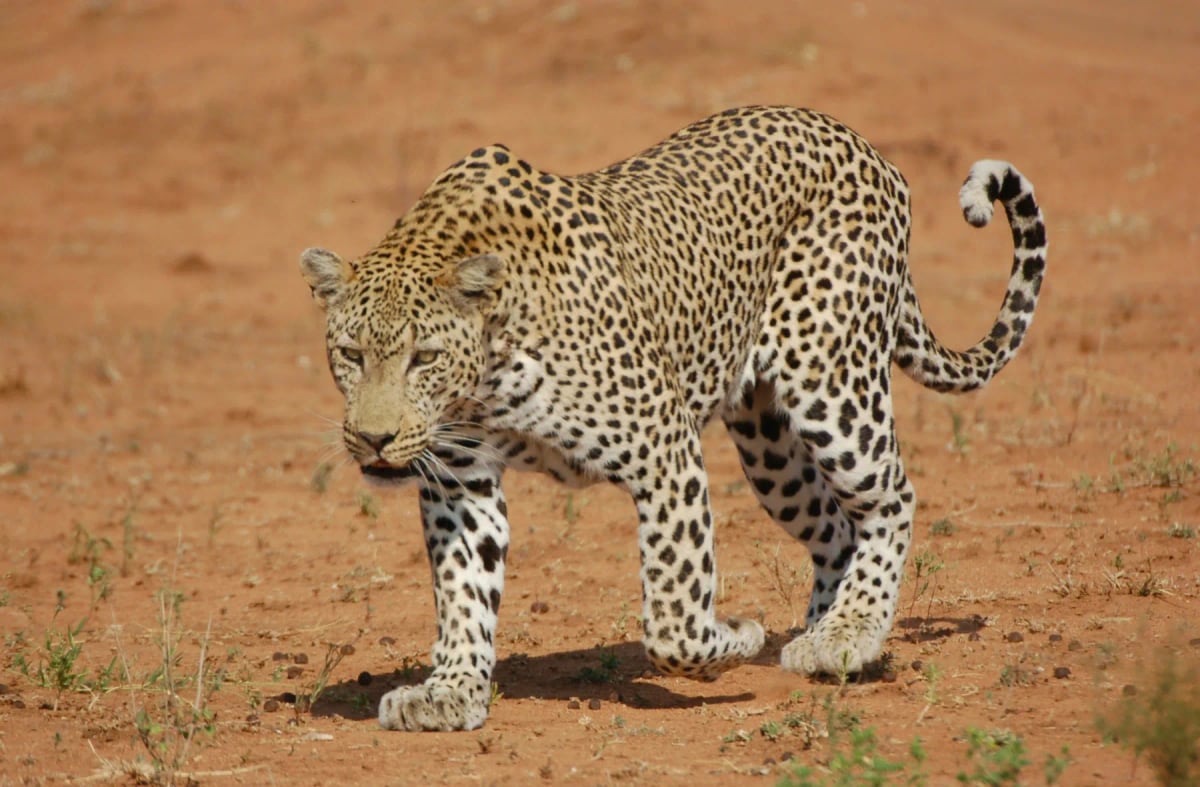
Leopard
Panthera pardus
Tanzania supports some of Africa's most important leopard populations. The Serengeti, Ruaha, and Selous ecosystems all hold healthy numbers, and leopards are also found on the slopes of Kilimanjaro. They are adaptable hunters, taking prey ranging from impala to baboons. Trophy hunting was historically permitted in Tanzania but continues to be debated. Habitat and prey availability remain relatively strong across many protected areas. IUCN status: Vulnerable.
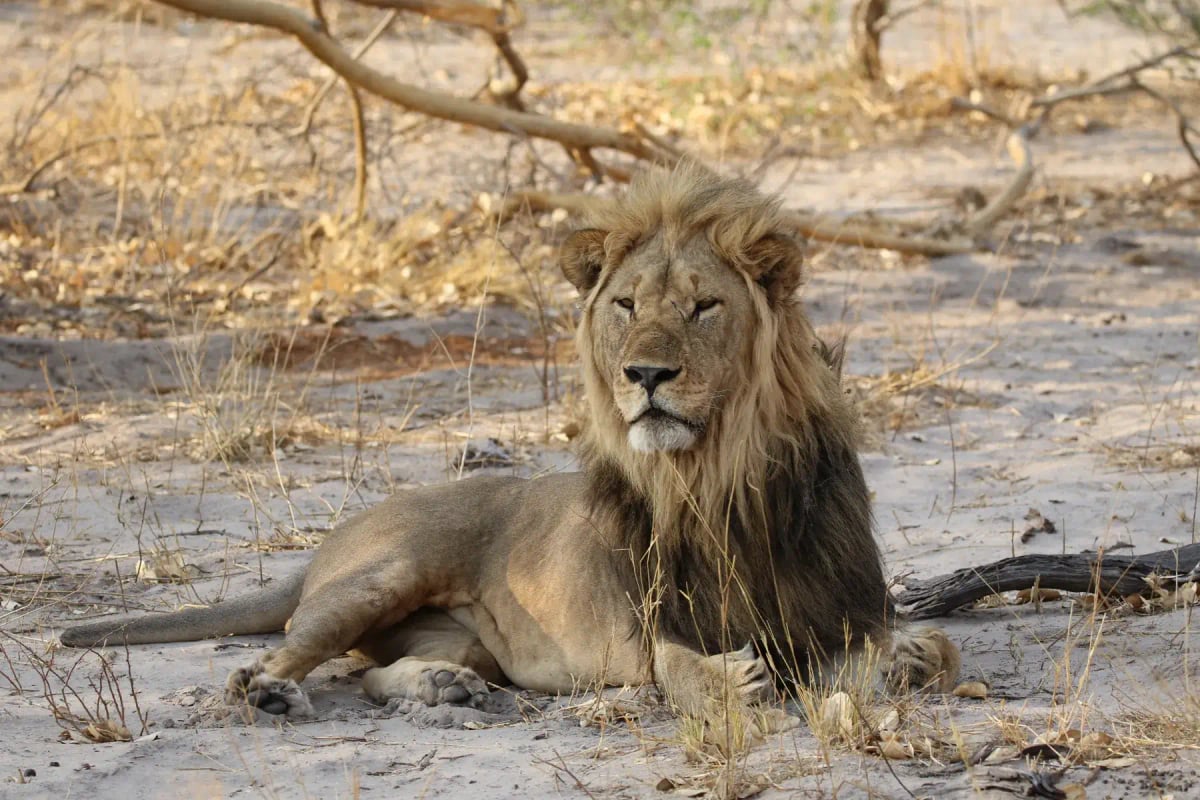
Lion
Panthera leo
Tanzania holds the largest lion population in the world, with the Serengeti ecosystem alone supporting several thousand individuals. The Serengeti, Ngorongoro, Ruaha and Selous are among the most important lion strongholds on the continent. Tanzania's lions live in large, well studied prides and are central to the country's world famous safari industry. Protecting this population is one of the most important priorities in global lion conservation.
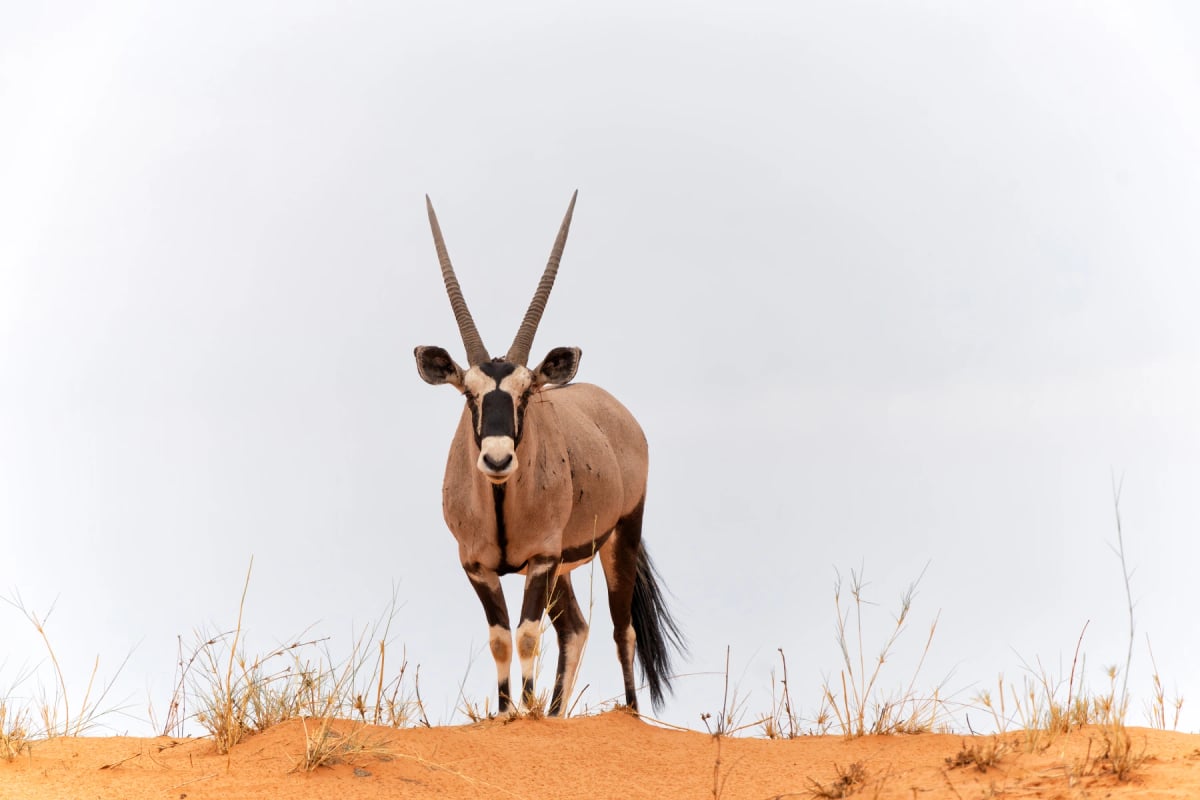
Oryx
Oryx spp.
In Tanzania, the beisa oryx is found in the arid and semi-arid zones of the north and northeast, including areas around Tarangire National Park and the Maasai Steppe. These lean, powerful antelopes are built for dry conditions, obtaining most of their water from the plants they eat rather than from standing water sources. Their long, straight horns, carried by both sexes, are among the most striking features in the East African savanna.
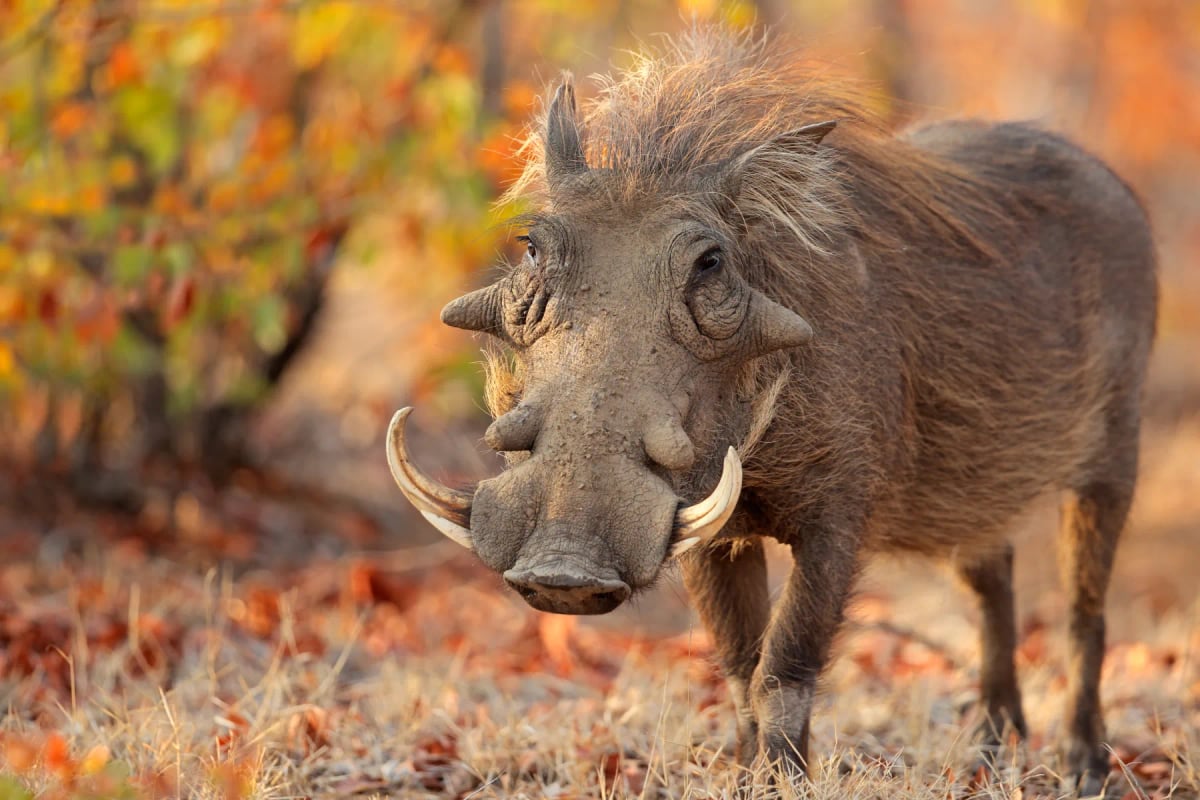
Warthog
Phacochoerus africanus
Tanzania is home to some of Africa's largest warthog populations, thriving across the Serengeti plains, the Selous Game Reserve, and the Ruaha ecosystem. They are a common species on the open savanna and are frequently seen trotting along with their tails raised, or kneeling to graze near waterholes. Predators such as lions, leopards, and cheetahs are abundant in these same areas, keeping warthog populations naturally balanced.
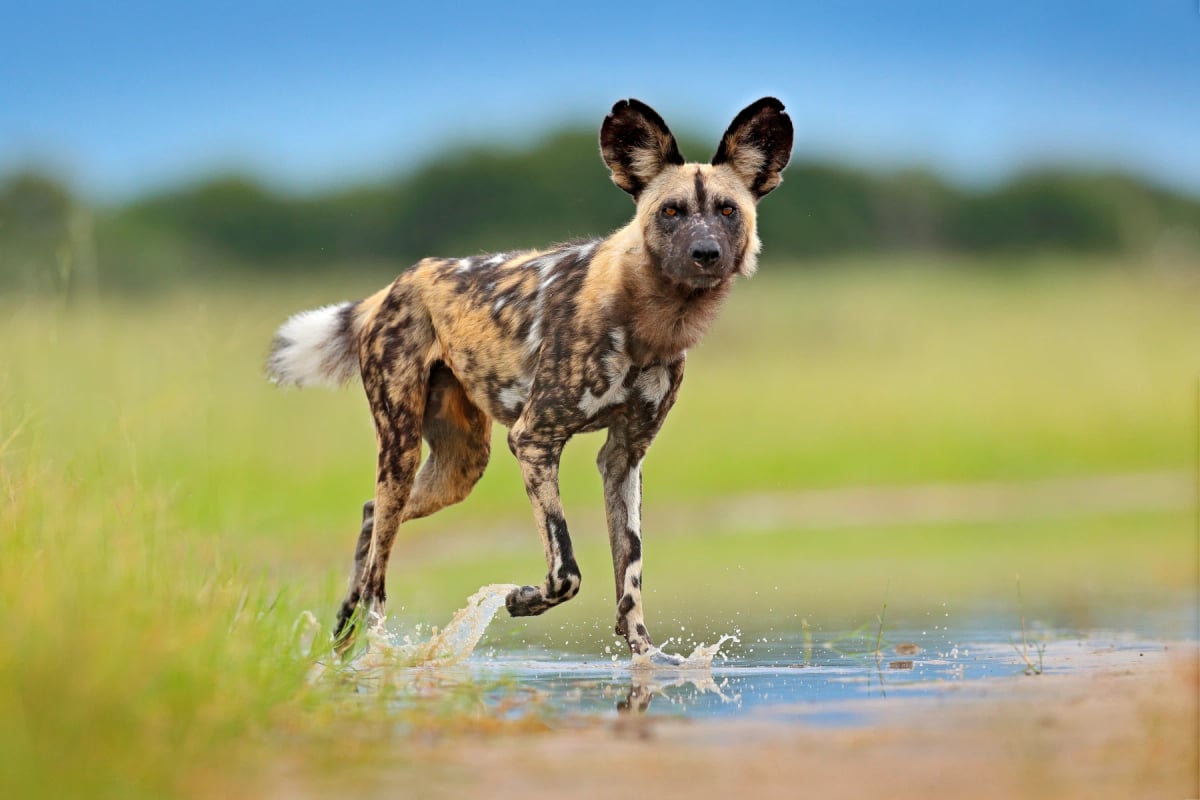
Wild Dog
Lycaon pictus
Tanzania is home to some of the largest and most studied wild dog populations in Africa. The Selous Game Reserve, now renamed Nyerere National Park, and the Ruaha landscape support significant packs that have been monitored for decades. These wide, open ecosystems give wild dogs the space they need to travel and hunt. Tanzania plays a critical role in the species' survival across the continent, linking populations from the south to the east.
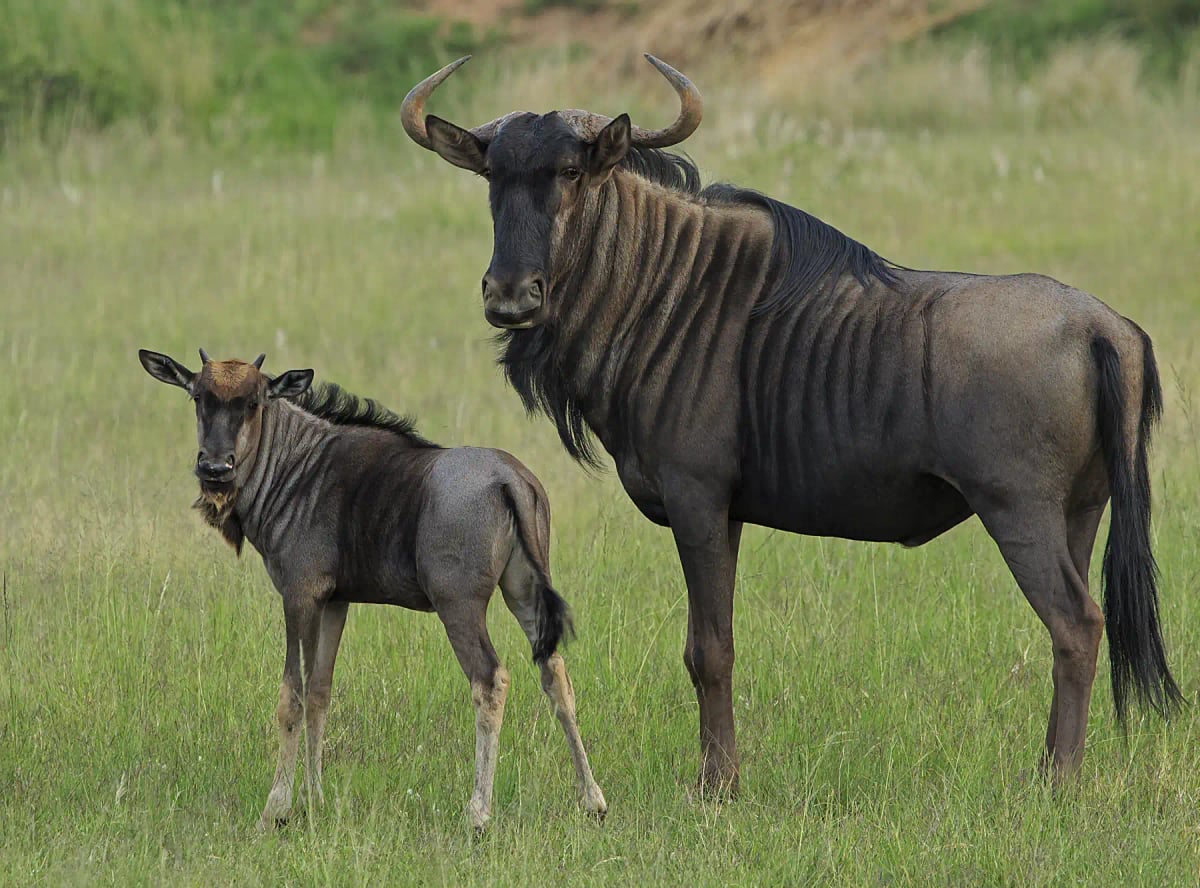
Wildebeest
Connochaetes spp.
Tanzania is home to the most famous wildebeest spectacle on Earth. Each year, roughly 1.5 million blue wildebeest circle through the Serengeti ecosystem in what is known as the Great Migration, driven by the search for fresh grass and water. The Serengeti's open plains support the largest population of wildebeest in the world, and the species is central to the ecology of this UNESCO World Heritage site.
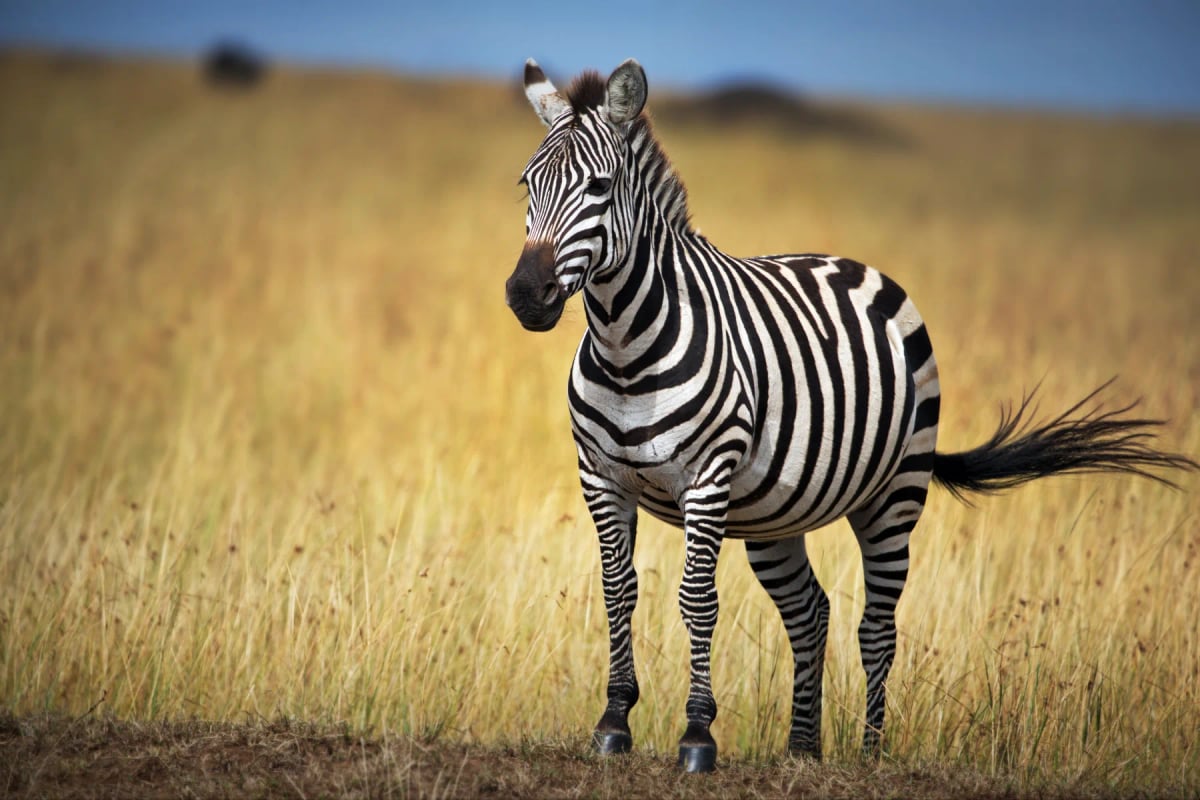
Zebra
Equus spp.
Tanzania holds some of the largest plains zebra populations in Africa, with huge numbers moving through the Serengeti alongside wildebeest during the great migration each year. Resident herds also live year round in Ngorongoro, Tarangire and other parks outside the main migration route. Tanzania's combination of vast protected land and connected ecosystems makes it one of the most important countries for the species' long term survival.
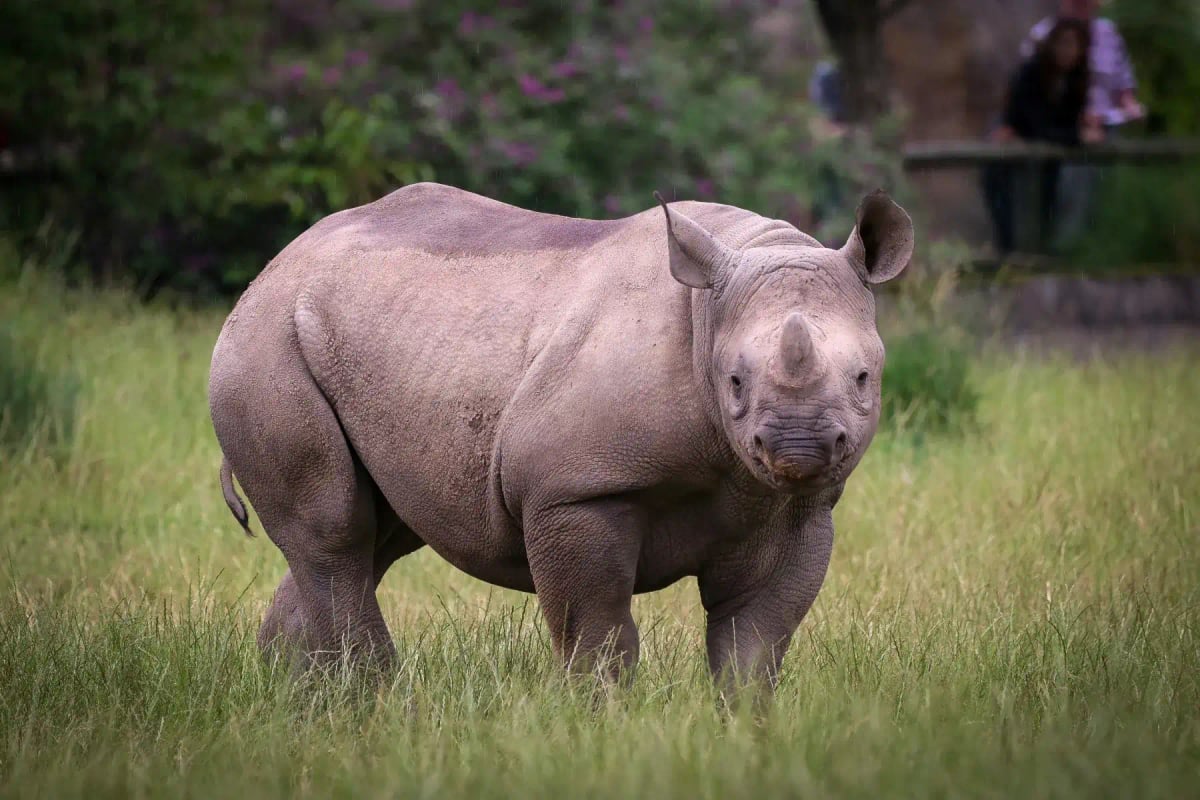
Black Rhinoceros
Diceros bicornis
Tanzania's black rhinoceros population is concentrated primarily in the Ngorongoro Crater, where a small but carefully monitored group benefits from the enclosed geography of the caldera. The Serengeti ecosystem historically supported rhinos as well, though numbers there remain very low. The Ngorongoro Conservation Area Authority works alongside conservation partners to protect this fragile population, which represents one of the few breeding groups remaining in East Africa.
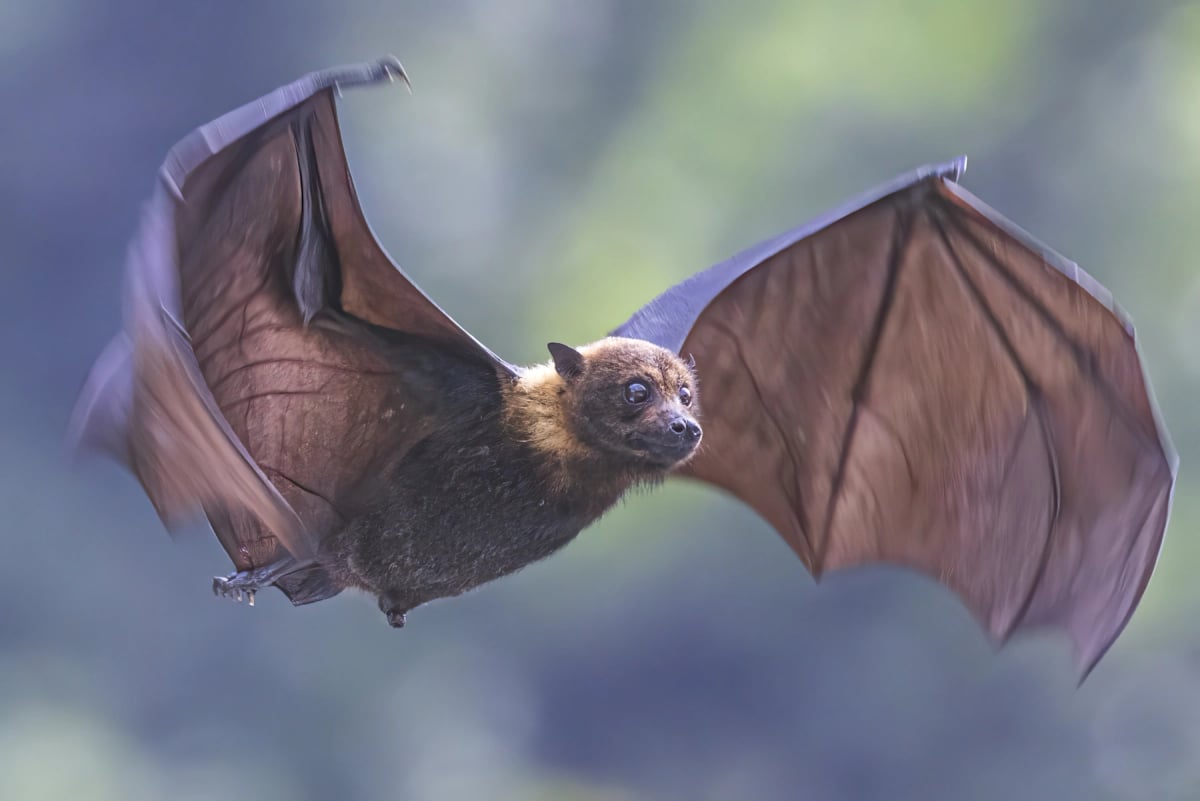
Fruit Bat
Pteropodidae
In Tanzania, fruit bats are widespread in coastal forests, on the islands of Zanzibar and Pemba, and in the woodland areas bordering national parks. On Pemba Island, the Pemba flying fox is a species found nowhere else on Earth and is considered vulnerable. Across the mainland, fruit bats support forest health by carrying pollen and seeds between trees, including species relied on by many other animals.
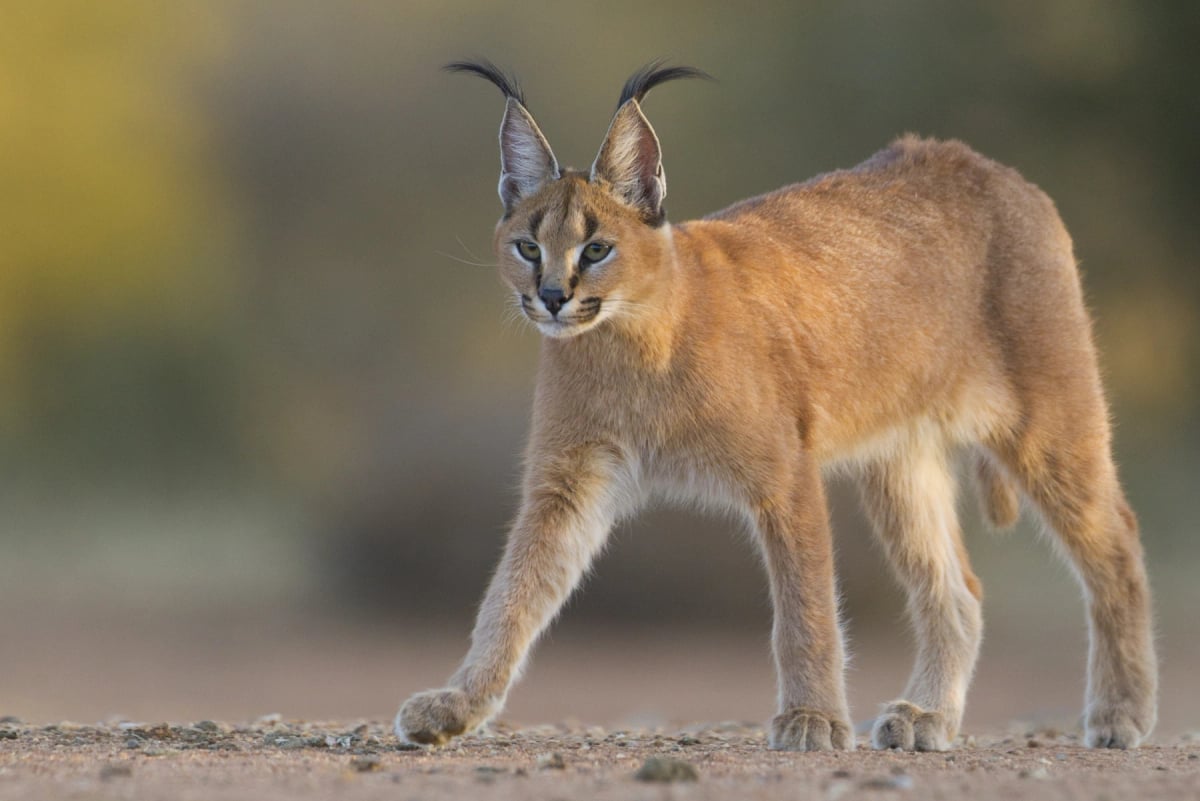
Caracal
Caracal caracal
In Tanzania, the caracal is found across savanna plains, dry woodlands, and rocky terrain, including areas bordering major protected zones such as the Serengeti and Ruaha. Though present across much of the country, it is rarely seen due to its nocturnal and secretive habits. It preys on hares, rodents, birds, and occasionally small antelopes. Globally, the IUCN lists the species as Least Concern, and Tanzania's protected areas offer important refuge.
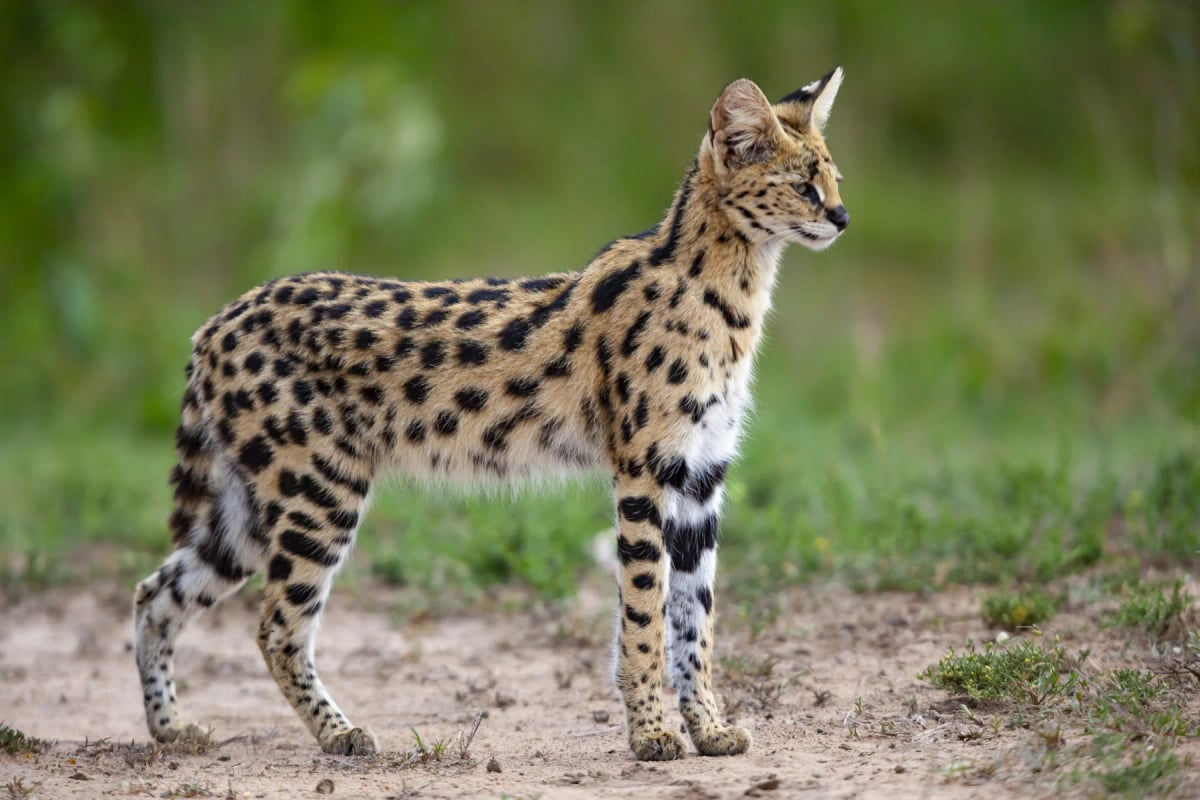
Serval
Leptailurus serval
Tanzania is one of the strongholds for the serval in East Africa. The species thrives in the moist grasslands and wetland fringes of the Serengeti, the Ngorongoro highlands, and areas around Lake Victoria. Servals hunt mostly at dawn and dusk, using their oversized ears to detect rodents under tall grass. The IUCN lists them as Least Concern, and Tanzania's extensive protected areas help support healthy populations.
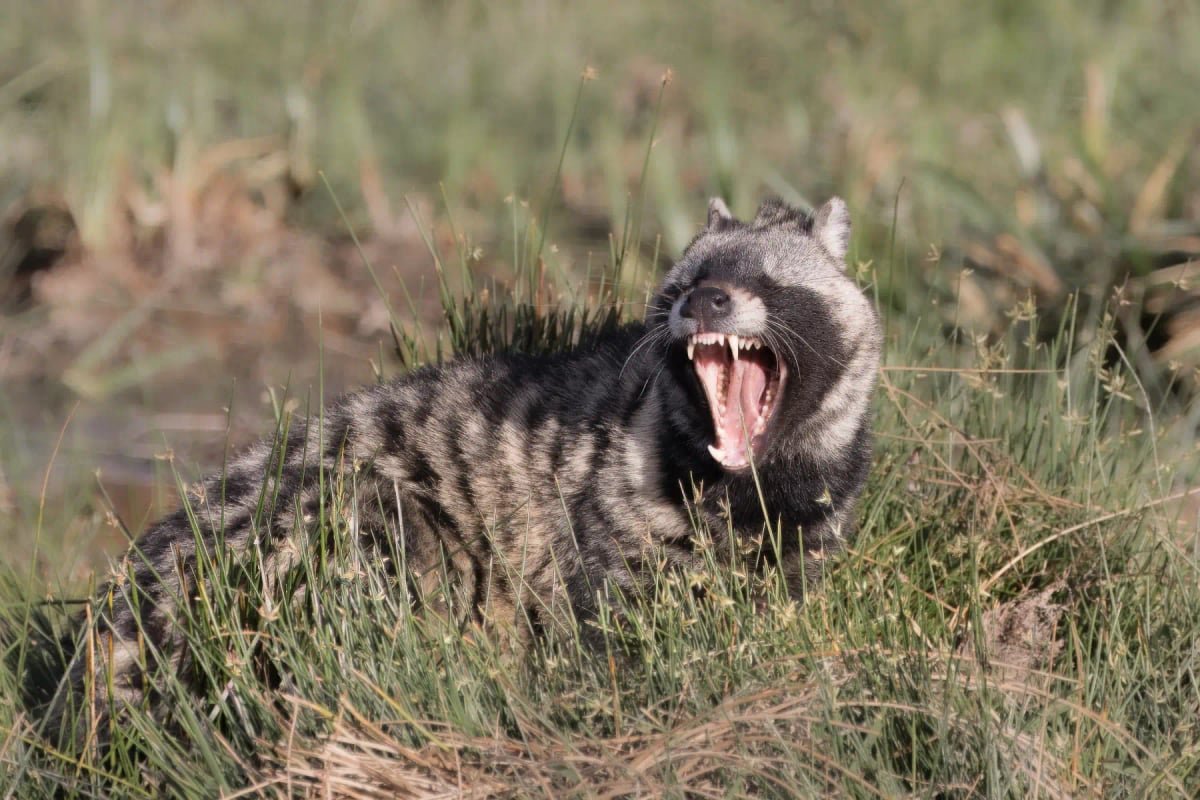
African Civet
Civettictis civetta
The African civet is widespread in Tanzania across savanna woodlands, coastal forests and highland margins. Serengeti, Ruaha and Nyerere National Parks all host populations. The coastal forests south of Dar es Salaam and the forests of Udzungwa and the Eastern Arc Mountains are particularly rich habitat. On Zanzibar Island, civets have also been recorded, representing an isolated island population.
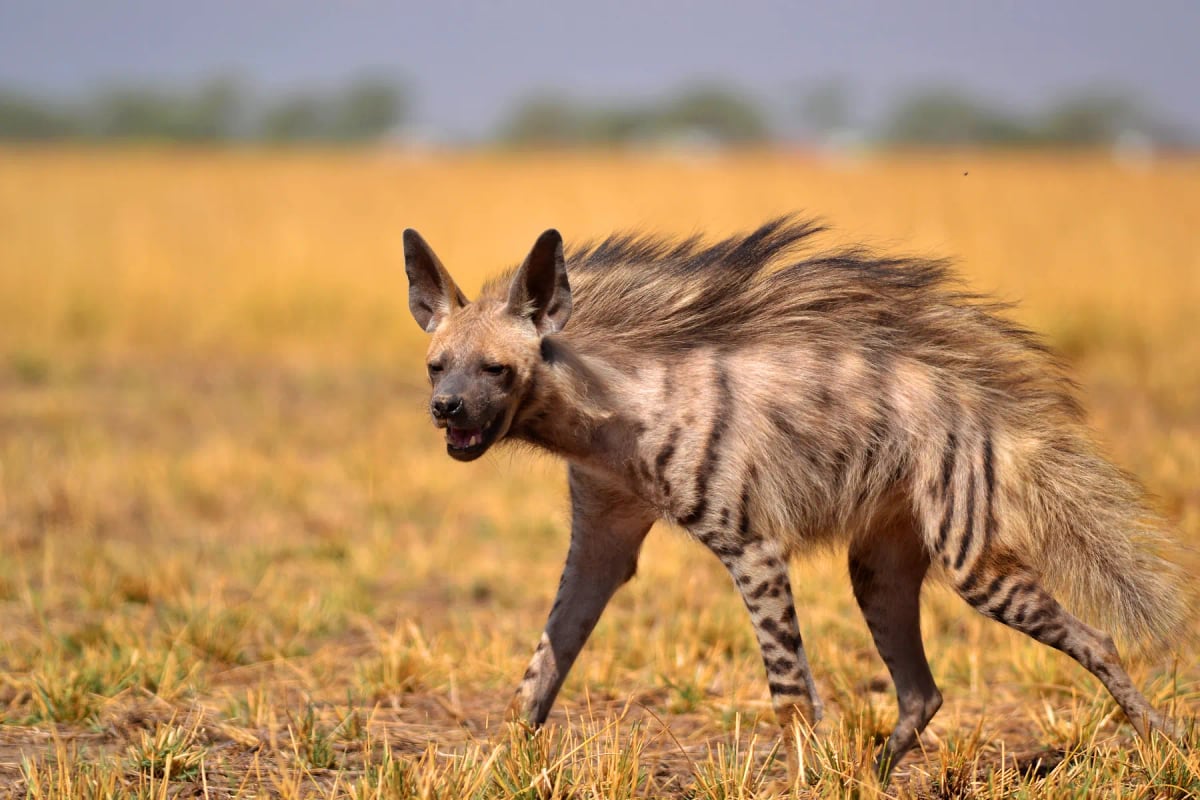
Striped Hyena
Hyaena hyaena
In Tanzania, the striped hyena occupies dry savanna and thornbush areas in the north and center of the country, including regions near Serengeti. Far less visible than the spotted hyena, it is nocturnal and largely solitary. It scavenges carcasses and crushes bones with its powerful jaws. The IUCN lists it as Near Threatened, and it receives little targeted conservation attention compared to larger, more familiar carnivores in the country.

Honey Badger
Mellivora capensis
The honey badger is widespread in Tanzania, found across the savanna of the Serengeti, the Selous ecosystem and miombo woodland throughout much of the country. It hunts rodents, reptiles and insects and is well known among safari guides for its fearless confrontations with much larger predators. It also raids beehives, sometimes drawing conflict with local farmers. The IUCN lists the species as Least Concern across its broader range.
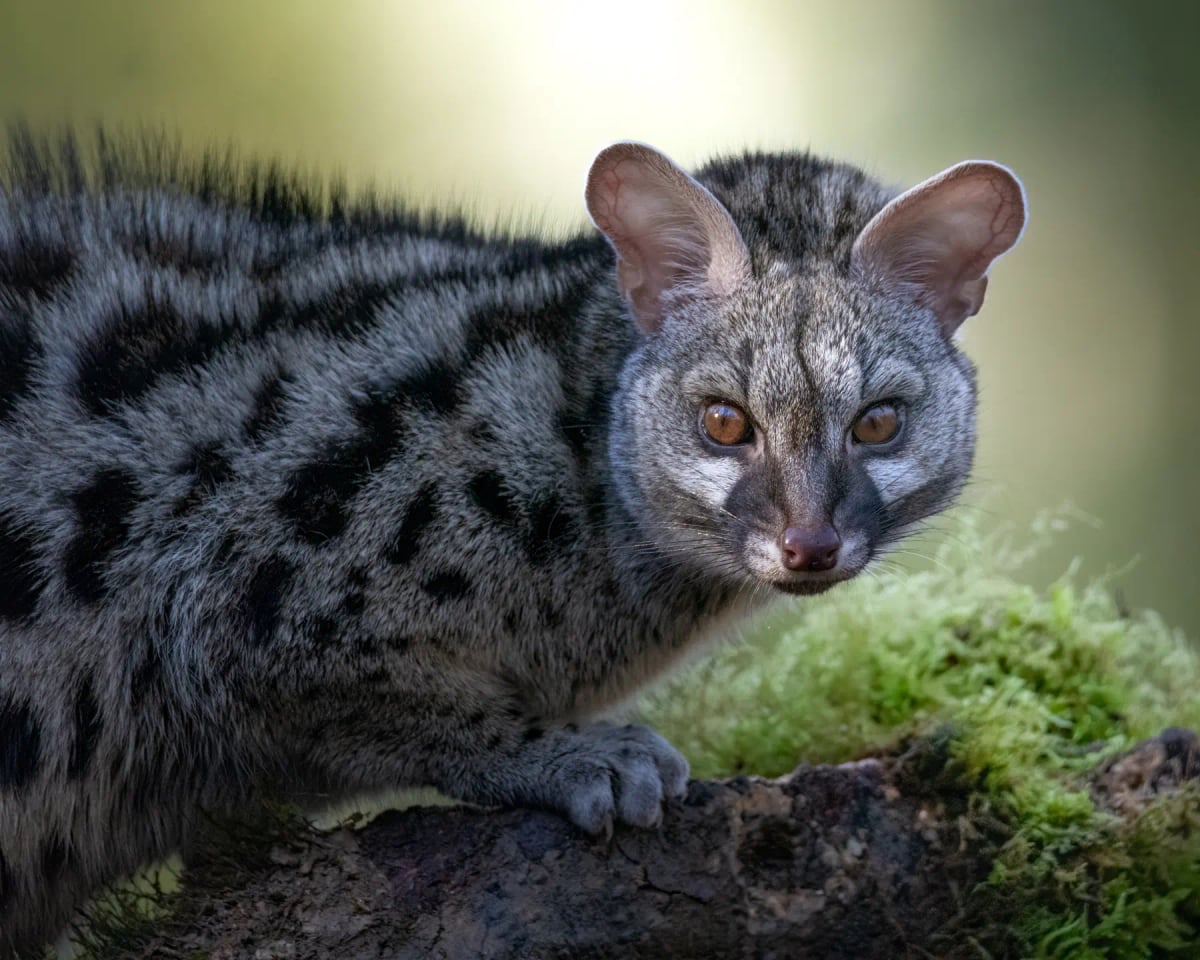
Common Genet
Genetta genetta
Tanzania's mix of miombo woodland, coastal forest, and highland zones makes it excellent habitat for the common genet. The animal is present in many of the country's national parks and reserves, including areas around the Rift Valley. It rests in tree hollows or thick brush by day and emerges after dark to hunt. The IUCN lists it as Least Concern across its African range.
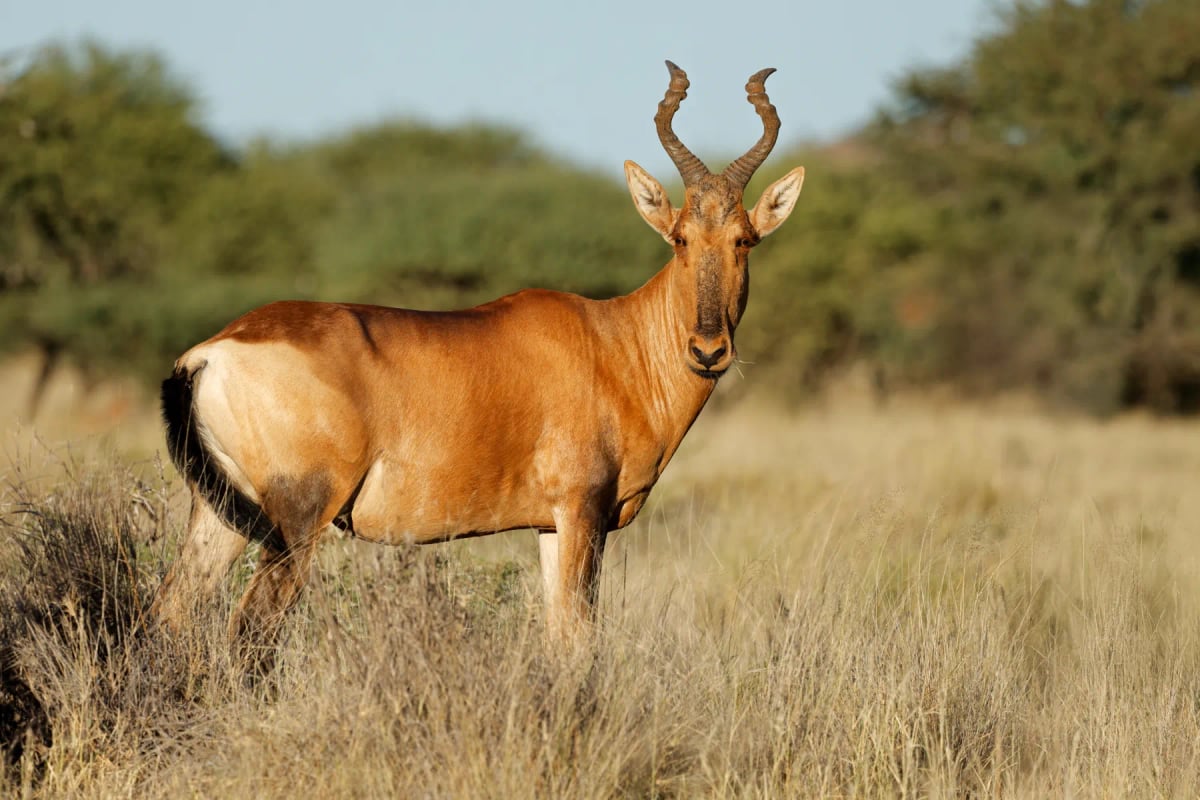
Hartebeest
Alcelaphus buselaphus
Tanzania hosts Coke's hartebeest, known locally as the kongoni, across its northern and central grasslands. The Serengeti ecosystem and areas around the Ngorongoro Conservation Area are among the best places to observe them. They graze on the open plains alongside wildebeest and zebra, thriving where grass is plentiful. Tanzanian populations remain relatively stable, and the species benefits from the country's extensive and well-managed protected area network.
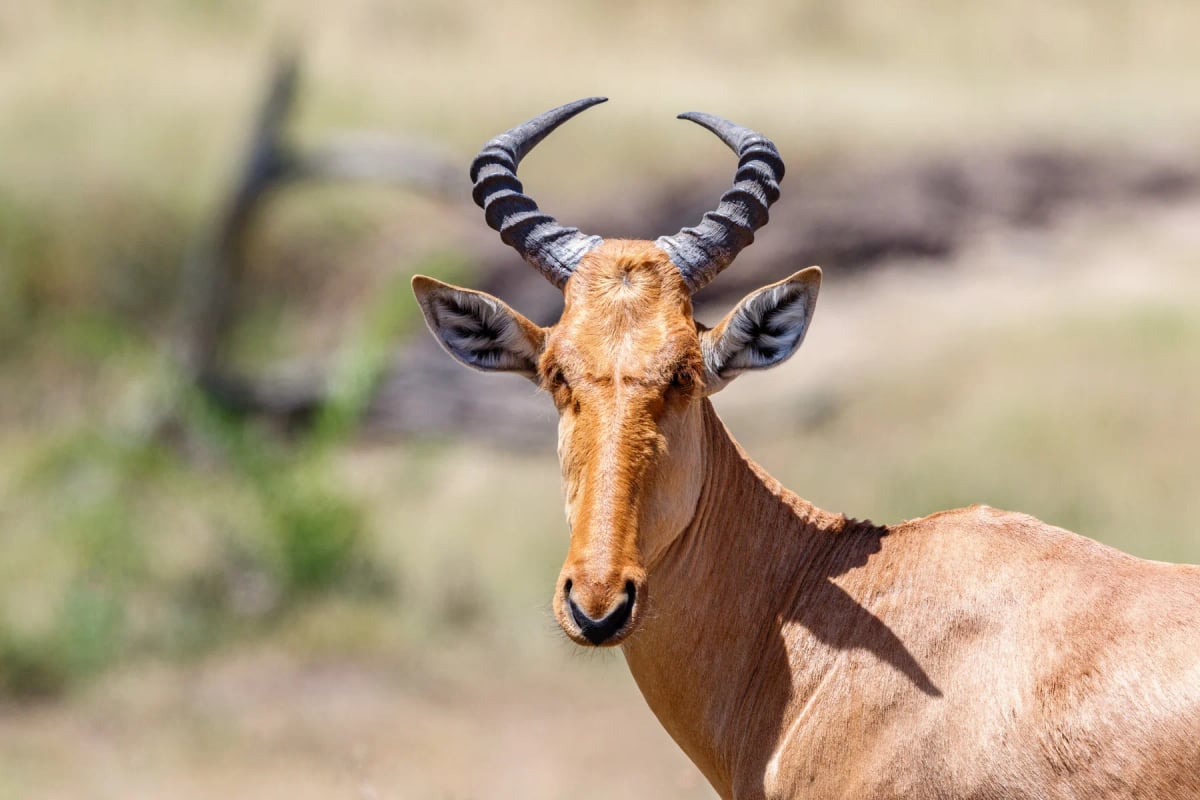
Topi
Damaliscus lunatus
Tanzania holds one of the most important topi populations on the continent, especially across the Serengeti ecosystem. Topis are permanent residents of the Serengeti plains and the Ngorongoro area, grazing year-round on open grasslands. Unlike wildebeest, they do not follow the full migration circuit but hold territories in productive areas. The Serengeti's protected status has been essential for keeping their numbers strong. IUCN status: Least Concern.
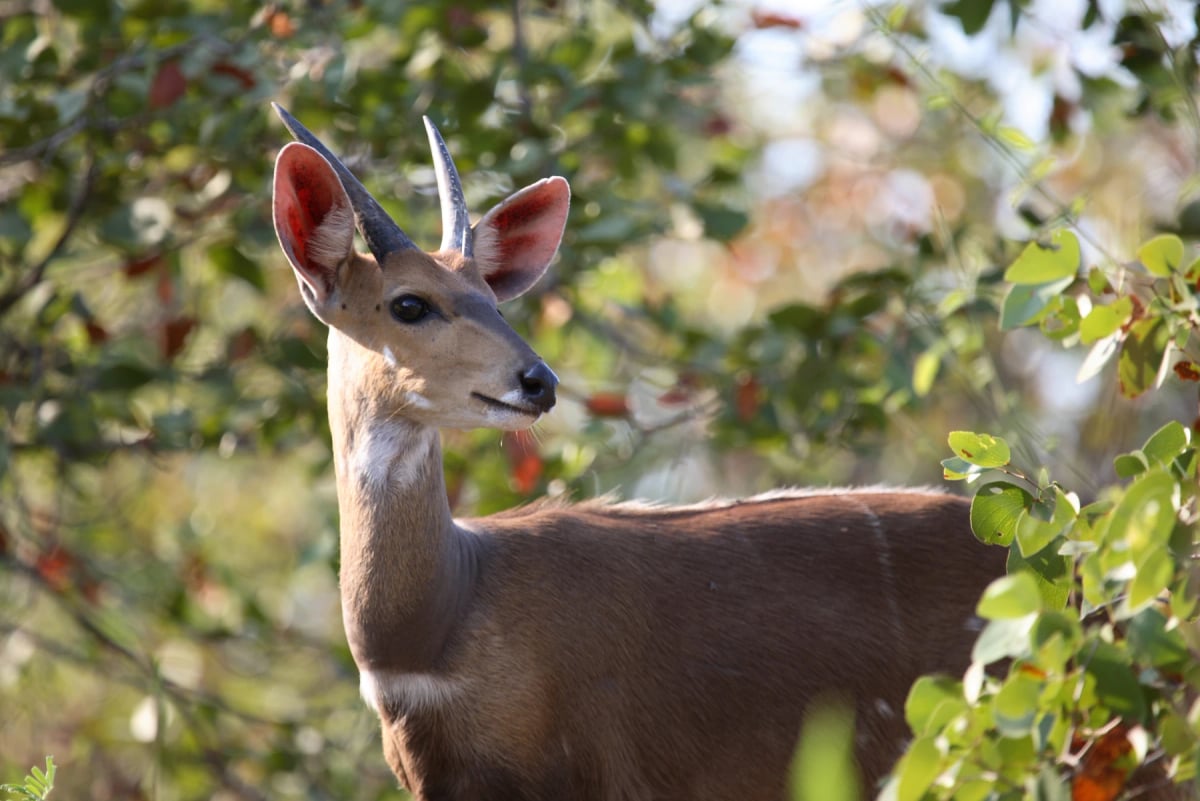
Bushbuck
Tragelaphus scriptus
Tanzania's bushbucks occupy dense woodlands, forest edges, and riverine zones across the country, from coastal regions to inland areas. These solitary browsers prefer thick vegetation that provides shelter and concealment from predators. Their reddish brown coats with white spots and stripes offer excellent camouflage in dappled woodland light. Active primarily at night and dawn, bushbucks feed on leaves, fruits, and tender shoots. They are surprisingly aggressive when threatened.
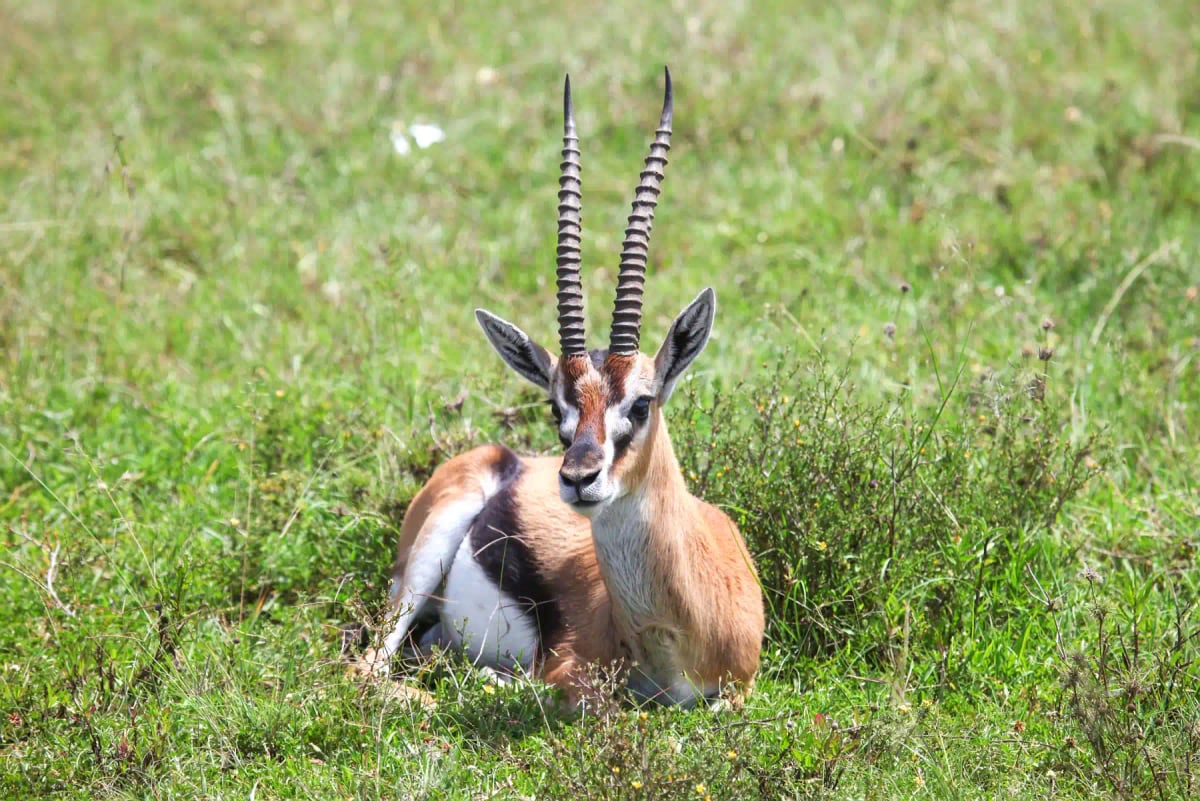
Thomson's Gazelle
Eudorcas thomsonii
In Tanzania, Thomson's gazelle is a defining presence on the Serengeti plains, where it joins one of the greatest wildlife movements on Earth each year. Weighing between 15 and 35 kg, these agile antelopes graze on short grasses and rely on bursts of speed reaching 80 km/h to outrun predators. Classified as Near Threatened, their populations face growing pressure from expanding human settlements along the Serengeti's borders.
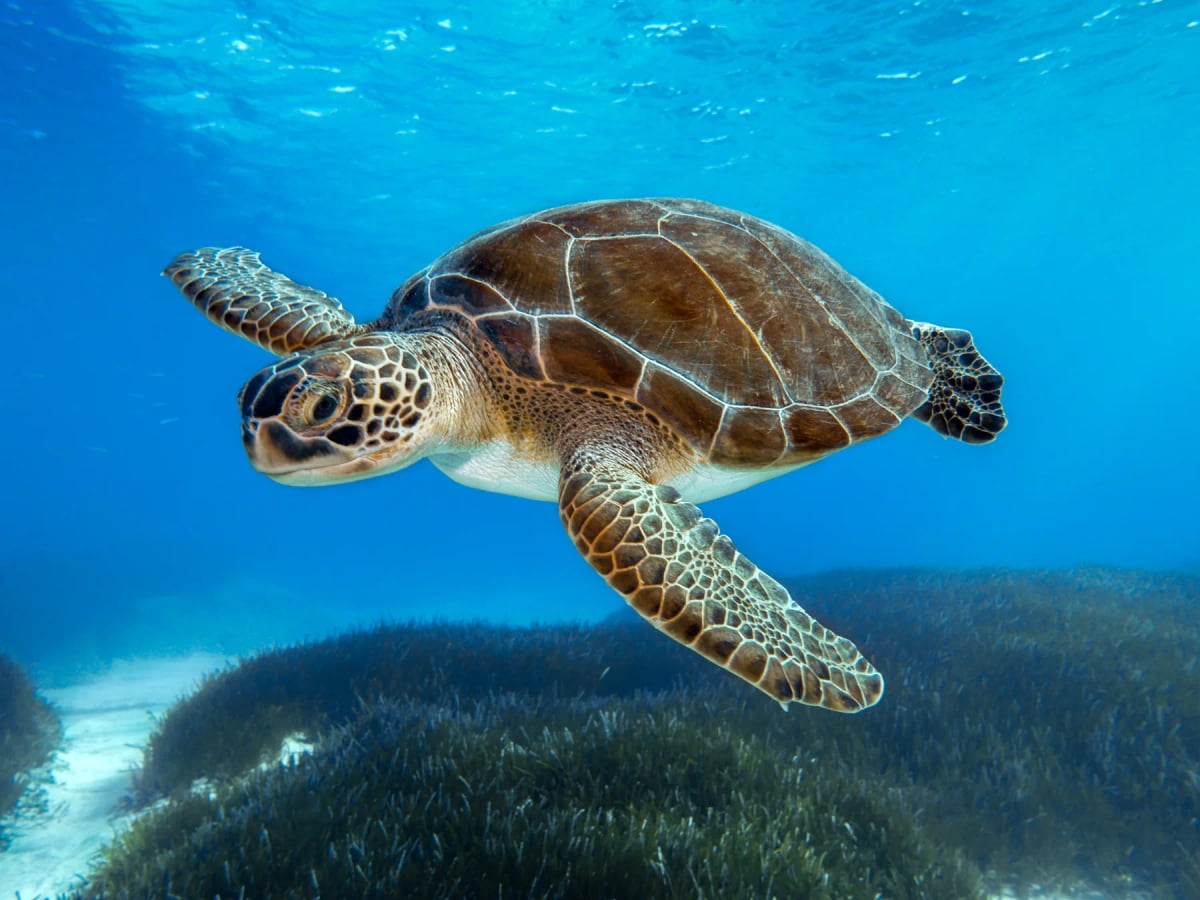
Sea Turtle
Cheloniidae & Dermochelyidae (families)
Tanzania's Indian Ocean coastline and offshore islands, including Zanzibar and the Mafia Island Marine Park, provide important habitat for green, hawksbill and leatherback sea turtles. Green turtles nest on beaches across the Tanzanian coast, and hawksbill turtles are associated with the coral reef systems of the archipelago. Mafia Island is one of the most significant sea turtle sites in East Africa, where both nesting and foraging populations have been monitored for years. Community conservation programs work across the coast to protect nests and raise awareness.
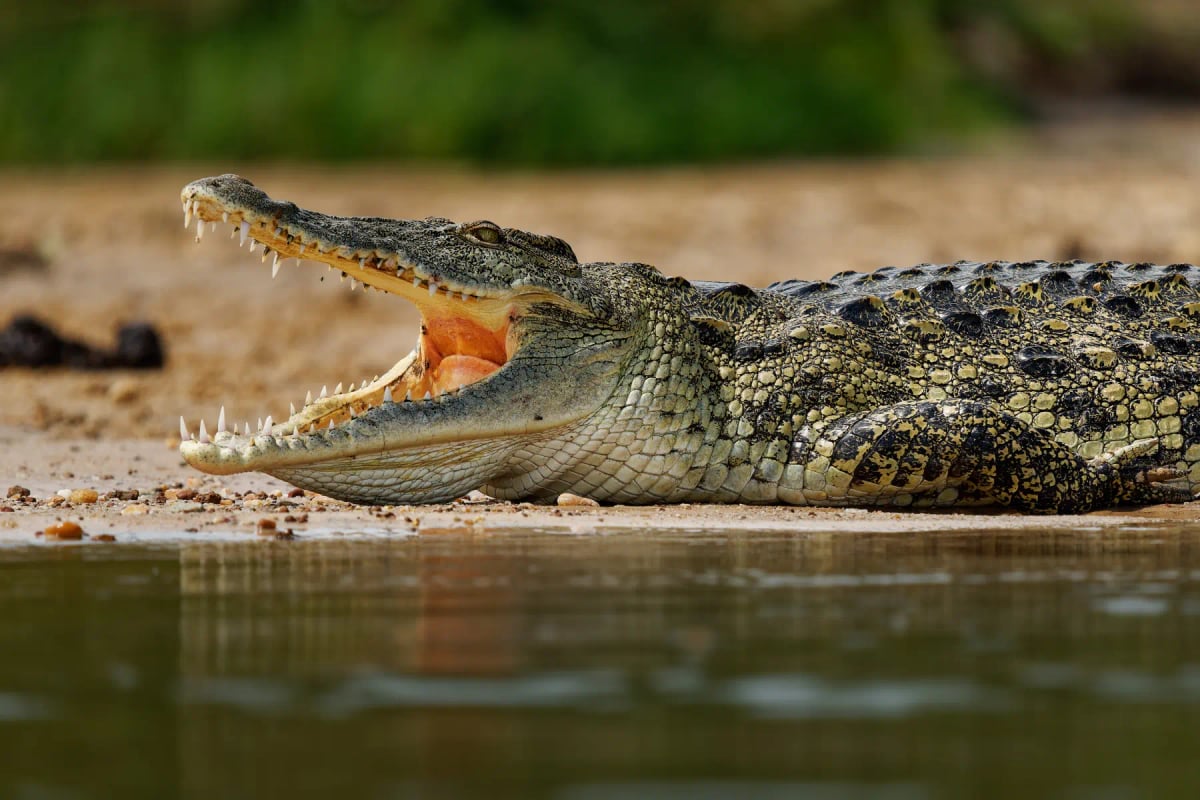
Nile Crocodile
Crocodylus niloticus
Tanzania holds some of Africa's most impressive Nile crocodile populations, particularly in the Rufiji River within Selous Game Reserve and along Lake Tanganyika and Lake Victoria. These large reptiles are a striking sight for visitors on river safaris. While protected within reserves, crocodiles outside park boundaries sometimes clash with fishing communities, making coexistence an ongoing conservation challenge across the country.
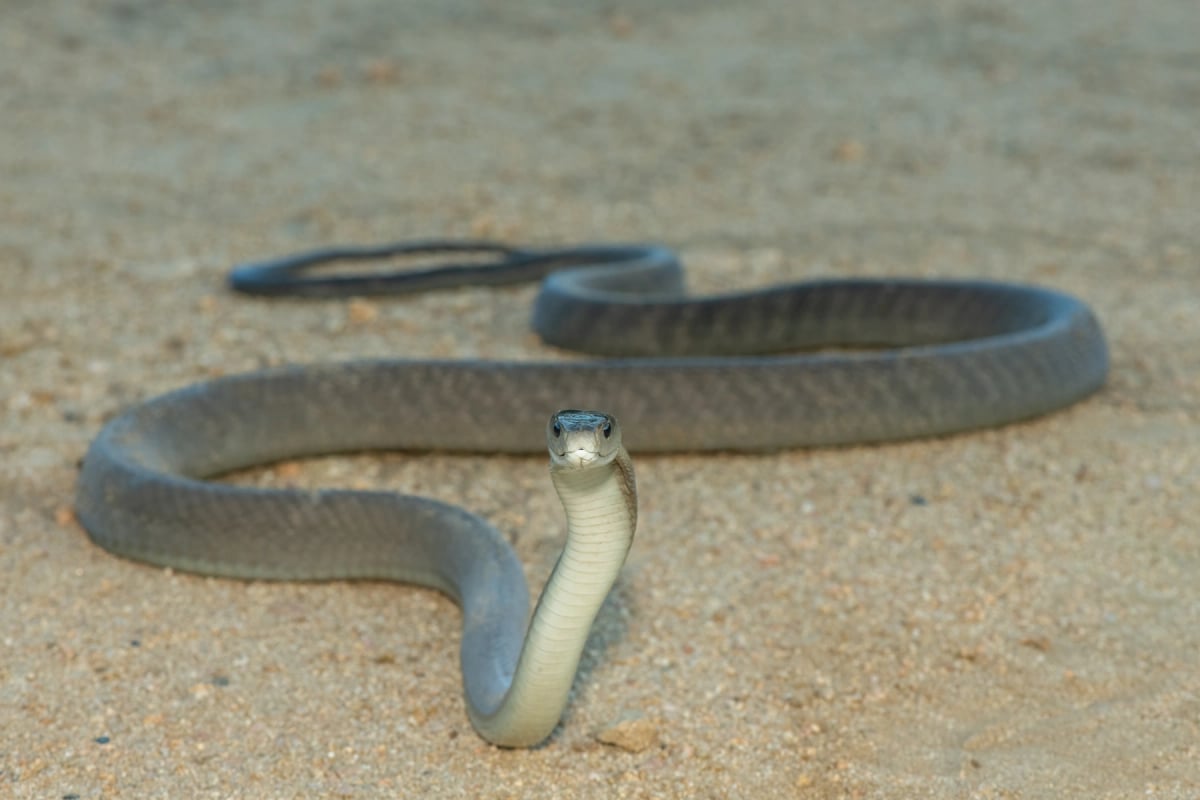
Black Mamba
Dendroaspis polylepis
Tanzania's diverse landscapes, including the savannas of the Serengeti, the woodlands of Miombo and the rocky terrain around the Rift Valley, support healthy black mamba populations. The species is encountered with some regularity in rural areas and near game reserves. Its speed, potent neurotoxic venom and size make it one of Tanzania's most notable reptiles. Antivenom availability has improved in urban centers but remains a challenge in remote areas. IUCN status: Least Concern.
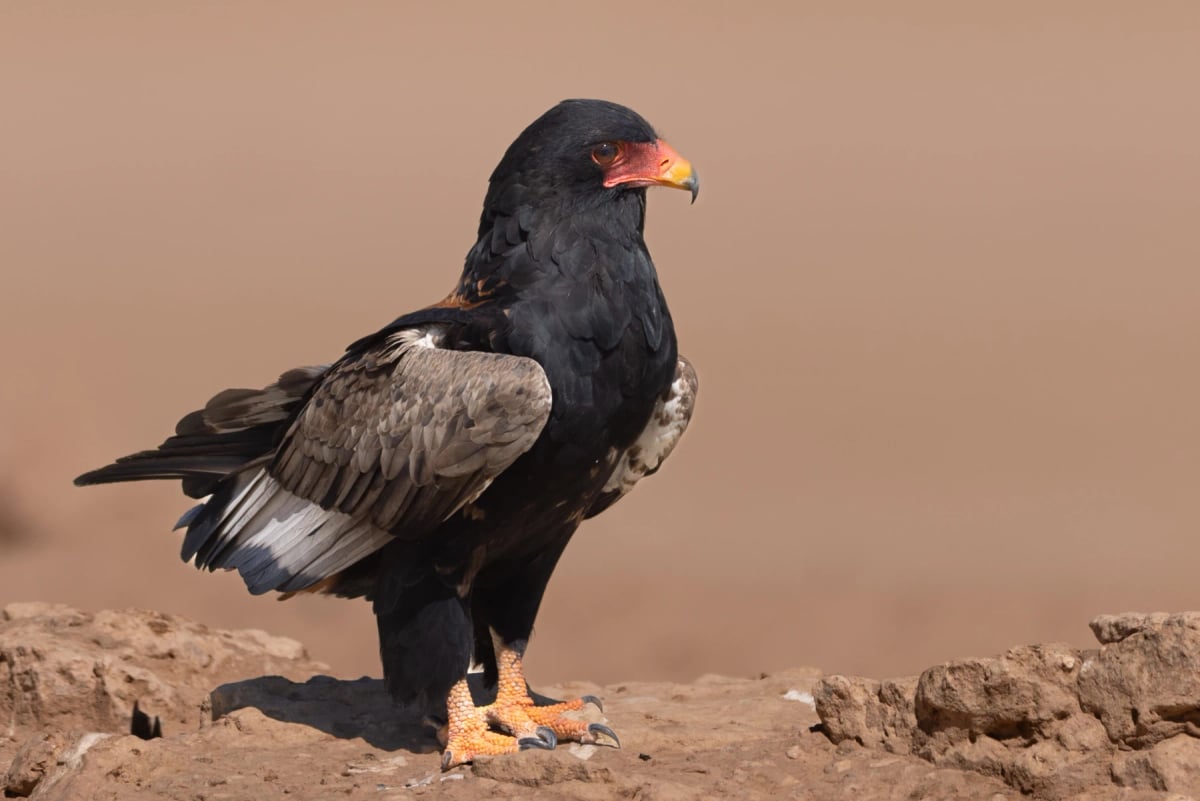
Bateleur
Terathopius ecaudatus
Tanzania is one of the strongholds for the bateleur in East Africa, with birds recorded regularly across the Serengeti, Ruaha, and Selous ecosystems. It soars over open savanna and dry woodland, covering vast distances daily in search of food. The country's extensive protected area network offers crucial refuge. Despite this, the species remains Endangered due to poisoning incidents and habitat loss outside park boundaries.
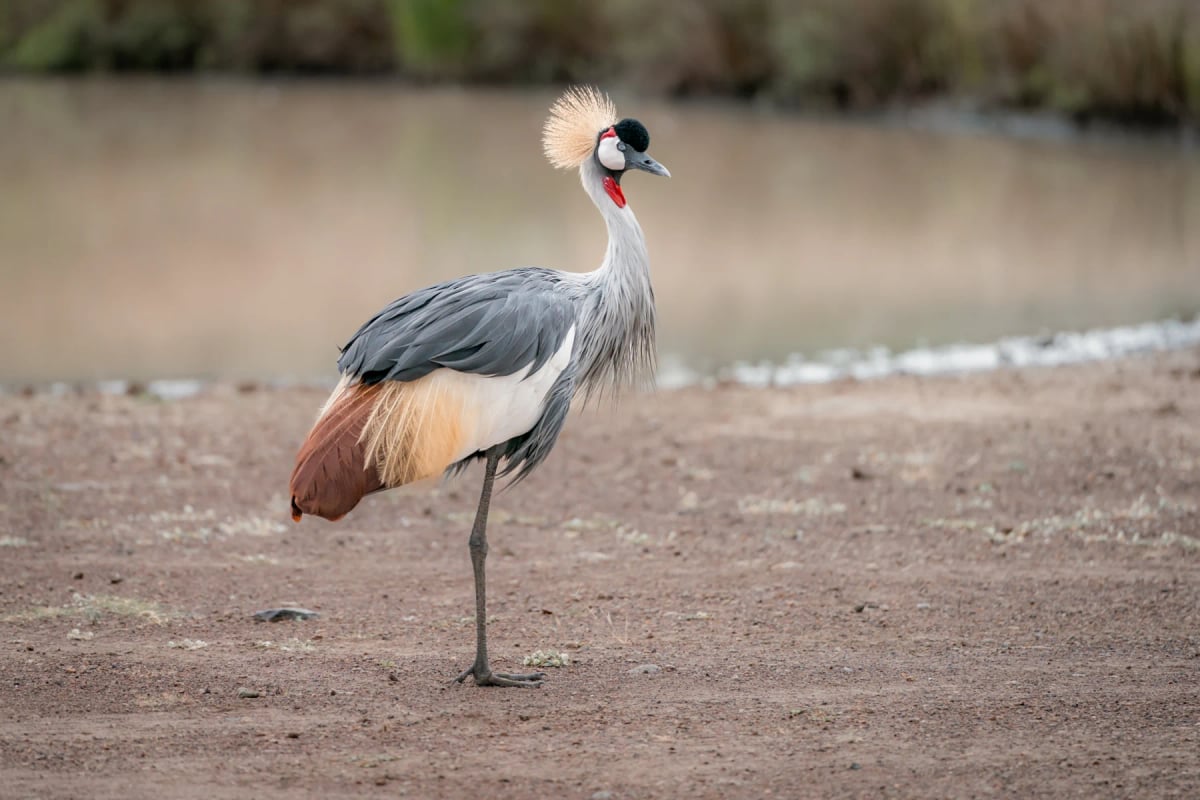
Grey Crowned Crane
Balearica regulorum
In Tanzania, the Grey Crowned Crane is a familiar sight across the northern grasslands and wetlands, particularly around the Serengeti and the shores of Lake Victoria. It forages in moist grasslands and farmlands alongside large herds of wildlife. Pairs perform spectacular leaping courtship displays during the breeding season. The species is listed as Endangered, with habitat loss and illegal capture putting pressure on local populations.
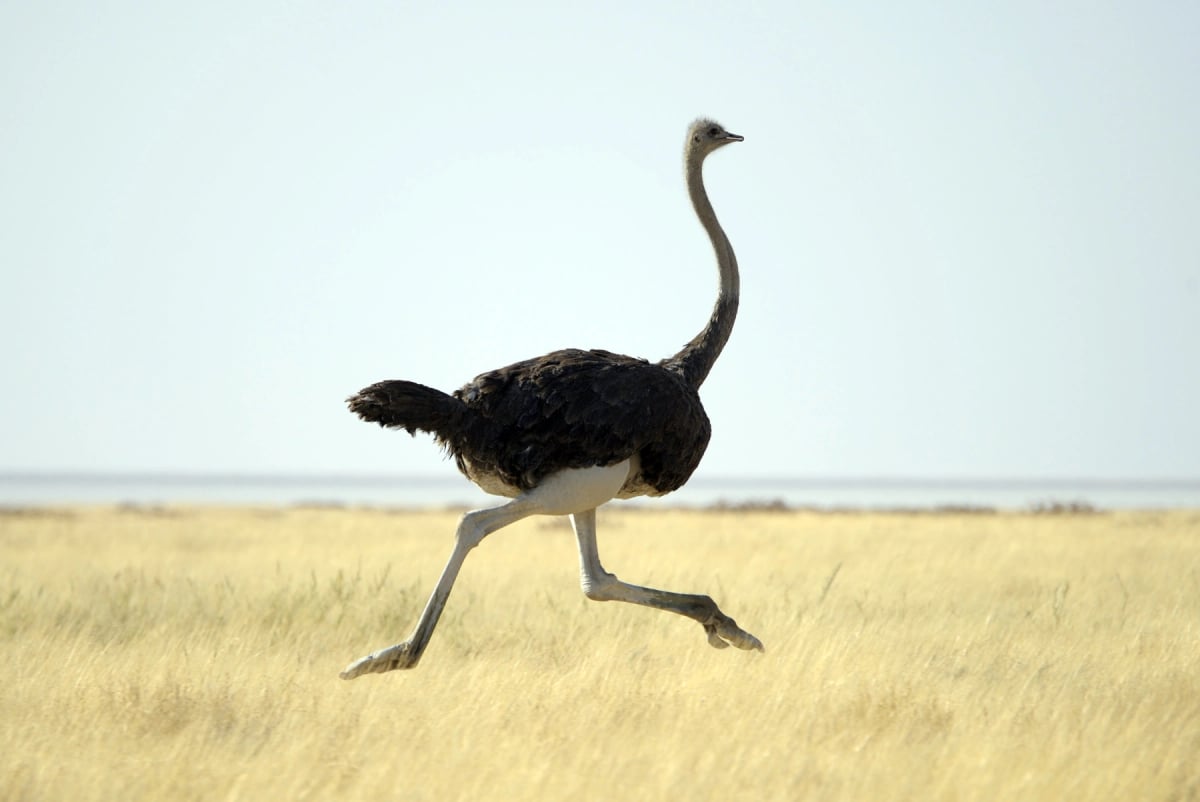
Ostrich
Struthio camelus
Tanzania is home to some of Africa's most iconic ostrich habitat, from the Serengeti plains to the dry savannas of the Masai Steppe. Ostriches are a familiar sight alongside wildebeest and zebra during the dry season. They feed on grasses, seeds, and leaves, and their large eggs, each weighing around 1.4 kilograms, are among the natural wonders visitors encounter on safari. Their IUCN status is Least Concern.
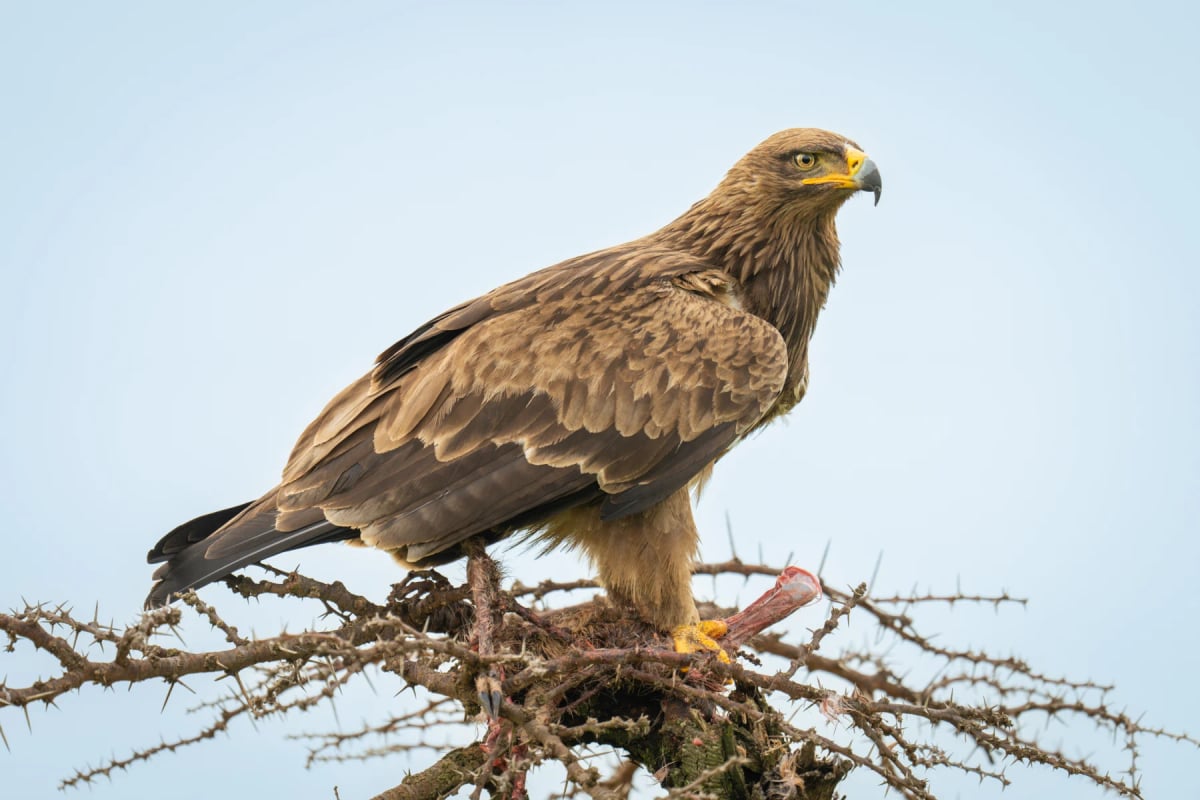
Steppe Eagle
Aquila nipalensis
Tanzania receives Steppe Eagles during the northern winter, when birds spread across the Serengeti plains and other open habitats in search of food. They are often spotted scavenging alongside vultures or descending in groups on termite emergences. With the global population estimated at around 30,000 and listed as Endangered by the IUCN, Tanzania's protected areas play a meaningful role in supporting these eagles through the season.
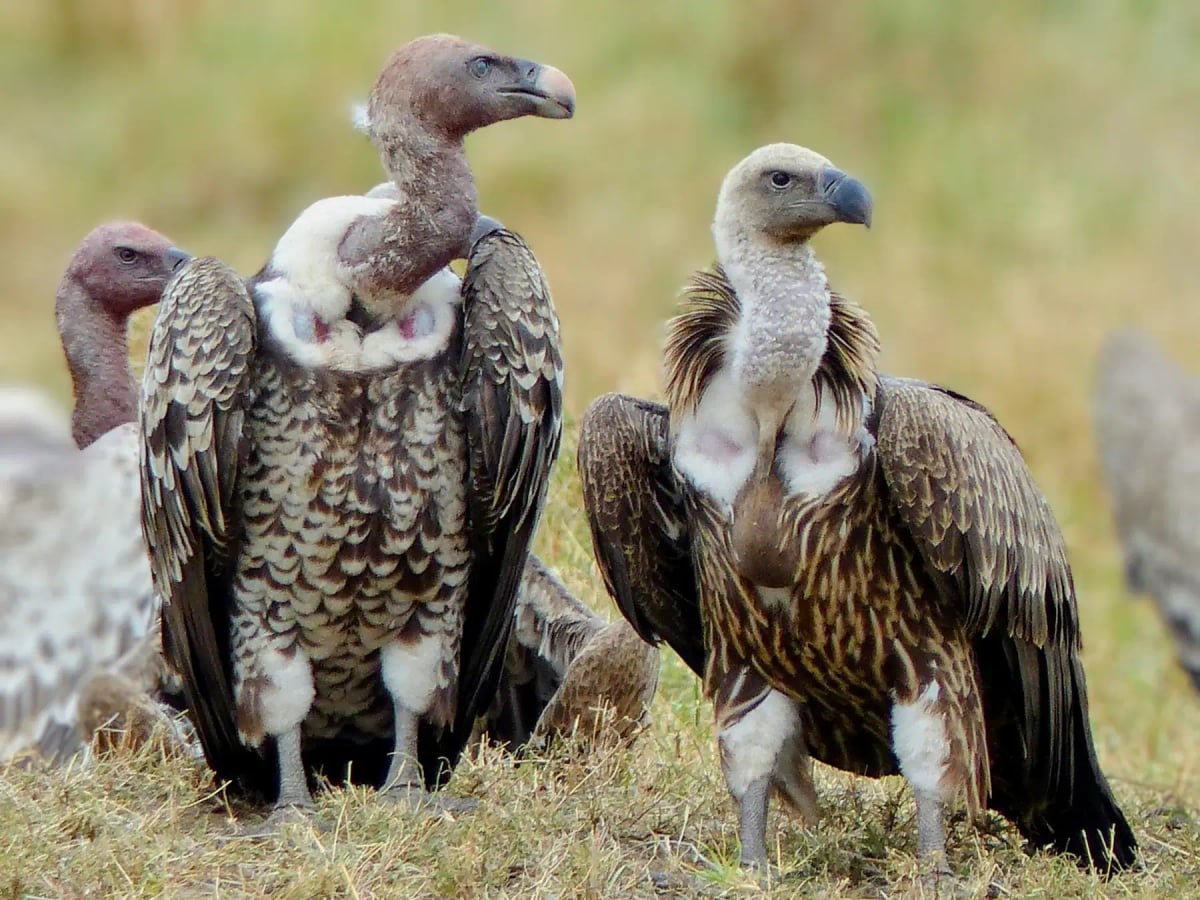
White backed Vulture
Gyps africanus
Tanzania holds some of the largest remaining populations of the white backed vulture on the continent. The Serengeti ecosystem, with its extraordinary concentrations of wildebeest and zebra, provides an almost constant supply of carcasses. The species nests in tall trees across savanna woodlands and is a familiar sight over the plains of the Serengeti and Ruaha. Poisoning linked to bushmeat poaching remains a serious concern.
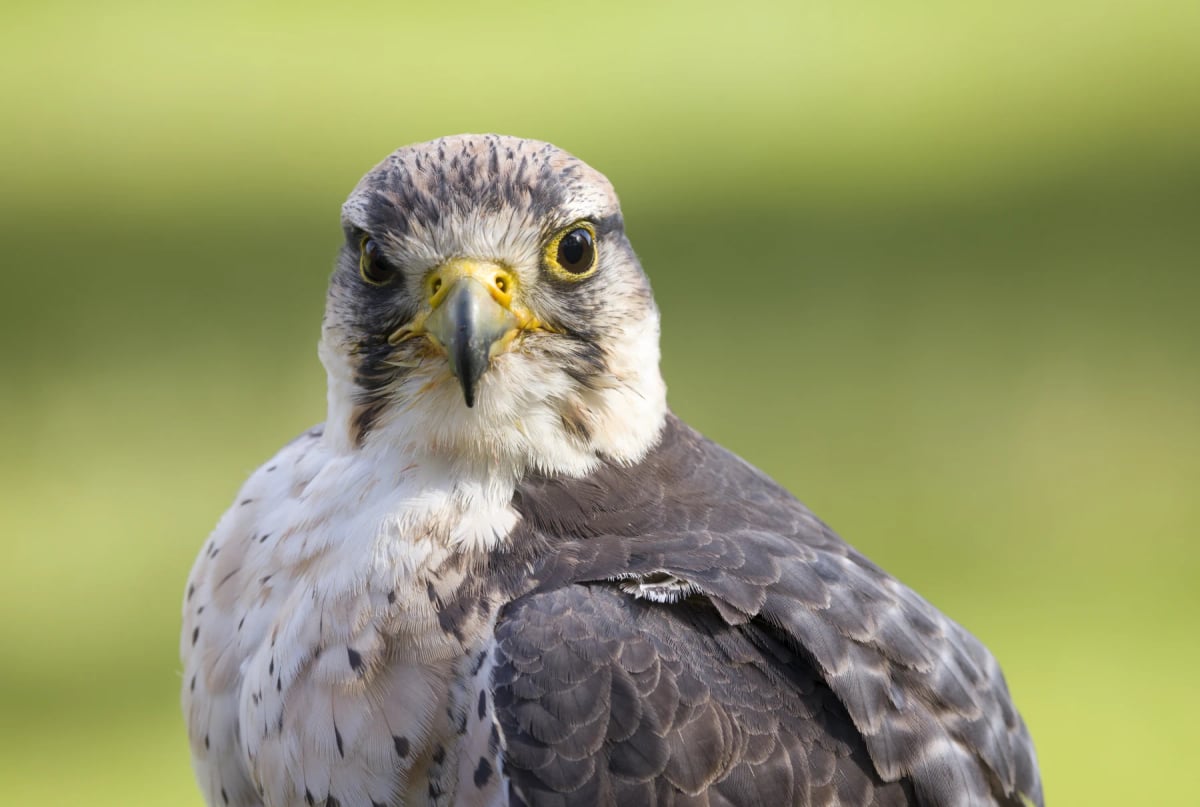
Lanner Falcon
Falco biarmicus
In Tanzania, the lanner falcon is found across open savanna and rocky habitats, including the Rift Valley escarpments and areas surrounding the great plains of the Serengeti. It is an opportunistic hunter that takes birds flushed from grassland and shrub. Pairs nest on cliff ledges and are territorial throughout the year. The species is not considered threatened nationally. The IUCN lists the lanner falcon as Least Concern.
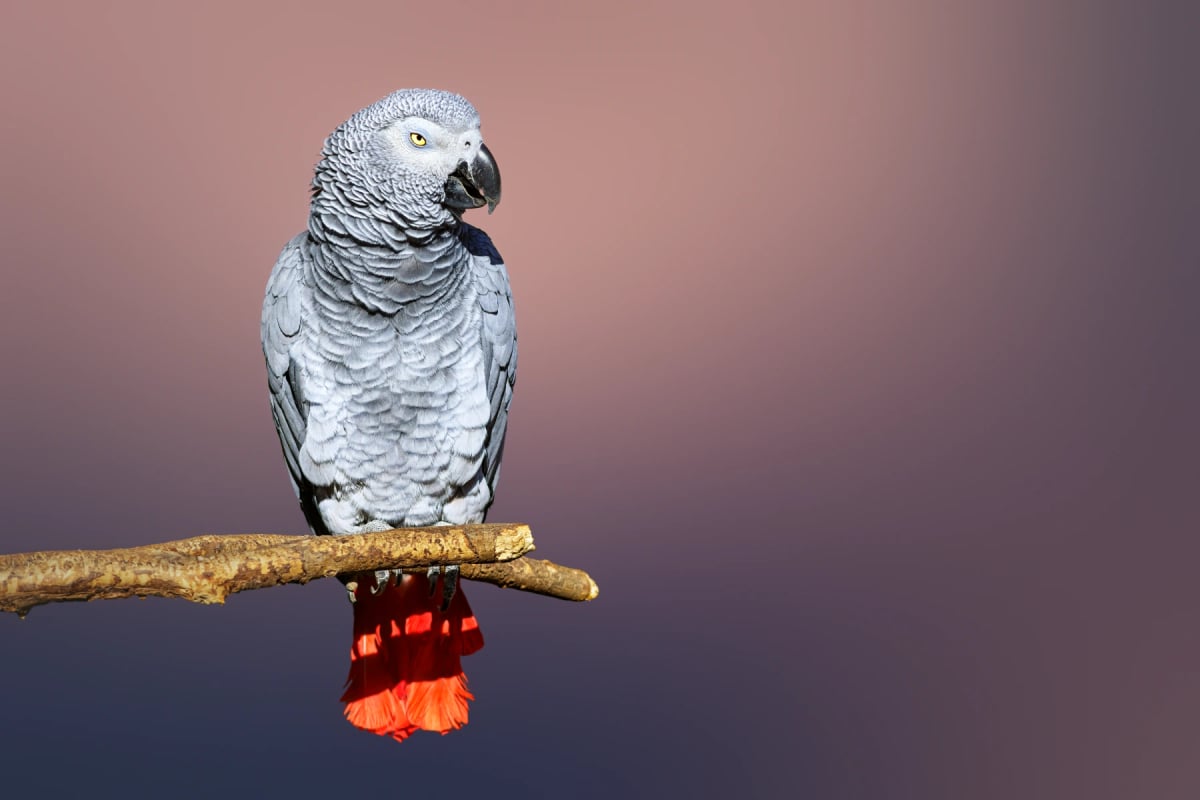
African Grey Parrot
Psittacus erithacus
Tanzania lies at the eastern edge of the African grey parrot's range. The species is found only in the far northwest, in forests near Lake Victoria and the borders with Uganda, Rwanda and Burundi, such as the Minziro forest, which are outliers of the great Congo Basin rainforest. The population is small and vulnerable to forest clearance and trapping, making Tanzania one of the most marginal countries for the species. The IUCN lists it as Endangered.
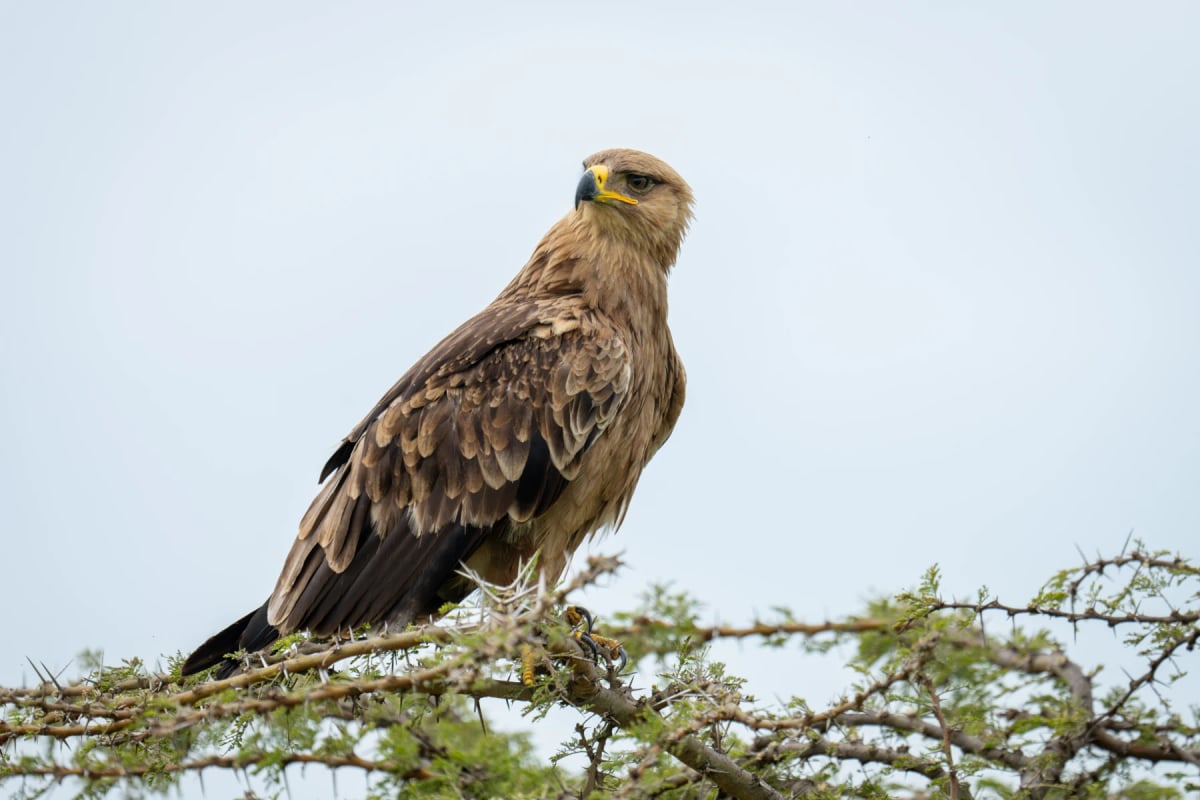
Tawny Eagle
Aquila rapax
Tanzania's iconic national parks, including the Serengeti and Ruaha, provide strongholds for the tawny eagle. It soars over open grasslands and dry woodlands, making the most of abundant carrion left behind by large predators. Despite the protection these parks offer, eagles living outside reserve boundaries face threats from poisoning and collisions with power lines. The IUCN lists it as Vulnerable.
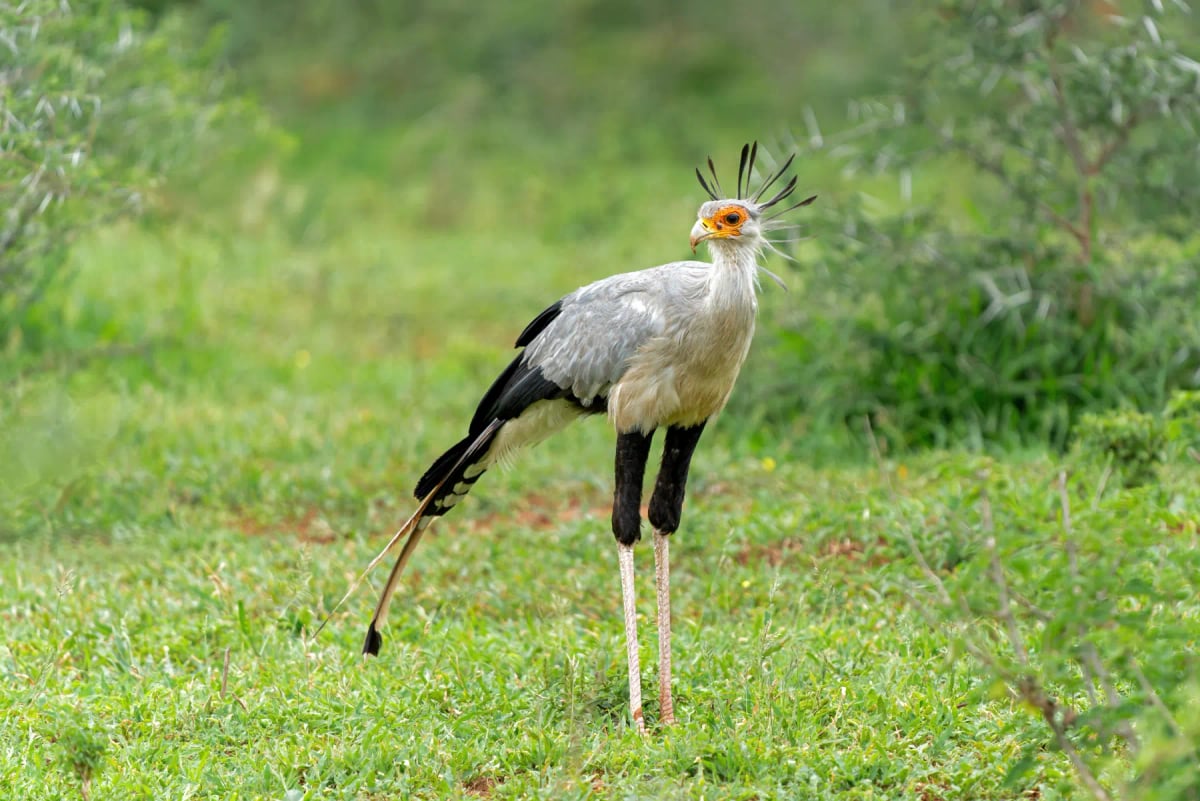
Secretary Bird
Sagittarius serpentarius
In Tanzania, the secretary bird is most commonly seen across the Serengeti plains and other open savannas in the north and east of the country. It strides through the grass hunting snakes, lizards, and rodents, often alongside large grazing herds. Tanzania's expansive protected areas offer some of the best remaining habitat for this Endangered species, though grasslands outside reserves continue to face pressure from farming and livestock grazing.
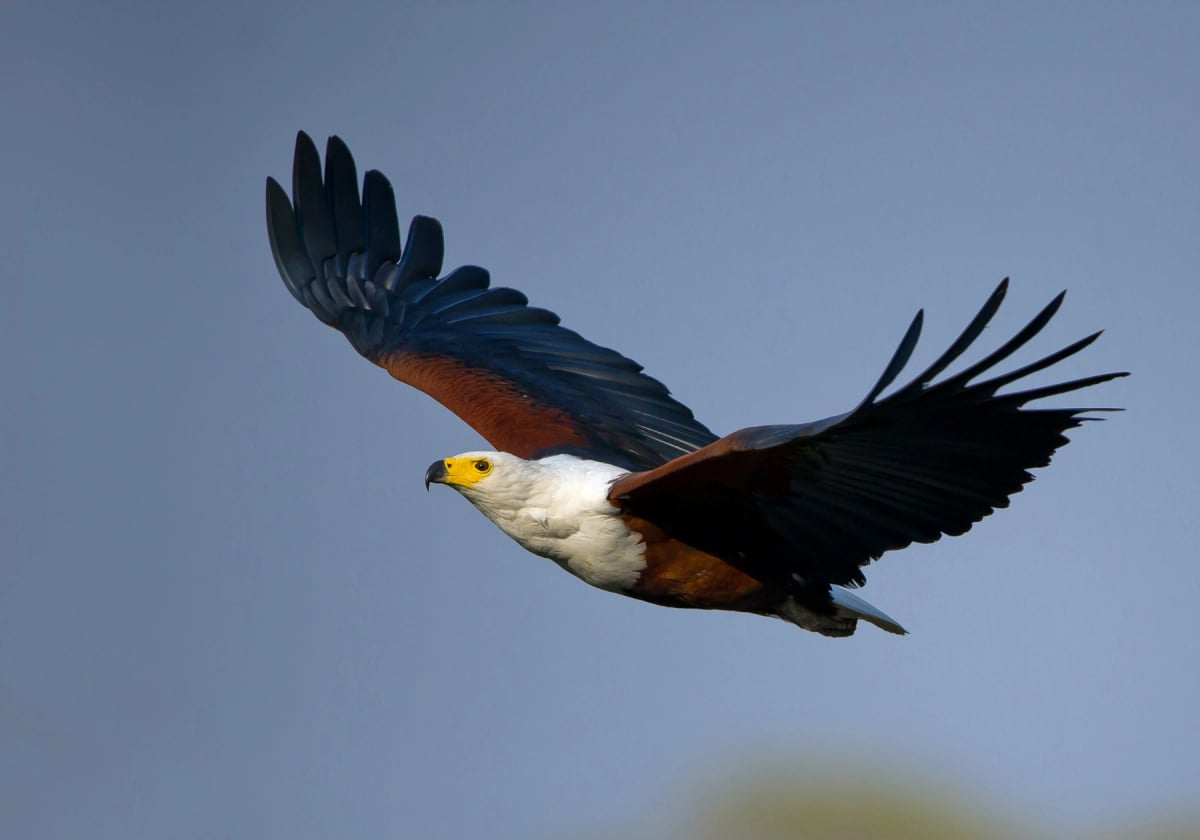
African Fish Eagle
Haliaeetus vocifer
Tanzania is one of the best countries in Africa to encounter the African fish eagle. The Rift Valley lakes, including Tanganyika, Rukwa and Manyara, as well as Lake Victoria along the northwestern border, support strong populations. The Rufiji River and the wetlands of the Selous Game Reserve in the south are also key areas. The bird is a common sight and sound across Tanzanian waterways, from the shores of the great lakes to the river systems of the interior.
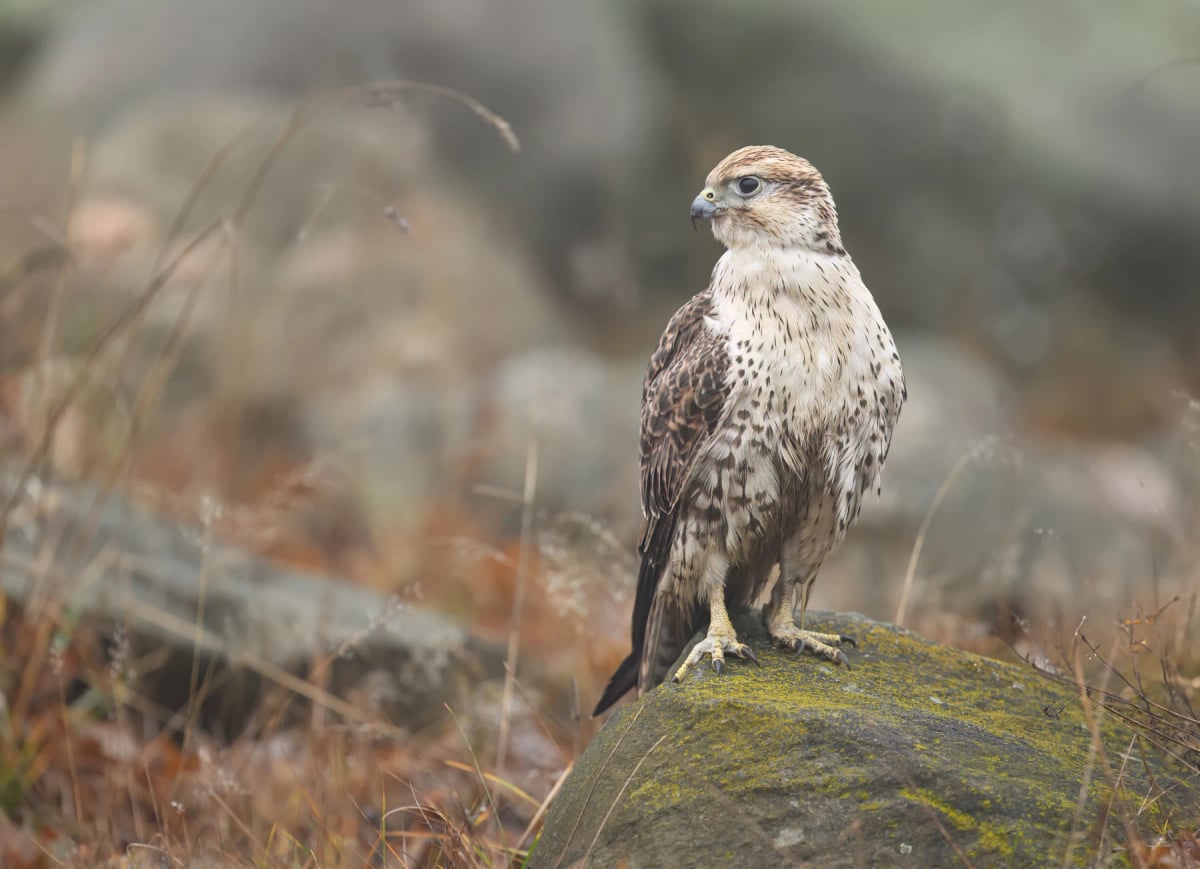
Saker Falcon
Falco cherrug
Tanzania marks the southernmost reach of the saker falcon's regular winter range. Small numbers of birds from breeding grounds in Eastern Europe and western Asia spend the northern winter in the open plains and dry savannas of the north of the country, far from the steppes where they nest. It is an uncommon sight here and does not breed in Tanzania. The IUCN lists the saker falcon as Endangered.
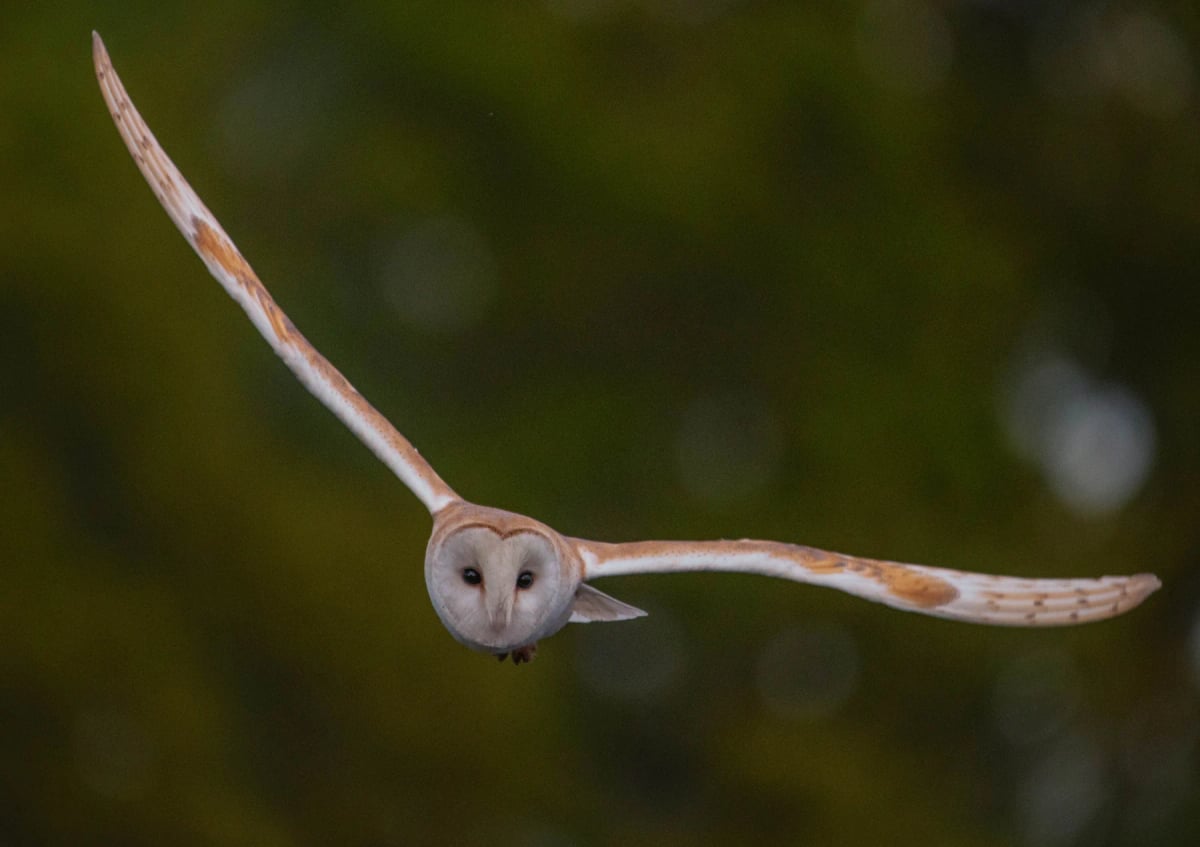
Barn Owl
Tyto alba
The barn owl is found across Tanzania in open savanna, farmland, and areas near villages and towns from the coastal lowlands and the Rift Valley to the highland plateaus of the south. It nests in old buildings, cliff faces, and hollow trees, and hunts rodents at night with exceptional precision. In farming communities across the country it plays a useful role in controlling small mammal populations that damage stored maize and other crops. It is present across a wide range of habitats and altitudes and is one of the more commonly encountered owls in Tanzania's open landscapes.
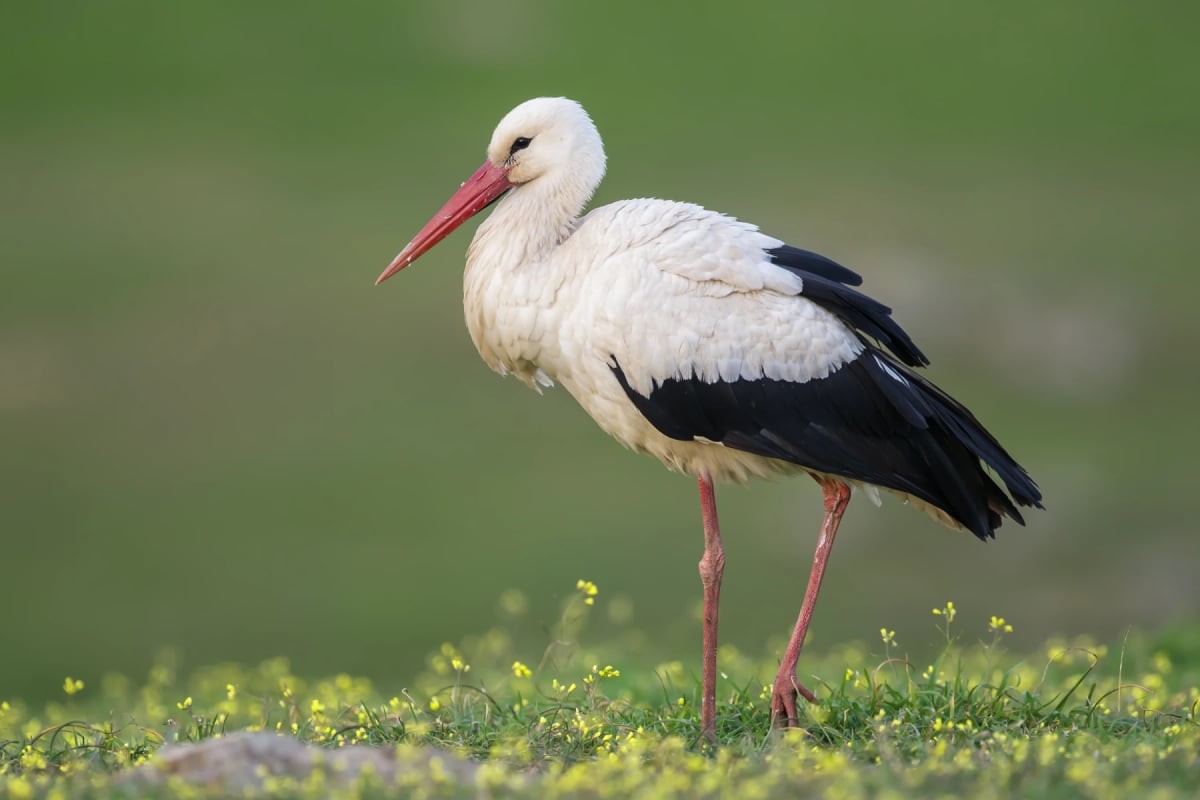
Stork
Ciconia ciconia
Tanzania is an important wintering ground for white storks, with large flocks arriving from Europe between October and April. Birds spread across the open savannas and short grasslands of the interior, including the areas around the Rift Valley. The Serengeti ecosystem and surrounding plains attract storks that feed alongside other wildlife. Tanzania sits along the eastern migration flyway used by storks that cross through the Middle East and the Horn of Africa.
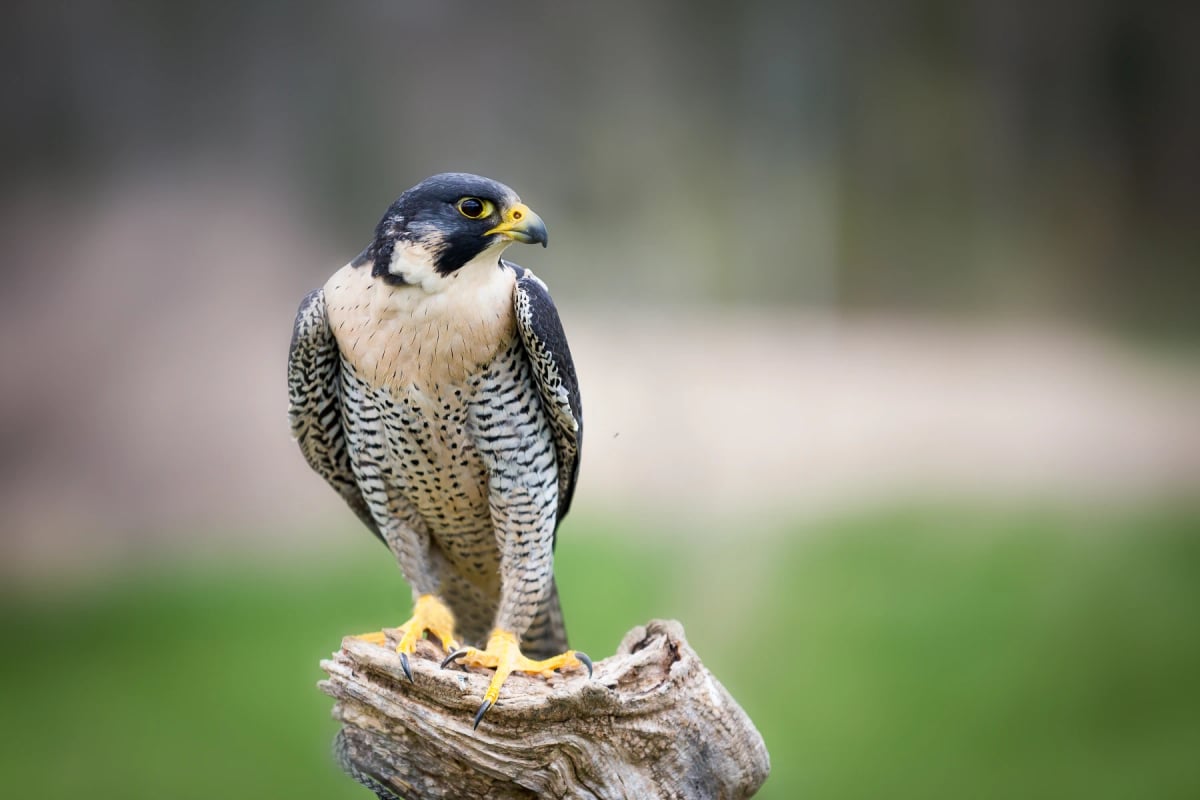
Peregrine Falcon
Falco peregrinus
The peregrine falcon is found in Tanzania as both a resident and a visitor during the northern winter, when migrants arrive from Eurasia. It favors open landscapes, rocky outcrops, and the escarpments of the Rift Valley, where it hunts a wide variety of birds. The Serengeti plains and highland areas also record sightings. The IUCN lists the species as Least Concern.
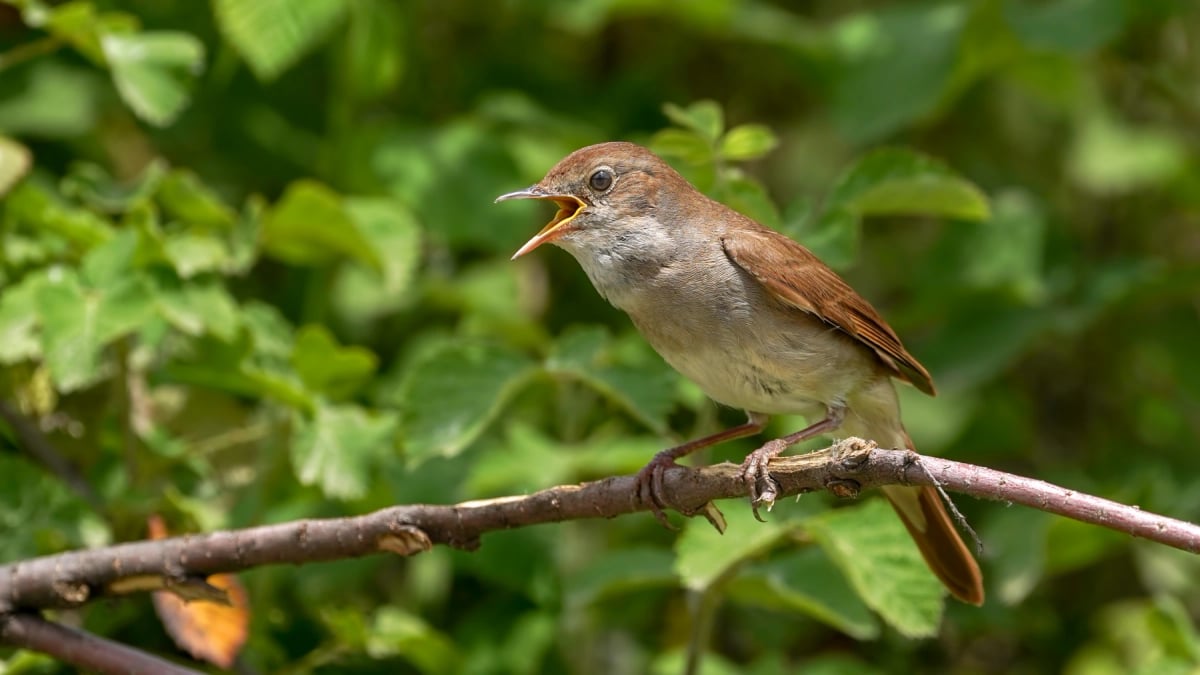
Nightingale
Luscinia megarhynchos
Tanzania serves as an important wintering area for the nightingale, which arrives from Europe and western Asia after a long journey across the Sahara and the tropics. It favours dense scrub, woodland edges, and thickets in both coastal and inland areas. Here it stays largely silent and keeps to cover, making it harder to spot than its summer reputation might suggest. Its IUCN status is Least Concern.
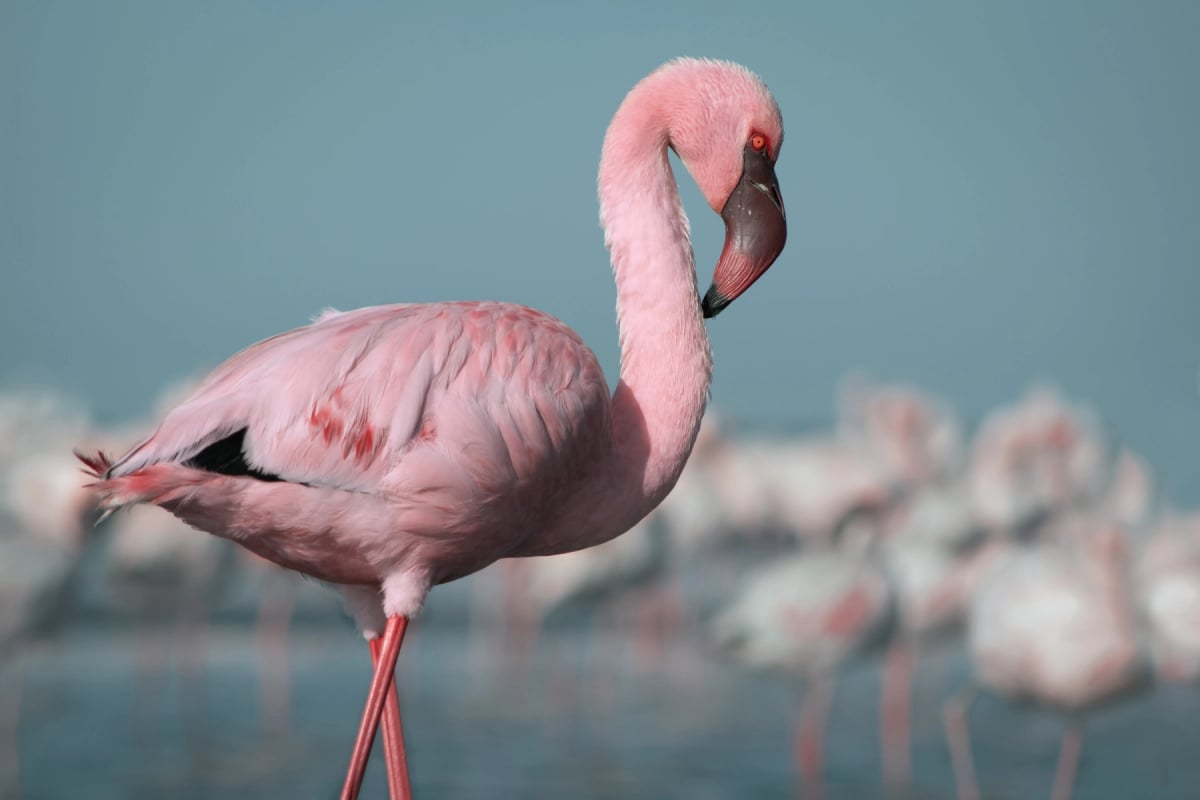
Flamingo
Phoenicopteridae (6 species)
Tanzania's Lake Natron, in the northern part of the country, is the most important breeding site for lesser flamingos in the world. Its extremely high pH and scorching temperatures make it inhospitable to most animals, but ideal for flamingos nesting on isolated mud islands. Nearly three quarters of the world's lesser flamingo population hatches here. The lesser flamingo is listed as Near Threatened by the IUCN, and protecting Lake Natron remains a conservation priority.
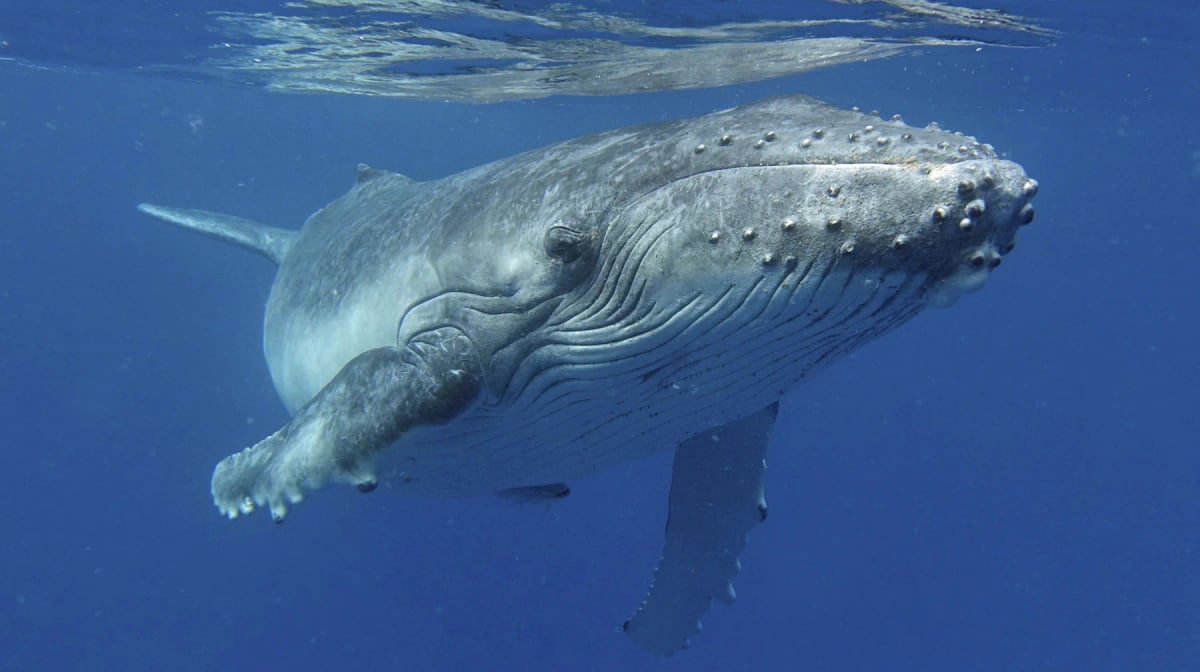
Humpback Whale
Megaptera novaeangliae
Humpback whales migrate through the waters off Tanzania along the East African coast, moving between their Antarctic feeding grounds and warmer breeding areas in the Indian Ocean. They are occasionally spotted near Zanzibar and along the Tanzanian coastline between July and October. Reaching up to 16 metres in length, these whales are impressive visitors to the region. Their recovery from commercial whaling has been a global conservation success. The IUCN lists them as Least Concern.
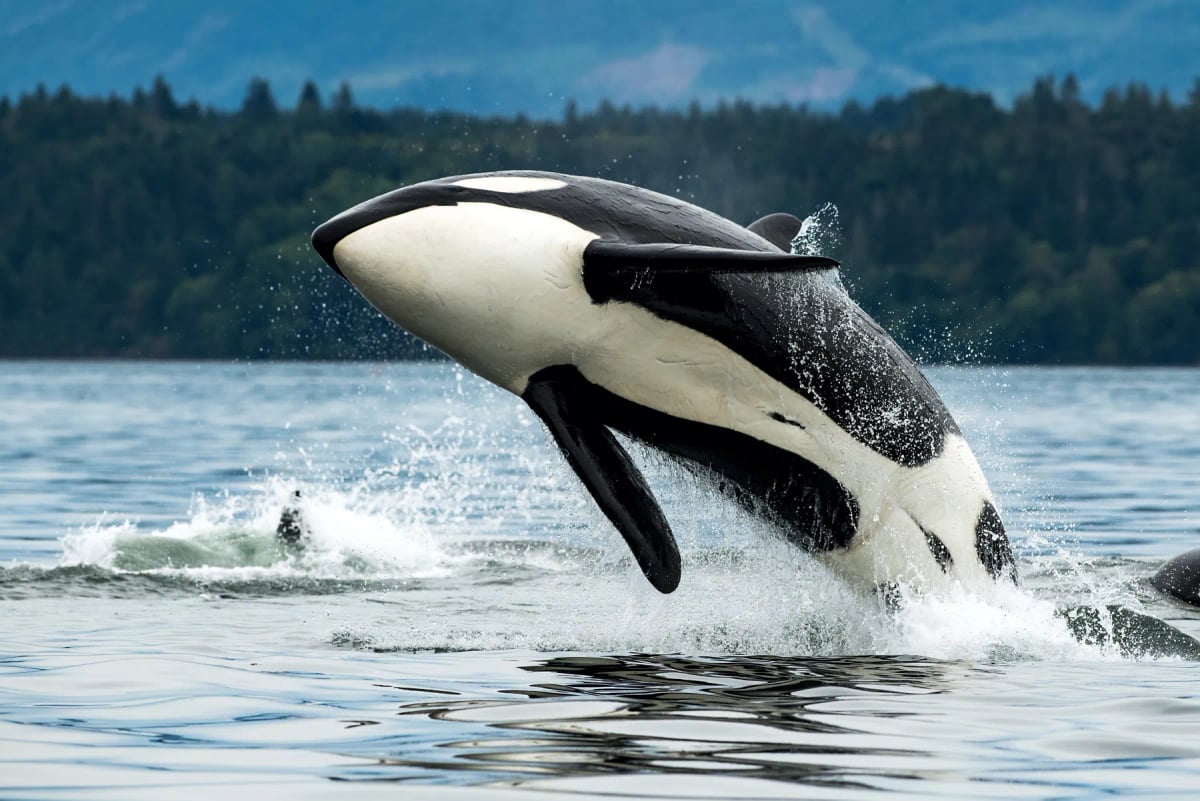
Orca
Orcinus orca
Tanzania's Indian Ocean coastline and the waters around Zanzibar fall within the known range of orcas in the western Indian Ocean. Verified sightings in this region are limited but the species is considered part of the broader Indian Ocean population. The surrounding seas are rich in biodiversity, supporting potential prey species. Marine conservation efforts in Tanzania focus largely on coral reefs and sea turtles, with cetacean research still in early stages.
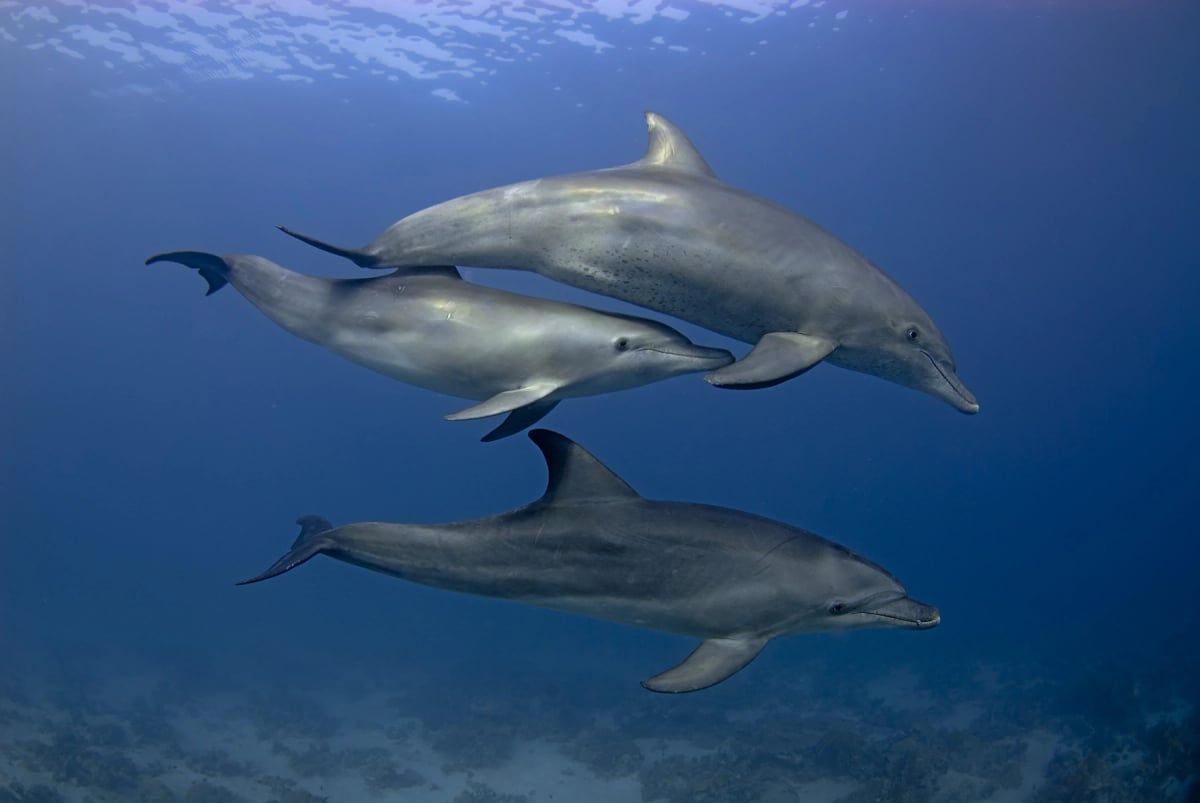
Bottlenose Dolphin
Tursiops truncatus
Along Tanzania's Indian Ocean coast and around the Zanzibar Archipelago, bottlenose dolphins are a familiar presence. They frequent the warm, shallow waters near coral reefs and seagrass beds, often traveling in pods of varying sizes. Dolphin watching near Kizimkazi on Zanzibar has become a notable ecotourism activity, though responsible management of boat interactions remains an ongoing conservation concern.
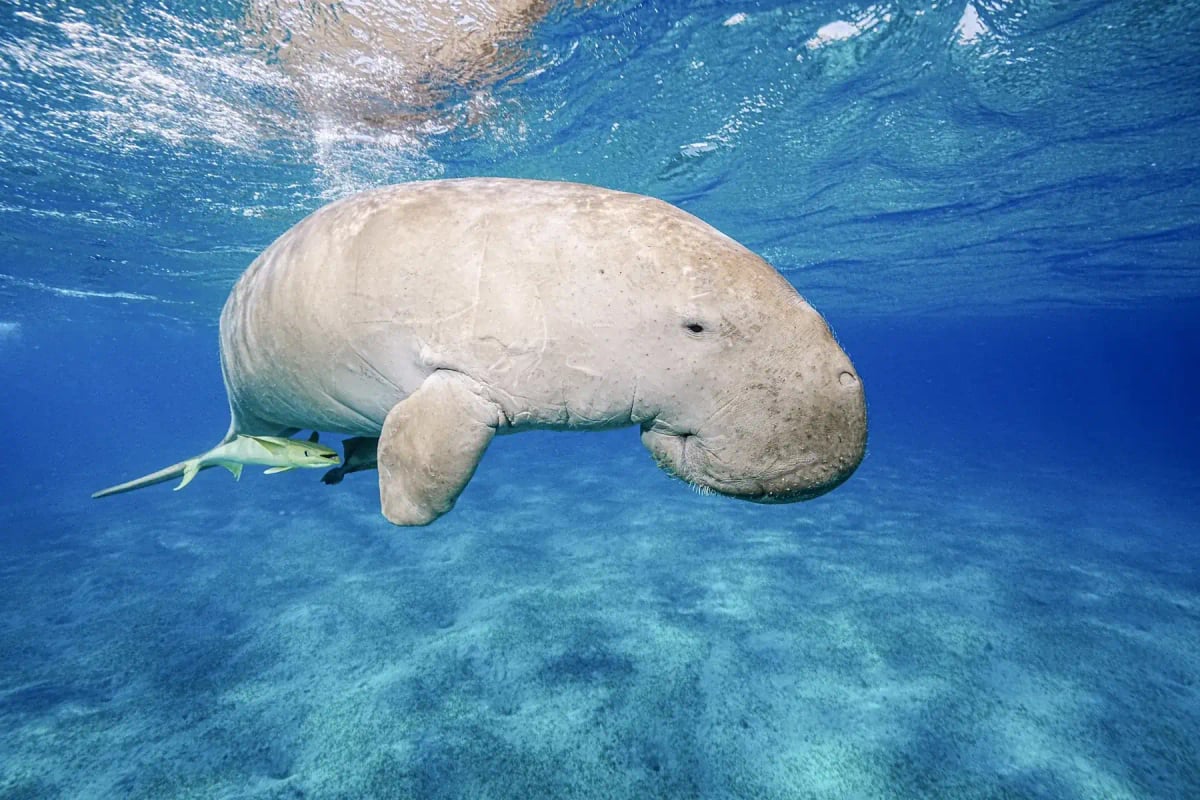
Dugong
Dugong dugon
Dugongs are found along Tanzania's Indian Ocean coastline, particularly around the Rufiji Delta and the waters near Mafia Island. They graze on the seagrass beds that grow in these shallow, sheltered bays. Populations here face pressure from accidental entanglement in fishing nets and the gradual loss of seagrass habitat. The dugong is listed as Vulnerable globally, and local numbers in Tanzania remain low.
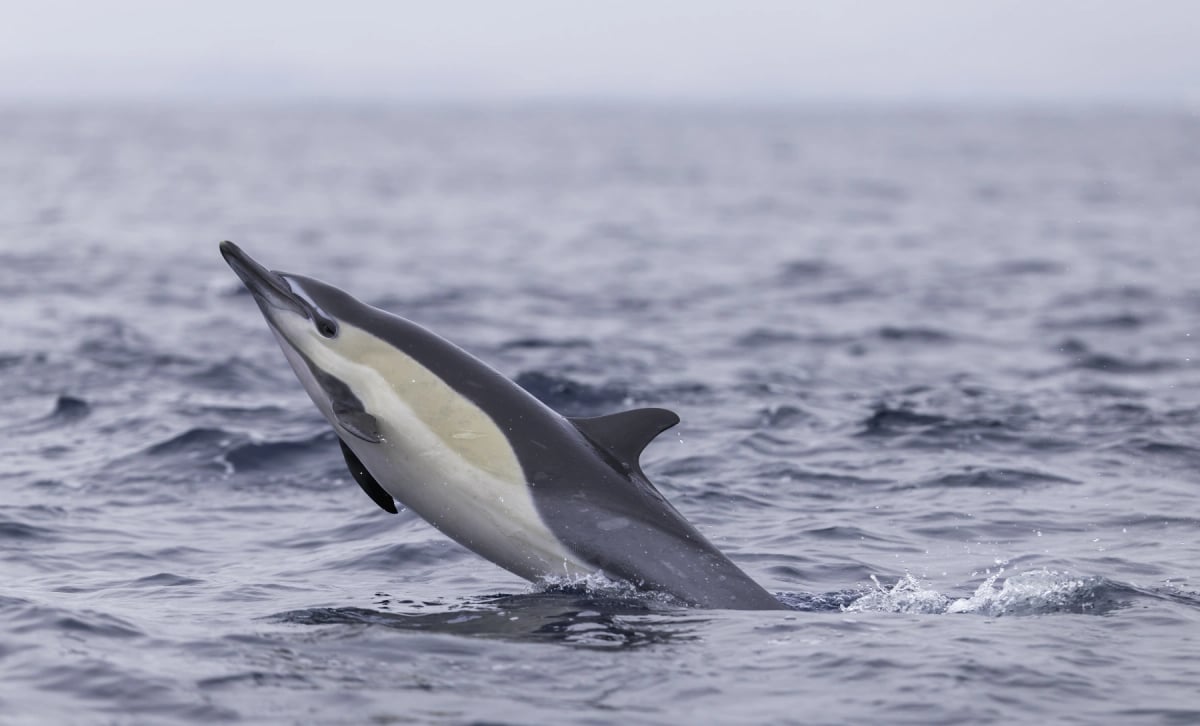
Common Dolphin
Delphinus delphis
Common dolphins are found in the Indian Ocean waters off Tanzania, including around Zanzibar and the Pemba Channel. This region supports productive marine ecosystems, and dolphins are sometimes spotted on boat trips from Stone Town and other coastal communities. They tend to gather in groups and are known for their lively behaviour at the surface. Their IUCN status is Least Concern.
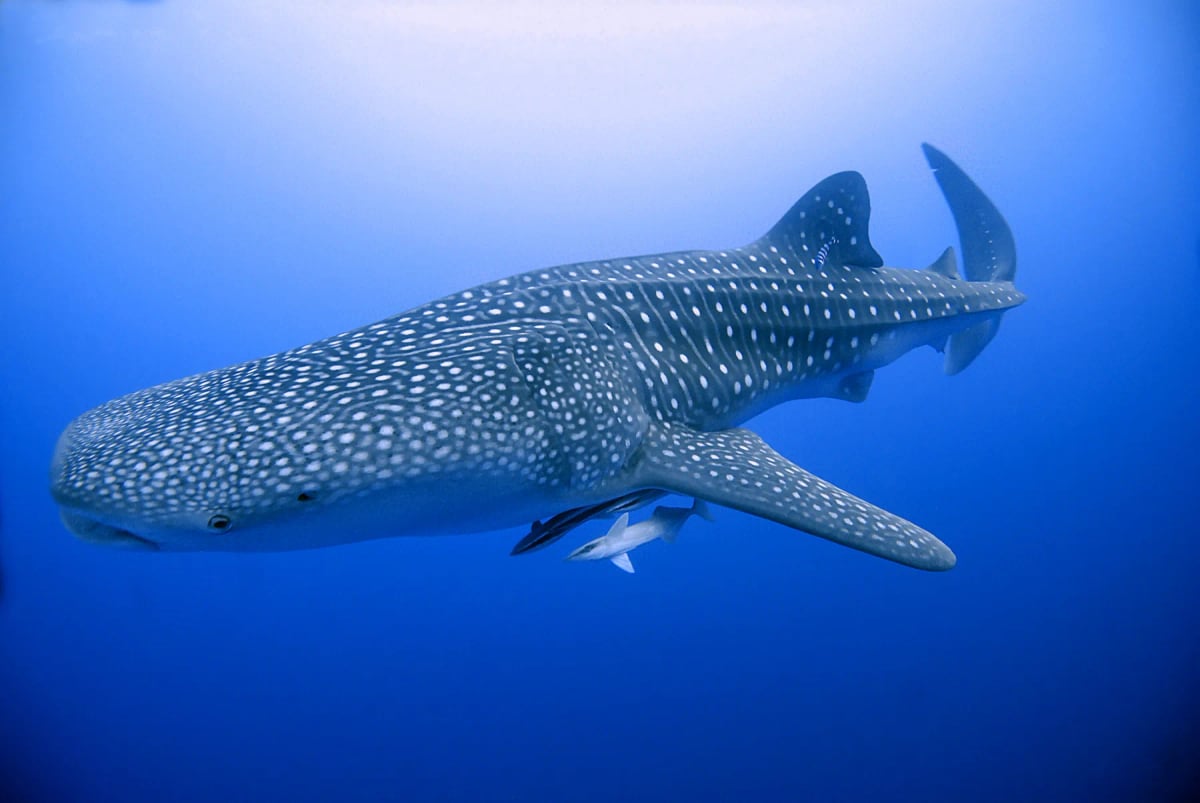
Whale Shark
Rhincodon typus
Tanzania's whale sharks gather mainly around Mafia Island Marine Park, where seasonal feeding aggregations, mostly of young males, peak between October and February each year. Local guides and researchers run regulated swimming tours that fund ongoing conservation work in the area. Mafia Island has become one of East Africa's most important known feeding grounds for the species, supporting both tourism and scientific monitoring of individual sharks over time.
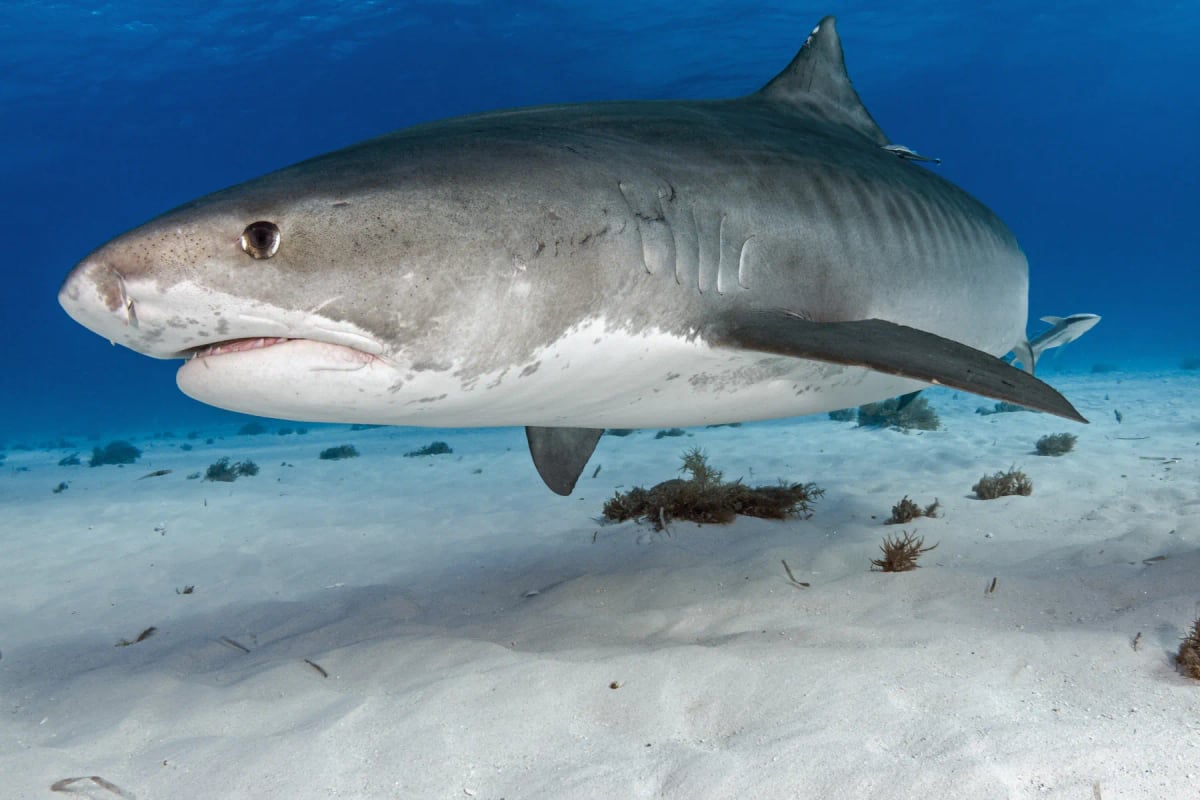
Tiger Shark
Galeocerdo cuvier
Along Tanzania's Indian Ocean coastline, including the waters around Zanzibar, tiger sharks are a natural part of the marine ecosystem. They hunt fish, sea turtles, and rays in coastal and offshore waters. Encounters with artisanal fishing boats are common, and sharks are sometimes caught in nets set for other species. Conservation awareness in the region is growing, though the species remains under pressure across the western Indian Ocean. Their IUCN status is Near Threatened.
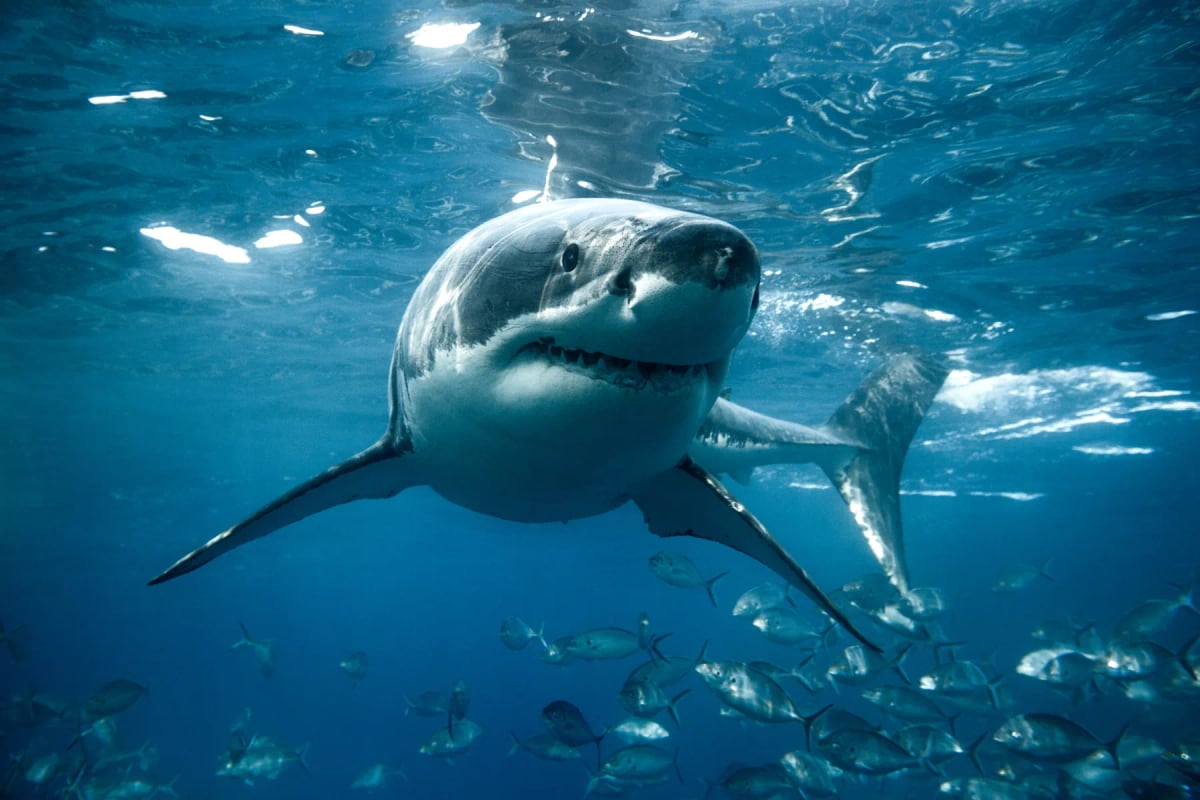
Great White Shark
Carcharodon carcharias
Tanzania's coastline along the Indian Ocean, including the waters near Zanzibar, falls within the range of the great white shark. The species is not commonly encountered here, but it moves through these tropical and subtropical waters during its wide oceanic migrations. Tanzania's marine ecosystems are rich in the prey species that sustain sharks, and protecting these habitats indirectly supports the survival of this Vulnerable species.
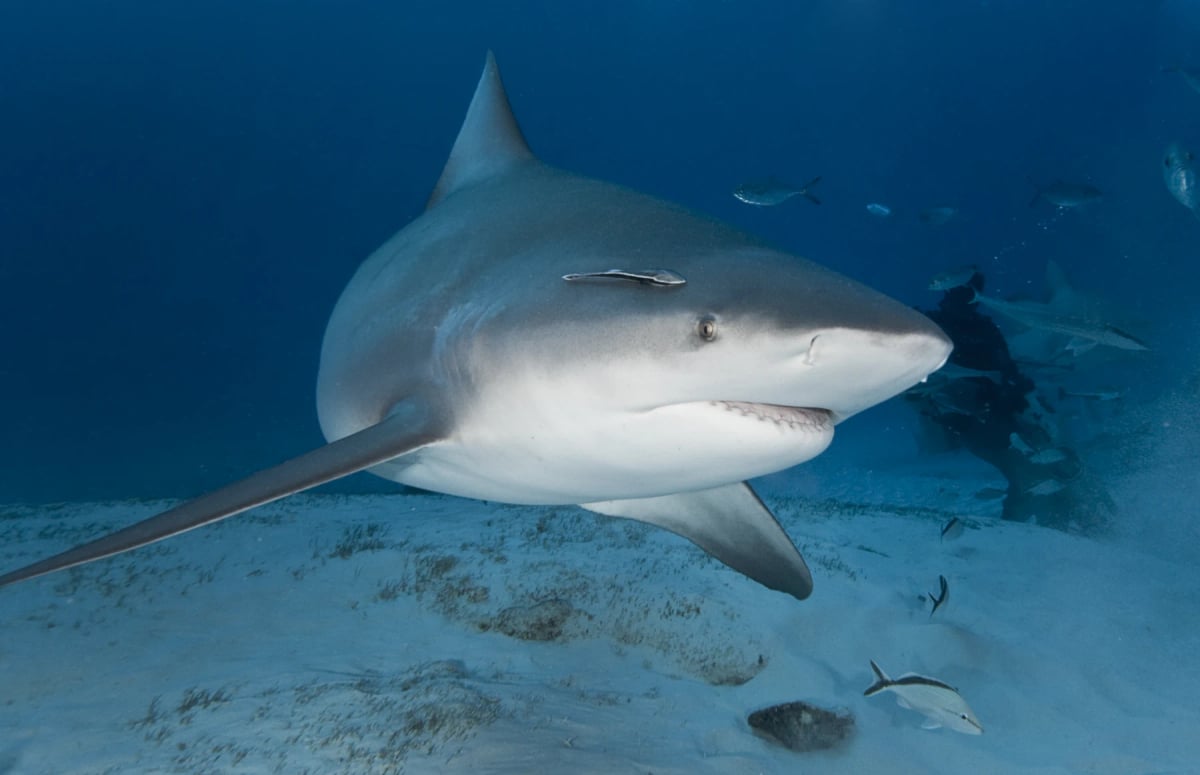
Bull Shark
Carcharhinus leucas
Bull sharks frequent Tanzania's coastal waters and estuaries, including the mangrove-lined channels around Dar es Salaam and the Rufiji River delta. Their ability to enter freshwater allows them to penetrate river systems inland. Rated Near Threatened by the IUCN, they face pressure from artisanal and commercial fishing across East African waters. Their presence in shallow, turbid inshore zones means encounters with local fishing communities are not uncommon.
Researched and written by Juan Pablo. Sources: IUCN Red List, scientific literature and regional field guides. Last updated: .