Rattlesnake
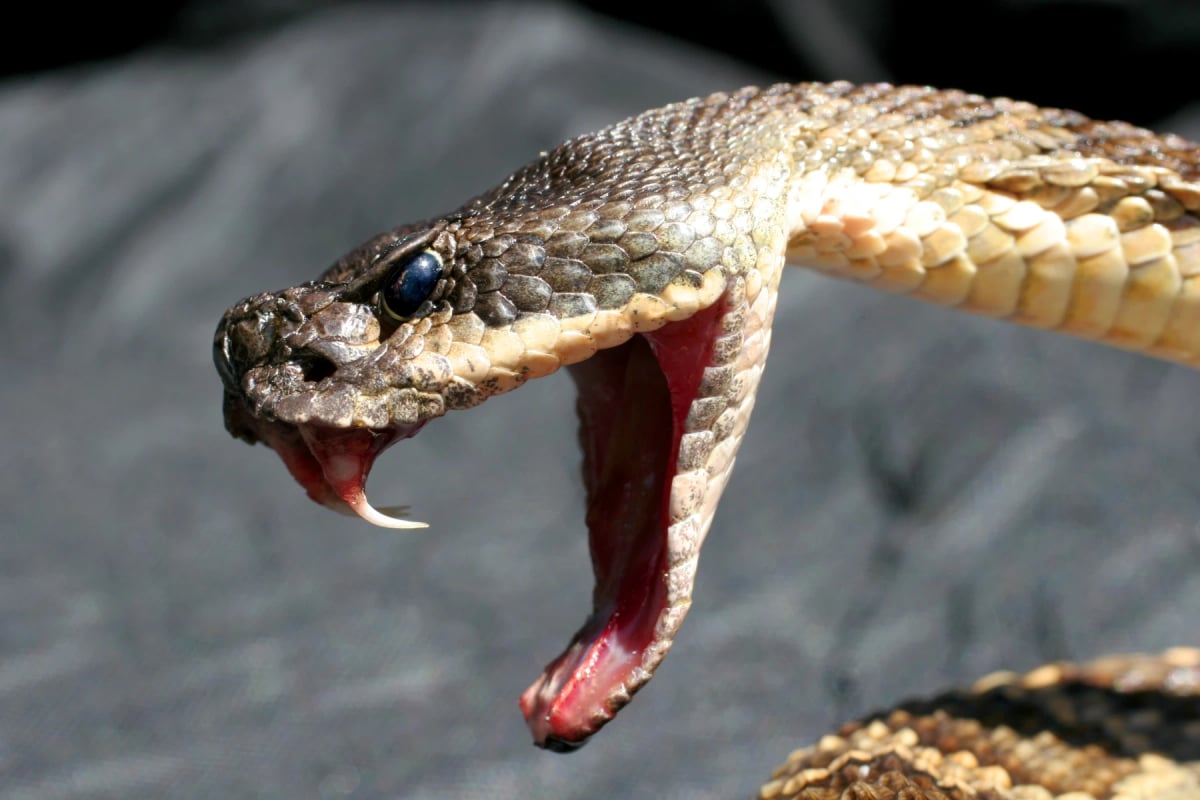
Rattlesnakes are venomous pit vipers belonging to the genera Crotalus and Sistrurus, found from southern Canada through the United States and Mexico into South America. Their most recognizable feature is the rattle at the tip of the tail, a series of interlocking keratin segments that produce a buzzing sound used to warn off potential threats. Adults typically range from 60 to 180 cm in length, though a few species reach beyond 2 meters. They are ambush predators, relying on heat-sensing facial pits to detect warm-blooded prey such as rodents, birds and small reptiles. Their venom is primarily hemotoxic, breaking down tissue and blood cells, though some South American species also carry neurotoxic components. Despite their fearsome reputation, rattlesnakes prefer retreat over confrontation and strike only when cornered or handled. Habitat loss, road mortality and deliberate killing remain the greatest threats to their populations.
Habitat and distribution
Rattlesnakes occupy one of the broadest ranges of any venomous snake group in the Americas, stretching from the dry grasslands of southern Canada all the way to Argentina and Brazil. The United States holds the greatest diversity of species, but populations are also well established throughout Mexico, Central America and several South American countries. Across this vast range they thrive in an impressive variety of environments, including deserts, scrublands, pine forests, coastal dunes, rocky hillsides and tropical dry forests. A few species are comfortable in agricultural land near human settlements. Elevation is no barrier either, as certain species have been recorded at altitudes above 3,500 meters in the Andes. Most prefer areas with good cover such as rock outcrops, fallen logs or dense brush where they can shelter from extreme temperatures and wait for prey.
Appearance
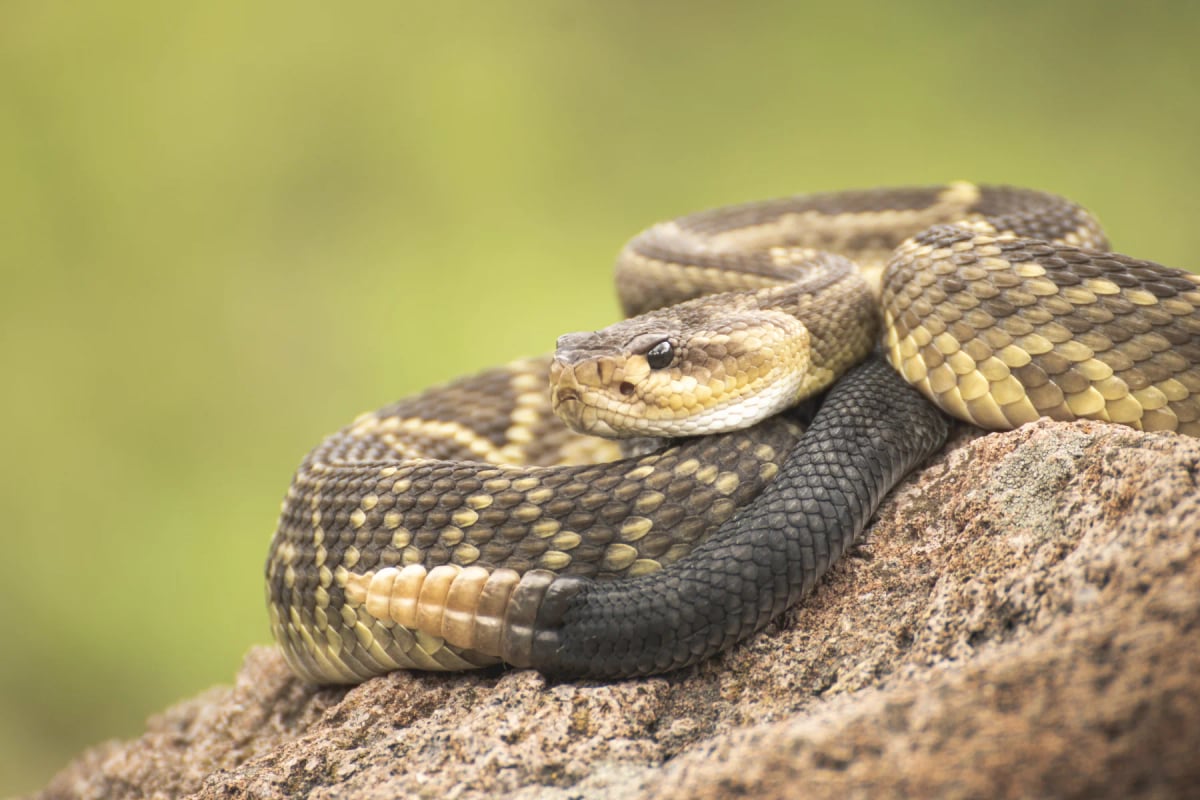
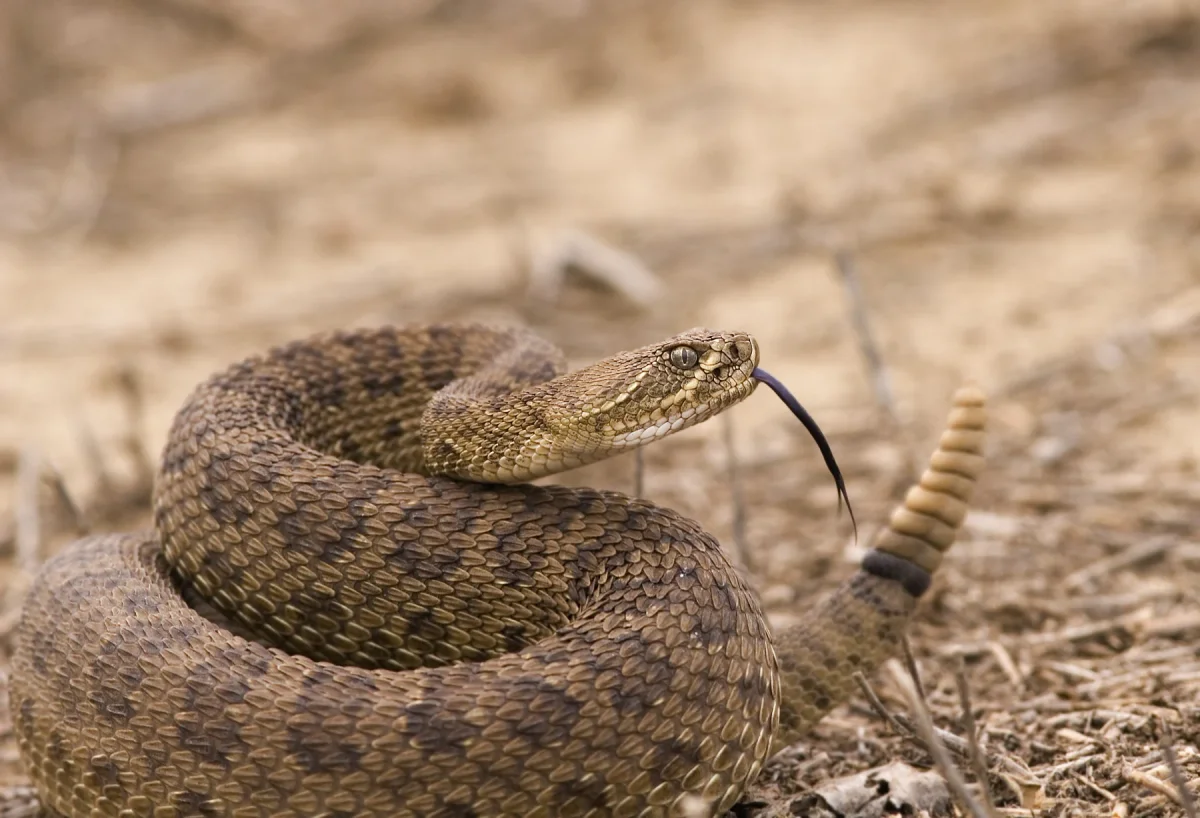
Few snakes are as immediately recognizable as a rattlesnake. The body is thick and muscular relative to length, with a broad, triangular head that houses large venom glands. Most species display earthy patterns of blotches, diamonds or crossbands in shades of brown, tan, grey and cream, colors that blend almost perfectly with leaf litter, sand and dry rock. This camouflage is so effective that a motionless rattlesnake can be nearly impossible to spot. Adults of most species measure between 60 and 150 cm, though the eastern diamondback, the largest rattlesnake in the world, can exceed 180 cm and weigh over 4.5 kg. The iconic rattle itself is a chain of hollow keratin segments. A new segment is added each time the snake sheds its skin, which can happen several times a year depending on how much the snake eats.
Diet
Patience is the rattlesnake's greatest hunting tool. Rather than chasing prey, they coil in a concealed spot and wait for an animal to pass within striking range. Rodents such as mice, rats and ground squirrels make up the bulk of the diet for most species, but birds, lizards, frogs and even other snakes are taken when the opportunity arises. Juvenile rattlesnakes tend to feed more heavily on lizards before shifting to mammals as they grow. Hunting relies heavily on the heat sensing pit organs located between each eye and nostril. These pits detect infrared radiation from warm bodies with remarkable precision, allowing the snake to strike accurately even in complete darkness. After delivering a venomous bite, the snake typically releases the prey and follows the scent trail once the venom has done its work.
Behavior
Contrary to their fierce reputation, rattlesnakes are generally reluctant to engage with large animals or people. Their first response to a perceived threat is almost always to stay still and rely on camouflage, or to move away quietly. The rattle is shaken as a warning only when the snake feels truly cornered, giving a potential threat the chance to back off before a strike becomes necessary. In hot desert climates many species shift to a pattern of activity at night or in the cooler hours of early morning, resting in shade or underground burrows during the heat of the day. In colder regions they hibernate communally in rocky dens, sometimes gathering in large numbers. Mating typically occurs in spring or autumn, and females of most species give birth to live young rather than laying eggs, with litters commonly ranging from 4 to 25 offspring.
Conservation
As a group, rattlesnakes are listed as Least Concern on the IUCN Red List, but that broad status masks serious pressure on individual species and local populations. Roads are a significant cause of death, as snakes crossing open pavement are both highly visible and slow to move out of the path of vehicles. Habitat loss driven by agriculture and urban expansion removes the prey base and shelter that rattlesnakes depend on. Deliberate killing remains widespread, fueled by fear and longstanding cultural attitudes. Some species face additional pressure from collection for the exotic pet trade or for rattlesnake roundup events still held in parts of the United States. A handful of species, including the Santa Catalina Island rattlesnake and the Aruba Island rattlesnake, are considered Critically Endangered due to their extremely small and restricted populations.
Where it is found
The Rattlesnake can be found in places such as:
Researched and written by Juan Pablo. Sources: IUCN Red List, scientific literature and regional field guides. Last updated: .
Technical factsheet

Frequently Asked Questions
Are rattlesnakes dangerous to humans?
Rattlesnakes are venomous and a bite can be serious, but they rarely attack people without reason. Their instinct is to retreat or stay still when a person approaches. Most bites happen when someone accidentally steps on one or tries to handle it. With prompt medical treatment, fatalities are uncommon. The rattle itself is a warning system, giving you a clear signal to back away before the snake ever strikes.
What do rattlesnakes eat?
Rattlesnakes feed mainly on small mammals such as mice, rats and ground squirrels. They also eat birds, lizards and frogs when the chance comes up. Young rattlesnakes tend to prefer lizards and switch to mammals as they get bigger. They hunt by waiting in a hidden spot and using special heat sensing pits on their face to detect warm prey, even in total darkness, then strike and follow the scent trail.
Where do rattlesnakes live?
Rattlesnakes are found across a huge stretch of the Americas, from southern Canada all the way to Argentina. They adapt to a wide range of environments including deserts, grasslands, pine forests, rocky hillsides and even some farmland near human settlements. The United States has the greatest number of species. Some live at elevations above 3,500 meters in the Andes. They generally look for spots with good cover like rocks, logs or dense brush.
What is the rattle on a rattlesnake made of?
The rattle is made of keratin, the same protein that forms human fingernails and hair. It consists of a series of hollow, interlocking segments that click together when the snake shakes its tail. A new segment is added each time the snake sheds its skin, which can happen several times a year. Contrary to popular belief, you cannot reliably tell a rattlesnake's age by counting the segments, since older ones often break off.
How do rattlesnakes survive winter?
In colder regions, rattlesnakes hibernate through winter in rocky dens, sometimes sharing them with large numbers of other snakes. These communal dens provide protection from freezing temperatures. The snakes enter a state of very low activity, slowing their metabolism to conserve energy until warmer temperatures return in spring. In warmer climates where temperatures stay mild, rattlesnakes may remain active year round, though they adjust their daily schedule to avoid extreme heat.
Are rattlesnakes at risk of extinction?
As a group, rattlesnakes are listed as Least Concern, but some individual species are in serious trouble. Road deaths, habitat loss from farming and urban growth, and deliberate killing driven by fear all put pressure on populations. A few species, such as the Aruba Island rattlesnake, are Critically Endangered because they survive in very small, restricted areas. Some parts of the United States still hold rattlesnake roundup events that remove large numbers from the wild.
How does a rattlesnake's venom work?
Most rattlesnake venom works by breaking down blood cells and body tissue, which is called a hemotoxic effect. This stops the prey from moving and begins the digestion process before the snake even swallows it. Some South American species also carry neurotoxic components that affect the nervous system. In humans, a bite can cause swelling, tissue damage and serious complications if not treated quickly. Antivenom is the standard treatment and is widely available across North America.