Animals in Mexico
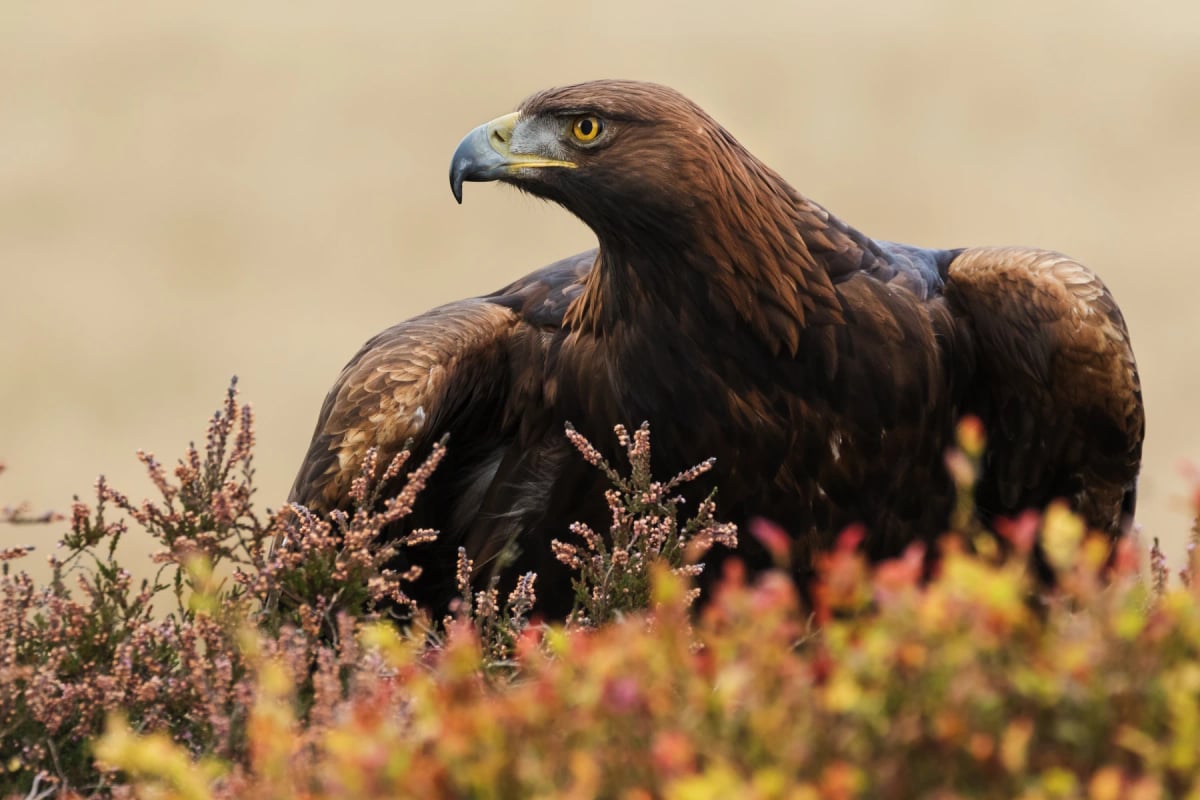
Golden Eagle
Aquila chrysaetos
The golden eagle is the national bird of Mexico and appears on the flag, perched on a cactus with a snake in its talons, the scene the Mexica saw when they founded Tenochtitlan. It is one of the largest birds of prey in the world, with a wingspan of more than two meters, and it hunts hares and other medium sized animals, diving at high speed. It nests on cliffs in the mountains and deserts of the north and center. Golden eagles live in many parts of the world, but only a few hundred pairs are left in Mexico, so the species is protected.
View details→Wildlife in Mexico
Mexico is one of the most biodiverse countries in the world, because it sits where North and South America meet. The north is desert and dry shrubland, home to coyotes, bobcats, gray foxes, pronghorns, rattlesnakes and the last wild gray wolves. The center has high plateaus and volcanoes, with white tailed deer, golden eagles and, in the canals of Xochimilco, the axolotl, a salamander that never grows up and lives nowhere else. The south is tropical forest, where jaguars, ocelots, margays, jaguarundis, tapirs, spider monkeys, scarlet macaws and the resplendent quetzal live. Raccoons, opossums, armadillos and black bears turn up almost everywhere. Both coasts are just as rich: whale sharks gather off Isla Mujeres, blue whales and sea lions feed in the Gulf of California, sea turtles nest by the thousand, and flamingos crowd the lagoons of Yucatán.
Most Dangerous Animals in Mexico
Mexico has wild animals that can be dangerous in certain situations, but serious incidents are rare. Venomous snakes are the main risk: rattlesnakes live in the deserts and dry hills of the north and center, and lanceheads, called nauyaca, live in the tropical forests of the south and cause most snakebites. Scorpions are common in many states and their stings send thousands of people to hospital every year, although antivenom is widely available. Jaguars, cougars and black bears live in the mountains and forests, but they avoid people and attacks are extremely rare. Caimans rest in coastal lagoons and mangroves, where swimming is not a good idea. In the sea, bull sharks, tiger sharks and great white sharks live off both coasts, but incidents with swimmers are very uncommon. Shaking out boots and watching where you step handle most of the risk.
Top 10 Animals in Mexico
The top animals of Mexico cover its deserts, jungles, mountains and two oceans. The jaguar is the largest cat in the Americas: about 4,800 live in Mexico, most of them in the forests of the Yucatán peninsula and Chiapas. Spider monkeys swing through the same canopy, alongside scarlet macaws and the resplendent quetzal, the sacred bird of the Maya and the Aztecs. In the north, coyotes, bobcats, gray foxes and pronghorns cross the desert, and the golden eagle, the national bird, nests on the cliffs. The axolotl survives in the canals of Xochimilco, in Mexico City, and almost nowhere else. At sea, whale sharks, the largest fish in the world, gather off Isla Mujeres in summer, sea turtles nest on both coasts, and blue whales, sperm whales, orcas and sea lions feed in the Gulf of California.
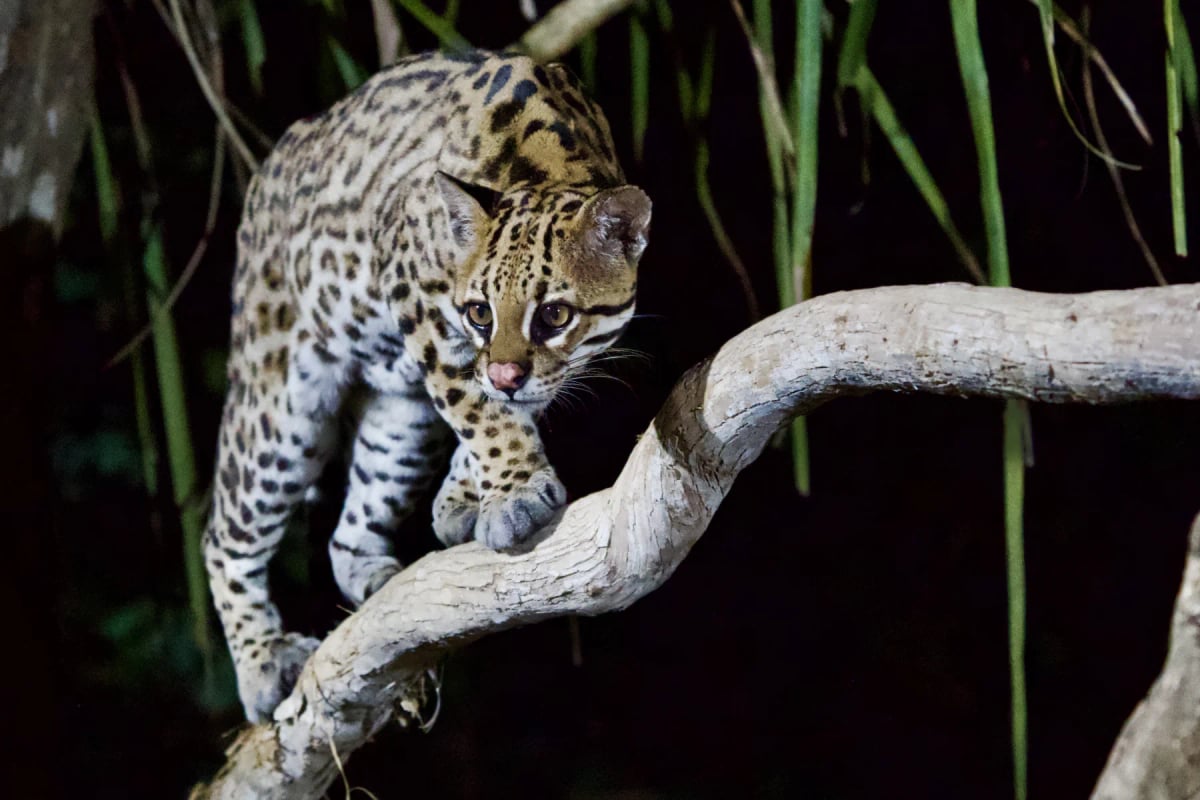
Ocelot
Leopardus pardalis
Mexico holds ocelot populations in several regions, from the thorny scrublands of Tamaulipas to the tropical forests of the Yucatán Peninsula and Chiapas. The northern population, shared with Texas, is critically small and considered one of the most endangered cat populations in North America. Deforestation, road collisions, and illegal hunting remain serious threats. Protected areas such as the Calakmul Biosphere Reserve offer vital strongholds for the species.
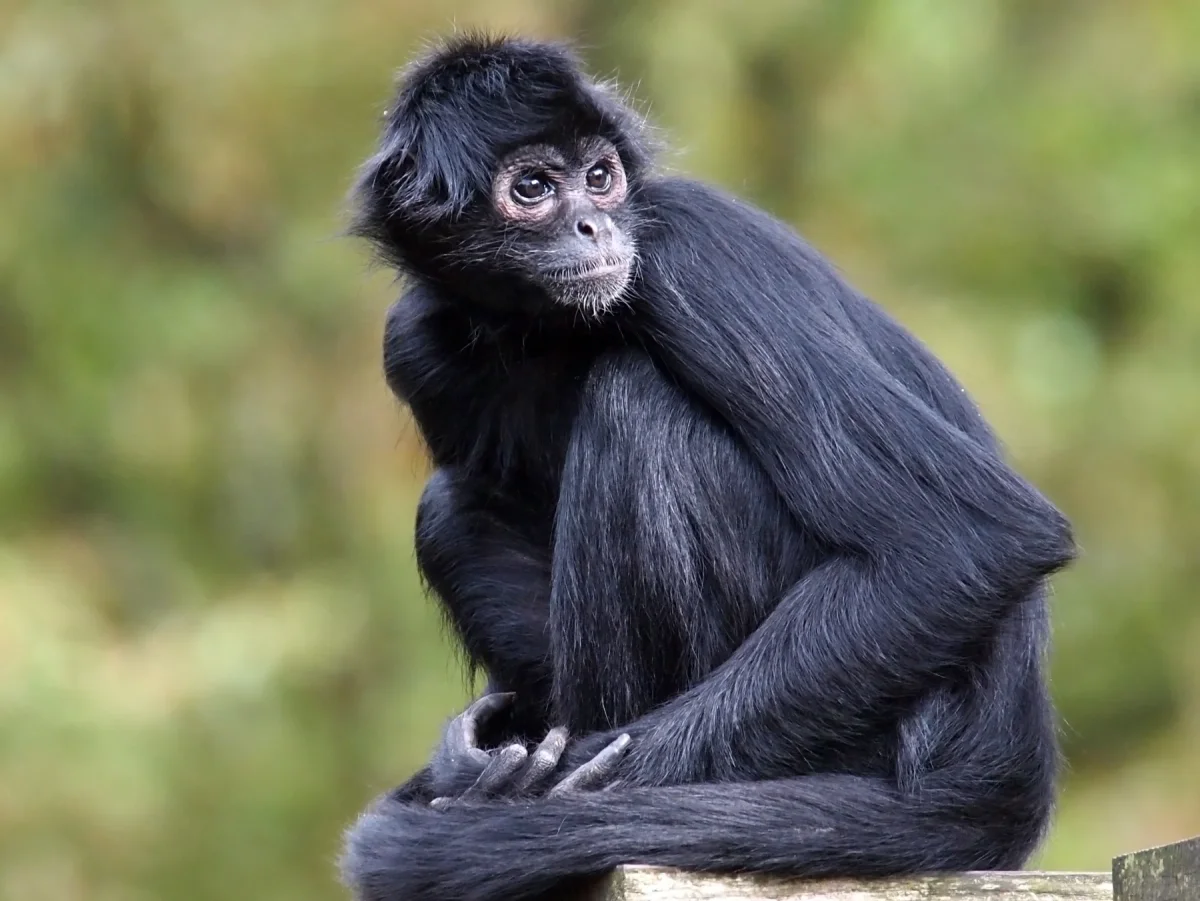
Spider Monkey
Ateles spp.
In Mexico, spider monkeys live primarily in the tropical forests of the Yucatán Peninsula and the southern states of Chiapas and Tabasco. They swing through the canopy using their long limbs and prehensile tail, feeding mainly on fruit. Deforestation and hunting have severely reduced their numbers, and the black-handed spider monkey found here is listed as Endangered by the IUCN.
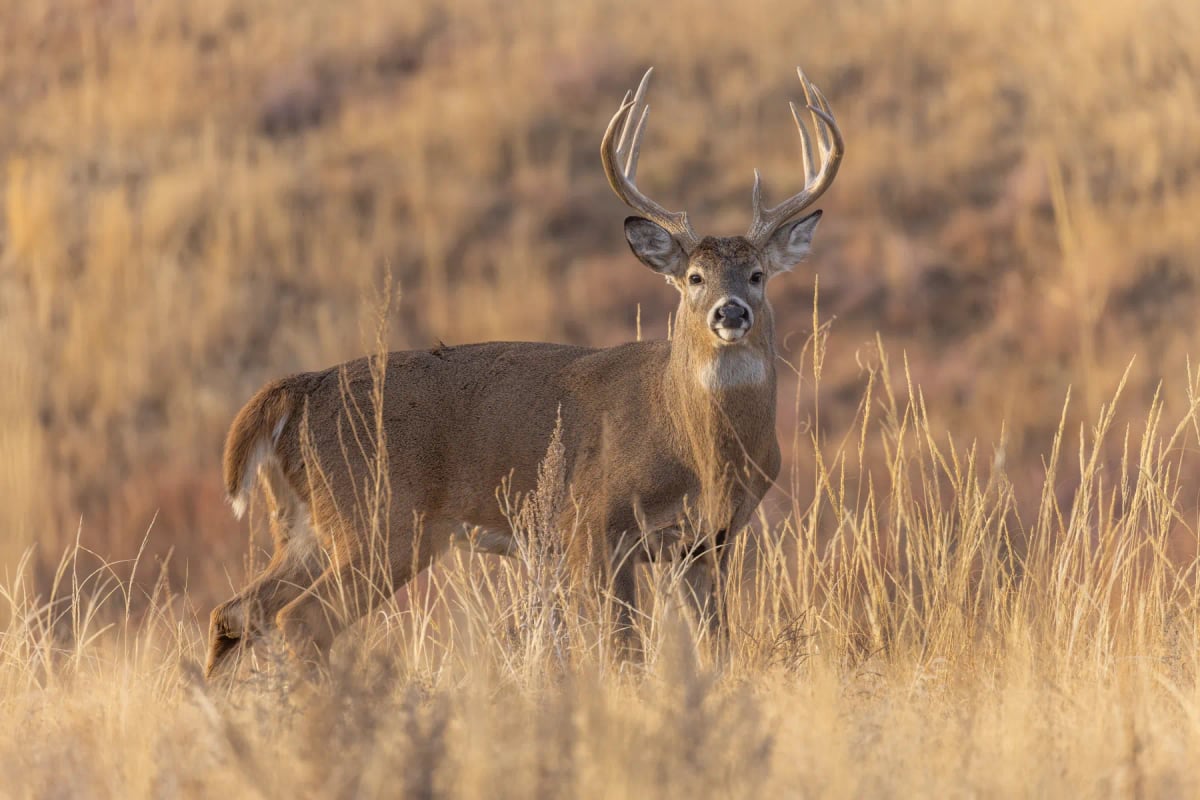
White tailed Deer
Odocoileus virginianus
Mexico is home to several subspecies of white tailed deer, found in ecosystems ranging from the dry scrublands of the north to the tropical forests of the south. The species is widely distributed and culturally significant, playing a role in Indigenous traditions for centuries. It is managed as a game species in many states, with regulated hunting ranches helping fund conservation across rural landscapes.
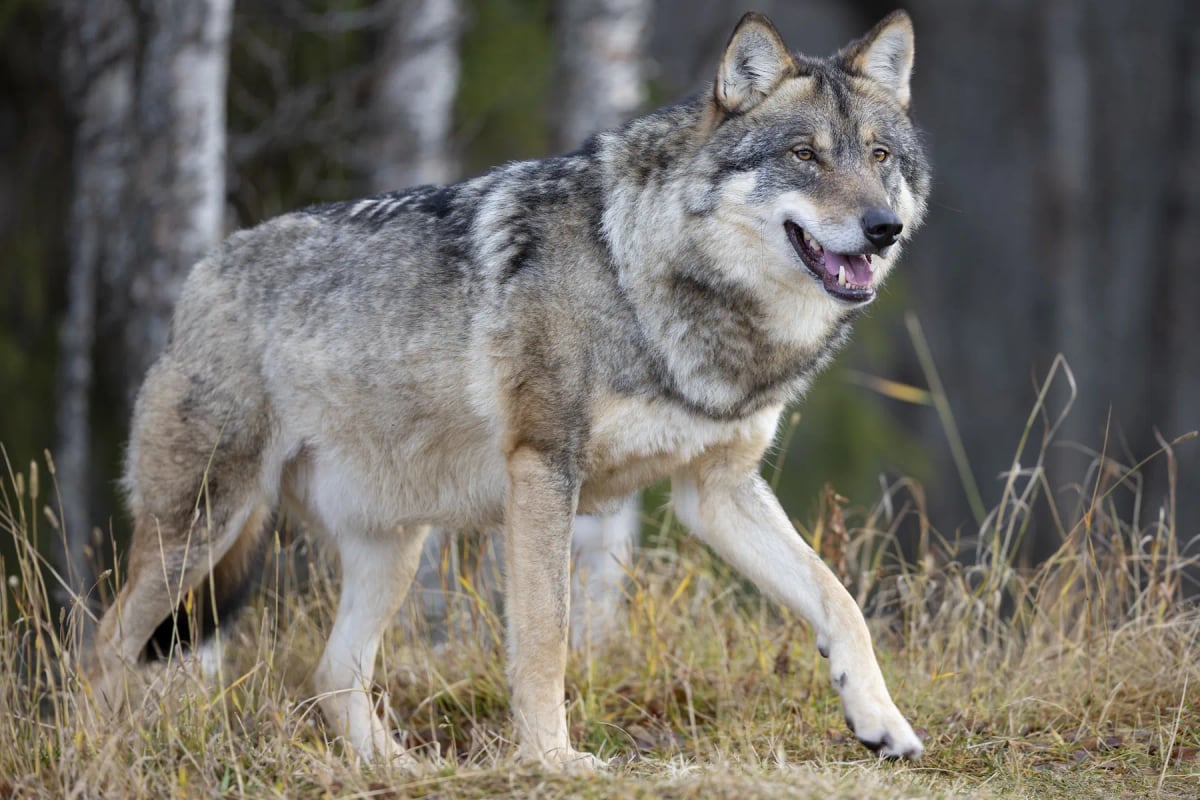
Gray Wolf
Canis lupus
Mexico is home to the critically endangered Mexican wolf, a subspecies of the gray wolf. By the 1970s the Mexican wolf had been driven to extinction in the wild across its range. The first releases into the Sierra Madre Occidental, in Sonora, came in October 2011, decades after the subspecies vanished from the wild here. The wild population has grown steadily and numbered over 40 individuals in Mexico by the early 2020s. The gray wolf globally is Least Concern.
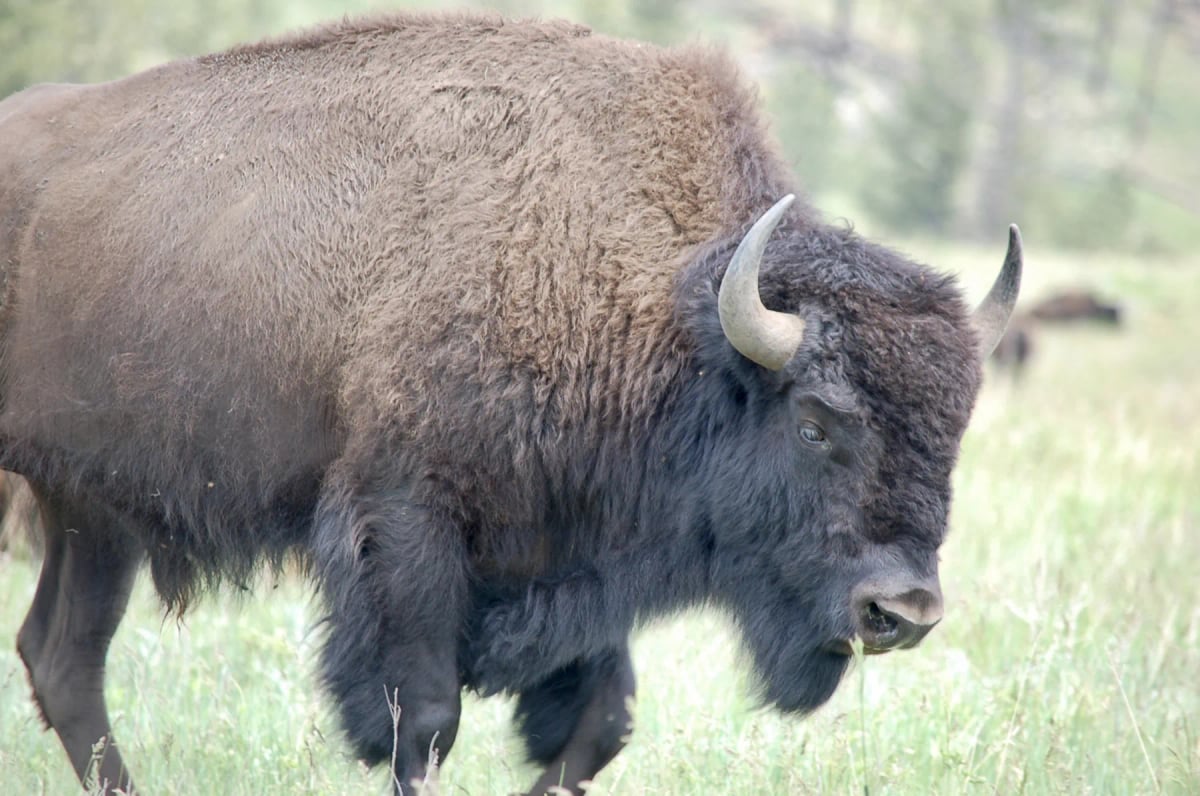
American Bison
Bison bison
The American bison was historically present across northern Mexico but disappeared from the country due to overhunting. Since 2009, a reintroduction program led by the Mexican government and conservation partners has established a growing herd in the Janos Biosphere Reserve in Chihuahua. This population represents the only wild bison in Mexico and is considered one of the most genetically pure plains bison herds in North America.
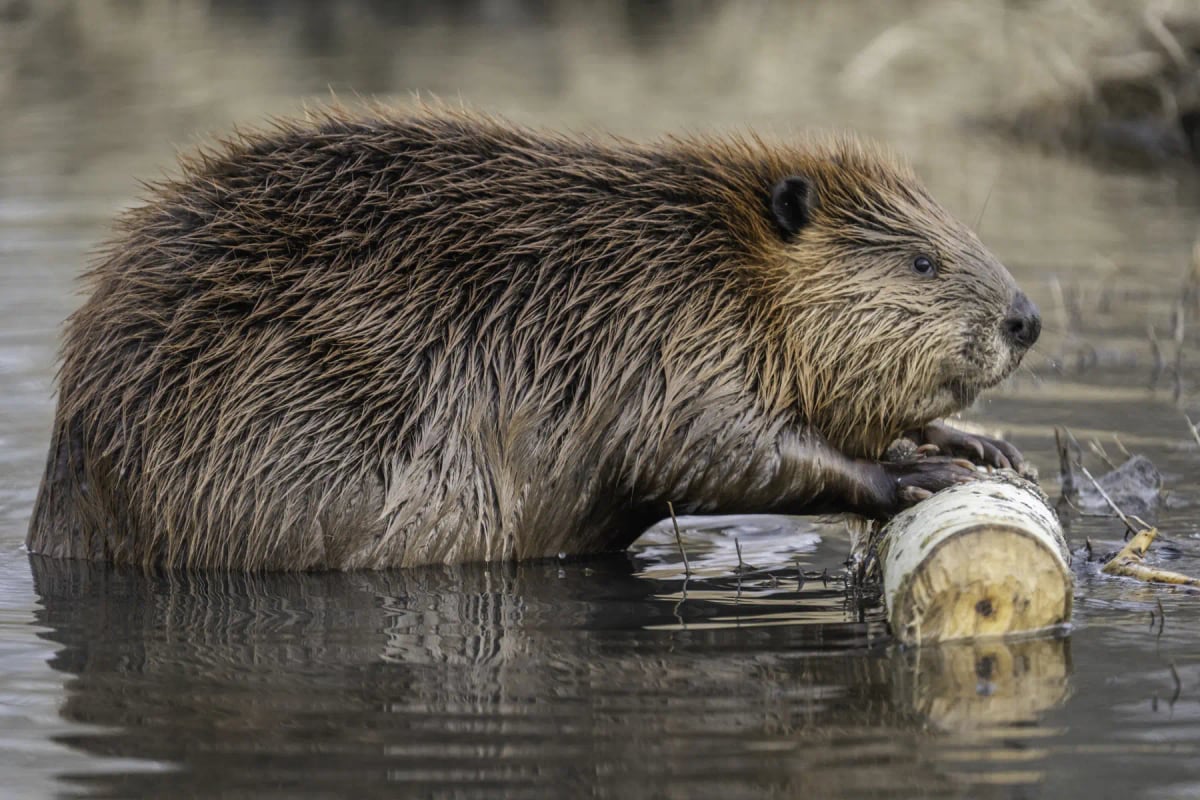
Beaver
Castor canadensis
In Mexico, the North American beaver is found along river systems in the northern states, particularly near the Rio Grande and its tributaries bordering the United States. Populations here are smaller and more isolated than those farther north. The species benefits riparian corridors in an otherwise arid landscape by creating wetland pockets that support local wildlife. Its IUCN status is Least Concern.
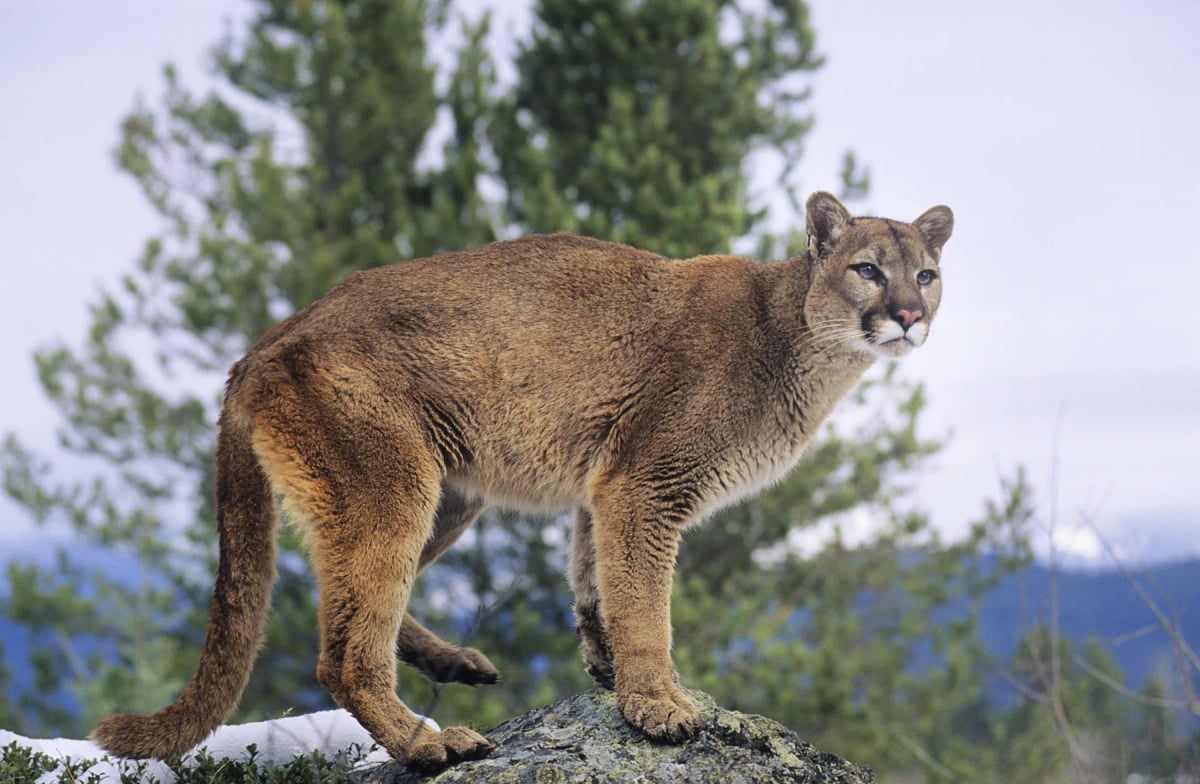
Cougar
Puma concolor
In Mexico, cougars are found in a wide range of habitats, from the Sierra Madre mountain ranges to the tropical forests of the Yucatán Peninsula and the dry scrublands of the north. They are the country's most widely distributed large cat, present in the majority of its states. Populations face pressure from habitat loss and hunting. The cougar is listed under special protection in Mexican environmental law.
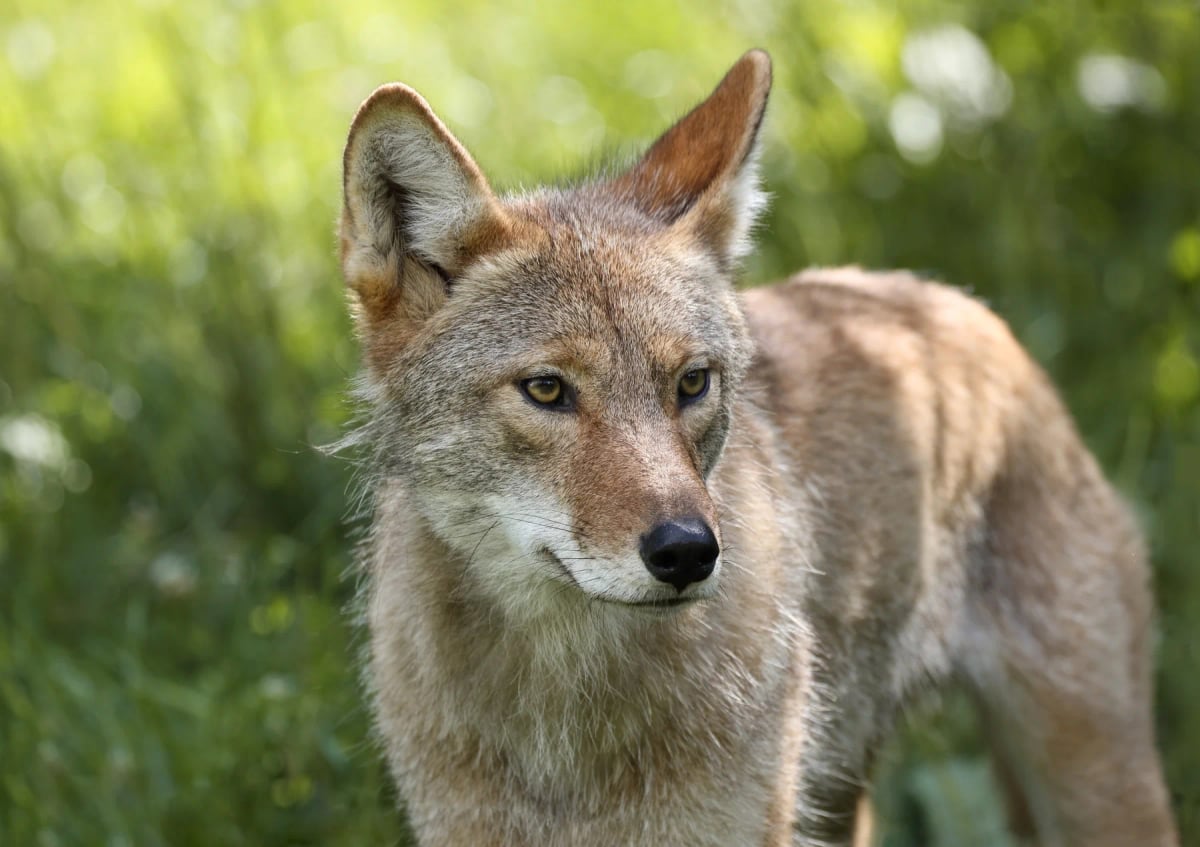
Coyote
Canis latrans
In Mexico, the coyote ranges across northern deserts, central highlands, and dry scrublands, thriving in states like Chihuahua, Sonora, and Coahuila. It also appears in agricultural areas and around towns. Deeply woven into Mexican folklore and indigenous traditions, the coyote is both a real and symbolic presence. It feeds on rodents, lizards, fruit, and livestock when wild prey is scarce. Its IUCN status is Least Concern.
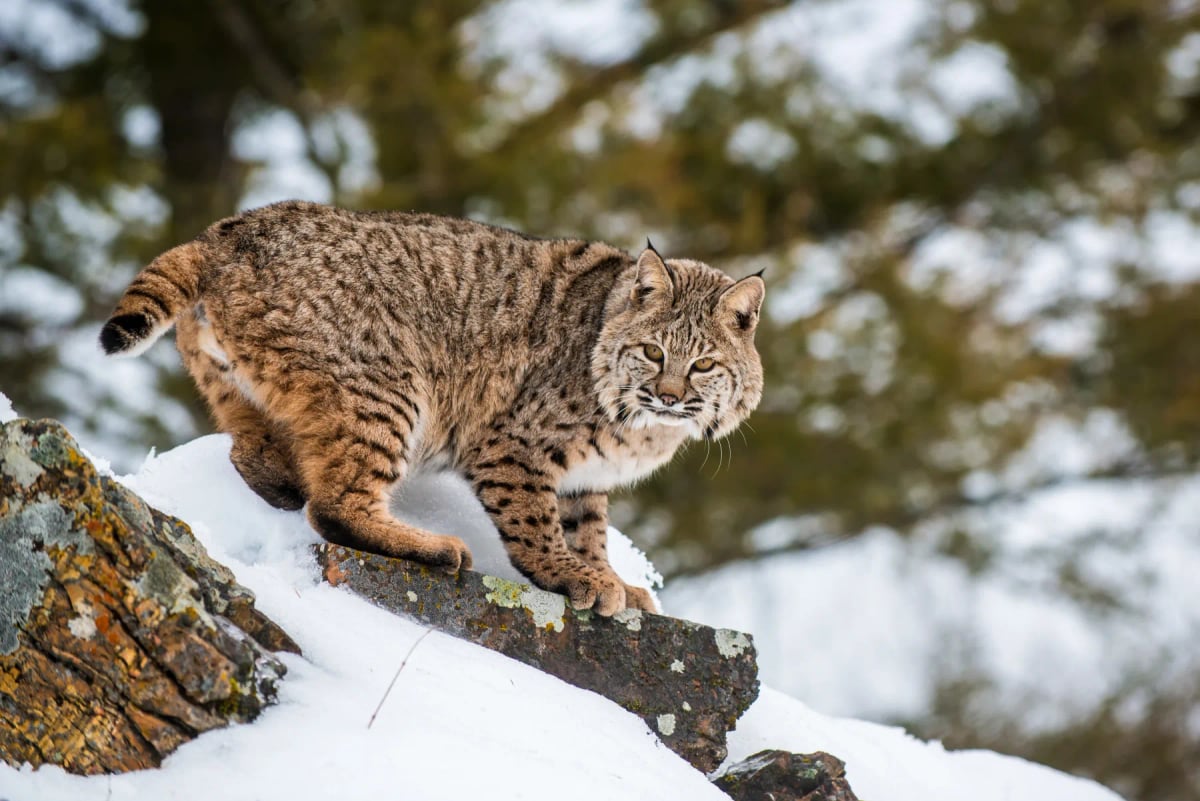
Bobcat
Lynx rufus
The bobcat is found throughout much of Mexico, from the northern deserts of Sonora and Chihuahua down through scrublands and pine-oak forests to the southern states. It is one of the few wild cats in Mexico that remains relatively widespread. It preys on rabbits, rodents, and birds across a variety of habitats. Though listed as least concern, habitat loss and hunting pressure in some regions pose ongoing challenges for local populations.
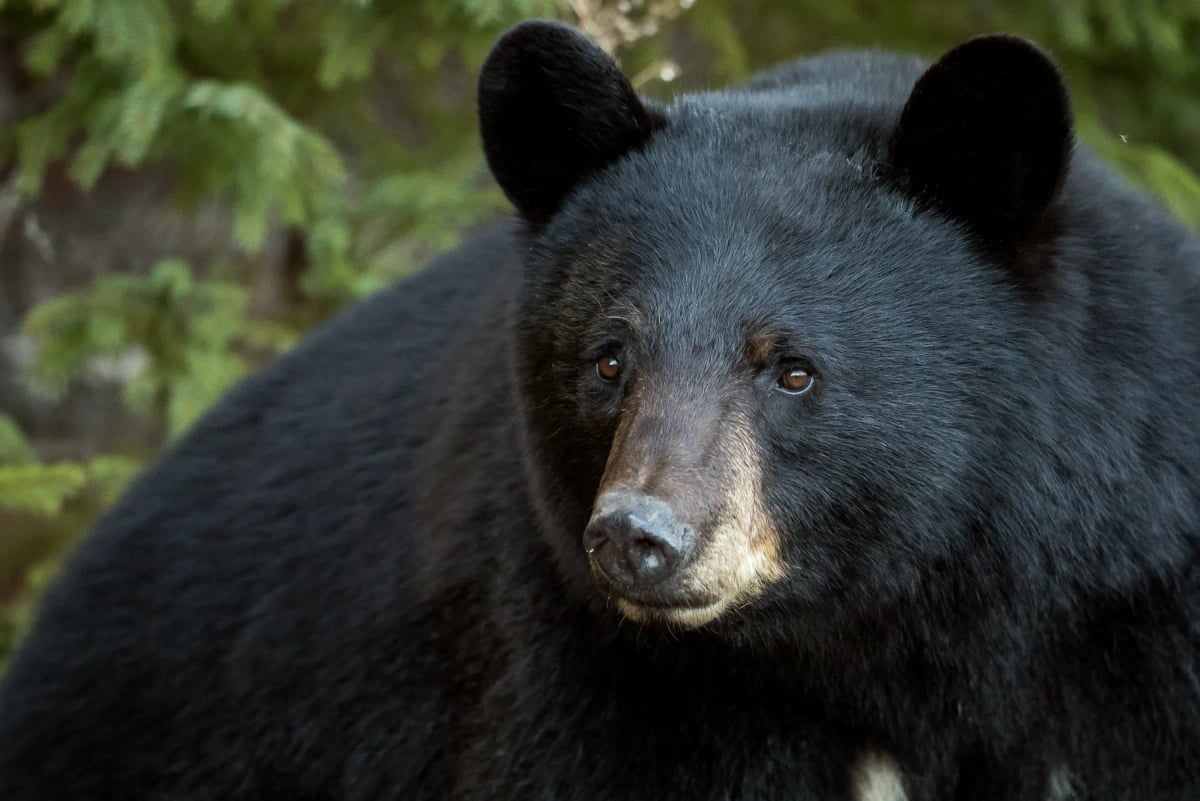
American Black Bear
Ursus americanus
The American black bear is found in the mountain forests of northern Mexico, particularly in the Sierra Madre Occidental and Sierra Madre Oriental ranges in states such as Chihuahua, Coahuila, Nuevo León and Tamaulipas. Mexico represents the southern edge of the species range on the North American continent. Black bears in Mexico have recovered in some areas after decades of persecution and habitat loss and are now protected under Mexican law. They are occasionally seen by visitors in the mountains of northern Mexico, particularly in areas bordering the United States.
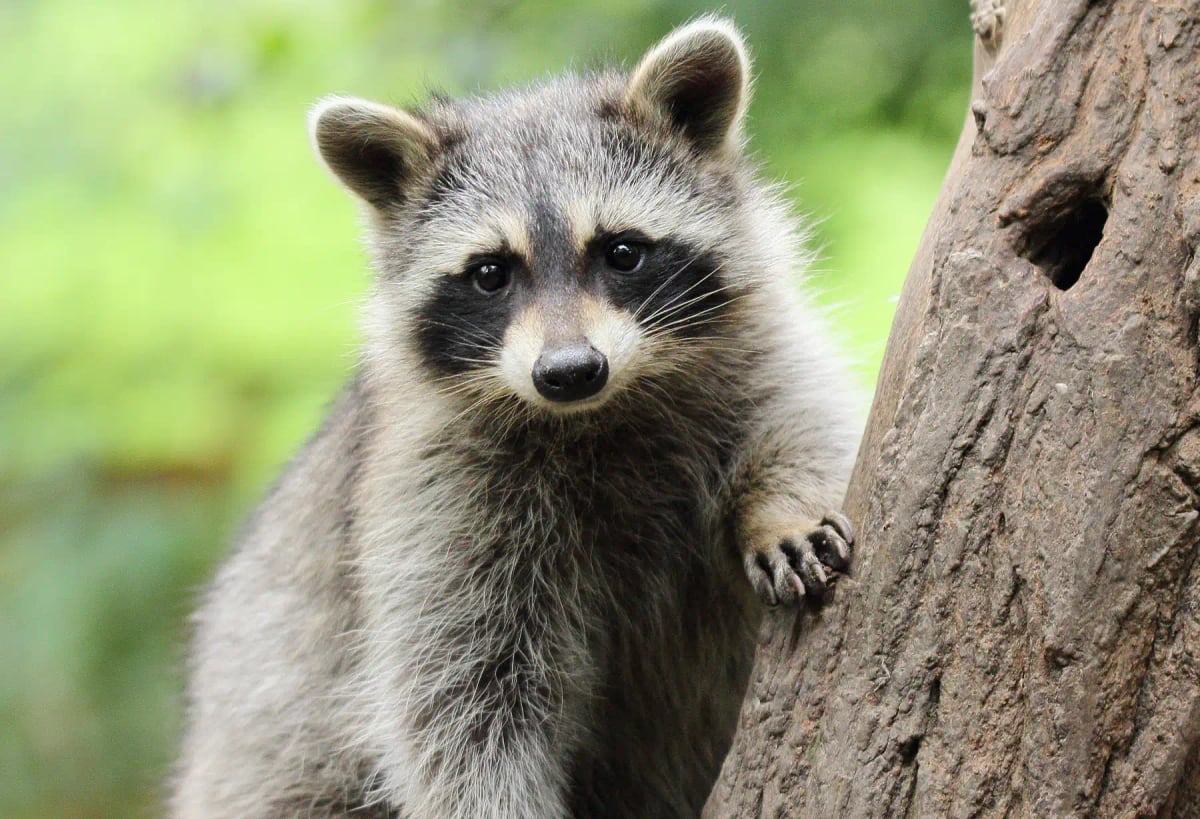
Raccoon
Procyon lotor
Mexico is central to the raccoon's native range, with populations living from the arid north to the tropical rainforests of the Yucatán Peninsula and Chiapas. The species thrives in mangroves, river systems, farmland, and cities alike. In places like the Yucatán, raccoons are common near Mayan ruins and tourist areas. Mexico also has two closely related island species. The common raccoon is listed as Least Concern and remains one of the country's most recognizable wild mammals.
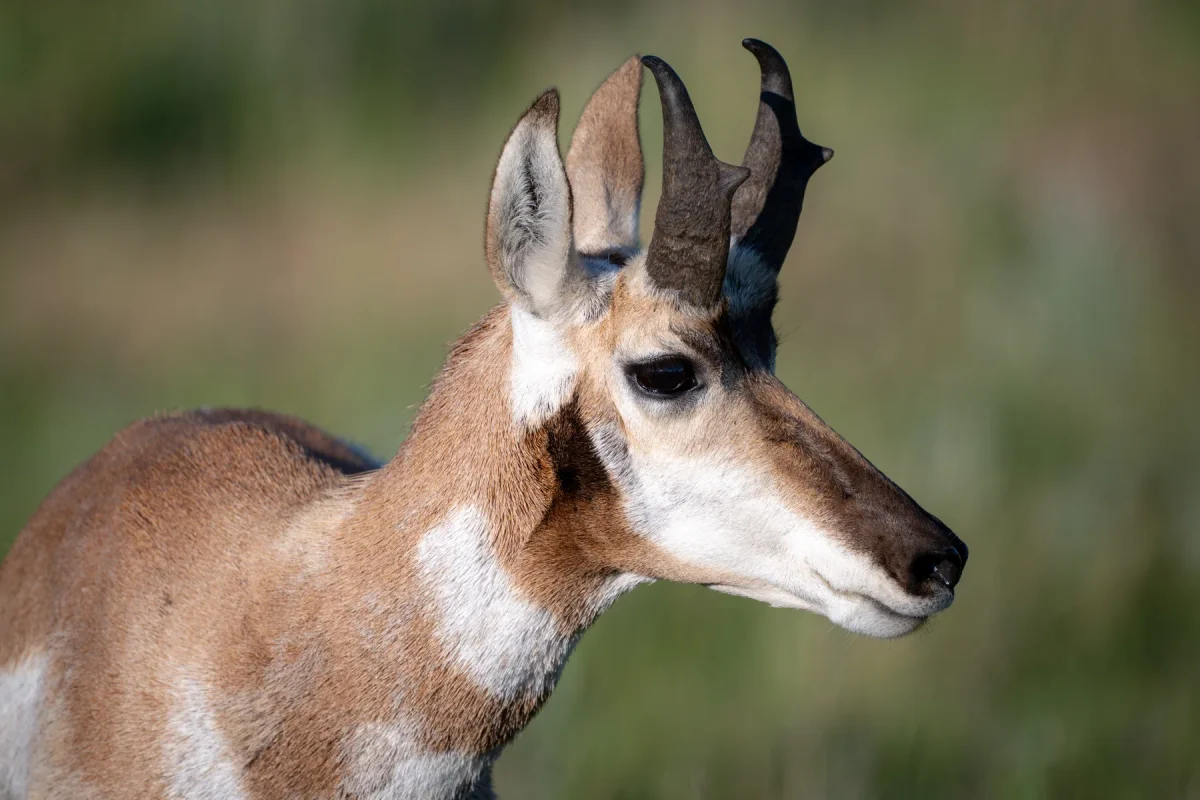
Pronghorn
Antilocapra americana
The pronghorn once roamed widely across northern Mexico, but today its range has shrunk dramatically. Isolated populations cling on in the desert grasslands and shrublands of Sonora, Chihuahua, and Baja California. Hunting pressure and habitat degradation pushed numbers to critical lows in the twentieth century. Conservation efforts, including protected areas and community programs, have helped some populations begin a slow recovery. IUCN Status: Least Concern globally, though Mexican populations remain fragile.
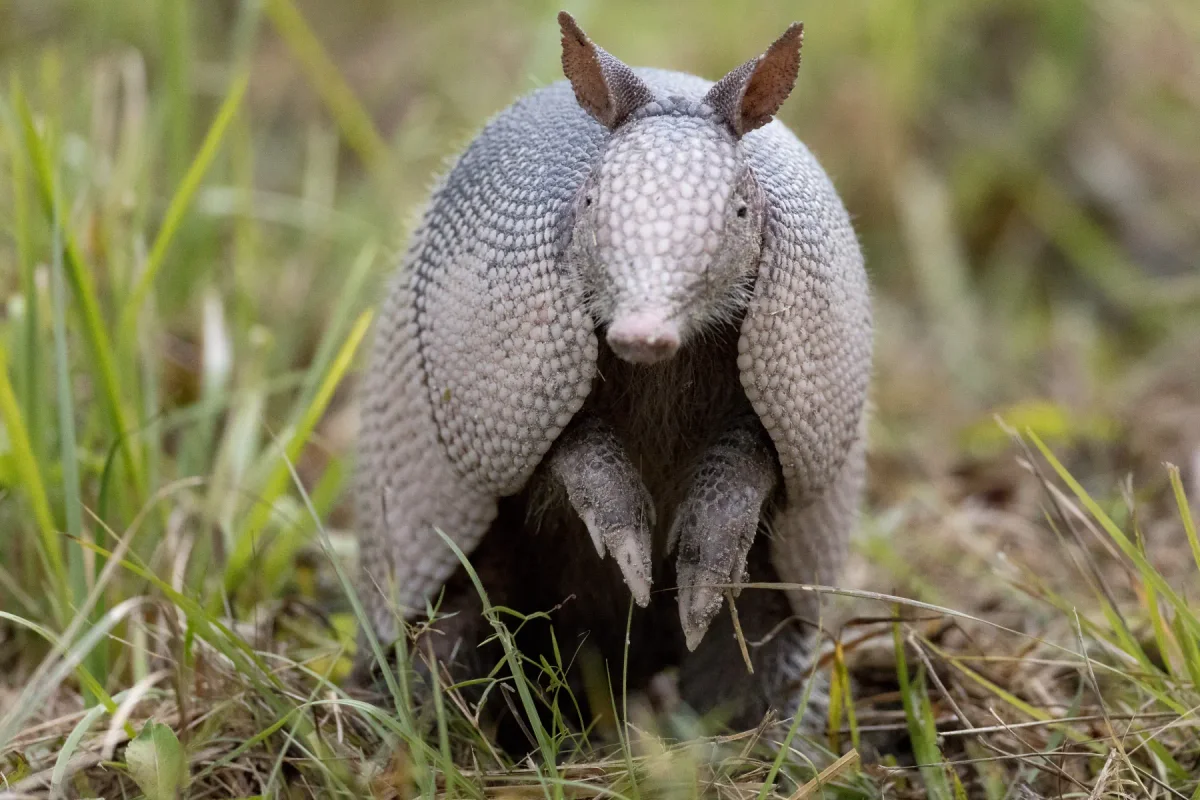
Armadillo
Dasypodidae spp.
The nine banded armadillo is found across most of Mexico, from the north through the central highlands and into the tropical south, where it lives in forests, scrublands, grasslands and agricultural areas. Mexico is part of the core of the armadillo's native range and the species is common and widespread throughout the country. It is nocturnal and feeds on insects, grubs and other invertebrates that it finds by digging in soft soil. In some regions of Mexico it is hunted for food and its shell has traditional uses in crafts and musical instruments.
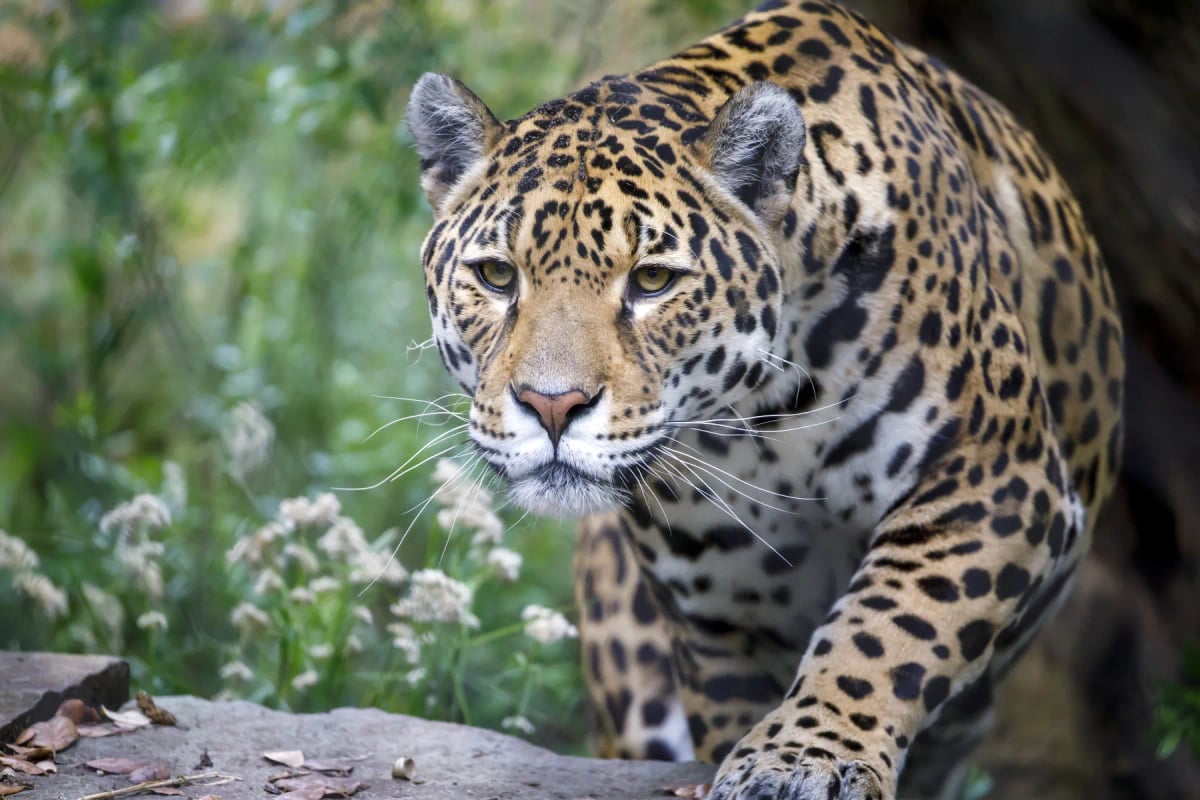
Jaguar
Panthera onca
In Mexico, jaguars are found mainly in the tropical forests of the Yucatán Peninsula and the Sierra Madre Occidental. The country holds one of the northernmost jaguar populations in the world. Conservation programs here focus on reducing conflict with ranchers and protecting wildlife corridors. The jaguar is a symbol of power in many Indigenous Mexican cultures and remains a priority species for national conservation efforts. IUCN status: Near Threatened.
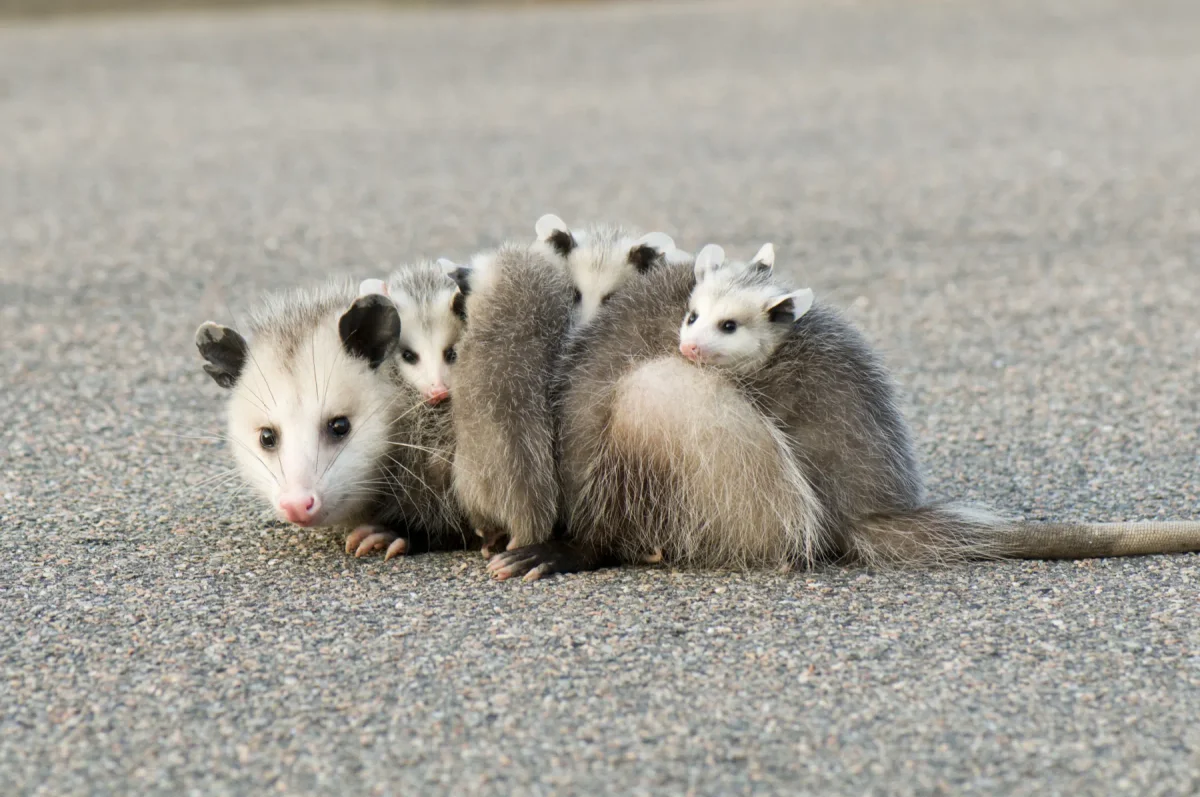
Opossum
Didelphis spp.
Mexico is home to several species of the genus Didelphis, including the Virginia opossum in the north and the common opossum (Didelphis marsupialis) further south. They occupy a wide range of habitats, from dry scrublands in the north to tropical forests in Veracruz, Oaxaca, and the Yucatán Peninsula. Highly adaptable, they also appear in agricultural areas and towns, where food scraps and fruit provide an easy, reliable food source.
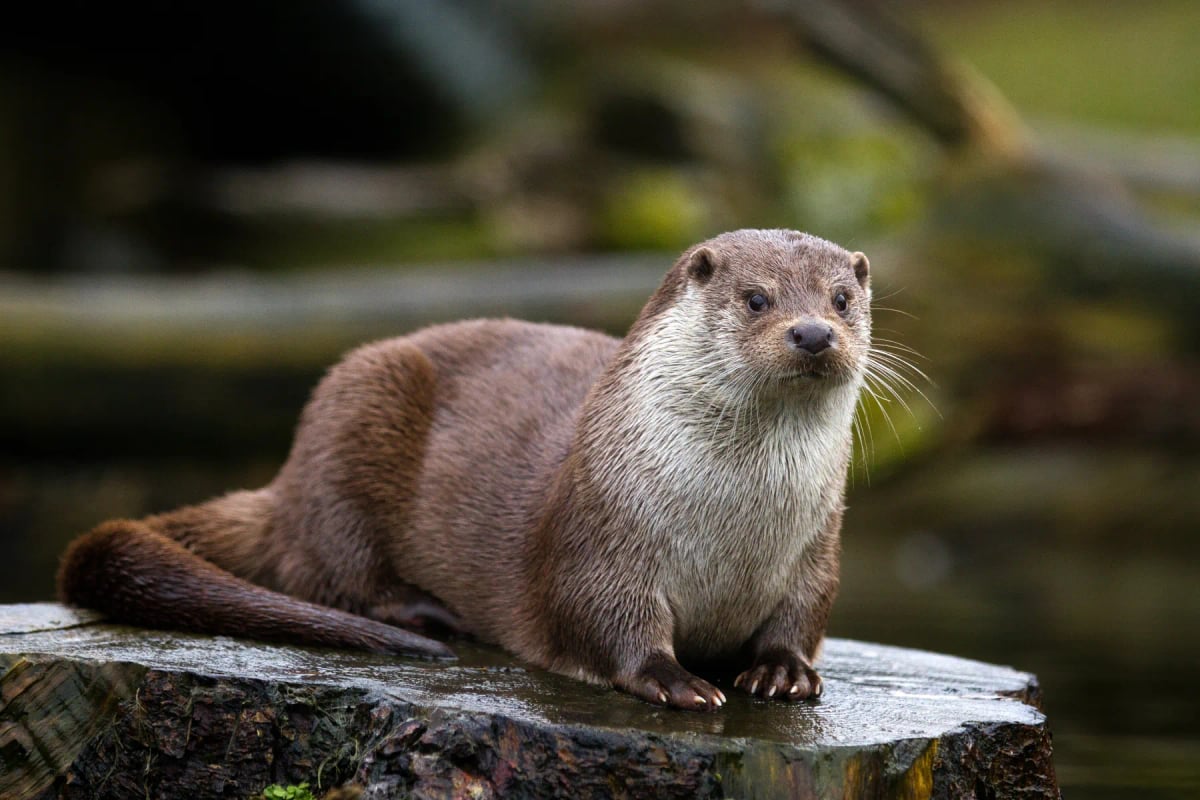
River Otter
Lontra canadensis
In Mexico, the river otter reaches the southern edge of its range, appearing in river systems in the northern and central parts of the country. It is considered rare and faces pressure from habitat degradation, water pollution and hunting in some areas. The species has been recorded in states such as Sonora and Chihuahua, where healthy river corridors still exist. Conservation efforts focused on freshwater habitats are essential for its survival in Mexico over the long term.
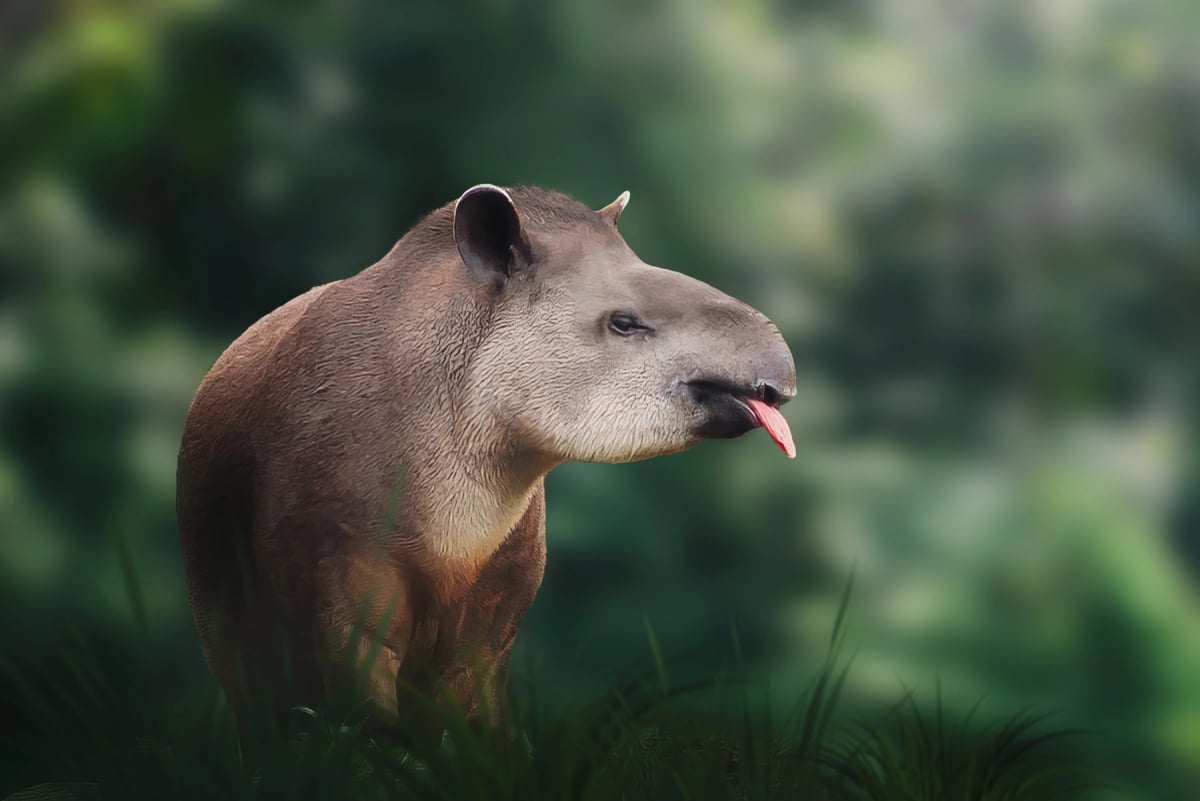
Tapir
Tapirus spp.
In Mexico, Baird's tapir roams the tropical forests of the Yucatán Peninsula and the southern states of Chiapas and Oaxaca. It favors dense lowland jungle and areas close to rivers and wetlands. Habitat loss and hunting have pushed it to the brink in the country, and it is now considered locally rare. Conservation programs in the Selva Maya region are working to protect remaining populations.
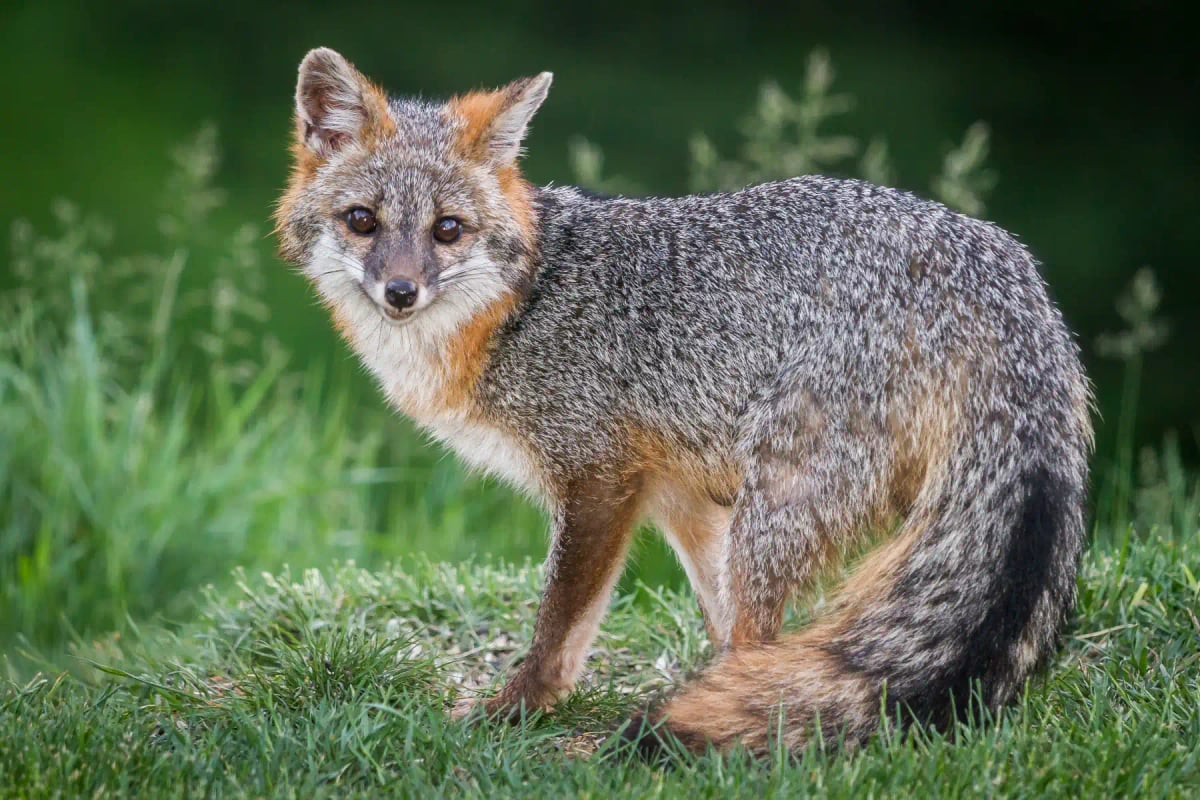
Gray Fox
Urocyon cinereoargenteus
The gray fox is found throughout much of Mexico, inhabiting pine and oak forests, scrublands, and dry tropical areas from the northern border states down through the central highlands. It is one of the most adaptable wild canids in the country. In Mexico it shares its range with the closely related island fox and the coyote, but occupies a distinct ecological niche as a forest dweller capable of climbing trees to avoid threats.
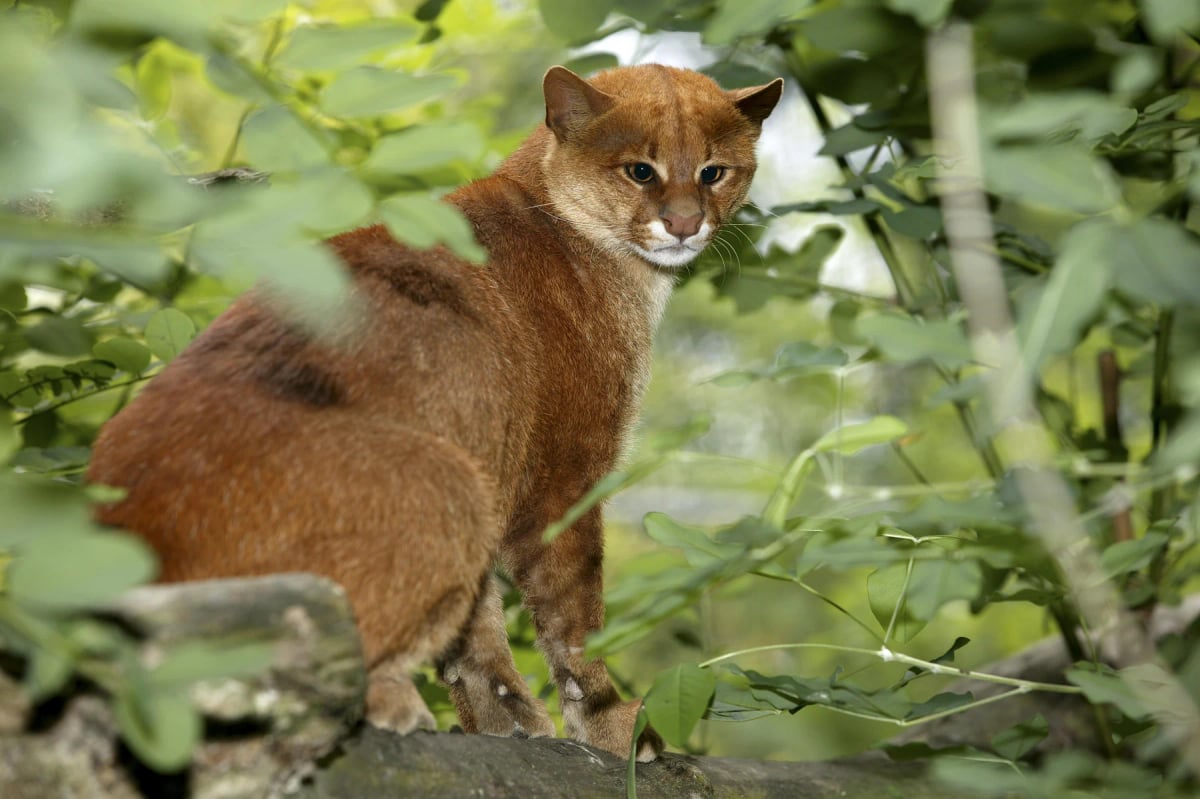
Jaguarundi
Herpailurus yagouaroundi
Mexico holds one of the northernmost populations of the jaguarundi in the world, with animals recorded from Sonora and Tamaulipas in the north down through the tropical forests of Chiapas and the Yucatán Peninsula. It thrives in dense vegetation near water. The IUCN lists it as Least Concern, but in northern Mexico its range has contracted considerably due to agricultural expansion and the fragmentation of native scrub.
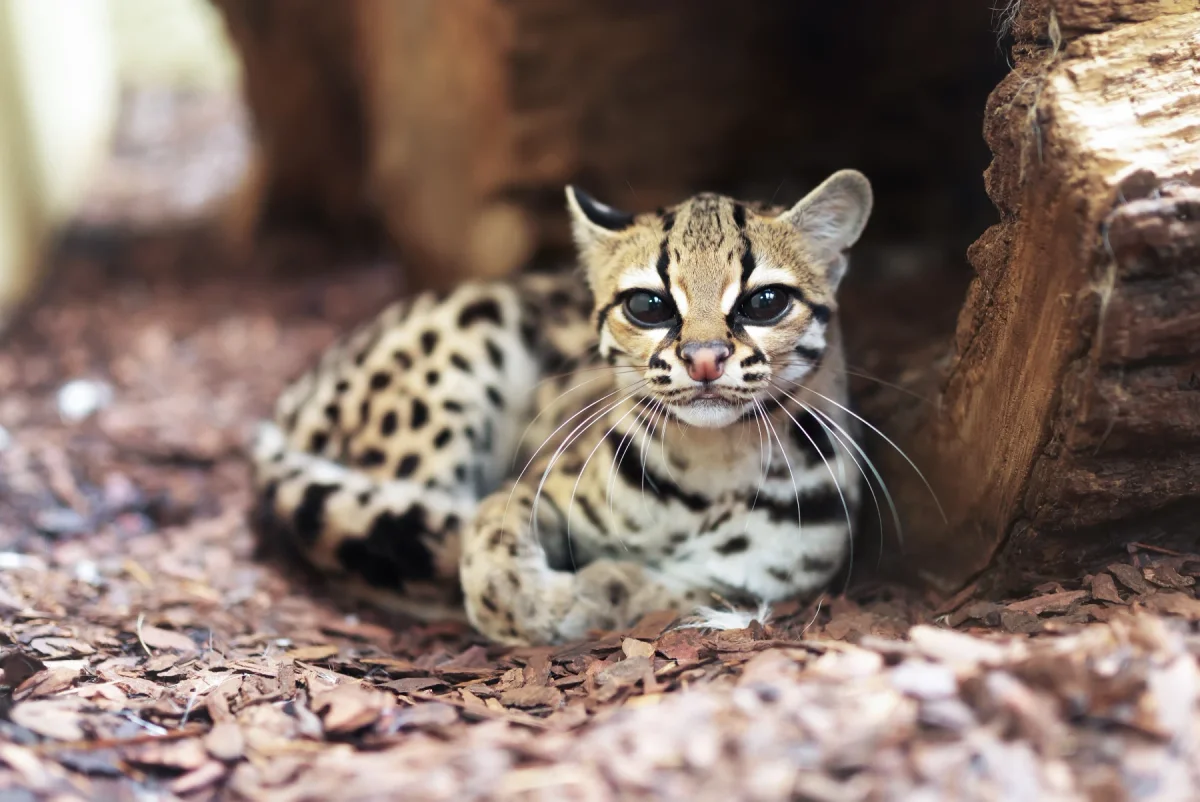
Margay
Leopardus wiedii
In Mexico, the margay is found in humid tropical forests stretching from the Gulf Coast lowlands through Chiapas and the Yucatán Peninsula. It is far less common than the ocelot and rarely seen due to its strictly nocturnal habits. Its ankle joints can rotate up to 180 degrees, allowing it to climb down trees headfirst. Habitat loss and the illegal pet trade remain serious threats. The IUCN lists it as Near Threatened.

Iguana
Iguana iguana
The green iguana is one of the most recognizable reptiles in Mexico and is found in tropical forests, coastal scrublands and river edges across the southern and coastal regions of the country, from Sinaloa and Tamaulipas down through the Yucatan Peninsula. It is a large herbivorous lizard that spends much of its time basking in trees near water. In Mexico iguanas are commonly seen near ruins, cenotes and beach areas and are part of everyday life in many coastal towns and villages.
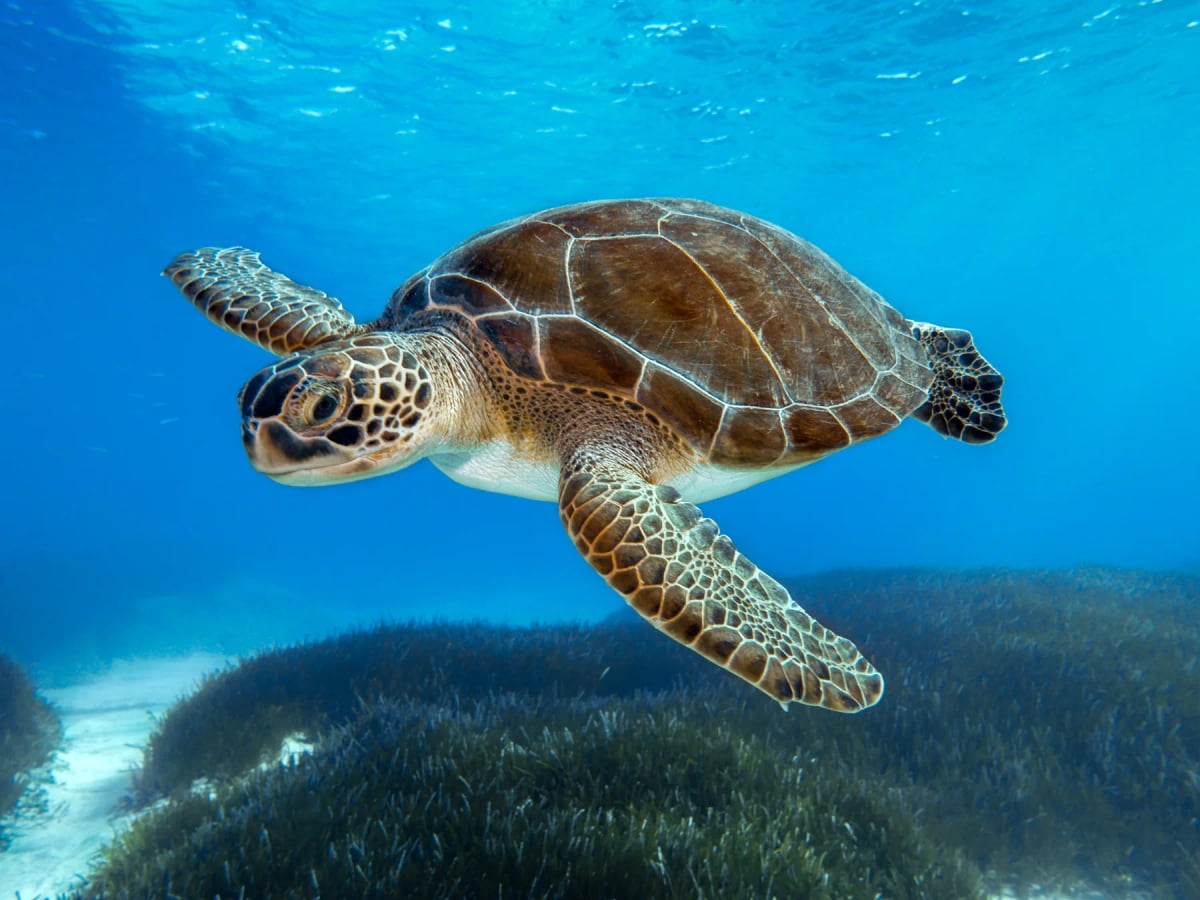
Sea Turtle
Cheloniidae & Dermochelyidae (families)
Mexico is one of the most important countries in the world for sea turtle conservation. Several species nest on its beaches, including the olive ridley, leatherback, green and loggerhead. The Pacific coast sees some of the largest mass nesting events on Earth, known as arribadas, particularly at La Escobilla beach in Oaxaca where tens of thousands of olive ridley turtles come ashore in a single night. The Caribbean coast supports green and loggerhead nesting, and marine turtle protection programs operate along both coasts.
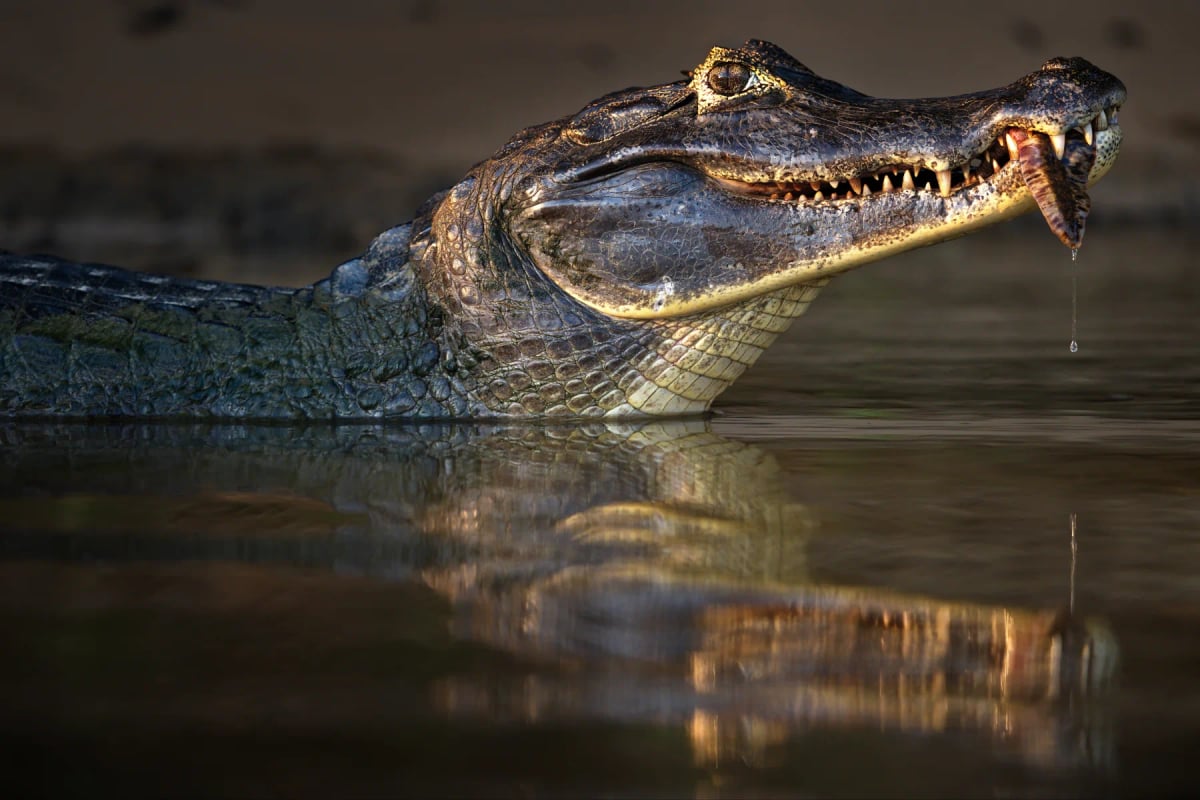
Caiman
Caiman spp.
In Mexico, caimans are found primarily in the tropical wetlands and coastal lagoons of the Yucatán Peninsula and the Gulf Coast lowlands. The spectacled caiman is the species most commonly recorded here, inhabiting slow rivers, marshes, and mangrove-edged waterways. Though present in lower numbers than in South America, they play an important role in local wetland ecosystems. Habitat loss from agriculture and tourism development remains the main threat to Mexican populations.
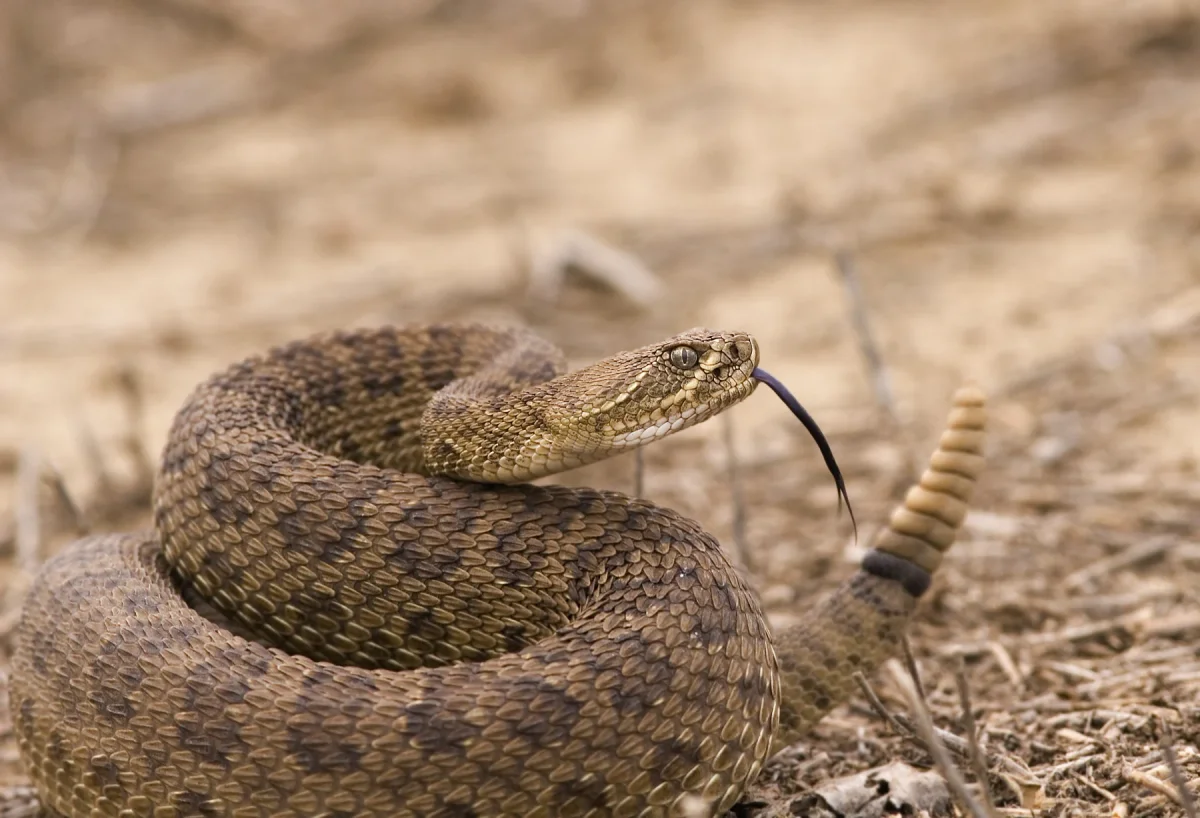
Rattlesnake
Crotalus spp. / Sistrurus spp.
Mexico is one of the richest countries in the world for rattlesnake diversity, with over 30 species recorded across its varied landscapes. The arid plateaus of the Chihuahuan and Sonoran deserts, the pine and oak forests of the Sierra Madre, and the tropical dry forests of the Pacific coast all support distinct species. Mexico is considered a center of origin for the genus Crotalus. IUCN status: Least Concern.
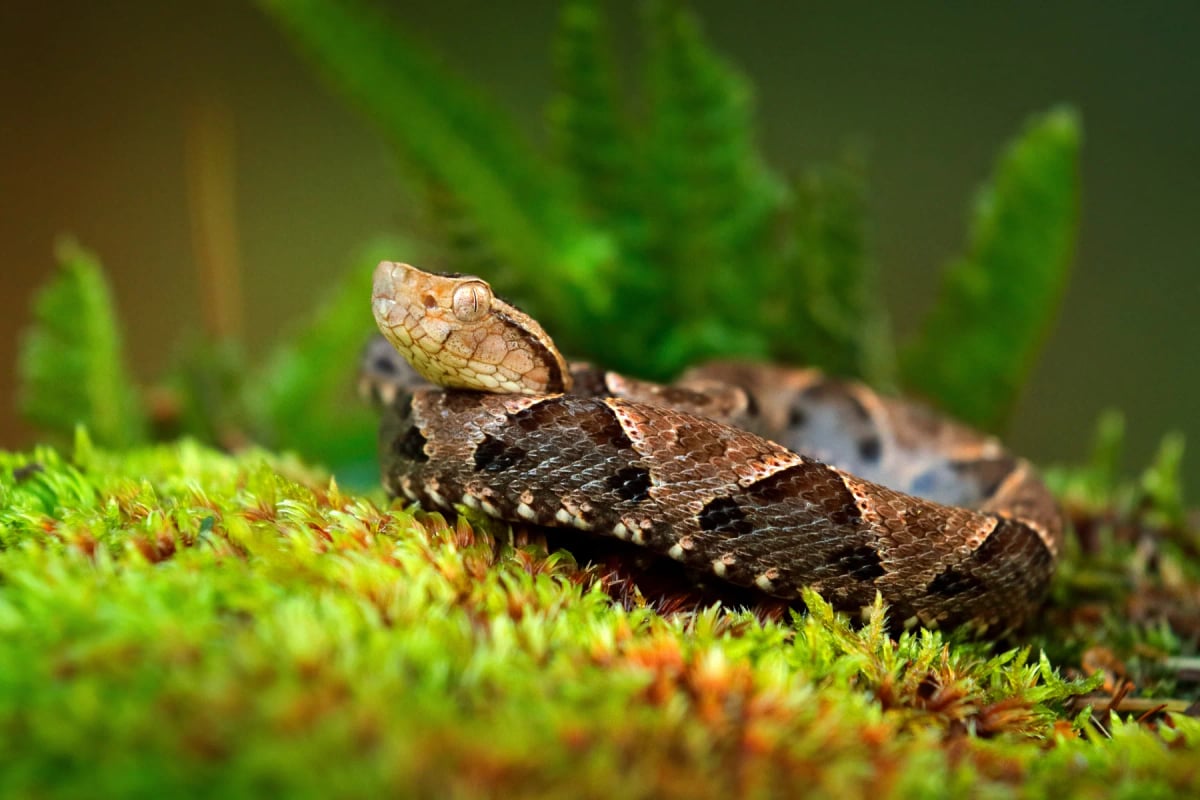
Lancehead
Bothrops spp.
In Mexico, lanceheads are found mainly in the humid lowland forests and tropical regions of the south, particularly in states like Veracruz, Oaxaca, and Chiapas. They blend into the leaf litter of the forest floor and hunt at night. Their venom is medically significant, and rural communities in these southern states face the greatest risk of snakebite. They play an important role in controlling local rodent populations.
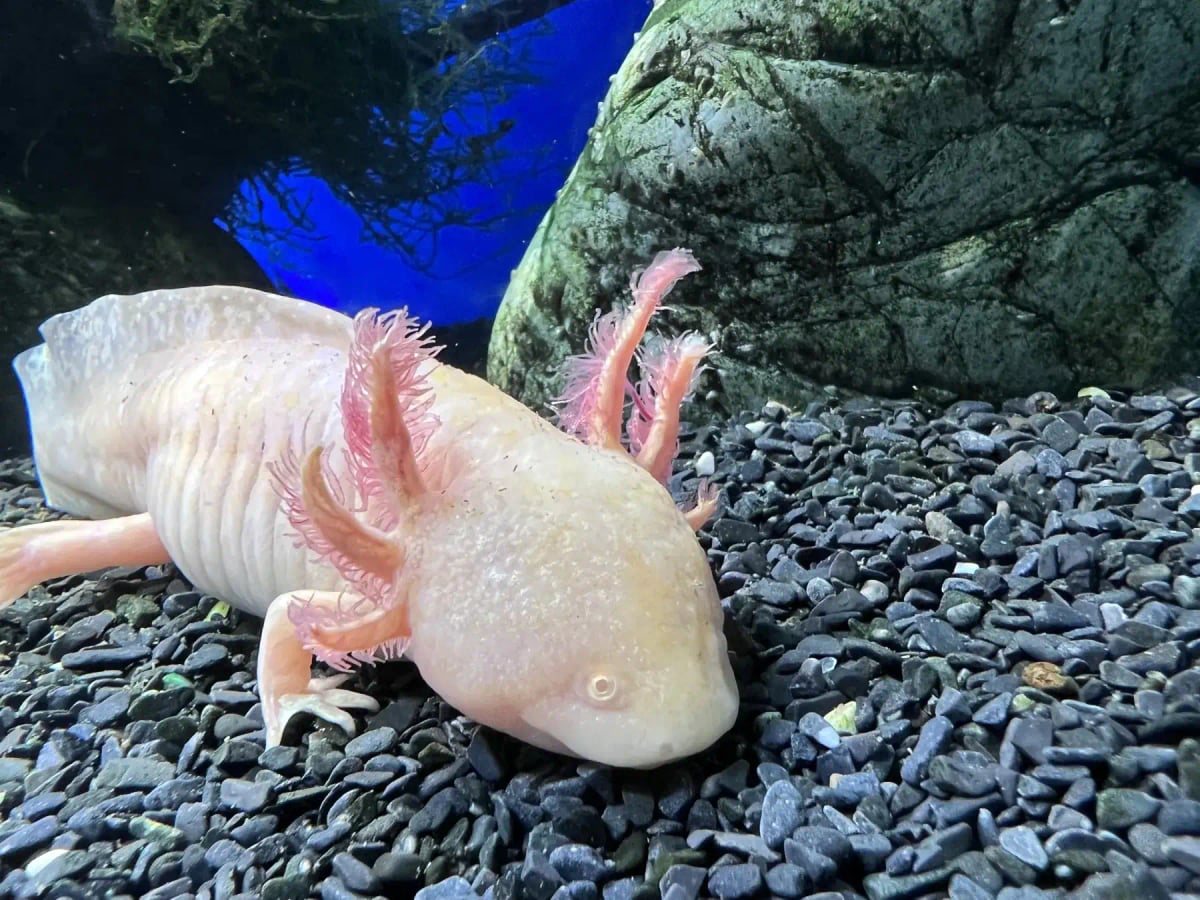
Axolotl
Ambystoma mexicanum
The axolotl is one of the most remarkable animals in Mexico and is found naturally only in the lake system of Xochimilco on the southern edge of Mexico City, where a small and critically endangered wild population clings to survival in the remaining chinampas waterways. It is a neotenic salamander, meaning it keeps its larval features and its external gills for life and never undergoes metamorphosis. The axolotl has become one of the most studied animals in the world thanks to its extraordinary ability to regenerate lost limbs, organs and even parts of its heart and brain. It also appears on the Mexican 50 peso note.
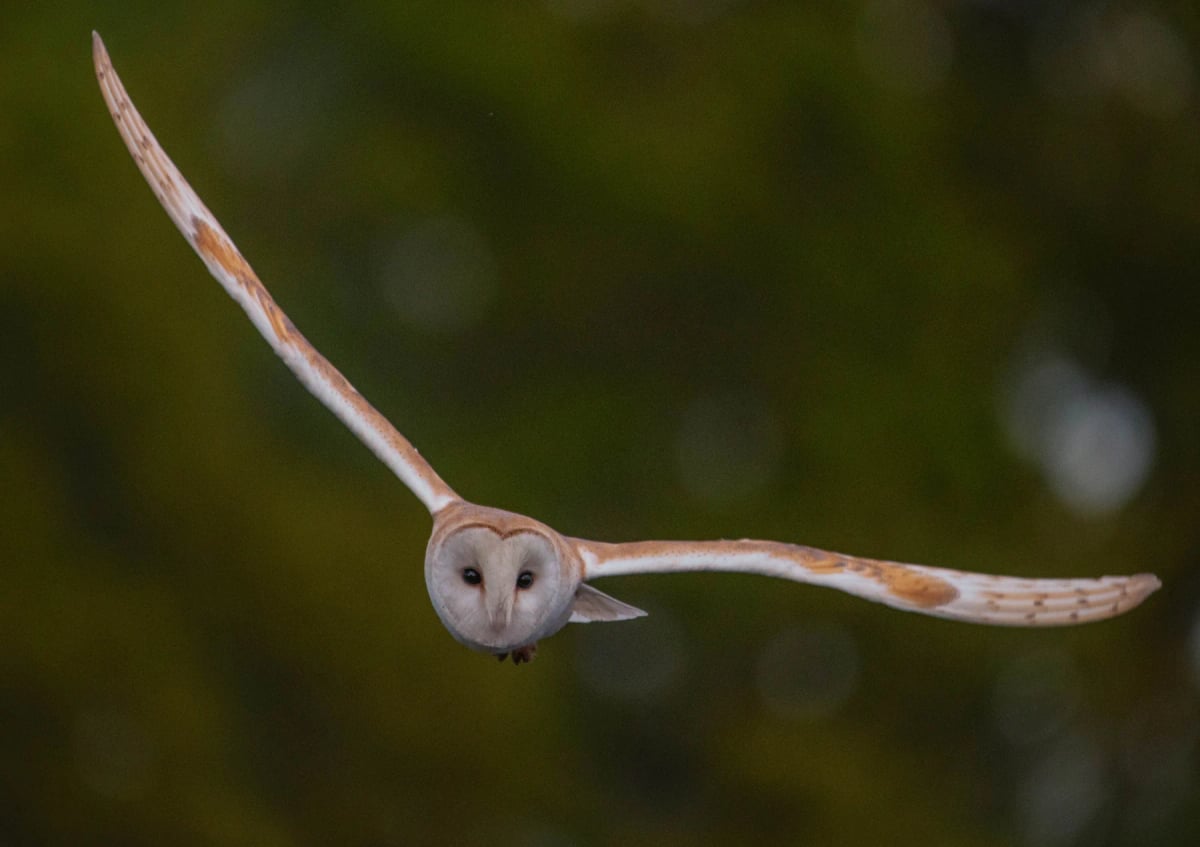
Barn Owl
Tyto alba
The barn owl is found across virtually all of Mexico, from the northern deserts and agricultural plains to the tropical south, nesting in old buildings, churches, cliff faces and tree cavities. It is one of the most widespread owls in the country and plays an important role in controlling rodent populations in farming areas. In Mexican popular culture the barn owl has long been associated with omens and the supernatural, and its eerie shrieking call is heard near villages and rural areas throughout the night.
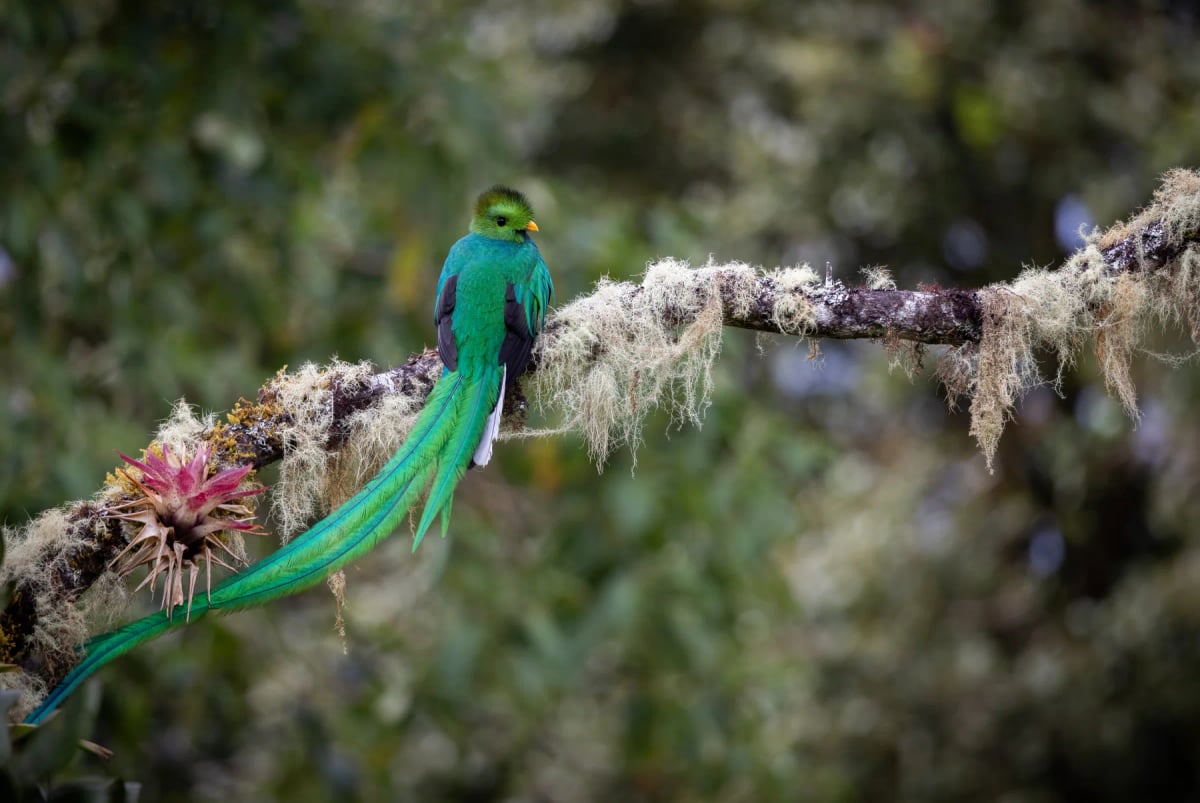
Resplendent Quetzal
Pharomachrus mocinno
In Mexico, the resplendent quetzal lives in the cloud forests of Chiapas, especially the El Triunfo Biosphere Reserve, at the northern end of its range. Males wear iridescent green and crimson plumage and grow long streamers that ancient Mesoamerican rulers prized above gold. The quetzal feeds on wild avocados and nests in hollows of decaying trees. Protecting the Chiapas cloud forests is critical to its future here. IUCN status: Near Threatened.
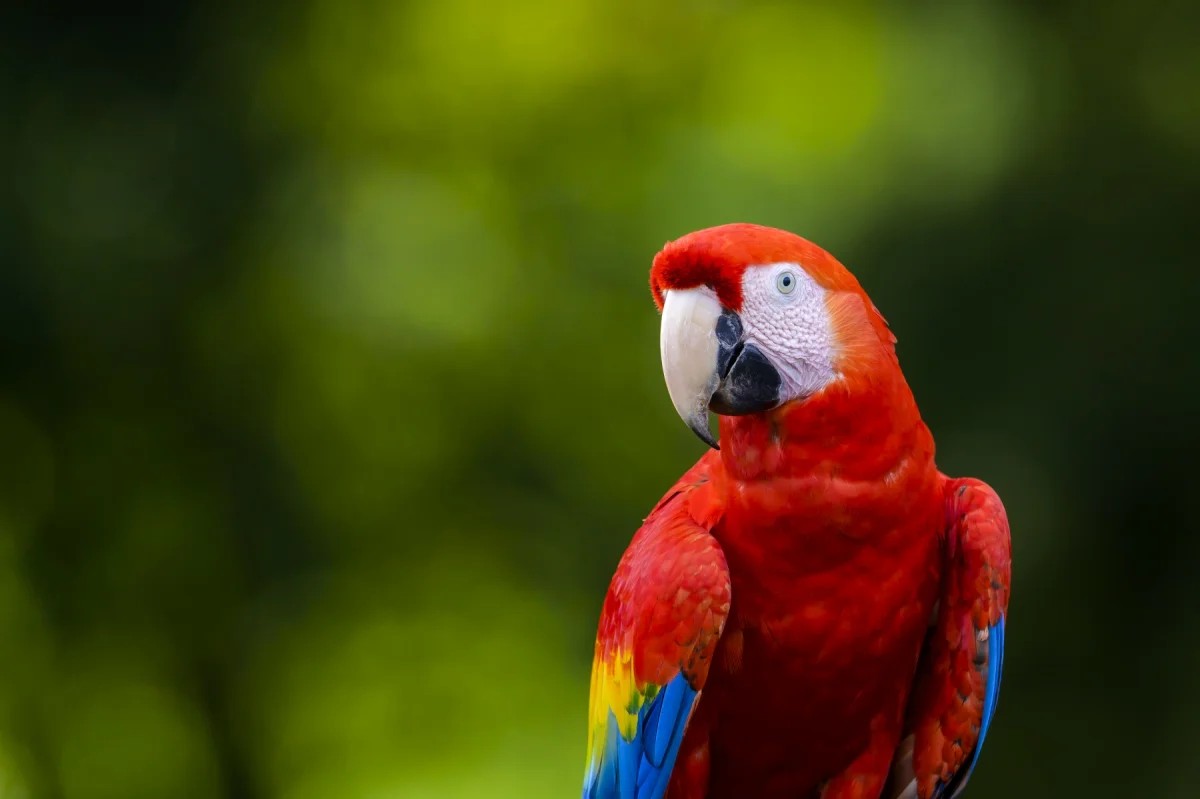
Scarlet Macaw
Ara macao
In Mexico, wild scarlet macaws survive mainly in the Selva Lacandona of Chiapas and the Chimalapas forest of Oaxaca, after deforestation and capture for the pet trade wiped them out elsewhere. The species is protected under Mexican law, and birds bred in captivity have been released at Palenque and Los Tuxtlas to bring it back. Pairs are often spotted flying above the canopy. IUCN status: Least Concern.
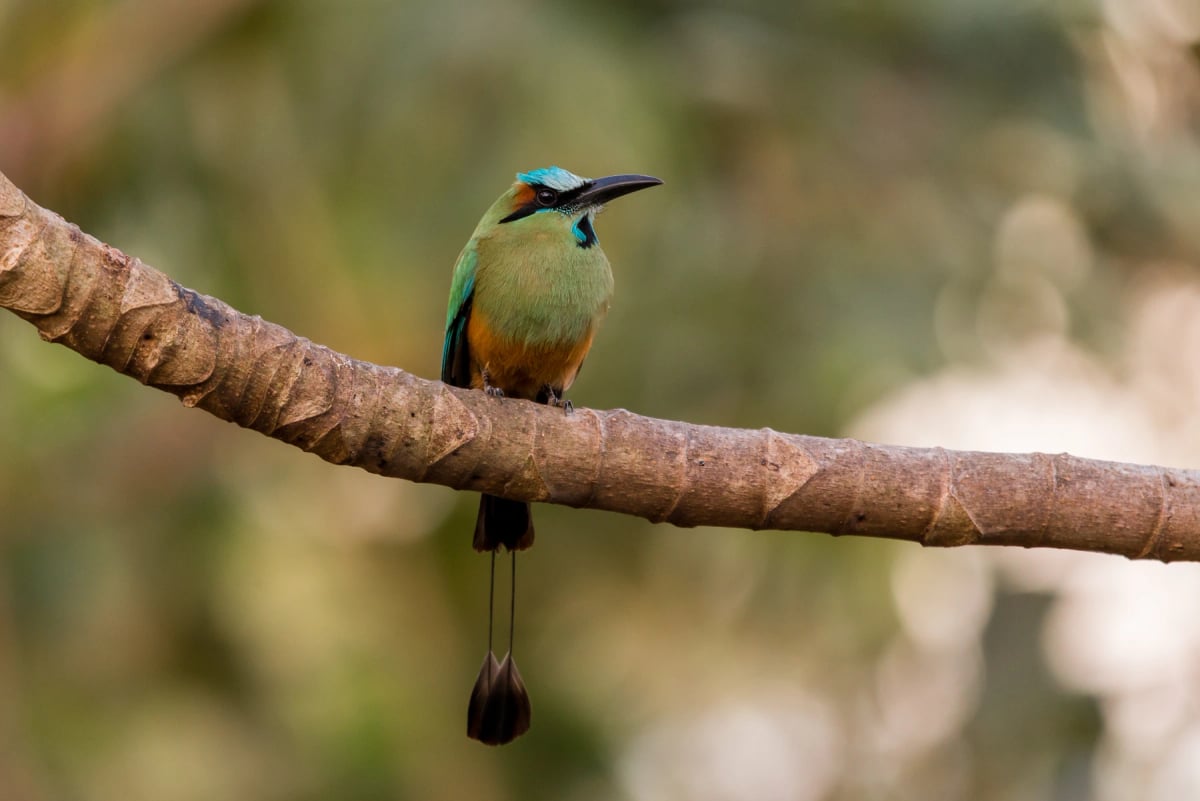
Turquoise browed Motmot
Eumomota superciliosa
The turquoise browed motmot reaches the northern edge of its range in southern Mexico, particularly in the Yucatán Peninsula and the Pacific coastal lowlands. It favors dry forests, scrubby woodland, and forest edges, where it perches quietly before diving onto insects or small lizards. Famous for its slow, pendulum swing of the tail, locally called the clock bird, this jewel of a bird is one of the most eye-catching species in the region.
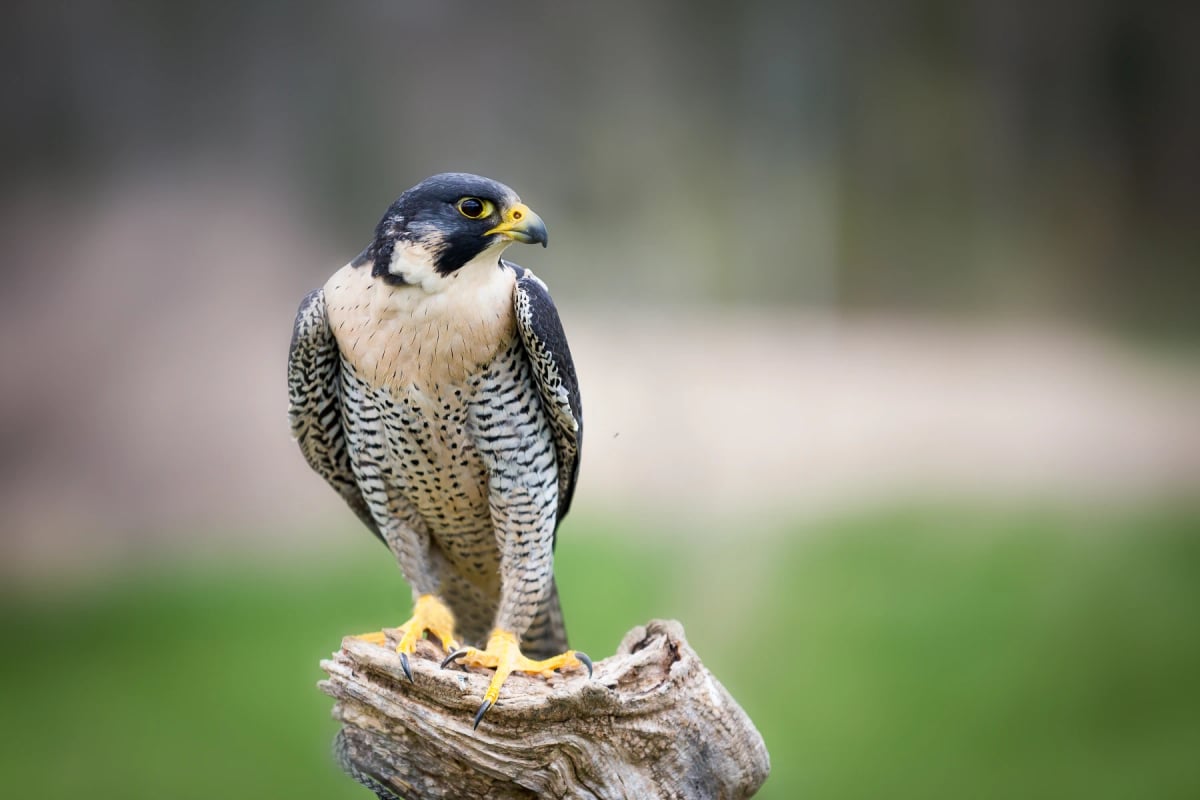
Peregrine Falcon
Falco peregrinus
Mexico hosts both resident and migratory peregrine falcons. Some subspecies nest on sea cliffs along Baja California and in mountain ranges such as the Sierra Madre, while large numbers pass through during autumn and spring migrations. Coastal lagoons and wetlands attract concentrations of waterbirds, giving this falcon excellent hunting conditions. Urban populations have also established themselves on tall buildings in major cities. The IUCN lists the species as Least Concern.
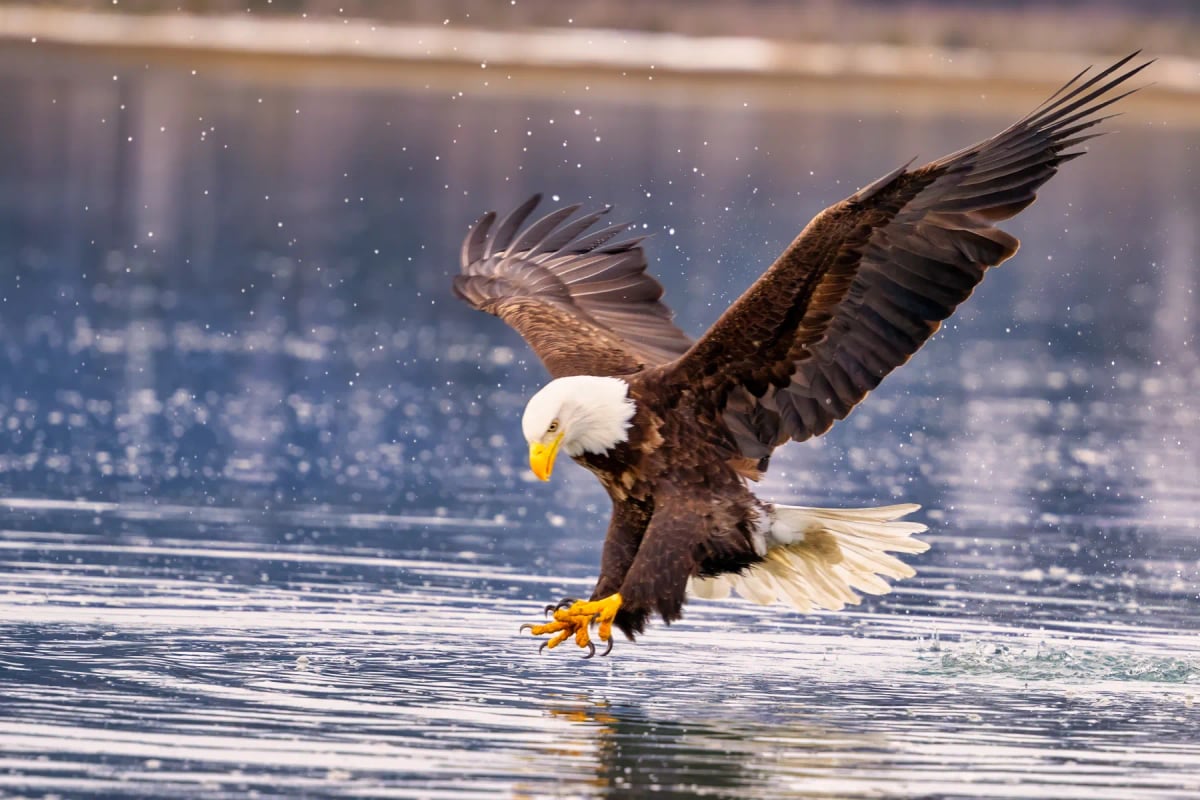
Bald Eagle
Haliaeetus leucocephalus
The bald eagle is rare in Mexico, at the southern edge of its range. A very small breeding population survives around Magdalena Bay in Baja California Sur, with only a handful of pairs, and a few pairs nest along rivers in Sonora and Chihuahua, sometimes even on cactus. More birds arrive from the north in winter, mostly near large lakes and reservoirs. IUCN status: Least Concern.
Golden Eagle
Aquila chrysaetos
The golden eagle is Mexico's national symbol, the eagle on a cactus at the heart of the flag and coat of arms. It lives in open and mountainous country of the north and center, from Baja California and Sonora through the Sierra Madre to the area around Guadalajara. It is rare and protected, with only a small population, mostly in the north. Pairs keep the same territory for years and often have several nests. IUCN status: Least Concern.
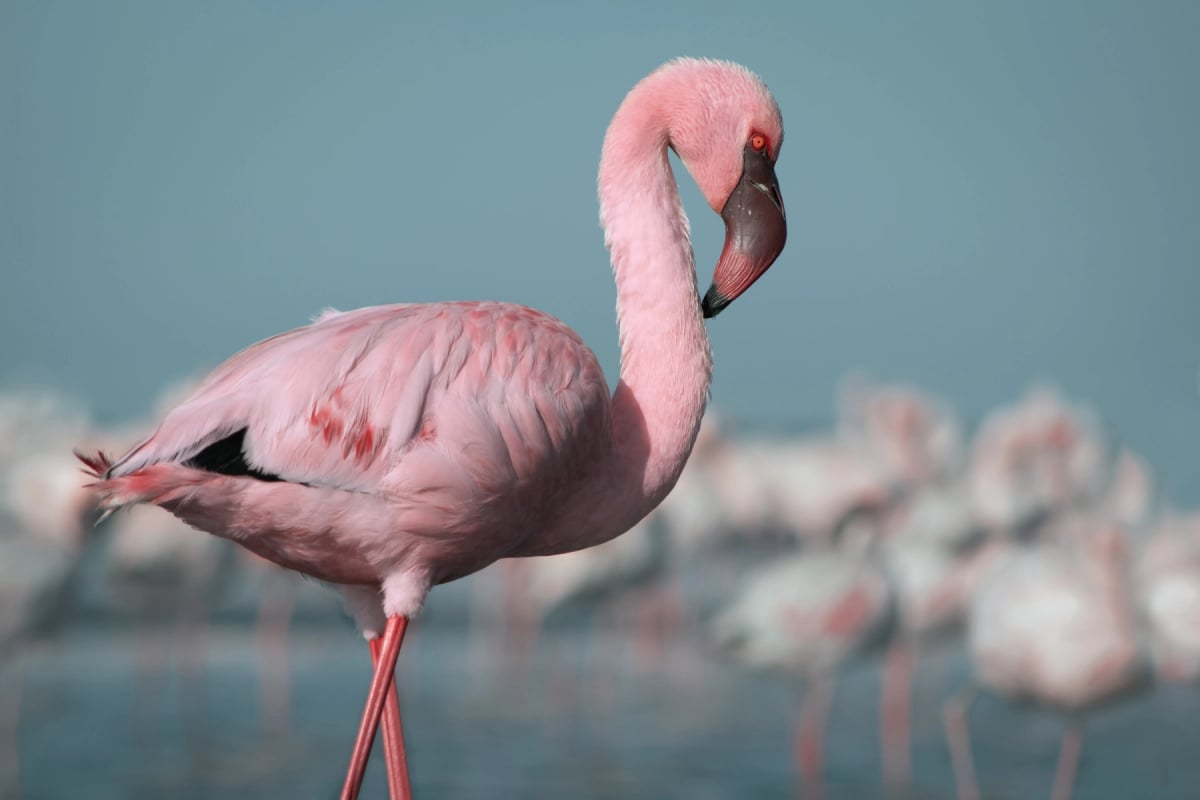
Flamingo
Phoenicopteridae (6 species)
The Yucatán Peninsula is the heart of flamingo country in Mexico. The Ría Celestún Biosphere Reserve and the Ría Lagartos Biosphere Reserve together protect one of the largest breeding colonies of the American flamingo in the world. Tens of thousands of birds gather in these shallow coastal lagoons to breed and feed. Both reserves are recognized as Ramsar Wetlands of International Importance.
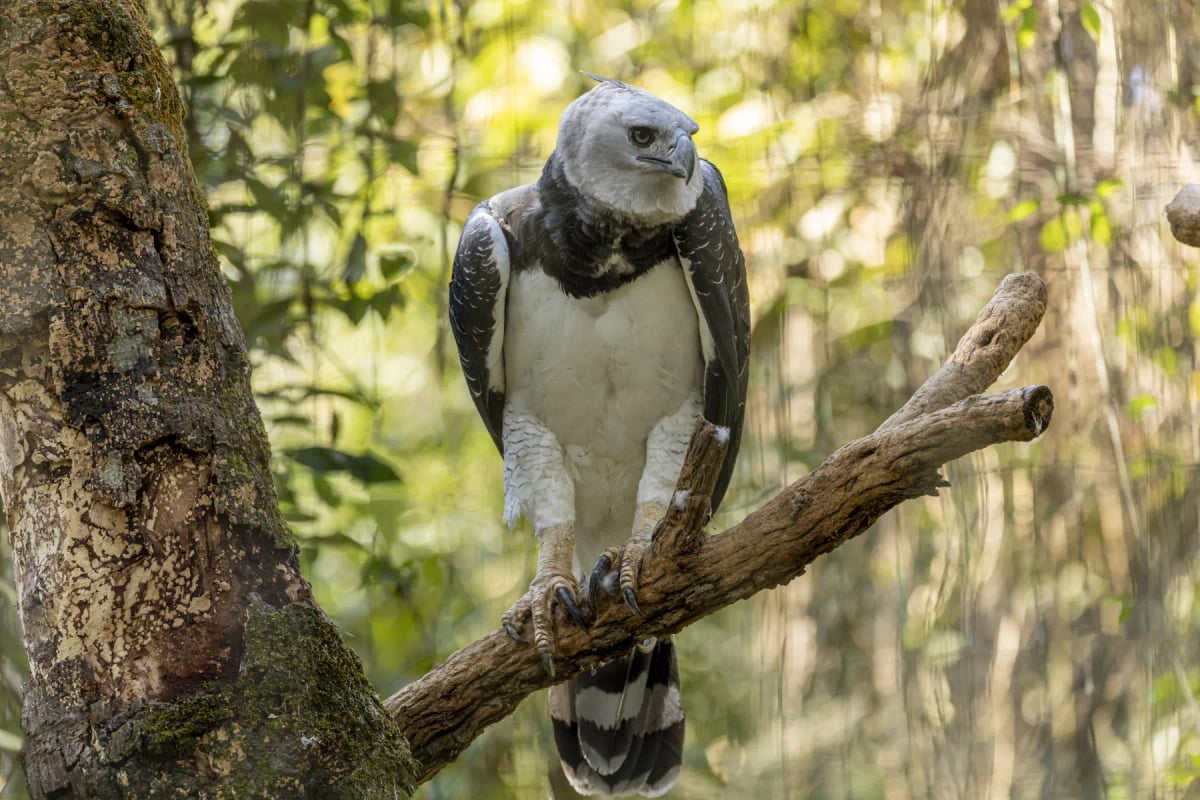
Harpy Eagle
Harpia harpyja
The harpy eagle reaches the northern edge of its range in Mexico, where it once lived as far north as Veracruz. Today it survives in very small numbers, mainly in the humid rainforests of Chiapas. Sightings are rare and each one is significant. Deforestation has pushed this powerful raptor to the brink of disappearing from the country, making it one of the most threatened birds in Mexico. IUCN status: Vulnerable.
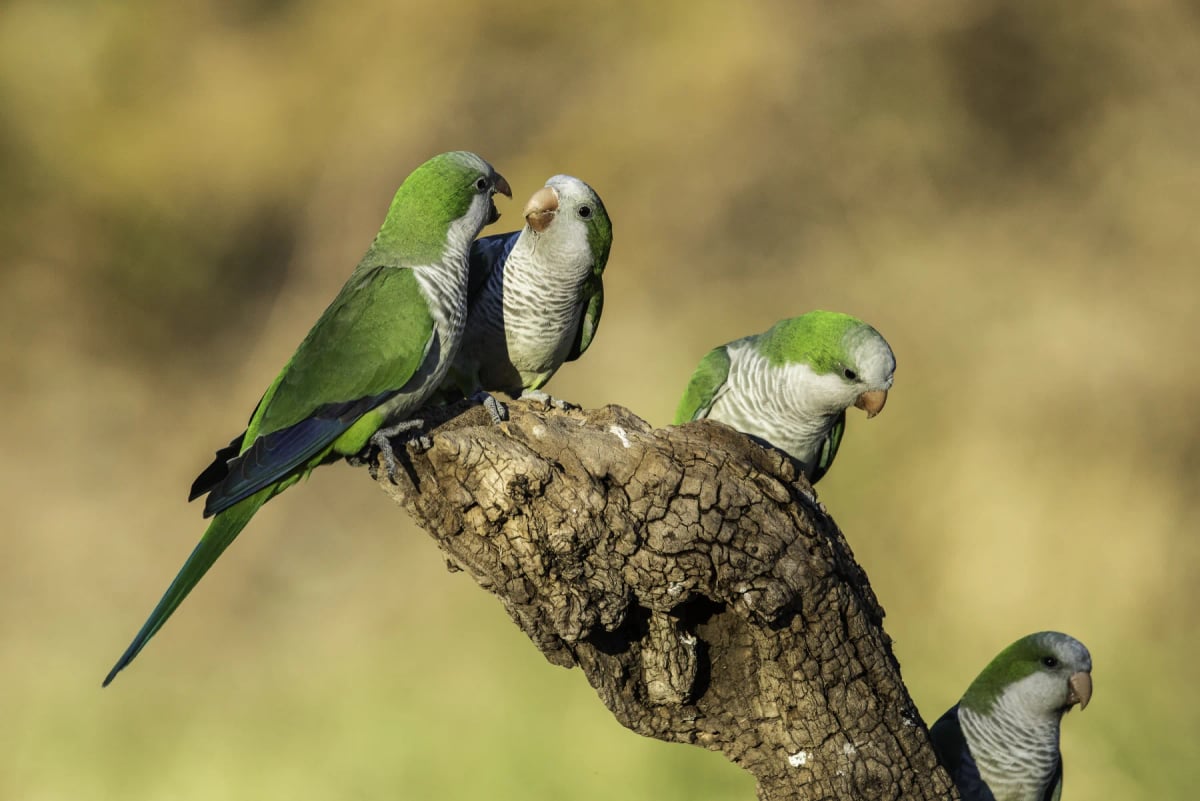
Monk Parakeet
Myiopsitta monachus
The monk parakeet is an introduced species in Mexico, first recorded in Mexico City in 1994 and 1995. Its spread has been fast: by 2015 it had been reported in 97 cities across the country. Part of the reason is the pet trade, which turned to monk parakeets after Mexico banned the capture and sale of its native parrots in 2008. The birds build communal stick nests on trees and power lines, and authorities watch their spread closely. IUCN status: Least Concern.
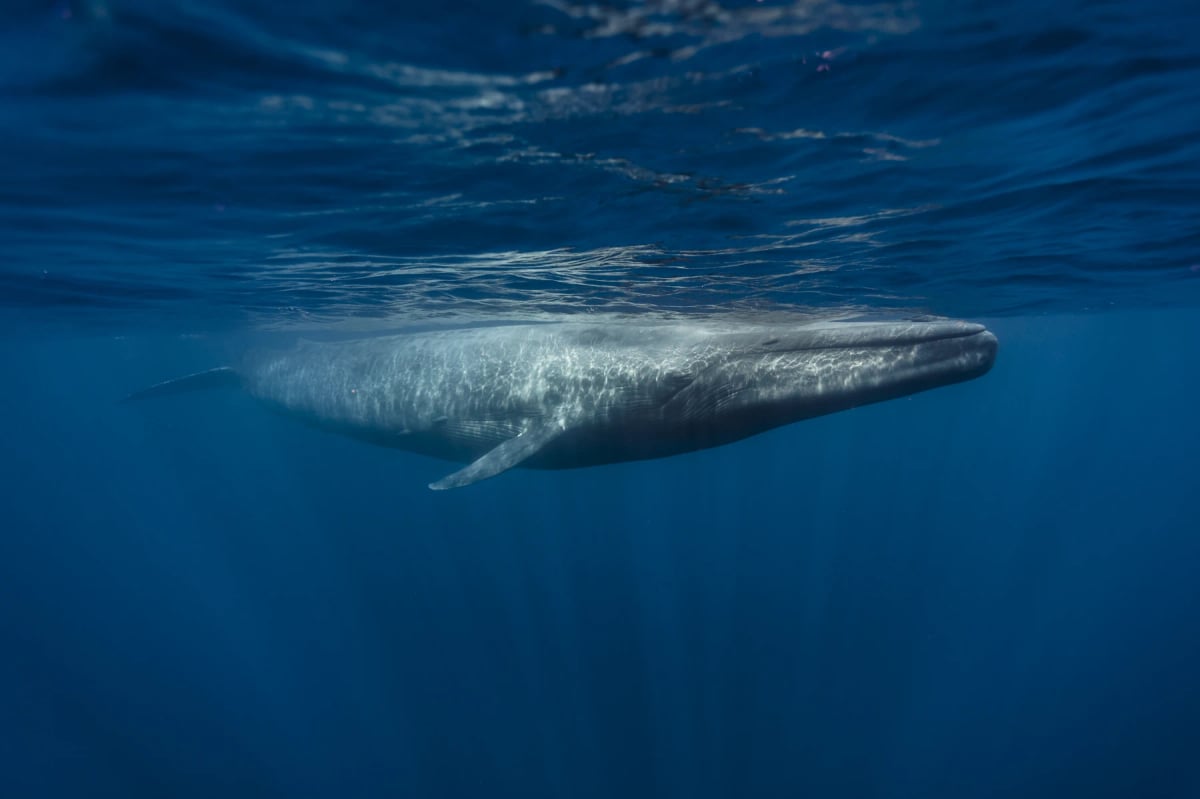
Blue Whale
Balaenoptera musculus
Mexico has one of the most reliable blue whale seasons in the world, in the Gulf of California. Between February and April the whales gather around Loreto, in Baja California Sur, where calm water and plenty of krill attract mothers with calves. Loreto Bay National Park protects part of this area, and local boats follow rules that keep them at a safe distance from the whales. IUCN status: Endangered.
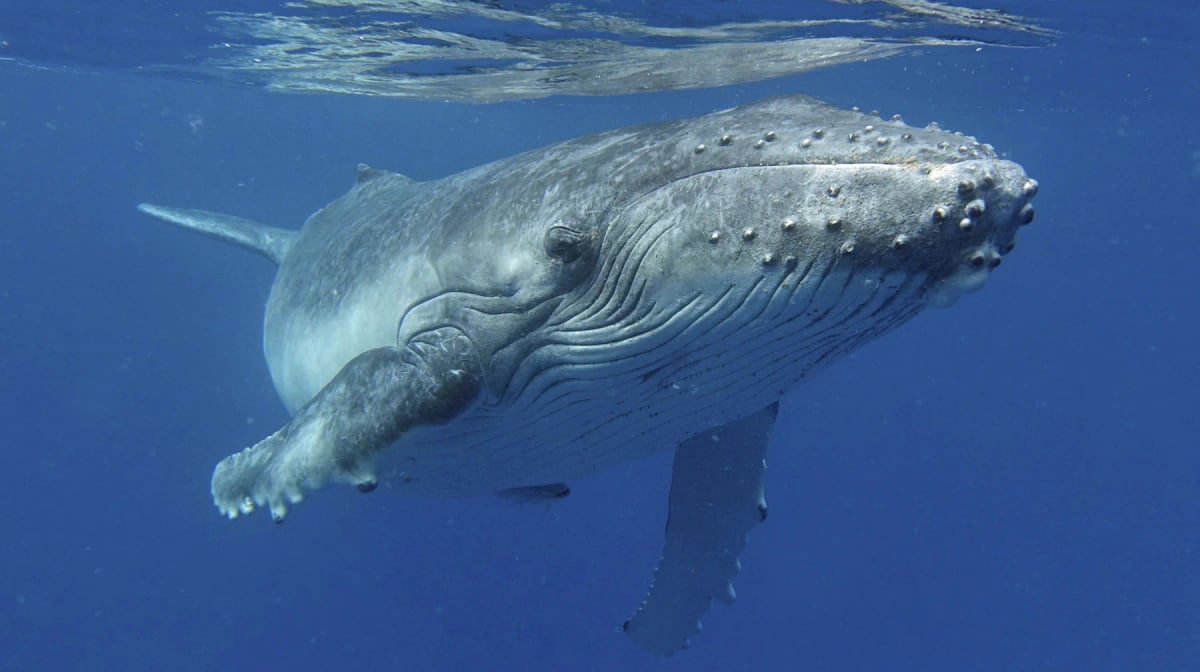
Humpback Whale
Megaptera novaeangliae
Mexico is one of the main humpback breeding grounds of the North Pacific. From December to March whales that feed off California, Alaska and Russia arrive at the tip of Baja California, around Los Cabos, in Bahía de Banderas near Puerto Vallarta and around the Revillagigedo Islands, where divers often hear males singing. Mothers with calves are common in shallow water close to the coast. IUCN status: Least Concern.

Orca
Orcinus orca
Mexico has orcas in the Gulf of California and along the Pacific coast of Baja California, where researchers have identified dozens of individuals that return year after year. Some groups hunt rays and sharks, others sea lions, dolphins and even whales, and they are seen regularly by boats around La Paz, Loreto and the Midriff islands, though their visits are hard to predict. A few also travel farther south along the Pacific coast. IUCN status: Data Deficient.
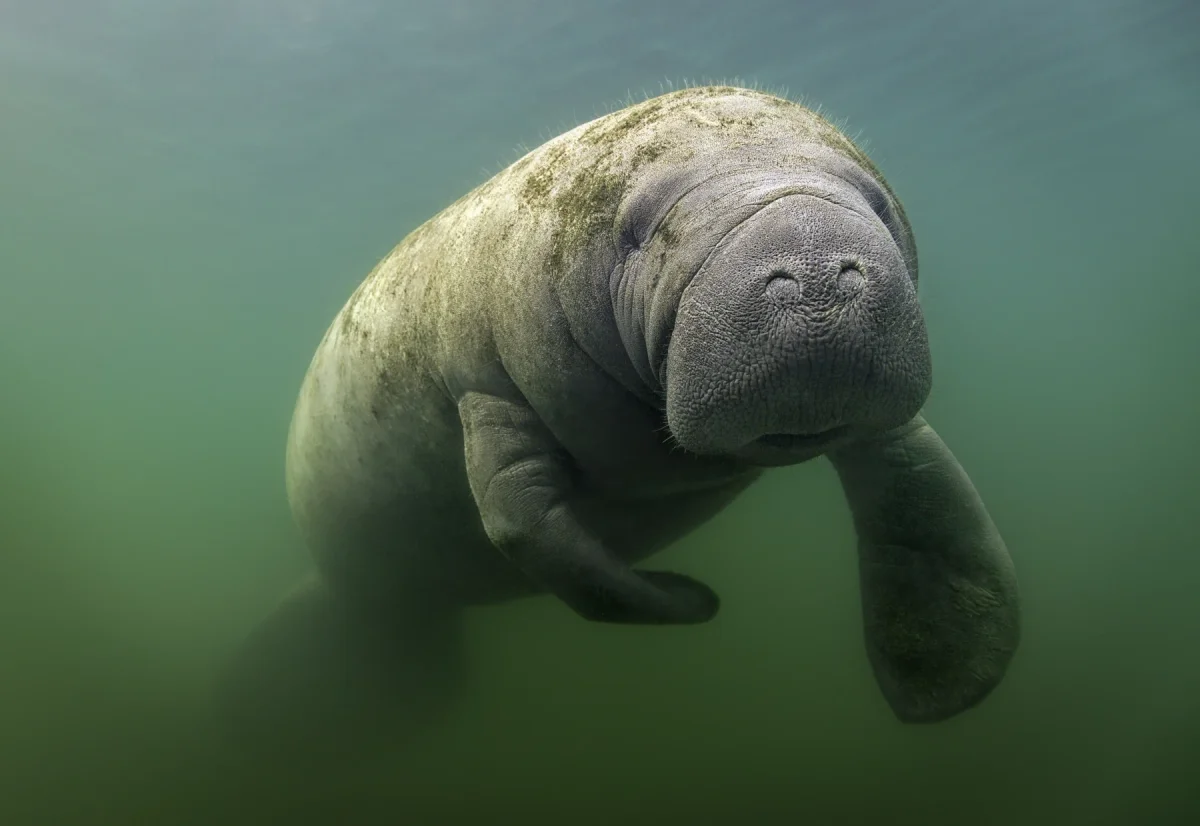
Manatee
Trichechus manatus
Mexico has Antillean manatees along the Gulf of Mexico and the Caribbean. The largest numbers live in the rivers and wetlands of Tabasco, around the Pantanos de Centla, and in Laguna de Términos in Campeche. In Quintana Roo, Chetumal Bay is a manatee sanctuary, and small groups use the cenotes and lagoons of the coast. Hunting once cut their numbers sharply; today nets, boats and polluted wetlands are the main threats. IUCN status: Vulnerable.

Bottlenose Dolphin
Tursiops truncatus
Mexico has bottlenose dolphins on all its coasts. In the Gulf of California they are seen from La Paz and Loreto, in Bahía de Banderas near Puerto Vallarta they are common on boat trips, and in the Caribbean they live in the lagoons and coasts of Quintana Roo and Yucatán. Coastal groups often stay in the same bays for years. Some groups in the Gulf of California have been followed for more than twenty years by local researchers. IUCN status: Least Concern.
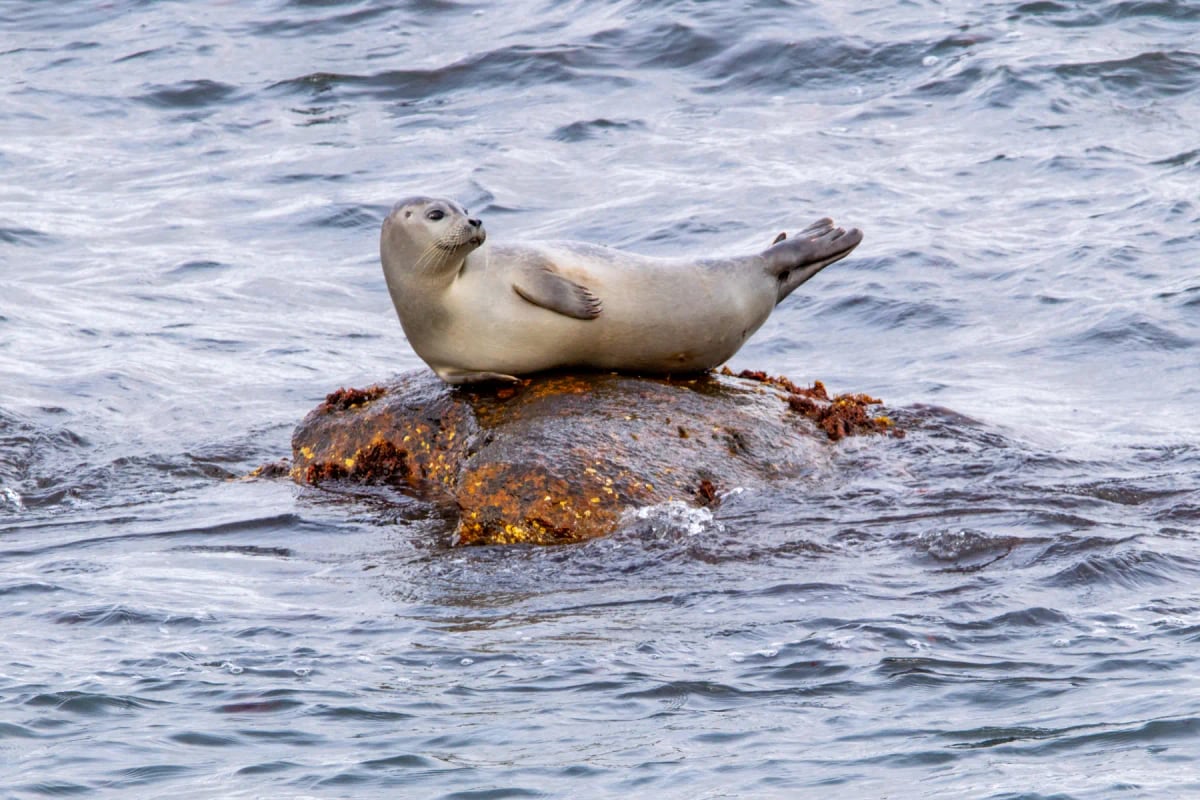
Harbor Seal
Phoca vitulina
Mexico marks the southern end of the harbor seal's range in the Pacific. It lives on the cold Pacific coast of Baja California, where it rests on rocks and beaches of islands such as Todos Santos, San Benito, Cedros and Natividad, and pups are born there from February. The cold California Current keeps these waters rich in fish. They share the islands with sea lions and northern elephant seals. IUCN status: Least Concern.

Common Dolphin
Delphinus delphis
Mexico has huge numbers of common dolphins along the Pacific coast of Baja California and in the Gulf of California, where groups of hundreds or even thousands are seen on trips from La Paz, Loreto and Cabo San Lucas. Most belong to the long beaked form of the eastern Pacific, which feeds on sardines and squid. They are seen all year, often hunting together with seabirds and sea lions. IUCN status: Least Concern.
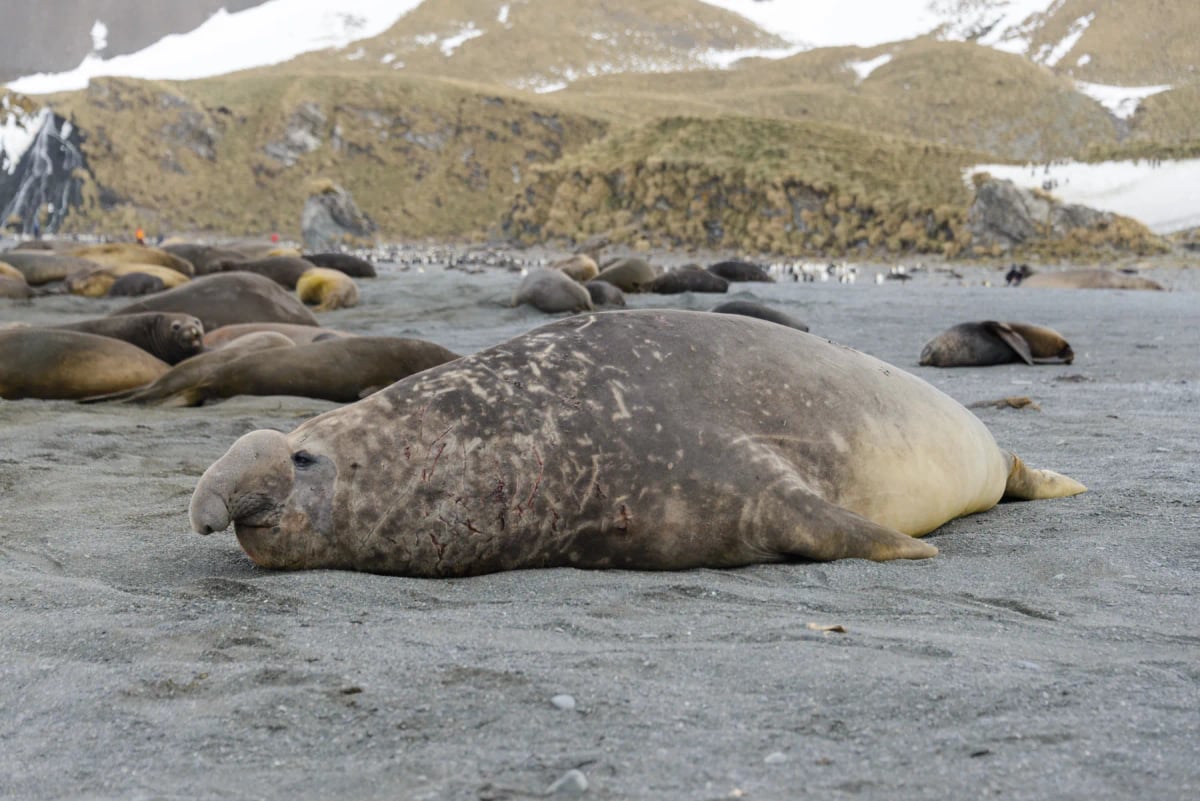
Elephant Seal
Mirounga spp.
The northern elephant seal breeds on the Pacific islands of Baja California, above all Isla Guadalupe and the San Benito Islands. Guadalupe matters for the whole species: the last few dozen seals that survived the hunting of the 1800s held on there, and every northern elephant seal alive today descends from them. The island is a protected biosphere reserve where the seals rest, molt and raise their pups in winter. IUCN status: Least Concern.
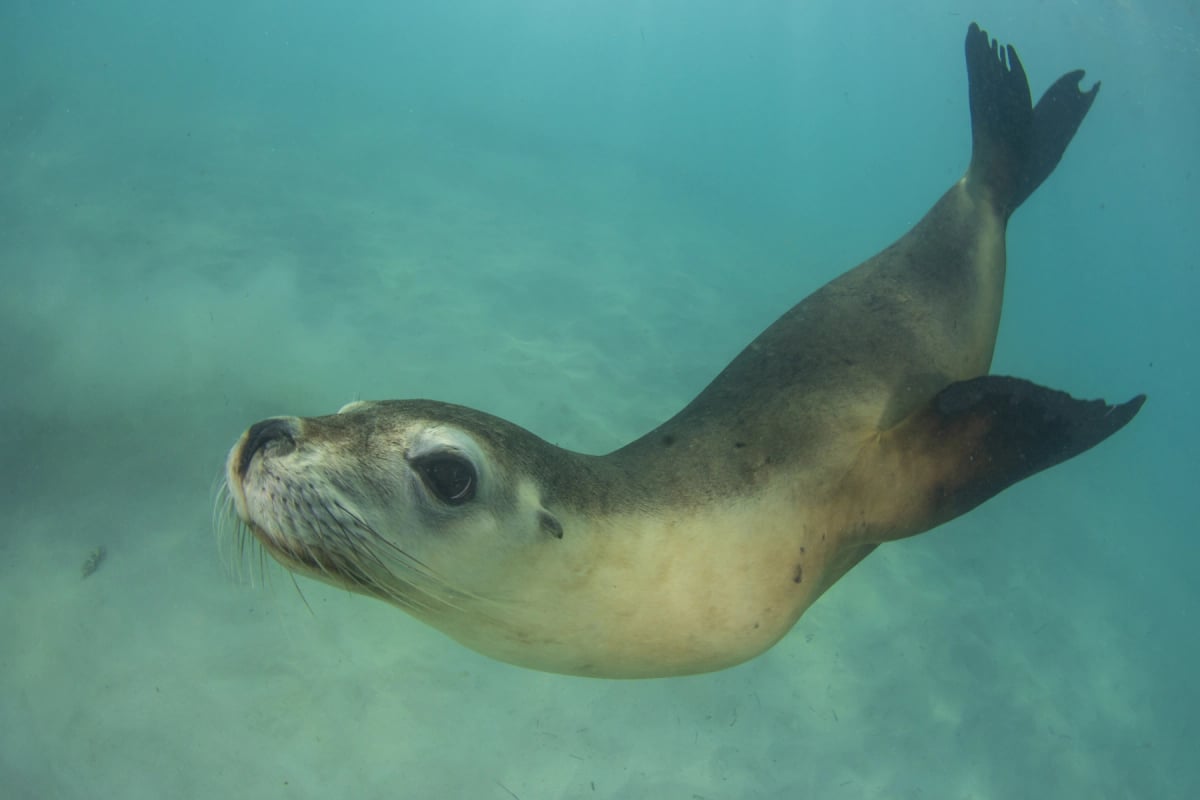
Sea Lion
Otariinae (six living species)
Mexico holds a large share of the California sea lion population. It breeds on the Pacific islands of Baja California and in the Gulf of California, at colonies such as Los Islotes near La Paz, where boats take people to snorkel with curious young sea lions, and San Jorge Island off Puerto Peñasco. The gulf colonies are genetically distinct from those of the Pacific, and some of them have declined in recent decades. IUCN status: Least Concern.
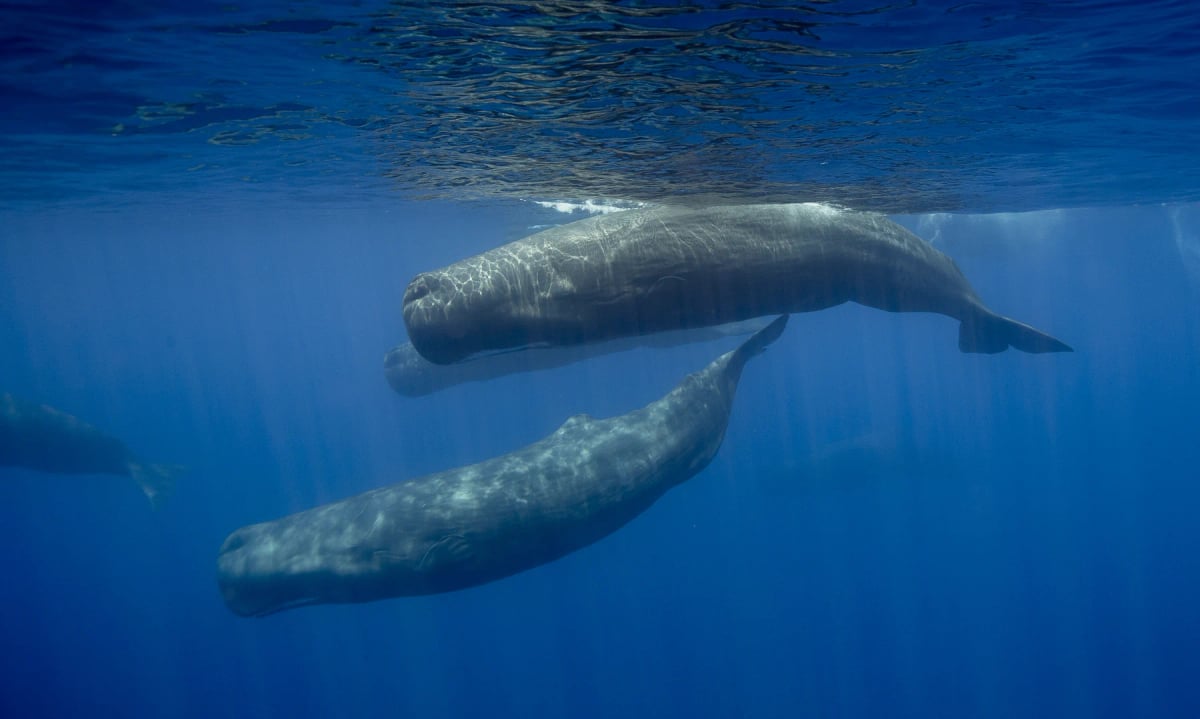
Sperm Whale
Physeter macrocephalus
Mexico has sperm whales all year in the deep central Gulf of California, where family groups of females and calves feed on jumbo squid. They are seen most often from about November to May, on trips from Loreto and around Santa Rosalía, where the seafloor drops steeply near the coast. Sperm whales also live in the deep waters of the Pacific and the Gulf of Mexico, though they are rarely seen there. IUCN status: Vulnerable.
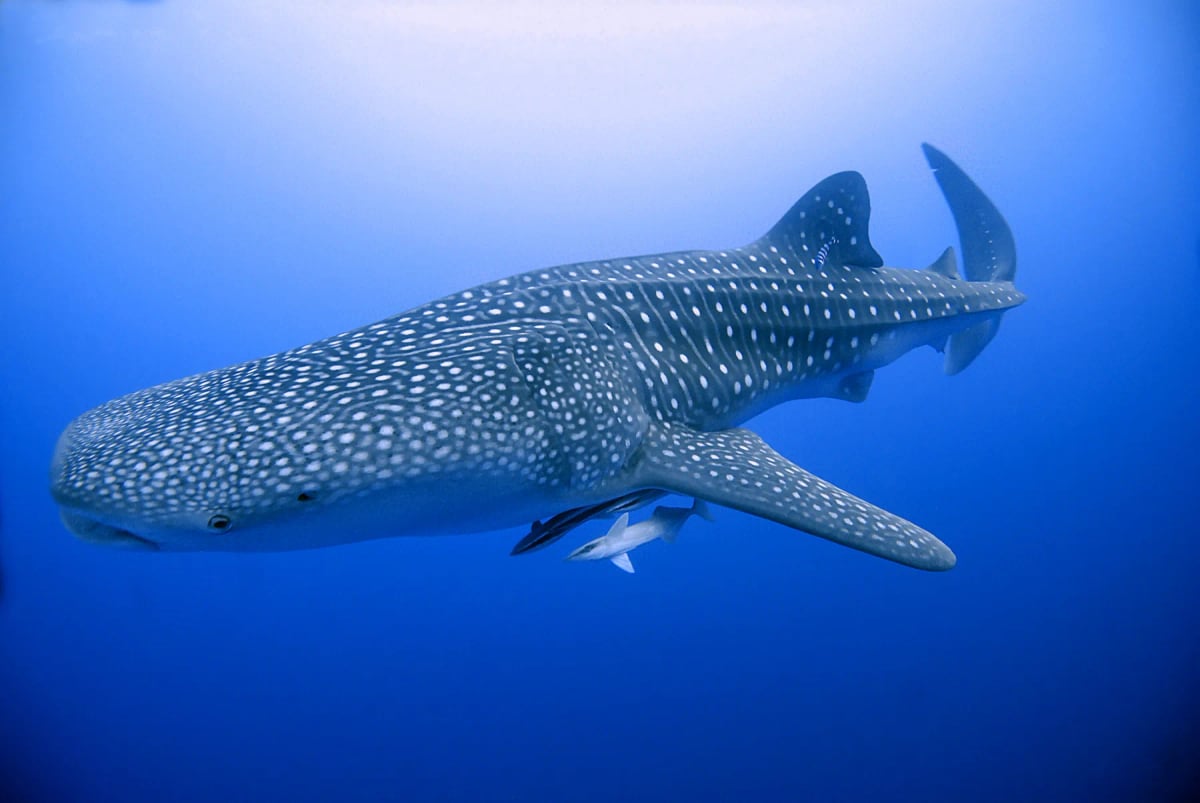
Whale Shark
Rhincodon typus
Mexico has two of the world's great whale shark sites. Off Isla Mujeres and Holbox, in the Caribbean, hundreds gather from June to September to feed on fish spawn, one of the largest aggregations on Earth. In the Gulf of California, young whale sharks feed in the Bay of La Paz from October to April, and adults visit Bahía de los Ángeles in summer. Swimming tours in both places follow strict rules. IUCN status: Endangered.
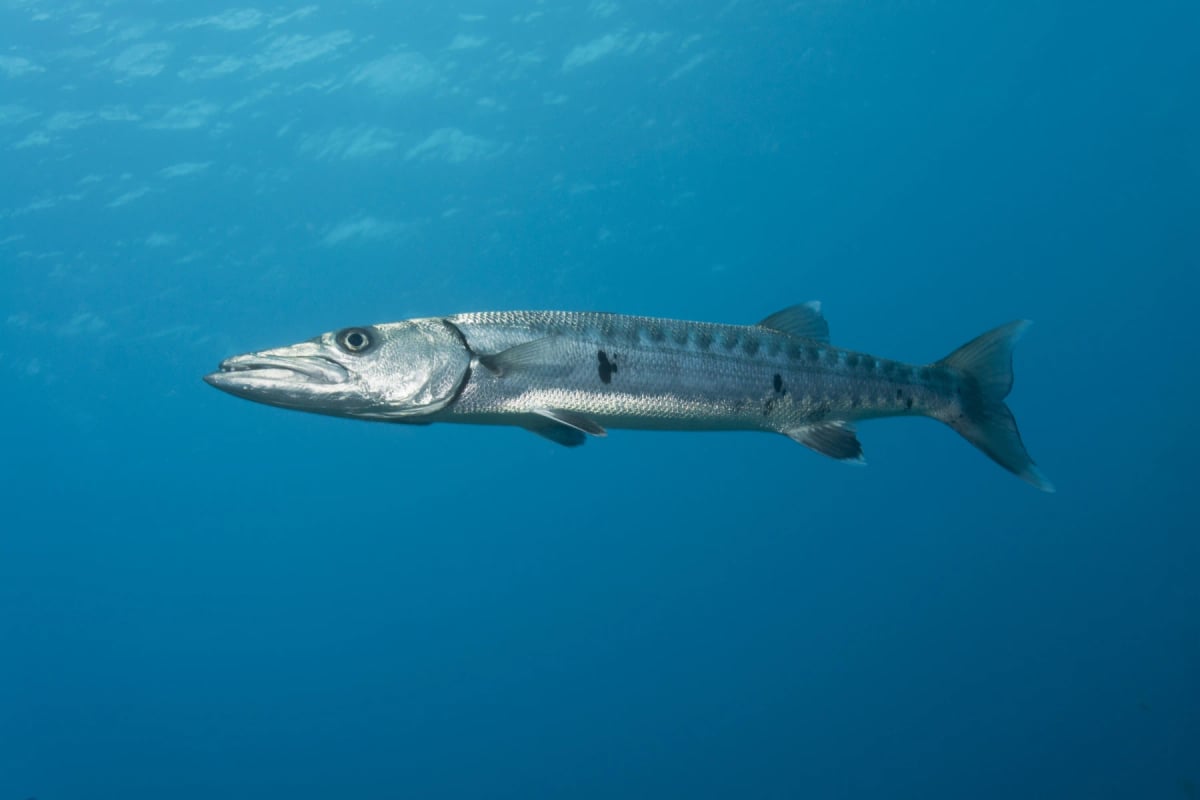
Barracuda
Sphyraena barracuda
In Mexico the great barracuda lives in the Caribbean and the Gulf of Mexico, not on the Pacific coast, where other barracuda species take its place. Divers see it on the reefs of Cozumel, the Riviera Maya and Banco Chinchorro, often alone and hanging still near the wall, and it also patrols the reefs off Veracruz and the Campeche Bank. Juveniles grow up in the mangroves of Sian Ka'an and the Yucatán coast. IUCN status: Least Concern.
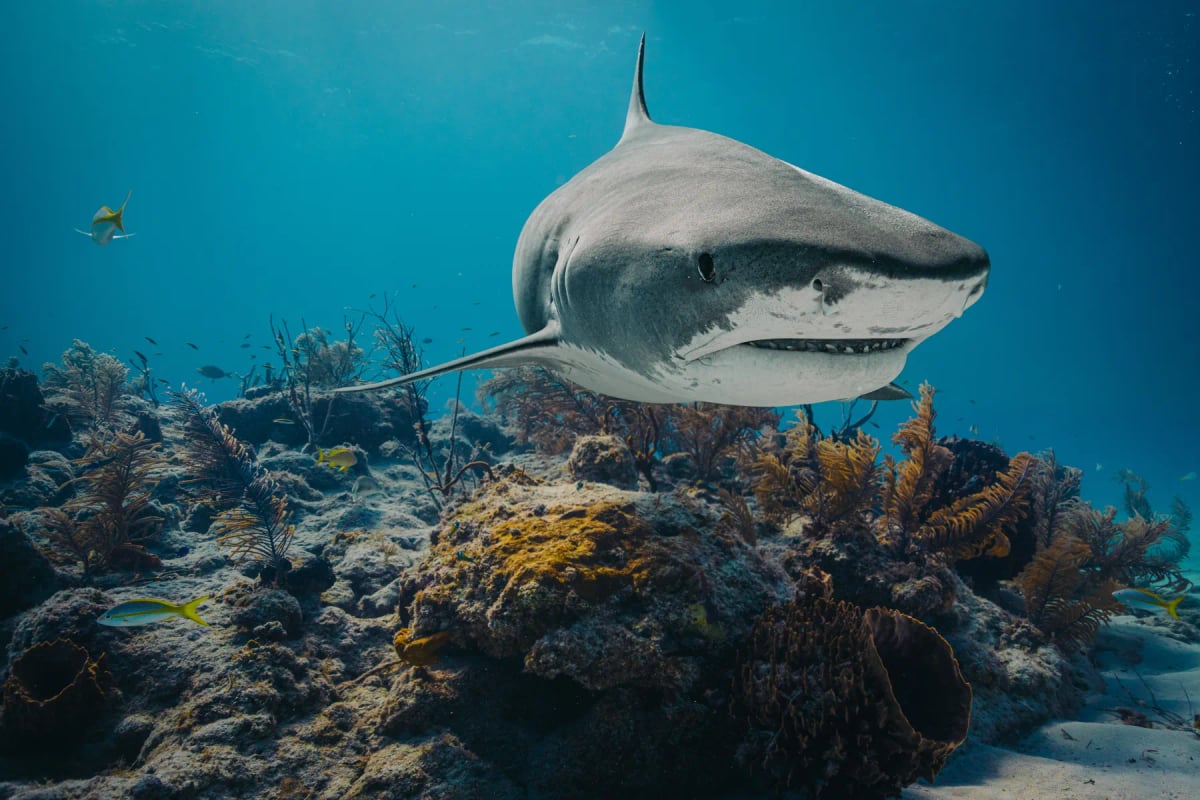
Tiger Shark
Galeocerdo cuvier
Mexico has tiger sharks on both coasts. On the Caribbean side they live off Quintana Roo and around Cozumel and Banco Chinchorro, and in the Gulf of Mexico they live off Veracruz and the Yucatán. On the Pacific side they are found from Baja California south and around the Revillagigedo Islands. Artisanal fishers catch them on both coasts. Bites on people in Mexico are very rare. IUCN status: Near Threatened.
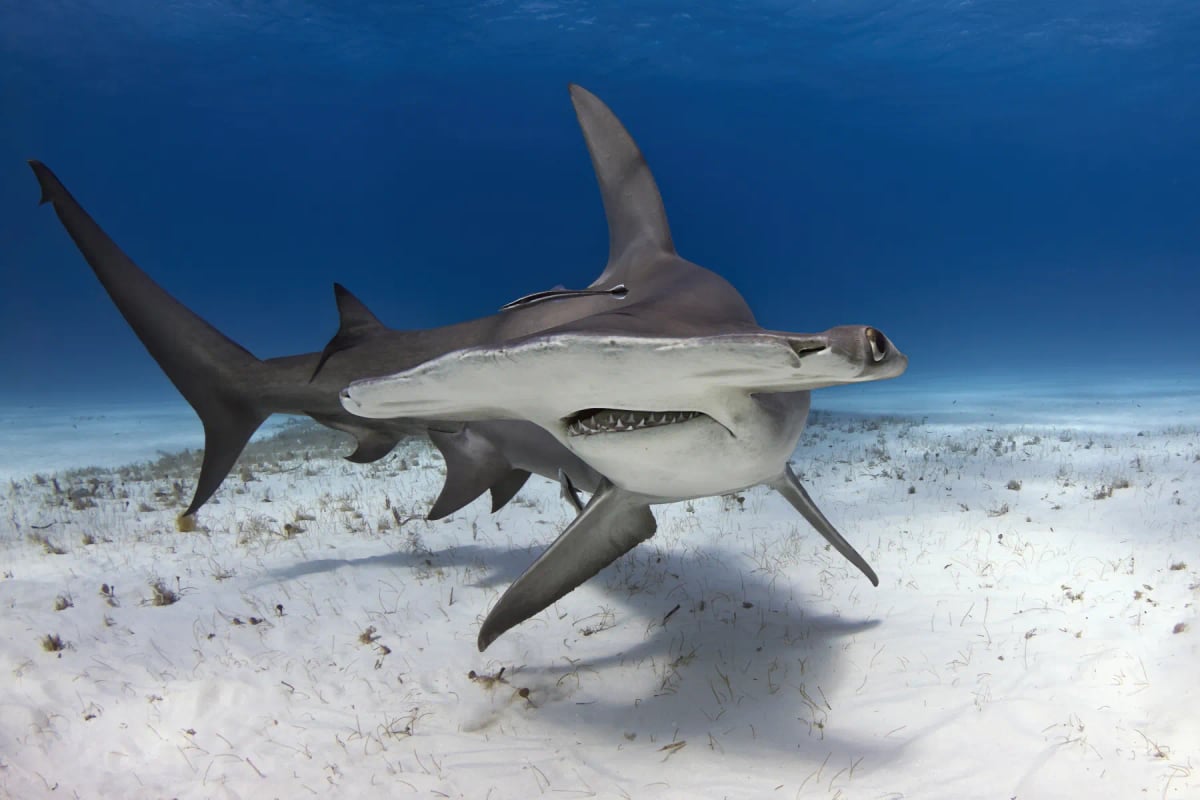
Hammerhead Shark
Sphyrnidae (Sphyrna mokarran, S. lewini and others)
In Mexico scalloped hammerheads once formed huge schools at El Bajo de Espíritu Santo, a seamount near La Paz in the Gulf of California, but fishing reduced them sharply, and today the largest schools are seen around the Revillagigedo Islands, a marine park far off the Pacific coast where fishing is banned. Great hammerheads visit the Caribbean coast, and young hammerheads are caught in coastal nurseries on both sides. IUCN status: Critically Endangered.
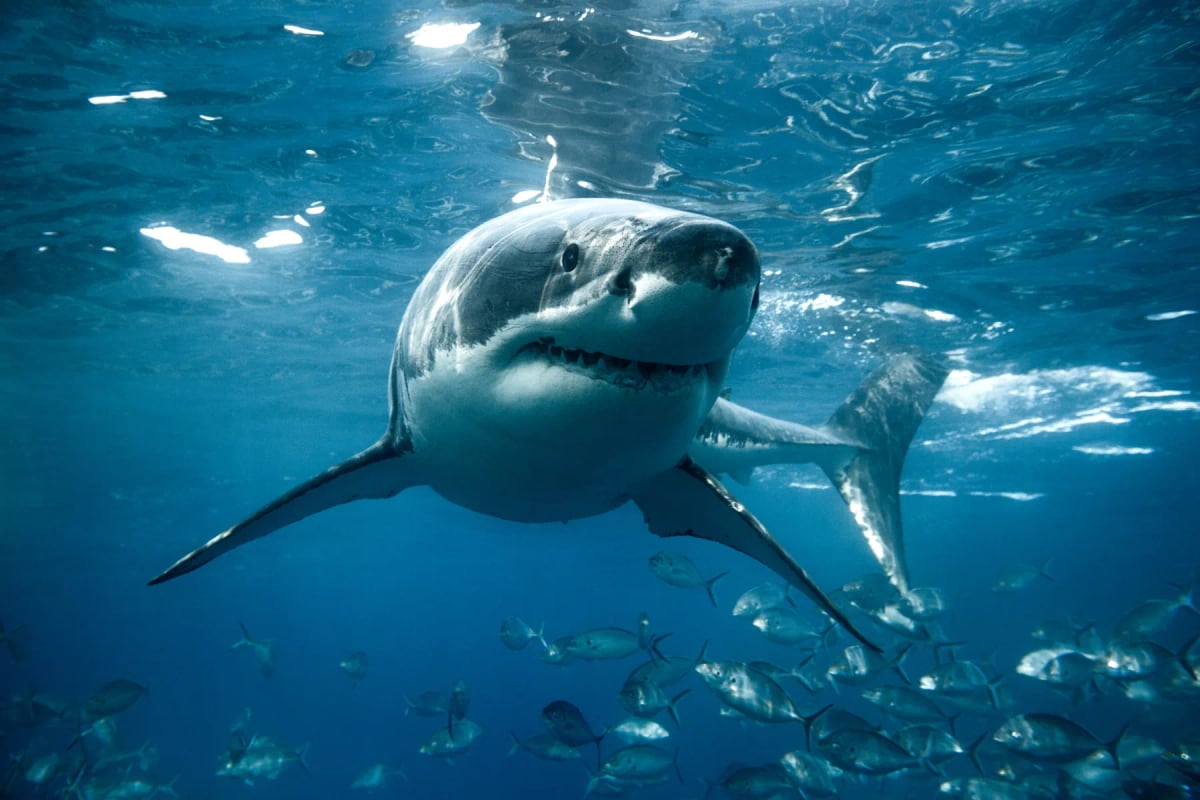
Great White Shark
Carcharodon carcharias
In Mexico great white sharks gather every year, from about August to January, at Guadalupe Island, a volcanic island about 250 kilometers off Baja California, drawn by elephant seals and fur seals. It was one of the best places in the world to see them until Mexico banned cage diving there in 2023 to protect the sharks. Young great whites use nurseries along the Pacific coast of Baja California, and the species is fully protected. IUCN status: Vulnerable.
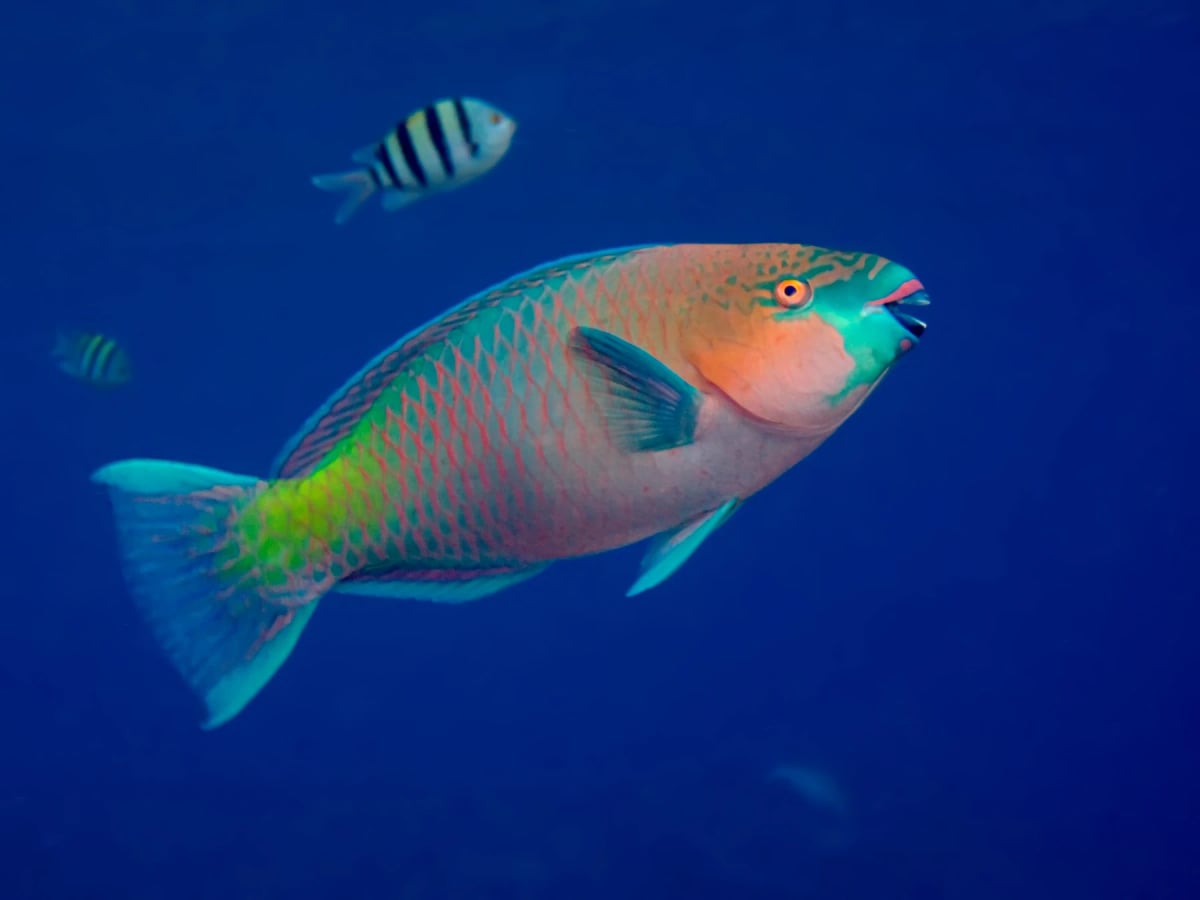
Parrotfish
Scaridae
In Mexico parrotfish live on both coasts. On the Mesoamerican Reef of the Yucatán Peninsula, at Cozumel, the Riviera Maya and Banco Chinchorro, divers see stoplight, queen, rainbow and blue parrotfish grazing the reef, and their sand helps build the white beaches of Quintana Roo. On the Pacific side, other species such as the bluechin parrotfish live on the rocky and coral reefs of Baja California Sur, including Cabo Pulmo. IUCN status: varies by species.
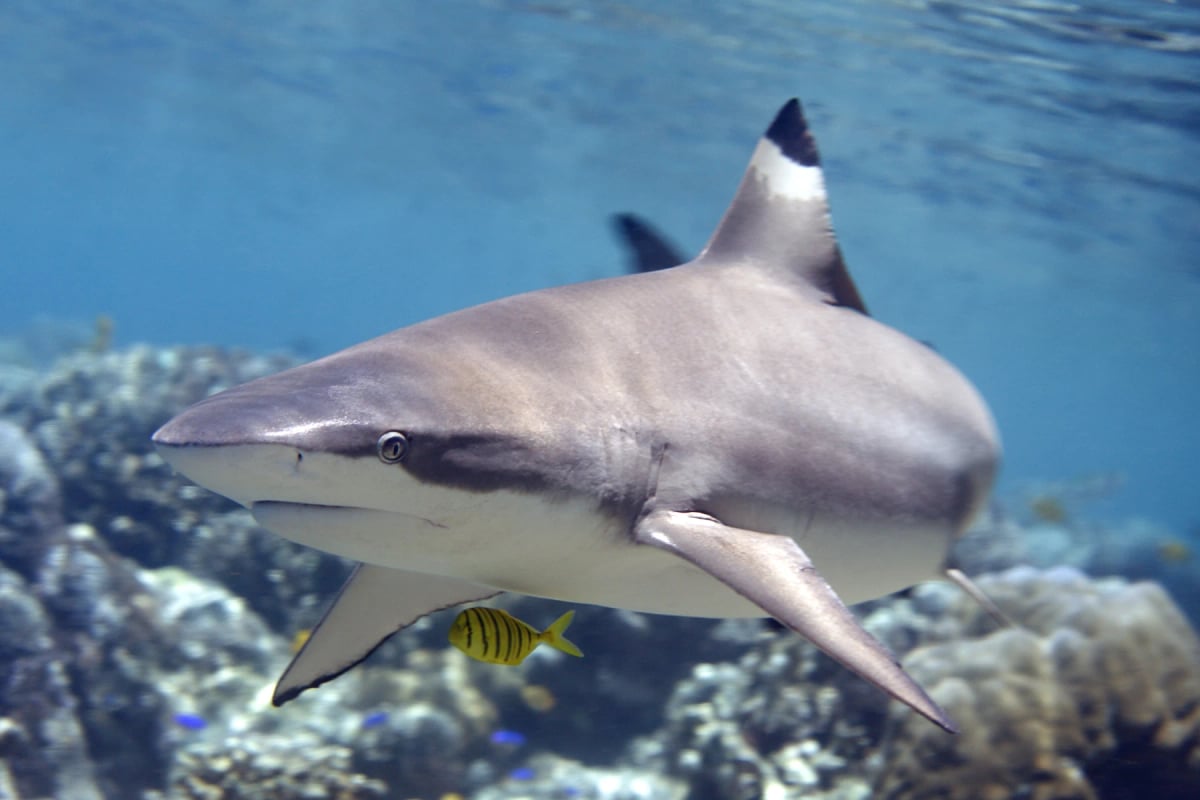
Reef Shark
Several species (Carcharhinus melanopterus, C. perezi, C. amblyrhynchos, Triaenodon obesus)
In Mexico the Caribbean reef shark lives along the Mesoamerican Reef, off Cozumel, the Riviera Maya and Banco Chinchorro. Off Isla Mujeres lies the famous Cave of the Sleeping Sharks, where Caribbean reef sharks were found resting motionless in the 1970s, a discovery that changed what scientists knew about sharks. Fishing has reduced them, and they are now seen mostly on protected reefs. IUCN status: Endangered.
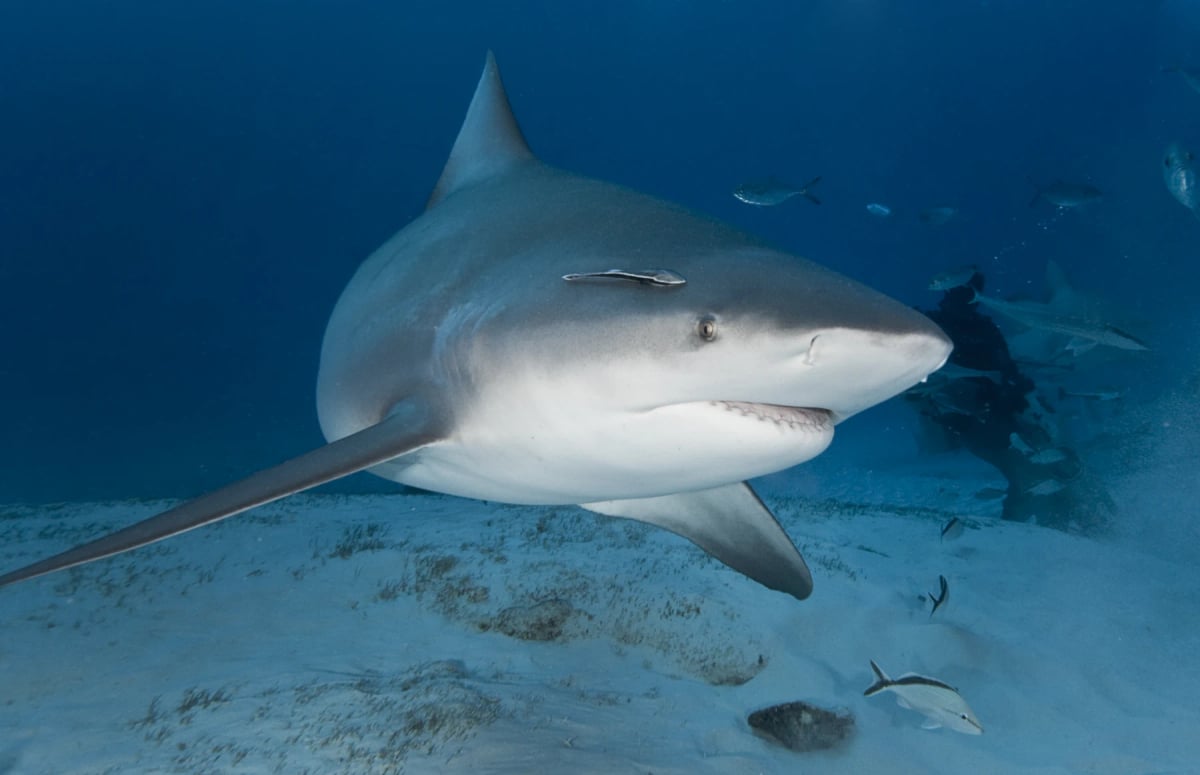
Bull Shark
Carcharhinus leucas
Mexico has bull sharks on both coasts, in the Gulf of Mexico off Veracruz and Tamaulipas, in the Caribbean and on the Pacific side, from Sinaloa south, where they enter lagoons and river mouths. The best known site is Playa del Carmen, in Quintana Roo, where pregnant females gather from about November to March and divers can watch them on guided dives. They are also caught by artisanal fishers in both seas. IUCN status: Vulnerable.
Frequently Asked Questions
What animals live in Mexico?
Mexico's animals include jaguars, cougars, ocelots, margays, jaguarundis, bobcats, coyotes, gray wolves, gray foxes, black bears, raccoons, opossums, armadillos, river otters, beavers, pronghorns, white tailed deer, tapirs and spider monkeys. Its birds include the golden eagle, the resplendent quetzal, scarlet macaws, motmots, flamingos and barn owls. The axolotl lives only in the canals of Xochimilco. Along its coasts swim whale sharks, sea turtles, blue whales, sperm whales, orcas, dolphins, sea lions and several kinds of shark.
What is the national animal of Mexico?
The national bird of Mexico is the golden eagle, the eagle on the Mexican flag, shown perched on a cactus with a snake in its talons. According to the legend, that was the sign the Mexica were told to look for when choosing where to found their city, Tenochtitlan, today Mexico City. The golden eagle is one of the largest birds of prey in the world, with a wingspan over two meters, and it nests on cliffs in the north and center of the country. Only a few hundred pairs are left in Mexico, and it is fully protected.
Are there raccoons in Mexico?
Yes. The common raccoon lives all over Mexico, from northern deserts to tropical forests, and it is easy to see near towns, farms and beaches. Mexico also has its own raccoon: the pygmy raccoon of Cozumel, an island off the coast of Quintana Roo. It is smaller than the common raccoon, with a golden tail, and it lives only on that island, mostly in the mangroves at its northwestern tip. Fewer than 250 adults are left, which makes it one of the most endangered mammals in the country.
What monkeys live in Mexico?
Monkeys live in the tropical forests of southern Mexico, in states such as Chiapas, Tabasco, Campeche, Yucatán and Quintana Roo. The spider monkey is the best known: it has very long arms and a tail that works like a fifth hand, and it travels through the treetops in noisy groups, feeding mainly on fruit. Monkeys were sacred animals for the Maya, who linked them with art and writing. Calakmul, Palenque and the forests around Yaxchilán are among the easiest places to see and hear them.
Are there jaguars in Mexico?
Yes. Mexico is the northern end of the jaguar's range, and the national census counted about 4,800 in 2018, around 20 percent more than ten years earlier. Most live in the forests of the Yucatán peninsula, especially around Calakmul, and in Chiapas, with smaller groups along the Pacific coast and in the northeast. The jaguar is the largest cat in the Americas and has the strongest bite of any big cat. It is protected by law: hunting has been banned since 1987, and the main threats today are deforestation and conflicts with ranchers.
Researched and written by Juan Pablo. Sources: IUCN Red List, scientific literature and regional field guides. Last updated: .