Amur Leopard
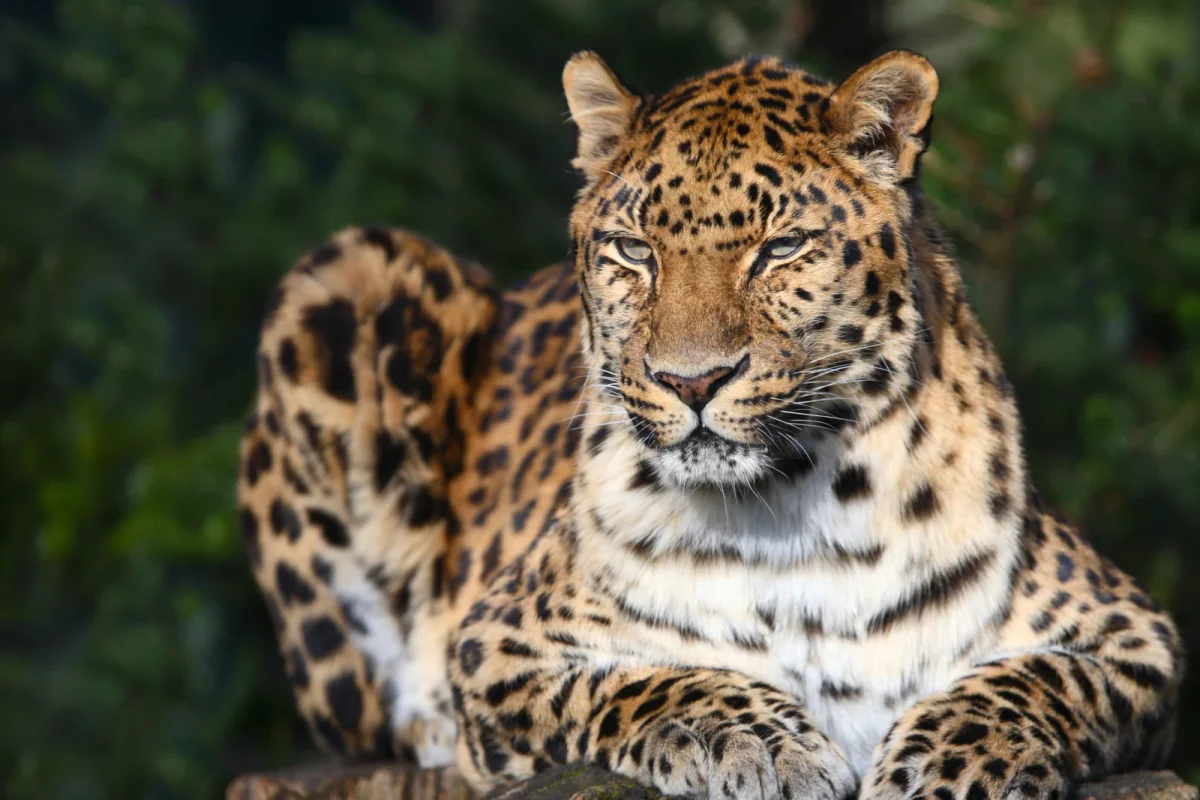
The Amur leopard (Panthera pardus orientalis), also called the Far Eastern leopard, is the leopard of the cold temperate forests of northeast Asia and one of the rarest big cats in the world. It is a subspecies of the leopard, adapted to snowy winters with a long, thick, pale coat and large, widely spaced rosettes with thick black borders. Males usually weigh 32 to 48 kilograms and females 25 to 43. It once ranged across northeast China, the Korean Peninsula and the Russian Far East, but today it survives only in a small area along the border between Russia and China, in southwest Primorsky Krai and the neighboring provinces of Jilin and Heilongjiang. There it hunts sika deer, roe deer and wild boar in hilly forests of oak and Korean pine. By the early 2000s only a few dozen remained, but strict protection and new national parks on both sides of the border have helped the population grow to more than 200.
Names and Relatives
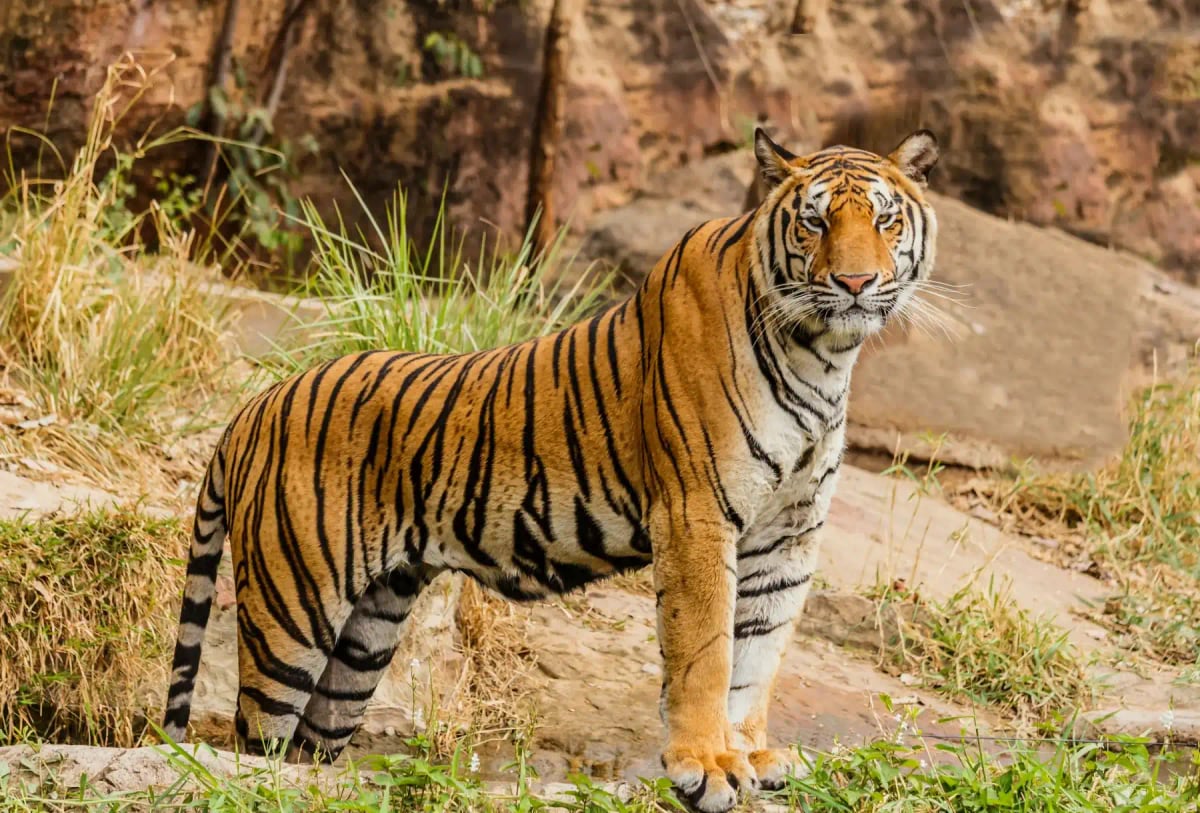
The Amur leopard takes its name from the Amur River, which forms much of the border between Russia and China, although today it lives well south of the river itself. It is also known as the Far Eastern leopard, and in the past as the Korean or Manchurian leopard. It is not a separate species but one of the eight subspecies of leopard, Panthera pardus, recognized by the IUCN Cat Specialist Group in 2017. In that review, the leopards of northern China were placed in the same subspecies, but the name Amur leopard is still used for the cats of the Russian Far East and northeast China. It is the northernmost leopard in the world and the one best adapted to snow. Despite the name, it is not closely related to the snow leopard, which belongs to the same genus but is a different species of the high mountains of Central Asia. In the forests of Primorye it shares its home with the Siberian tiger.
Size and Winter Coat
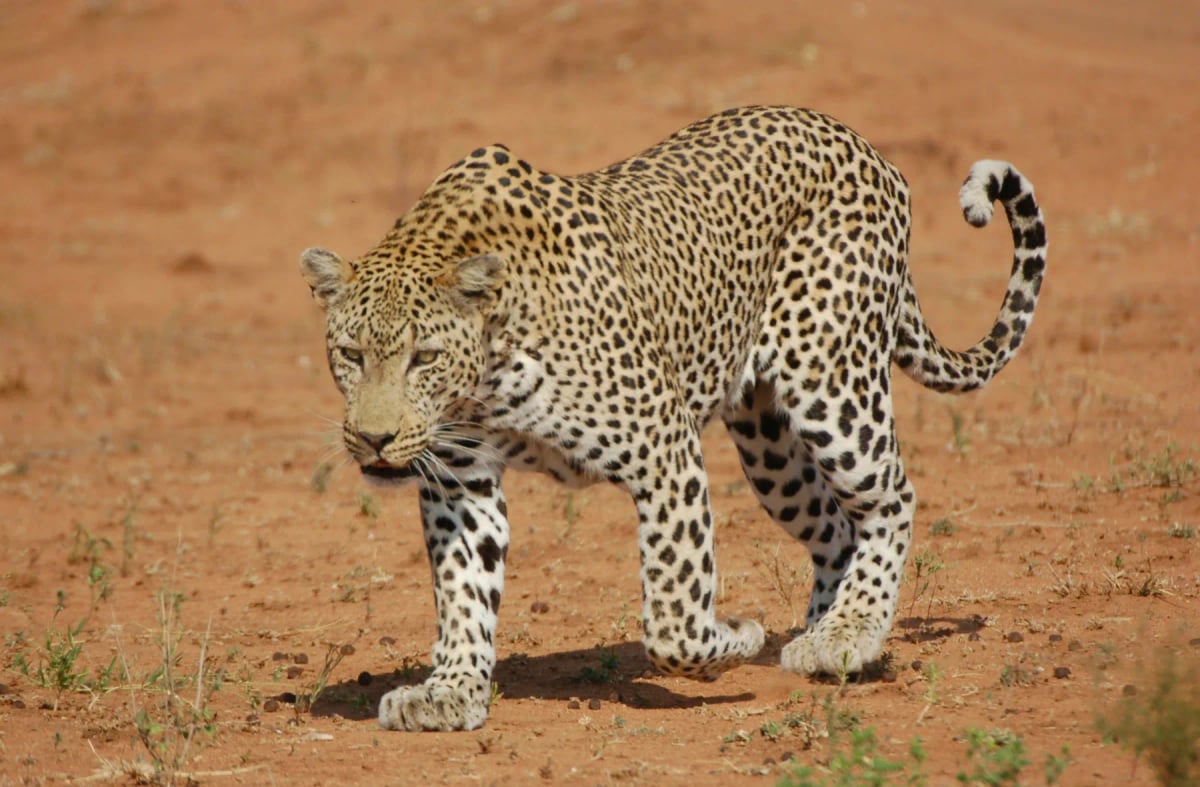
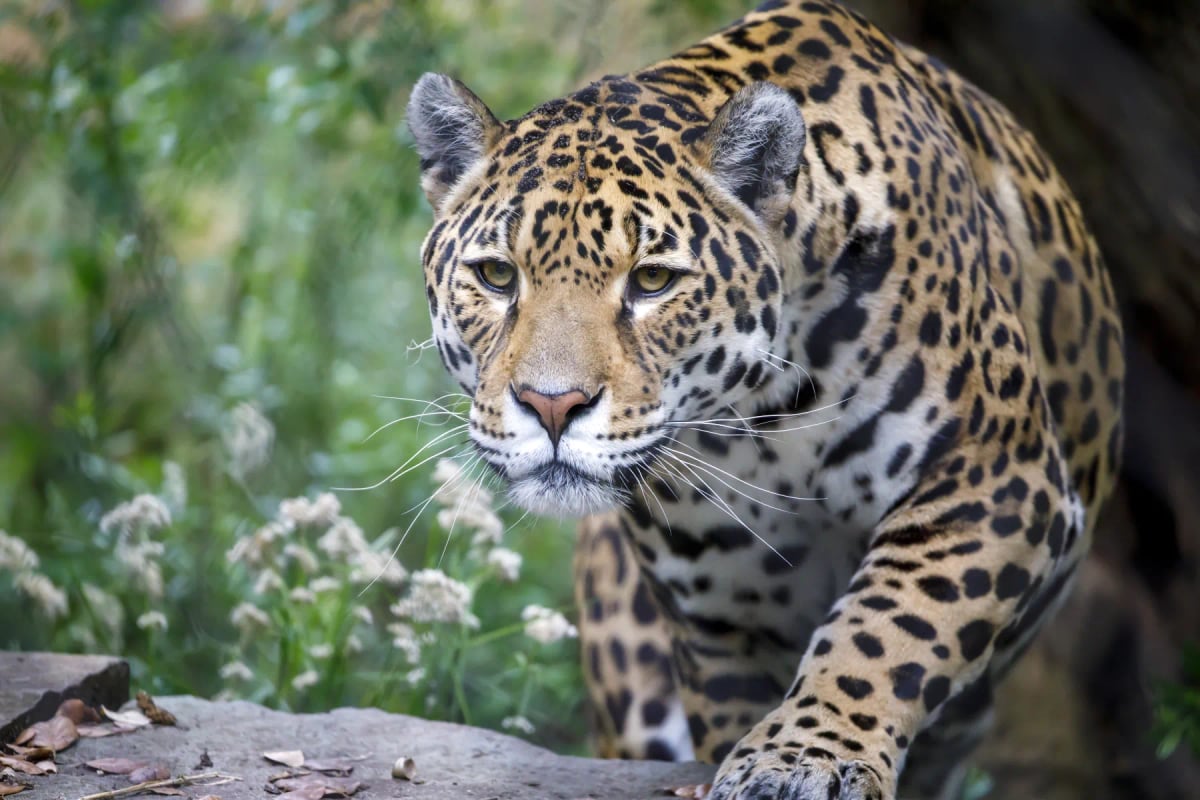
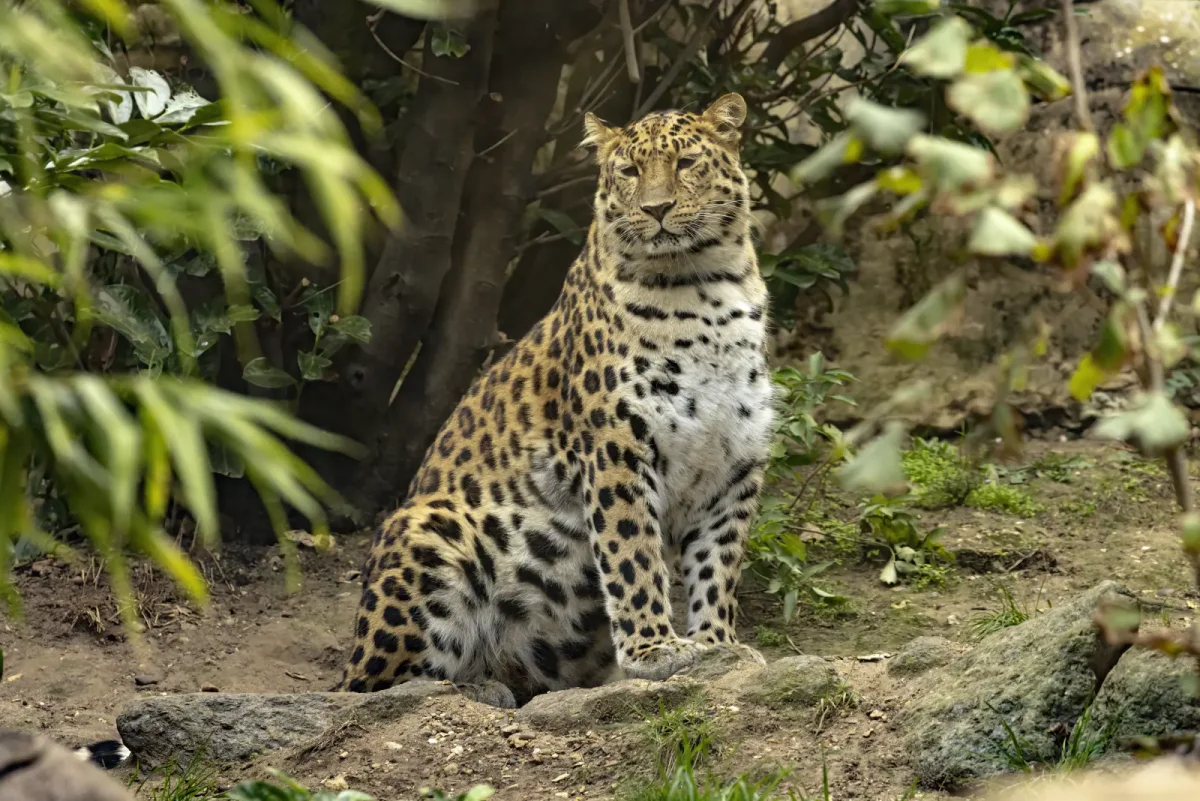
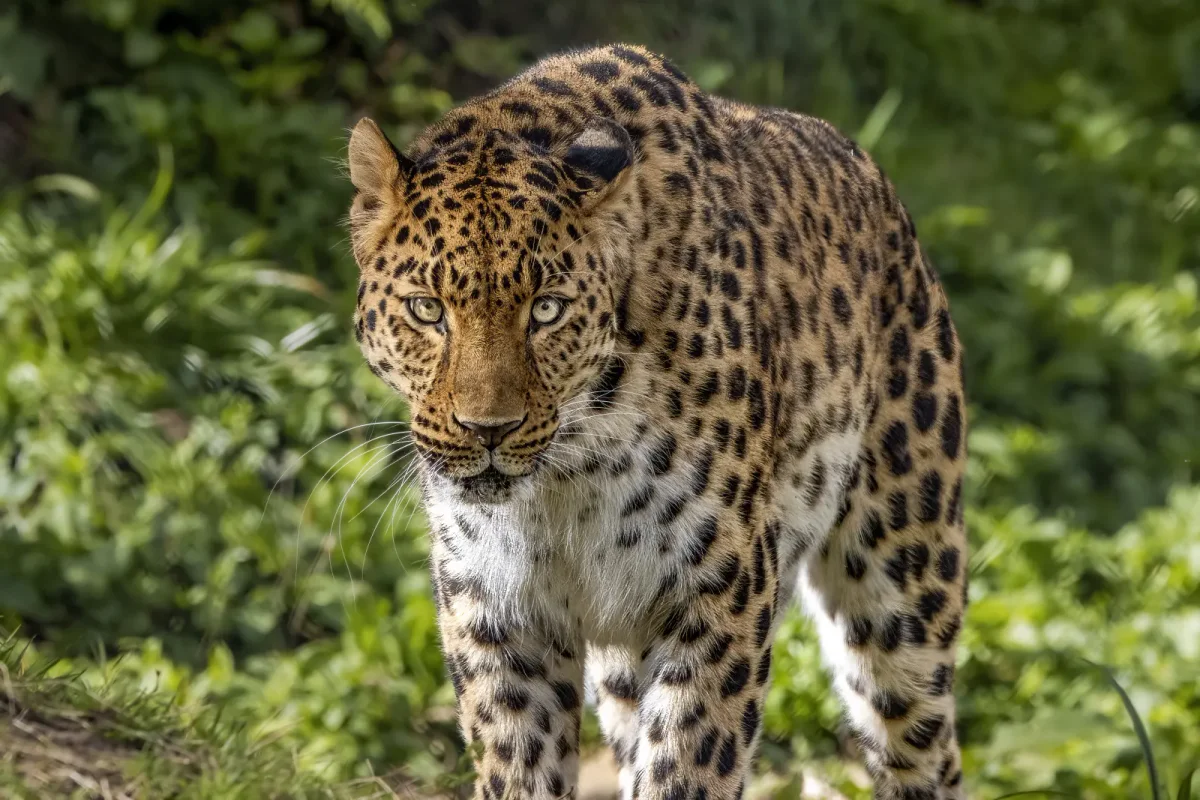
The Amur leopard is a medium sized leopard. Males usually weigh 32 to 48 kilograms, with large individuals reaching about 60, and females 25 to 43 kilograms. The body measures up to about 136 centimeters, and the long tail adds up to 90 centimeters more, helping with balance on rocks and slopes. What makes it stand out is its coat. In summer the fur is short and bright, about 2.5 centimeters long, but in winter it grows thick and soft, up to 7 centimeters long, and turns paler, a creamy gold that blends better with snow and bare winter forest. The rosettes are larger and more widely spaced than in most other leopards, with thick, unbroken black borders, and each leopard has its own pattern. Researchers use these patterns to identify individual cats in camera trap photos, which is how the population is counted. The paws are broad and the legs fairly long, useful for walking in snow.
Habitat and Range
The Amur leopard lives in temperate mixed forests of oak, Korean pine, maple and birch, on hills and low mountains cut by streams and rocky outcrops. Winters are long, cold and snowy, while summers are warm and wet. Leopards favor steep, rocky slopes where snow melts early and deer gather in winter. A century ago the subspecies ranged across northeast China, much of the Korean Peninsula and the south of the Russian Far East. Today the only wild population lives in a strip of forest along the border between Russia and China. On the Russian side it is centered on Land of the Leopard National Park in southwest Primorsky Krai, created in 2012 and including Kedrovaya Pad, a reserve founded in 1916. On the Chinese side, leopards live in the Northeast China Tiger and Leopard National Park in Jilin and Heilongjiang. The leopard is probably extinct in South Korea and North Korea, where it was last recorded in the late 20th century.
Hunting and Diet
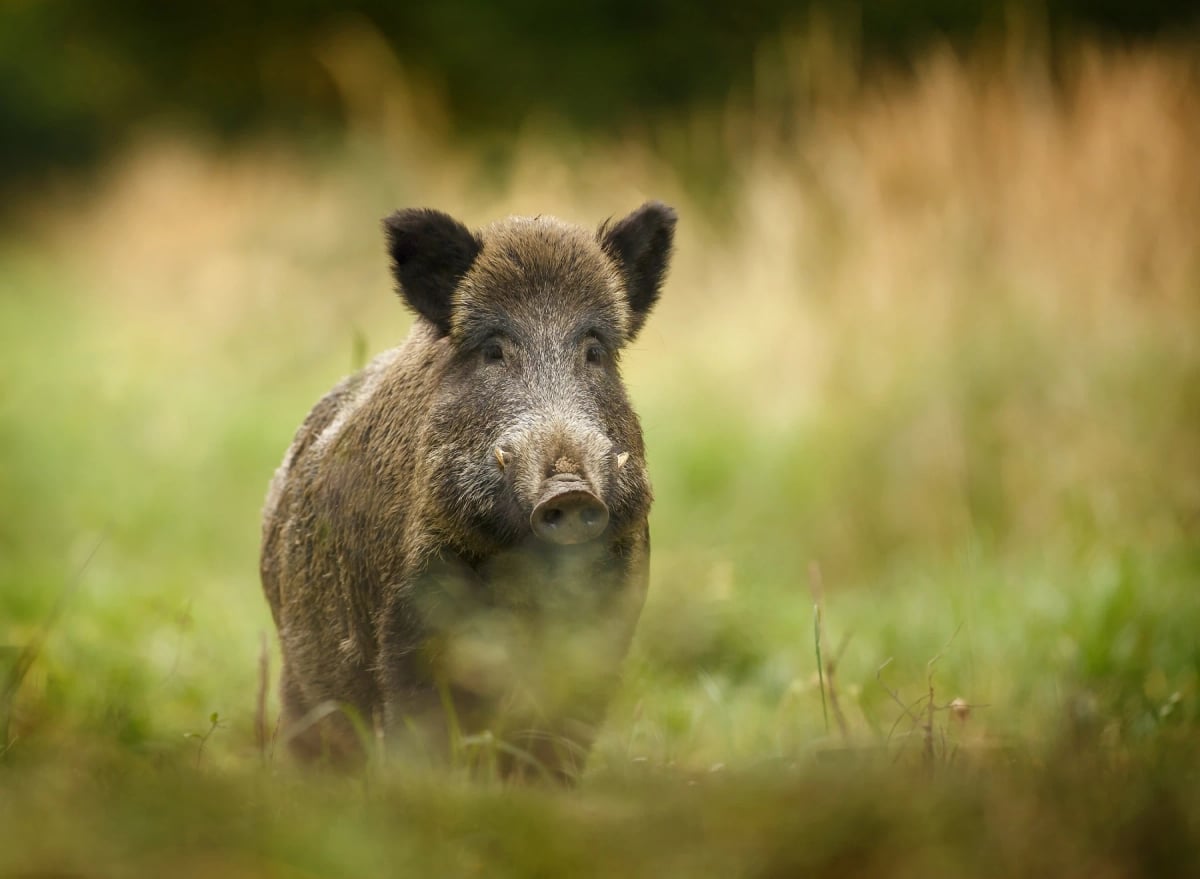
Amur leopards hunt mainly deer. Sika deer and roe deer make up most of their diet, and they also take wild boar, especially young ones, as well as badgers, raccoon dogs, hares and birds. Like other leopards, they hunt alone and mostly at dusk and at night. They move quietly along ridges and trails, stalk as close as they can and then rush the last few meters, killing with a bite to the throat or neck. A large kill can feed a leopard for several days, so it often drags the carcass into thick cover and returns to it until little is left. In winter, deep snow and the need for more energy make hunting harder, and leopards spend more time on the sunny, rocky slopes where deer feed. Their survival depends on healthy deer numbers, which is why stopping illegal deer hunting and forest fires has been as important for their recovery as protecting the leopards themselves.
Family Life and Cubs
Amur leopards live alone, and each adult keeps a home range that it marks with scent, scrapes and scratches on trees. A male's range is larger and usually overlaps those of several females. Males and females meet to mate, most often in late winter and early spring, and the male then leaves. After a pregnancy of about three months, the female gives birth in a sheltered den among rocks, in a cave or under fallen trees. A litter has one to four cubs, usually two. They are born blind and helpless, open their eyes after about a week and begin to follow their mother when they are a couple of months old. They are weaned at around three months but stay with their mother for one and a half to two years, learning to hunt before they leave to find a territory of their own. Young leopards that disperse face many risks, from tigers to roads. In the wild, Amur leopards usually live 10 to 15 years.
Population and Conservation
For most of the 20th century the Amur leopard lost ground to logging, farming, fires, poaching for its beautiful fur and the hunting of the deer it eats. By the early 2000s it was one of the rarest cats on Earth, with only a few dozen left, and a study of camera trap data from 2014 and 2015 estimated just 84 animals in Russia and China. Since then the news has been much better. Land of the Leopard National Park and the Northeast China Tiger and Leopard National Park now protect most of its range, and the two countries share camera trap data. Russian monitoring identified at least 160 leopards in 2024, and the Chinese park reported about 80 the same year. The IUCN assessed the Amur leopard separately as Critically Endangered in 2008, but today it lists only the leopard as a whole, as Vulnerable. Zoos keep a breeding population as a safety net, and there are plans to release leopards into the Lazovsky area to start a second wild population.