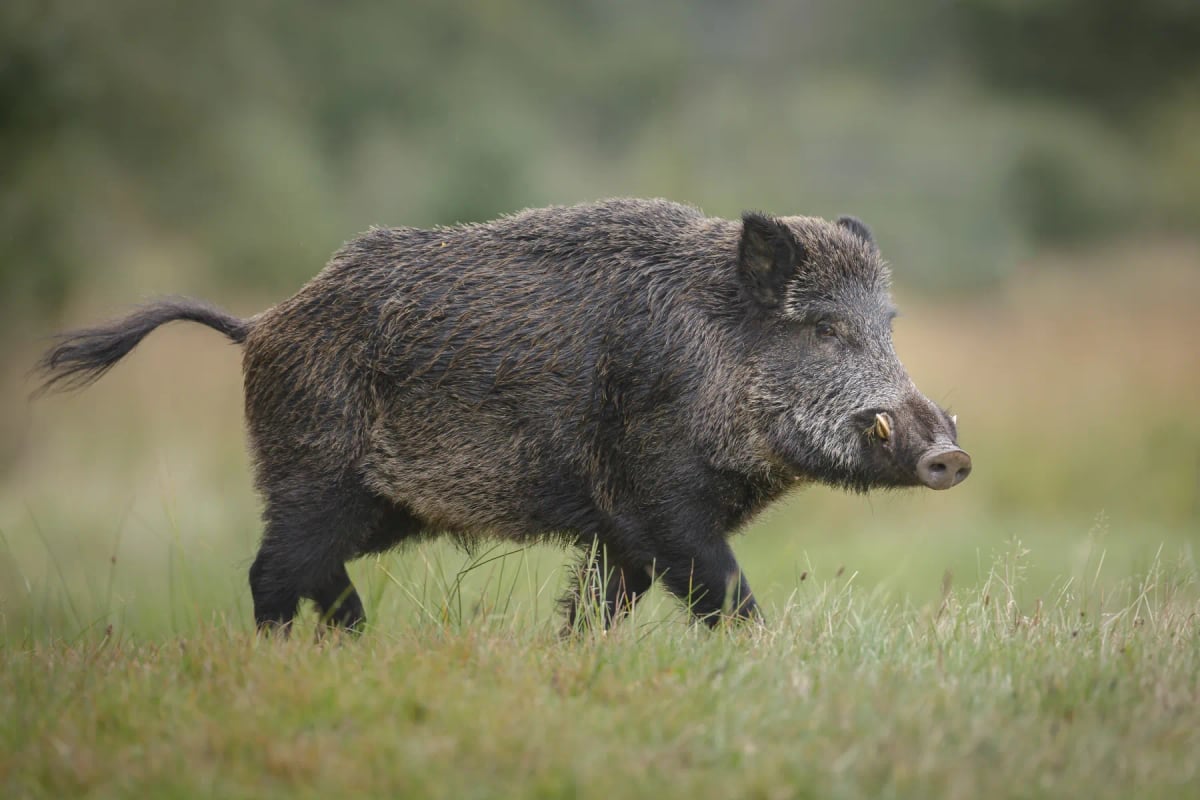
Wild Boar

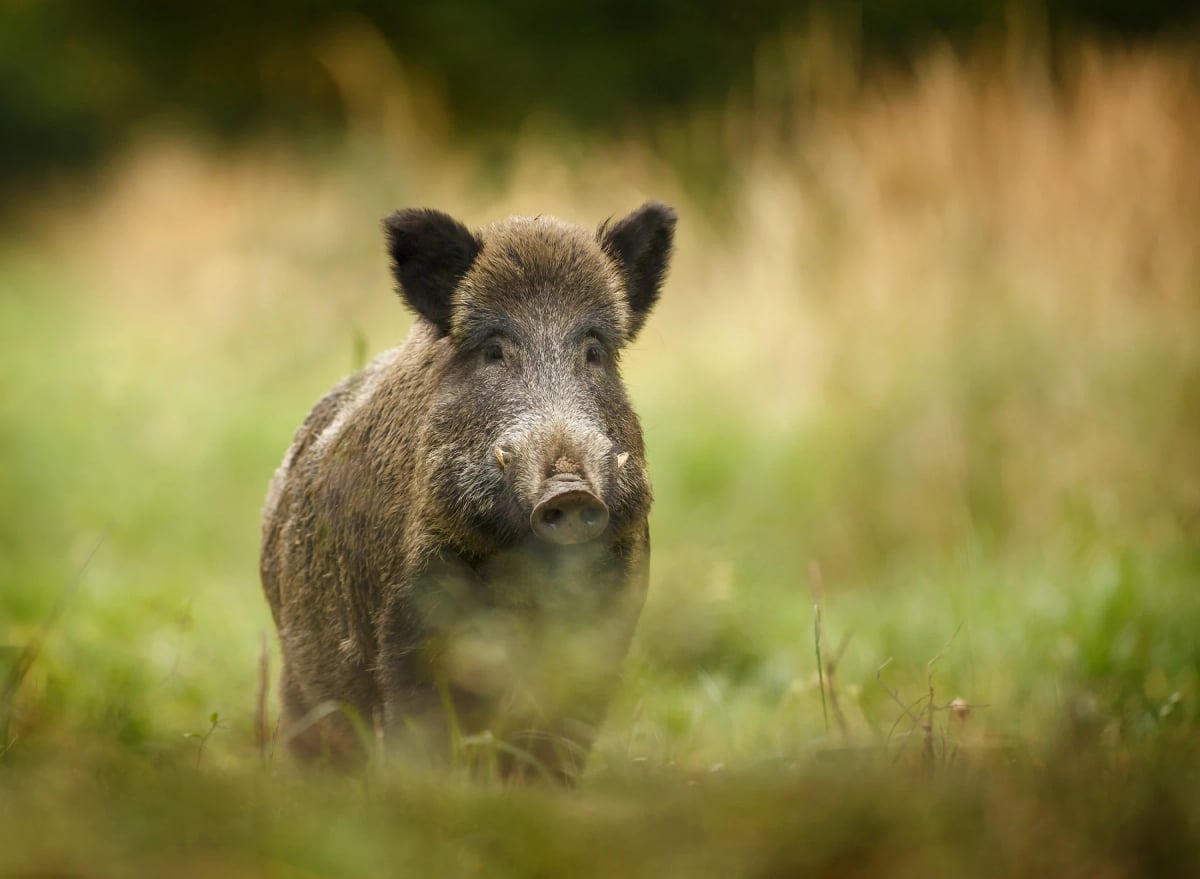
The wild boar (Sus scrofa) is a stocky, tusked mammal with one of the widest natural and introduced ranges of any large land animal. Native to Europe, Asia and North Africa, it has been introduced across the Americas and Oceania, where populations thrive. Highly adaptable and omnivorous, wild boars forage at night in groups, turning over soil in search of roots, acorns, insects and carrion. While usually avoiding conflict, they can be aggressive when threatened.
Habitat and distribution
Wild boars occupy an extraordinary range of habitats, from deciduous and mixed forests to Mediterranean scrubland, reed dominated wetlands and agricultural mosaics across Eurasia and North Africa. They need dense cover for shelter and rarely venture far into open treeless country. Their natural distribution stretches from Western Europe through Central Asia to East and Southeast Asia, and they have been introduced or escaped from farms on every other continent except Antarctica. In many of these introduced regions, including parts of the Americas and Oceania, populations have grown rapidly in the absence of natural predators.
Diet
Wild boars are opportunistic omnivores whose diet shifts with season and location. Roots, tubers, acorns, beechnuts and fallen fruit make up much of their intake, supplemented by fungi, earthworms, insects, small vertebrates, bird eggs and carrion when available. Using their strong snout and tusks, they dig and overturn soil in a process called rooting, which loosens earth, spreads seeds and creates microhabitats for other species. This same behavior makes them notorious agricultural pests, since they readily raid maize, wheat, potato fields and vineyards, often causing serious economic losses for farmers.

Behavior
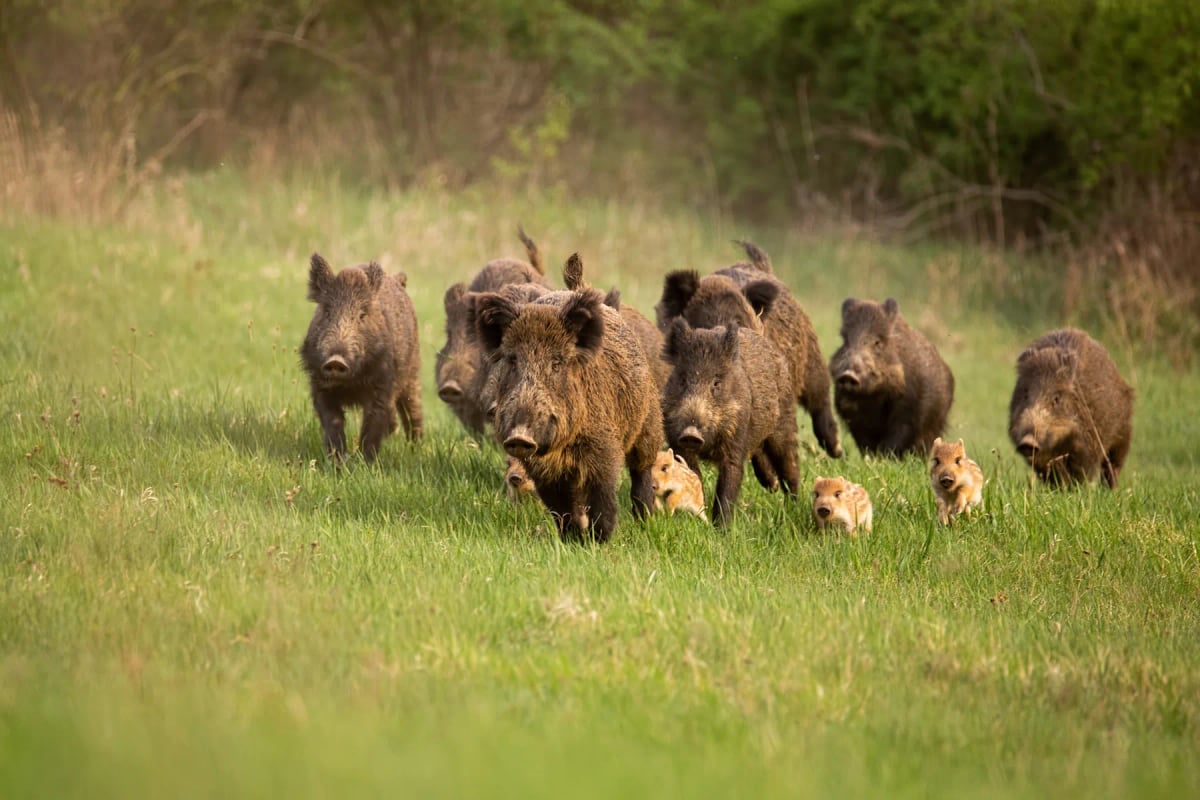
Female wild boars and their offspring live in tight family groups called sounders, usually led by an older matriarch, while young males disperse around one to two years of age and live mostly alone except during the autumn breeding season. Boars rely heavily on smell rather than sight, communicate through grunts, squeals and scent marking, and can run surprisingly fast for short bursts despite their stocky build. They are also strong swimmers. Mothers with piglets are especially protective and will defend their young aggressively if they feel cornered or threatened.

Relation with humans
Wild boars have a complicated relationship with people. They are the wild ancestor of the domestic pig, first tamed thousands of years ago in several separate regions of Eurasia, and remain a traditional game animal hunted for meat across much of their native range. At the same time, escaped or deliberately released populations have become serious invasive pests in the Americas, Australia and New Zealand, where they damage crops, native vegetation and wetlands, compete with local wildlife and can spread diseases to both livestock and people.
Conservation
The wild boar is classified as Least Concern by the IUCN, reflecting its huge range and remarkable ability to adapt to almost any habitat that offers food and cover. Rather than needing protection, most populations are actively managed or controlled, since unchecked numbers can damage crops, forests and native ecosystems, especially in regions where the species was introduced. Conservation concerns mainly involve specific local issues, such as hybridization with domestic pigs in some areas and the role wild boars play in spreading diseases like African swine fever among livestock.
Technical factsheet
Where it is found
The Wild Boar can be found in places such as:
Frequently Asked Questions
Are wild boars dangerous to humans?
Wild boars generally avoid people and prefer to flee rather than confront a threat, but they can become dangerous if cornered, surprised at close range, or protecting piglets. Their sharp tusks and powerful build allow them to inflict serious injuries when they charge, and adult males can be especially unpredictable during the autumn breeding season. Most encounters end without incident, but wildlife agencies recommend keeping distance, never approaching young, and retreating slowly if a boar shows signs of agitation.
What is the difference between a wild boar and a pig?
Wild boars and domestic pigs belong to the same species, Sus scrofa, but differ significantly after thousands of years of selective breeding. Wild boars have leaner, more muscular bodies, longer legs, a coarse bristly coat and visible tusks, while domestic pigs are typically rounder, pinker and less aggressive. Wild boars also retain sharper senses and stronger survival instincts, since farm breeding focused on docility and meat production rather than the traits that help an animal survive in the wild.
What do wild boars eat?
Wild boars are omnivores with a highly flexible diet that changes with the seasons. Much of their food comes from roots, tubers, acorns, beechnuts and fallen fruit, which they dig up using their snout and tusks. They also eat insects, worms, small vertebrates, bird eggs and carrion whenever these are available. This adaptable diet, combined with their willingness to raid crops such as maize and potatoes, is one reason wild boars thrive in so many different environments.
How fast can a wild boar run?
Wild boars can run at speeds of around 40 kilometers per hour over short distances, which is fast enough to outpace most people and many predators in a sprint. Despite their stocky, low slung bodies, they are surprisingly agile and can change direction quickly when fleeing or charging. They are also capable swimmers, sometimes crossing rivers or even short stretches of open water to reach new feeding grounds or escape danger.
Why are wild boars considered invasive in some countries?
In regions where wild boars are not native, such as much of the Americas, Australia and New Zealand, populations descended from farm escapes or deliberate releases have expanded rapidly without natural predators to control them. Their rooting behavior damages crops, native vegetation and wetlands, and they compete with local wildlife for food. Because they reproduce quickly and adapt to almost any habitat, controlling these introduced populations has proven difficult and costly for landowners and governments alike.
How big do wild boars get?
Wild boars typically measure between 90 and 150 centimeters in body length and weigh anywhere from 50 to 200 kilograms, with males generally larger than females. Size varies considerably across their wide range, with some populations in colder regions growing notably larger than those in warmer climates. Despite their bulk, wild boars are surprisingly fast and agile, able to move quickly through dense vegetation that would slow down many larger animals.
Are wild boars nocturnal?
Wild boars are mostly nocturnal or active at dawn and dusk, especially in areas with significant human activity, where moving at night helps them avoid people and hunters. In more remote or undisturbed habitats, they often shift to daytime activity instead. This flexibility in their daily schedule is another example of how adaptable wild boars are, allowing them to adjust their behavior based on local pressures and food availability.