Giant Panda
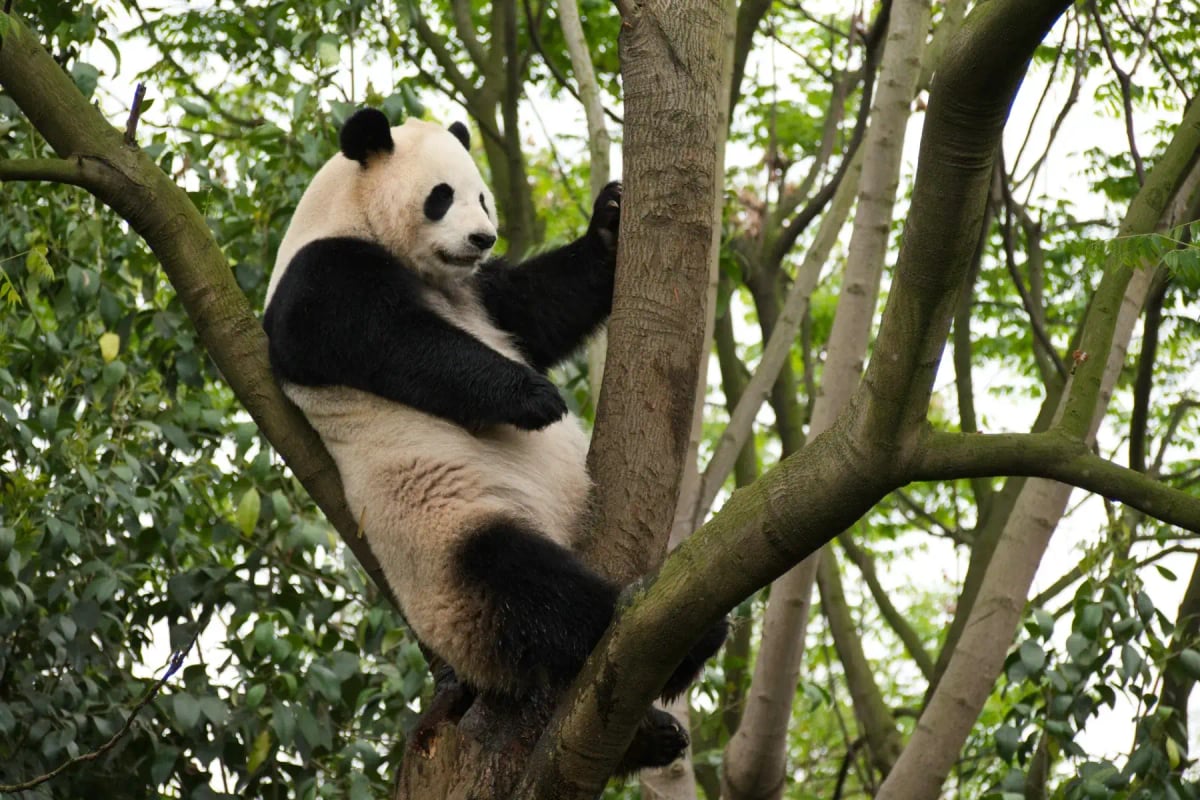
The giant panda (Ailuropoda melanoleuca) is a bear native to the cool, misty mountain forests of central China, found today only in Sichuan, Shaanxi, and Gansu provinces. Despite belonging to the order Carnivora, it feeds almost exclusively on bamboo, consuming up to 12 to 38 kilograms of shoots, leaves, and stems every day. To grip bamboo stalks with precision, it relies on an enlarged wrist bone that functions much like a thumb. Adults are instantly recognizable by their bold black and white coat, with black patches covering the eyes, ears, and limbs. Females give birth to cubs that are remarkably tiny at birth, typically weighing around 100 grams. After decades of intense conservation work, including the expansion of nature reserves and captive breeding programs, the IUCN reclassified the giant panda from Endangered to Vulnerable in 2016.
Diet
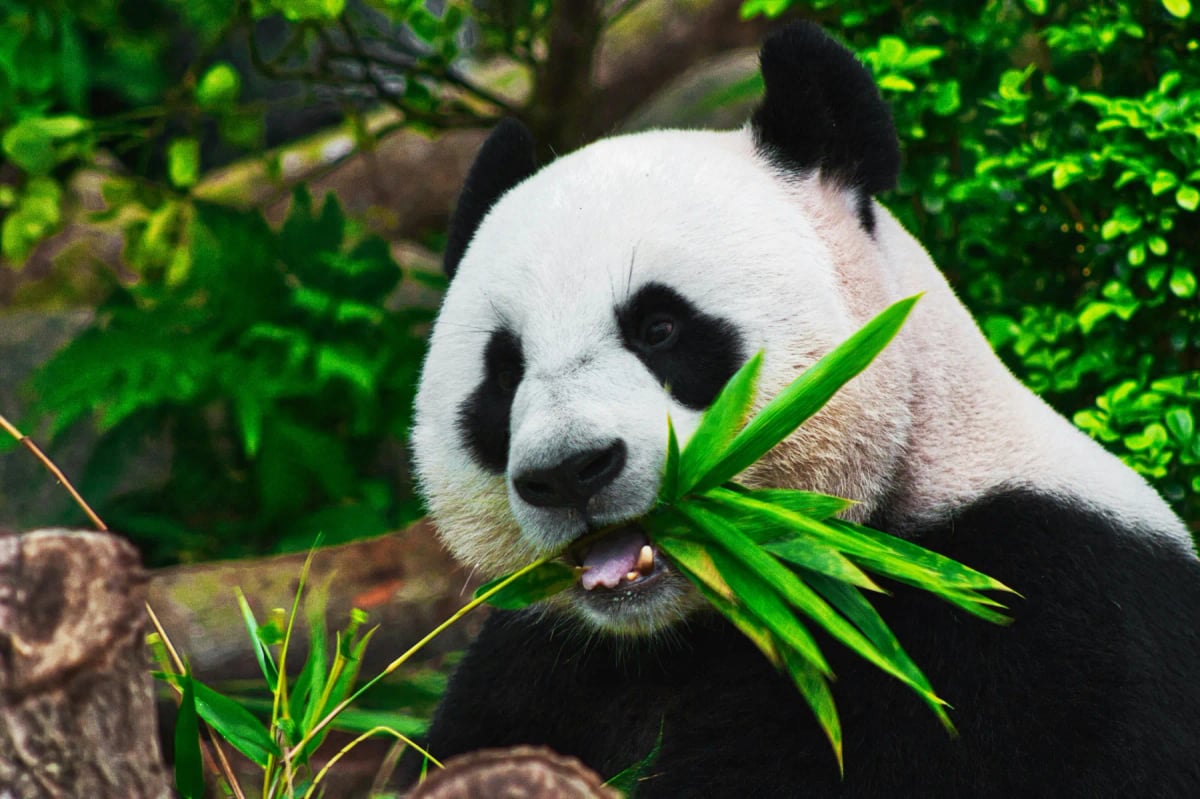
Even though giant pandas belong to the order Carnivora, bamboo makes up more than 99% of what they eat. They feed on the shoots, leaves, and stems of various bamboo species, and an adult must consume between 12 and 38 kilograms every single day just to meet its energy needs. Bamboo is not very nutritious, so pandas spend up to 14 hours a day eating. To handle tough stalks with accuracy, they rely on an enlarged wrist bone that acts much like a thumb, giving them a firm grip while chewing. They do retain the short digestive tract typical of carnivores, which means their bodies absorb only a small fraction of the nutrients available in each mouthful of bamboo.
Behavior
For the most part, giant pandas live alone. Adults communicate through scent markings left on trees and rocks, which let other pandas know who is around without any direct contact. Each individual roams a defined area within the bamboo forest, and these ranges can overlap without serious conflict. Outside of the brief breeding season in spring, encounters between adults are rare and usually avoided. Giant pandas are active at dawn, dusk, and during the night, resting for long stretches in between to conserve energy. Despite their large, rounded build, they are capable climbers and will scale trees to rest or to escape from potential threats. Cubs stay close to their mothers for up to two years before setting off on their own.
Population
According to the most recent national survey conducted by China, roughly 1,864 giant pandas live in the wild. They are found exclusively in the mountain forests of Sichuan, Shaanxi, and Gansu provinces, scattered across about 30 isolated patches of habitat. This fragmentation makes it difficult for individuals from different groups to meet and breed. Outside of the wild, zoos and breeding centers around the world maintain several hundred pandas as part of coordinated conservation programs. China has steadily expanded its network of nature reserves over the decades, and this effort has been central to the gradual recovery of wild numbers. The species was reclassified from Endangered to Vulnerable by the IUCN in 2016, reflecting real but still fragile progress.
Threats
Habitat loss remains the most serious pressure facing giant pandas. Over generations, the expansion of farmland, logging, and human settlements pushed pandas out of the lowland forests they once occupied, confining them to higher and more isolated mountain zones. The patches of forest that remain are often separated by roads, villages, and agricultural land, making it hard for pandas to move between them. Climate change adds another layer of concern. Researchers have found that rising temperatures could shift or reduce bamboo populations across significant portions of the panda's current range over the coming decades. Because bamboo is the foundation of the panda's diet, any large reduction in its availability would place serious pressure on a population that is still recovering.
Conservation
Few animals in the world have received the level of dedicated attention that giant pandas have over the past half century. China established its first panda nature reserve in 1963, and today there are more than 60 such reserves protecting core habitat across the three provinces where pandas live. Captive breeding programs, led by facilities such as the Chengdu Research Base of Giant Panda Breeding, have grown into sophisticated operations that have successfully reintroduced a small number of pandas to the wild. The giant panda also serves as a flagship species, meaning that protecting its habitat benefits hundreds of other plants and animals sharing the same forests. The IUCN uplisted the species from Endangered to Vulnerable in 2016, a milestone that reflects the genuine impact of sustained conservation work over many decades.
Researched and written by Juan Pablo. Sources: IUCN Red List, scientific literature and regional field guides. Last updated: .
Technical factsheet


Frequently Asked Questions
What do giant pandas eat?
Giant pandas eat bamboo almost exclusively, which makes up over 99% of their diet. They feed on the shoots, leaves, and stems of various bamboo species and must eat between 12 and 38 kilograms every day. Because bamboo offers so little nutrition, pandas spend up to 14 hours a day just eating. To grip tough stalks, they use an enlarged wrist bone that works much like a thumb.
Where do giant pandas live?
Giant pandas live in the cool, misty mountain forests of central China. Today, wild populations are found only in Sichuan, Shaanxi, and Gansu provinces, spread across roughly 30 isolated patches of forest. They tend to live at elevations where bamboo grows in abundance. Centuries of habitat loss pushed them out of lower areas, so the mountains now represent the last stronghold for this species in the wild.
Are giant pandas bears?
Yes, giant pandas are true bears belonging to the family Ursidae. For a long time, scientists debated whether they were more closely related to bears or raccoons, but genetic studies confirmed they are bears. What makes them unusual is their diet. Unlike most bears, which eat a wide variety of foods, giant pandas survive almost entirely on bamboo, a plant that most other carnivores would find nearly impossible to live on.
How many giant pandas are left in the wild?
According to the most recent national survey carried out by China, around 1,864 giant pandas remain in the wild. The IUCN lists the species as Vulnerable, after reclassifying it from Endangered in 2016. That change reflected real progress, but the population is still small and spread across fragmented patches of forest, which makes it hard for individuals to find each other and breed.
How small are giant panda cubs at birth?
Giant panda cubs are extraordinarily small when they are born. A newborn typically weighs around 100 grams, which is roughly 1/900th of the mother's weight. They are born pink, blind, and almost hairless. The size difference between a mother and her cub is one of the largest of any placental mammal. Cubs rely completely on their mothers and stay with them for up to two years.
Why are giant pandas black and white?
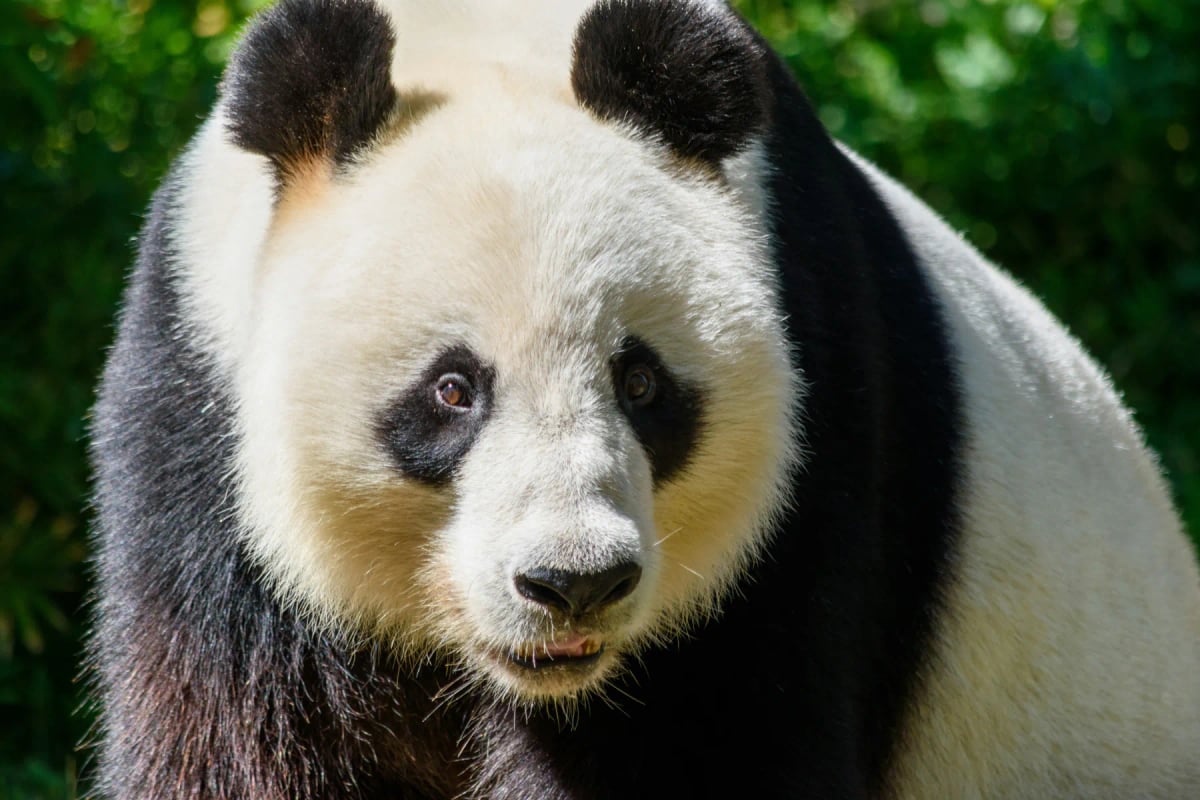
Scientists believe the giant panda's striking pattern serves more than one purpose. Research suggests the black patches around the eyes may help pandas recognize one another, while the dark limbs could provide some camouflage in shaded forest settings. The white sections of the body may help them blend into snowy environments. However, experts note that no single explanation fully accounts for such a bold and distinctive coat.
What are the main threats to giant pandas?
Habitat loss is the biggest threat giant pandas face. Farming, logging, and the expansion of human settlements have reduced and fragmented the forests they depend on, leaving populations isolated from one another. Climate change is also a growing concern, as rising temperatures could shrink bamboo populations across large parts of the panda's range in the coming decades. Since bamboo is essentially their only food source, any major reduction would put serious pressure on the species.