Animals in Indonesia
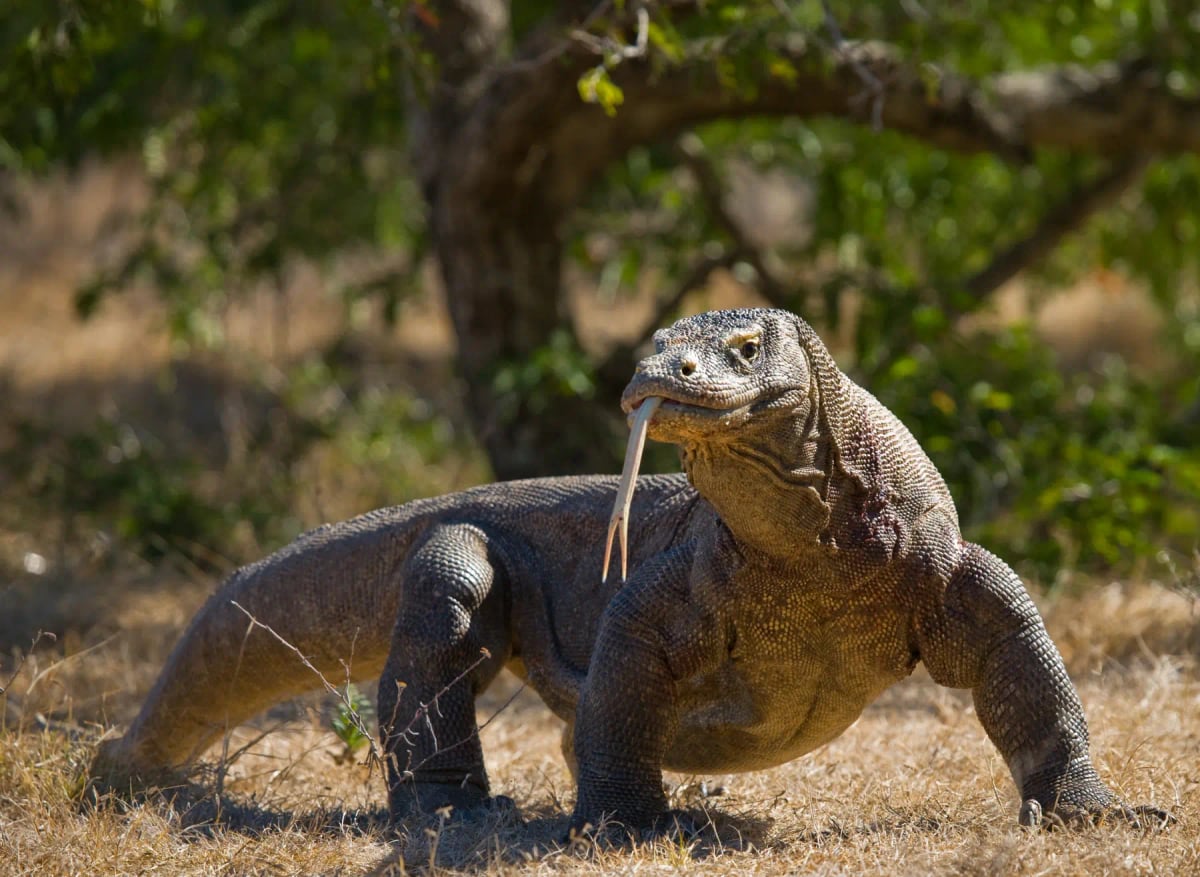
Komodo Dragon
Varanus komodoensis
The Komodo dragon is a strong national icon. It lives on a few islands in eastern Indonesia and uses open slopes and dry forests to bask and hunt. Park rangers manage visits so people watch from marked areas and boats. Museums and learning centers use the lizard to explain how islands shape wildlife and why careful protection keeps unique species alive while tourism grows at a steady pace.
View details→Wildlife in Indonesia
Indonesia stretches across thousands of islands with rainforests, volcanoes and coral reefs. In Borneo and Sumatra, river boats reach parks known for orangutans and proboscis monkeys, while in Flores and Komodo small cruises link bays and viewpoints. Divers visit Bali and Raja Ampat for clear reefs and calm lagoons. Short flights connect major cities with reserves, so day trips and simple tours are easy to plan.
Most Dangerous Animals in Indonesia
Risks vary by habitat. In forests, wild boar defend young, Asian elephants are powerful when moving in groups, and dholes hunt in packs. Reticulated pythons and king cobras are rare but present, while Komodo dragons and large monitor lizards are watched on guided routes. At sea, sea snakes, reef sharks and larger sharks including bull and tiger appear in some channels, and orcas pass offshore.
Top 10 Animals in Indonesia
Our Top 10 for Indonesia focuses on four species with strong interest and clear places to see them. The Asian elephant is tied to forest routes in Sumatra. The reticulated python is most likely in warm lowland woods and along rivers. The peregrine falcon nests on cliffs and tall buildings on several islands. The clownfish is the classic reef fish for snorkelers on shallow corals in Bali and Raja Ampat.
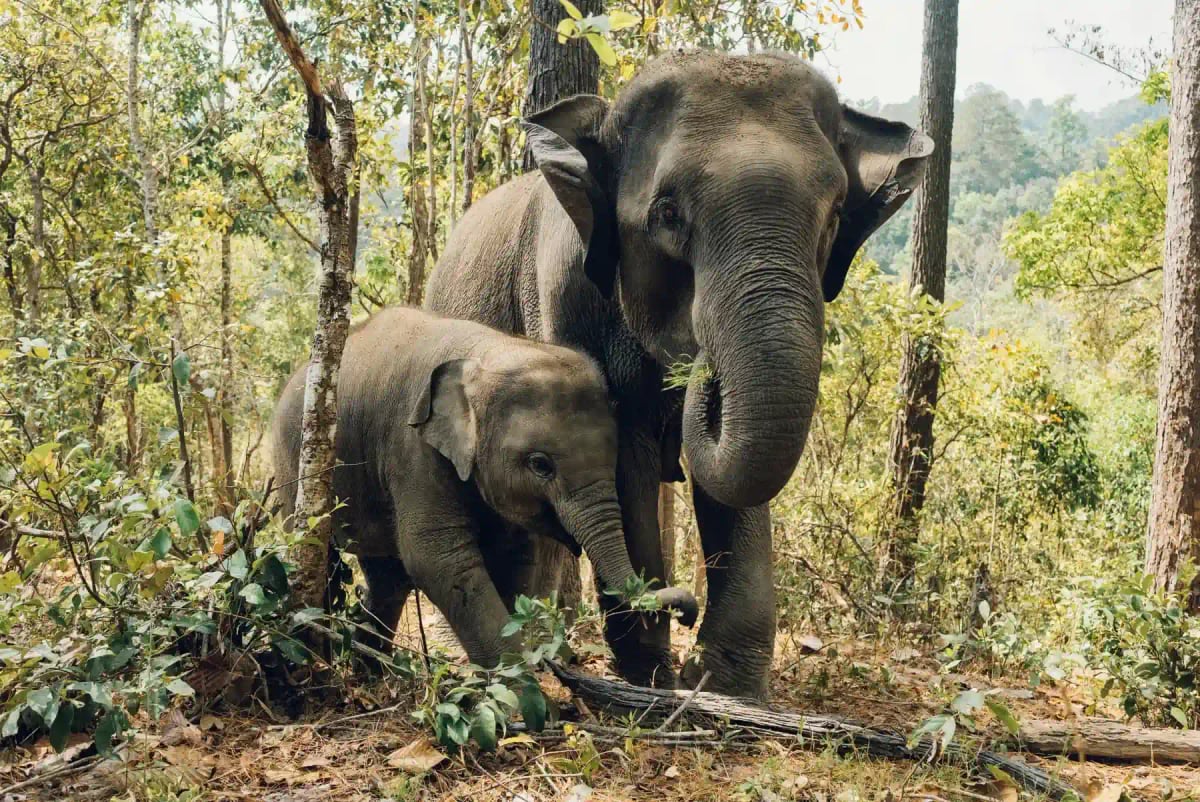
Asian Elephant
Elephas maximus
Indonesia is home to two distinct elephant populations: the Sumatran elephant on the island of Sumatra and the Borneo pygmy elephant in the forests of Kalimantan. The Sumatran elephant is classified as Critically Endangered and has lost most of its lowland forest habitat to palm oil and pulp plantations. Both island populations face ongoing pressure from deforestation and conflict with local communities, and conservation efforts focus on protecting remaining forest corridors across the archipelago.
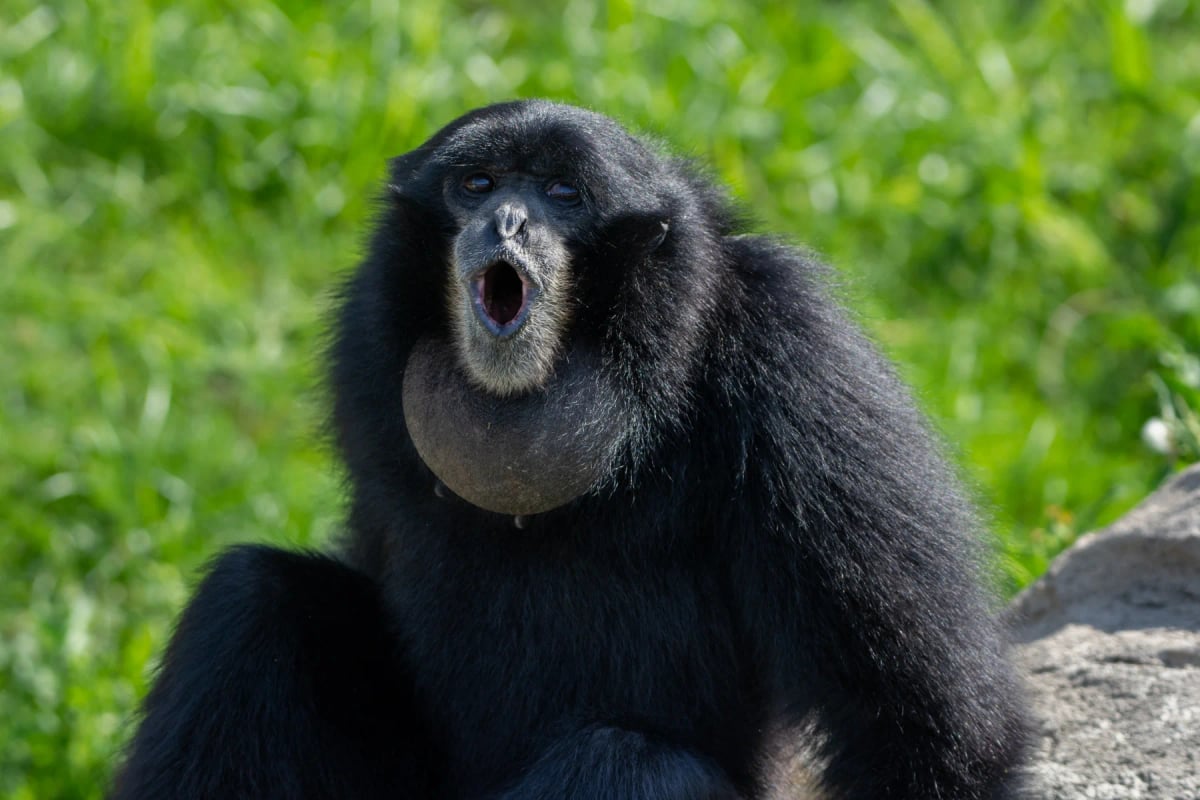
Siamang
Symphalangus syndactylus
The siamang is the largest gibbon in the world and lives in the rainforests of Sumatra. Its arms are longer than its entire body, letting it swing through the canopy with ease. Pairs fill the Sumatran forest each morning with loud, booming duets produced through an inflatable throat sac. Deforestation and oil palm expansion across Sumatra have pushed this species to Endangered status.
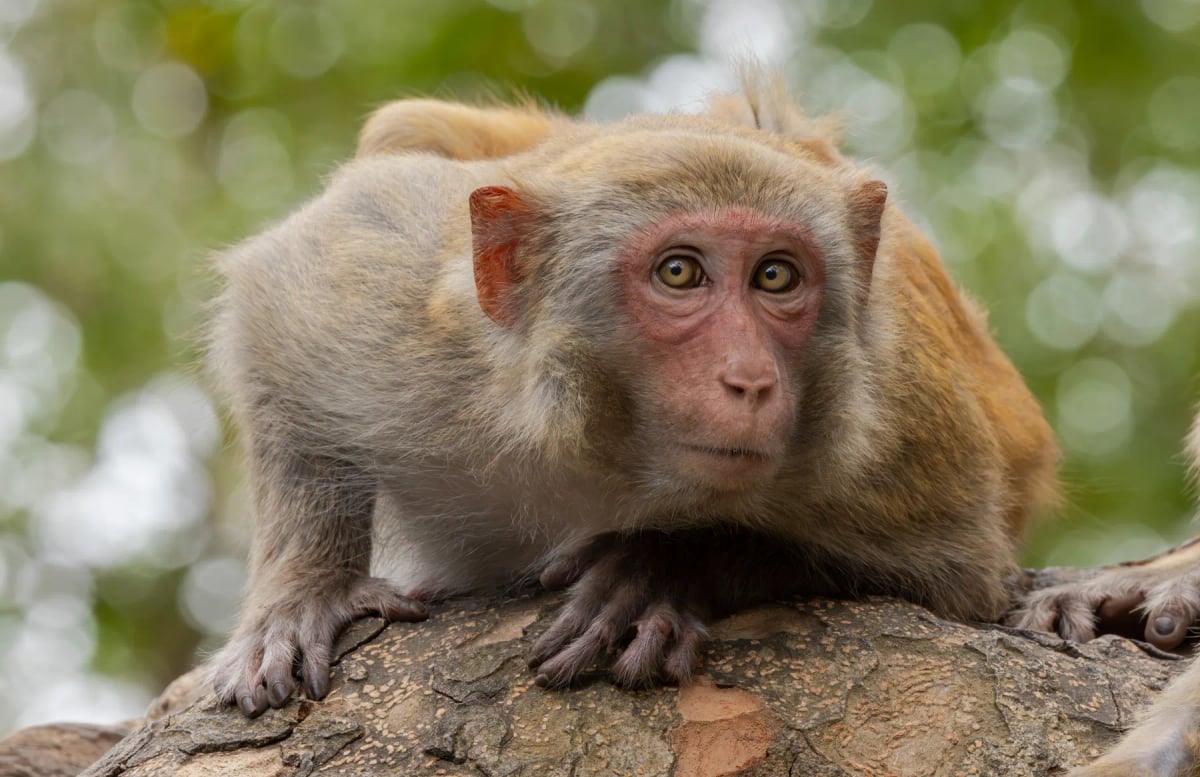
Macaque
Macaca spp.
Indonesia is home to a remarkable range of macaque species, many found nowhere else on Earth. Sulawesi alone has seven endemic species, including the crested black macaque, which is classified as Critically Endangered. Long-tailed macaques are widespread across Sumatra, Java, Bali, and Borneo. Deforestation and the illegal pet trade are serious threats, particularly for the endemic species of Sulawesi.
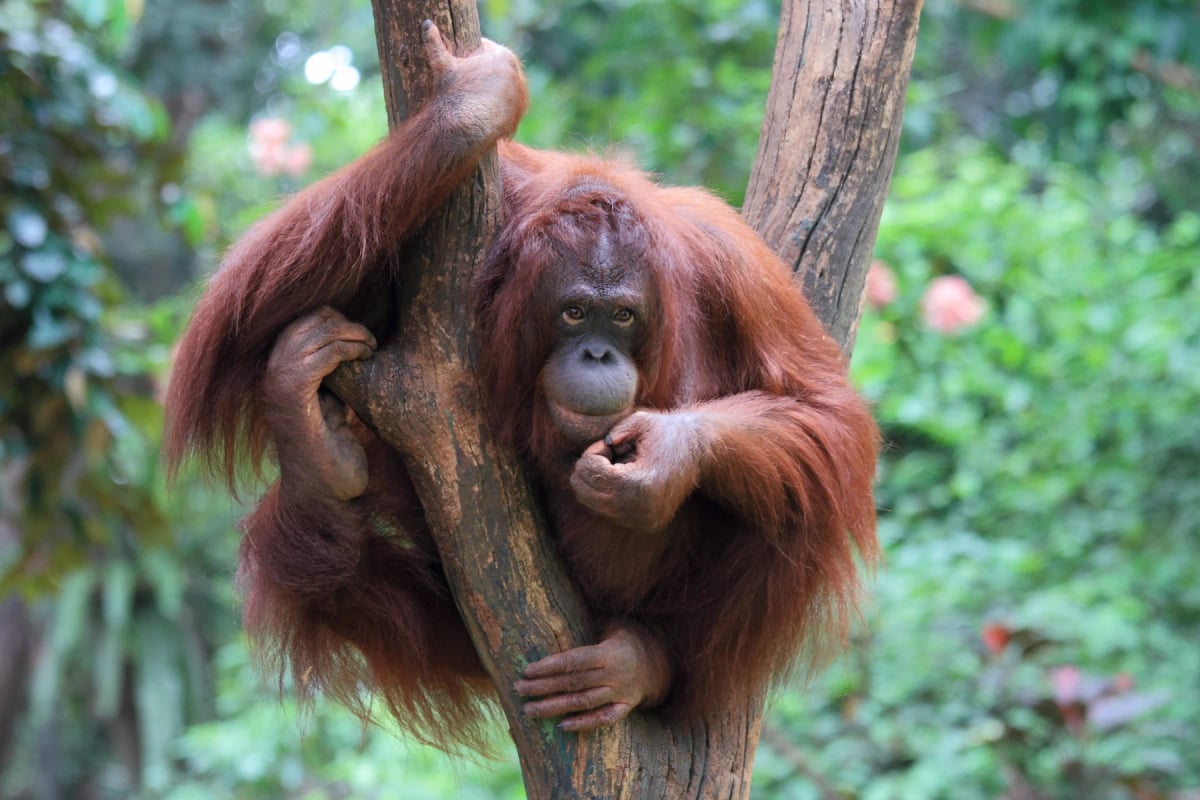
Orangutan
Pongo spp.
Indonesia is home to two of the three orangutan species: the Bornean orangutan on Kalimantan and the Sumatran and Tapanuli orangutans on Sumatra. All three are critically endangered. These great apes spend most of their lives high in the rainforest canopy, but rampant deforestation driven by palm oil plantations, illegal logging, and wildfires has destroyed vast stretches of their habitat, pushing populations toward collapse.
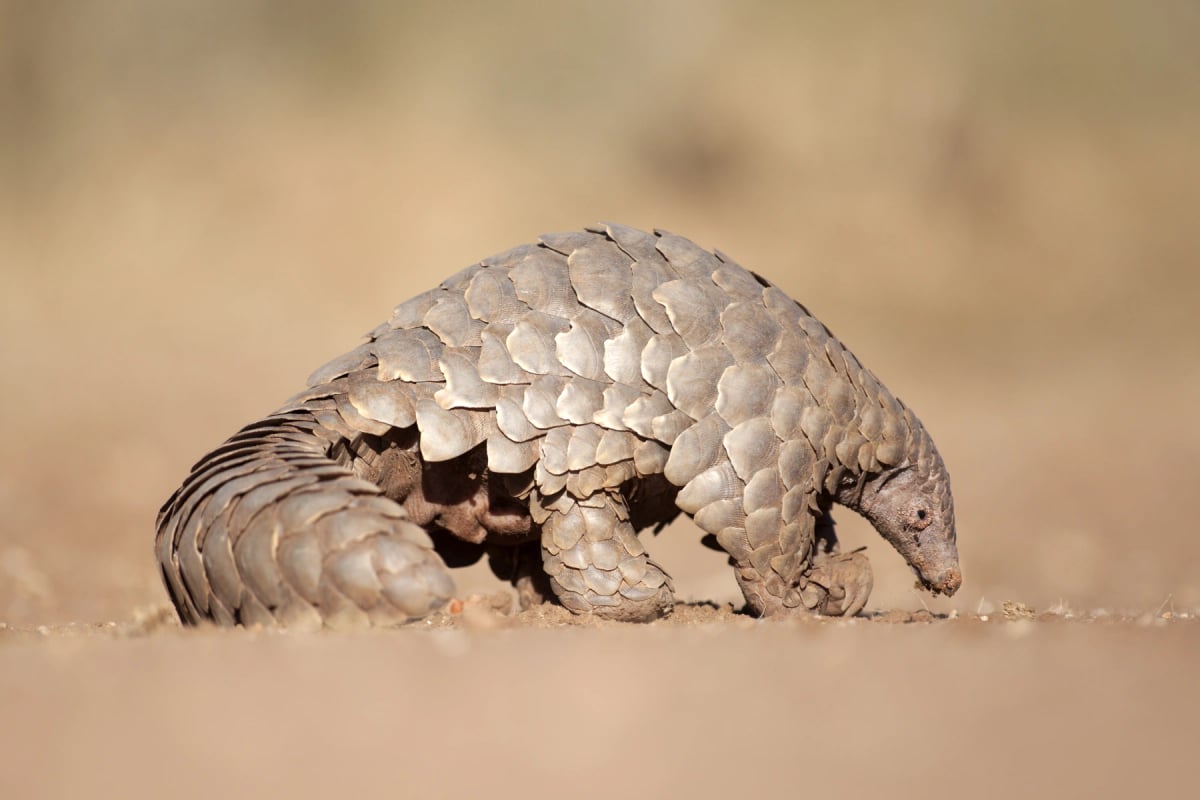
Pangolin
Manis spp.
The Sunda pangolin (Manis javanica) is found across Indonesia's main islands, including Sumatra, Java, Borneo, and Sulawesi, in tropical rainforests and secondary forest areas. Indonesia sits at the center of the global pangolin trafficking crisis, as large volumes are seized in the country each year. Rapid deforestation for palm oil and timber compounds the threat from poaching. The species is legally protected under Indonesian law, and several rescue programs operate across the archipelago.
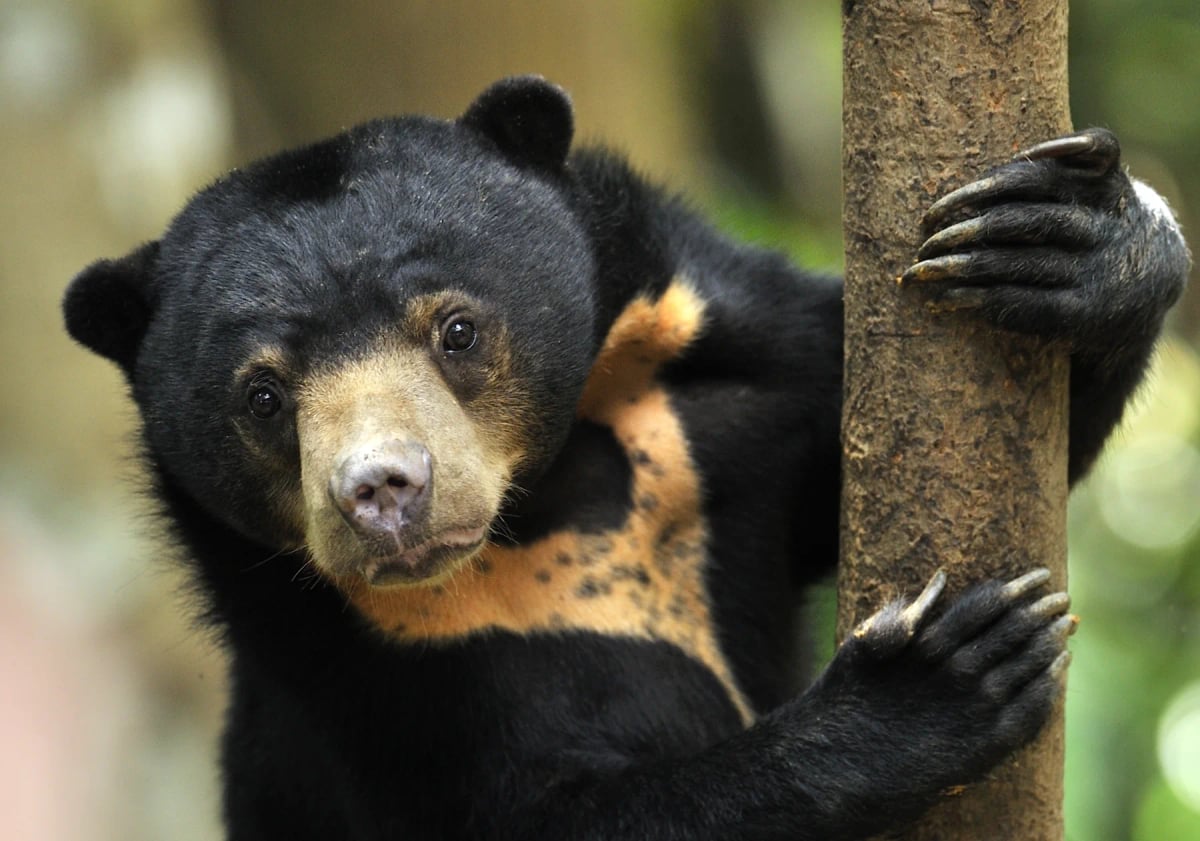
Sun Bear
Helarctos malayanus
In Indonesia, the sun bear is found across Sumatra and Borneo, two of the most biodiverse islands on Earth. It lives in lowland rainforests and hill forests, where it climbs trees in search of honey, fruit, and insects. Rapid deforestation driven by palm oil expansion has destroyed vast areas of its habitat. The sun bear is classified as Vulnerable, and its situation in Indonesia is particularly urgent.
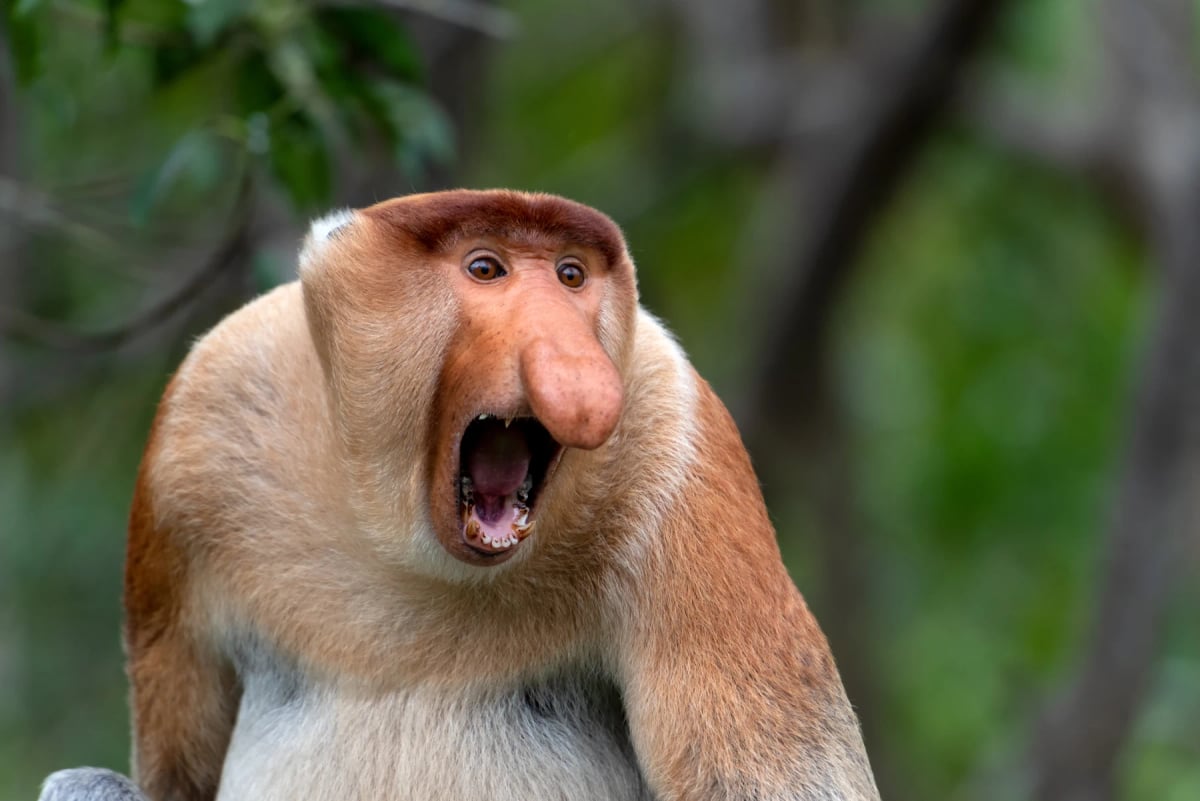
Proboscis Monkey
Nasalis larvatus
Indonesia holds a large portion of the proboscis monkey's total population, with groups living across the mangroves, swamp forests, and riverbanks of Kalimantan, the Indonesian region of Borneo. The species faces serious pressure from the loss of peat swamp forests due to conversion for palm oil and timber. Several national parks in Kalimantan, including Tanjung Puting, provide critical refuge for remaining populations of this striking primate.
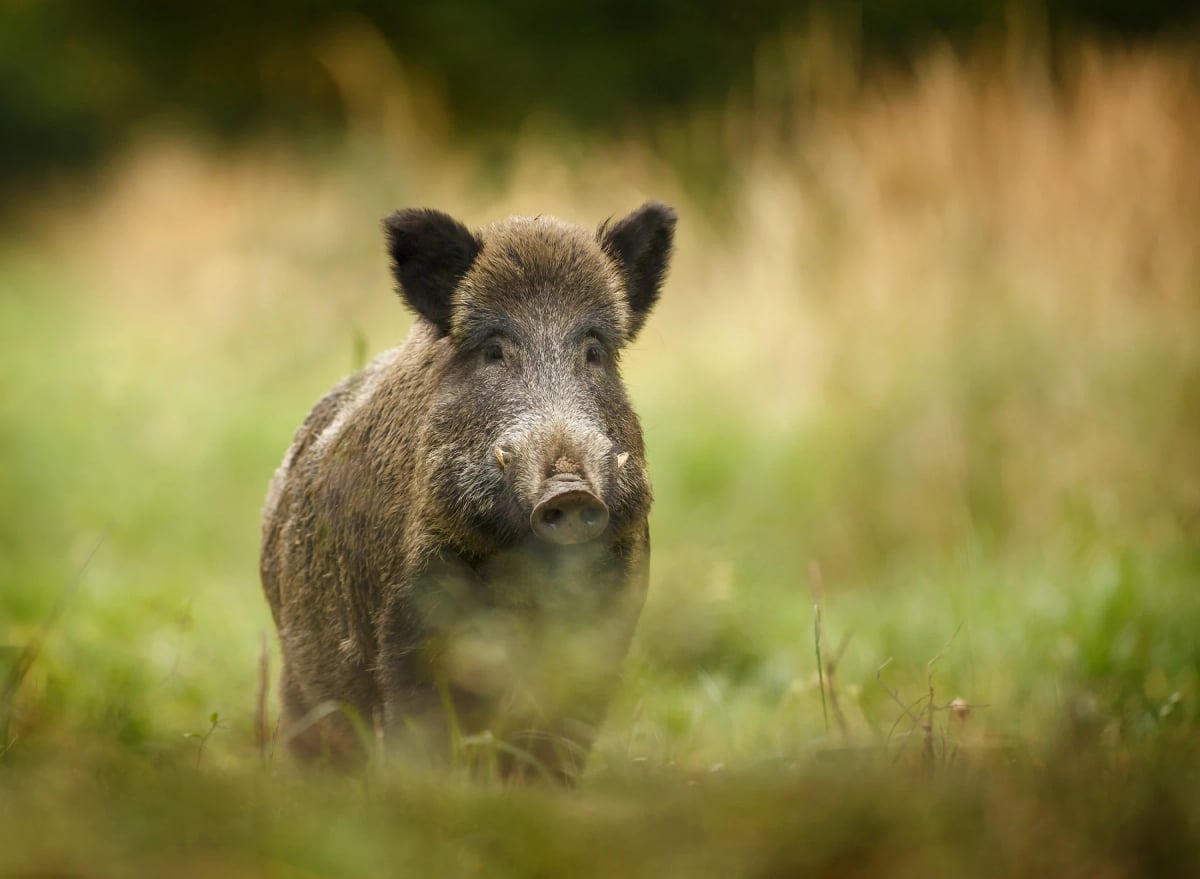
Wild Boar
Sus scrofa
Wild boars are found across many of Indonesia's islands, including Sumatra, Java and Kalimantan, where they inhabit forests, farmland edges and lowland wetlands. They are an important prey species for predators such as the Sumatran tiger and serve as a traditional food source for several non Muslim communities, though pork is not eaten by Indonesia's Muslim majority. Wild boars frequently raid crops, making them a persistent concern for farmers across the archipelago.
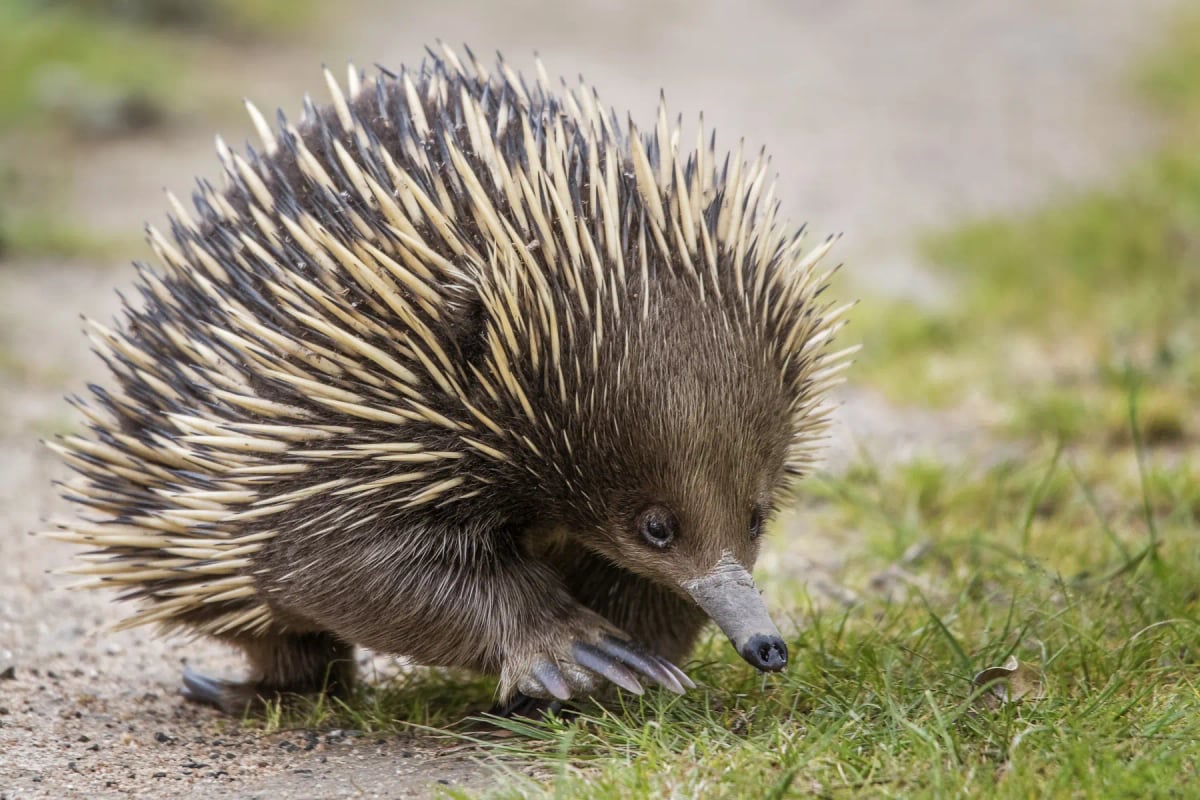
Echidna
Tachyglossus aculeatus
In Indonesia, the short-beaked echidna is found in the forests and grasslands of Papua, the country's easternmost region. It shares this habitat with its close relative, the long-beaked echidna. Though considered Least Concern globally, habitat loss from deforestation in Indonesian Papua puts pressure on local populations. It uses powerful front claws to dig into soil rich in insects, feeding on ants and termites.
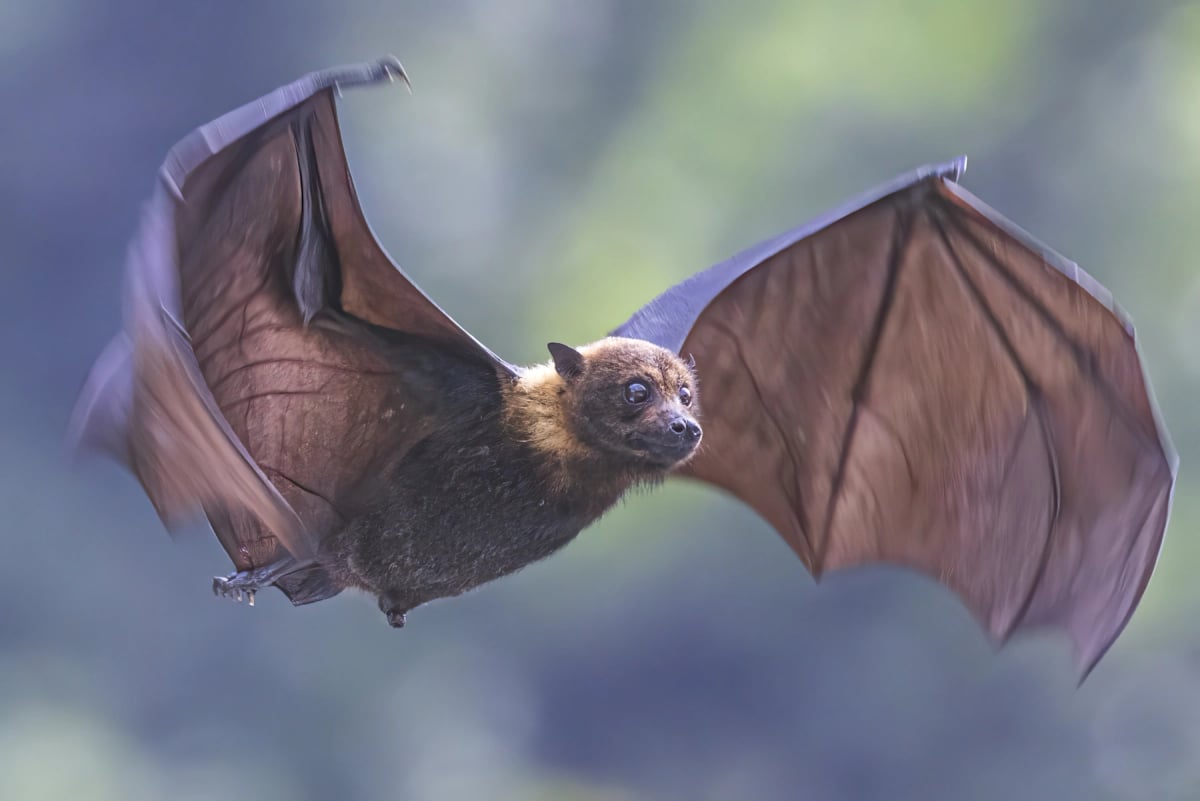
Fruit Bat
Pteropodidae
Fruit bats are widespread across Indonesia's islands, from Sumatra and Java to Sulawesi and Papua. They roost in large colonies in forest canopies and coastal mangroves. As they fly between fruiting trees each night, they spread seeds and carry pollen across vast distances, helping to regenerate Indonesia's tropical rainforests. Several species found here are unique to specific islands. Their IUCN status is Least Concern.
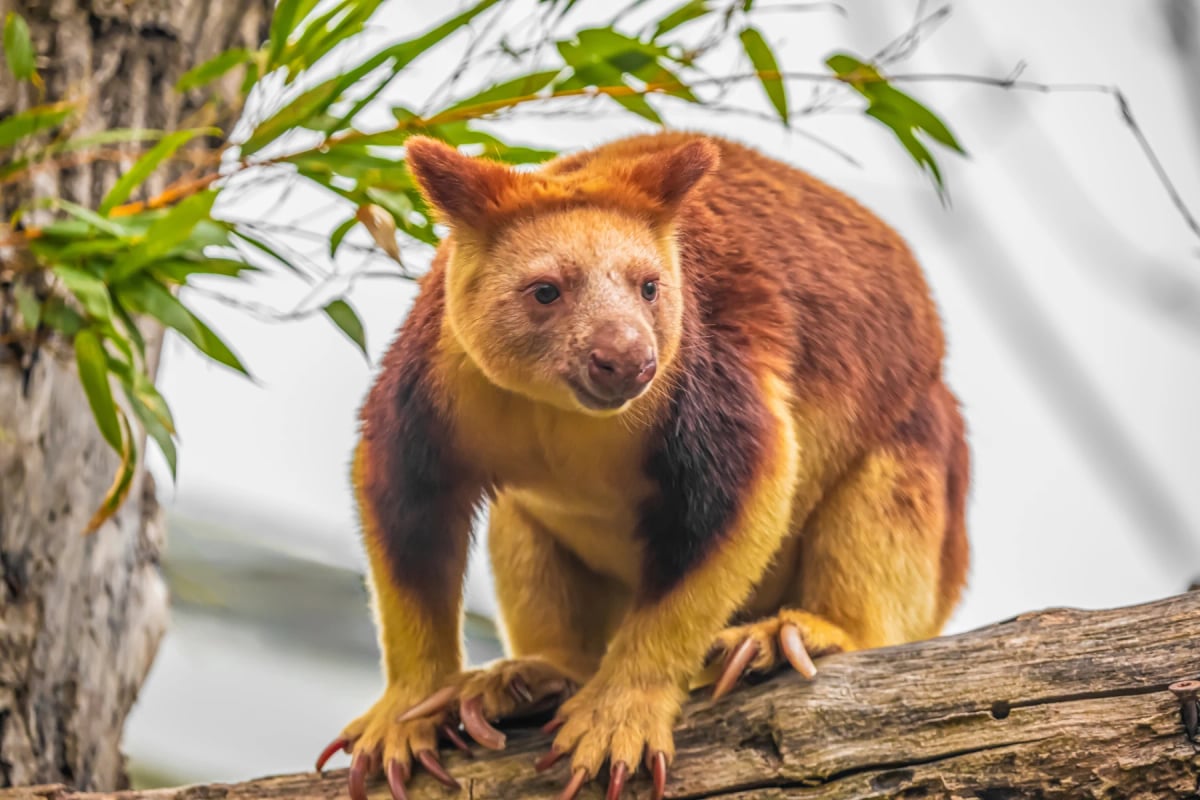
Tree Kangaroo
Dendrolagus spp.
In Indonesia, tree kangaroos are found in the rainforests of Papua, the western half of the island of New Guinea. This region holds some of the most intact tropical forest remaining in Southeast Asia, yet these animals still face pressure from hunting and habitat loss. Most species here are nocturnal and spend their lives high in the canopy. Several are listed as Endangered or Critically Endangered on the IUCN Red List.
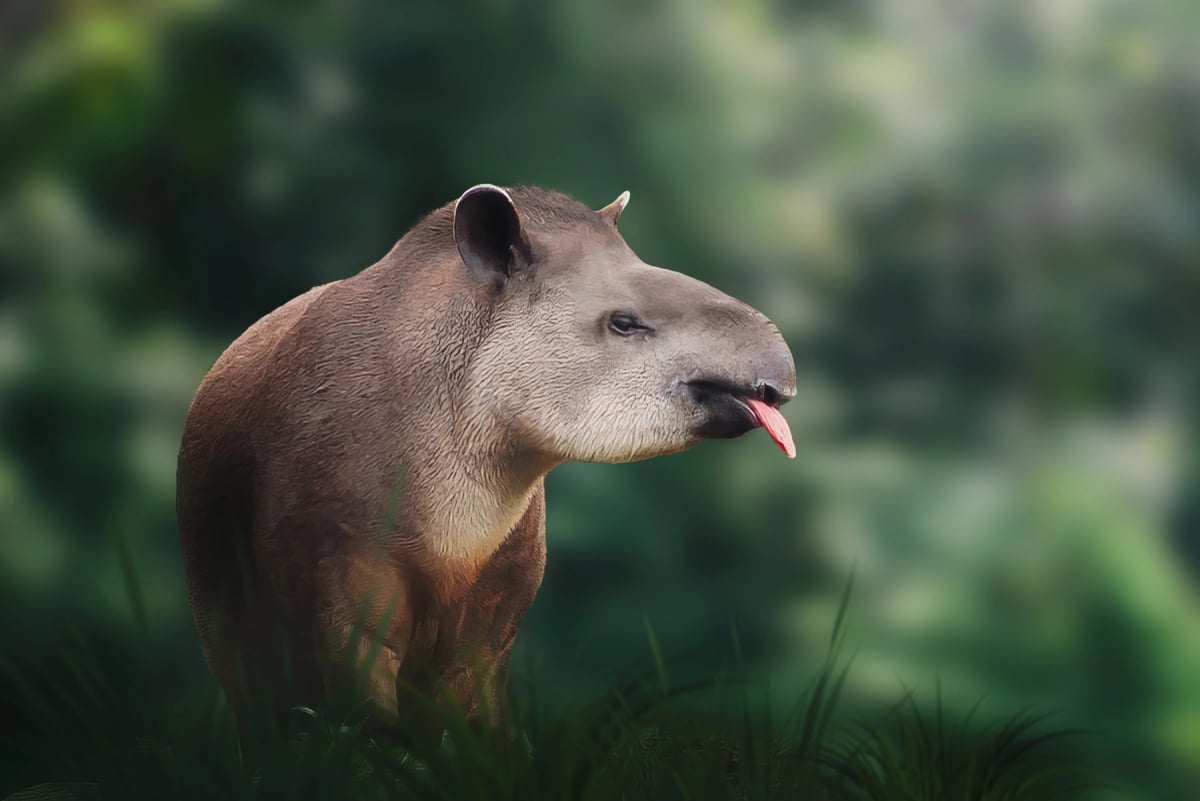
Tapir
Tapirus spp.
In Indonesia, the Malayan tapir is found on the island of Sumatra, where it inhabits lowland and montane rainforests. Sumatra has lost a vast portion of its forest cover in recent decades, putting tapirs under severe pressure. The species shares its remaining habitat with other critically threatened animals like the Sumatran tiger and Sumatran rhinoceros. Conservation efforts focused on Sumatra's remaining forest blocks are vital for the tapir's future.
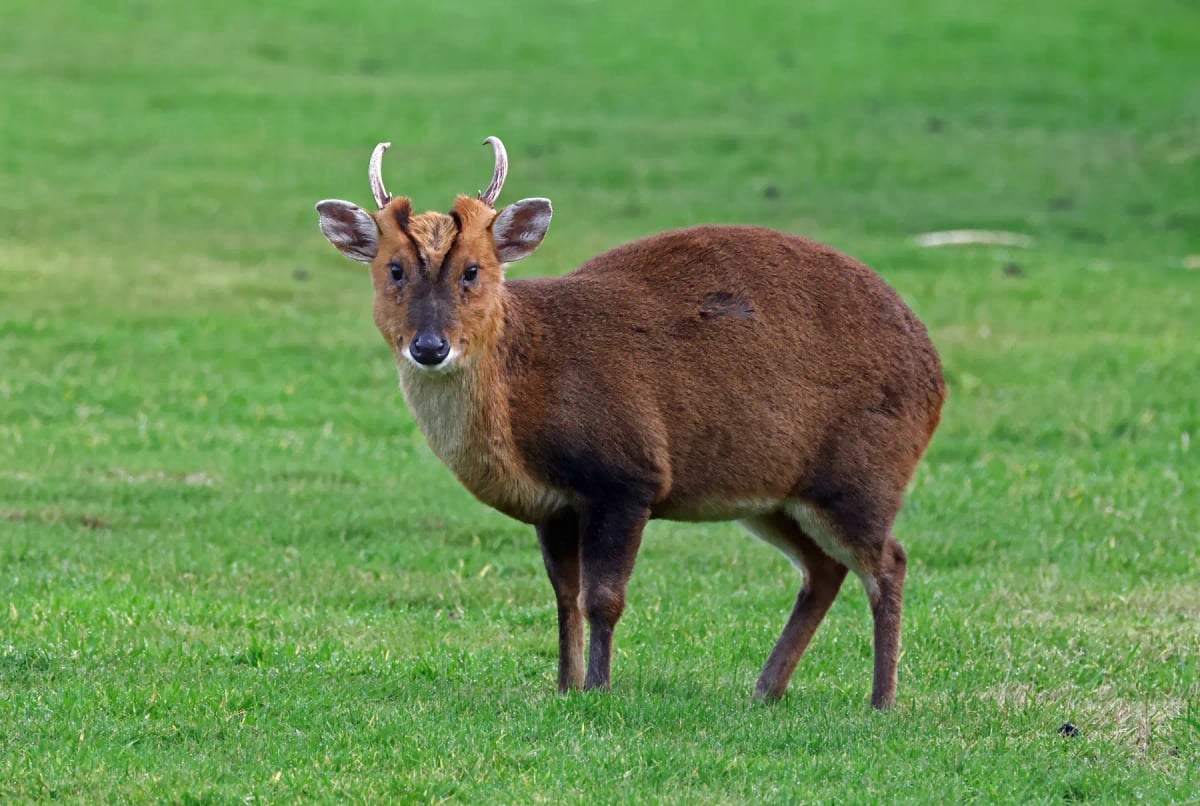
Southern Red Muntjac
Muntiacus muntjak
Across Indonesia, the southern red muntjac inhabits rainforests, scrublands and forest edges on islands including Sumatra, Java, Bali and Borneo. This small deer is recognisable by its reddish brown coat and loud, dog-like bark used as an alarm call. It feeds on leaves, fruits and young shoots. Hunting for bushmeat puts pressure on local populations in some areas, though the IUCN lists the species as Least Concern overall.
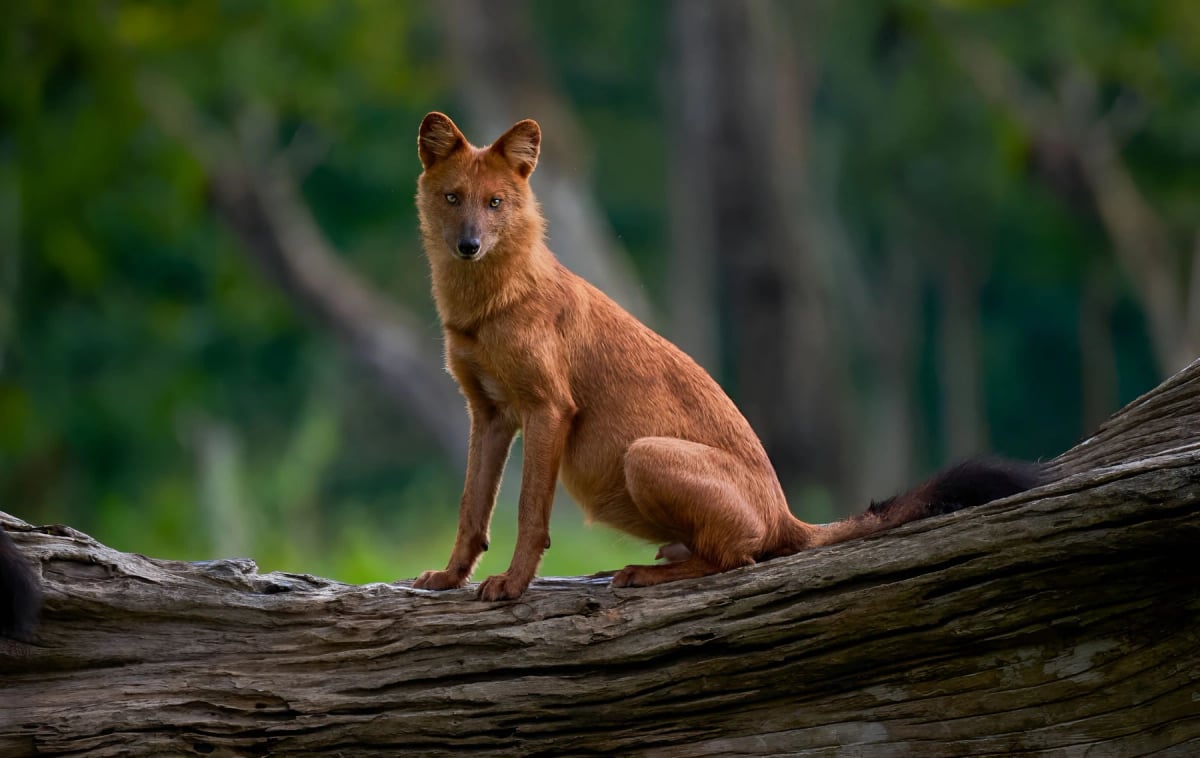
Dhole
Cuon alpinus
In Indonesia, dholes are found on the islands of Sumatra and Java, where they inhabit tropical rainforests and montane areas. Both island populations are considered distinct subspecies. Rapid deforestation driven by agriculture and logging has severely reduced their range. Java's dhole population is particularly at risk due to the island's dense human population and very limited remaining forest. The IUCN lists the dhole as Endangered.
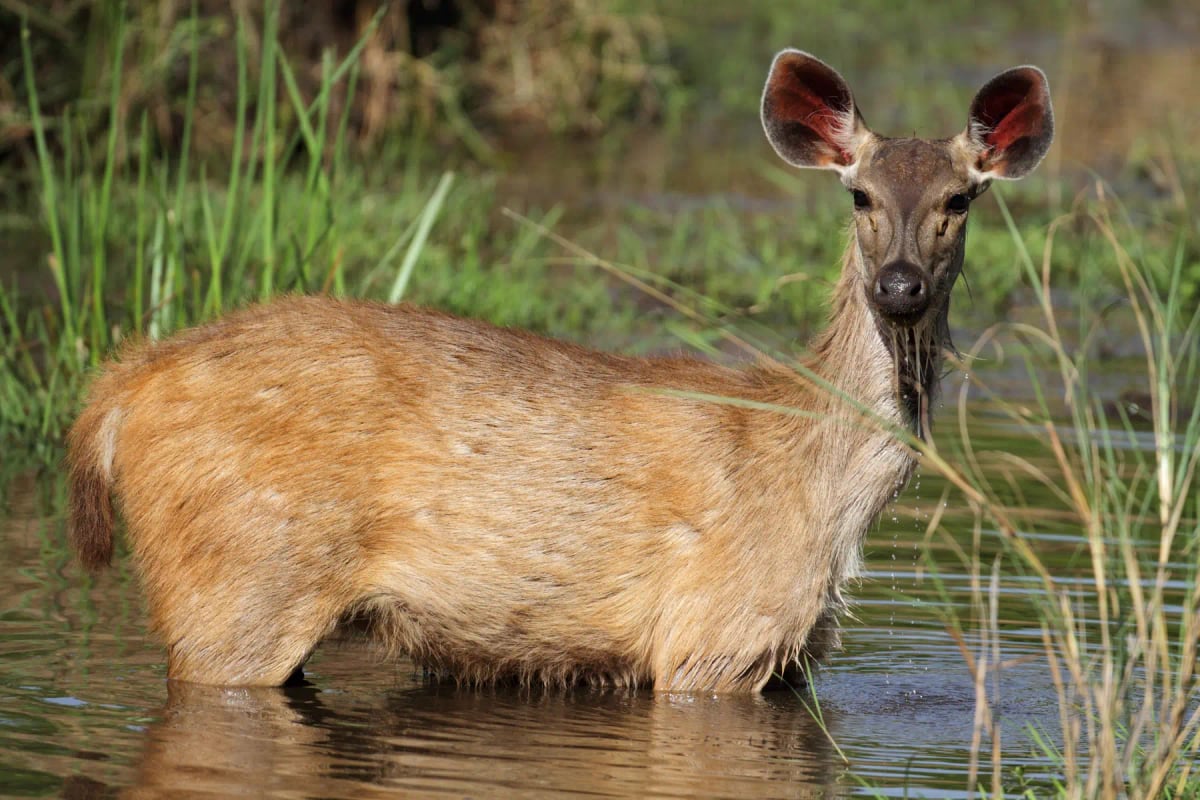
Sambar Deer
Rusa unicolor
In Indonesia, sambar deer are found on the islands of Sumatra, Borneo, and several smaller islands. They inhabit tropical rainforests, forest edges, and areas near rivers. Sumatra's remaining forests, such as those within Gunung Leuser National Park, are among the most important refuges for the species. Rapid deforestation driven by palm oil expansion and logging is the greatest threat to sambar populations across the Indonesian archipelago.
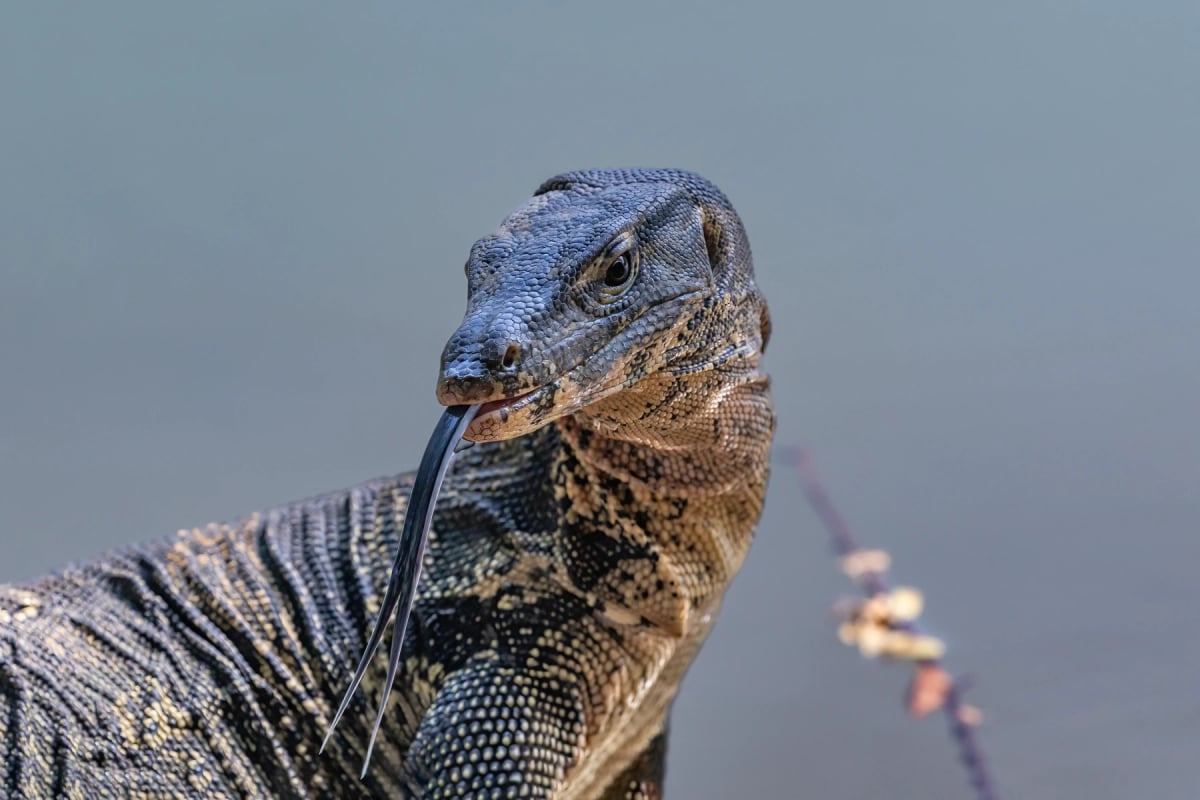
Monitor Lizard
Varanus salvator
Indonesia holds the most widespread population of Asian water monitors in the world. The species is found across all major islands, from Sumatra and Java to Kalimantan and Sulawesi, in mangroves, rivers, forests and city drainage canals. Known locally as "biawak air," it is part of everyday life for millions of Indonesians. Indonesia is also the world's largest exporter of monitor lizard skins, with the trade regulated under annual quotas.
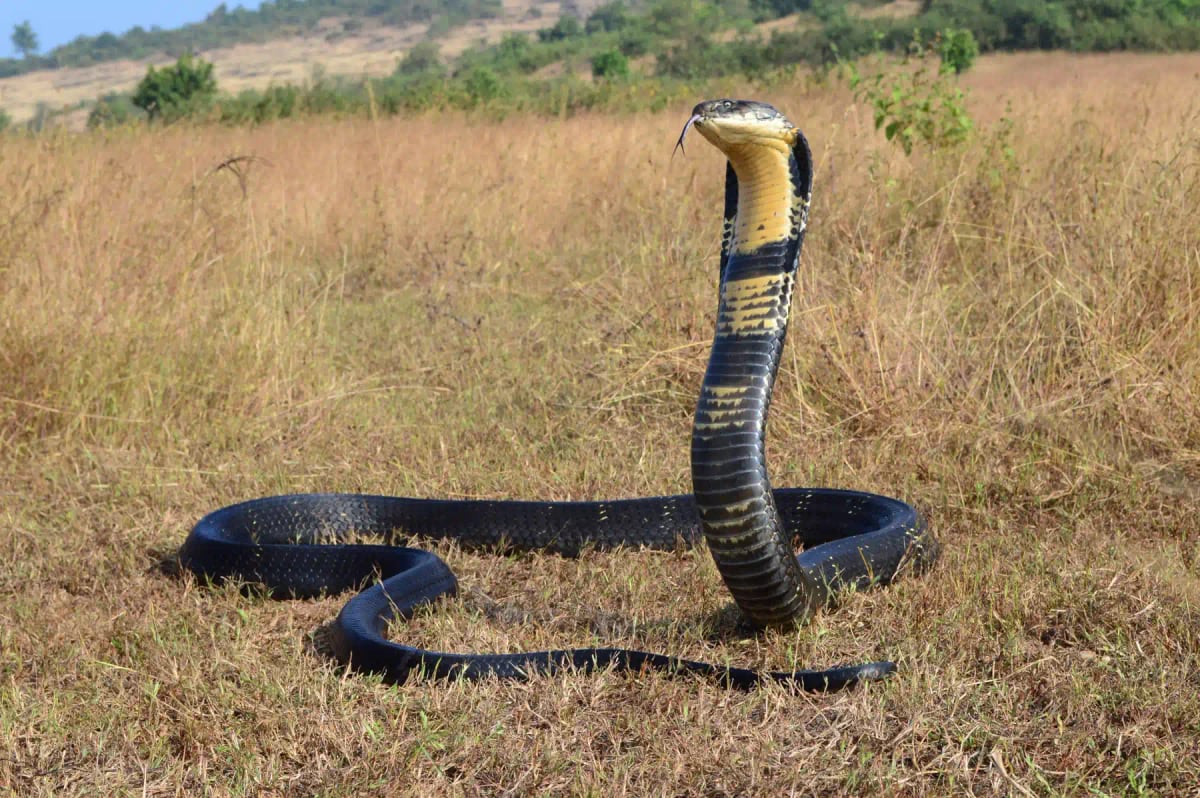
King Cobra
Ophiophagus hannah
Indonesia is home to king cobras across several major islands, including Sumatra, Java and Kalimantan. The species lives in rainforest, secondary forest and areas near rivers where prey is plentiful. Indonesia's rapid deforestation is one of the main pressures the king cobra faces across the archipelago. It is also hunted for its skin and collected for the local food and traditional medicine trade, adding further strain on its populations.
Komodo Dragon
Varanus komodoensis
The Komodo dragon is found only in Indonesia, on the small islands of Komodo, Rinca, Flores, Gili Motang and Padar in the East Nusa Tenggara province. It is the largest living lizard in the world and one of the country's most iconic animals. Protected within Komodo National Park, a UNESCO World Heritage Site, it attracts visitors from around the world. Indonesia is the only place on Earth where this species exists in the wild.
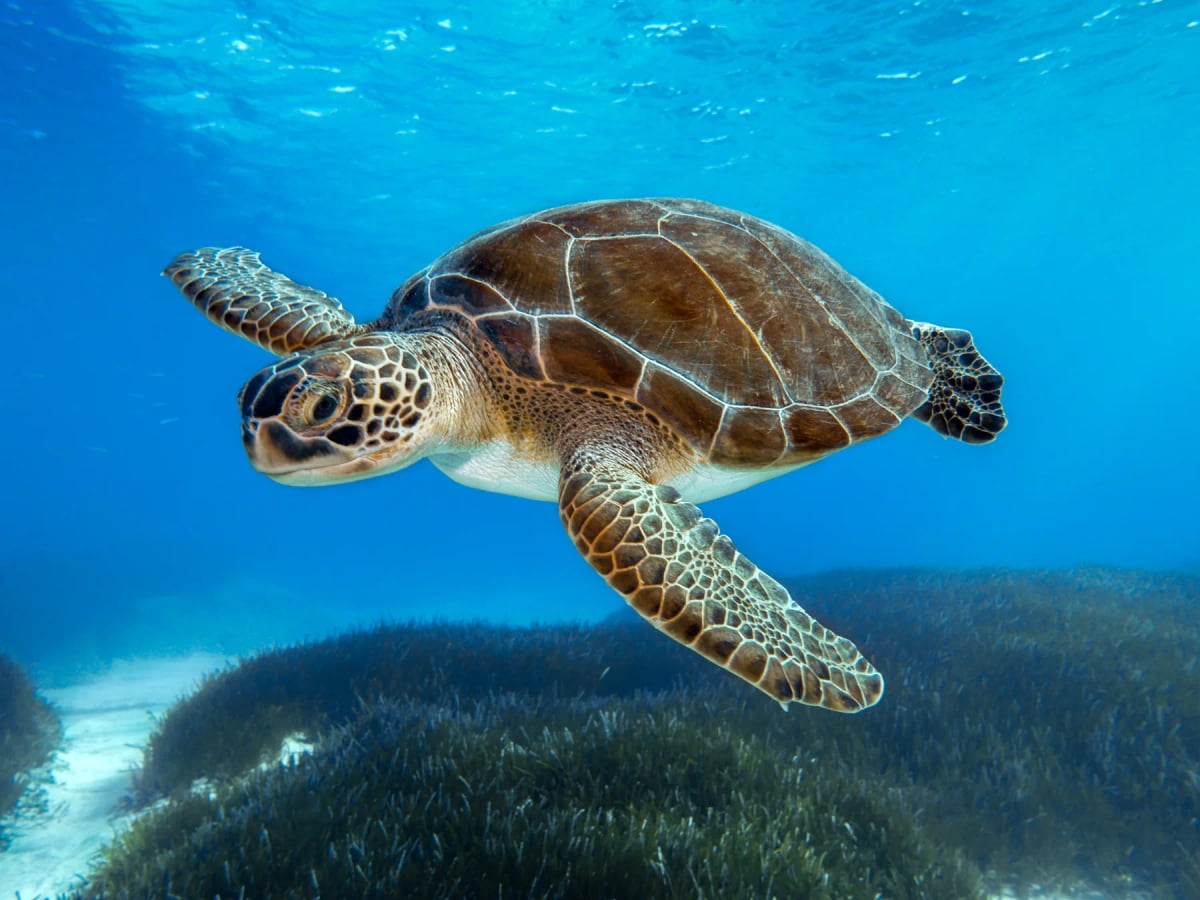
Sea Turtle
Cheloniidae & Dermochelyidae (families)
Indonesia is one of the most important sea turtle countries in the world, with six of the seven species present in its waters. The archipelago's vast coastline, coral reefs and seagrass beds provide feeding and nesting habitat across thousands of islands. Leatherback turtles nest on beaches in West Papua, particularly around Jamursba-Medi and Wermon, which rank among the largest leatherback sites in the Pacific. Green, hawksbill, olive ridley, loggerhead and flatback turtles are also found in Indonesian waters, and conservation programs operate across many regions.
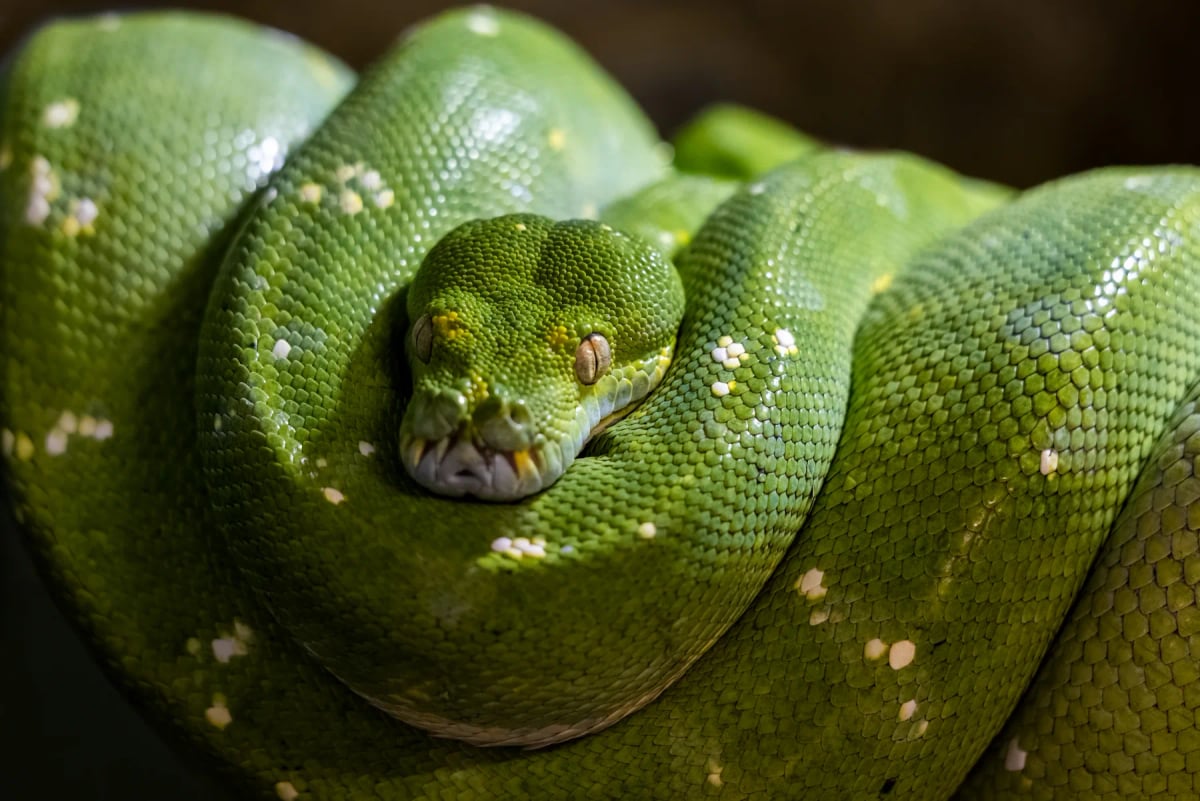
Green Tree Python
Morelia viridis
The green tree python lives across the rainforests of eastern Indonesia, including the islands of the Maluku archipelago and western New Guinea. It spends its life in the canopy, coiled over branches with its head resting at the center. Juveniles hatch in bright yellow or red before turning green. Collection for the exotic pet trade puts pressure on some island populations, which are harder to monitor and protect.
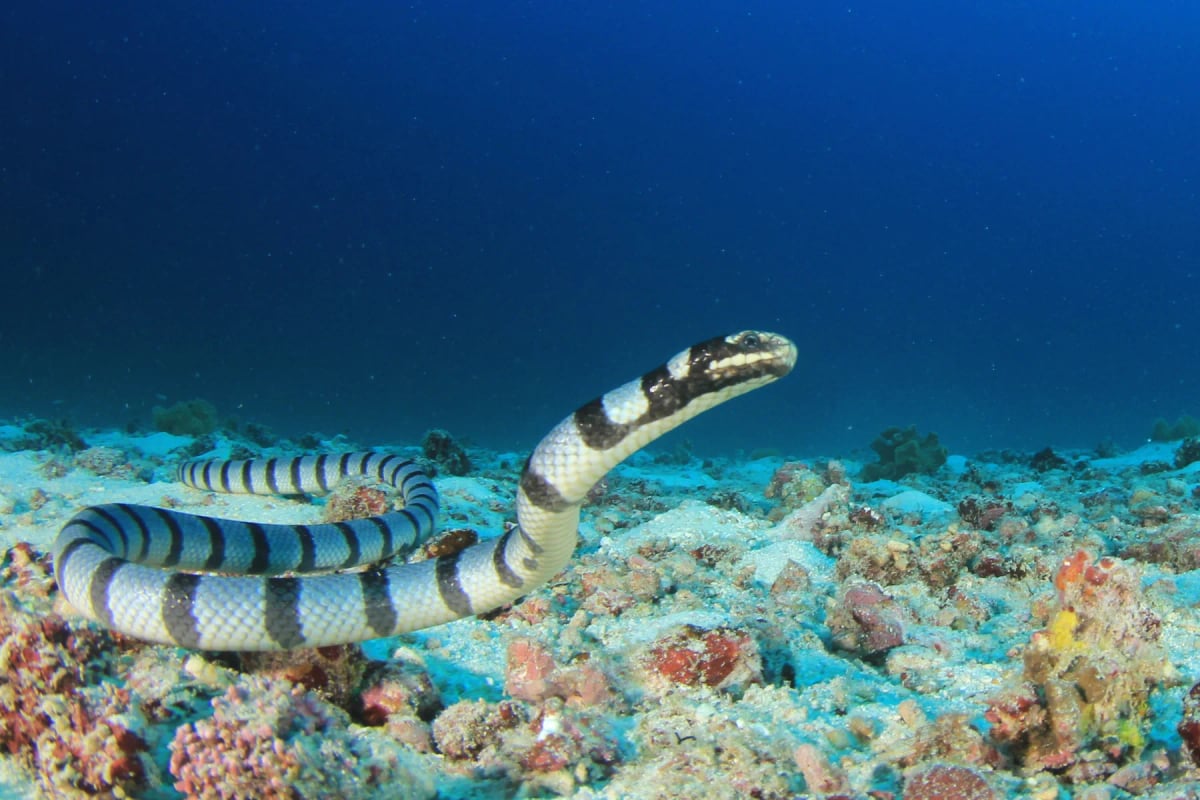
Sea Snake
Hydrophiinae / Laticauda spp.
Indonesia, sitting at the heart of the Coral Triangle, is home to one of the highest diversities of sea snakes in the world. Species of both Hydrophiidae and Laticauda inhabit its vast network of coral reefs, coastal shallows, and island shorelines across thousands of islands. Bycatch and coral reef degradation are the primary threats. Their venom is potent but bites on people are uncommon. IUCN status: Data Deficient.
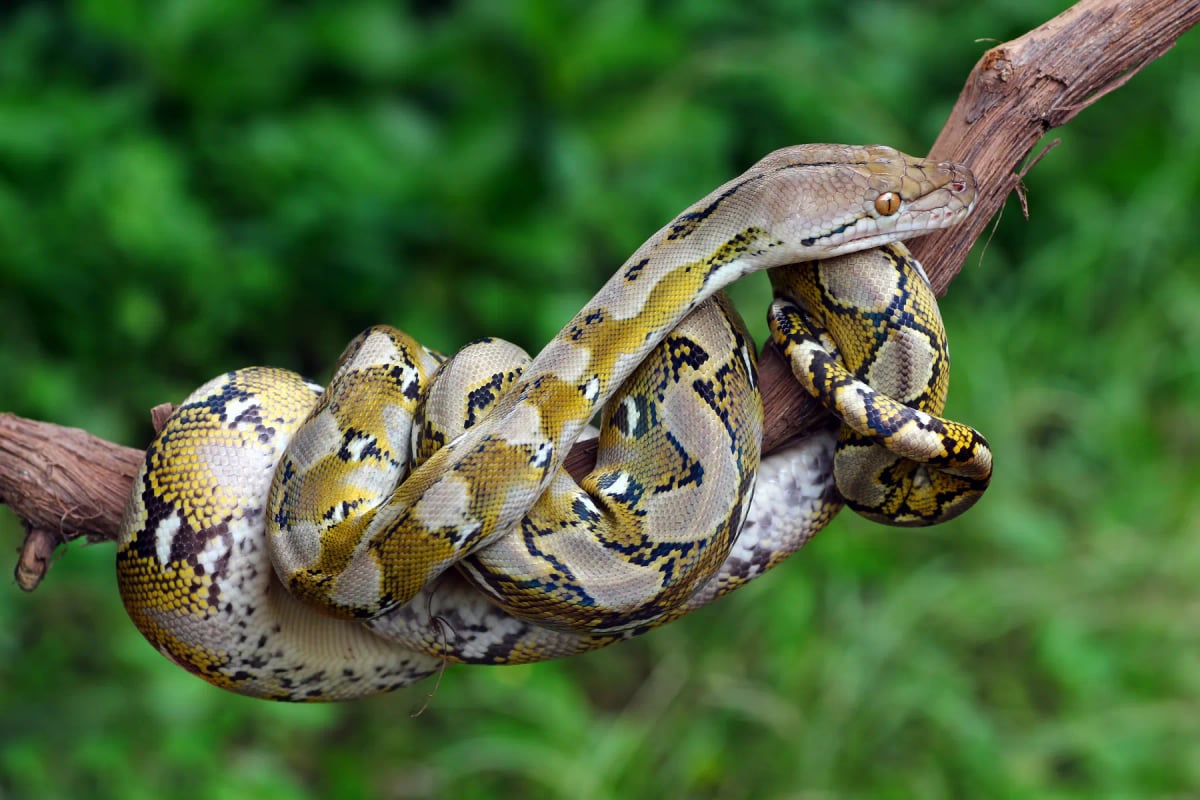
Reticulated Python
Malayopython reticulatus
Indonesia is home to some of the largest reticulated pythons ever recorded. The species is widespread across Sumatra, Kalimantan, Java, Sulawesi, and many smaller islands. It thrives in rainforests, swamps, and agricultural land near forest edges. Indonesia is also one of the world's largest exporters of python skins, making sustainable management of wild populations a significant conservation concern.
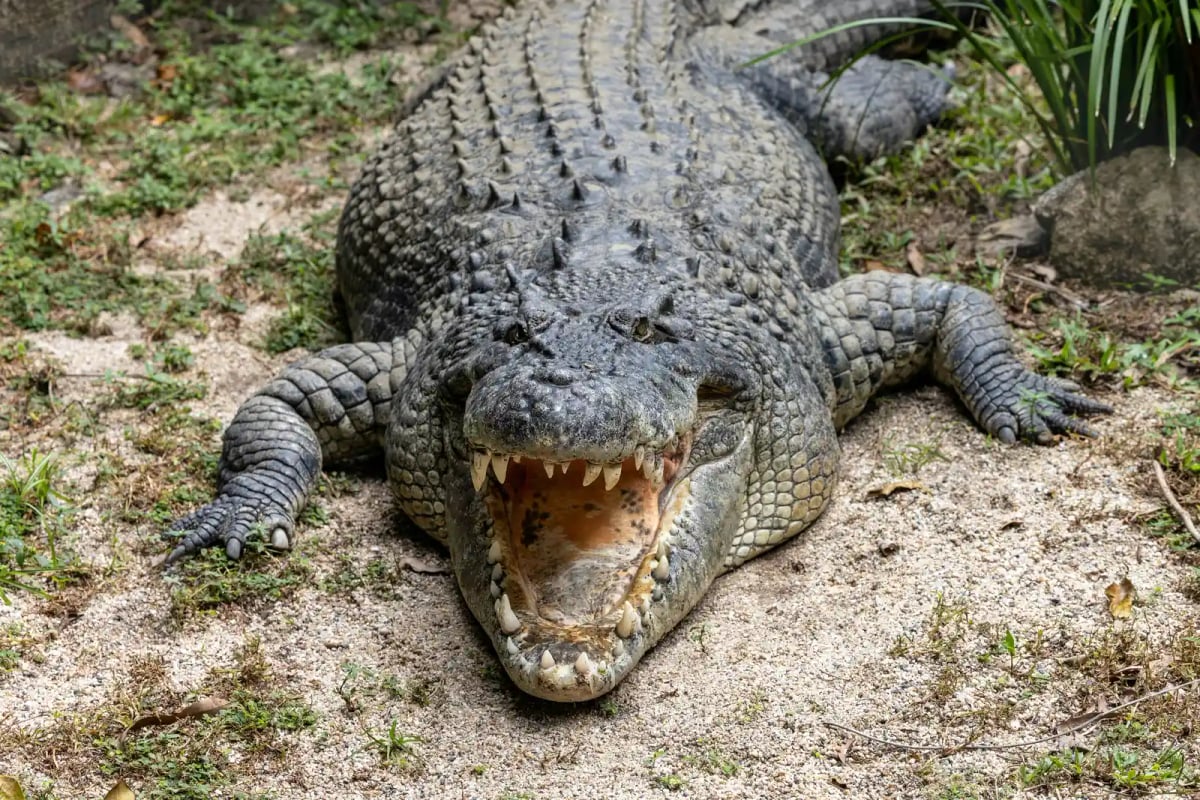
Saltwater Crocodile
Crocodylus porosus
Indonesia has one of the widest distributions of the species, with crocodiles present in the coastal wetlands of Papua, Kalimantan, Sumatra, Sulawesi and many smaller islands. Decades of skin trade cut into numbers, and today the main pressures come from mangrove clearing, aquaculture and expanding settlements along river mouths. Attacks on people are reported regularly in provinces such as East Kalimantan and Bangka Belitung, where communities live close to tidal rivers.
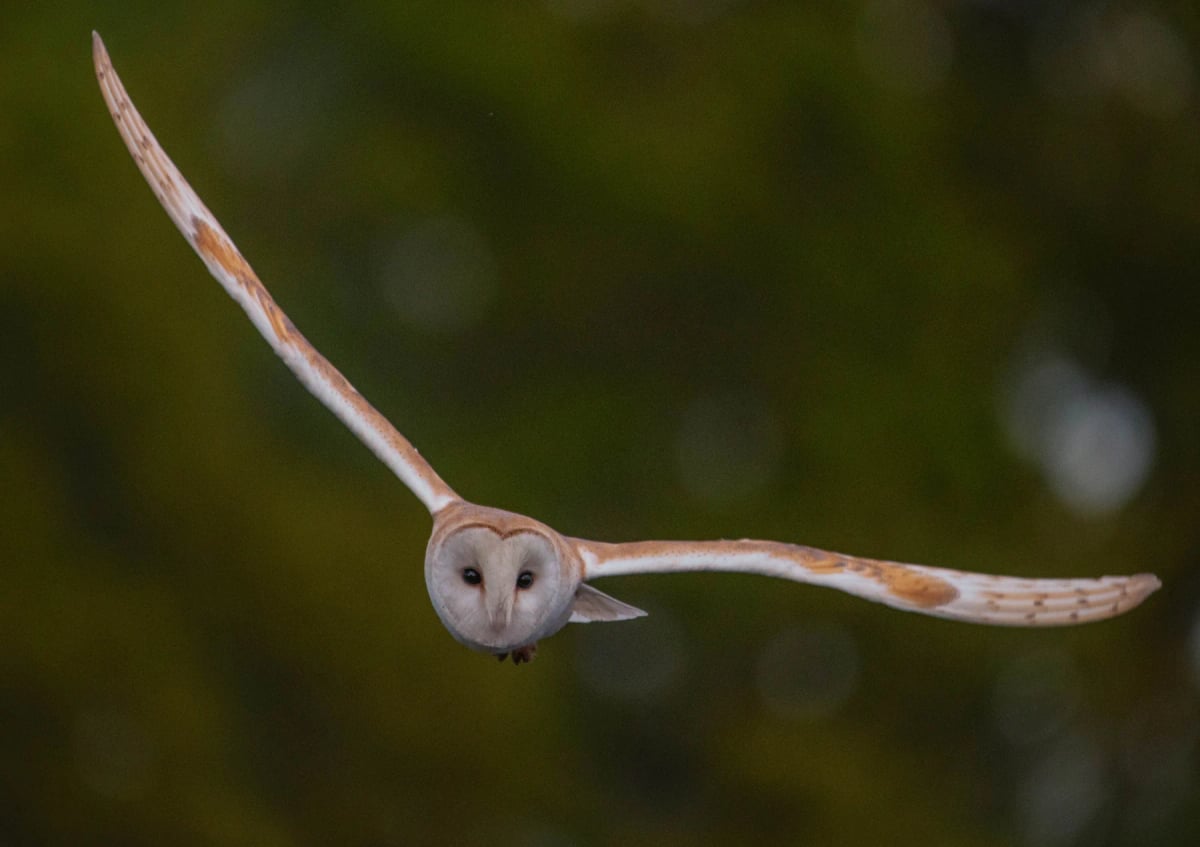
Barn Owl
Tyto alba
The barn owl is found across Indonesia in open farmland, rice paddies, coconut plantations, and areas near villages and towns on the main islands of Java, Sumatra, Bali, Sulawesi, and others. It nests in old buildings, hollow trees, and cliff faces, and hunts rodents at night. In Indonesia's densely farmed agricultural landscapes, particularly in the rice-growing regions of Java and Bali, it is highly valued as a natural controller of rat populations that damage crops. Some farming communities actively maintain nest boxes to attract barn owls as an alternative to rodenticide use.
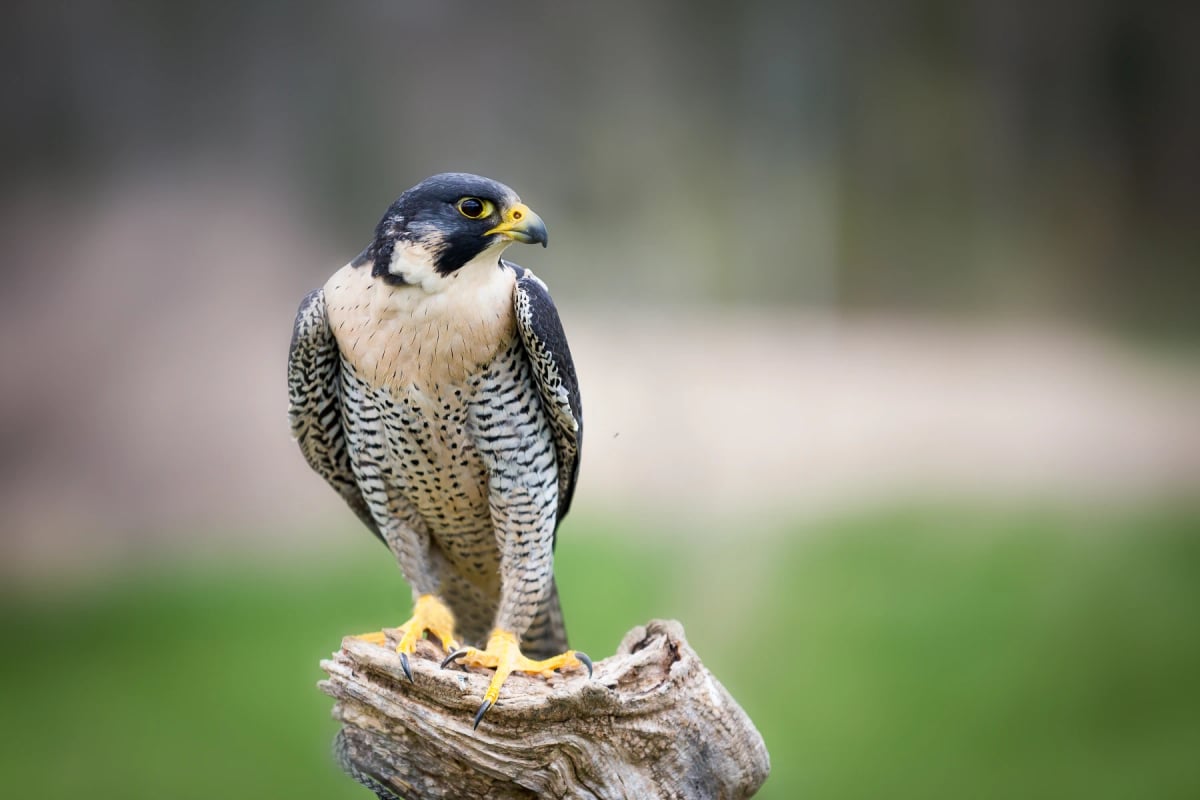
Peregrine Falcon
Falco peregrinus
In Indonesia, the peregrine falcon occurs across the archipelago as a migrant visitor from northern breeding grounds, with some resident populations also present on larger islands including Borneo, Sulawesi, and New Guinea. It hunts shorebirds, pigeons, and swifts over coastal wetlands, forest edges, and open lowlands. The species is well suited to Indonesia's mix of habitats and is rated Least Concern on the IUCN Red List.
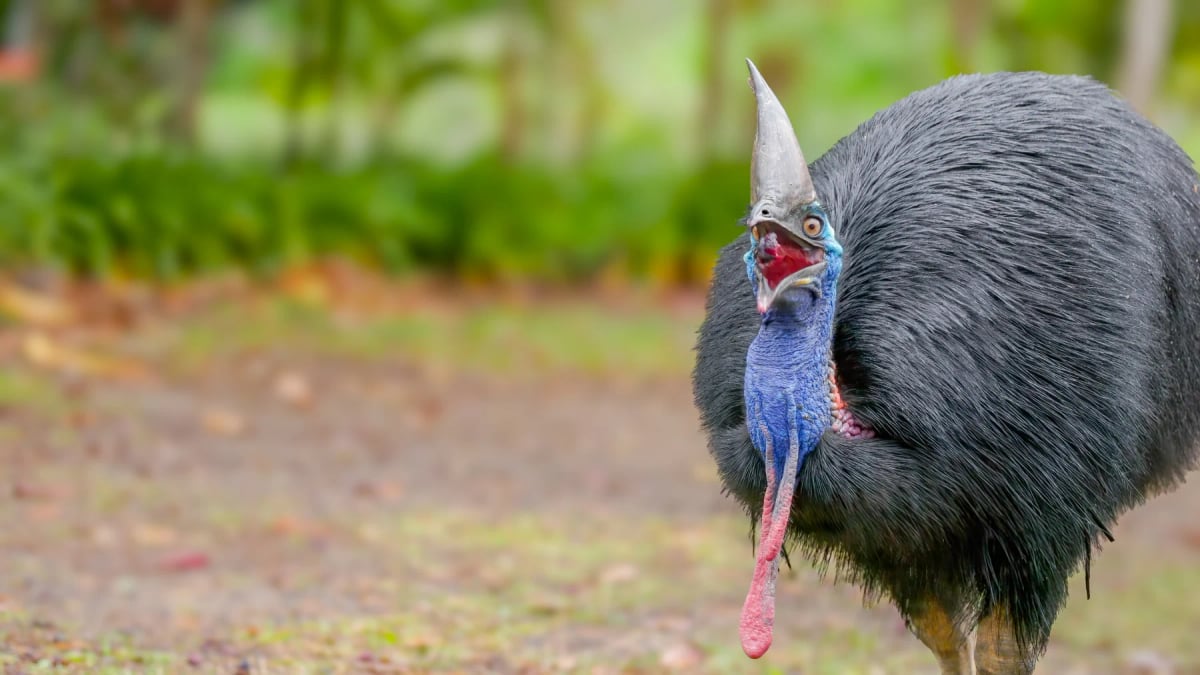
Cassowary
Casuarius casuarius
In Indonesia, the southern cassowary lives in the lowland rainforests of the south of Indonesian New Guinea and on the Aru Islands, where forests rich in fruiting trees give it plenty of food. It swallows large fruits whole and spreads their seeds intact. Hunting and the clearing of forest for plantations put pressure on local populations across the island. IUCN status: Least Concern.
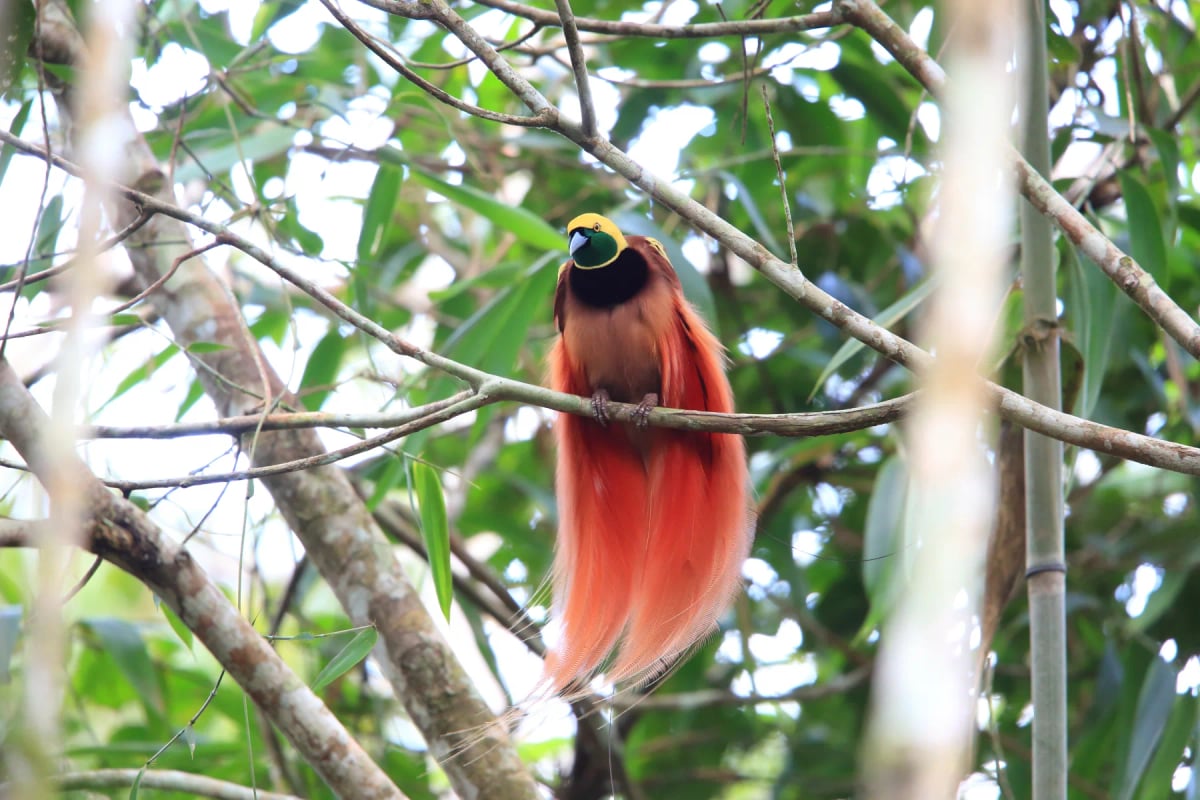
Raggiana Bird of paradise
Paradisaea raggiana
Indonesia holds only the western edge of this bird's range. The Raggiana bird of paradise reaches the Trans Fly, the lowland country just across the border from Papua New Guinea in southern Indonesian New Guinea, and goes no further west. Birds there belong to the same southern population as those in Papua New Guinea, with the deep crimson flank plumes, and they display at the same kind of communal lek trees. IUCN status: Least Concern.
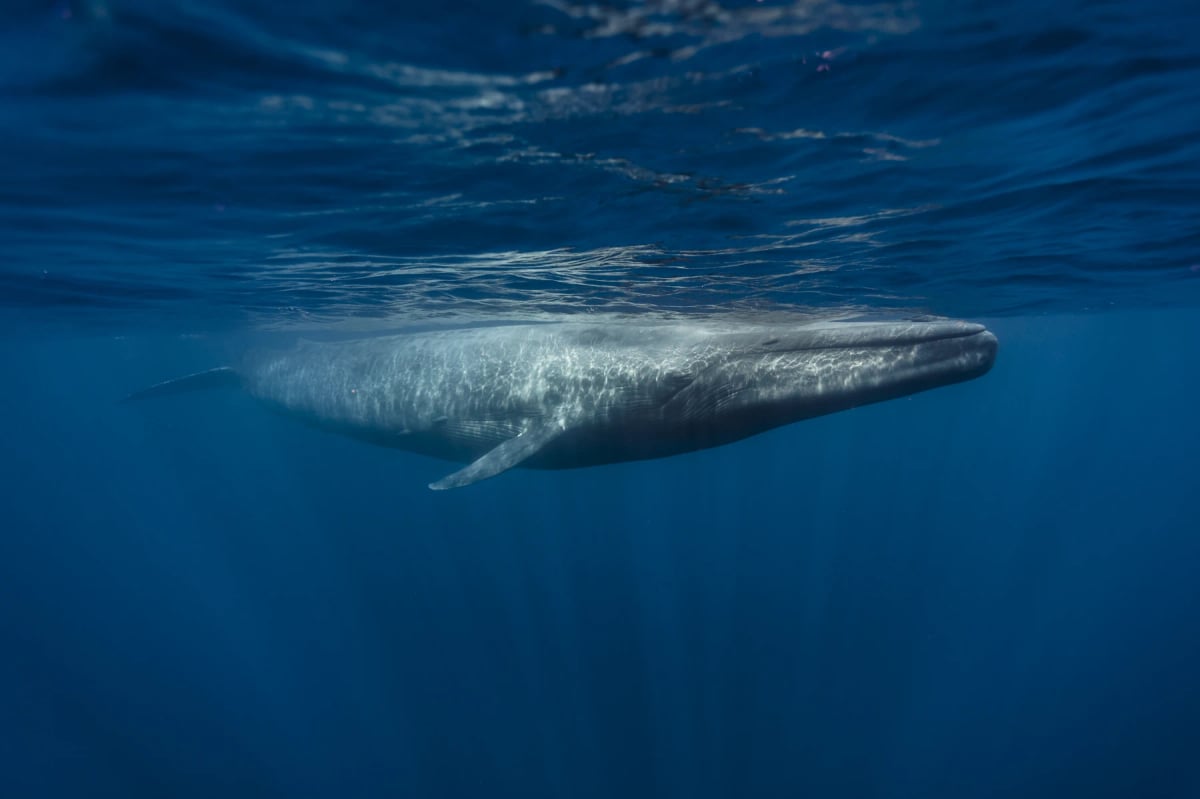
Blue Whale
Balaenoptera musculus
Indonesia sits on the migration route of pygmy blue whales moving between Australian feeding grounds and tropical breeding waters. They pass through the Savu Sea and the straits around Solor, Alor and Lembata, where deep channels come close to shore and allow sightings from small boats. Local communities in East Nusa Tenggara have long known these waters as a corridor for large whales, and research and cautious tourism have grown there in recent years.
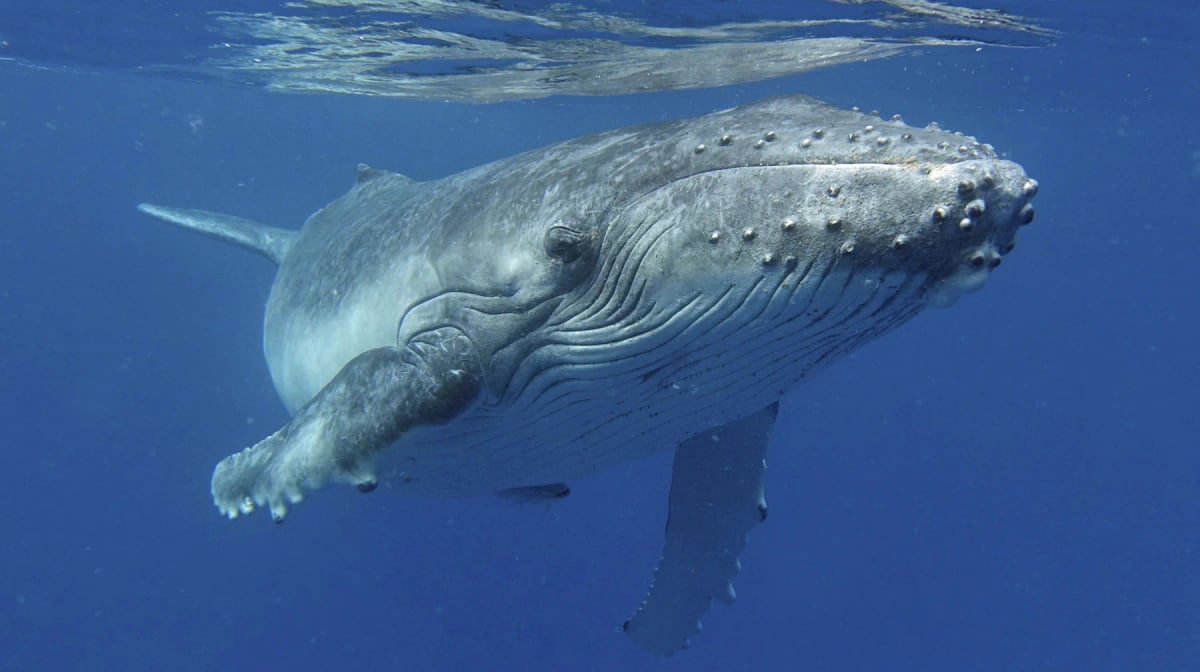
Humpback Whale
Megaptera novaeangliae
Humpback whales pass through Indonesian waters during their migrations between feeding and breeding grounds across the Indo-Pacific. The Banda Sea and waters around Maluku are among the areas where sightings occur. Growing whale-watching interest in the region has raised local awareness of these animals. The species is classified as Least Concern by the IUCN, though vessel traffic and fishing gear remain concerns in busy Indonesian seas.
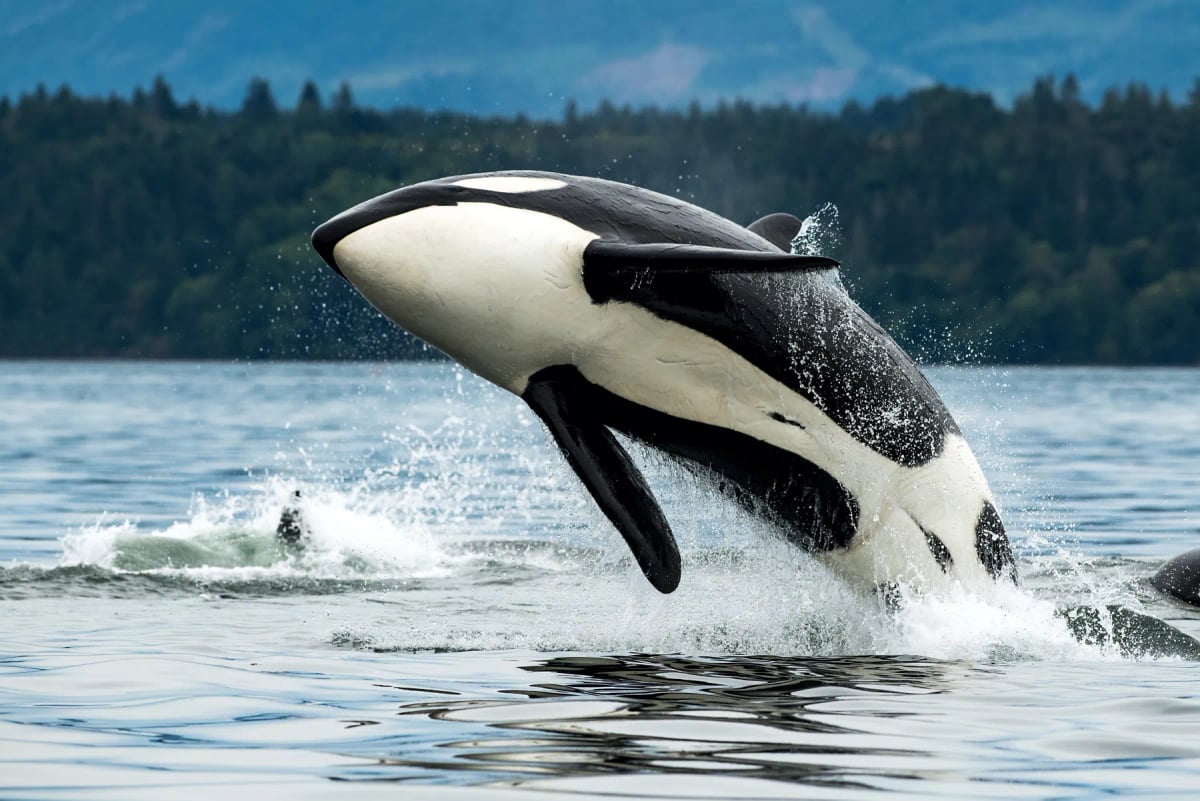
Orca
Orcinus orca
Orcas move through Indonesian waters across one of the most biodiverse marine regions on Earth. Sightings have been recorded in the Banda Sea and surrounding areas, where these apex predators follow prey through rich coral sea ecosystems. Living in close family pods led by older females, they communicate through distinct calls and are listed as Data Deficient by the IUCN due to limited population data.
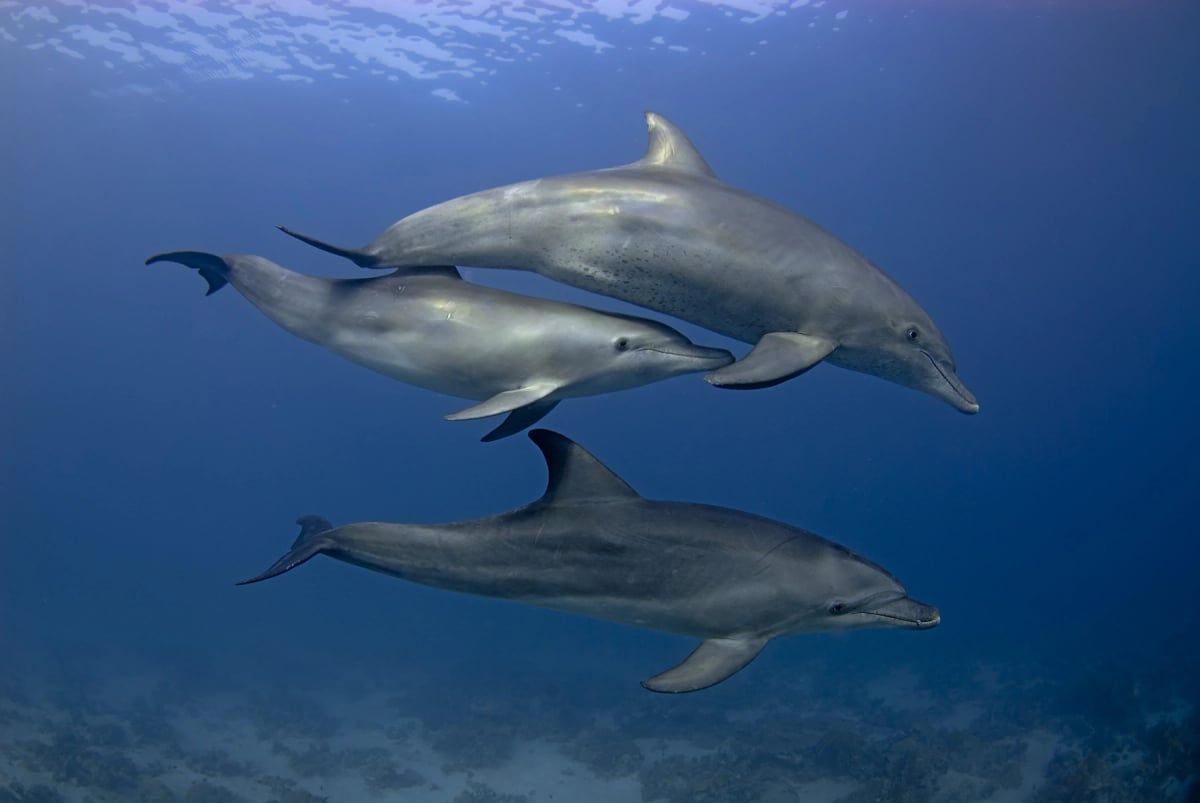
Bottlenose Dolphin
Tursiops truncatus
Indonesia's vast and biodiverse seas, including the Banda Sea, Flores Sea, and the waters of the Coral Triangle, provide rich habitat for bottlenose dolphins. Pods are regularly observed in coastal areas and around the country's thousands of islands. Indonesia is a global center for marine biodiversity, and dolphin watching has grown as an ecotourism activity in places like Lovina in Bali. The IUCN lists the species as Least Concern.
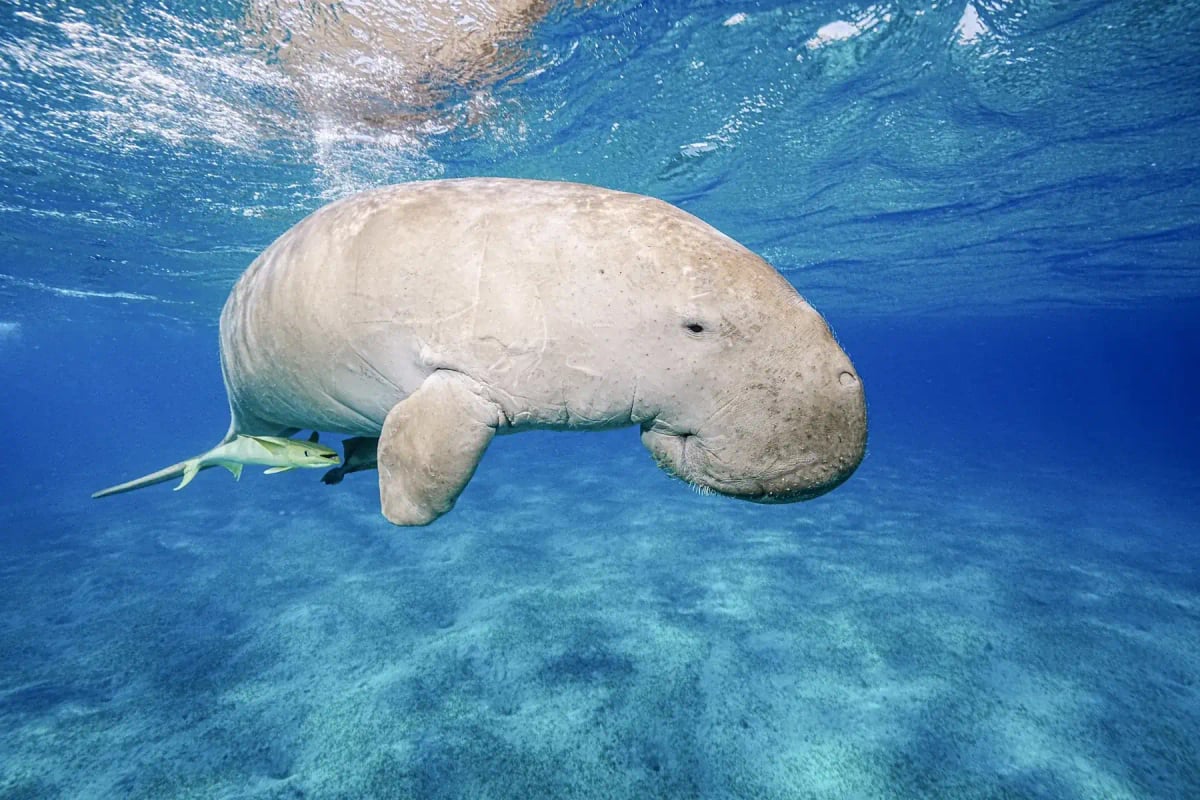
Dugong
Dugong dugon
Indonesia's vast archipelago encompasses some of the most important dugong habitats in the Indo-Pacific, with populations recorded across regions including the Coral Triangle, the waters of Papua, and the Maluku Islands. Rich seagrass ecosystems support these animals, but rapid coastal development, pollution, and fishing pressure threaten their survival. Indonesia's sheer size makes coordinated conservation challenging, though marine protected areas offer refuge in several key locations. IUCN status: Vulnerable.
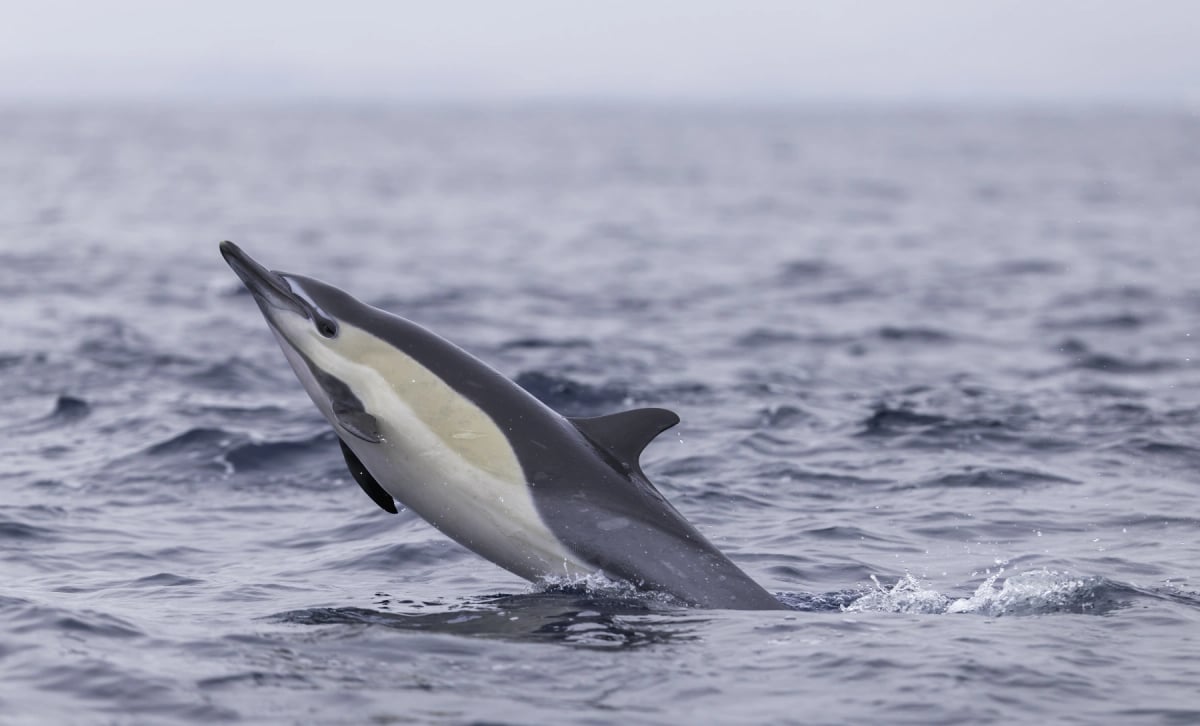
Common Dolphin
Delphinus delphis
Common dolphins inhabit the warm seas surrounding Indonesia's vast archipelago, including the Java Sea, the Banda Sea, and the waters of the Lesser Sunda Islands. They gather in groups to hunt small schooling fish and squid in these productive tropical waters. Their striking hourglass flank markings and energetic acrobatics make them easily identifiable. Interactions with local fisheries are an ongoing concern across the region. IUCN status: Least Concern.
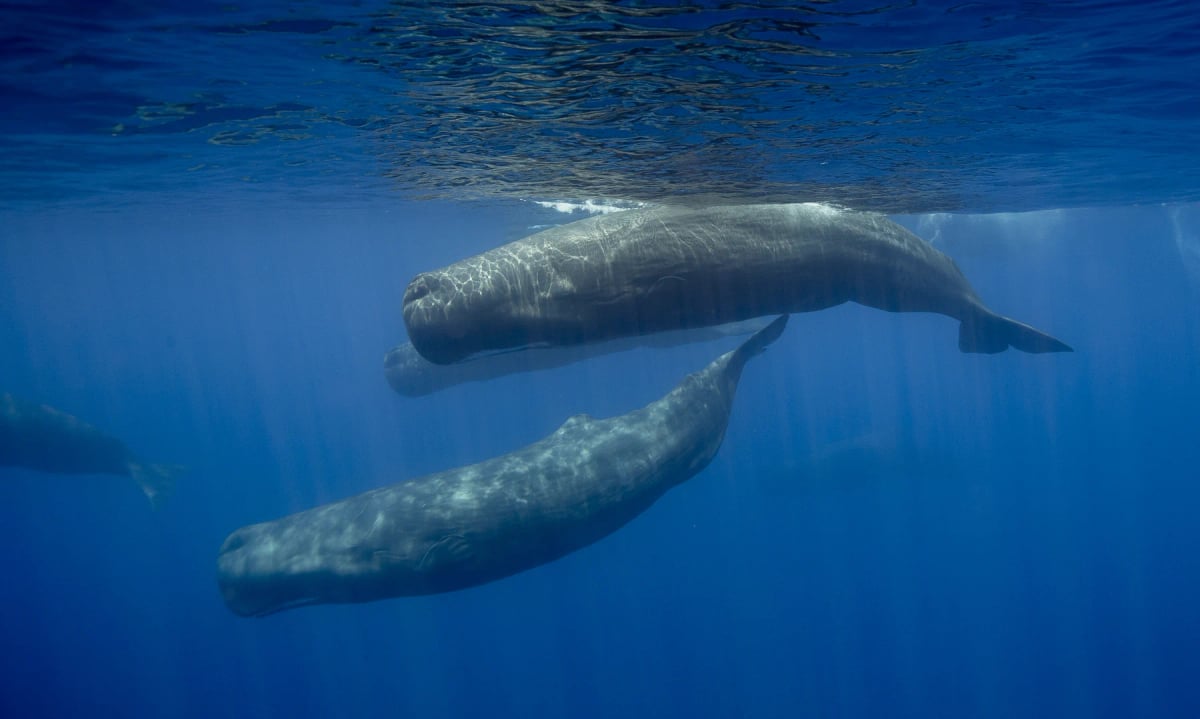
Sperm Whale
Physeter macrocephalus
Indonesia's vast archipelago is surrounded by some of the deepest seas in the world, including the Banda Sea and the Flores Sea, making it prime habitat for sperm whales. These waters are rich in squid, the primary prey of this species. Indonesian communities, particularly in the Lembata region, have a long cultural history with sperm whale hunting, though the species is now internationally protected and listed as Vulnerable.
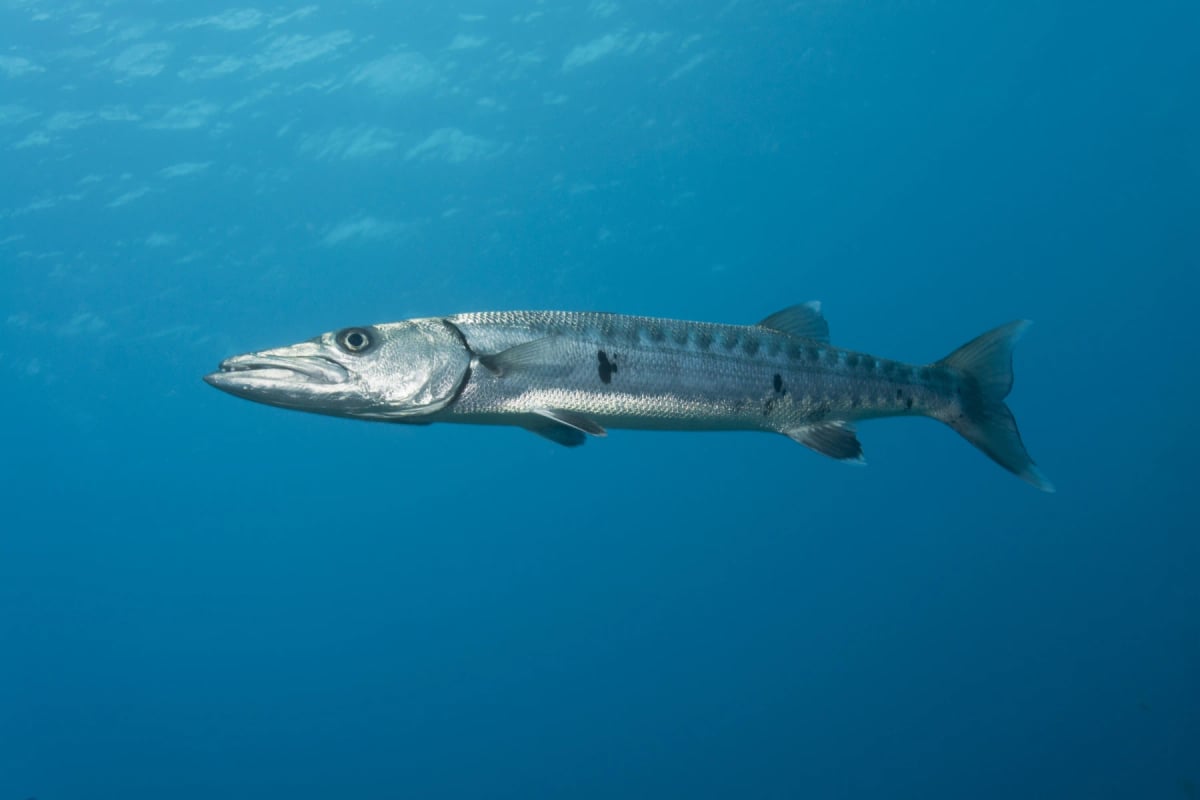
Barracuda
Sphyraena spp.
Barracudas are abundant throughout Indonesia's vast tropical marine waters, found across the coral triangle reef systems of Komodo, Raja Ampat, the Banda Sea, Sulawesi, and Ambon. Several species are present, including the great barracuda and large schooling species that form impressive aggregations on exposed reef points and current-swept walls. Indonesia is one of the most biodiverse marine environments on Earth, and barracudas are a consistent presence on reef dives across the archipelago. Large spiraling schools of barracuda at sites like Komodo and Alor are among the most memorable spectacles in Indonesian diving.
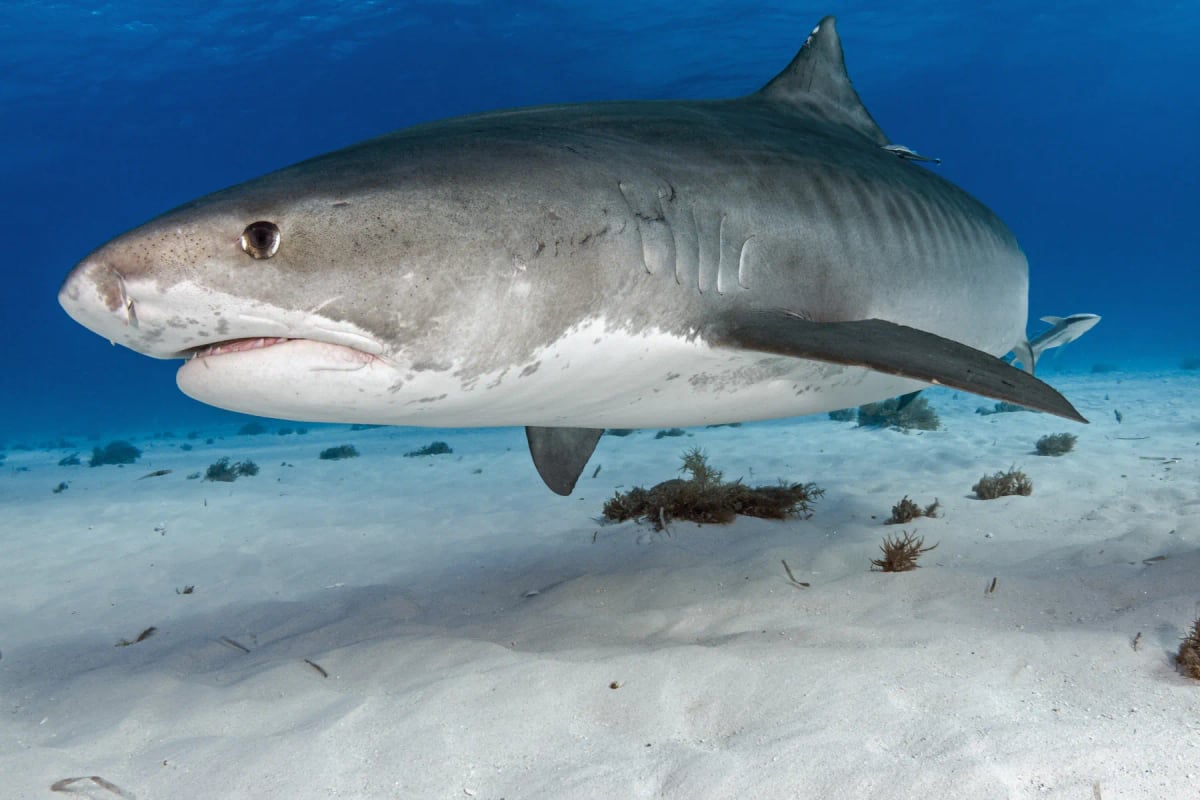
Tiger Shark
Galeocerdo cuvier
Indonesia's vast network of coral reefs, coastlines, and open seas makes it ideal habitat for the tiger shark. This large predator roams waters across the archipelago, from the Coral Triangle to deeper offshore zones. It feeds on fish, sea turtles, and rays. Listed as Near Threatened by the IUCN, the tiger shark faces pressure from fishing activity and the fin trade, both of which are significant in Indonesian waters.
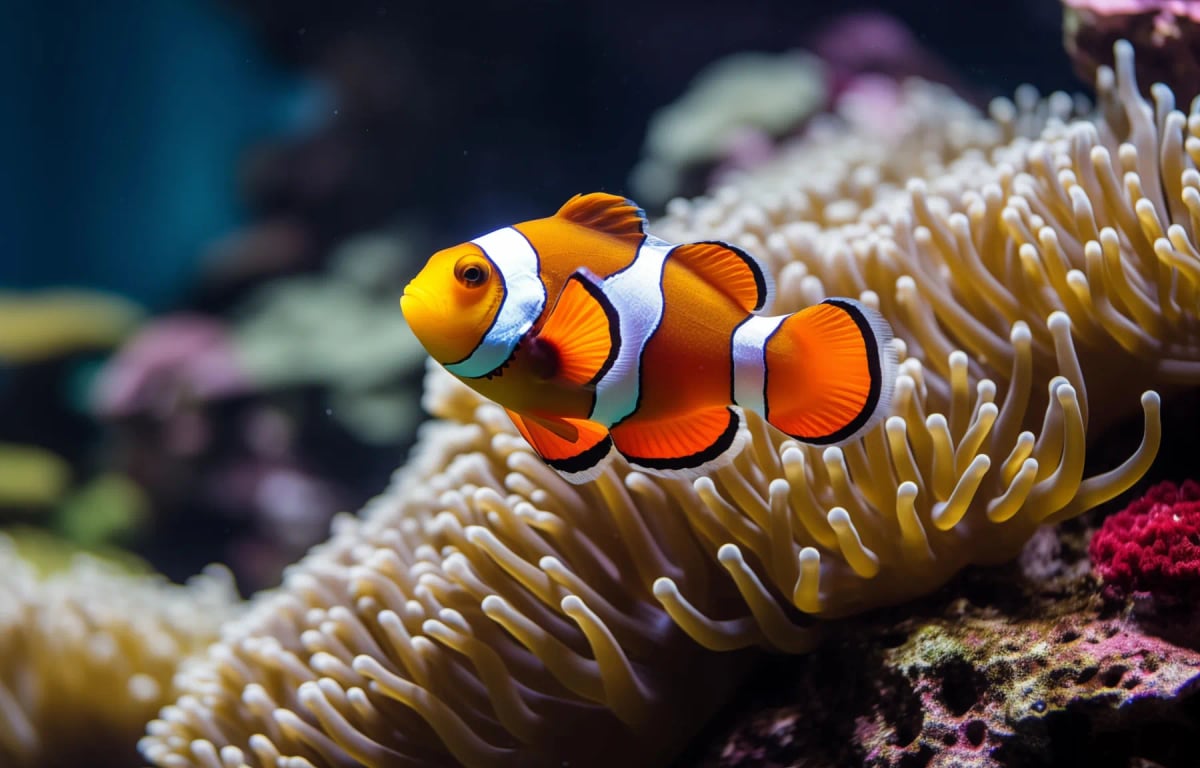
Clownfish
Amphiprioninae (over 30 species)
Indonesia sits at the heart of the Coral Triangle, one of the most biodiverse marine regions on Earth, and clownfish thrive throughout its warm, reef-rich waters. From the Raja Ampat archipelago to Komodo National Park, these bright orange fish are spotted tucked safely inside sea anemones. Their symbiotic relationship with anemones is essential to reef health, and Indonesia's vast reef network provides ideal habitat for dozens of species.
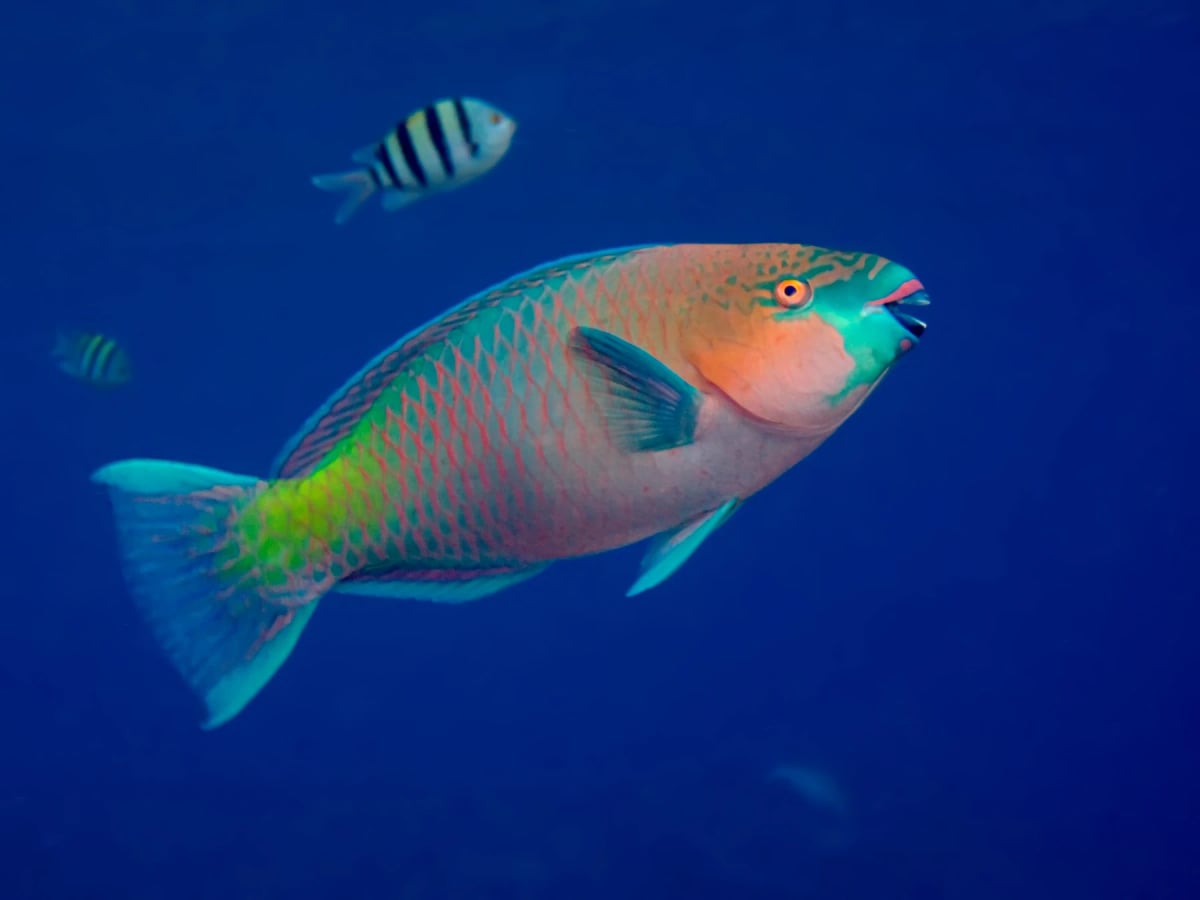
Parrotfish
Scaridae
Indonesia sits at the heart of the Coral Triangle, one of the most diverse marine regions on Earth, and parrotfish are among its most active reef residents. Across the reefs of Raja Ampat, Komodo, and the Banda Sea, these fish graze in groups, scraping algae and dead coral from surfaces and producing large quantities of fine sand. Their constant activity helps prevent algae from smothering coral, supporting the extraordinary reef diversity Indonesia is known for.
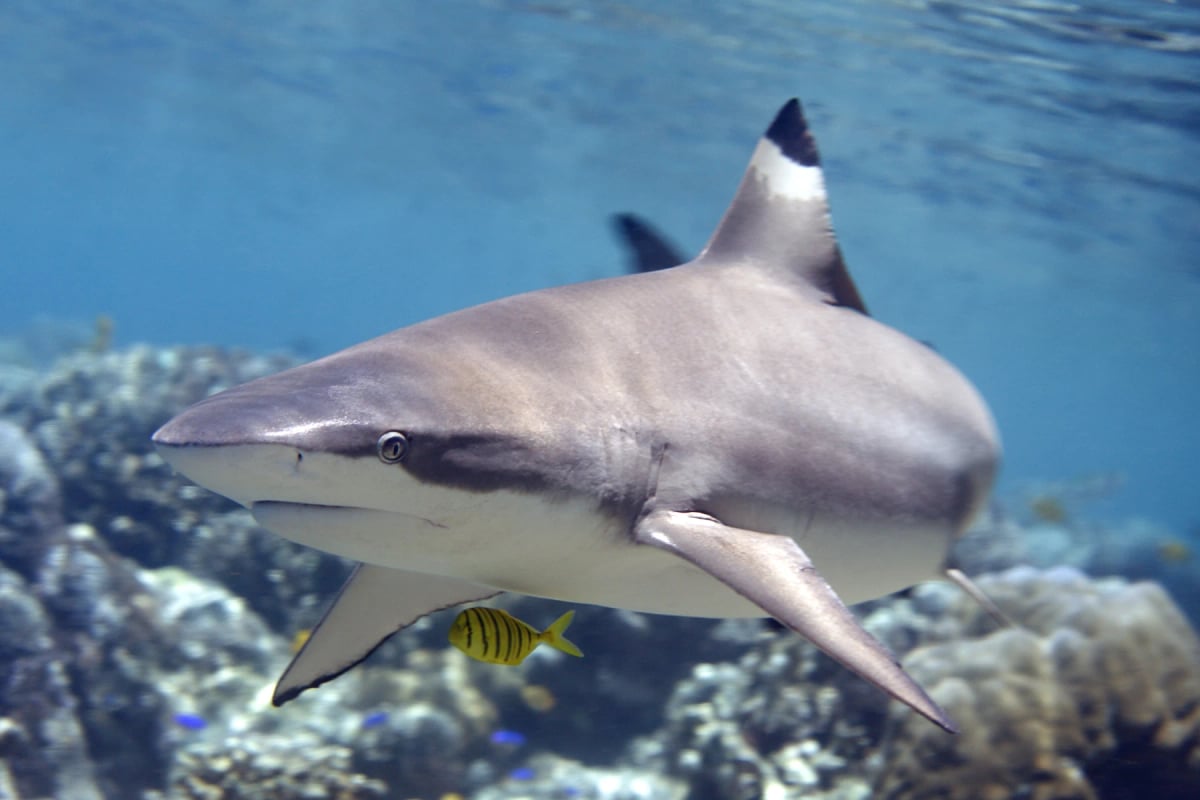
Reef Shark
Carcharhinus spp.
Indonesia sits at the heart of the Coral Triangle, the most biodiverse marine region on Earth, and reef sharks are found throughout its thousands of islands. Blacktip and whitetip reef sharks are common in the waters around Raja Ampat, Komodo, and the Banda Sea. Despite strong diving tourism in many areas, reef sharks in Indonesia face ongoing threats from the shark fin trade and local fishing pressure.
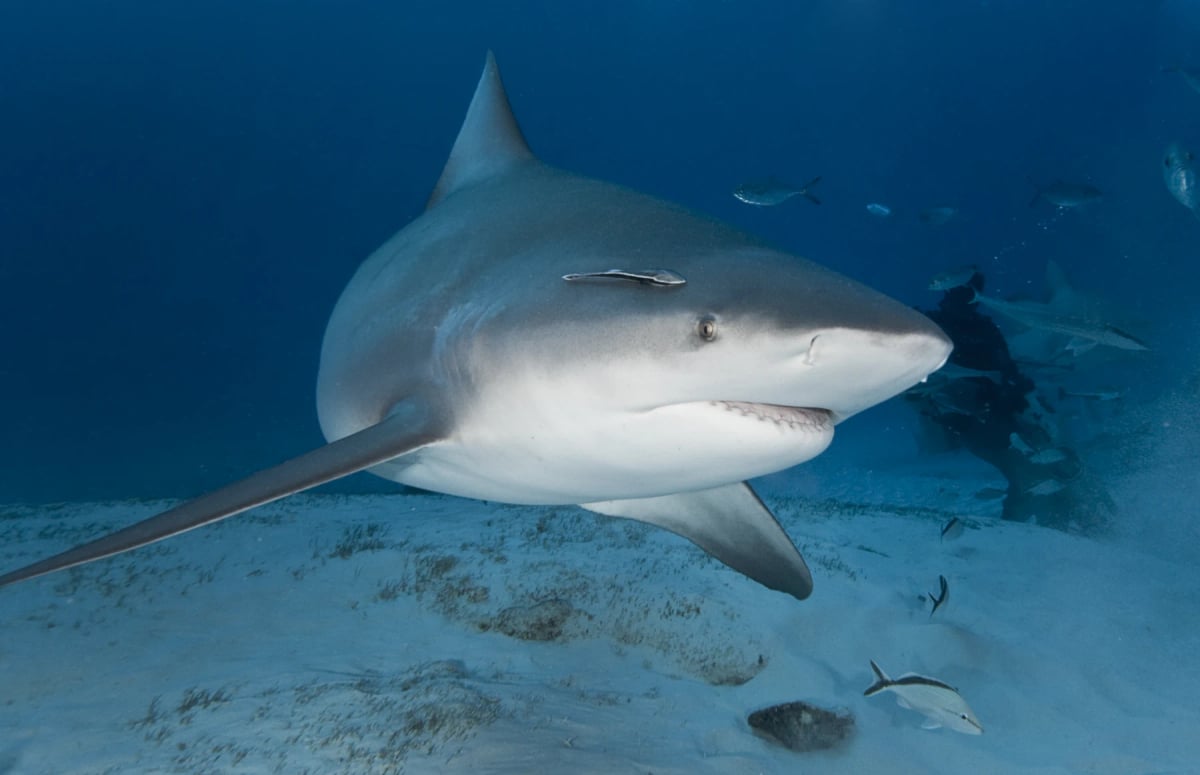
Bull Shark
Carcharhinus leucas
Indonesia's vast network of coastlines, river mouths, and estuaries across its many islands provides ideal habitat for bull sharks. They are found in shallow, warm coastal waters from Sumatra to Papua. Indonesia is a major fishing nation, and bull sharks are sometimes caught as bycatch. Habitat loss in mangrove and estuarine zones poses a growing threat to their populations in the region. IUCN status: Near Threatened.
Researched and written by Juan Pablo. Sources: IUCN Red List, scientific literature and regional field guides. Last updated: .