Hippopotamus
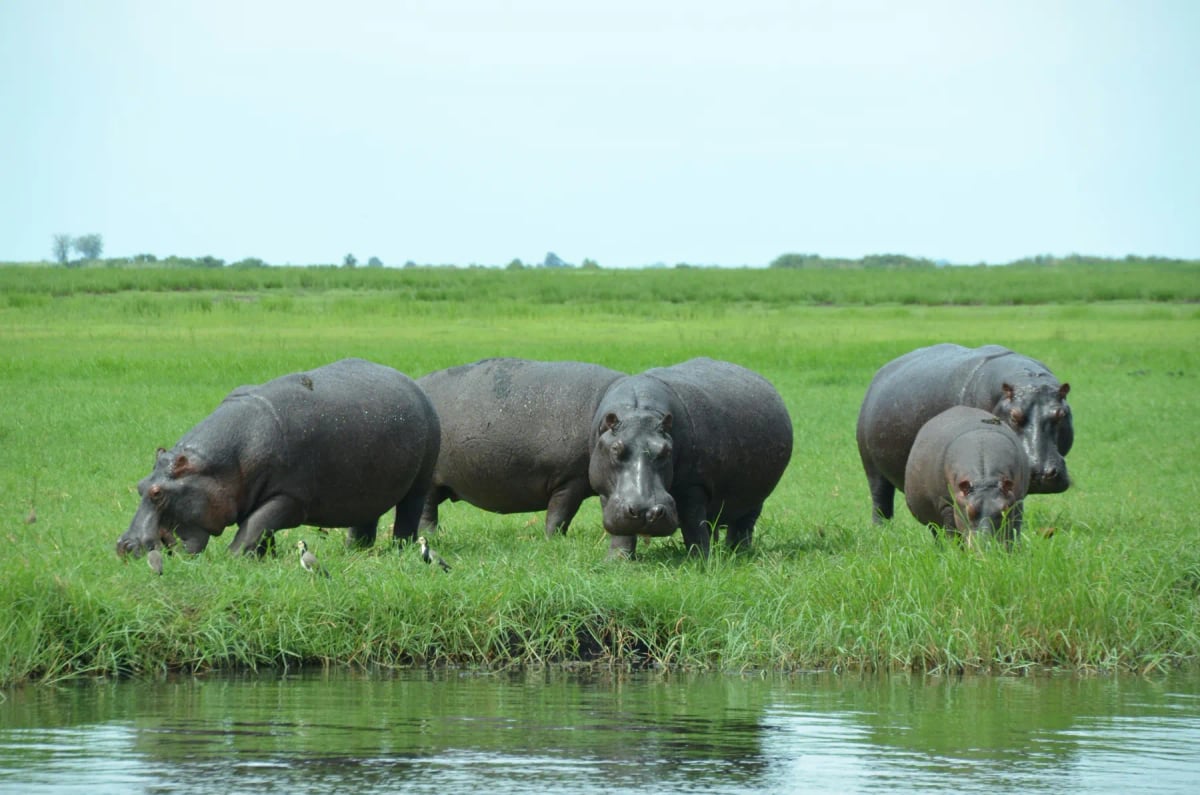
The hippopotamus (Hippopotamus amphibius) is one of the largest land animals on Earth, yet it lives a life built around water. Found across rivers, lakes, and wetlands in sub-Saharan Africa, hippos spend most of the day submerged or resting at the water's edge to keep their skin moist and their body temperature in check. As night falls, they leave the water and wander several kilometers on land to graze, eating roughly 40 kg of grass in a single outing. Their skin produces a reddish fluid that acts as a natural sunscreen and may also help fight infection. Although entirely plant eating, hippos are fiercely territorial in water and can move at surprising speed on land. They live in groups led by a dominant male and communicate through deep, resonant calls that travel both through the air and underwater. The IUCN lists them as Vulnerable.
Habitat and distribution
Across sub-Saharan Africa, hippos occupy rivers, lakes, swamps, and flooded grasslands from Senegal and Guinea in the west to Ethiopia and Tanzania in the east, and as far south as South Africa. They are never found far from permanent freshwater. During the day, a hippo needs to keep its massive body cool and its skin moist, so access to deep, calm water is essential. They favour stretches of river with gently sloping banks that allow them to enter and exit easily, and with patches of short grass nearby for grazing at night. Population density in any given area depends almost entirely on how much suitable water and adjacent pasture is available. Where rivers have been dammed or diverted, hippo numbers tend to drop sharply.
Diet
Despite their bulk, hippos are strict herbivores with a diet built almost entirely around short grasses. After dark, they leave the water and follow well-worn trails that can extend several kilometres inland, grazing steadily for four to five hours. An adult can consume around 40 kg of grass in a single night. Their lips are broad and muscular, allowing them to crop vegetation very close to the ground without the need for hands or a prehensile tongue. Because they spend so much of the day resting and digesting in water, their metabolic rate is relatively low, which means they actually need less food per kilogram of body weight than many other large mammals. Occasionally they eat fallen fruit, but grass makes up the overwhelming bulk of what they consume.
Behavior
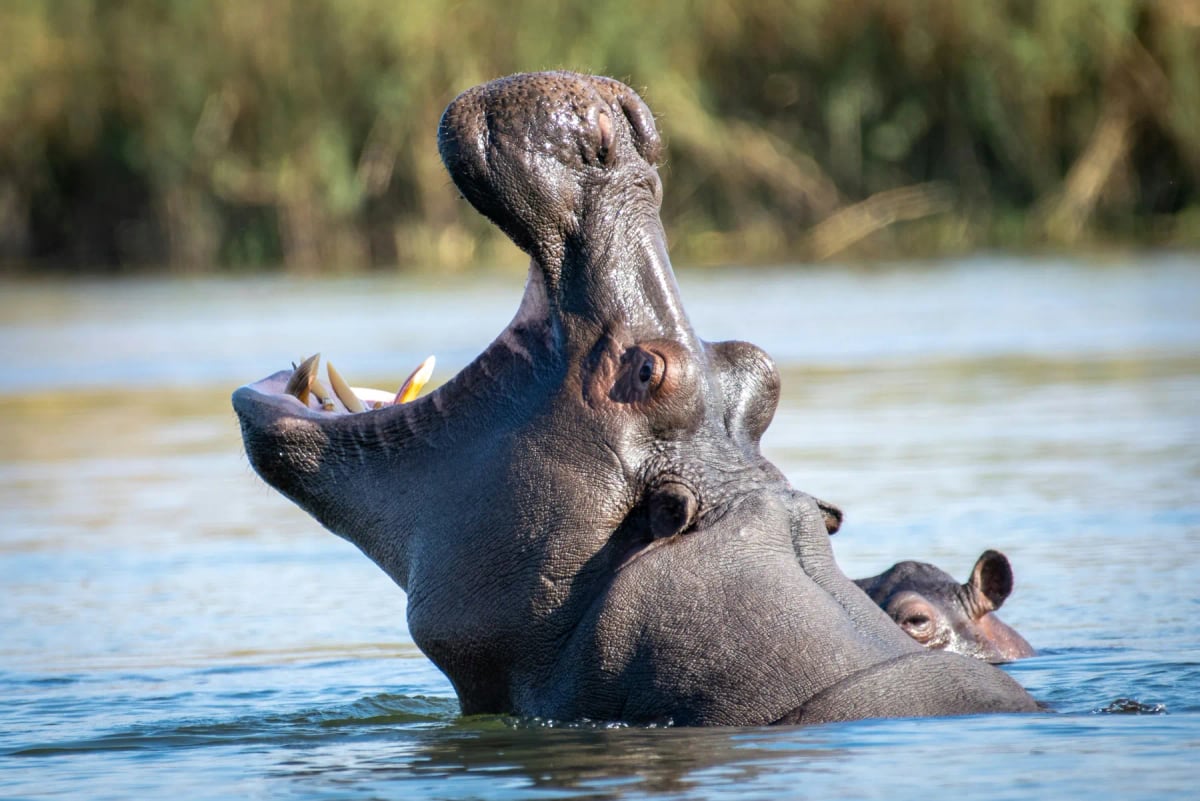
Hippos are social animals that gather in groups called pods, typically made up of females and their young under the watch of a single dominant male. He defends his stretch of river vigorously, communicating through loud, resonant calls that carry both through the air and underwater. Confrontations between males can be violent, with each animal using its enormous canine teeth as weapons. On land, a hippo can reach speeds of around 30 km/h over short distances, which makes encounters outside the water genuinely dangerous. They are widely regarded as one of the most unpredictable and deadly animals in Africa. Females are especially protective of their calves. Most social interactions, from greeting rituals to disputes over territory, take place at the water's surface or just beneath it.
Adaptations to water
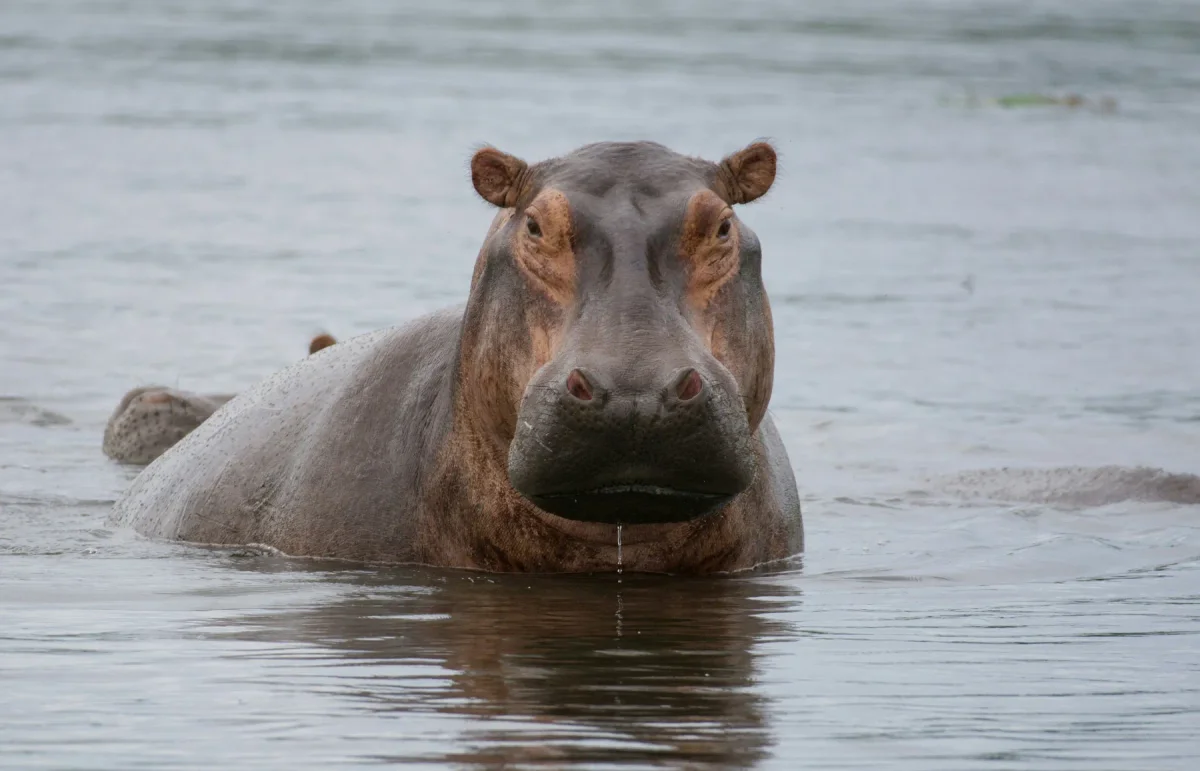
Few large mammals are as well suited to a life split between land and water as the hippo. Their eyes, ears, and nostrils sit high on the head, so they can breathe and remain alert while nearly fully submerged. They can close their nostrils and hold their breath for up to five minutes when diving. Their skin lacks sweat glands, which is why staying in water during daylight hours is so important. To compensate, they secrete a reddish fluid through specialised pores. For a long time scientists thought this was blood, but it is actually a mixture of pigments that absorb ultraviolet light, acting as a sunscreen, and that also appear to have properties that fight certain types of bacteria. Calves can suckle both on land and underwater, and they can walk along the riverbed rather than swim.
Conservation
The IUCN classifies the hippopotamus as Vulnerable, with estimates suggesting between 115,000 and 130,000 individuals remain across Africa. Numbers have fallen significantly since the mid-twentieth century, and the trend is still going downward in several regions. The main pressures are habitat loss as rivers and wetlands are converted for agriculture and human settlement, and illegal hunting for meat and ivory. Hippo teeth are made of ivory and became a more prominent target for poaching after the international ban on elephant ivory trade reduced that supply. Political instability in parts of Central and West Africa has made it harder to enforce protections. Populations in well-managed reserves, such as those in Kenya, Tanzania, and Zambia, remain more stable, showing that effective protection can make a real difference over the long term.
Where it is found
The Hippopotamus can be found in places such as:
Researched and written by Juan Pablo. Sources: IUCN Red List, scientific literature and regional field guides. Last updated: .
Technical factsheet


Frequently Asked Questions
Are hippos dangerous to humans?
Yes, hippos are considered one of the most dangerous animals in Africa. They are highly territorial in water and can move at around 30 km/h on land, which is faster than most people expect. Males will charge without much warning, and females are fiercely protective of their calves. Most incidents happen when people accidentally come between a hippo and the water, cutting off its escape route.
What do hippos eat?
Hippos are herbivores that feed almost entirely on grass. They leave the water after dark and graze for four to five hours, covering trails that can stretch several kilometres from the riverbank. An adult eats around 40 kg of grass in a single night. Their broad, muscular lips let them crop vegetation very close to the ground. Fallen fruit is eaten occasionally, but grass is by far the main part of their diet.
Why do hippos secrete a red liquid from their skin?
That reddish fluid is not blood, even though it looks like it. Hippos produce it through specialised pores in their skin, and it serves two important purposes. The pigments in it absorb ultraviolet light, acting as a natural sunscreen, and research suggests it also has properties that help fight certain bacteria. Since hippos have no sweat glands, this secretion plays a key role in protecting their skin when they are out of the water.
Where do hippos live?
Hippos are found across sub-Saharan Africa, from Senegal and Guinea in the west to Ethiopia and Tanzania in the east, and as far south as South Africa. They always live near permanent freshwater, such as rivers, lakes, and swamps. They prefer stretches of river with calm, deep water and gently sloping banks. Where rivers have been dammed or wetlands drained for farming, hippo populations tend to decline quickly.
How long can a hippo hold its breath underwater?
A hippo can hold its breath for up to five minutes when submerged. Their nostrils close automatically when they dive, and young calves can actually walk along the riverbed rather than swim. Hippos also sleep at the surface, rising to breathe every few minutes without fully waking up. Their eyes, ears, and nostrils are positioned high on the head so they can stay alert while almost completely underwater.
Are hippos endangered?
The hippopotamus is currently listed as Vulnerable on the IUCN Red List. Estimates put the total population at between 115,000 and 130,000 individuals, a significant drop from numbers recorded in the mid-twentieth century. The main threats are habitat loss due to farming and human settlement, and illegal hunting for their meat and teeth, which are made of ivory. Populations in well-protected reserves tend to be more stable than those in areas affected by conflict.
How do hippos communicate?
Hippos communicate through deep, booming calls that are loud enough to be heard from a great distance. What makes them unusual is that their vocalizations travel both through the air and underwater at the same time, allowing them to stay in contact with other members of their group even when submerged. Males use these calls to assert dominance over their stretch of river. Physical displays, such as wide-open mouths showing their large canine teeth, are also a key part of how they signal threats.