Jaguar
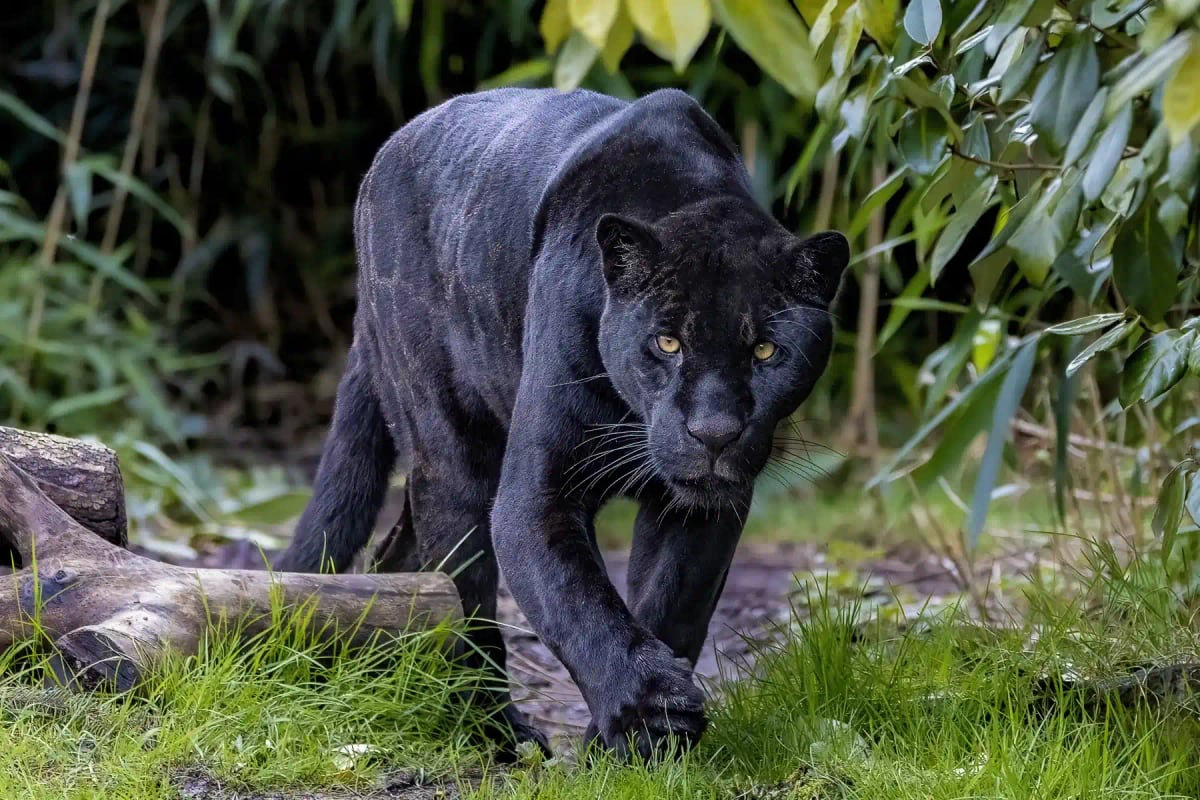
The jaguar (Panthera onca) is the largest cat in the Americas and one of the most powerful predators on the continent. It is a heavily built animal with a broad head, stocky limbs, and a coat covered in rosettes, each usually containing a small central spot. This pattern helps it disappear into the shadows of dense forest and dappled riverbanks. Jaguars are strong swimmers and often hunt near water, where they prey on capybaras, peccaries, deer, caimans, and turtles. Their bite is the strongest of any big cat relative to body size, and they can crush through shells and thick hides with ease. Adults are solitary and territorial, communicating through scent markings and deep vocalizations. Habitat loss, fragmentation, and conflict with livestock owners have reduced their range considerably. The species is listed as Near Threatened by the IUCN.
Habitat and range
Jaguars range from northern Mexico through Central America and across much of South America, though their distribution today is far more patchy than it once was. The Amazon Basin and the Pantanal hold the largest remaining populations, while smaller groups persist in parts of the Chaco, the Atlantic Forest, and various river corridors and wetlands. These cats are remarkably adaptable and can thrive in tropical rainforest, seasonally flooded forest, dry forest, and mangrove edges, provided there is sufficient cover and prey. Males in particular need very large territories to find mates and food. Because of this, connectivity between protected areas is critical to survival over the long term, since isolated patches of habitat can only support small groups that are vulnerable to local disappearance.
Diet
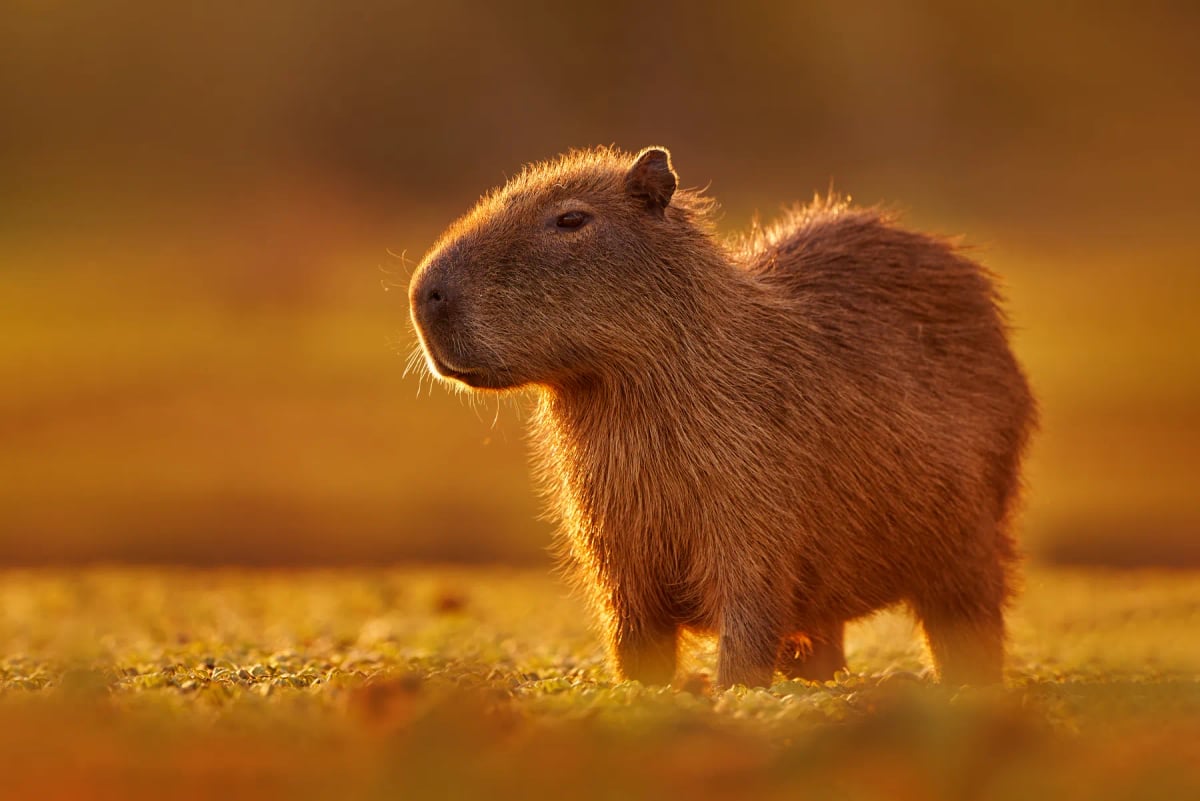
Few predators on the continent are as versatile in their feeding habits as the jaguar. Peccaries and capybaras make up a large part of the diet across much of its range, but jaguars also take deer, tapirs, armadillos, and a variety of smaller animals depending on what is available locally. In wetland areas such as the Pantanal, they regularly hunt caimans, freshwater turtles, and fish. The jaguar's bite force is the greatest of any big cat relative to its body size, allowing it to pierce through turtle shells and the thick skulls of prey. This remarkable killing technique sets it apart from lions and leopards, which typically aim for the throat. Where jaguars are abundant, prey populations tend to be healthy and habitats are generally in good condition.
Black jaguar
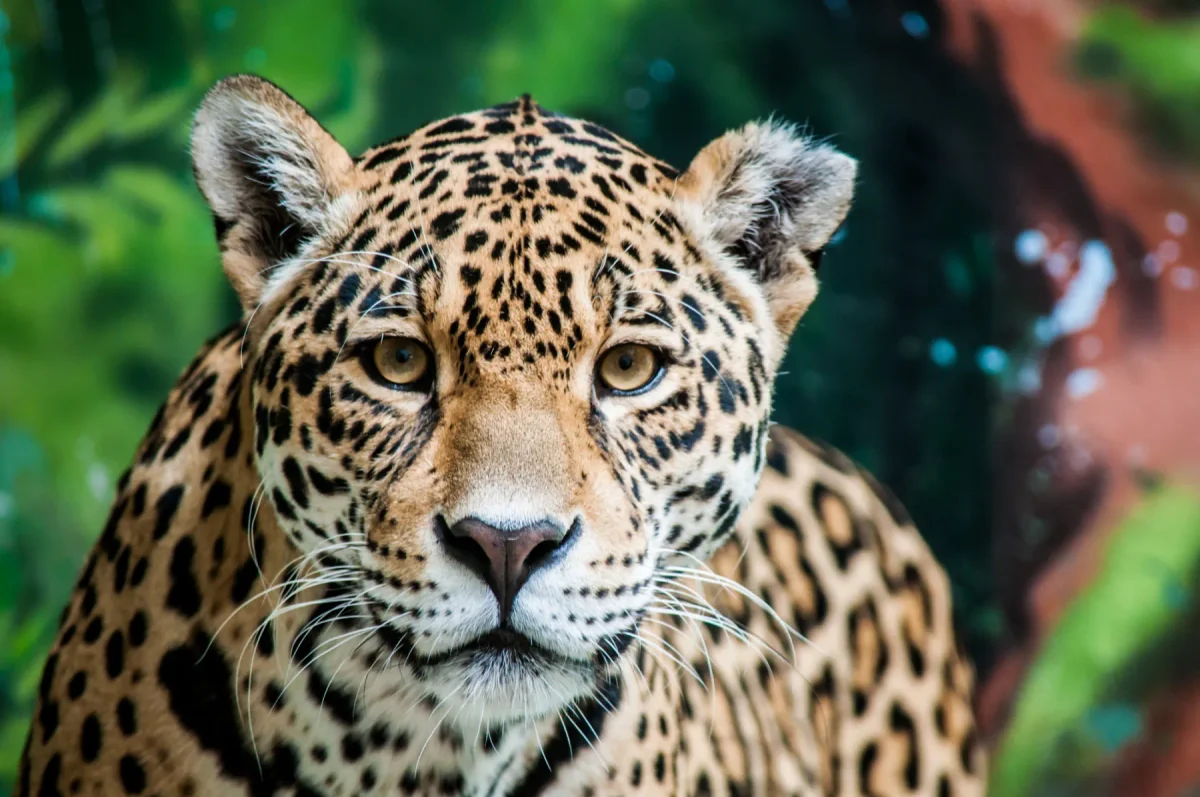
Occasionally, a jaguar is born with a condition called melanism, which causes the coat to produce a much higher concentration of dark pigment. The result is an animal that looks almost entirely black, commonly known as a black jaguar. Despite the striking appearance, these individuals are the same species as spotted jaguars, and the two can even be born in the same litter. Look closely in bright light and the rosette markings are usually still visible beneath the dark fur. Melanistic jaguars appear to be recorded more often in dense rainforest, where the reduced light may make darker coloration an advantage for staying hidden. However, melanism is a genetic variation that can turn up in any part of the jaguar's range.
Behavior
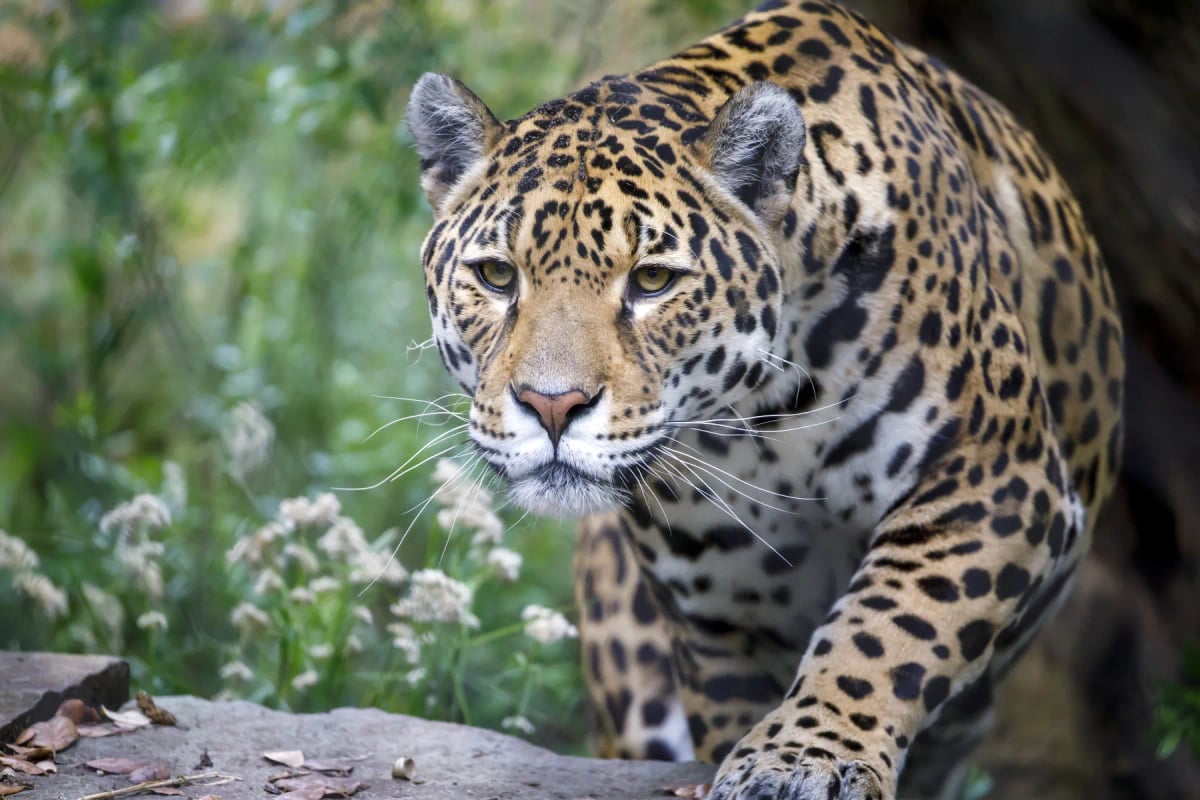
Adult jaguars lead largely solitary lives, coming together only to mate. Each individual holds a territory it marks regularly with scent, scrape marks on the ground, and deep, repetitive vocalizations that carry through dense vegetation. Territory size varies considerably: in prey-rich wetlands a jaguar may manage with a smaller area, while in drier or more fragmented landscapes individuals often need to cover much greater distances. Females raise their cubs without help from the male, and the young stay with their mother for up to two years, learning to hunt before setting off on their own. Jaguars generally avoid direct contact with people, though they will venture toward farms and settlements when natural prey becomes scarce or forest cover disappears.
Swimming
Water holds little fear for a jaguar. These cats take to rivers and flooded areas with ease and are strong, confident swimmers capable of crossing wide channels. Rivers often serve as travel routes as much as barriers, and jaguars regularly patrol the water's edge, where prey tends to gather. In the Pantanal, one of the world's largest tropical wetlands, jaguars have been widely observed hunting caimans and capybaras along riverbanks, sometimes launching directly from the bank into the water to make a kill. This affinity for aquatic environments sets the jaguar apart from most other large cats and allows it to exploit a range of prey and habitats that species less comfortable in water simply cannot access.
Conservation
The IUCN classifies the jaguar as Near Threatened, and population trends are downward across much of its range. Deforestation and the breaking up of forest blocks remain the most widespread threats, cutting populations off from one another and reducing the space each animal needs to survive. Declines in prey, driven by hunting and habitat loss, compound the problem. Direct persecution by farmers and ranchers who lose livestock to jaguars is also a significant pressure. Illegal trade in skins, teeth, and other body parts adds further risk in certain regions. Effective conservation relies on protecting large connected landscapes, creating wildlife corridors between reserves, working with rural communities on livestock protection measures, and consistently enforcing laws against poaching and trade.
Where it is found
The Jaguar can be found in places such as:
Researched and written by Juan Pablo. Sources: IUCN Red List, scientific literature and regional field guides. Last updated: .
Technical factsheet

Frequently Asked Questions
How big is a jaguar compared to other big cats?
The jaguar is the largest cat in the Americas and the third largest in the world, after tigers and lions. Adults typically weigh between 56 and 96 kilograms, though large males in the Pantanal can exceed 100 kilograms. They are heavily built with broad heads and stocky limbs, which makes them look even more powerful than their weight alone suggests.
Where do jaguars live?
Jaguars are found across a wide stretch of the Americas, from northern Mexico through Central America and into South America. The Amazon Basin and the Pantanal hold the largest populations today. They adapt well to tropical rainforest, dry forest, wetlands, and even mangrove edges, as long as there is enough prey and cover. Their overall range has shrunk significantly due to habitat loss.
What do jaguars eat?
Jaguars eat a wide variety of animals, making them one of the most versatile hunters on the continent. Peccaries, capybaras, deer, and tapirs are common prey, but they also hunt caimans, turtles, fish, and armadillos depending on where they live. Their bite is the strongest of any big cat relative to body size, powerful enough to crack through turtle shells and pierce the skulls of large prey.
Are jaguars dangerous to humans?
Jaguars generally avoid people and unprovoked attacks are rare. They are naturally shy around humans and tend to retreat when they sense someone nearby. However, like any large predator, a cornered or injured jaguar can be very dangerous. In areas where forest has been cleared and natural prey is scarce, jaguars may approach farms or settlements, though this is more about food than aggression toward people.
Why are jaguars endangered?
Jaguars are listed as Near Threatened by the IUCN, with numbers declining across much of their range. The biggest pressures are deforestation and the breaking up of forest into isolated patches, which cuts populations off from each other. Persecution by farmers who lose livestock is also significant. On top of that, illegal trade in skins, teeth, and body parts continues to pose a serious risk in several countries.
What is a black jaguar?
A black jaguar is not a separate species. It is a jaguar born with melanism, a genetic condition that causes the fur to produce a much higher level of dark pigment. The rosette markings are still there but are hard to see unless the light is bright. Black and spotted jaguars can be born in the same litter. Melanistic individuals seem to appear more often in dense rainforest environments.
How do jaguars communicate?
Jaguars communicate mainly through scent and sound. They mark their territories by rubbing scent glands against trees, leaving scrape marks on the ground, and spraying urine. Their main vocalization is a deep, repetitive call that sounds like a series of rough coughs, quite different from the roar of a lion. These calls carry well through dense forest and help individuals signal their presence to others without needing to meet face to face.