Animals in Dem. Rep. Congo
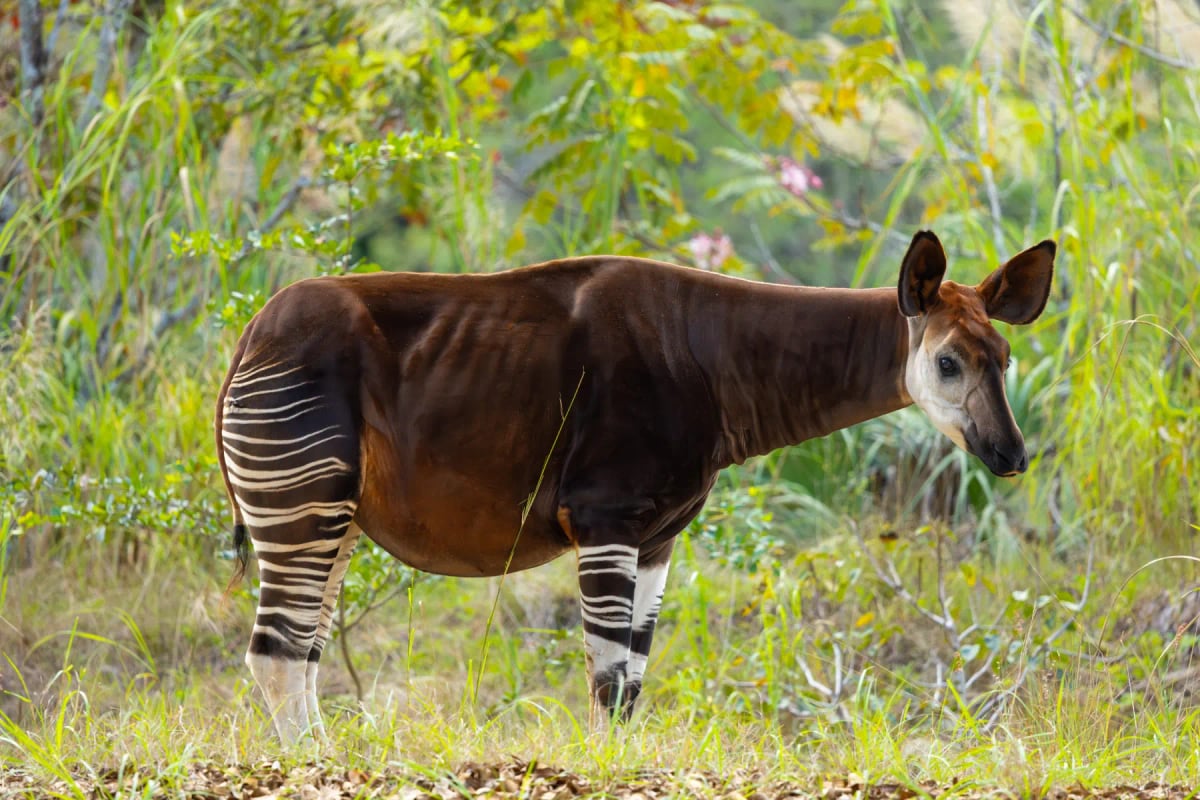
Okapi
Okapia johnstoni
The okapi, the national animal of the Democratic Republic of the Congo, lives only in the country’s dense tropical forests. It represents the uniqueness of Central African wildlife and the need to protect its fragile ecosystems. The okapi is often featured in conservation and eco travel campaigns that promote awareness of Congo’s natural heritage.
View details→Wildlife in Dem. Rep. Congo
The Democratic Republic of the Congo holds one of the world’s largest continuous rainforests, spreading across the vast Congo Basin. Rivers, swamps and high forests support gorillas, bonobos, okapis and many endemic birds. Ecotourism is slowly expanding, allowing visitors to explore its remarkable biodiversity under strict conservation programs.
Most Dangerous Animals in Dem. Rep. Congo
Some species in the Democratic Republic of the Congo require caution. Hippos, lions, leopards, crocodiles and venomous snakes can be dangerous if disturbed. Park guides recommend keeping distance and following regulations during river or forest excursions. Responsible tourism ensures safety while supporting conservation.
Top 10 Animals in Dem. Rep. Congo
The Democratic Republic of the Congo is home to rare species such as mountain gorillas, chimpanzees, forest elephants and leopards. These animals inhabit tropical forests and savannas that attract a growing number of visitors seeking wildlife experiences. The country’s diversity highlights its crucial role in global ecological balance.
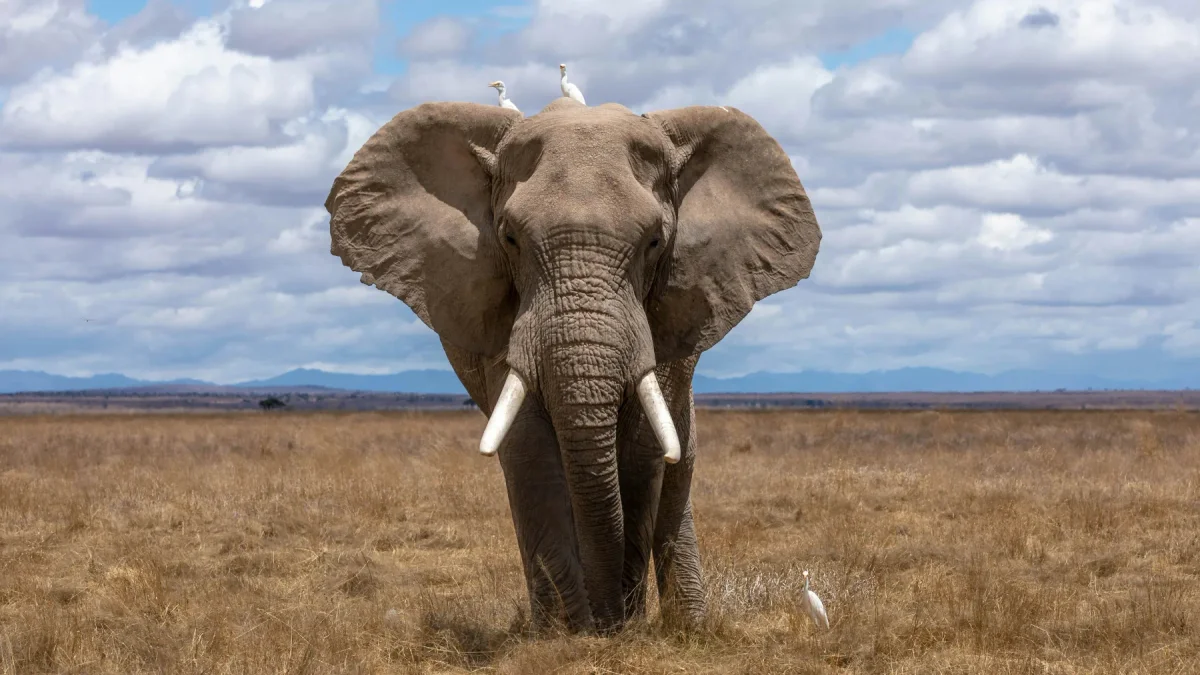
African Elephant
Loxodonta africana
In the Democratic Republic of Congo, savanna elephants are found in Garamba National Park in the northeast, near the borders with South Sudan and Uganda. Garamba is one of Africa's oldest national parks and has historically been an important stronghold for the species in Central Africa. The park has faced severe poaching pressure from armed groups operating in the region and its elephant population has suffered significant losses over recent decades despite ongoing conservation efforts by African Parks.
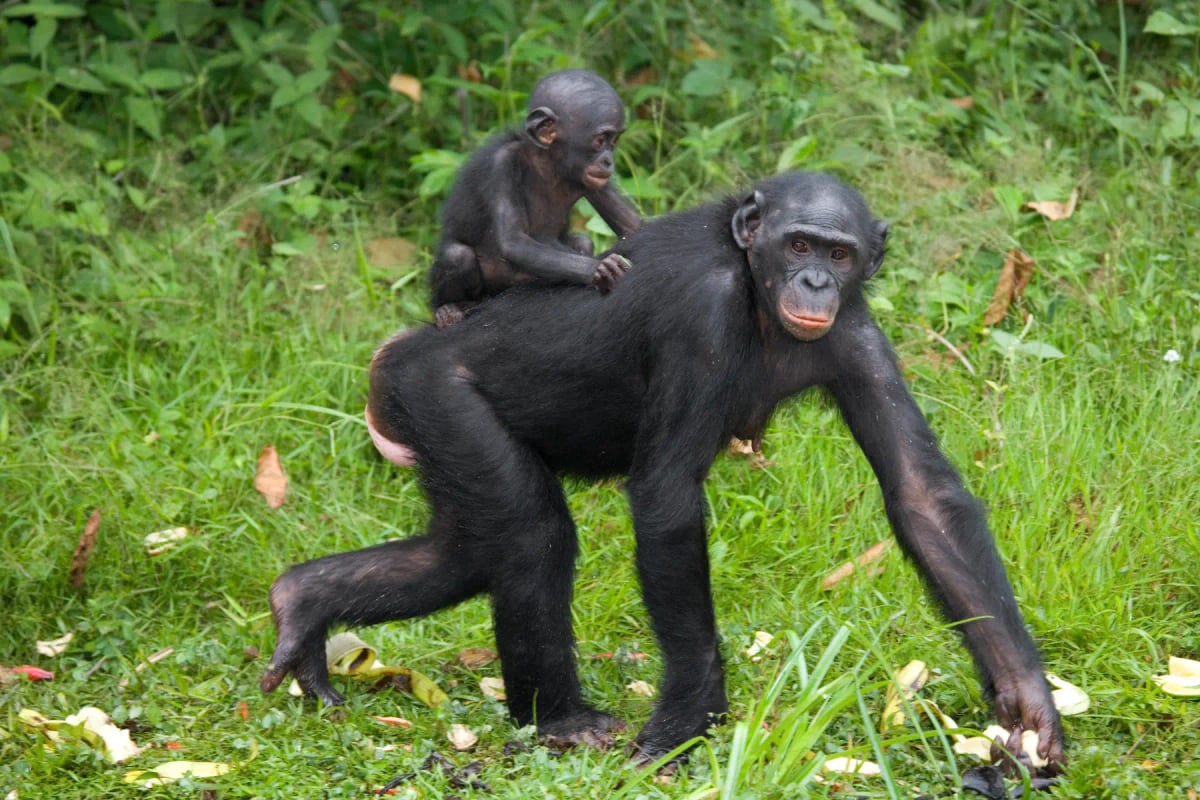
Bonobo
Pan paniscus
The bonobo is found exclusively in the Democratic Republic of Congo, living south of the Congo River in dense lowland rainforests. It is the country's most iconic great ape, yet faces serious threats from bushmeat hunting, habitat loss due to logging, and decades of civil conflict. The IUCN lists the species as Endangered, making conservation efforts within the Congo Basin critical to its survival.
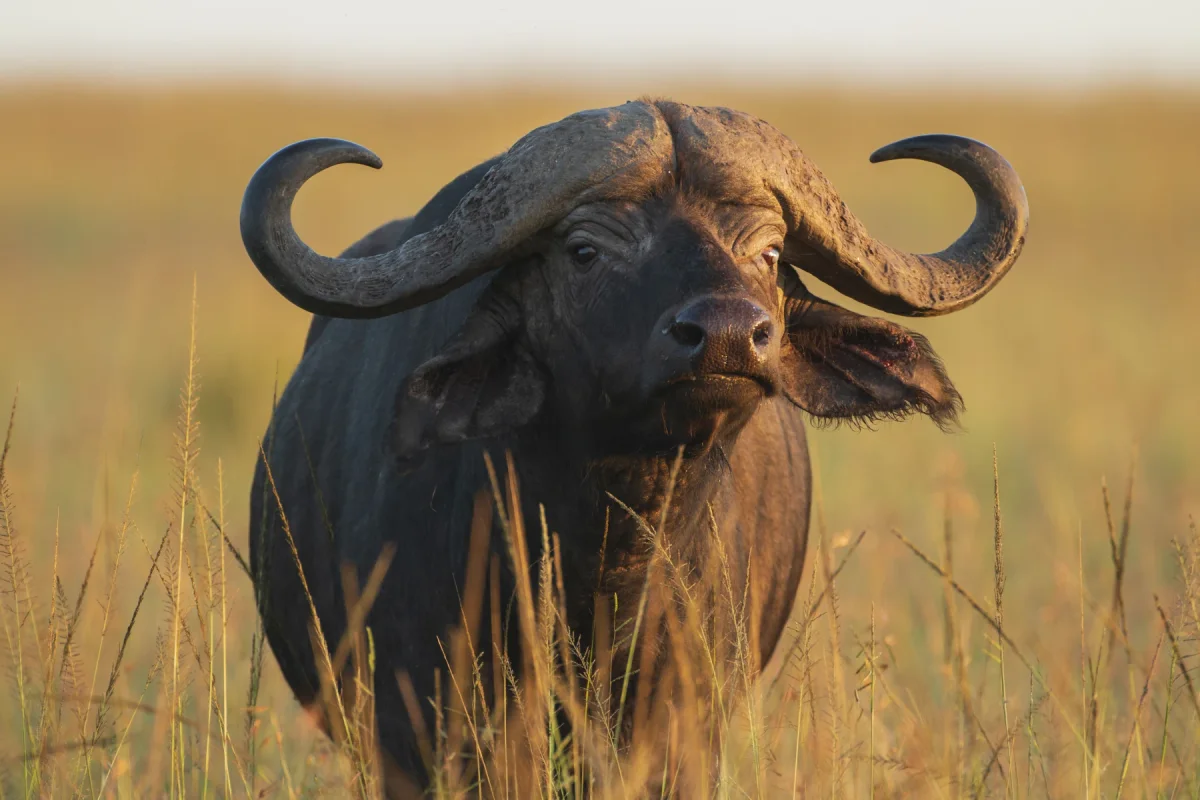
Buffalo
Syncerus caffer
The Democratic Republic of the Congo holds both savanna and forest buffalo across its vast territory. Forest buffalo are widespread in the Congo Basin's lowland rainforests, while larger savanna populations occur in the east, particularly in Virunga National Park. Ongoing armed conflict has severely impacted wildlife across much of the country, and rangers at Virunga have worked under dangerous conditions to protect wildlife. IUCN status: Least Concern.
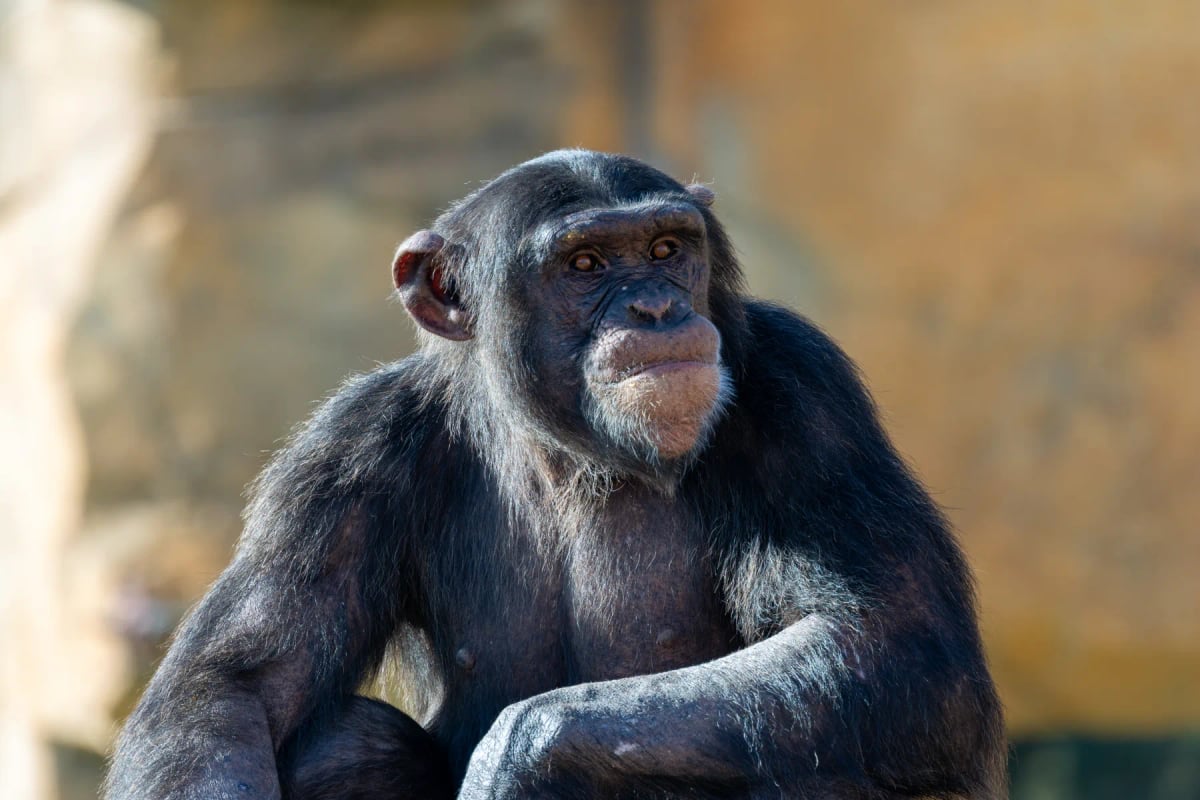
Chimpanzee
Pan troglodytes
The Democratic Republic of the Congo holds the largest chimpanzee population of any country, supported by the immense forest cover of the Congo Basin. Chimpanzees are found across a wide range of habitats, from lowland rainforest to montane forest edges. Despite this abundance, ongoing conflict, bushmeat hunting, and illegal trade in live animals continue to put pressure on populations across the country.
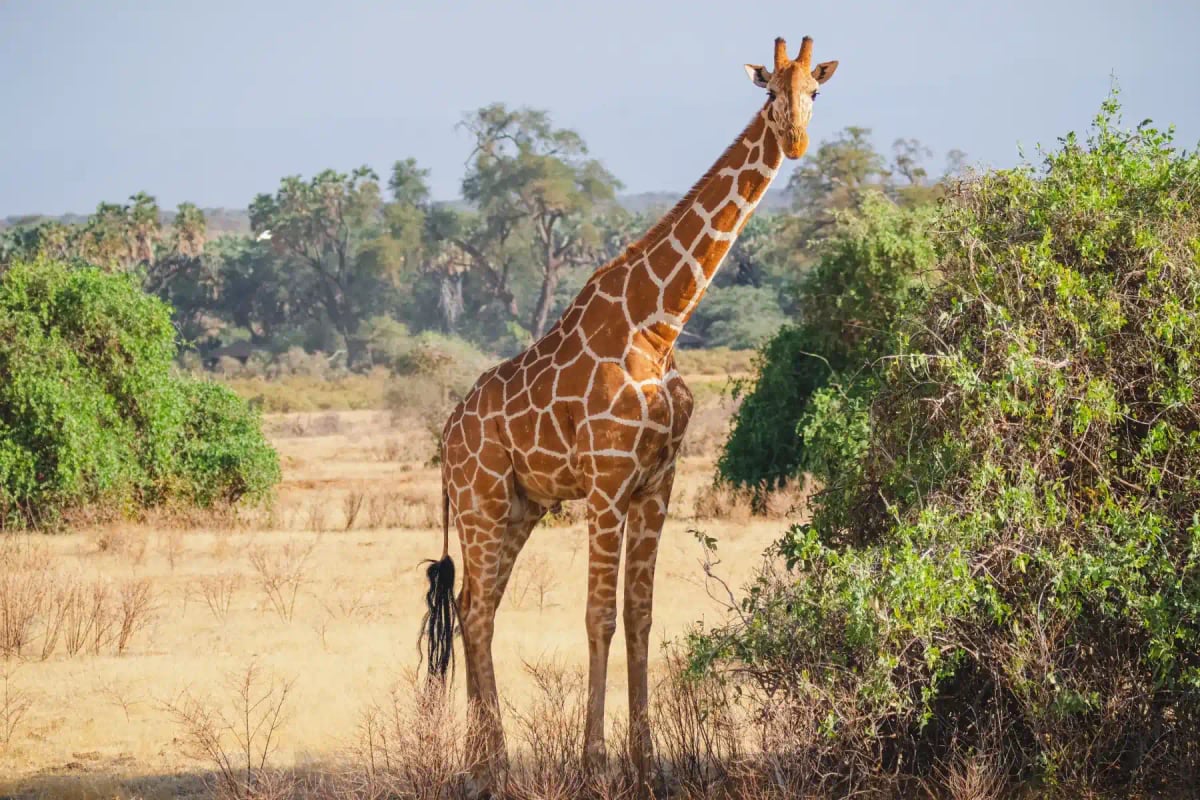
Giraffe
Giraffa camelopardalis
In the Democratic Republic of Congo, giraffes are present in the northeastern savannas, including areas near Garamba National Park. This park has a long history of conservation challenges, including poaching, yet it remains one of the most important refuges for large mammals in Central Africa. Giraffe numbers in the country are modest, and ongoing instability makes monitoring and protection difficult. Their role in shaping savanna vegetation remains vital. IUCN status: Vulnerable.
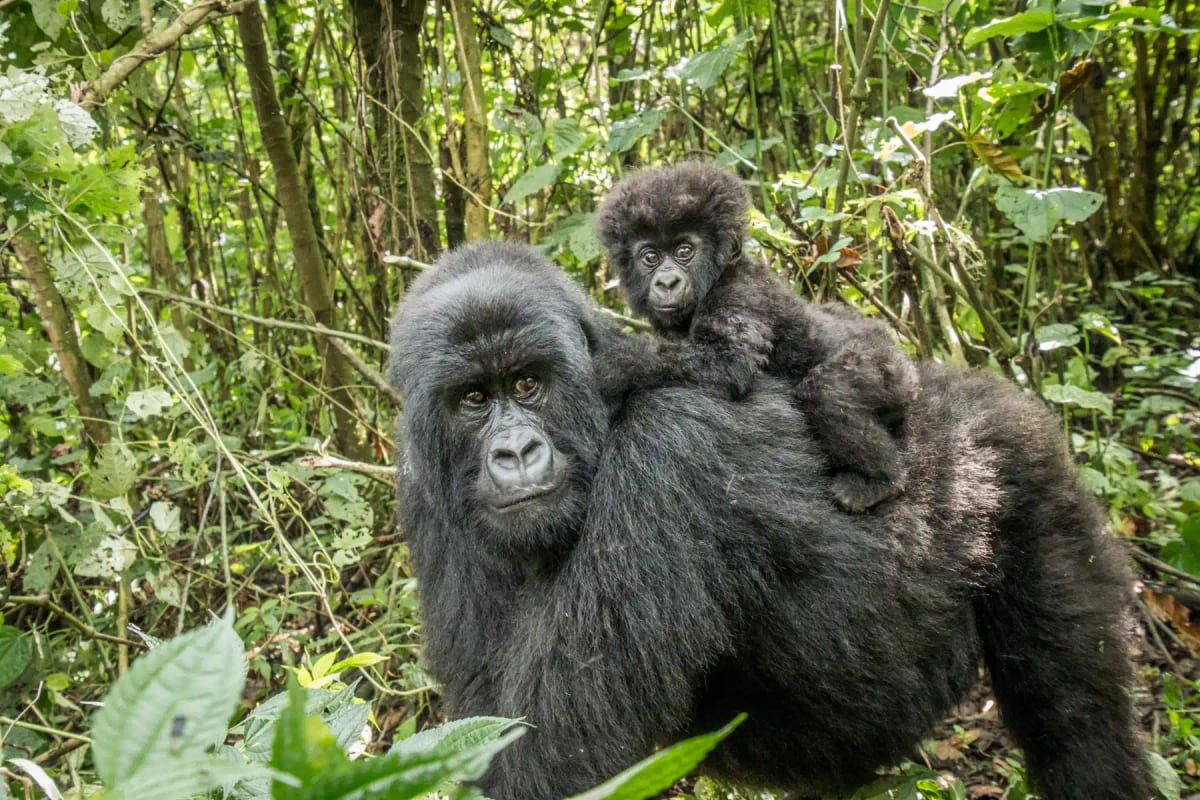
Mountain Gorilla
Gorilla beringei beringei
The mountain gorilla shares its home in the DRC with the Virunga volcanic mountains, a landscape of mist, lava fields, and dense forest. Troops of around ten individuals roam these highlands under the watch of a dominant silverback. Thanks to cross-border conservation efforts involving the DRC, their population has now surpassed 1,000 individuals, a remarkable recovery for an Endangered species.
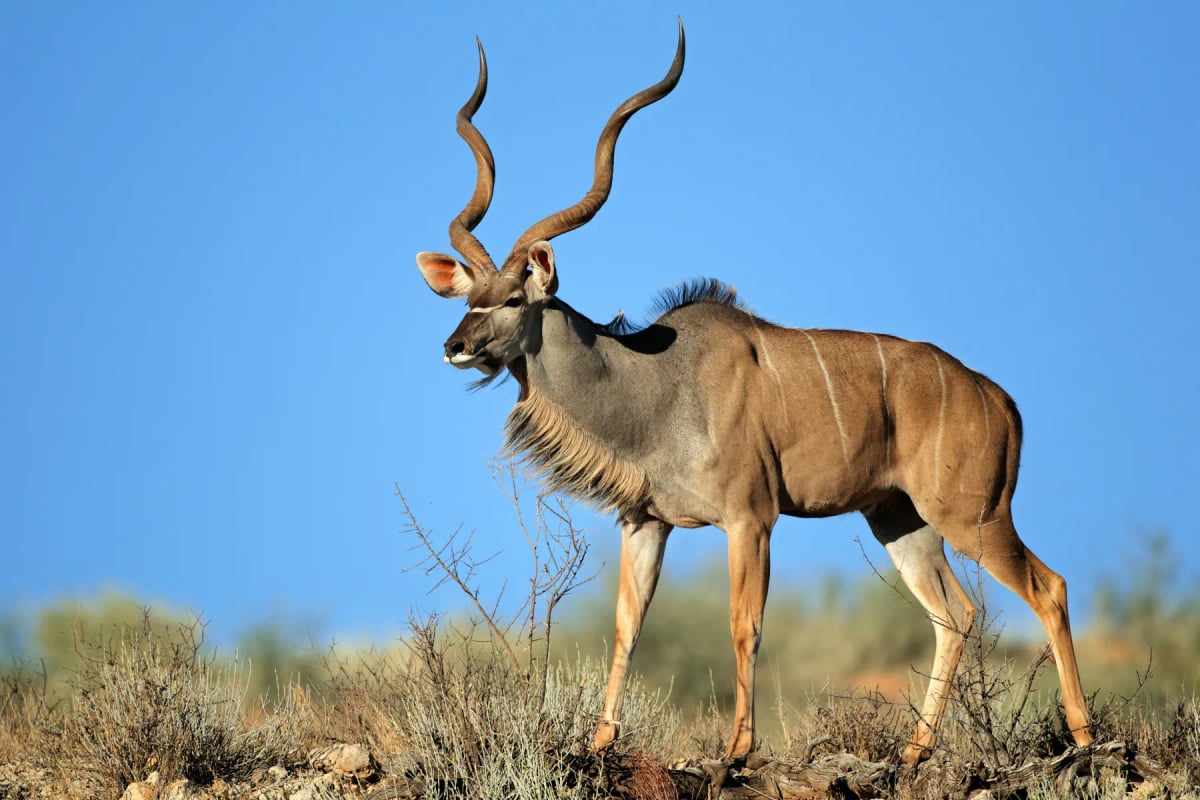
Greater Kudu
Tragelaphus strepsiceros
In the Democratic Republic of Congo, the greater kudu is found mainly in the drier woodland areas of the south and east, away from the dense rainforest that dominates much of the country. It relies on bush and thicket for food and cover, feeding on leaves, pods and tubers. Females and young move in small groups while males are mostly solitary. The IUCN lists the species as Least Concern, though local monitoring remains limited.
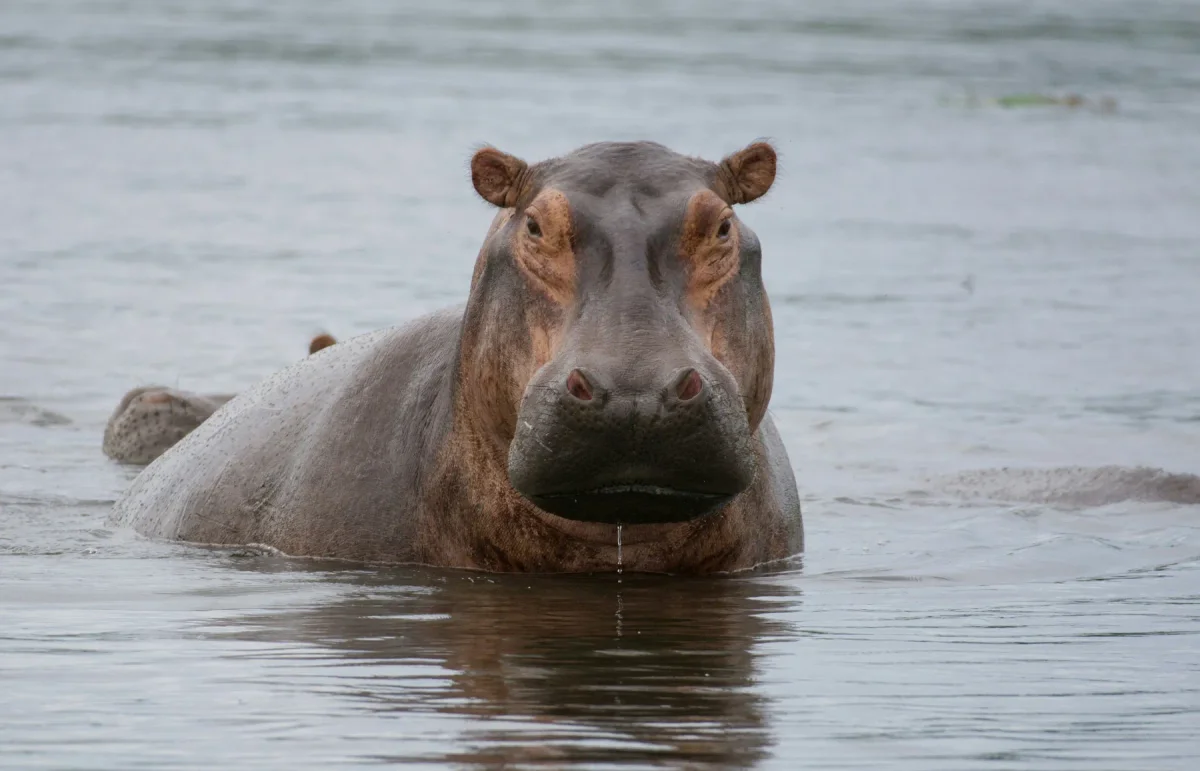
Hippopotamus
Hippopotamus amphibius
The Democratic Republic of the Congo is home to one of the largest hippo populations in Africa, spread across the Congo River basin and its vast network of rivers and wetlands. Virunga National Park, Africa's oldest national park, has long been a key stronghold, though armed conflict in the east has repeatedly threatened both the animals and the rangers who protect them. The IUCN lists the hippopotamus as Vulnerable.
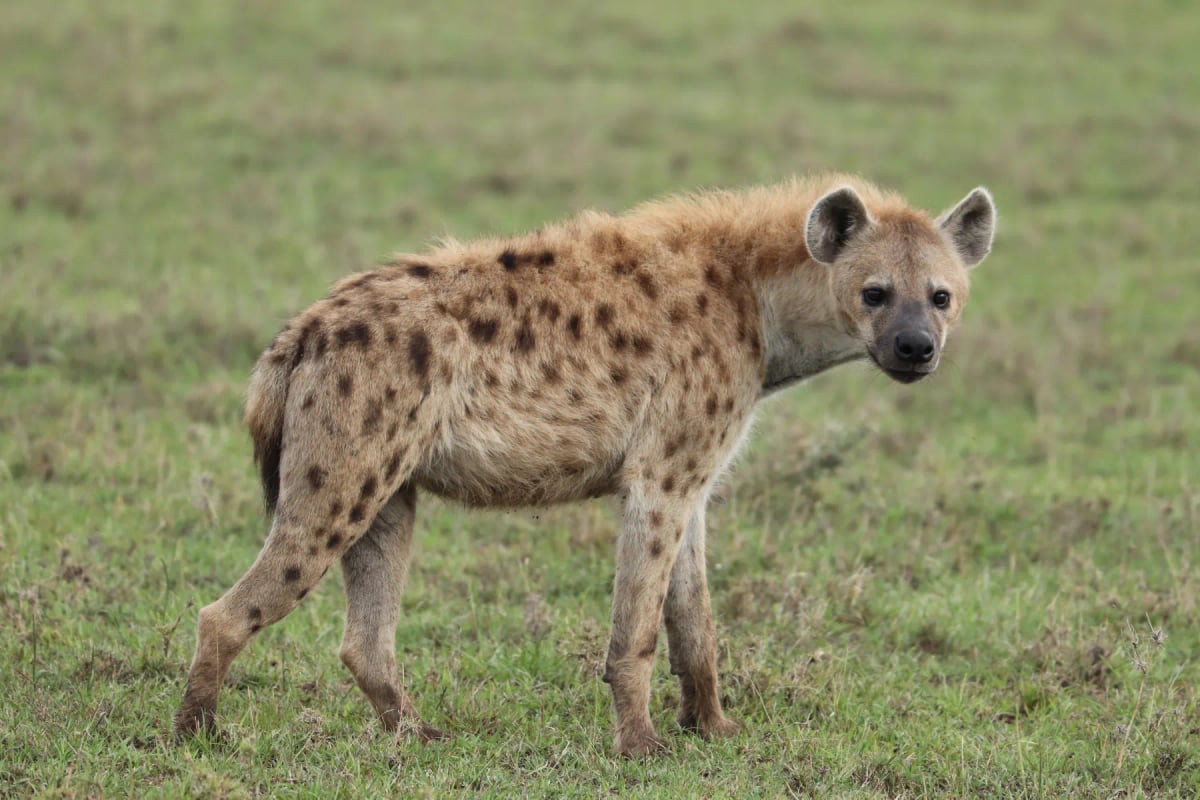
Spotted Hyena
Crocuta crocuta
The Democratic Republic of Congo's spotted hyenas are found primarily in the savanna and grassland regions of the east and south, including areas near Upemba National Park and the Kundelungu Plateau. The vast rainforest at the country's core is not suitable for the species. Ongoing conflict and weak enforcement of protected areas have allowed poaching to reduce wildlife populations broadly, though hyenas remain present where open habitat survives.
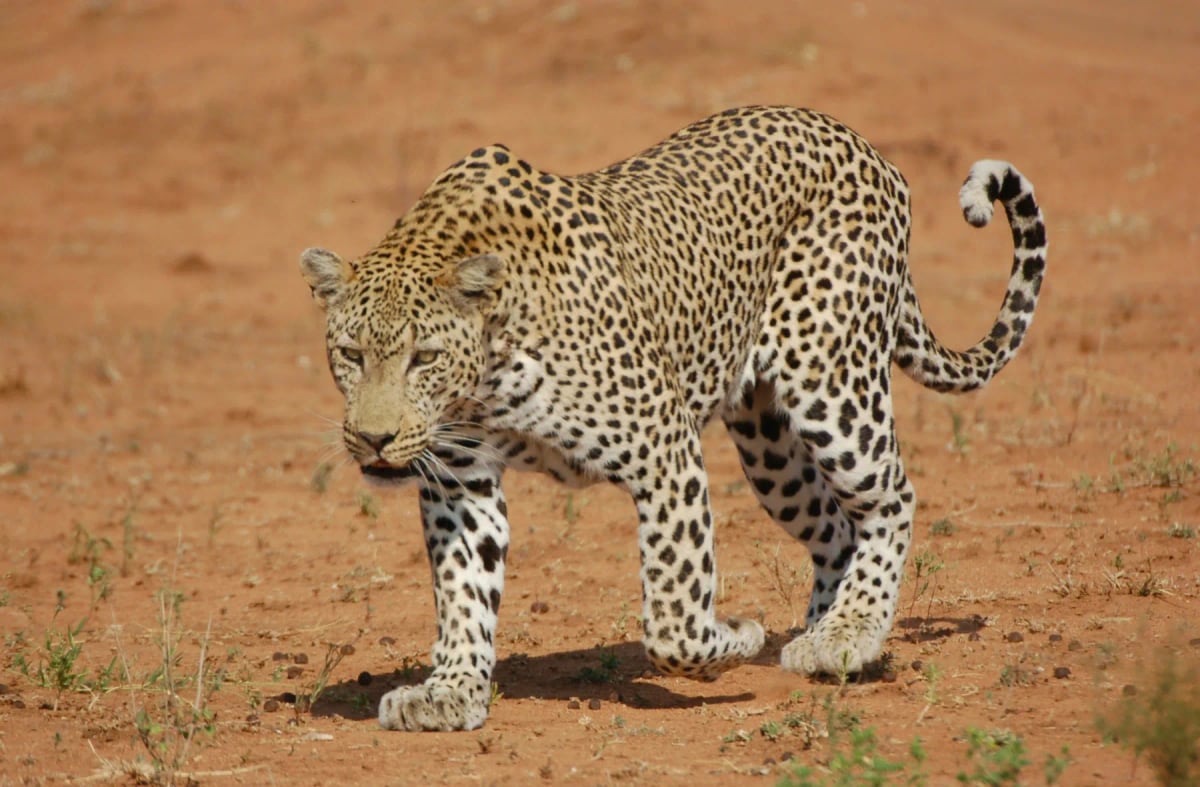
Leopard
Panthera pardus
The Democratic Republic of Congo, home to a vast stretch of the Congo Basin rainforest, supports one of Africa's largest leopard populations. Leopards here range from lowland forest to montane zones near the Albertine Rift. Despite the enormous size of their habitat, years of conflict have weakened protection efforts and fueled poaching. The species is classified as Vulnerable on the IUCN Red List.
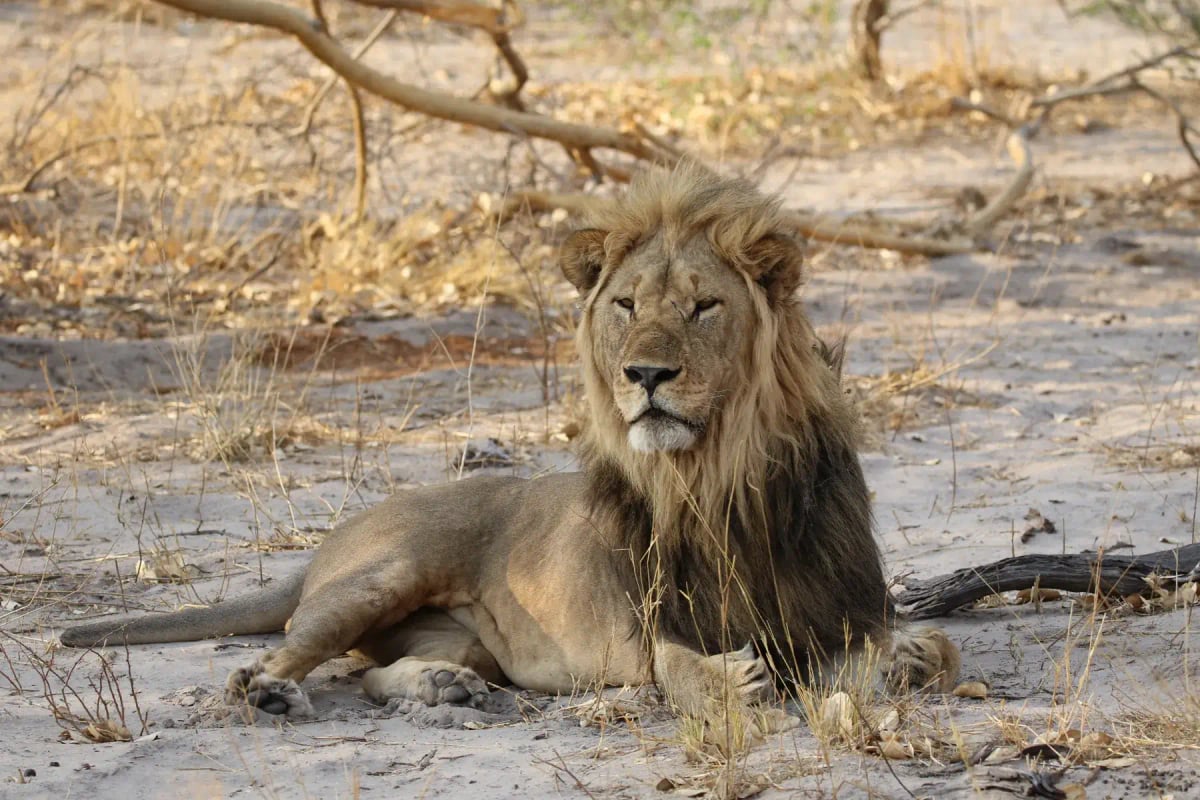
Lion
Panthera leo
In the Democratic Republic of Congo, lions are found in the savanna zones of the east and northeast, including Upemba and Garamba national parks. Decades of conflict have severely disrupted conservation efforts and exact population figures are difficult to assess. Despite the challenges, lions persist in several protected areas and remain an important part of the country's wildlife.
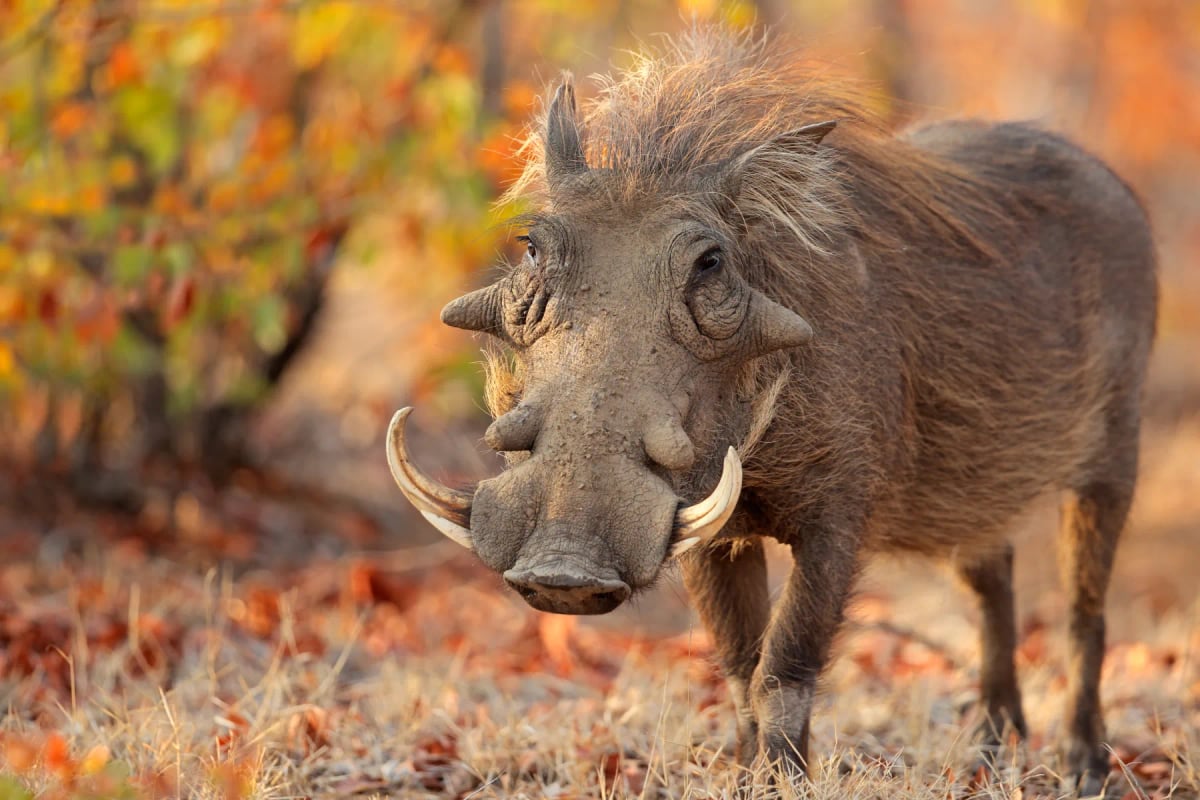
Warthog
Phacochoerus africanus
The common warthog is found in the open savannas and grasslands of the Democratic Republic of Congo, primarily in the eastern and southern regions away from the dense Congo Basin rainforest. Areas like Upemba National Park provide suitable open habitat. It feeds on grasses and roots and takes shelter in burrows. Predators including lions and leopards are part of the same ecosystems. Its IUCN status is Least Concern.
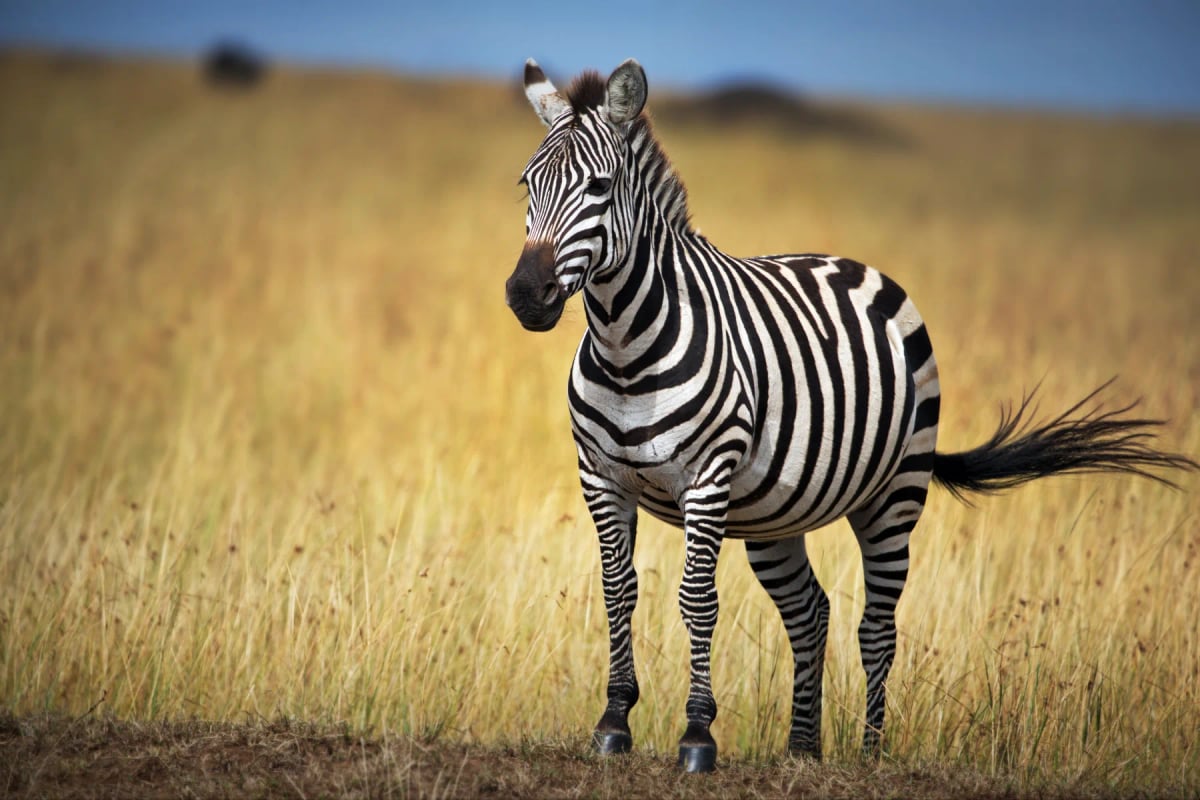
Zebra
Equus spp.
In the Democratic Republic of Congo, plains zebras survive in smaller numbers than elsewhere in the region, mainly in savanna areas of the southeast, including Upemba National Park. Decades of instability and limited park infrastructure have made population monitoring difficult, and numbers are believed to be far below historic levels. Where herds persist, they share open grassland with other large grazers, though zebra sightings are far less common here than further east or south.
Okapi
Okapia johnstoni
The okapi lives nowhere else on Earth but the dense rainforests of the Democratic Republic of the Congo, particularly in the Ituri Forest. Its striped legs and reddish coat help it blend into the shadows of the forest floor. Classified as Endangered, it faces serious threats from illegal hunting and logging. The Okapi Wildlife Reserve was created to help protect both the species and its habitat.
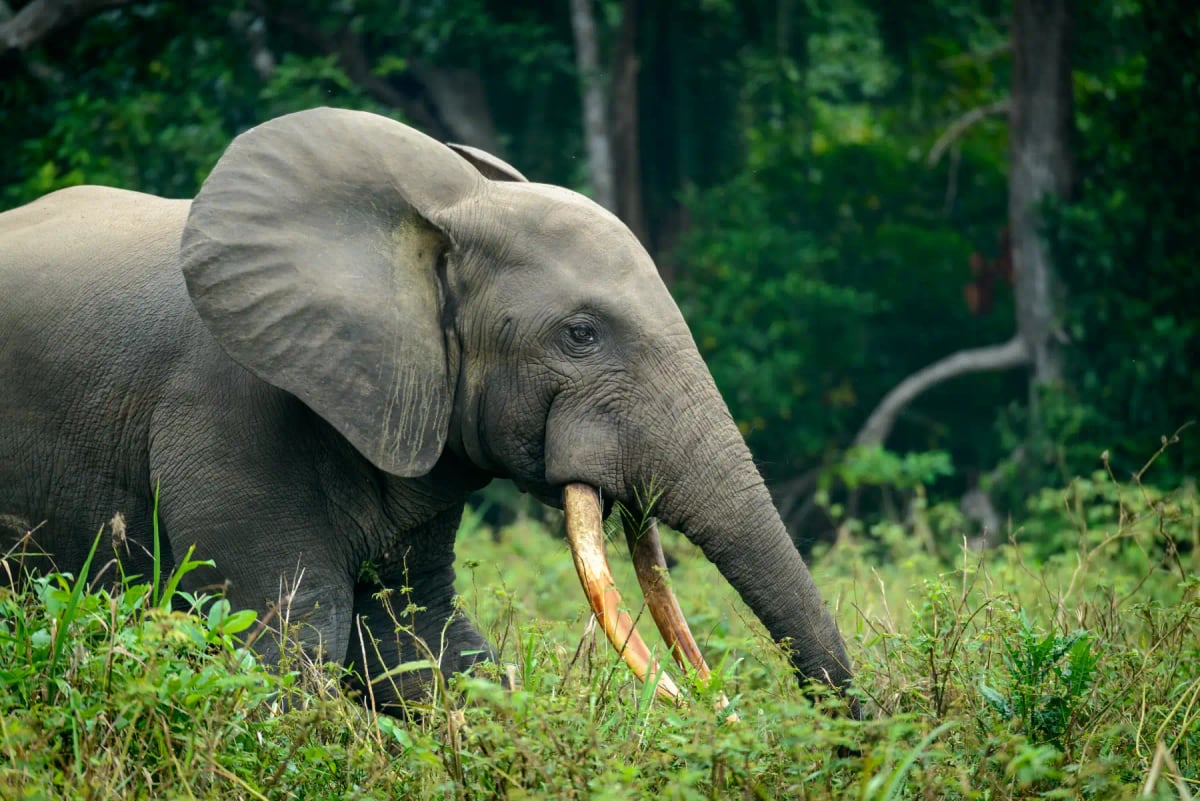
African Forest Elephant
Loxodonta cyclotis
The Democratic Republic of the Congo holds the largest area of African forest elephant habitat on the continent, with vast stretches of intact Congo Basin rainforest covering much of the country's north and center. Despite this, populations have been devastated by decades of conflict, poaching and illegal ivory trade. The Okapi Wildlife Reserve and the forests of the Équateur and Orientale provinces are among the most significant areas. The DRC's forest elephant population has declined by over 80 percent since the 1970s.
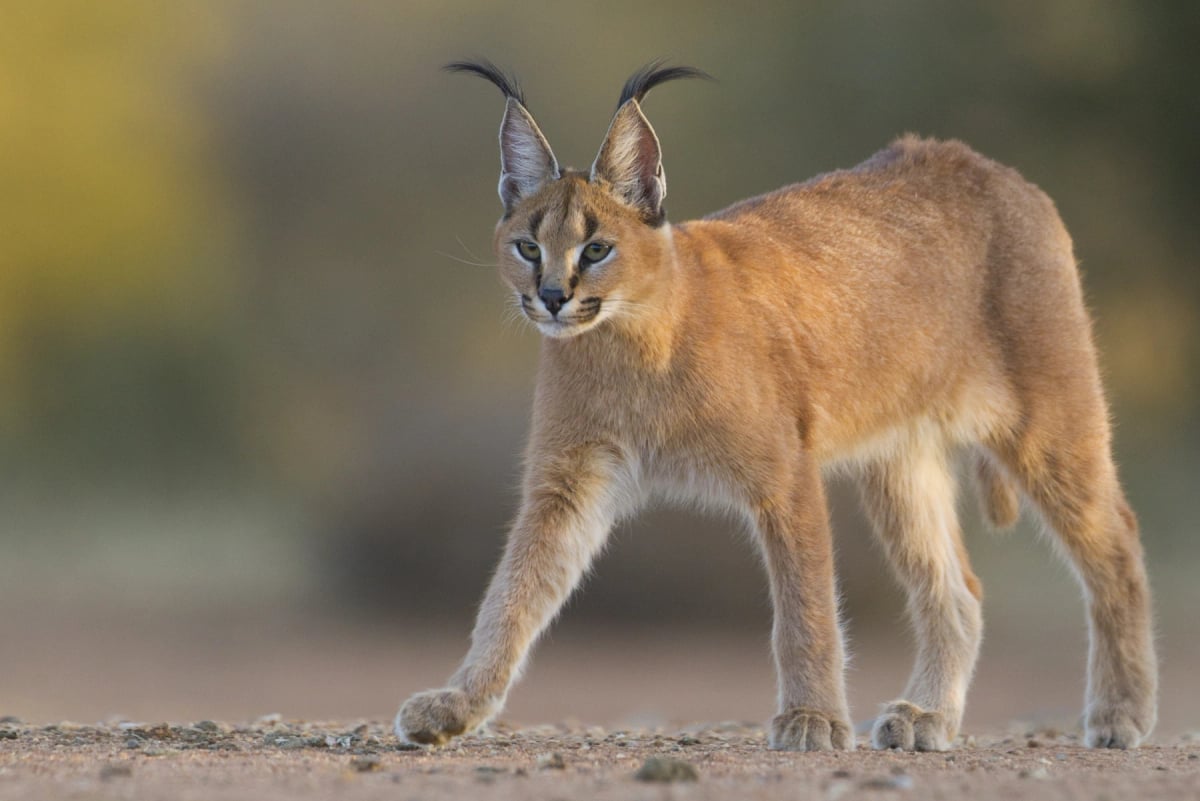
Caracal
Caracal caracal
In the Democratic Republic of Congo, the caracal is limited to the drier savanna regions of the east and southeast, such as the areas bordering Upemba National Park. It is entirely absent from the vast Congo Basin rainforest. It hunts rodents, birds, and small antelopes across open and semi-open habitats. Ongoing armed conflict and inadequate funding for protected area management make conservation monitoring extremely challenging. IUCN status: Least Concern.
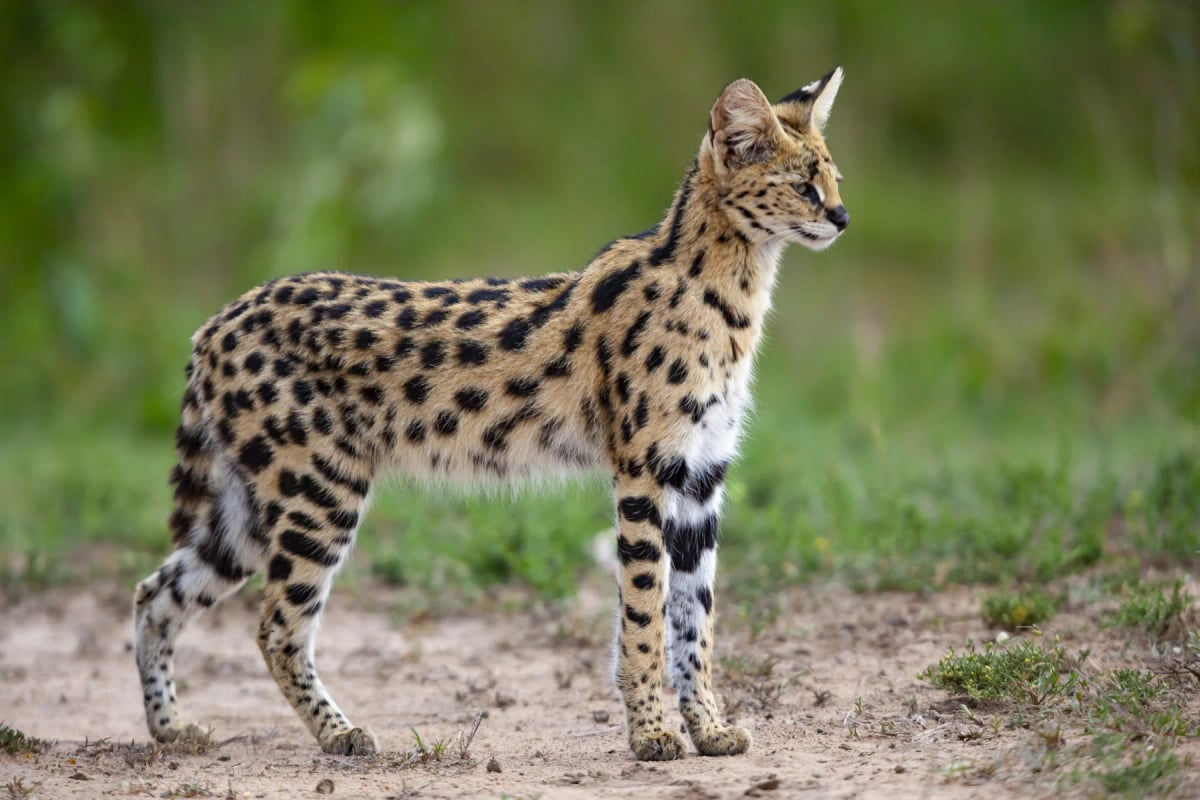
Serval
Leptailurus serval
The Democratic Republic of the Congo holds the serval mainly in its eastern highland grasslands and the savanna edges bordering Rwanda, Burundi, and Uganda. The vast rainforest interior is unsuitable for this cat. It hunts in areas of tall grass near wetlands, using its large ears to detect prey before striking. The IUCN considers it Least Concern, though the DRC's ongoing conflicts and forest conversion make population monitoring a significant challenge.
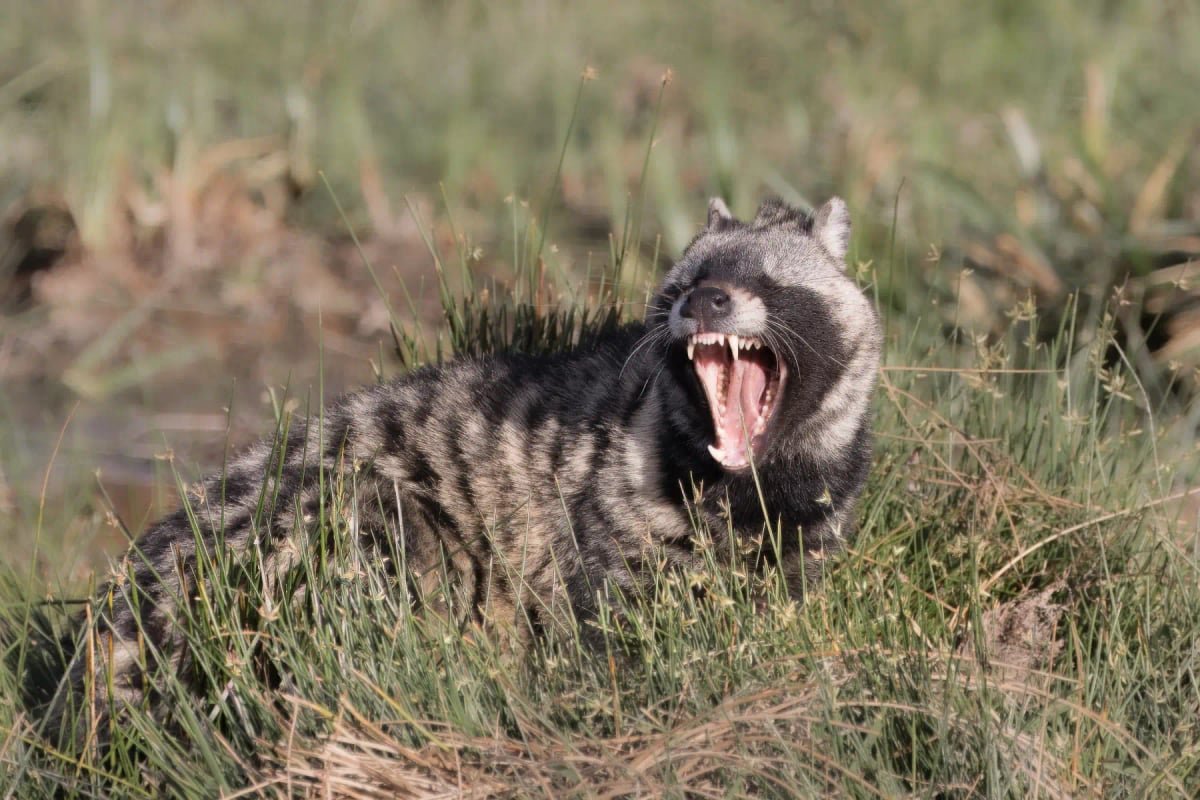
African Civet
Civettictis civetta
The Democratic Republic of Congo holds some of the most important African civet populations on the continent. The species ranges across the vast Congo Basin rainforest, the savanna woodlands of Katanga, the eastern forests near Virunga and Kahuzi-Biega, and the open woodlands of Kasai. Its presence across such a varied territory reflects the species' adaptability, though habitat loss and bushmeat hunting pose growing threats in several regions.

Honey Badger
Mellivora capensis
The honey badger is found across the Democratic Republic of Congo, from savanna edges to woodland areas bordering the Congo Basin rainforest. It is a stocky, fearless carnivore that digs with impressive speed and eats almost anything, from snakes and scorpions to honey and roots. Despite pressure from habitat loss and conflict with farming communities, it remains listed as Least Concern by the IUCN.
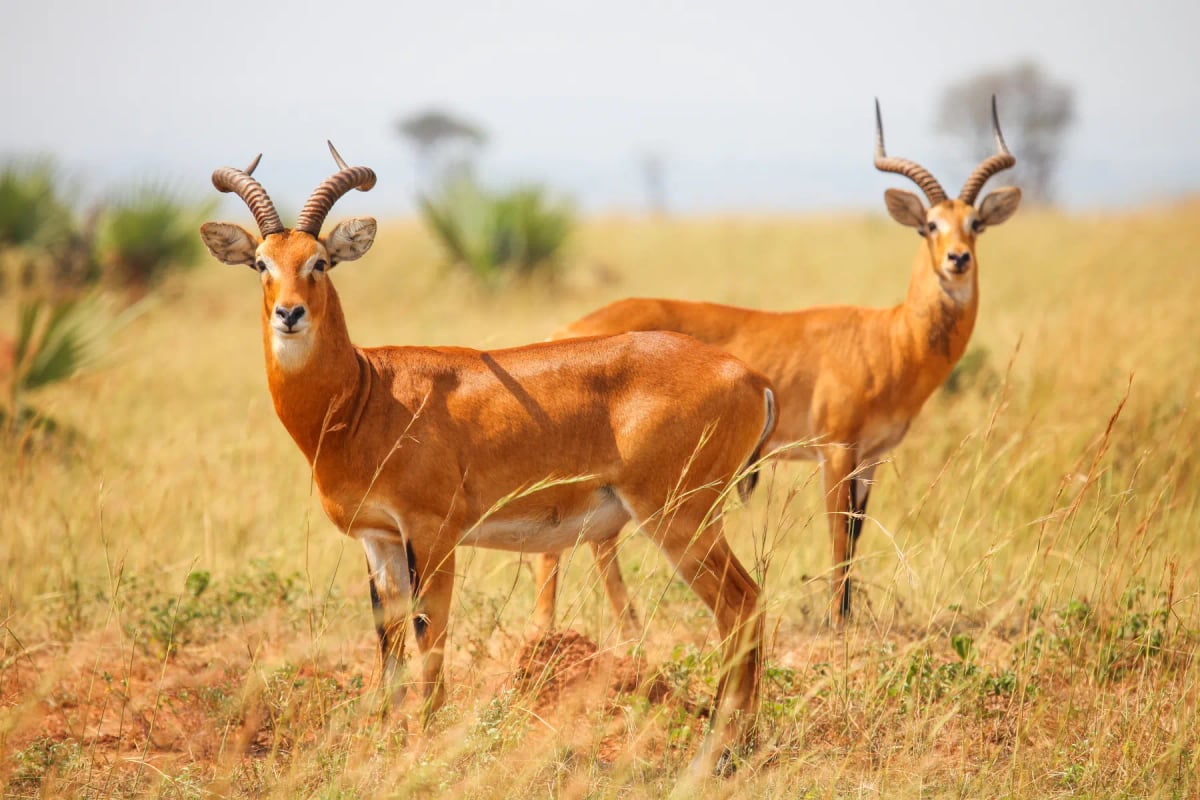
Kob
Kobus kob
In the Democratic Republic of Congo, the kob is found in the northeastern and northwestern grasslands, including habitats within and around Garamba National Park. It favors open floodplains and grassy clearings near rivers, where herds can graze freely. Decades of conflict have made consistent wildlife monitoring difficult, and poaching remains a serious threat. Despite local pressures, the kob's global IUCN status is Least Concern.
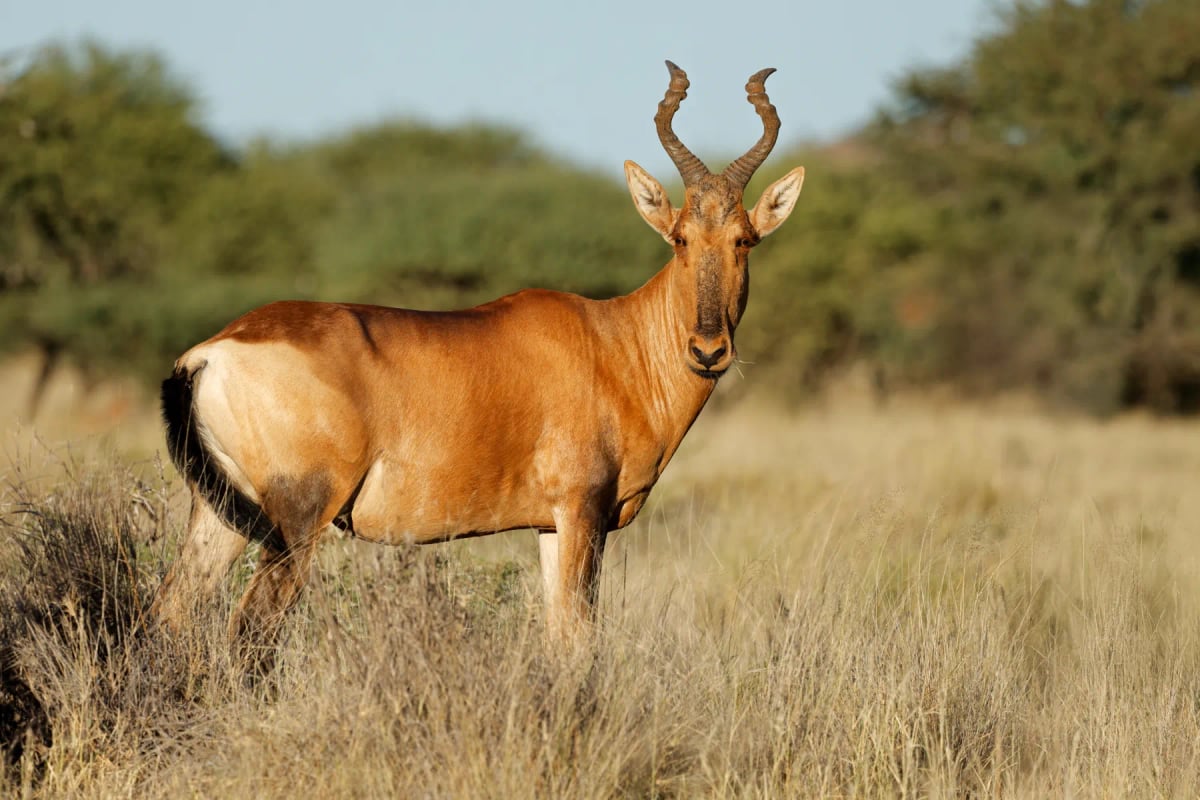
Hartebeest
Alcelaphus buselaphus
The hartebeest is found in the savanna corridors of the Democratic Republic of Congo, mainly in the eastern and northeastern regions where grasslands open up beyond the Congo Basin forest. Garamba National Park, one of Africa's oldest reserves, provides habitat for this species. Decades of instability and poaching across the DRC have placed considerable pressure on large mammal populations, including the hartebeest.
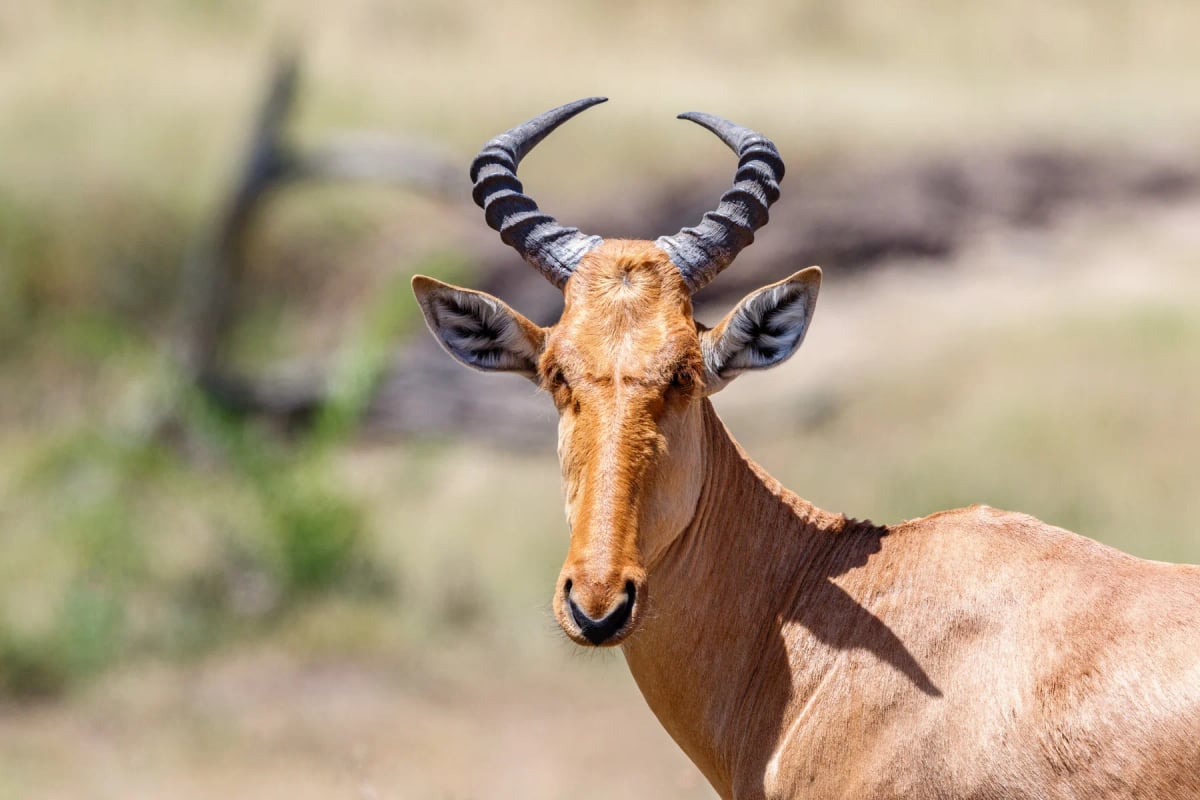
Topi
Damaliscus lunatus
In the Democratic Republic of the Congo, the topi is found in the grasslands and floodplains of the eastern and northeastern regions, including areas around Garamba and Virunga National Parks. These open ecosystems stand apart from the dense forests that cover much of the country. Topis graze in herds and males are known to stand on termite mounds to scan for predators. Decades of conflict have taken a serious toll on wildlife populations here. IUCN status: Least Concern.
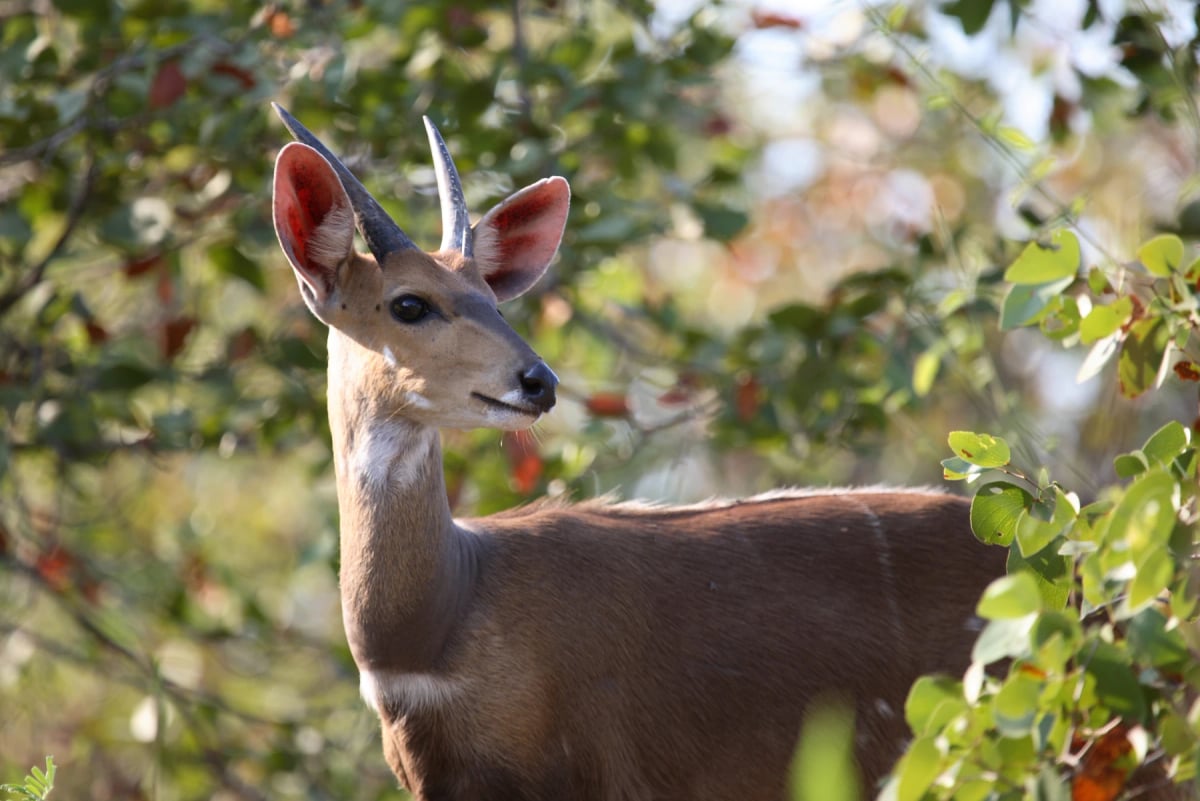
Bushbuck
Tragelaphus scriptus
The Democratic Republic of the Congo supports bushbuck populations across its extensive forest and woodland regions. These solitary, medium sized antelopes are primarily nocturnal, emerging to browse leaves, shoots and other vegetation under cover of darkness. Males display distinctive spiral horns and white spotted coats; females are hornless. Their shy, retiring behaviour and reliance on dense vegetation for protection make them difficult wildlife to observe.
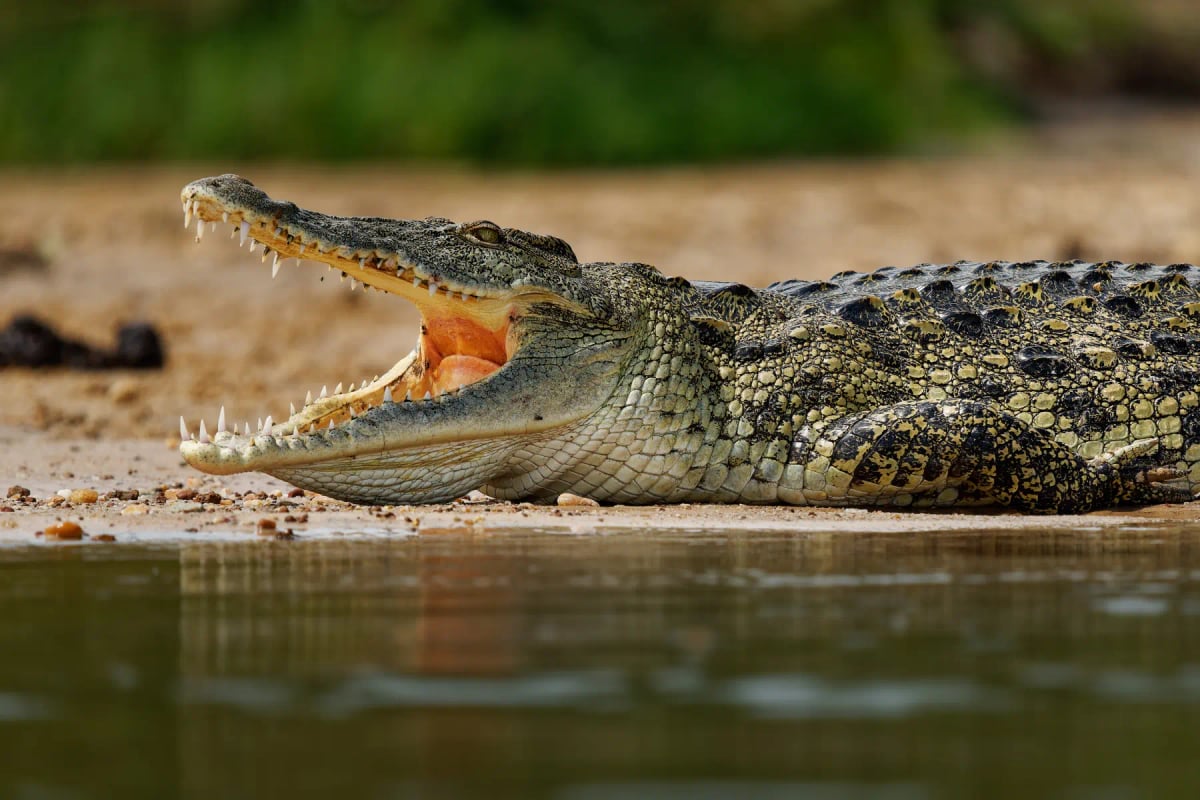
Nile Crocodile
Crocodylus niloticus
The Democratic Republic of Congo holds some of the largest river systems in Africa, and the Nile crocodile is present throughout many of them, including the Congo River and its vast network of tributaries. This enormous country's wetlands and forest rivers provide exceptional habitat. Crocodiles can reach 5.5 metres and 750 kilograms here. Conservation is challenged by limited resources for wildlife monitoring across such a vast and remote landscape.
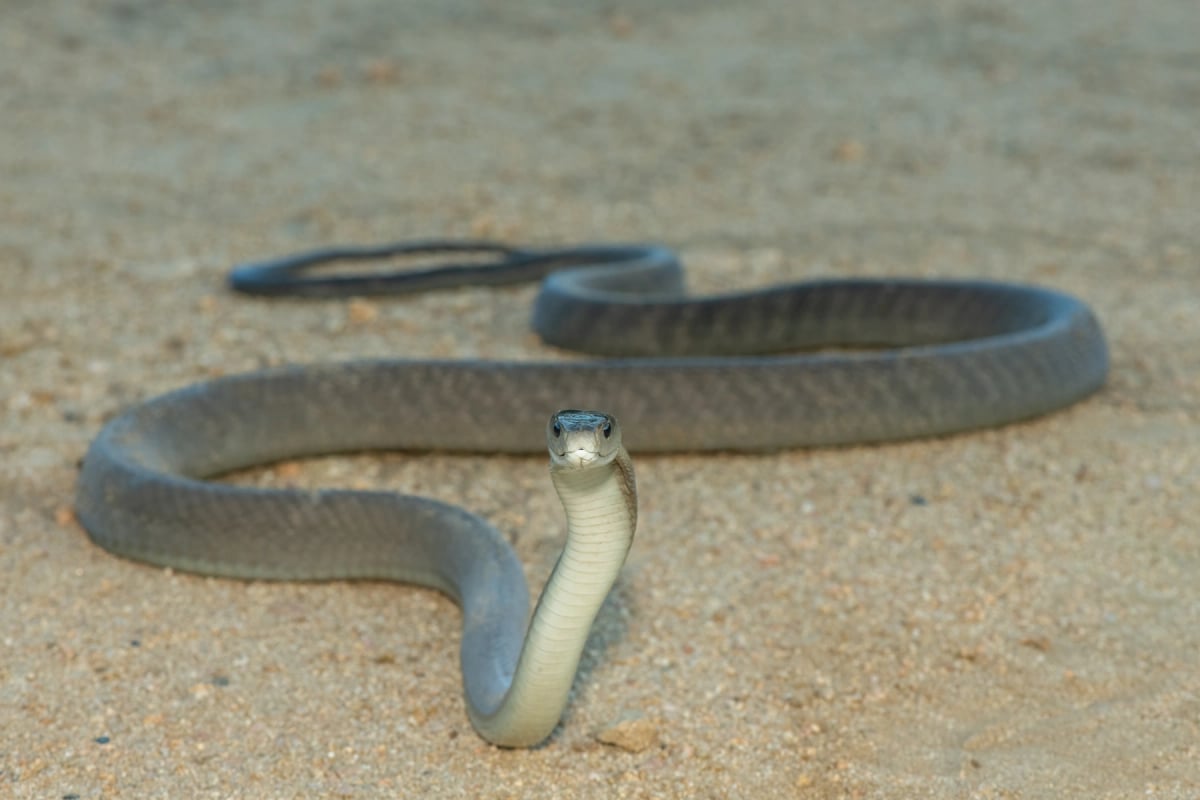
Black Mamba
Dendroaspis polylepis
The black mamba is found in the savanna and open woodland areas of the Democratic Republic of Congo, particularly in the eastern and southern regions where the landscape opens up beyond the Congo Basin rainforest. It is one of the most medically significant snakes in its range. In a country with vast rural populations and uneven healthcare access, snakebite by this species carries a serious risk of fatality.
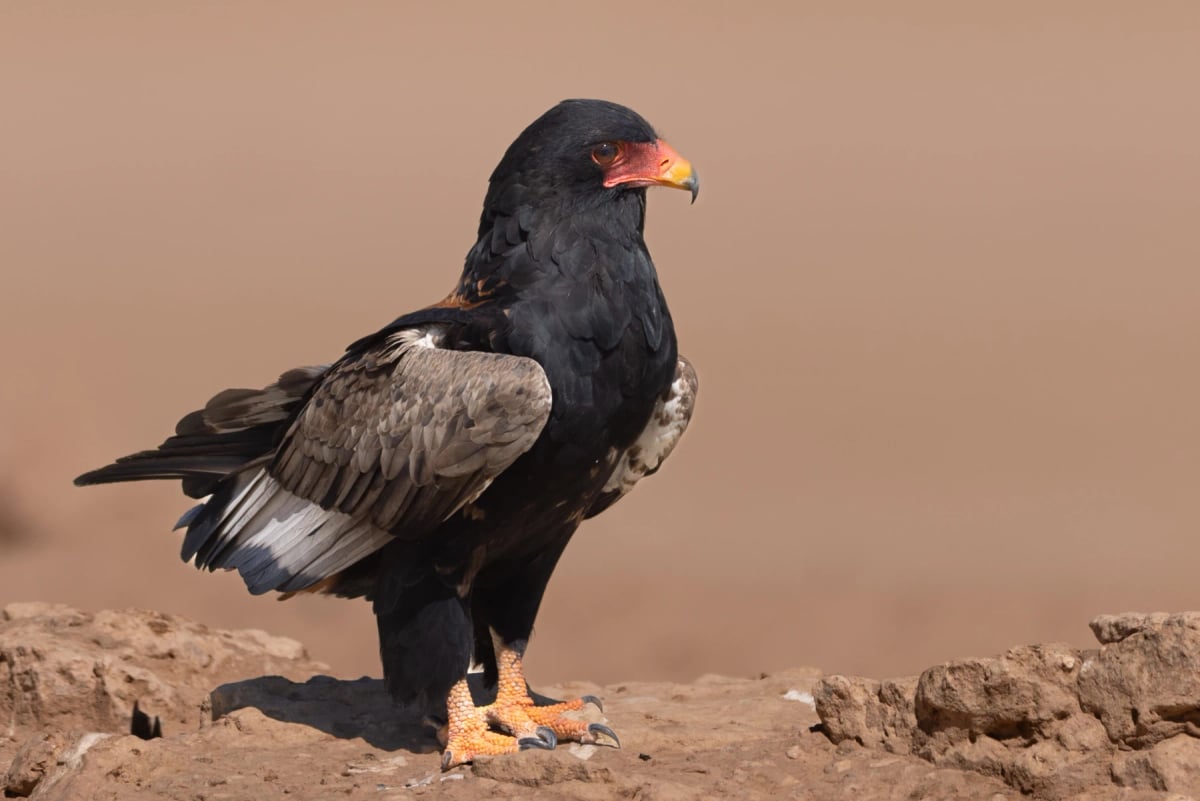
Bateleur
Terathopius ecaudatus
The bateleur occurs in the Democratic Republic of the Congo primarily in the savanna and open woodland areas of the north, east, and south, avoiding the vast Congo Basin rainforest. Protected areas such as Upemba and Garamba national parks offer some refuge. Classified as Endangered by the IUCN, the species is threatened by poisoning, habitat loss, and the broader pressures of one of the continent's most ecologically complex countries.
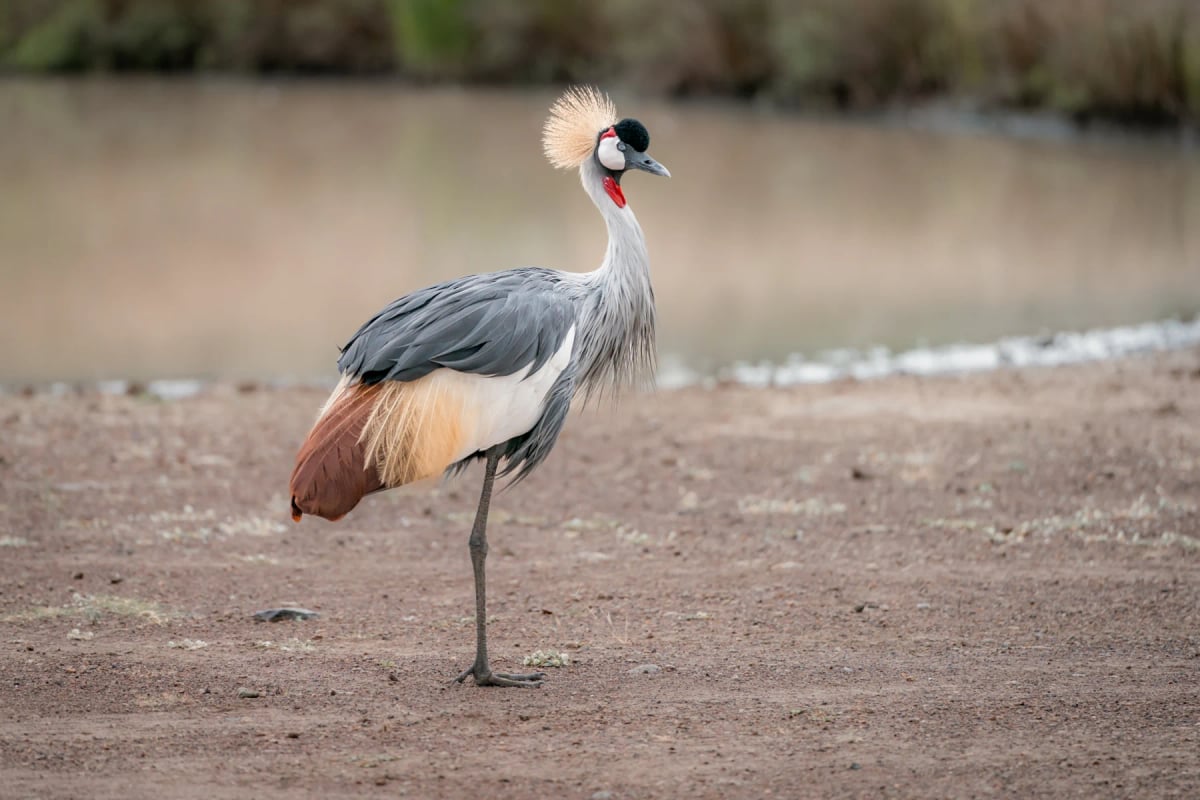
Grey Crowned Crane
Balearica regulorum
In the Democratic Republic of Congo, the Grey Crowned Crane occurs mainly in the eastern highlands and the savannas bordering Uganda and Rwanda. It favors wetlands, open grasslands, and the edges of cultivated fields. The country's vast size means populations are spread across a range of landscapes. Illegal capture for the live bird trade remains a serious concern across this region, contributing to the species' Endangered status globally.
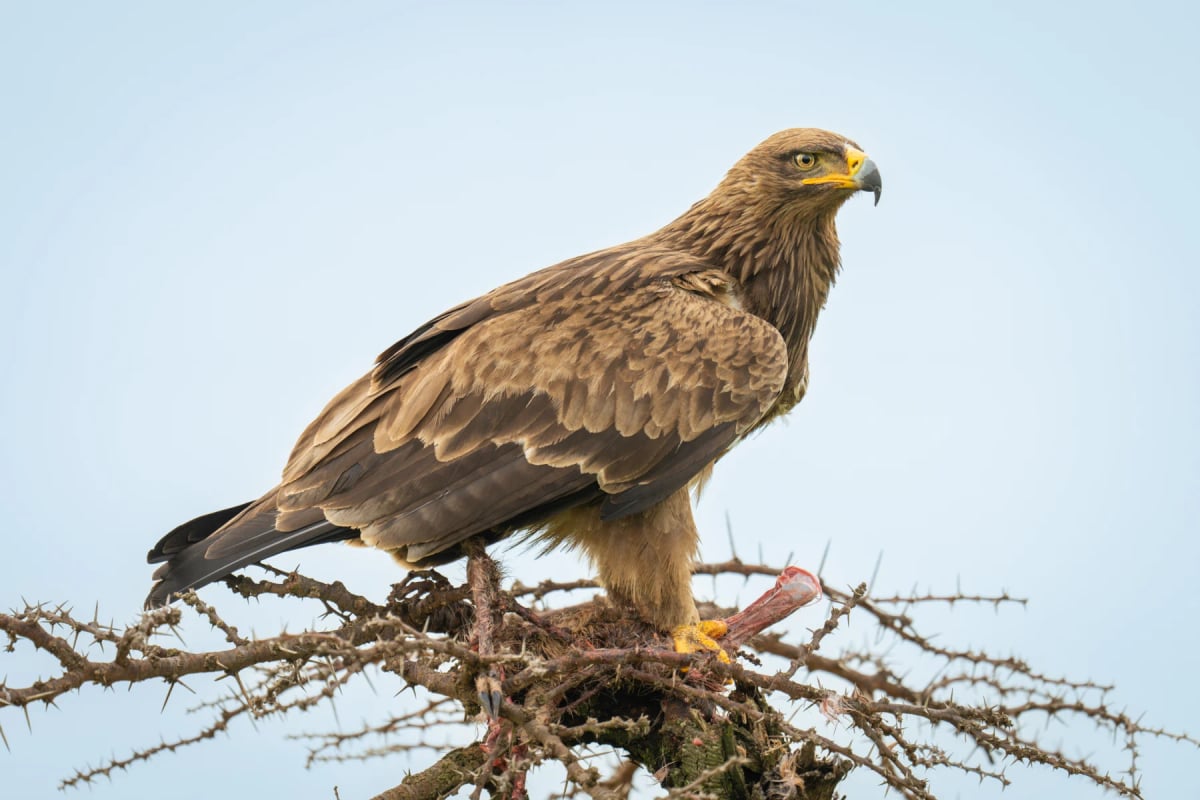
Steppe Eagle
Aquila nipalensis
The Democratic Republic of Congo falls within the wintering range of the Steppe Eagle in central Africa. Birds that breed in Central Asia can reach the open woodlands and grassland areas of the country's eastern and southern regions after covering enormous distances. The species gathers where food is plentiful, including near termite activity. As a globally Endangered bird, every wintering area it relies on contributes to its overall survival.
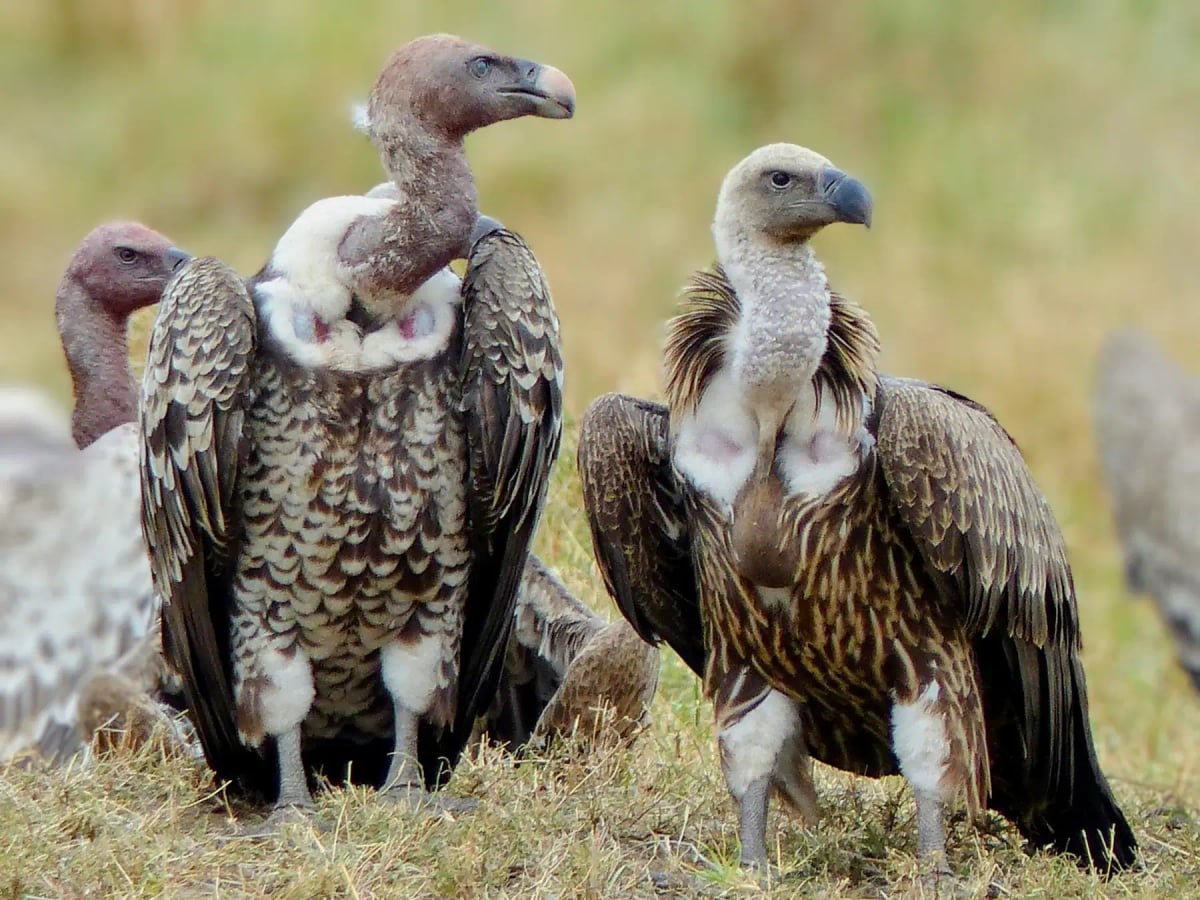
White backed Vulture
Gyps africanus
The Democratic Republic of Congo is vast, and the white backed vulture is found mainly in the savanna regions of the south and east, including areas bordering Zambia and Tanzania. The dense Congo Basin rainforest offers no suitable habitat. Ongoing conflict and weak enforcement of wildlife protections make this Critically Endangered vulture especially vulnerable to poisoning and to the general collapse of large mammal populations in affected areas.
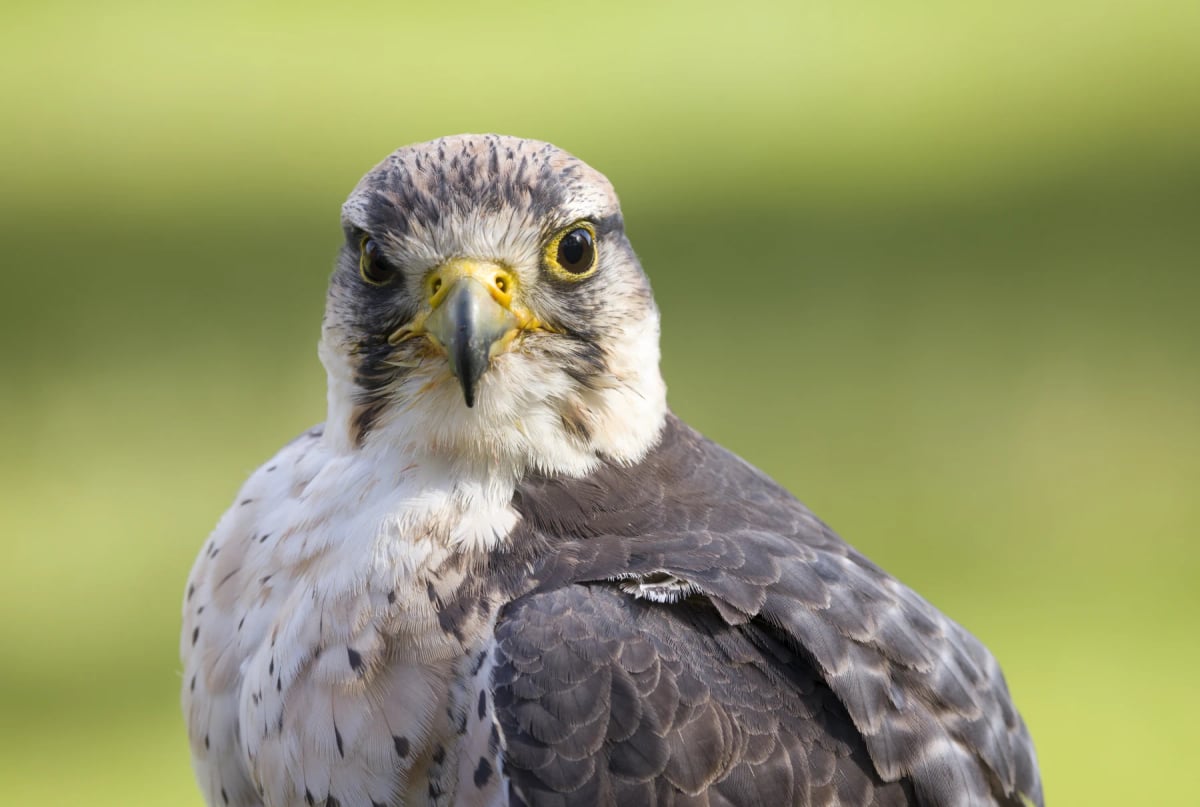
Lanner Falcon
Falco biarmicus
In the Democratic Republic of the Congo, the lanner falcon is found mainly in the open savanna regions to the north and south of the dense equatorial forest. It hunts birds using rapid, low flights and often pairs up to flush prey into the open. Cliff ledges and rocky outcrops provide nesting sites where available. The IUCN lists it as Least Concern.
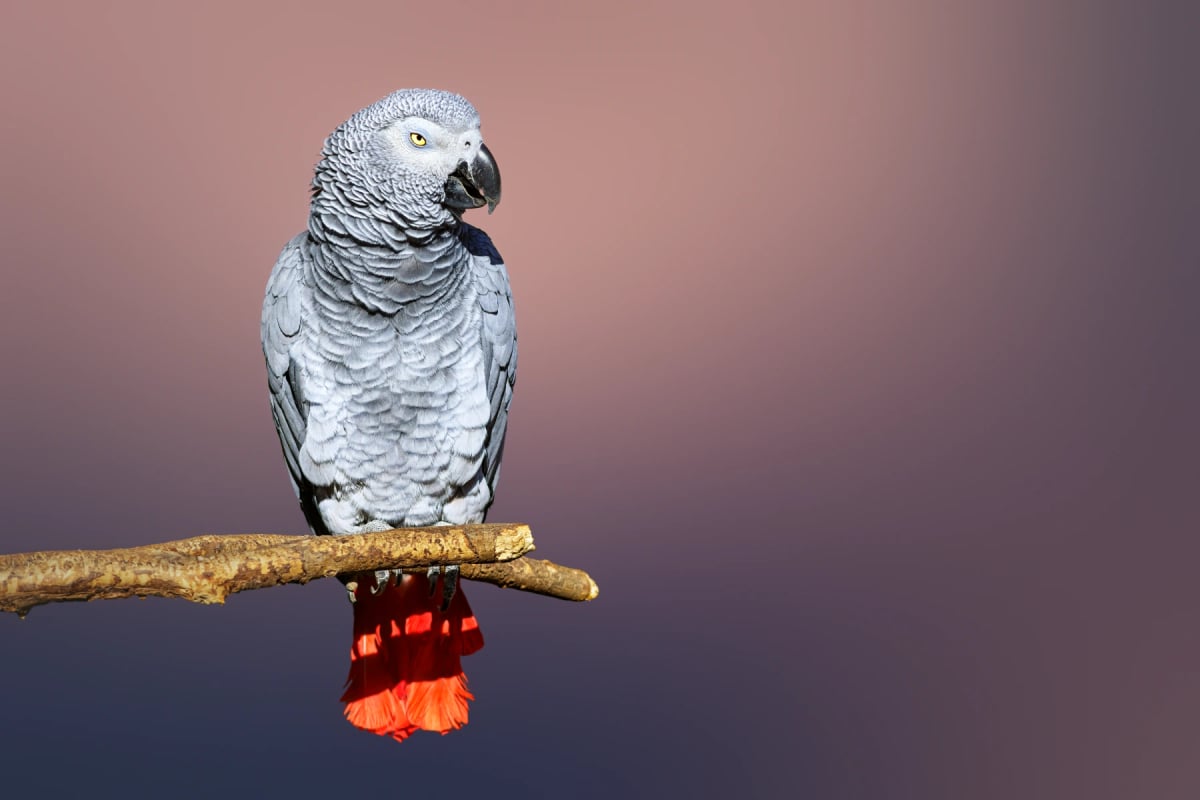
African Grey Parrot
Psittacus erithacus
The Democratic Republic of Congo is the global stronghold of the African grey parrot, home to the largest remaining wild population on Earth. The vast Congo rainforest, the second largest tropical forest in the world, provides millions of square kilometers of suitable habitat. Despite this, the country was the single largest exporter of wild grey parrots before international trade bans, with legal quotas of 5,000 birds per year that were widely exceeded through illegal capture. Forest loss from logging and agriculture continues to reduce available habitat.
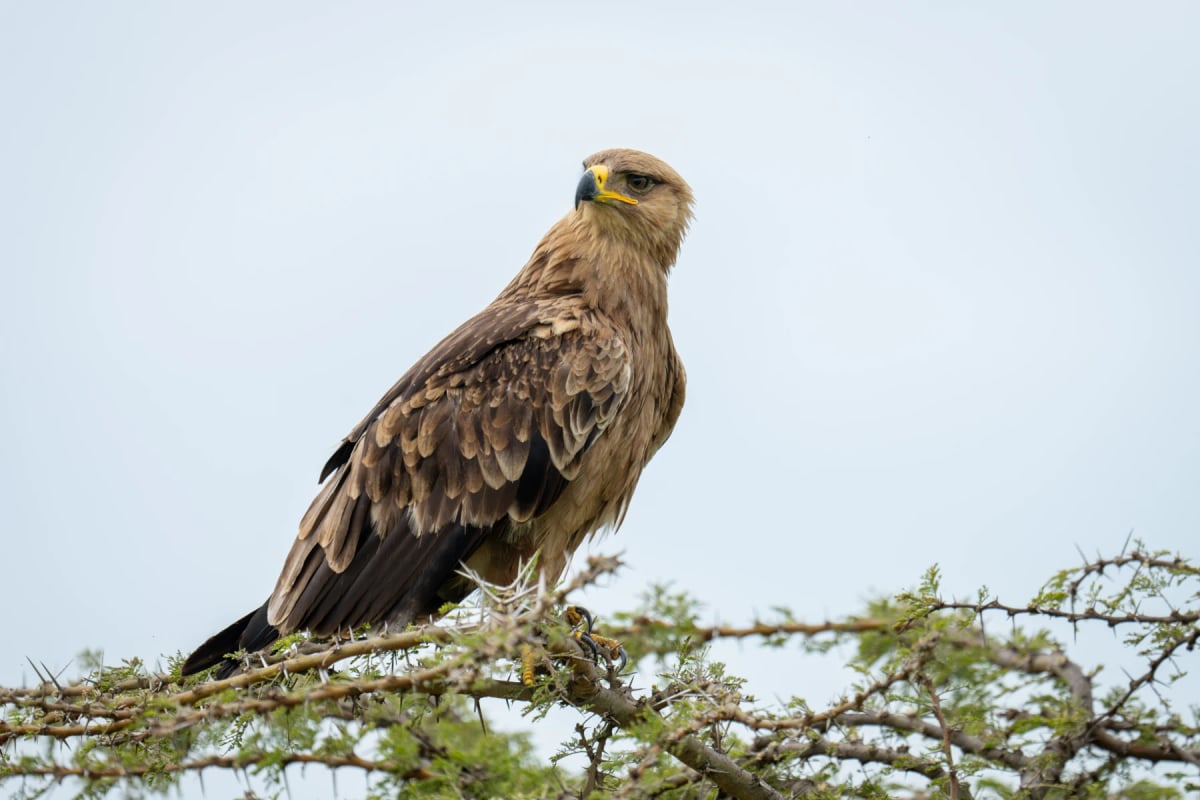
Tawny Eagle
Aquila rapax
The Tawny Eagle is found along the drier, more open edges of the Democratic Republic of Congo, where savanna corridors border the great forest zones. It hunts small mammals and reptiles and readily steals food from other raptors. Habitat loss and accidental poisoning threaten its numbers here, as in much of its African range. The IUCN lists it as Vulnerable.
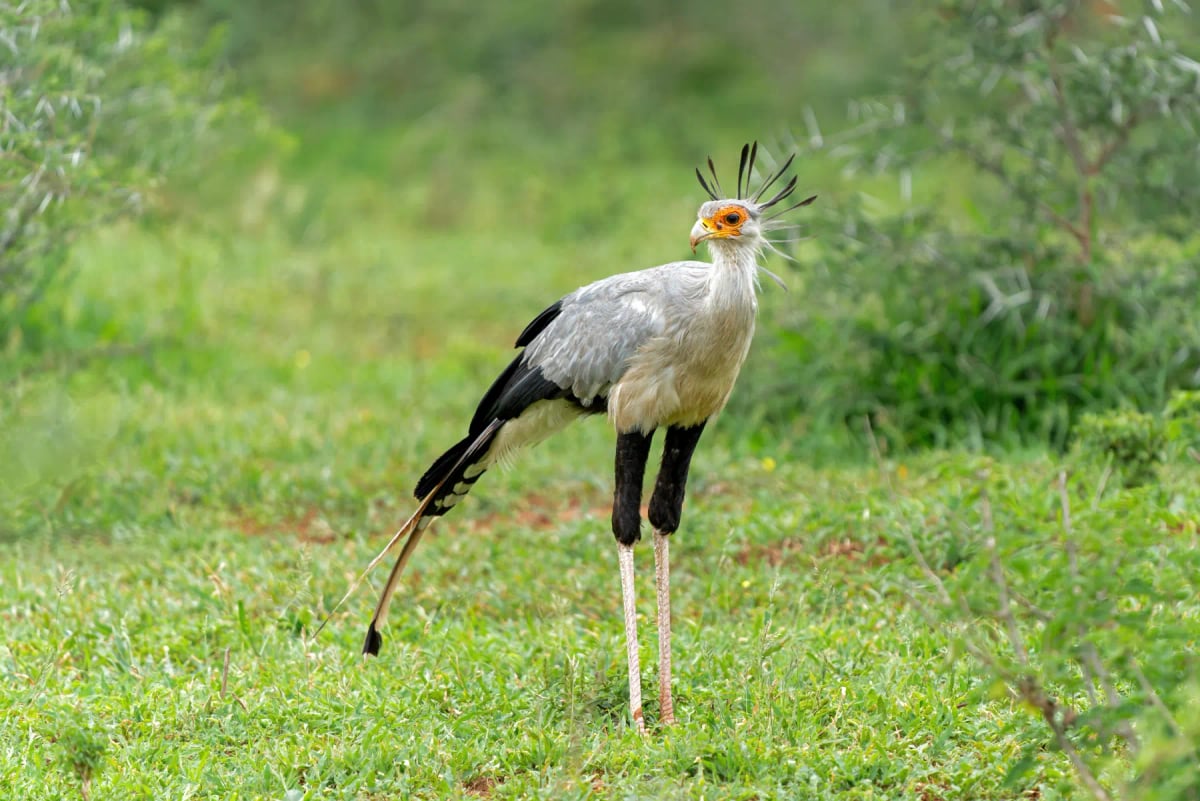
Secretary Bird
Sagittarius serpentarius
In the Democratic Republic of Congo, the secretary bird is found in the open savanna and grassland regions in the south and east of the country, away from the Congo Basin's dense rainforest. Areas like the Upemba and Kundelungu plateaus provide suitable open habitat. It hunts on foot, targeting snakes, rodents, and insects. Ongoing deforestation and land conversion remain serious threats. The IUCN lists it as Endangered.
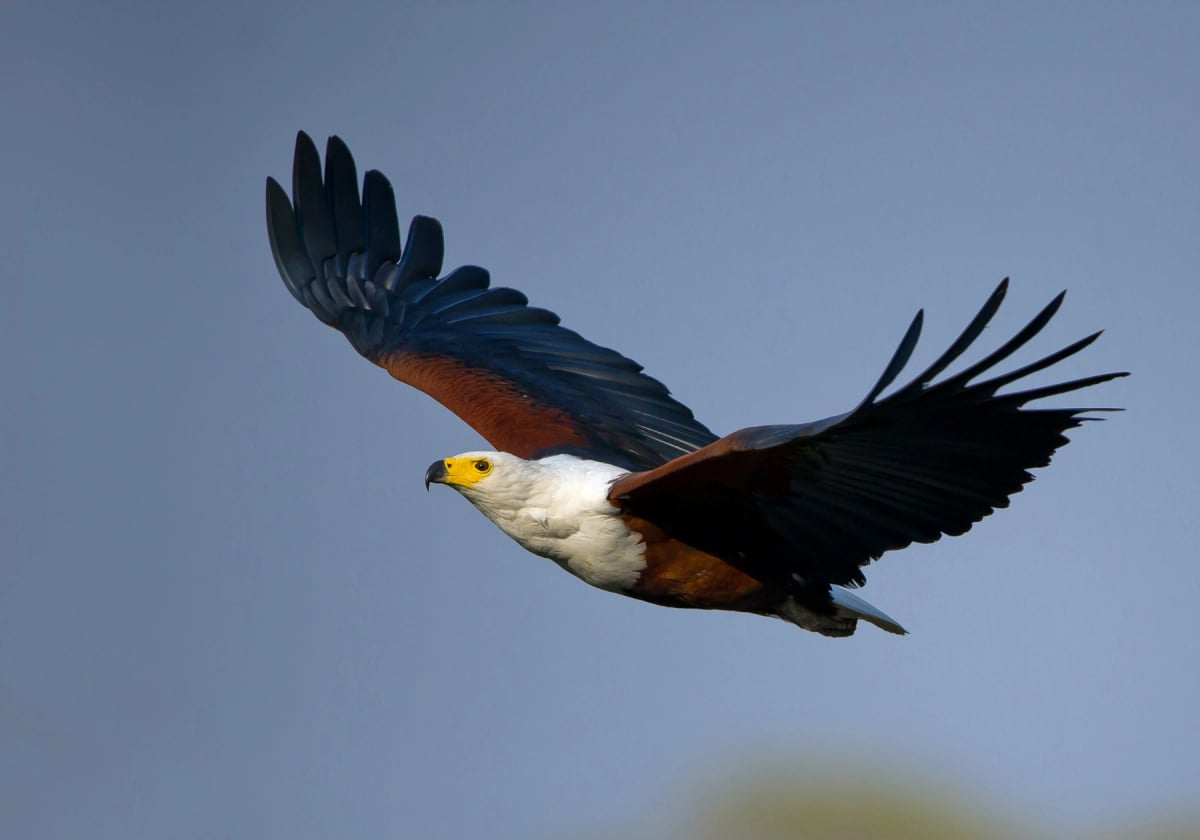
African Fish Eagle
Haliaeetus vocifer
The Democratic Republic of the Congo holds one of the most important populations of African fish eagles on the continent. The Congo River and its vast network of tributaries, lakes and floodplains provide enormous habitat across the country. The bird is common near water throughout most of the DRC and is a familiar sight along the great rivers, across the Congo Basin and around the Rift Valley lakes to the east.
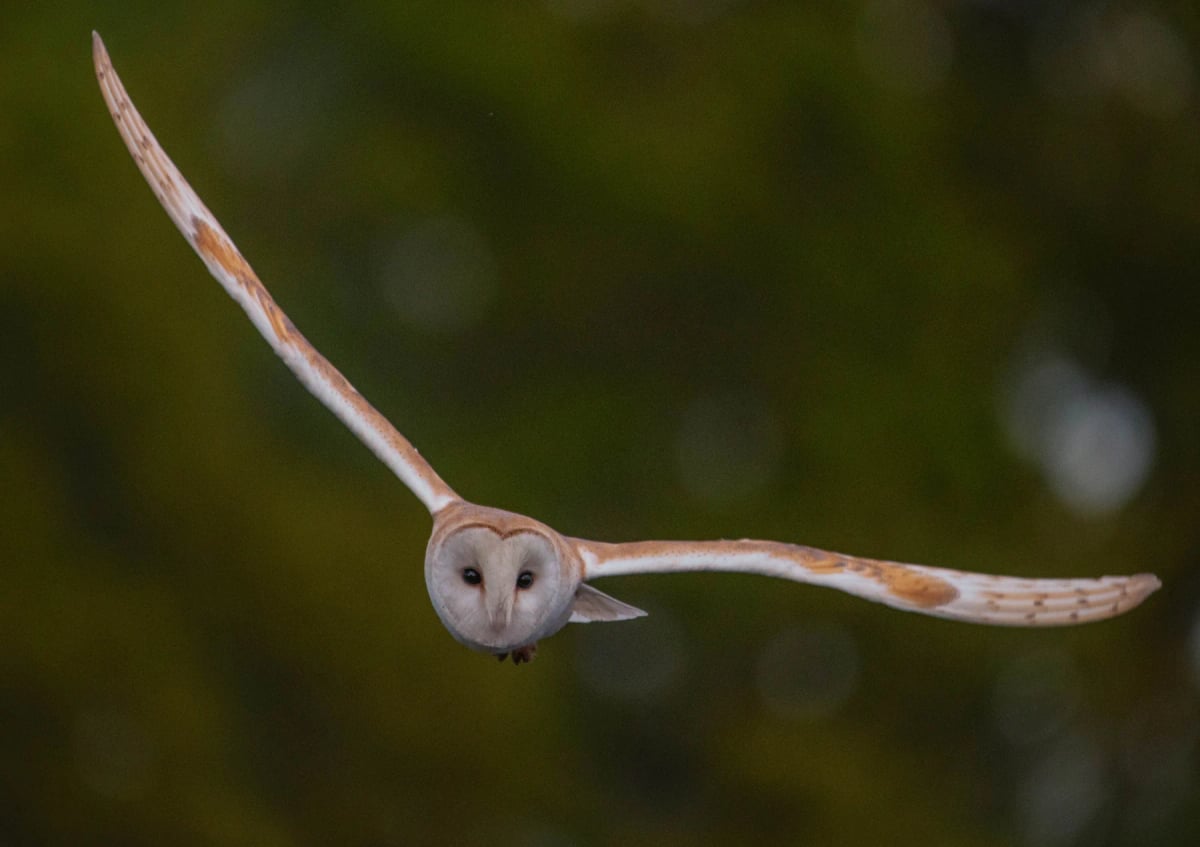
Barn Owl
Tyto alba
The barn owl is found in the Democratic Republic of the Congo mainly in open savanna, farmland, and areas near human settlements in the eastern highlands, the southern savanna belt, and along major river valleys. It is far less common in the vast equatorial rainforest of the Congo Basin, which offers little open hunting habitat. Where it does occur, it nests in old buildings and hollow trees and hunts rodents at night, providing useful pest control in farming communities.
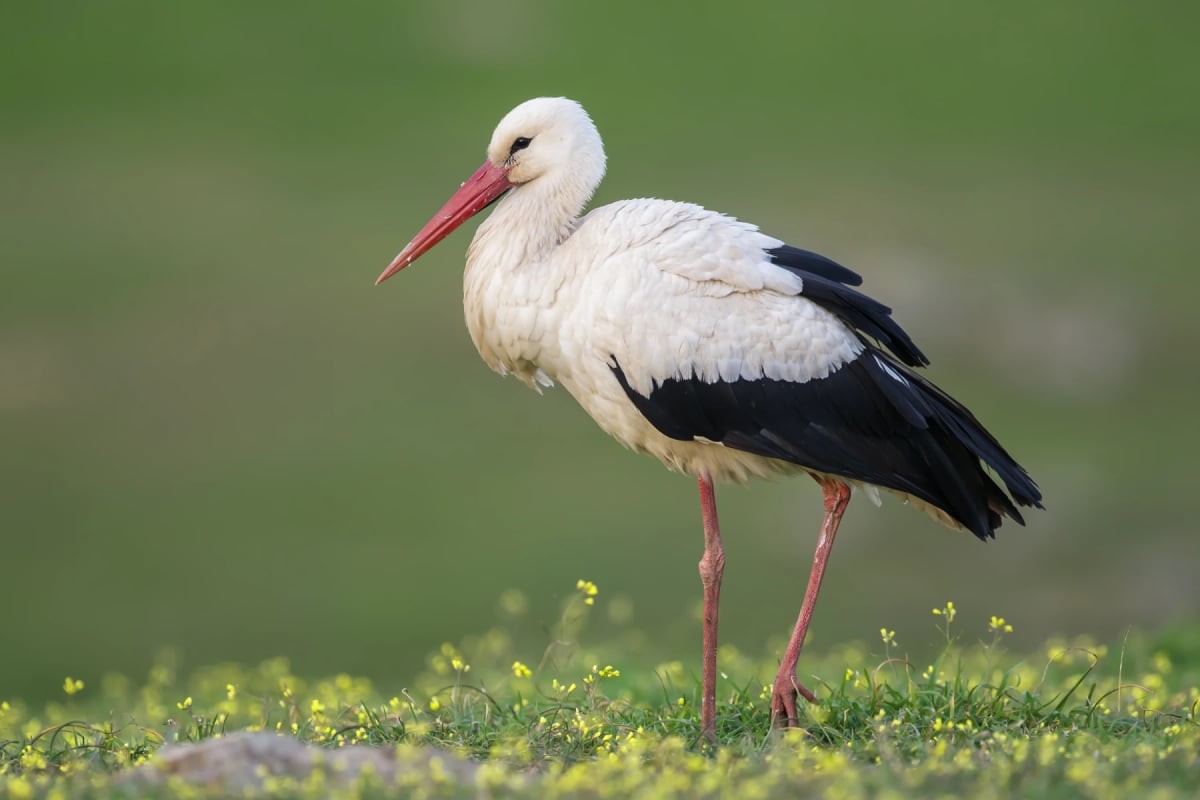
Stork
Ciconia ciconia
The white stork winters in parts of the Democratic Republic of the Congo, particularly in open grasslands and agricultural areas away from the dense rainforest of the Congo Basin. These birds arrive from their European breeding grounds after traveling through one of two major migration bottlenecks. They spend several months feeding on insects, frogs, and small animals before the return journey north begins in late winter.
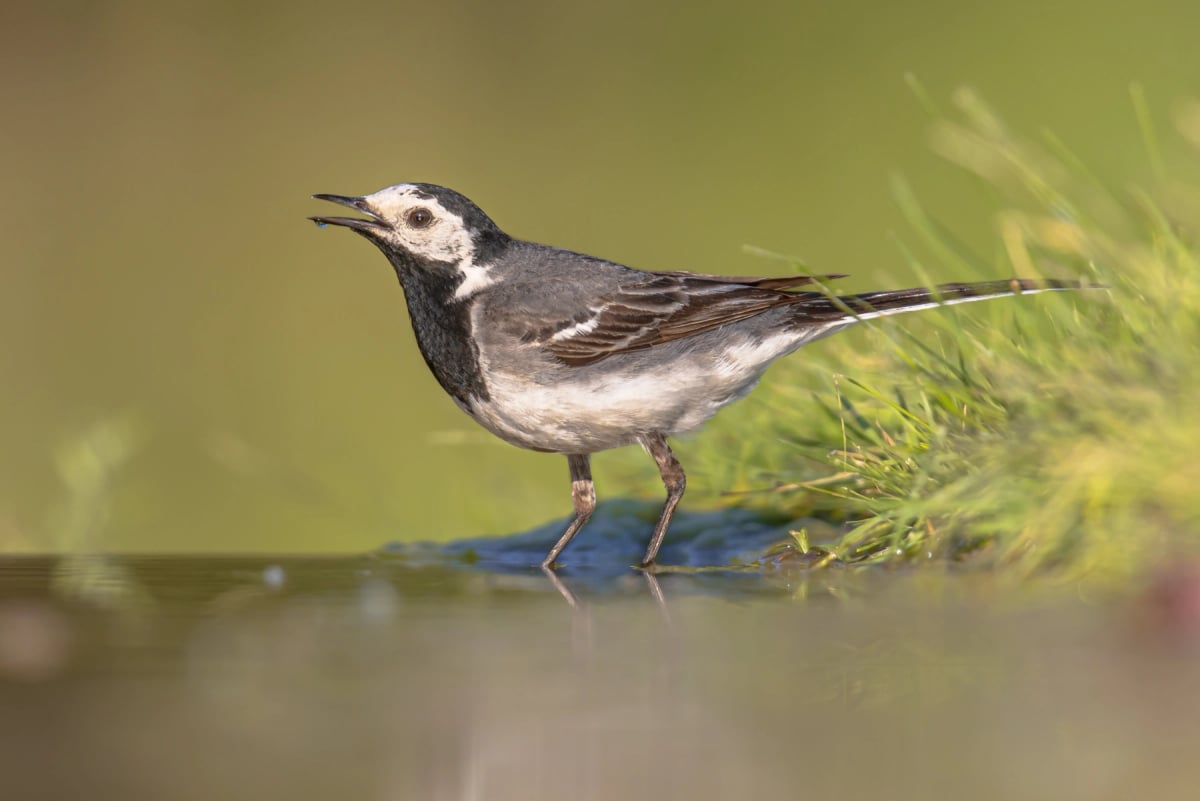
White Wagtail
Motacilla alba
The white wagtail occurs in the Democratic Republic of the Congo mainly as a passage migrant and winter visitor, found most regularly in open habitats across the northern and eastern parts of the country. It tends to avoid dense forest, preferring riverbanks, clearings and farmland edges. Despite the country's vast size and habitat diversity, this bird remains tied to open ground near water. The IUCN lists it as Least Concern.
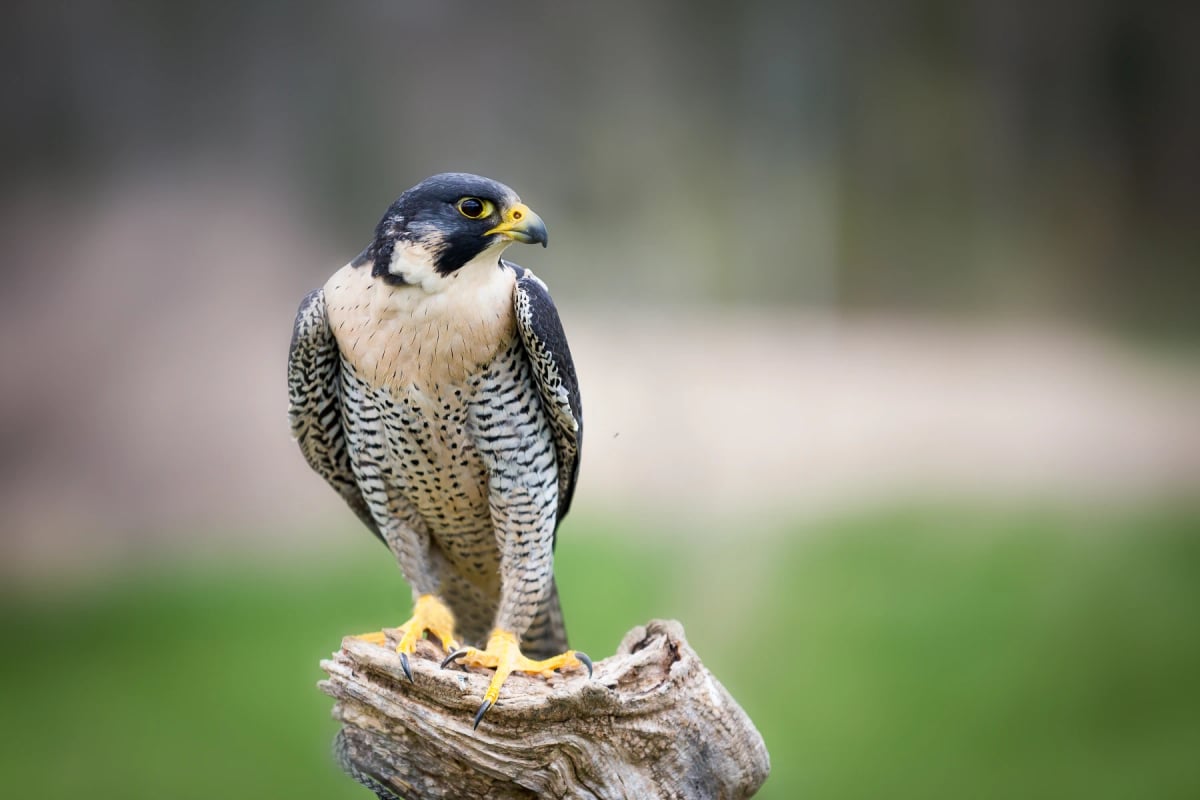
Peregrine Falcon
Falco peregrinus
The peregrine falcon occurs in the Democratic Republic of the Congo primarily as a migratory visitor, moving through the Congo Basin and surrounding savannas. The vast forest interior offers fewer open hunting grounds, so the falcon tends to favour forest edges, river corridors, and the more open landscapes of the eastern highlands near the Albertine Rift. Its presence here reflects the country's role in connecting African flyways.
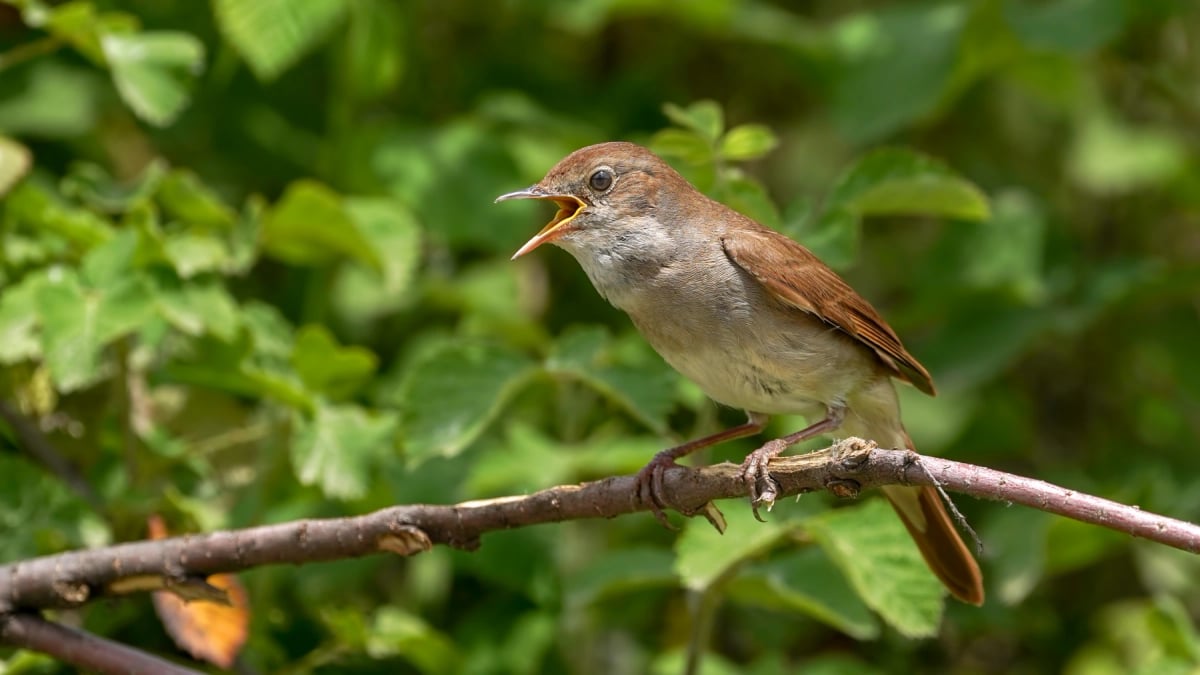
Nightingale
Luscinia megarhynchos
In the Democratic Republic of the Congo, nightingales are winter visitors found primarily in the savanna and woodland habitats of the north and northeast, including areas around the Congo basin fringe. They do not venture into the dense equatorial rainforest that covers much of the country. Silent and well camouflaged, these birds blend into dry scrubby vegetation as they forage. The country represents the southern edge of the species' regular wintering range in central Africa. Its IUCN status is Least Concern.
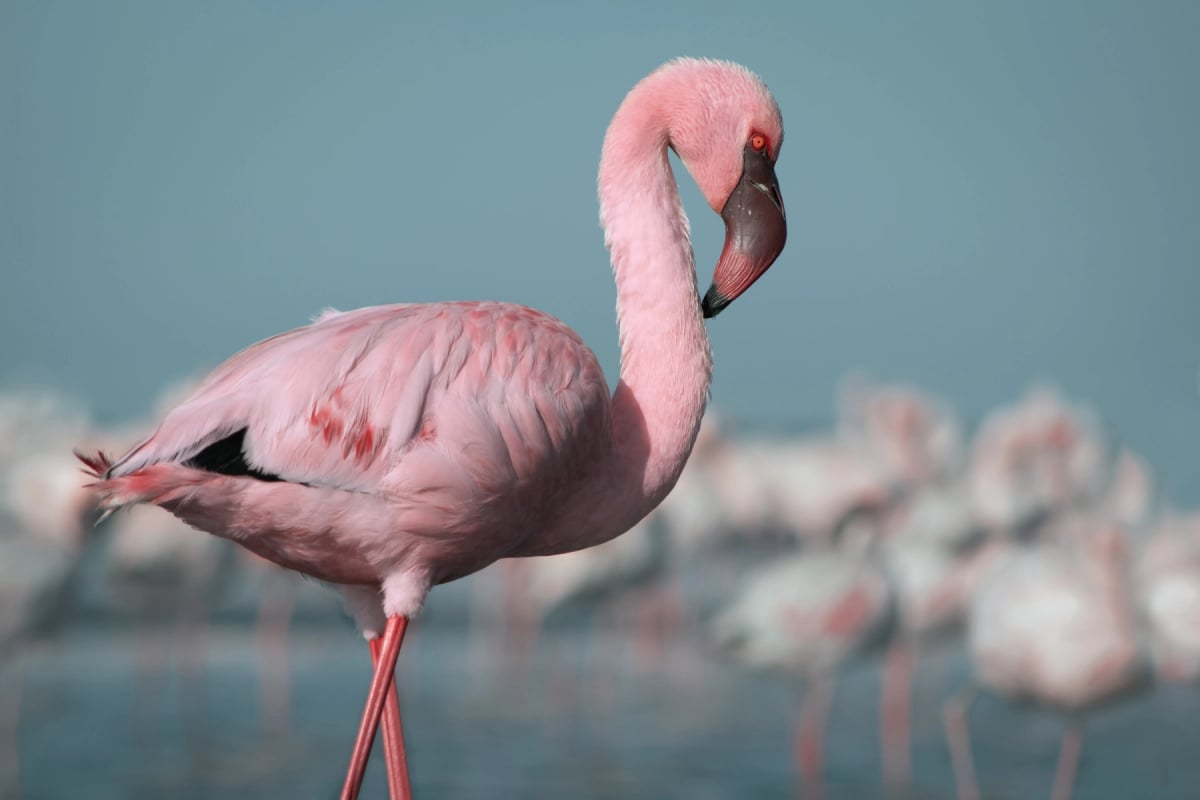
Flamingo
Phoenicopteridae (6 species)
The lesser flamingo visits the Democratic Republic of the Congo outside the breeding season, and it is uncommon here. Most records come from the lakes of the east, along the Albertine Rift, not far from the flamingo lakes of Uganda, and from the short Atlantic coast. The birds follow blooms of tiny blue green algae across the region, so their presence varies from year to year. IUCN status: Near Threatened.
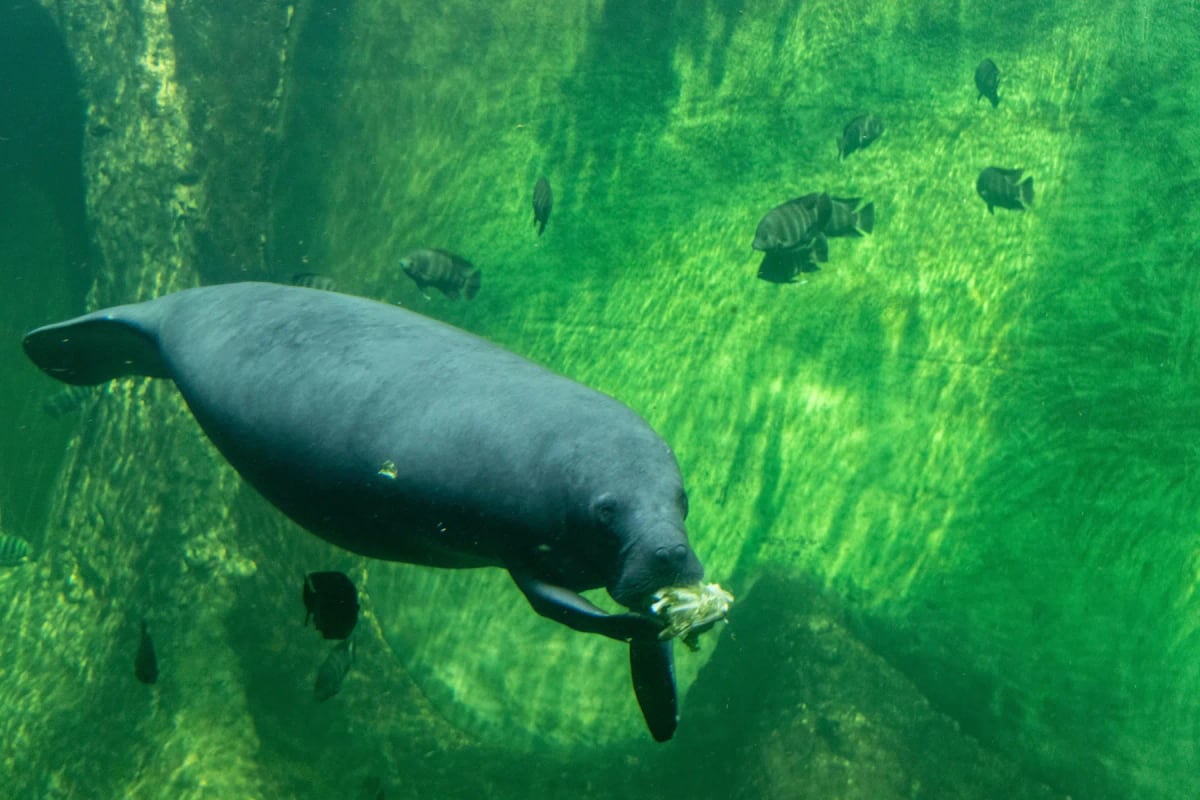
African Manatee
Trichechus senegalensis
The Democratic Republic of the Congo holds some of the largest stretches of manatee habitat on the continent, with the Congo River and its vast network of tributaries running through dense tropical forest. The species is distributed across much of the river system, but populations are difficult to monitor. Hunting for bushmeat and entanglement in fishing nets remain the primary threats across this enormous range.
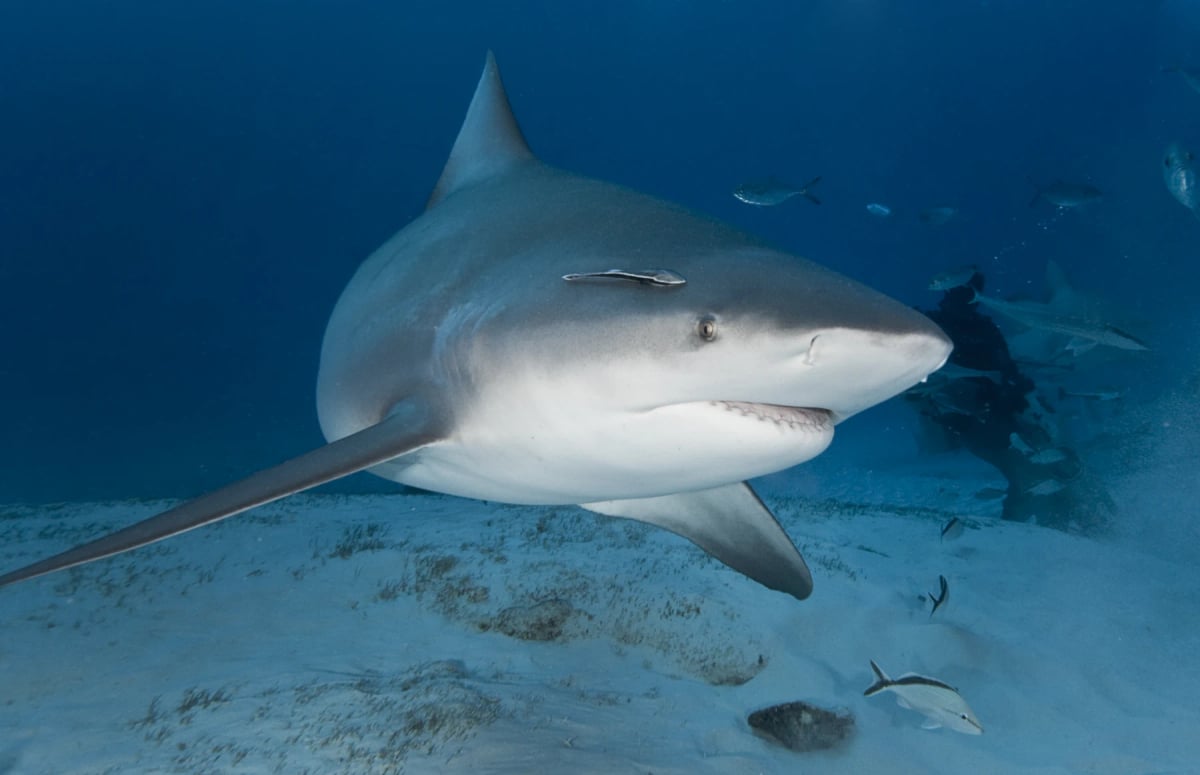
Bull Shark
Carcharhinus leucas
The Democratic Republic of the Congo is home to one of the most remarkable freshwater records for bull sharks. Individuals have been confirmed deep within the Congo River system, one of the world's largest river basins. These sharks navigate hundreds of kilometres from the sea, exploiting the river's abundant fish populations. Globally Near Threatened, they receive little focused conservation attention within the country.
Researched and written by Juan Pablo. Sources: IUCN Red List, scientific literature and regional field guides. Last updated: .