Indian Rhinoceros
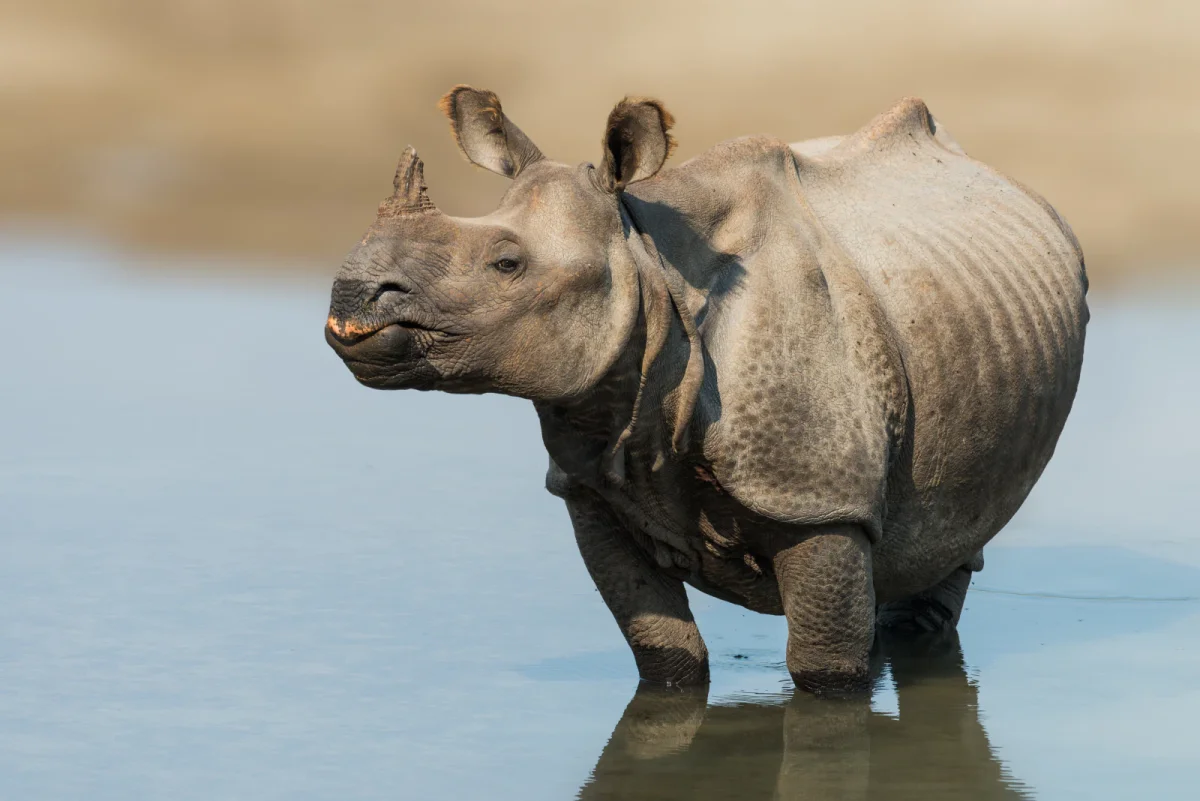
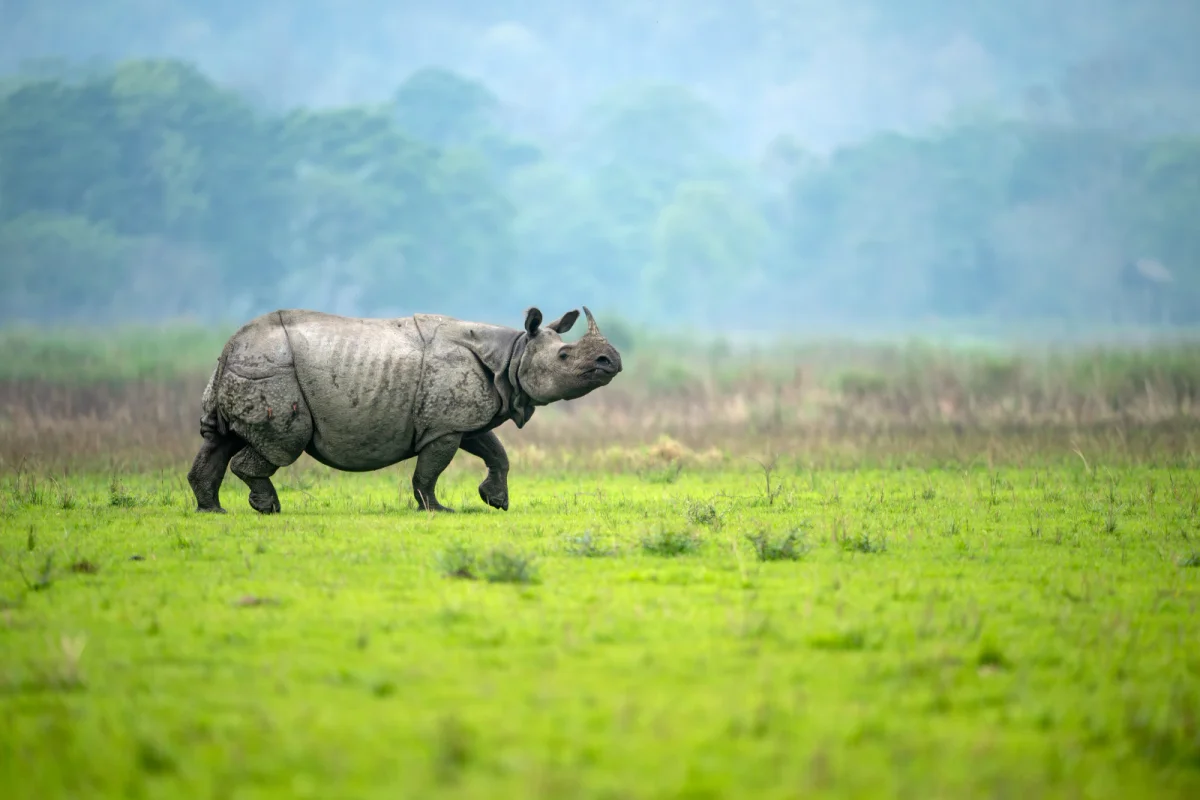
The Indian rhinoceros (Rhinoceros unicornis), also called the greater one horned rhino, is the largest rhino in Asia and one of the heaviest land mammals in the world. Adult males weigh around 2,000 kilograms or more. It has a single black horn and thick, gray brown skin with deep folds that make it look as if it wears plates of armor, covered with small bumps on the shoulders and legs. It lives in the tall grasslands, swamps and riverside forests of the floodplains at the foot of the Himalayas, today only in northeastern and northern India and in the lowlands of Nepal. It is mainly a grazer, feeding on grasses, and also eats leaves, fruit and water plants. It wallows in mud and is a strong swimmer. In the early 1900s hunting had left only about 20 animals in the wild, but strict protection in parks such as Kaziranga and Chitwan has brought the population back to more than 4,000. The IUCN lists it as Vulnerable.
The Five Rhino Species
There are five living species of rhinoceros, two in Africa and three in Asia. The African species, the white rhino and the black rhino, have two horns. Of the Asian species, the Indian rhinoceros and the much rarer Javan rhinoceros have one horn, while the small, hairy Sumatran rhinoceros has two. The Indian and Javan rhinos are close relatives in the genus Rhinoceros, and both have the folded, armorlike skin that the African species lack. The Indian rhinoceros is the largest of the Asian rhinos and, after the white rhino, the second largest of all. It is also the Asian rhino with by far the largest population: more than 4,000 animals, compared with fewer than 100 Javan and Sumatran rhinos each. Its scientific name, Rhinoceros unicornis, means one horned nose horn. Conservation groups usually call it the greater one horned rhino, while in India and Nepal it is simply known as the one horned rhino.
Size and Appearance
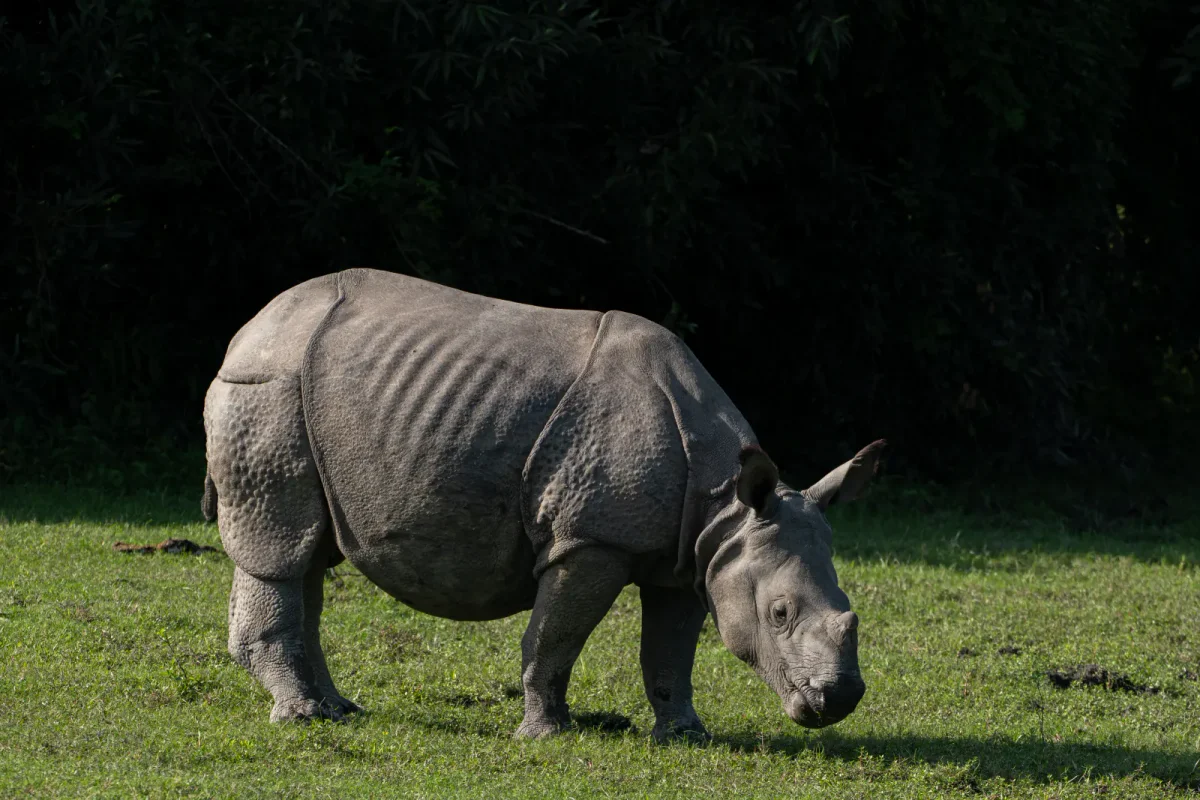
The Indian rhinoceros is a massive animal. Its head and body measure about 3 to 3.8 meters long, and it stands 1.5 to 1.9 meters at the shoulder. Adult males usually weigh around 2,000 to 2,200 kilograms, and females about 1,600 kilograms. Its most striking feature is the skin, which is up to several centimeters thick and divided by deep folds behind the head, behind the shoulders and in front of the hind legs, so that the body looks covered in riveted plates. Small, round bumps cover the shoulders and upper legs. The skin is gray brown and turns pinkish in the folds, and the animal is almost hairless apart from its eyelashes, ear fringes and the tip of the tail. Both males and females have a single black horn on the nose, made of keratin like human fingernails. It usually measures about 20 to 25 centimeters and rarely exceeds 50 centimeters. The upper lip is partly prehensile, which helps the rhino gather grass and pull down stems.
Habitat and Range
The Indian rhinoceros lives in the alluvial floodplains along the great rivers at the foot of the Himalayas, below about 400 meters. Its ideal habitat is a mosaic of very tall grasses, swamps, oxbow lakes and patches of riverside forest. Each year the monsoon floods renew the grasslands, keeping them fresh and productive. In the past the species lived across the whole northern plain of the Indian subcontinent, from the Indus valley in Pakistan along the Ganges to the Brahmaputra and into Bangladesh and Bhutan. Hunting, farming and settlement wiped it out almost everywhere. Today wild Indian rhinos survive only in protected areas of northeastern and northern India and southern Nepal. About 80 percent of them live in the Brahmaputra valley of Assam, mostly in Kaziranga National Park. Others live in Pobitora, Orang and Manas in Assam, Jaldapara and Gorumara in West Bengal, Dudhwa in Uttar Pradesh, and Chitwan, Bardia, Shuklaphanta and Parsa in Nepal.
Diet
The Indian rhinoceros is a herbivore and mainly a grazer. Grasses make up most of its diet, and it feeds on both short grasses on open meadows and the tender shoots of tall grasses, which it pulls in with its flexible upper lip. It also eats leaves and twigs of shrubs and trees, fruit, crops and water plants, which it often feeds on while standing or even submerged in lakes and swamps. The mix changes with the seasons: in winter, when the grass dries out, rhinos browse more on leaves and woody plants. Feeding takes up much of the day and night, mostly in the early morning, evening and after dark, while the hottest hours are spent resting or wallowing. Rhinos play an important role in their habitat. By eating fruit and passing the seeds in their dung, they help spread trees such as Trewia, whose seedlings sprout from rhino dung piles. Their grazing also keeps patches of grassland short and open, which benefits deer and other grazing animals.
Behavior
Indian rhinos are mostly solitary, apart from mothers with their calves, although several may gather peacefully at good wallows or feeding grounds. They spend hours lying in mud wallows and pools, which keeps them cool and protects their skin from biting insects and the sun. They are excellent swimmers and cross wide rivers with ease. Rhinos communicate a great deal through smell. They leave their dung in large communal piles, called middens, which several animals use and which carry information about who lives in the area, and males also spray urine to mark their range. They have poor eyesight but sharp hearing and smell, and they make sounds from snorts and honks to bleats. Dominant males defend areas of good habitat and fight rivals, and the main weapons in these fights are not the horn but the sharp lower incisor teeth, which can cause deep wounds. Although they look heavy, they can charge at high speed, and they sometimes injure or kill people who come too close on foot.
Reproduction and Calves
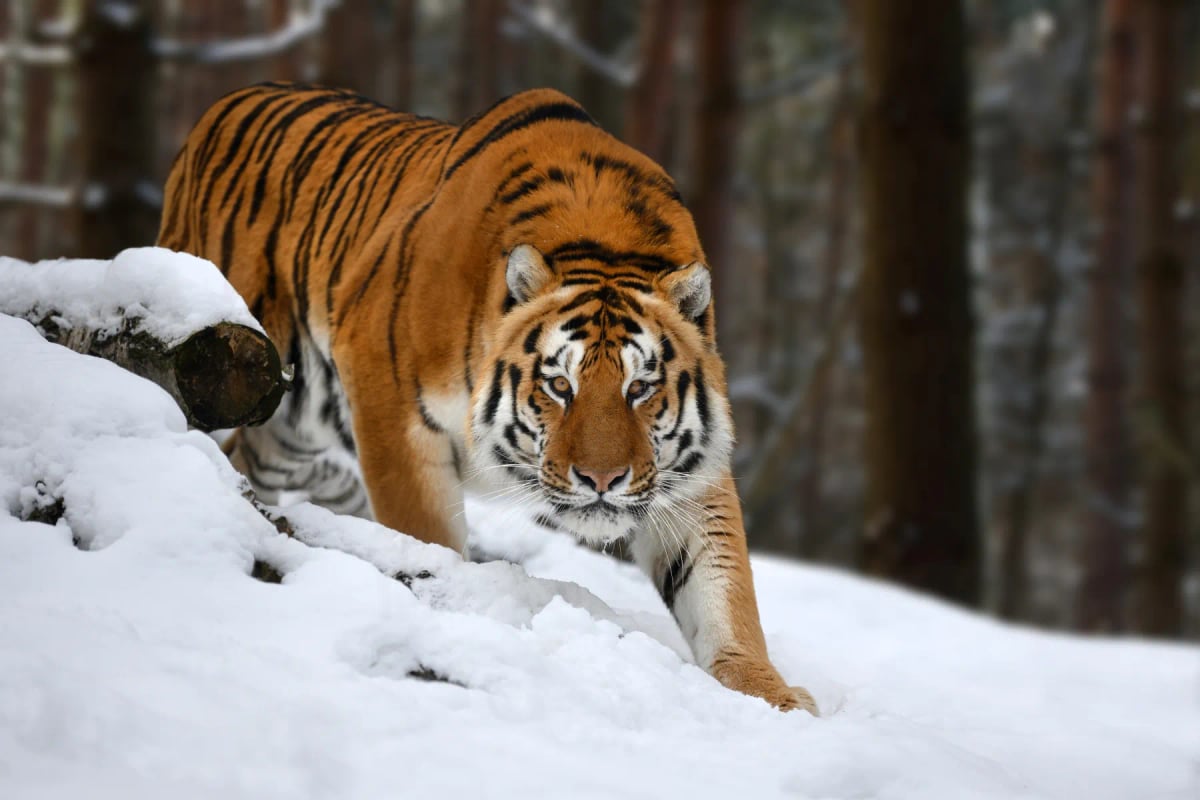
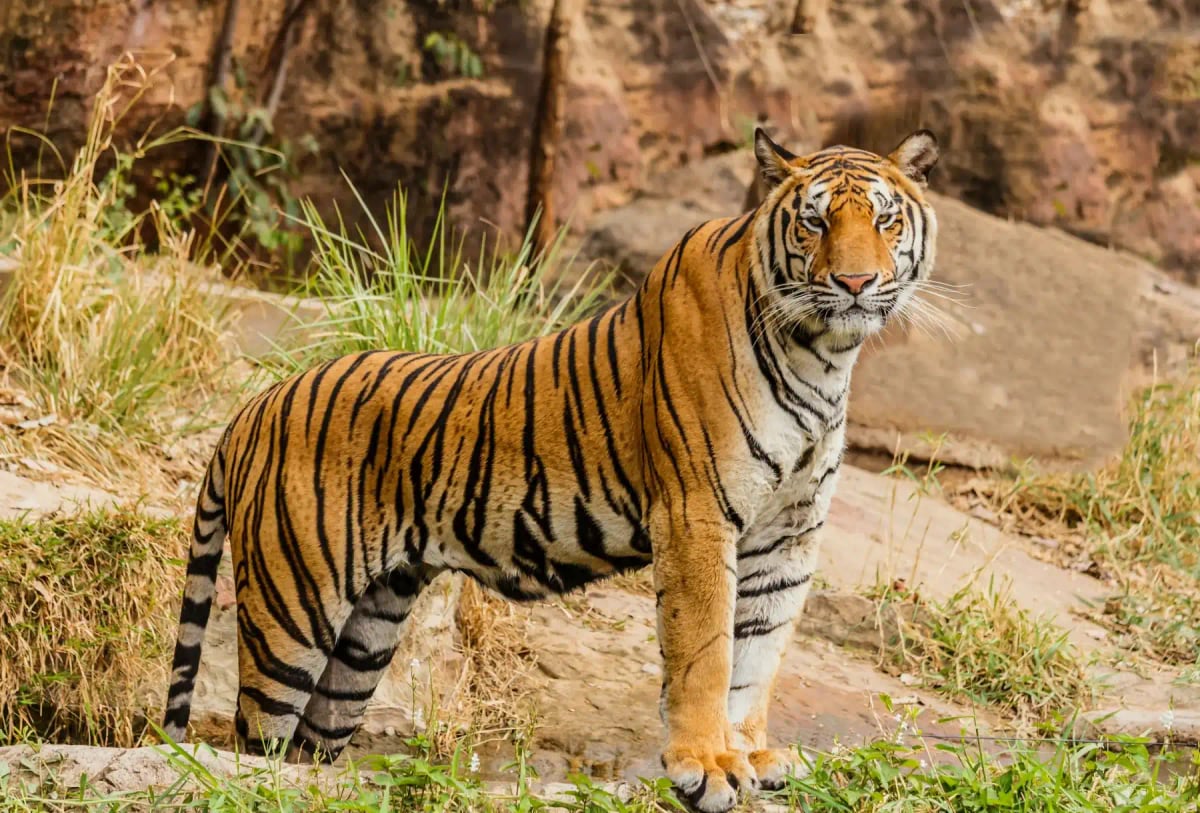
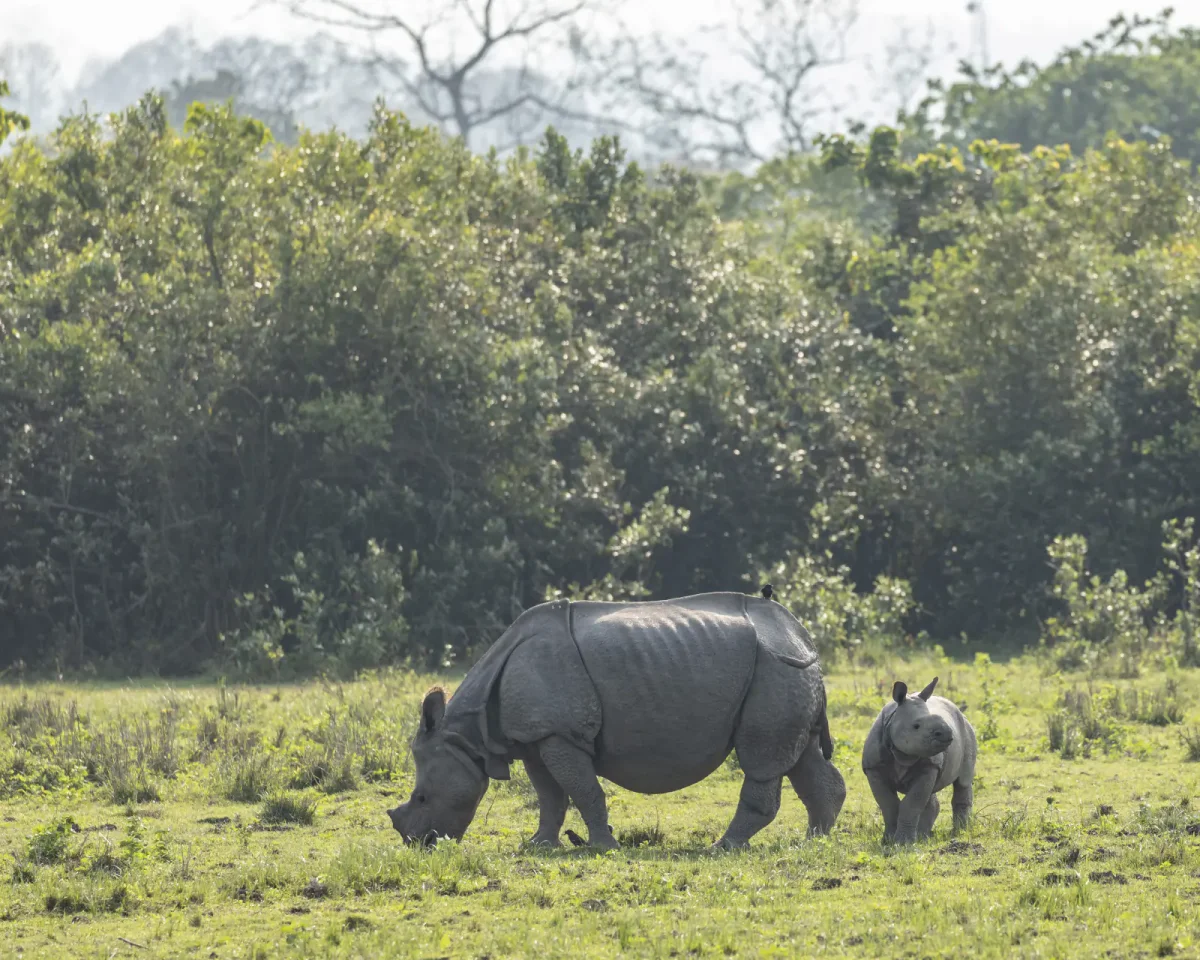
Indian rhinos can breed at any time of year. Courtship can be rough, with the male chasing the female for long distances and sometimes fighting with her before mating. Pregnancy is one of the longest of any land mammal, about 16 months, and the female gives birth to a single calf. Twins are almost unknown. A newborn calf weighs around 60 kilograms and can stand and walk within a few hours. It has no horn yet, only a small bump on the nose. The calf stays close to its mother and nurses for more than a year, and it usually remains with her for two to four years, until she gives birth again. Mothers are very protective, because tigers can kill young calves, and calf losses to tigers are a known problem in Kaziranga and Chitwan. Females usually start breeding at around five to seven years old and then give birth every three years or so, while males start breeding later, once they are big enough to compete. Indian rhinos can live about 40 years.
From 20 Rhinos to 4,000
By the early 1900s, hunting for sport and for the horn, along with the clearing of grasslands for farming, had pushed the Indian rhinoceros to the edge of extinction. In 1905 there were thought to be only about 20 left in the wild, most of them in Assam. That year the area that would become Kaziranga was proposed as a reserve, declared in 1908, and it opened the long recovery of the species. Over the following century, guards, strict laws and the protection of Kaziranga and Chitwan allowed numbers to climb, despite heavy waves of poaching in the 1980s, the 1990s and the early 2000s. Wildlife managers also moved rhinos to start new populations. Nepal shifted animals from Chitwan to Bardia and Shuklaphanta, and Assam's Indian Rhino Vision 2020 program moved 22 rhinos from Kaziranga and Pobitora to Manas between 2008 and 2021, where more than 30 calves have since been born. By 2025 the total had reached about 4,075, roughly 3,323 in India and 752 in Nepal, a great conservation success.
Threats and Conservation
The IUCN lists the Indian rhinoceros as Vulnerable, with an increasing population, in an assessment from 2018. Its recovery is real but fragile, because most of the population lives in just a few parks, and Kaziranga alone holds about two thirds of all Indian rhinos. Poaching for the horn remains the biggest threat. Rhino horn is made of keratin and has no proven medical value, but it is still sold illegally for traditional medicine and as a luxury item. India and Nepal have answered with armed patrols, intelligence networks and tough laws, and Nepal has recorded several years with no rhinos poached at all. In 2021 Assam publicly burned nearly 2,500 stored rhino horns to show that they have no value for the state. Other threats include the annual monsoon floods in Kaziranga, which drown calves and push rhinos onto roads and farmland, invasive plants that choke the grasslands, and the shortage of space for a growing population.