Badger
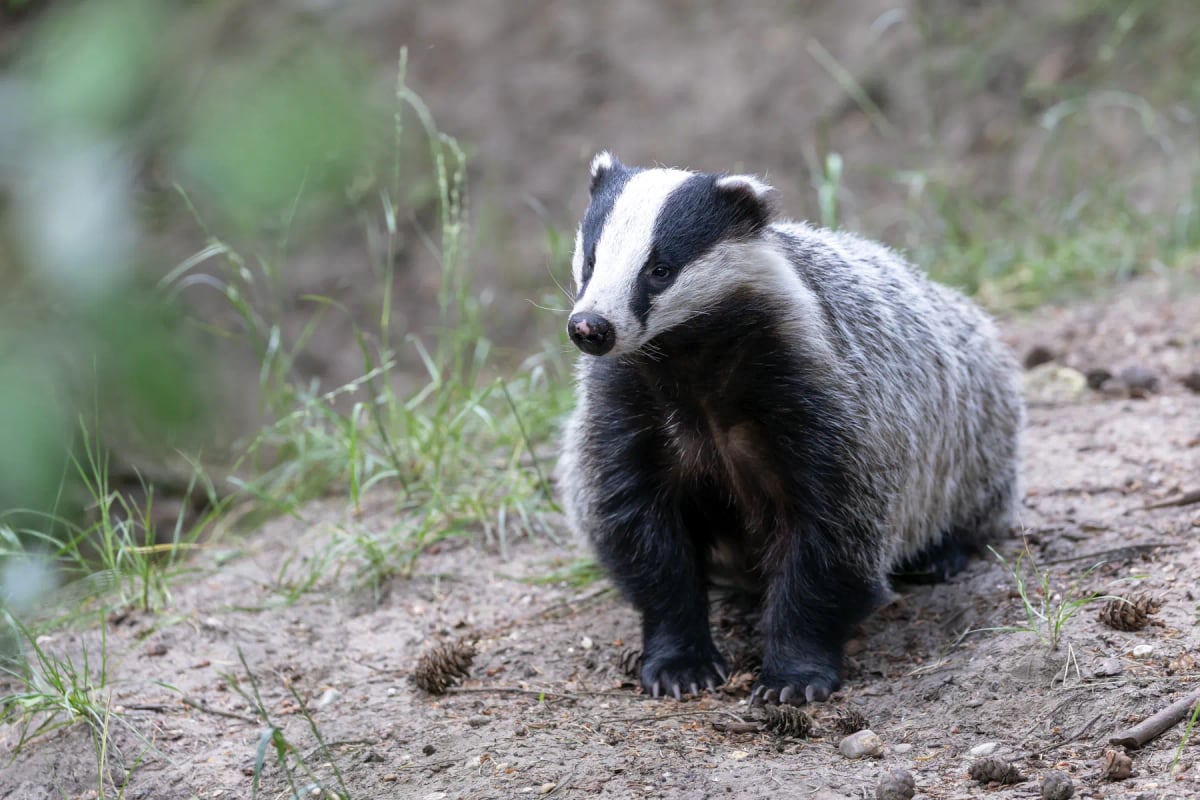
The European badger is a stocky, powerful mustelid with a distinctive black and white striped face and a grey body that can weigh up to 17 kg. It is found across most of Europe, from Ireland and Portugal in the west to western Russia and parts of Scandinavia in the north. Highly social for a mustelid, it lives in family groups called clans and digs elaborate underground burrow systems known as setts, some of which have been in continuous use for centuries. Badgers are nocturnal and spend the day underground, emerging after dark to forage primarily for earthworms, which can make up over half their diet. They also eat insects, berries, roots, small mammals, and carrion. In cold climates they enter a period of reduced activity during winter, sleeping for long stretches but not hibernating fully. The species is classified as Least Concern by the IUCN and remains common across most of its range, though habitat loss and road collisions are ongoing pressures in many countries.
Habitat
European badgers occupy a wide range of habitats across the continent, showing a strong preference for mixed woodland with access to open farmland and pasture. They dig their setts in well-drained soils on slopes or banks, often under tree roots or dense hedgerows that provide structural support. In the British Isles, badgers are particularly associated with hedgerow country and ancient woodland. Further east they favor deciduous and mixed forests. Urban and suburban populations have expanded in several countries, with badgers regularly foraging in gardens and parks, particularly in Britain and Ireland.
Diet
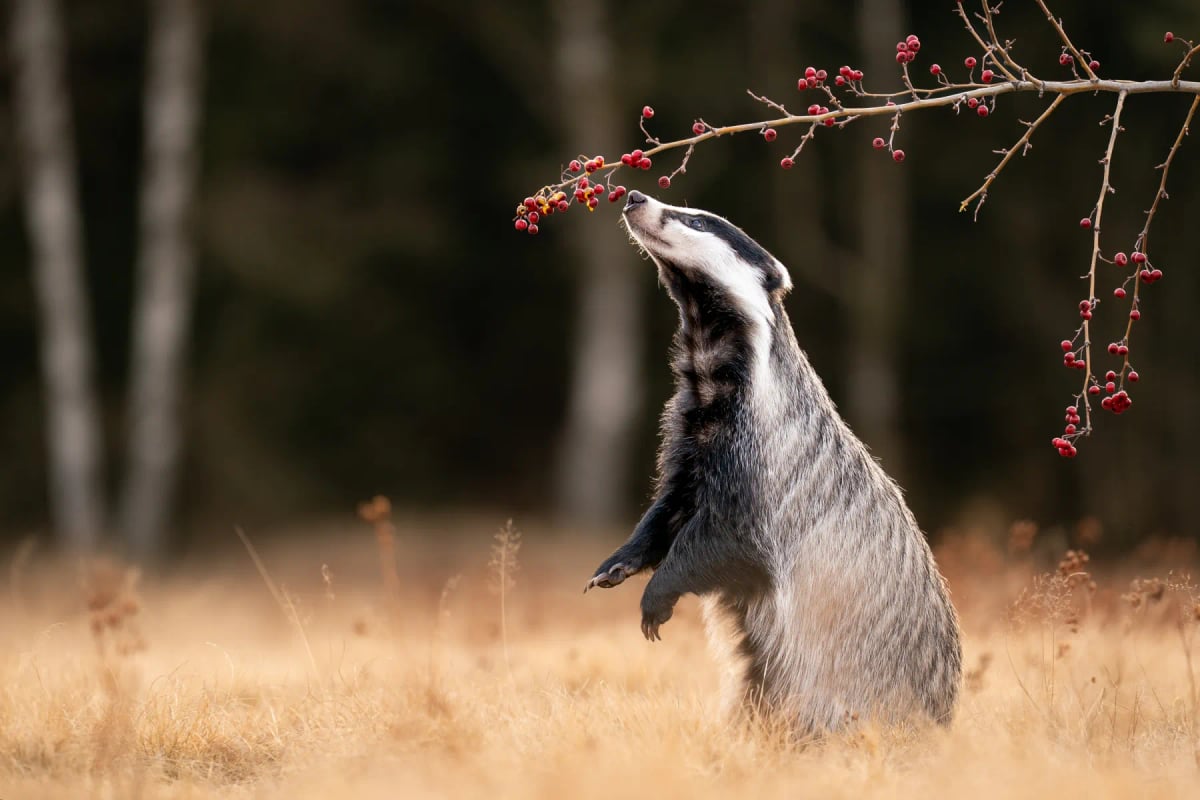
Earthworms are the cornerstone of the European badger's diet and can account for more than half of its total food intake in areas where they are abundant. On a productive night a badger can consume several hundred worms. Beyond worms, the diet is highly varied and opportunistic: insects and their larvae, berries and fallen fruit, cereal grains, roots and bulbs, small mammals, frogs, birds' eggs, and carrion are all taken when available. Diet shifts considerably by season, with fruit and cereals becoming more important in late summer and autumn as badgers build up fat reserves before winter.
Behavior and social life
The European badger is one of the most social mustelids, living in clans of two to twenty or more individuals that share a communal sett and a defined territory. Clan members groom each other, play, and sleep together during the day. Despite this social structure, foraging is generally done alone at night. Badgers are highly territorial and mark their ranges with scent from subcaudal glands. Setts are maintained year-round and expanded over generations, with the largest examples containing dozens of entrances and hundreds of metres of tunnels. In winter, badgers reduce activity significantly and may spend weeks underground without emerging, though they do not hibernate.
Reproduction
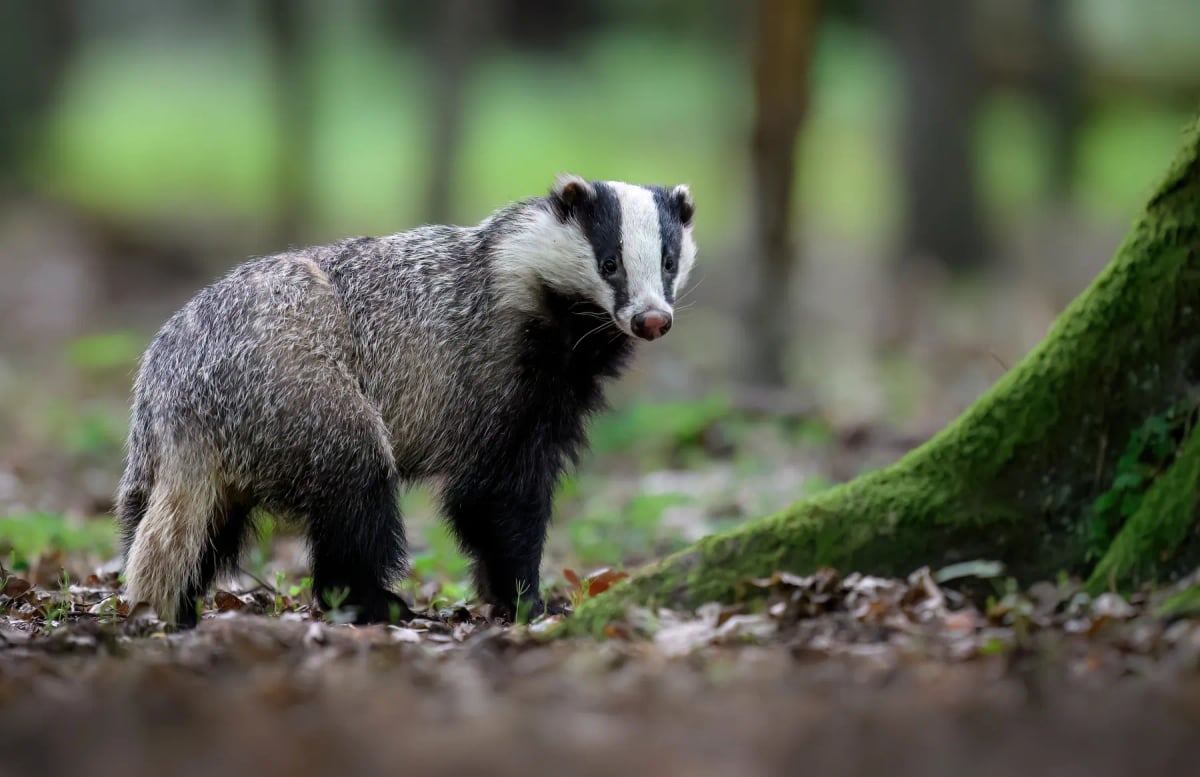
The European badger has an unusual reproductive strategy involving delayed implantation, meaning that although mating can occur at almost any time of year, the fertilized embryo does not implant in the uterus until December or January, regardless of when conception took place. Cubs are born in late January or February, typically in litters of one to five, and spend their first weeks entirely underground. They emerge from the sett for the first time in spring, usually around eight weeks of age. Females reach sexual maturity at about one year old, and both parents and other clan members may contribute to cub care.
Conservation
The European badger is classified as Least Concern by the IUCN, with a total European population estimated at over one million individuals. It is legally protected in most countries across its range. The main threats are habitat fragmentation due to agricultural intensification, road mortality, and in some countries deliberate persecution. In Britain and Ireland the badger is at the center of an ongoing controversy over bovine tuberculosis: badgers can carry and transmit the disease to cattle, and government-sanctioned culling programs have been implemented in parts of England and Ireland, generating significant scientific and public debate about their effectiveness.
Where it is found
The Badger can be found in places such as:
Researched and written by Juan Pablo. Sources: IUCN Red List, scientific literature and regional field guides. Last updated: .
Technical factsheet










Frequently Asked Questions
Where do badgers live?
European badgers are found across most of Europe, from Ireland and Portugal in the west to western Russia and parts of Scandinavia in the north, and south through the Balkans and into parts of the Middle East and Central Asia. They prefer mixed woodland with access to open farmland and pasture, digging their setts in well-drained soils on slopes or under tree roots. They have also adapted well to suburban environments in countries like Britain and Ireland, where they regularly forage in gardens and parks.
What do badgers eat?
Earthworms are the most important food source for European badgers and can make up more than half their diet in areas where they are plentiful. On a productive night a badger may eat several hundred worms. They also consume insects and their larvae, berries, fallen fruit, cereal grains, roots, small mammals, frogs, birds' eggs, and carrion. Diet varies considerably by season, with fruit and grain becoming more important in late summer and autumn when badgers build up fat reserves before the colder months.
Do badgers hibernate in winter?
No, European badgers do not hibernate, but they do reduce their activity significantly during cold months. In areas with harsh winters they may spend weeks underground without emerging, living off fat reserves built up during autumn. Their body temperature and metabolic rate drop somewhat, but not to the extent seen in true hibernators like dormice or hedgehogs. In milder climates, such as in the British Isles and western Europe, badgers remain active throughout winter, emerging on warmer nights to forage.
Are badgers dangerous to humans?
European badgers are not dangerous to humans under normal circumstances. They are shy, secretive animals that avoid contact with people and will almost always retreat when encountered. A cornered or injured badger can bite powerfully, as its jaws are extremely strong, but unprovoked attacks are extremely rare. Badgers are however associated with bovine tuberculosis in Britain and Ireland, where they can transmit the disease to cattle, which has led to significant controversy over culling programs in those countries.
How do badgers dig their burrows?
Badgers are powerful diggers and use their strong forelegs and long curved claws to excavate soil rapidly. Their setts can be enormous structures, with the largest containing dozens of entrances, multiple chambers, and hundreds of metres of tunnels at different depths. Badgers are meticulous housekeepers, regularly removing old bedding of grass and leaves and replacing it with fresh material to keep the sleeping chambers clean and dry. A sett is often used by multiple generations of the same clan and may be continuously occupied for over a century.
Why are badgers controversial in the UK and Ireland?
In Britain and Ireland, badgers are at the center of a long-running debate over bovine tuberculosis. Badgers can carry and transmit Mycobacterium bovis, the bacterium that causes the disease, to cattle, resulting in significant economic losses for the farming industry. Governments in England and Ireland have authorized culling programs to reduce badger numbers in affected areas, but the scientific evidence for their effectiveness is disputed. Animal welfare groups strongly oppose the culls, while farming organizations argue they are necessary. The debate involves questions of science, economics, animal welfare, and rural policy.