Animals in Ukraine
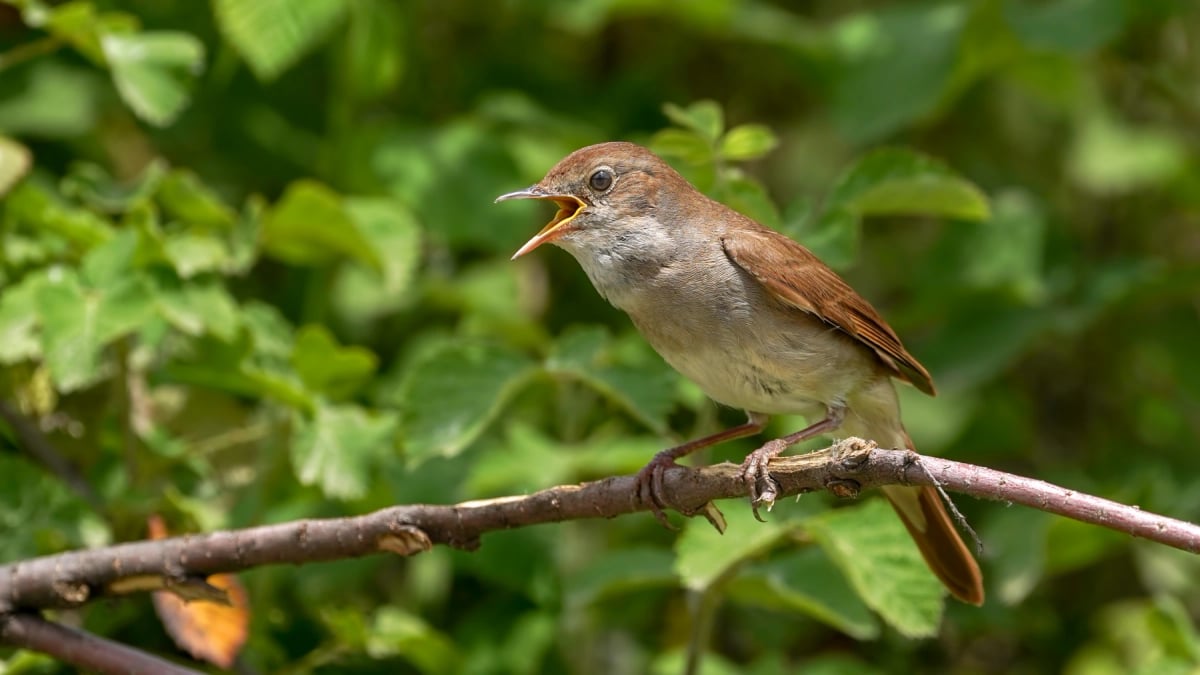
Nightingale
Luscinia megarhynchos
The nightingale is a well known symbol in Ukraine. Its clear song appears in folk tales, proverbs and spring festivals, and is used in school books and local art to mark the return of warm days. The bird nests in gardens, parks and river edges, so many people hear it at night in May. As a cultural sign it links city life with nearby woods and the calm parts of the countryside.
View details→Wildlife in Ukraine
Ukraine joins Carpathian mountains, wide steppe, broad rivers and a long Black Sea shore. Carpathian parks have marked paths to meadows and forest ridges, while the Danube Delta and coastal lagoons offer boat trips and bird towers. In Polesia, quiet pine woods and wetlands sit close to towns. Day trips often mix short walks, river views and easy birdwatching in spring and autumn.
Most Dangerous Animals in Ukraine
Wildlife risks in Ukraine follow habitat and season. In mountain forests the main concern is brown bear, while wild boar can be defensive near food in late summer. Gray wolf and the Eurasian lynx avoid people but defend young and prey. In the north, moose and European bison are large and unpredictable when crossing river flats. European adders rest on warm ground in sunny clearings in summer.
Top 10 Animals in Ukraine
The Top 10 list for Ukraine focuses on red deer, moose, brown bear, Eurasian lynx, gray wolf and peregrine falcon. Deer and moose shape many valleys and are easiest to notice at dawn along forest edges. Bears, wolves and the shy lynx hold the wild image of the Carpathians and remote hills. Peregrine falcons nest on cliffs and tall buildings, giving fast flights over rivers and towns.
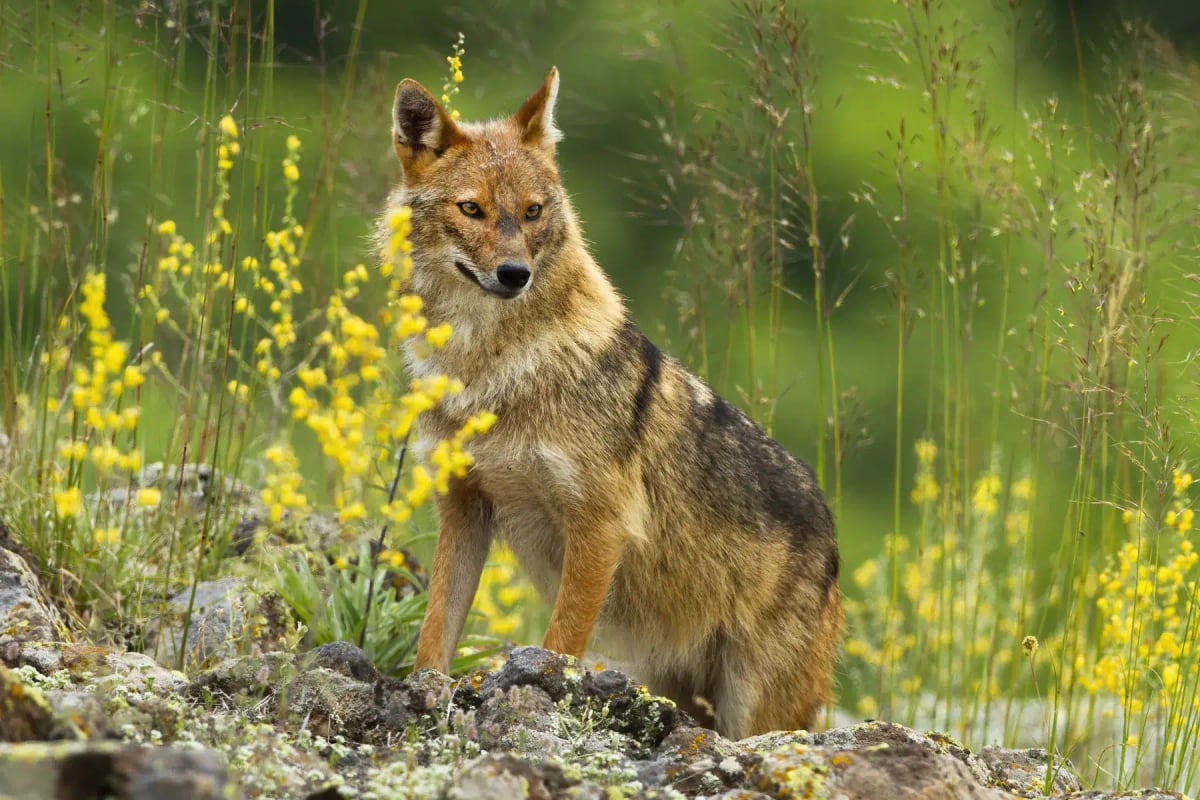
Golden Jackal
Canis aureus
The golden jackal has expanded noticeably into Ukraine over recent decades, colonising the southern steppe regions, the Danube delta area, and Crimea. This northward spread is linked to milder winters and changes in land use. In Ukraine, jackals favour wetland edges, reed beds, and farmland. They are still considered relatively new arrivals in much of the country, and their range continues to grow. IUCN status: Least Concern.
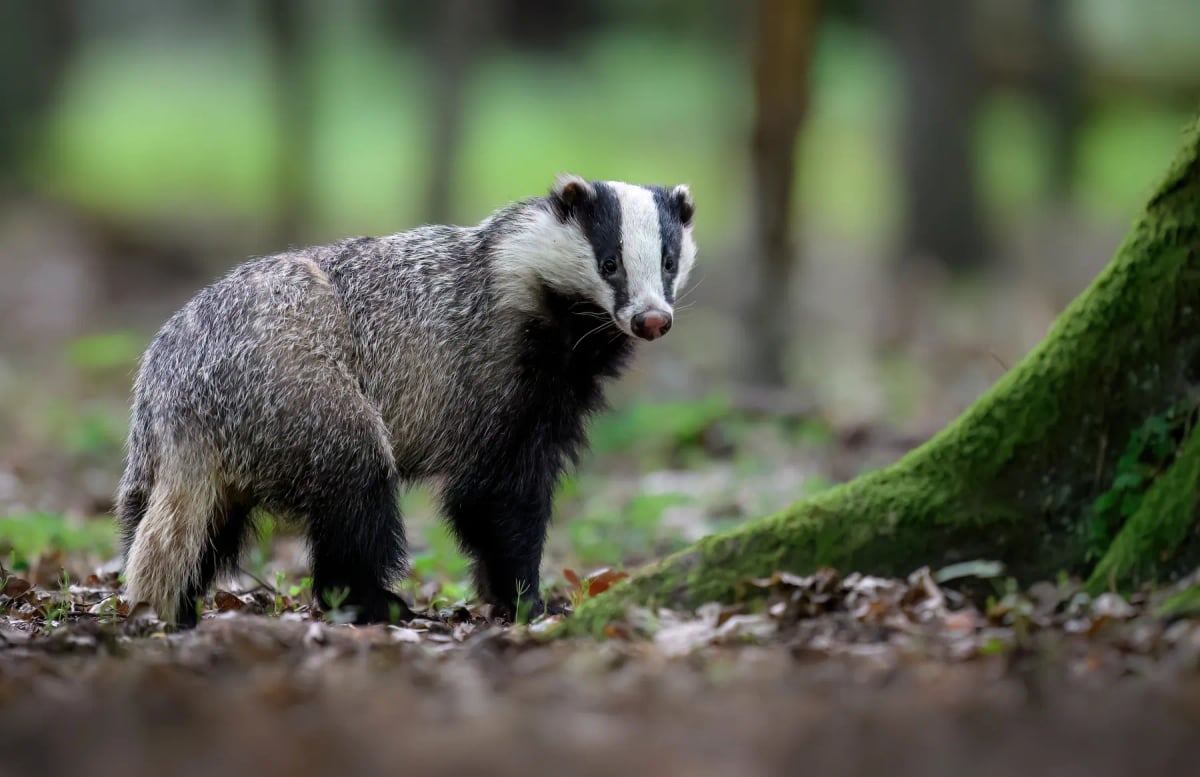
Badger
Meles meles
The Eurasian badger is widespread across Ukraine in mixed and deciduous woodland, forest steppe and farmland from the Carpathians in the west to the forested regions of the north and east. It lives in family groups in extensive setts and is nocturnal, feeding on earthworms, insects, fruit and small animals. Distribution becomes patchier in the more open steppe landscapes of the south and southeast, where woodland cover is limited. Populations are considered stable across the country's forested regions.

Brown Bear
Ursus arctos
In Ukraine, brown bears are found mainly in the Carpathian Mountains in the west of the country, where forested slopes provide shelter and food throughout the year. The Ukrainian Carpathians form part of a larger Carpathian population shared with Slovakia, Poland, and Romania. Bear numbers in Ukraine are modest but considered stable. The species benefits from protected areas such as the Carpathian Biosphere Reserve.
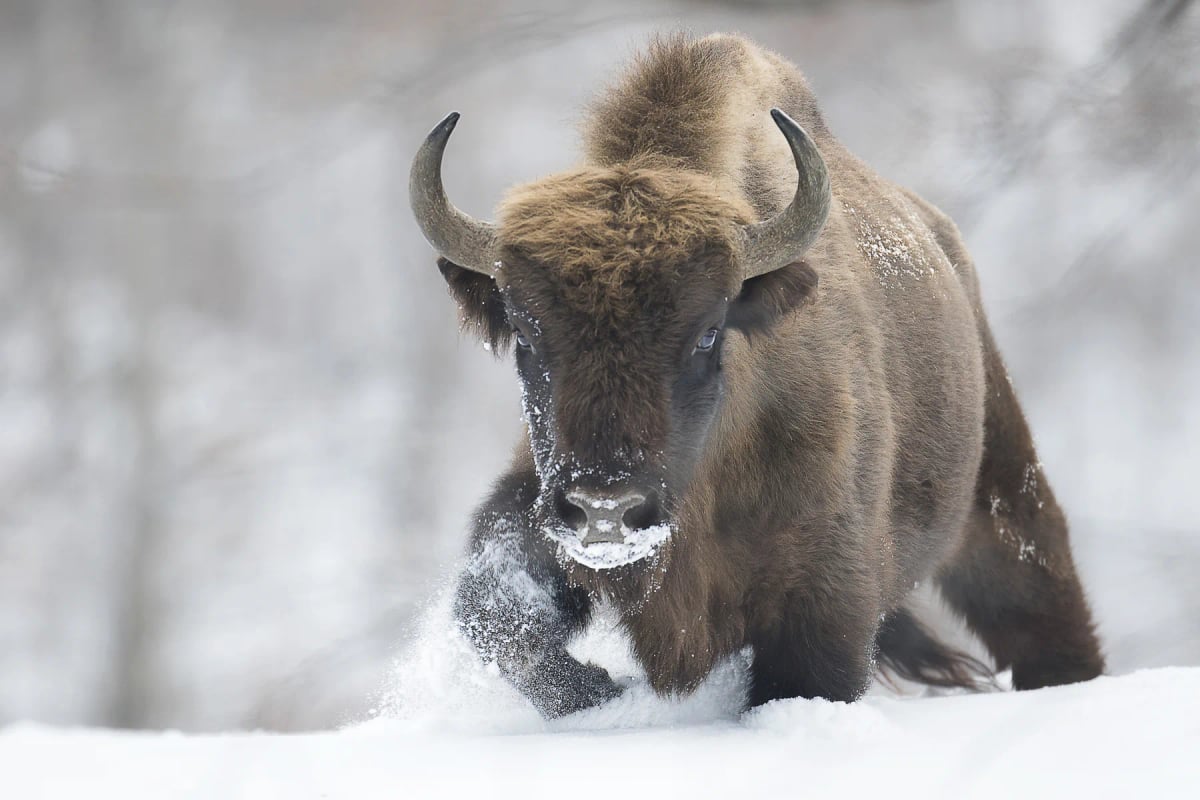
European Bison
Bison bonasus
Ukraine hosts European bison populations in several forested reserves, including areas in the Carpathian region. The species was reintroduced after disappearing from the country during the twentieth century. Ukrainian forests provide seasonal food sources including grasses, leaves, and bark, which this large mammal depends on throughout the year. Conservation programs monitor the herds closely, as the species still requires active management to overcome the challenges posed by its limited genetic diversity. IUCN status: Near Threatened.
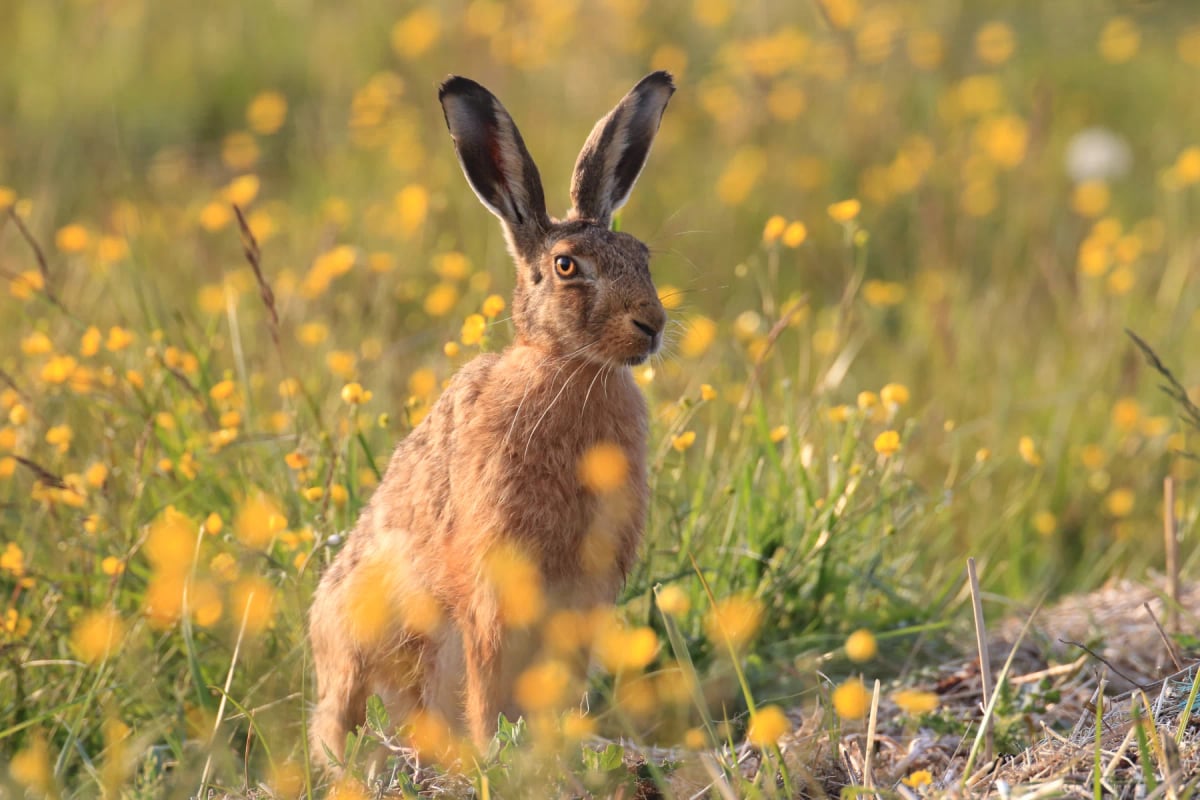
Hare
Lepus europaeus
Ukraine is one of the strongholds for the European hare across its native range. The vast steppe and agricultural plains, particularly in the south and east of the country, provide ideal conditions of open terrain and plentiful vegetation. The species is abundant in cereal-growing regions and is an important game animal. Despite this, the intensification of farming in recent decades has begun to reduce habitat quality in some areas, affecting the availability of food and resting cover.
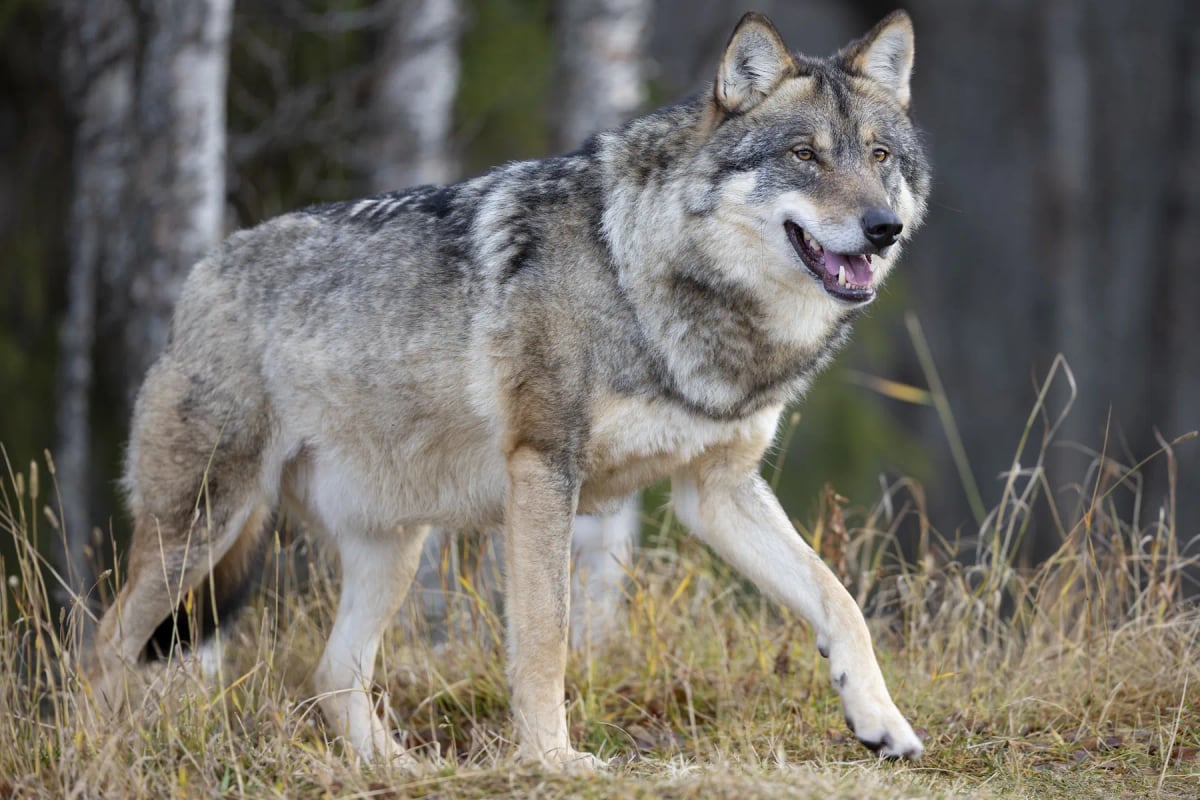
Gray Wolf
Canis lupus
The gray wolf is present throughout much of Ukraine, living in forests, river floodplains, and agricultural edges across the country. The Carpathian Mountains in the west support a notable population connected to wolf groups in Poland and Slovakia. Wolves are not legally protected in Ukraine and are subject to hunting. Despite this, the national population remains stable. The species is listed as Least Concern globally.
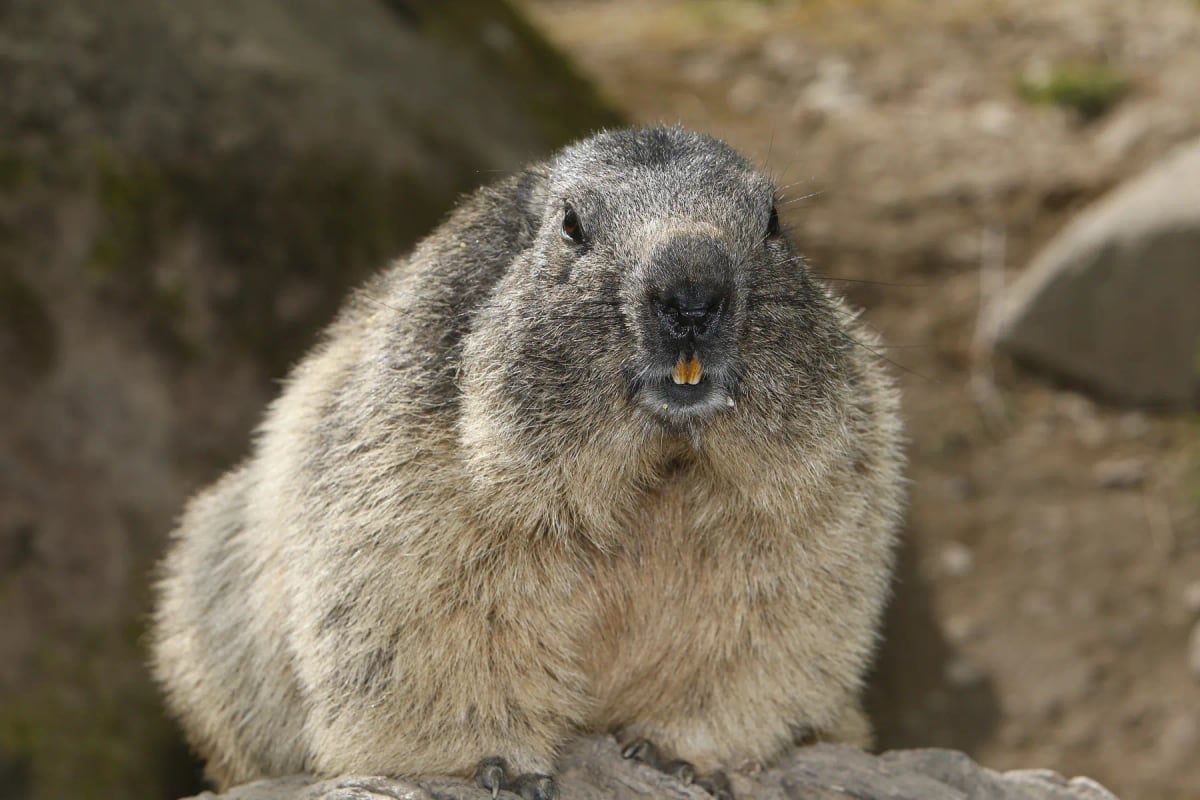
Alpine Marmot
Marmota marmota
The Alpine marmot was reintroduced to the Ukrainian Carpathians in the twentieth century and has established populations in several highland areas, particularly in the Carpathian Biosphere Reserve. The species occupies subalpine meadows above the forest zone, where it lives in family colonies and is active during the warmer months. Ukraine's marmot population forms part of the continuous Carpathian range shared with Slovakia, Poland, and Romania, and is monitored within the protected areas of the western Carpathians.
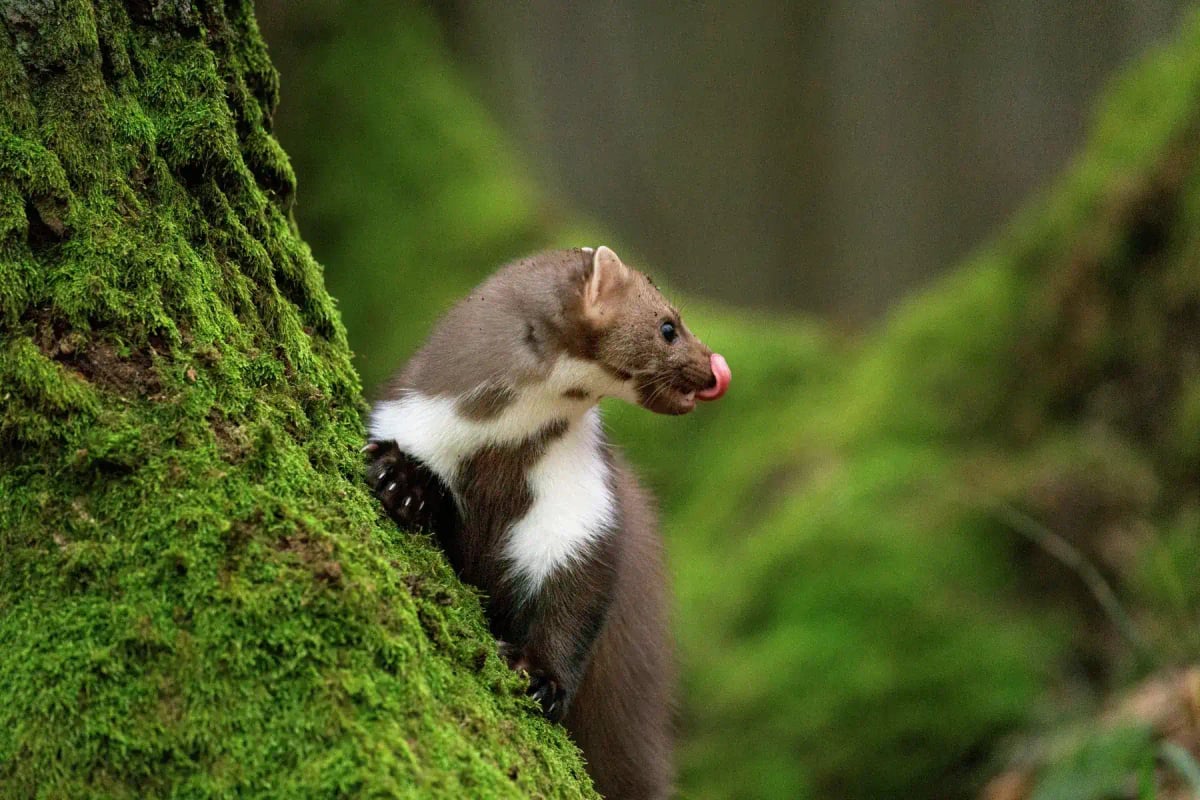
Marten
Martes martes / Martes foina
In Ukraine, both marten species are present across a variety of habitats. The pine marten favors the Carpathian forests in the west and the mixed woodlands further north, while the stone marten is more common in open countryside and villages across the central and southern regions. Both are listed as Least Concern and are considered stable in the country.
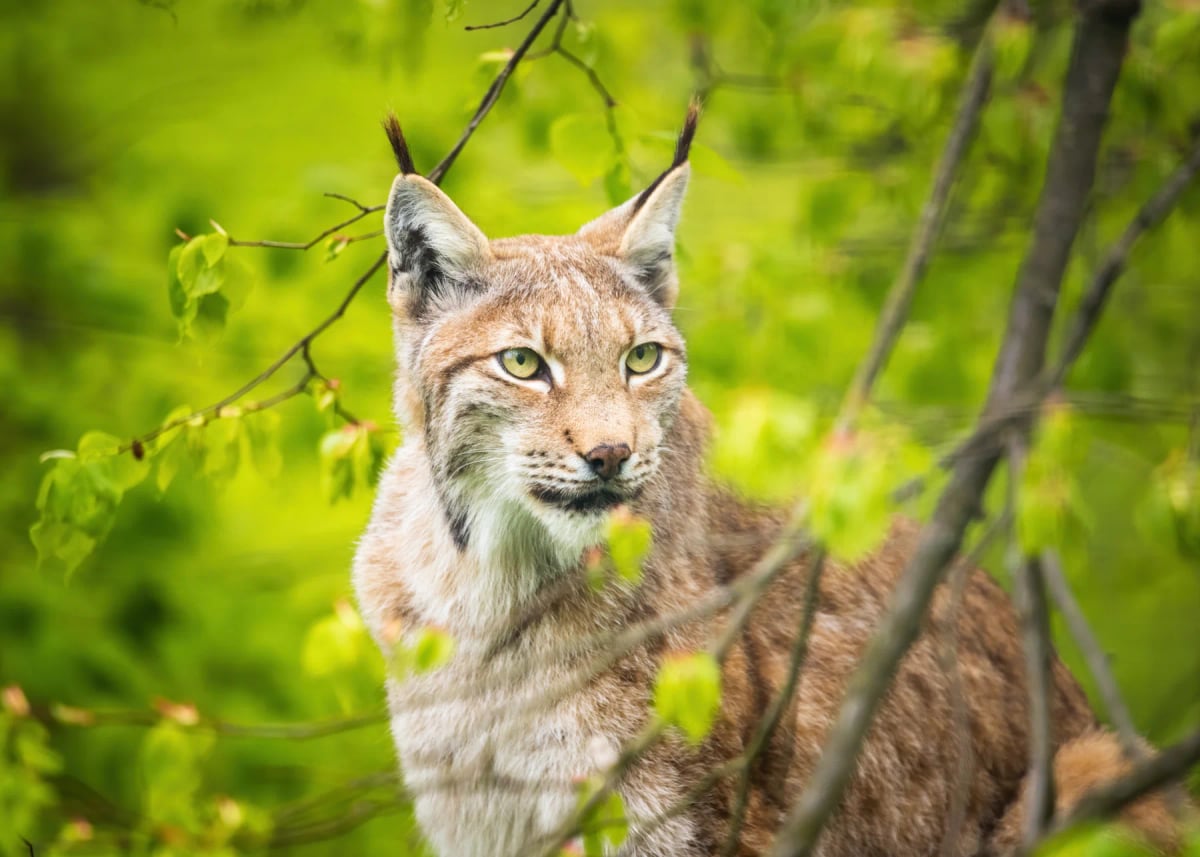
Eurasian Lynx
Lynx lynx
Ukraine's Eurasian Lynx population is concentrated in the Carpathian forests of the west, one of the most important refuges for large carnivores in Central Europe. Smaller numbers also occur in the Polesia region in the north. The lynx relies on dense forest cover and healthy deer populations. Conservation efforts focus on reducing poaching and maintaining forest habitats. The IUCN lists the species as Least Concern at the global scale.
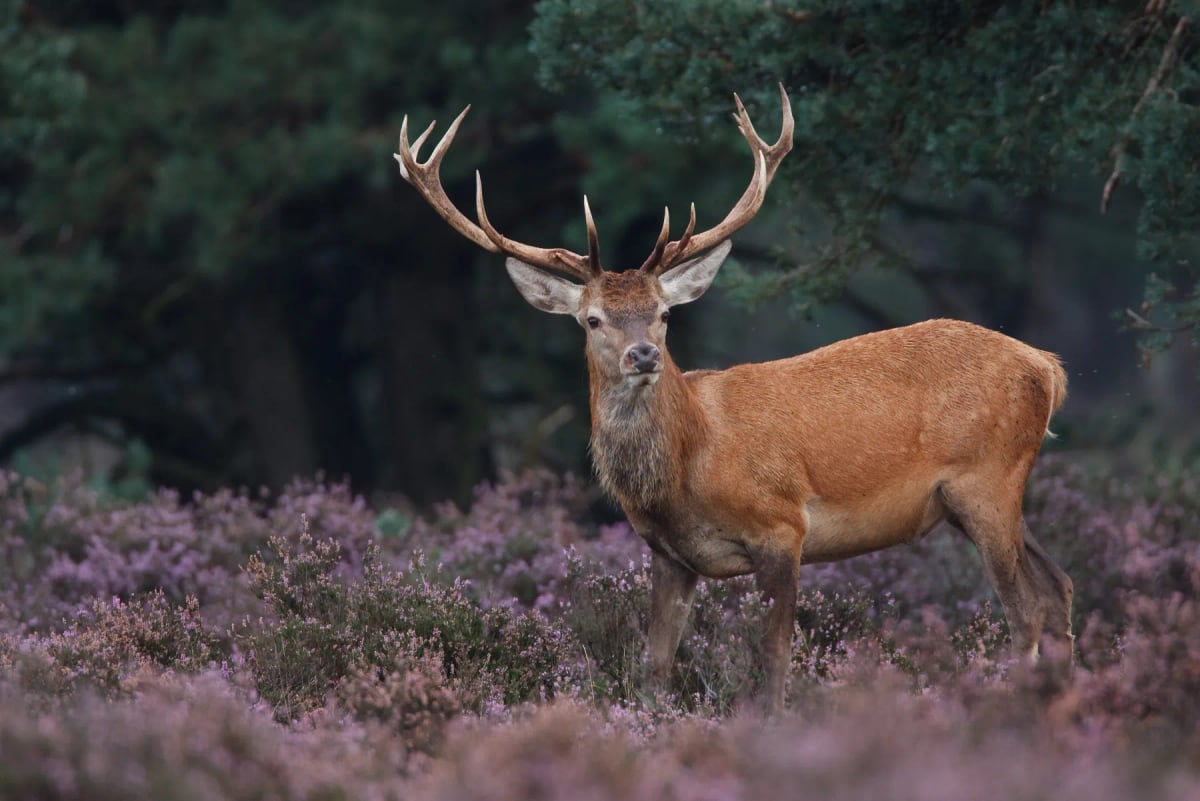
Red Deer
Cervus elaphus
In Ukraine, red deer are found across the Carpathian mountain forests of the west and in forested areas of the north and east. The Carpathian Biosphere Reserve provides key habitat for the species. Populations suffered declines due to unregulated hunting in the past but have recovered in protected areas. Red deer feed on grasses, bark and leaves, and stags are recognised by their large branching antlers. Its IUCN status is Least Concern.
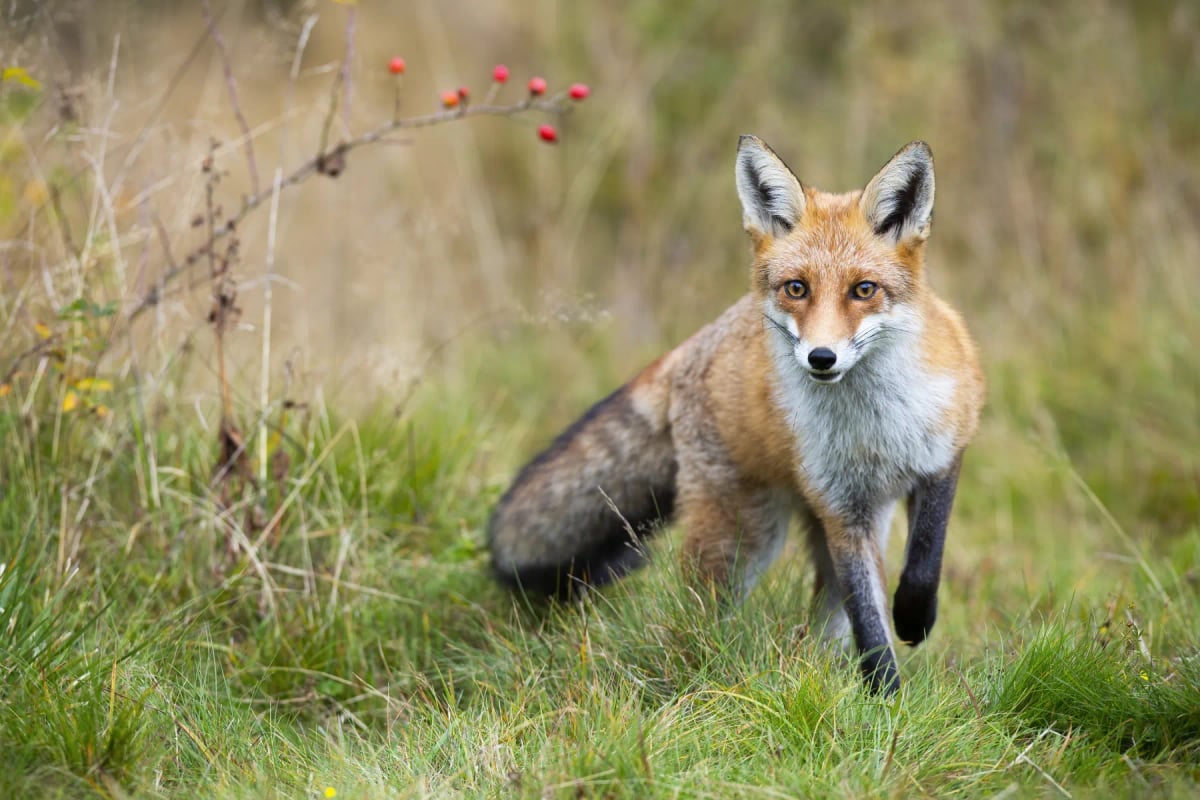
Red Fox
Vulpes vulpes
The red fox is one of Ukraine's most familiar wild mammals, found across the country's vast steppes, farmland, river valleys, and forests. It adapts well to human landscapes and is common even near villages and towns. Rodents make up the core of its diet, making it a natural pest controller for agricultural areas. Its IUCN status is Least Concern, and populations remain stable throughout the country.
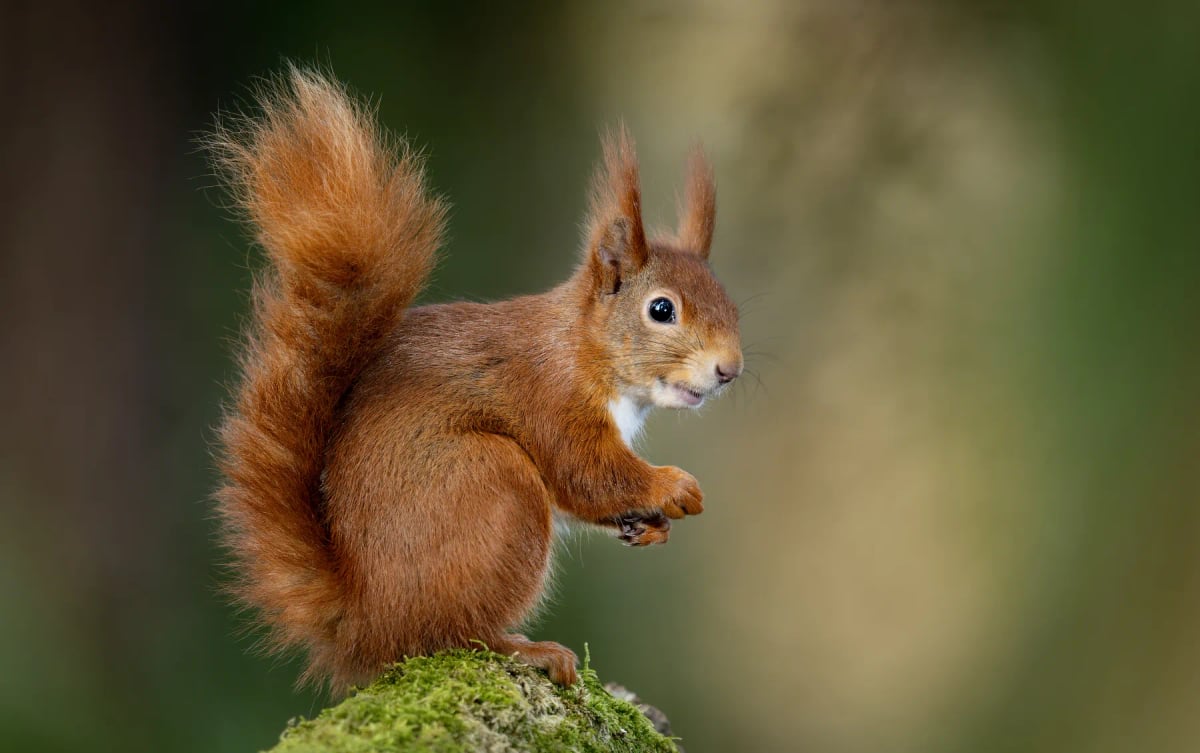
Red Squirrel
Sciurus vulgaris
The red squirrel is found across Ukraine in mixed and coniferous forests, particularly in the Carpathian Mountains and the forested regions of Polesia in the north. It thrives among spruce and pine trees, feeding on seeds, nuts, and fungi. Unlike in western Europe, it faces little pressure from grey squirrels here, and populations remain healthy throughout the country. Its IUCN status is Least Concern.
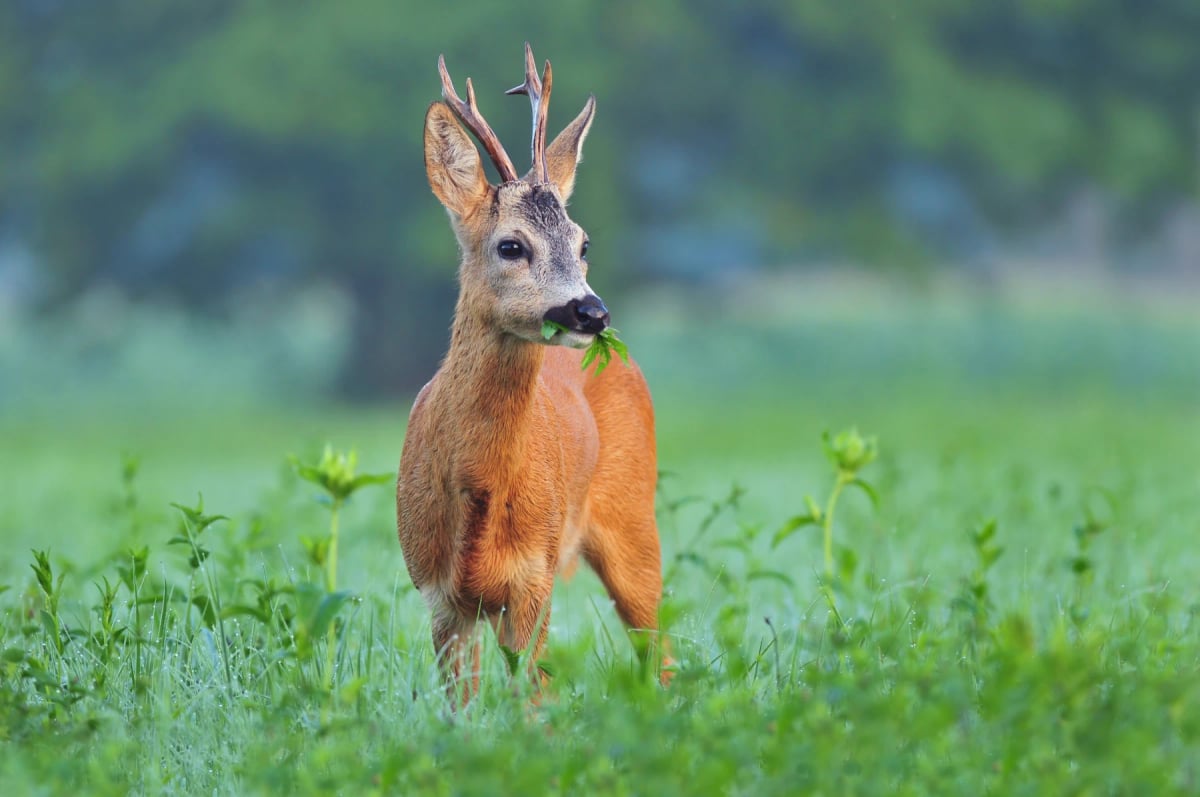
Roe Deer
Capreolus capreolus
Roe deer are widespread across Ukraine, living in the mixed and broadleaf forests of the Carpathian region, the forest-steppe zone, and river floodplains throughout the country. They are among the most commonly encountered wild deer in Ukraine. Most active at dawn and dusk, they feed selectively on buds, herbs, and shoots. The white rump patch flares as a warning when the animal is startled or fleeing a predator. IUCN status: Least Concern.
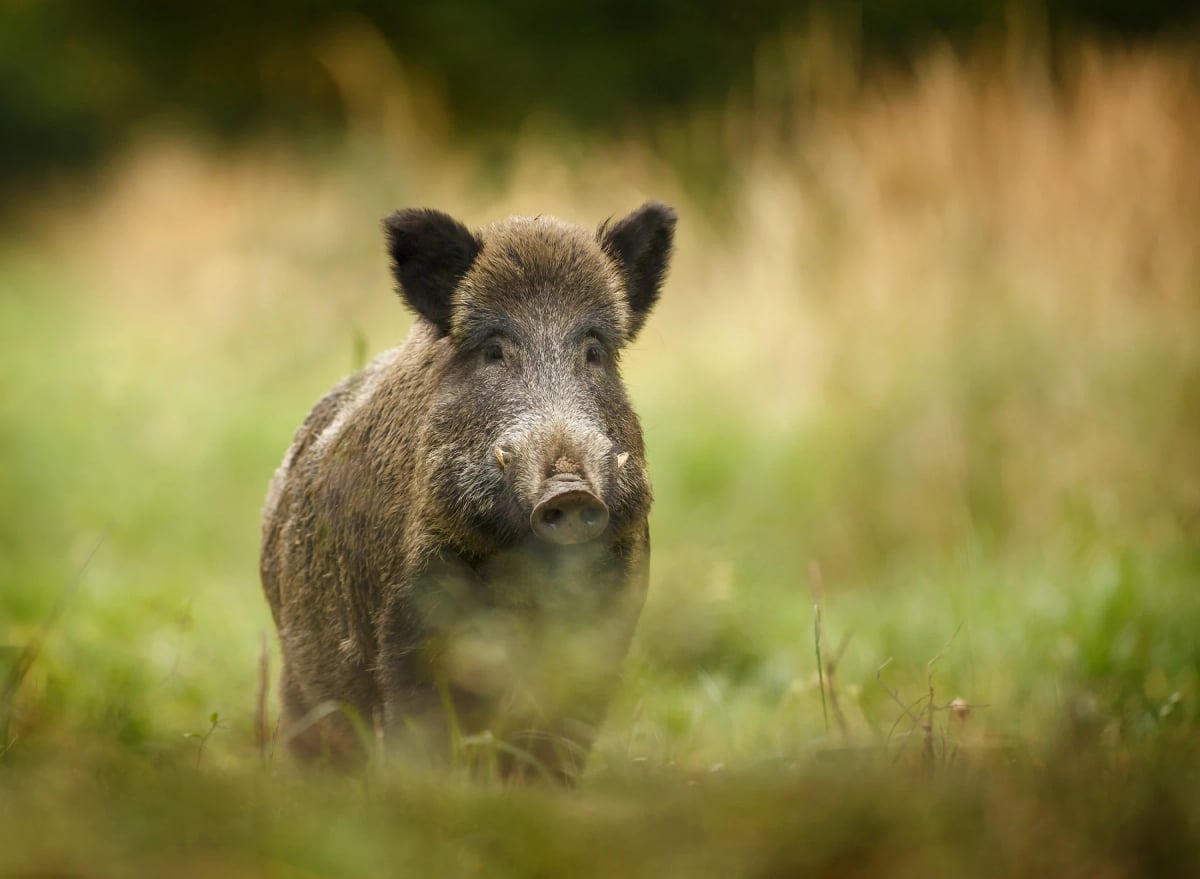
Wild Boar
Sus scrofa
Wild boars are widespread across Ukraine's forests, particularly the wetland woodlands of Polesia in the north and the forested foothills of the Carpathians in the west. The species has long been a popular game animal, though outbreaks of African swine fever and the disruption caused by ongoing conflict have complicated population monitoring and management in several regions in recent years.
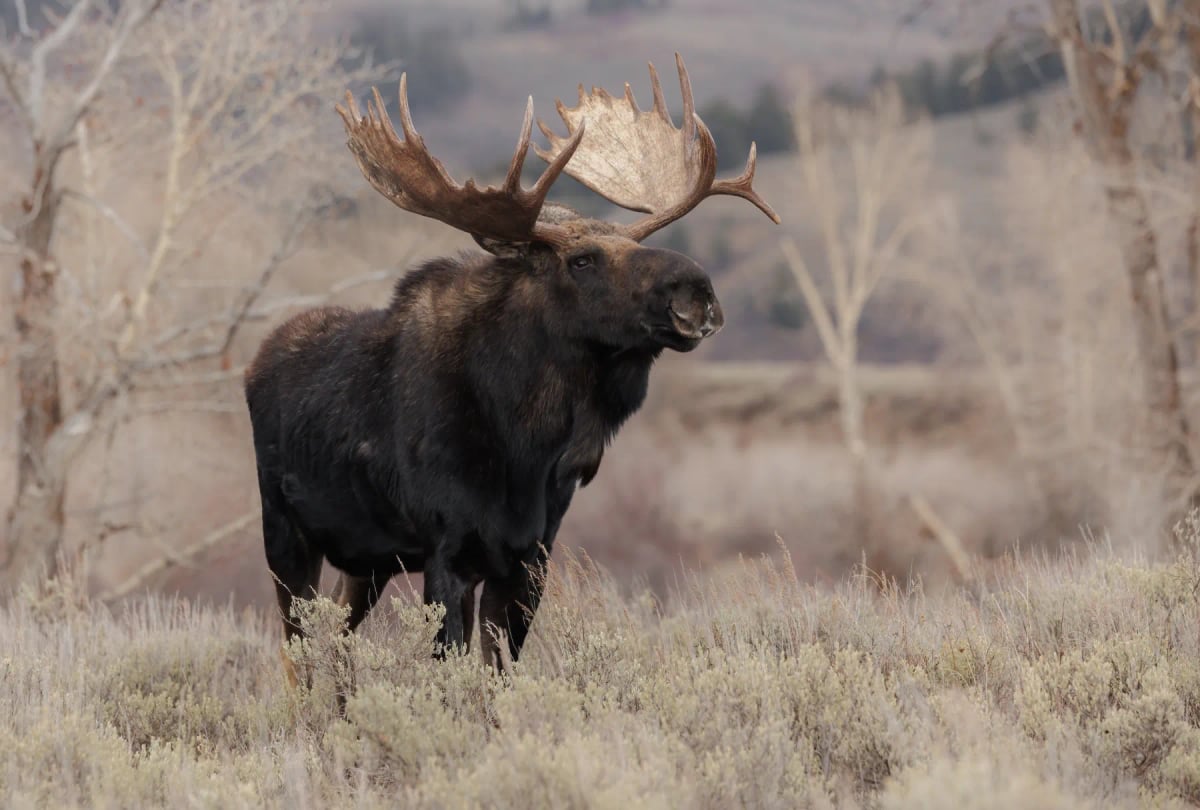
Moose
Alces alces
In Ukraine, moose are found mainly in the Polesia region, a vast area of forests, wetlands, and river floodplains stretching across the north of the country. They favour the quiet riverbanks and boggy woodland edges where willows and aquatic plants grow in abundance. Numbers here are relatively modest compared to Scandinavia or Russia, and the species carries Least Concern status, though habitat pressures continue to affect local populations.
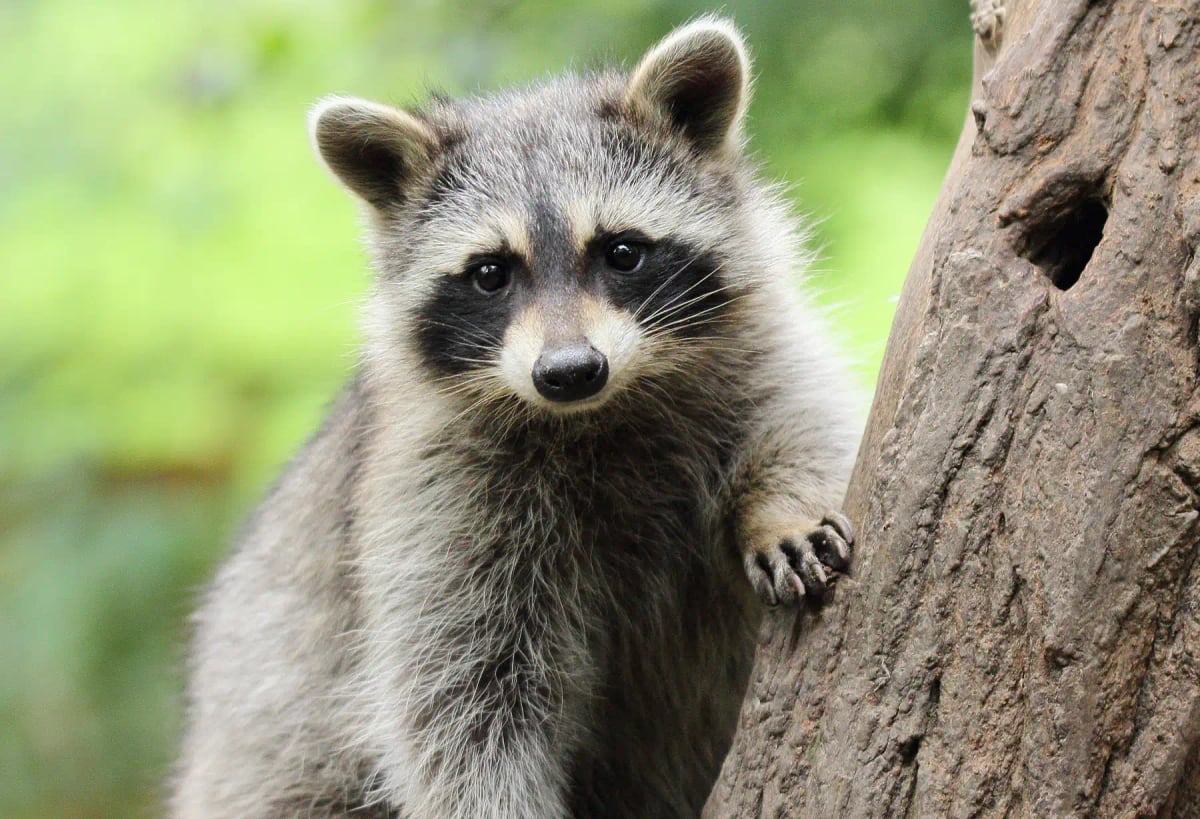
Raccoon
Procyon lotor
Raccoons are an introduced species in Ukraine, descended from animals brought over during the Soviet era for fur farming. Escaped and released individuals gradually established wild populations, particularly in forested areas in the west of the country. They are highly adaptable, thriving in riparian forests and rural settlements alike. Ukrainian wildlife managers treat them as an invasive species, as they can disrupt local bird and amphibian populations. Their global IUCN status is Least Concern.
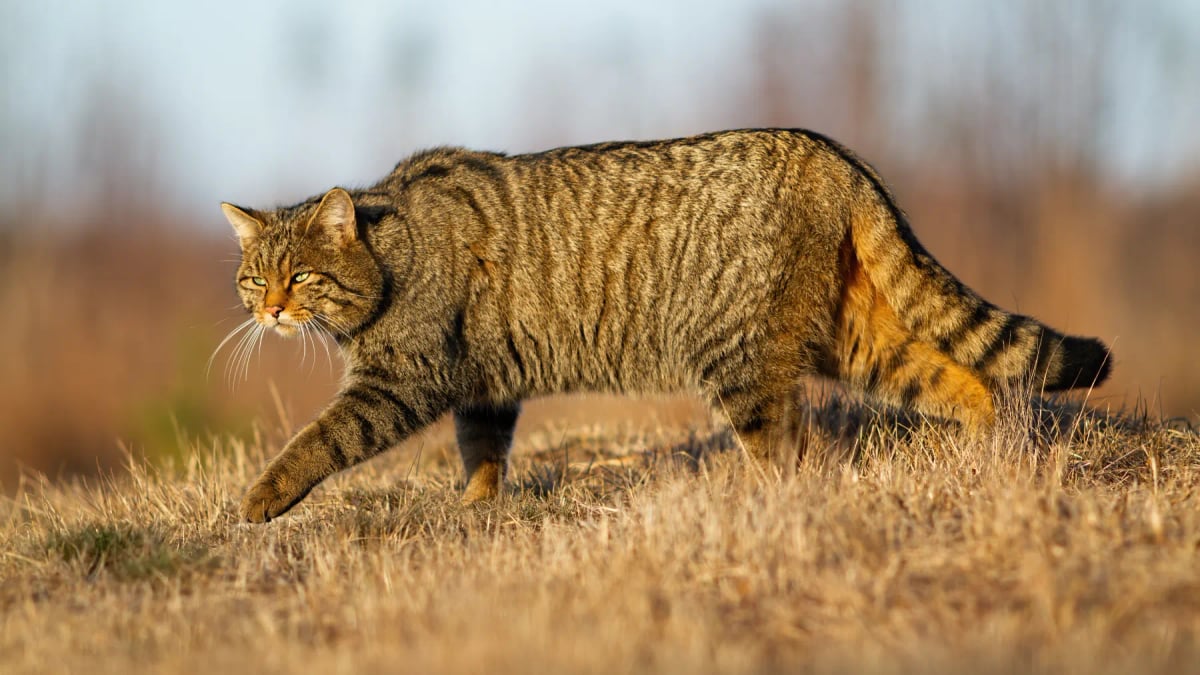
European Wildcat
Felis silvestris silvestris
In Ukraine, the European wildcat is present in the Carpathian region in the west of the country, where forested mountain slopes provide suitable cover and prey. It is a solitary, nocturnal feline, bulkier than a domestic cat, with a striped coat and a distinctly blunt tail tip. Habitat loss and crossbreeding with feral cats are ongoing concerns. The IUCN lists the species as Least Concern at the global level.
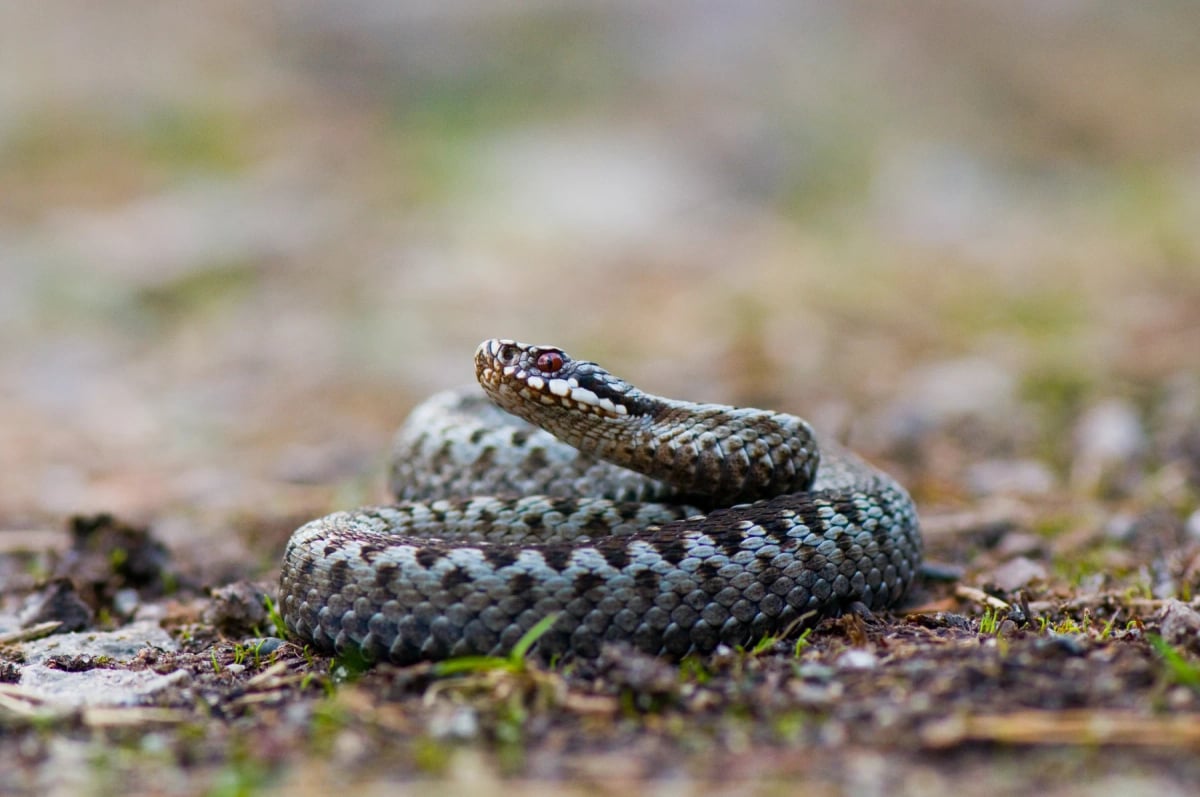
European Adder
Vipera berus
The European adder is present across much of Ukraine, living in forest edges, wetland margins, and the foothills of the Carpathian mountains in the west. It is the country's most widespread venomous snake. Habitat loss due to agricultural expansion puts pressure on local populations. It is active from spring through autumn and spends winter in underground hibernation. Its IUCN status is Least Concern.
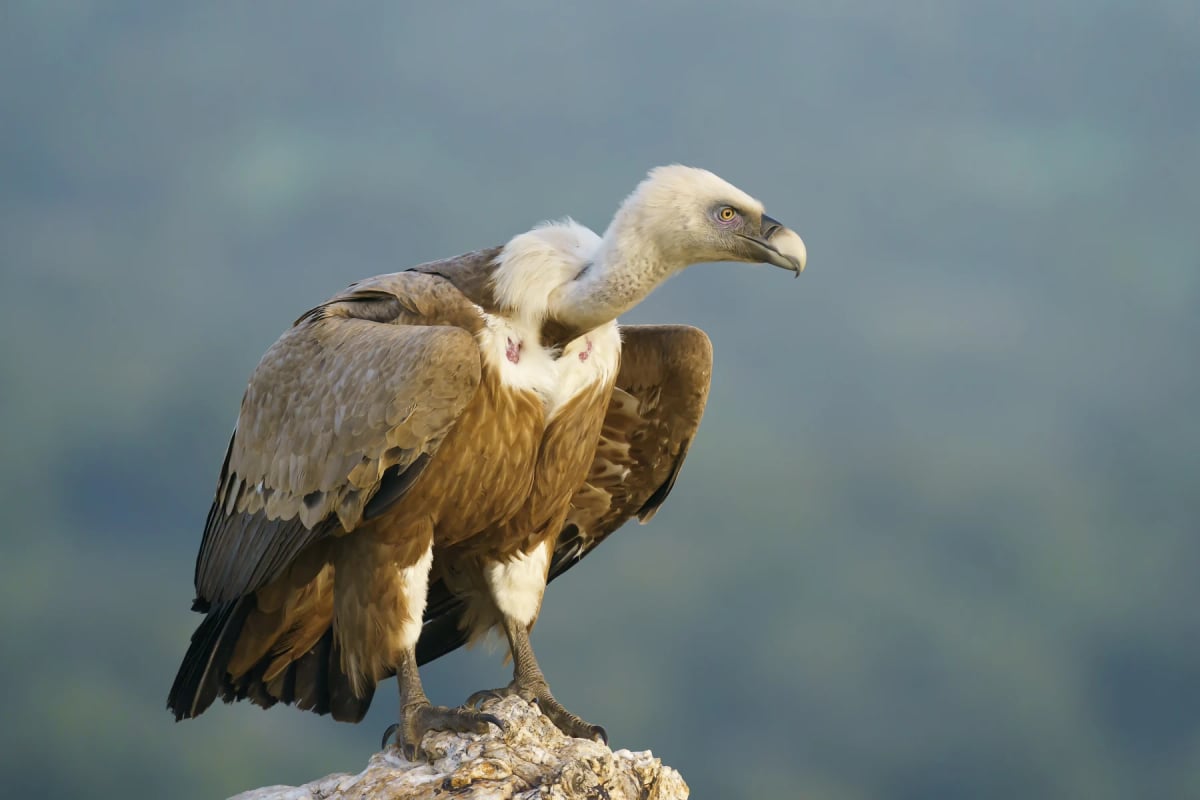
Griffon Vulture
Gyps fulvus
The griffon vulture once nested in Ukraine, in the Dniester River valley, but those colonies were lost long ago and today it is a rare bird here. Most records are wandering birds, some of them ringed in Israel, Bulgaria, Serbia, or Croatia, seen in Crimea, near Kamianets Podilskyi, or even in the Kyiv region. They soar over open country and river valleys looking for carcasses. IUCN status: Least Concern.
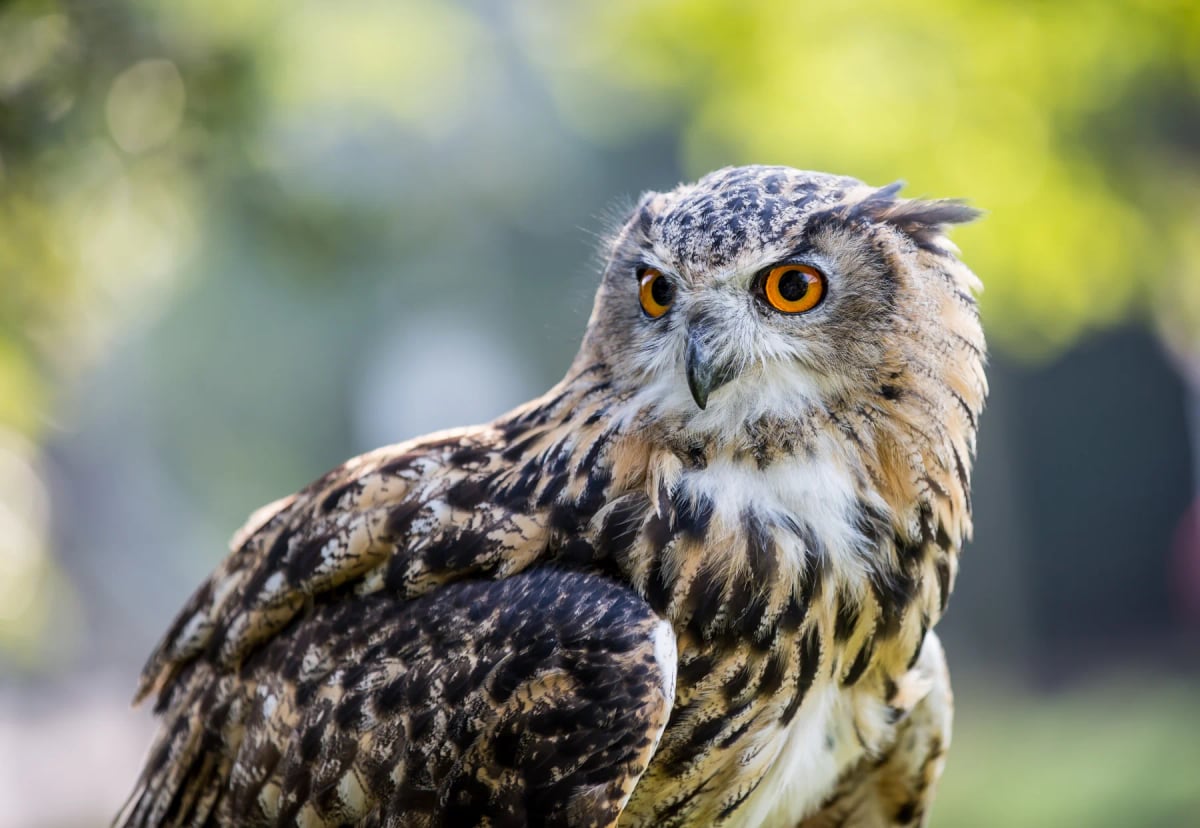
Eagle Owl
Bubo bubo
In Ukraine, the eagle owl is found in forested river valleys, rocky outcrops in the Carpathian mountains, and the steppe zones of the south and east. Populations have faced pressure from habitat loss and human disturbance, but the species still breeds in suitable areas across the country. The Carpathian region in western Ukraine is considered one of its strongholds. It nests on sheltered cliff ledges and forested escarpments. IUCN status: Least Concern.
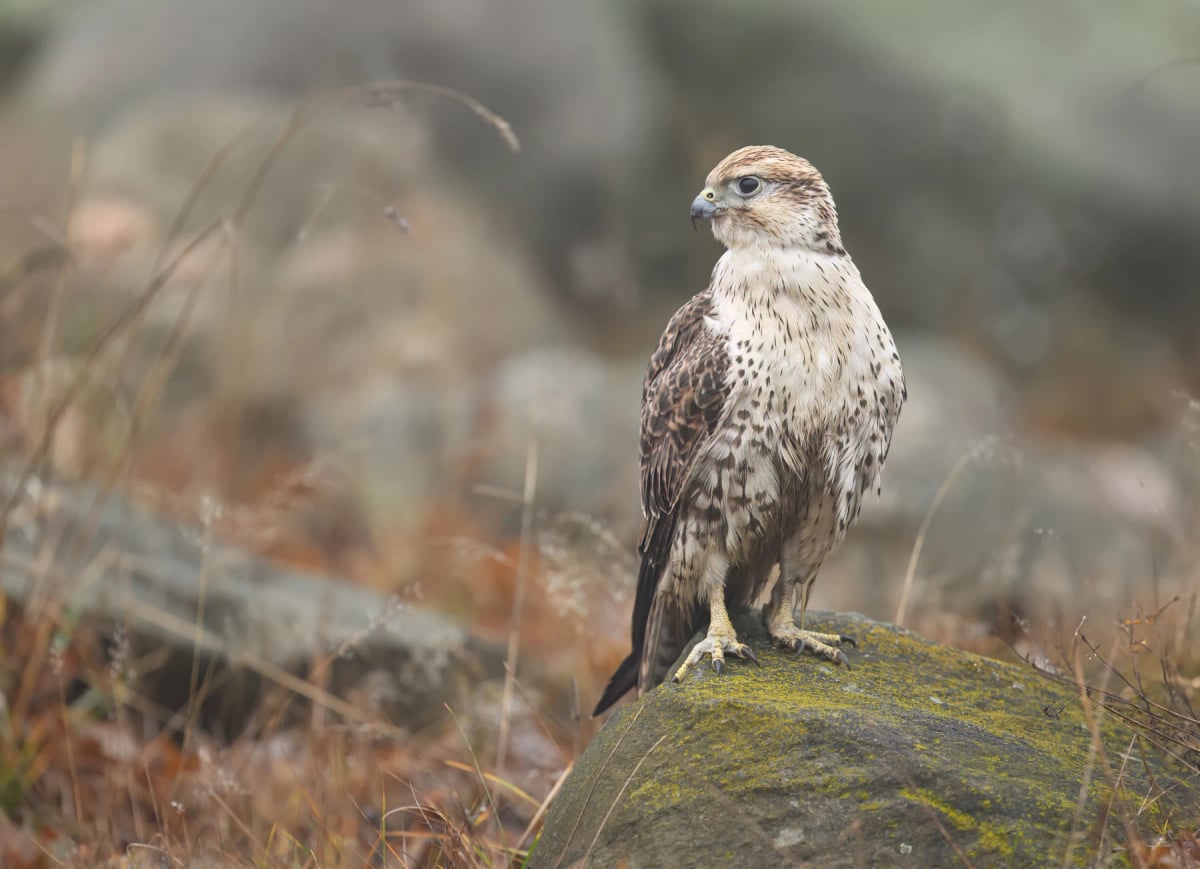
Saker Falcon
Falco cherrug
Ukraine's expansive steppe zones, especially in the south and east of the country, have historically supported breeding saker falcons. The species nests in trees or on human-made structures across open grasslands and hunts ground squirrels in particular. Agricultural intensification and power line electrocution are key threats. Ongoing conflict has severely disrupted wildlife monitoring and conservation work across the country. The saker falcon is listed as Endangered by the IUCN.
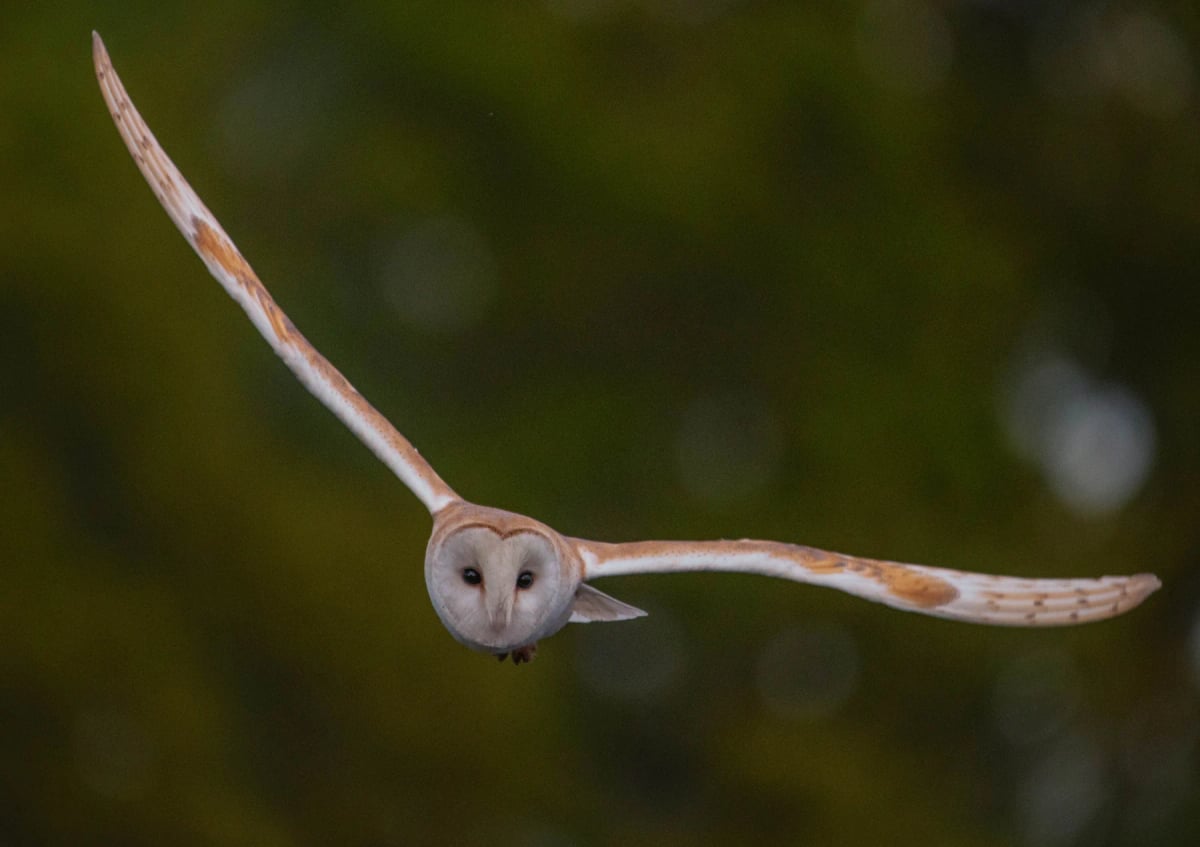
Barn Owl
Tyto alba
The barn owl is found across the lowlands and agricultural plains of Ukraine, particularly in the western regions, Podolia, and the steppe zones of the south and east. It nests in old farm buildings, church towers, and hollow trees, and hunts mice and voles at night in open fields. Cold winters in the north and east can cause significant mortality and limit population density. Conservation programs with nest boxes are in use in several regions, and Ukraine's extensive traditional farmland provides some of the most important barn owl habitat in Eastern Europe.
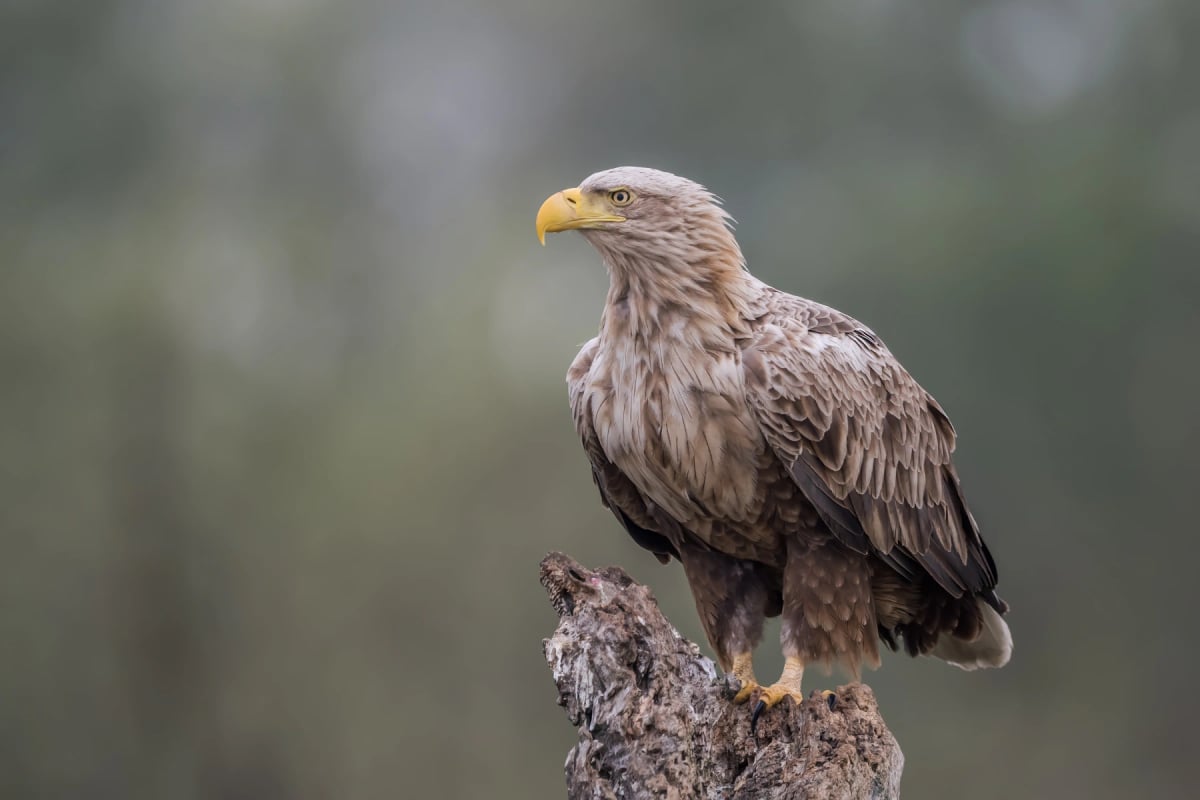
White tailed Eagle
Haliaeetus albicilla
Ukraine supports a significant breeding population of white tailed eagles, particularly in the Danube Biosphere Reserve and the Polesia region in the north, where extensive wetlands and river systems provide ideal habitat. The species has benefited from protected areas along the Dnieper and Danube rivers. Ongoing conflict has disrupted conservation monitoring in parts of the country, making it difficult to assess current population trends with precision.
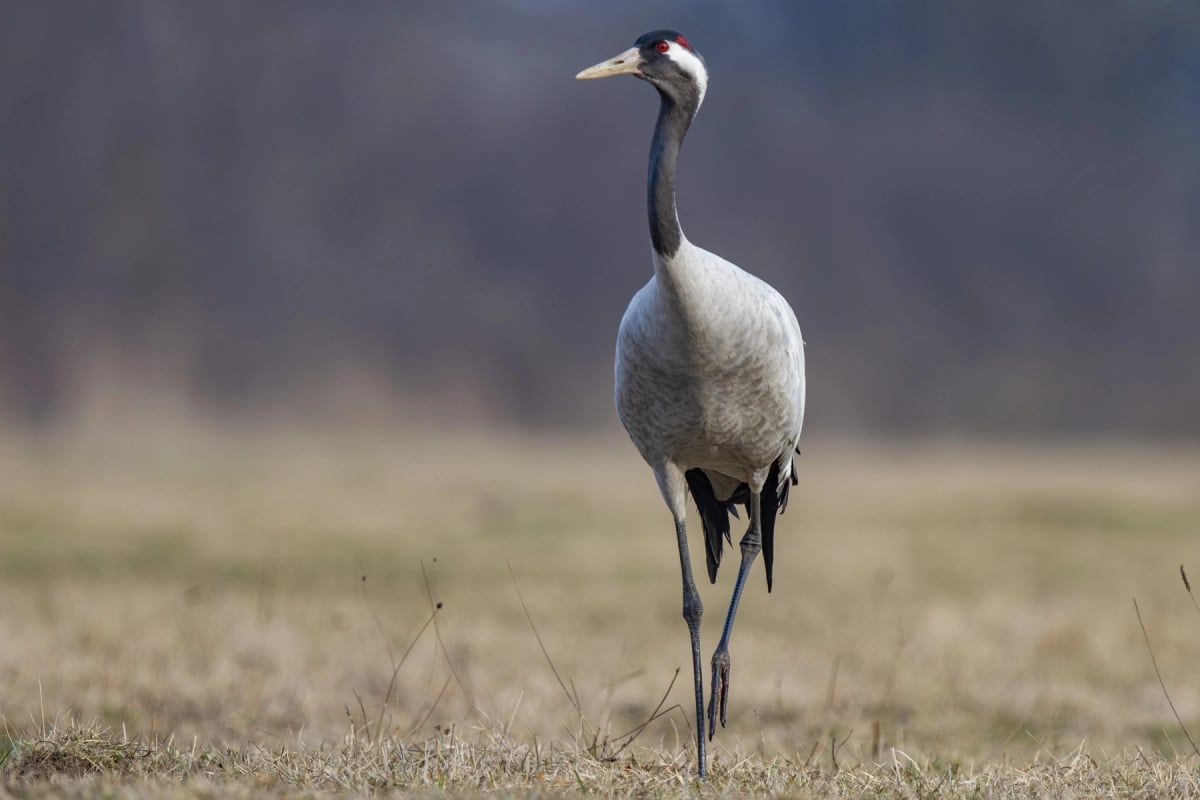
Crane
Grus grus
Ukraine hosts common cranes both as breeding birds in the north and as migrants passing through in large numbers each autumn and spring. Nesting takes place in the forests and wetlands of Polesia, near the border with Belarus. During migration, flocks move across the broad plains and river valleys of the country. The species is considered to be of Least Concern and is a regular presence across Ukraine.
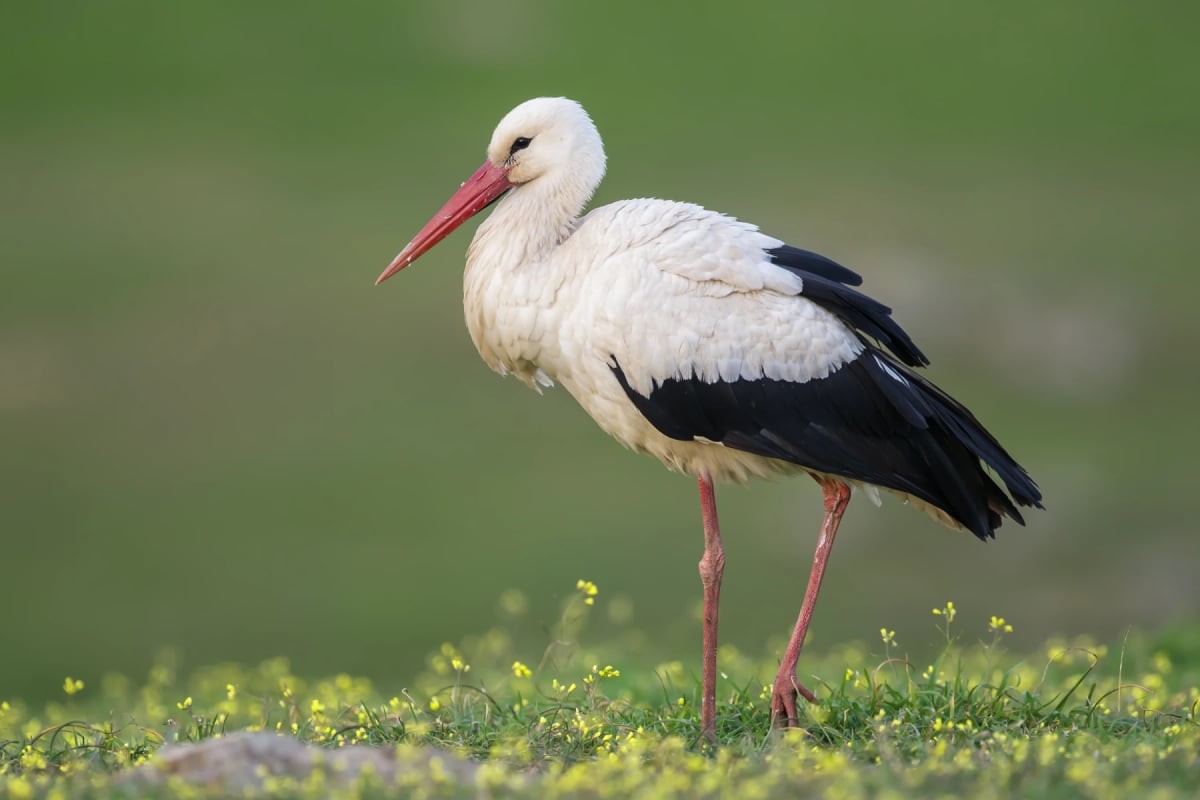
Stork
Ciconia ciconia
Ukraine holds one of the largest white stork breeding populations in Europe, with about 30,000 pairs counted in the 2004/05 census. The river floodplains, meadows, and farmland of the west and northwest are ideal for nesting and feeding. Storks build their large stick nests on rooftops, poles, and trees in rural villages, where they are welcomed as a sign of good fortune. IUCN status: Least Concern.
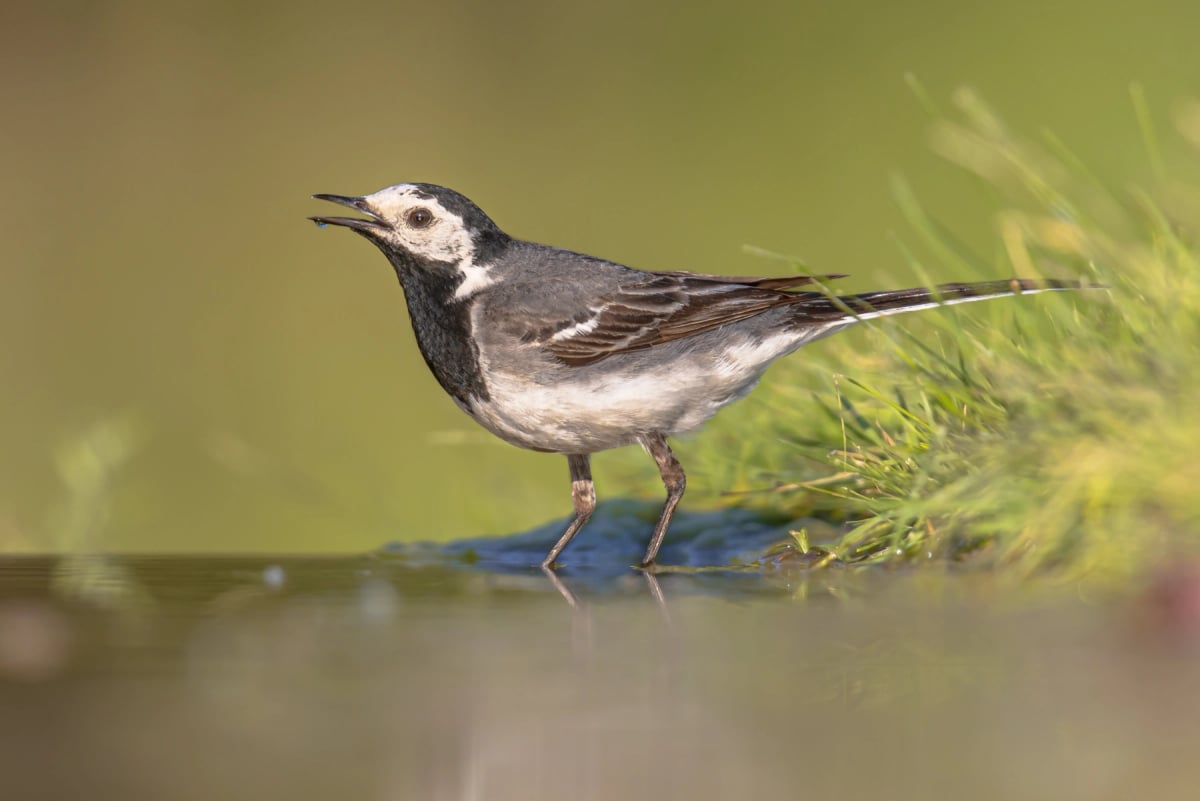
White Wagtail
Motacilla alba
Small black, white and grey bird with a slender tail that bobs up and down as it walks and feeds along the edges of water and open ground.
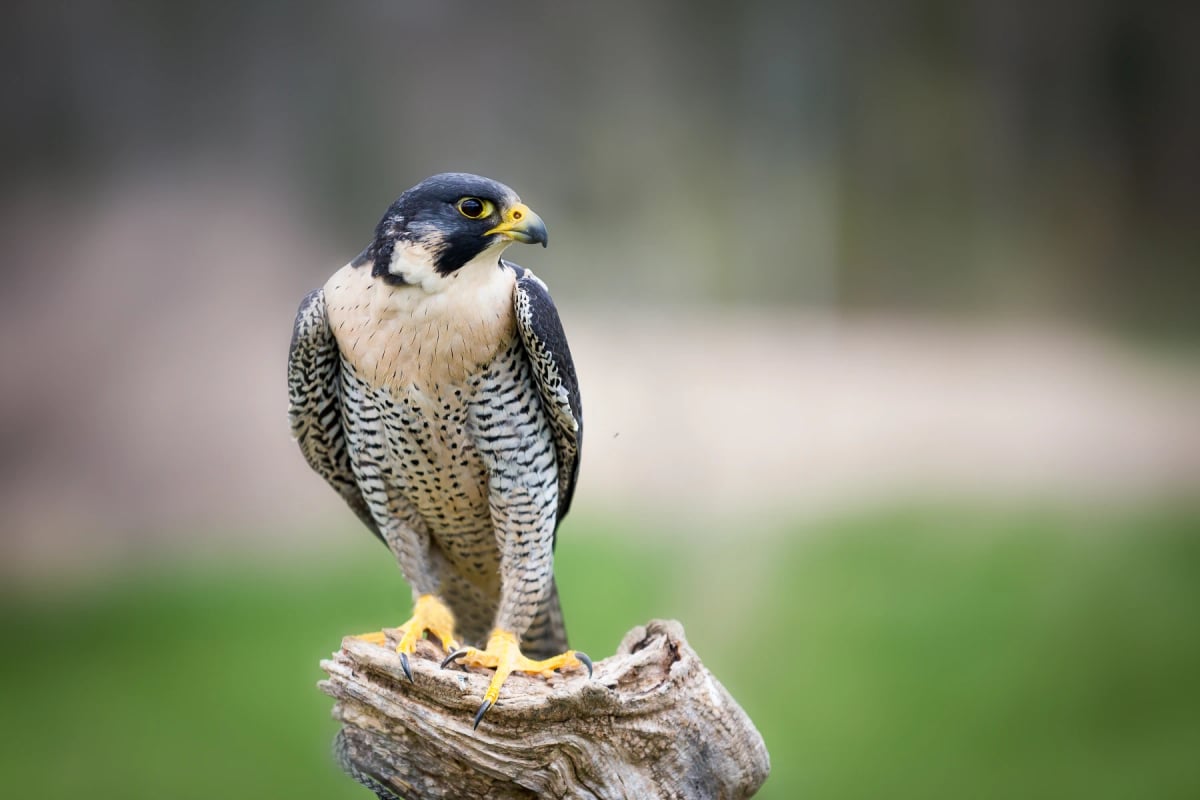
Peregrine Falcon
Falco peregrinus
In Ukraine, the peregrine falcon breeds on river cliffs and rocky outcrops, particularly in the Carpathian Mountains in the west and along the Dnister and Dnipro river canyons. The species disappeared from much of the country during the DDT era but has been slowly recovering. Conservation programmes and nest monitoring by local ornithological groups have helped support the population as it rebuilds across suitable breeding habitat. IUCN status: Least Concern.
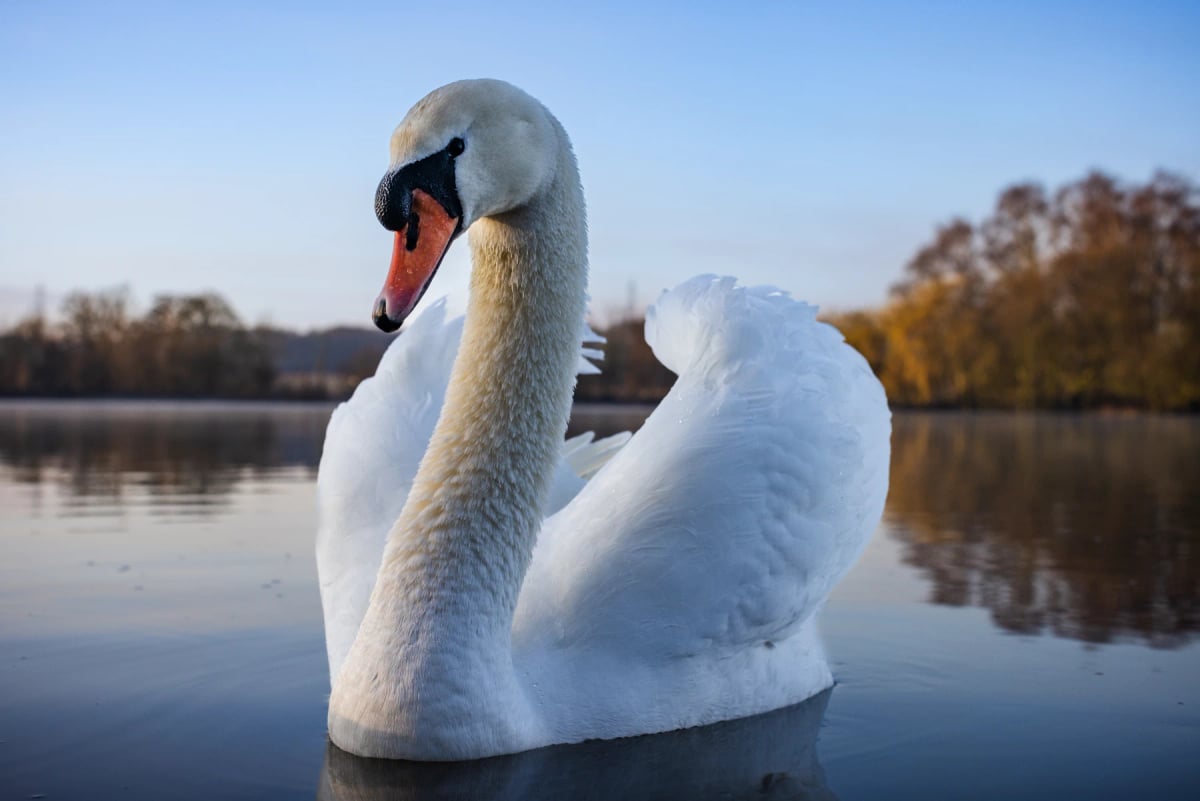
Mute Swan
Cygnus olor
The mute swan is a familiar sight across Ukraine, where it breeds on the shallow lakes, river deltas, and coastal wetlands of the Black Sea and Azov Sea regions. Pairs build large nests among reeds and defend them fiercely. Outside the breeding season, flocks gather on sheltered bays and estuaries. Its white plumage and orange bill make it one of the country's most recognizable waterbirds. IUCN status: Least Concern.
Nightingale
Luscinia megarhynchos
The nightingale is a familiar and beloved bird across Ukraine, breeding in river valleys, forest edges, and the dense shrubby thickets of the steppe zone. Ukrainian poets and folk songs have celebrated its voice for centuries, and it remains common throughout much of the country. Males sing powerfully through May and June, filling riparian woodlands with their complex phrases. The species is rated Least Concern and faces no specific threat in Ukraine.
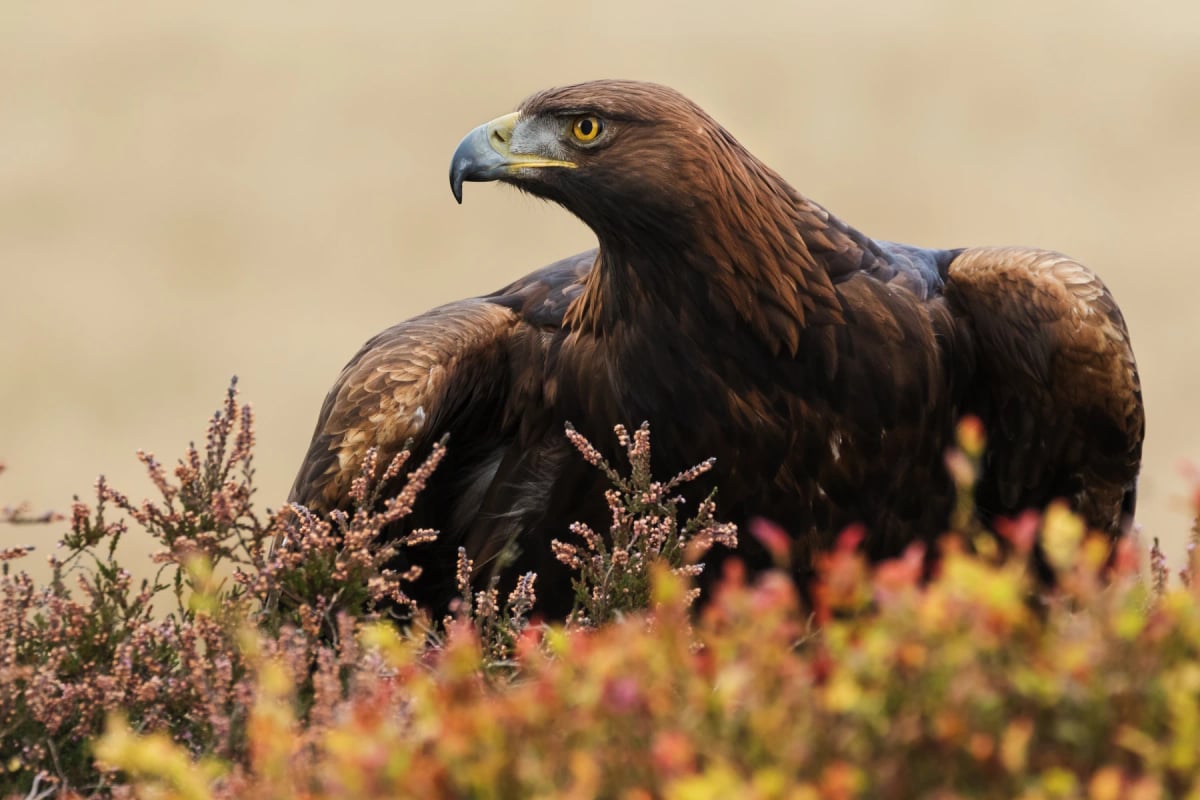
Golden Eagle
Aquila chrysaetos
The golden eagle is a rare and impressive visitor to Ukraine, seen mainly in the Carpathian Mountains in the west of the country. It hunts across open slopes and forest edges, preying on hares and small mammals. Nesting pairs need large, undisturbed territories to raise their young successfully. The species is considered threatened in Ukraine, and conservation efforts focus on protecting its remaining mountain strongholds. The IUCN lists it as Least Concern globally.
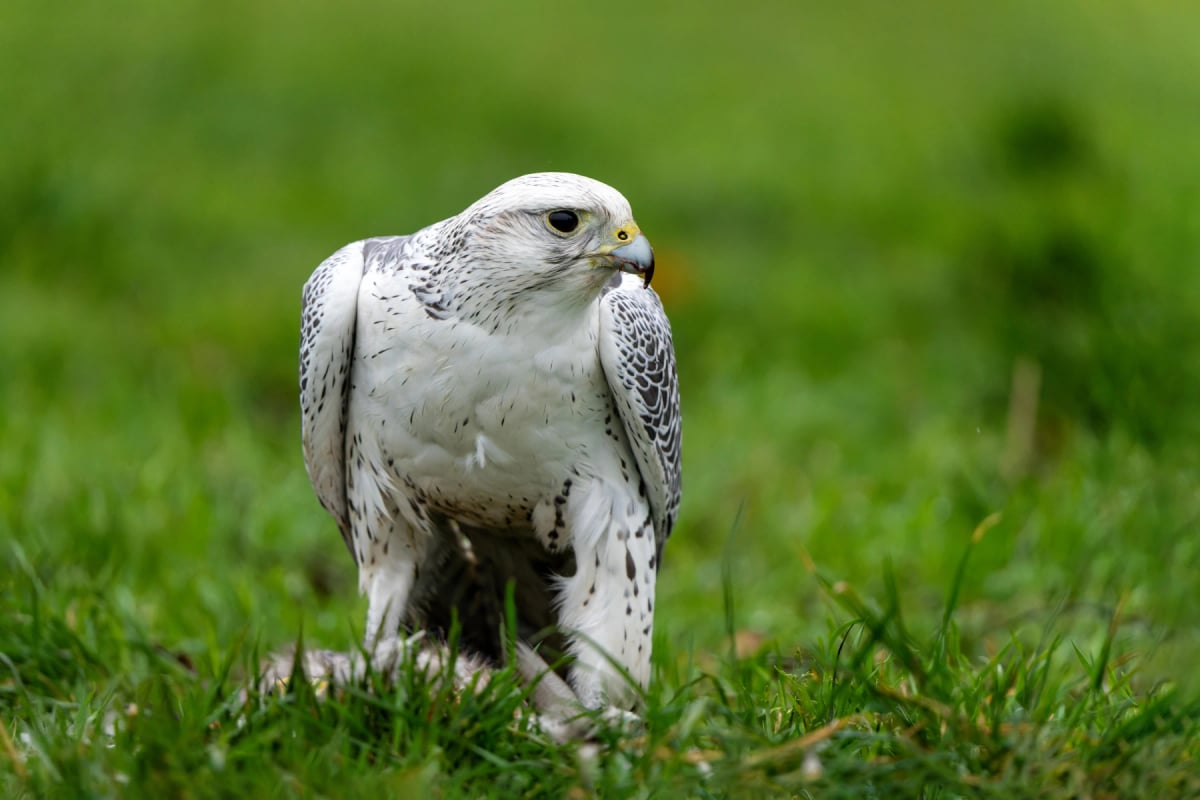
Gyrfalcon
Falco rusticolus
The gyrfalcon visits Ukraine as a rare winter guest, appearing sporadically in open landscapes across the north and east of the country when Arctic conditions push it southward. Ukraine's agricultural plains and river valleys can offer enough prey, mostly birds, to sustain a visiting falcon through the coldest months. Sightings are infrequent and always attract attention from the local birdwatching community. Its IUCN status is Least Concern.
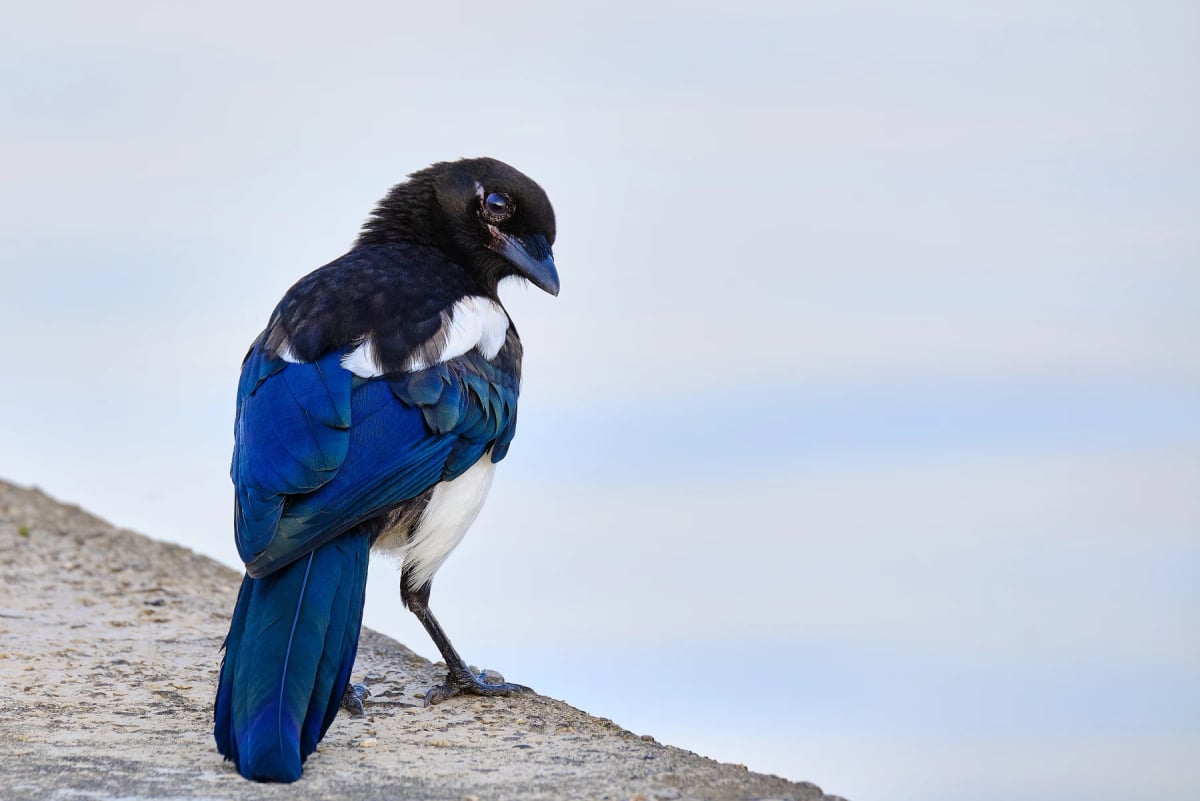
Eurasian Magpie
Pica pica
In Ukraine, the Eurasian Magpie is found from the Carpathian foothills in the west to the open steppes in the east, though it prefers areas with scattered trees and shrubs rather than fully open plains. It is common in villages, orchards, and along river corridors. Resourceful and bold, it scavenges widely and caches food for leaner seasons. Its IUCN status is Least Concern across its range.

Bottlenose Dolphin
Tursiops truncatus
Bottlenose dolphins inhabit the Ukrainian waters of the Black Sea, where they are the largest of the three cetacean species present. They are found mainly along the northwestern shelf, including near the Odesa coast. The Black Sea population has faced significant historical pressure from commercial hunting and continues to be threatened by pollution and fishing bycatch. The IUCN classifies the species as Least Concern globally.
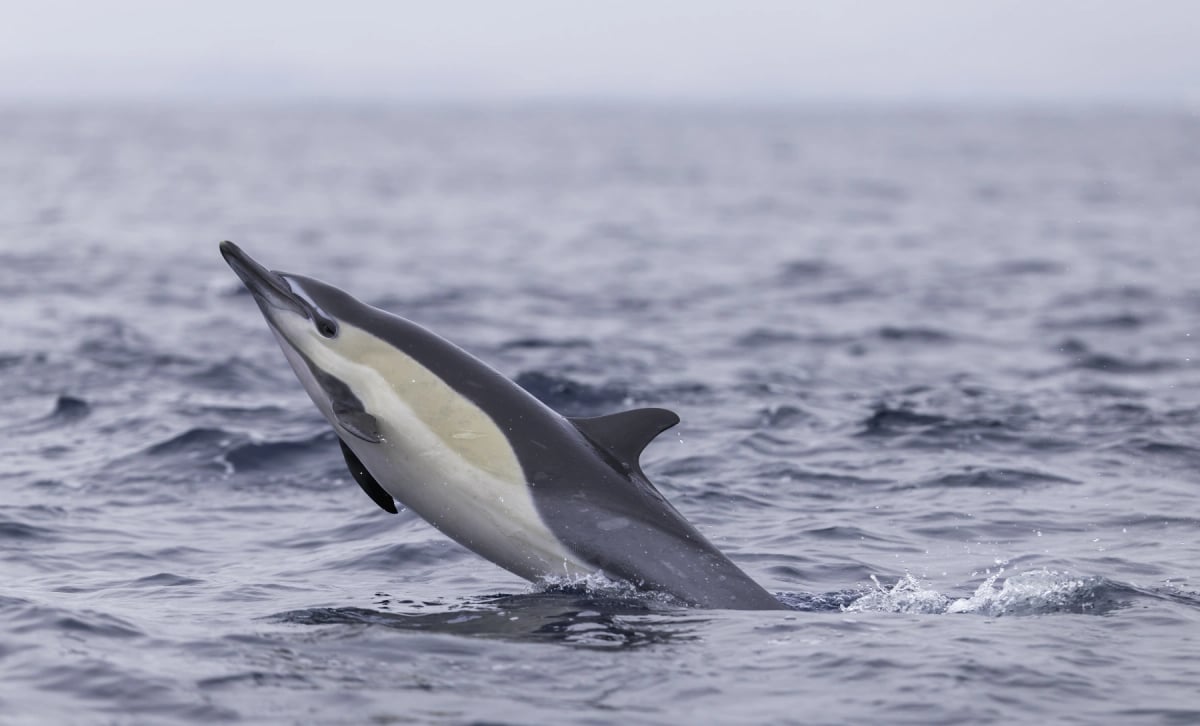
Common Dolphin
Delphinus delphis
In Ukrainian waters, the common dolphin is found mainly in the Black Sea, where it shares habitat with two other dolphin species. This population has historically suffered from bycatch in fishing operations and from pollution entering the sea from major rivers. Groups of common dolphins can still be spotted feeding on small fish close to the surface, though their numbers remain a concern for local researchers.
Researched and written by Juan Pablo. Sources: IUCN Red List, scientific literature and regional field guides. Last updated: .