Animals in Montenegro
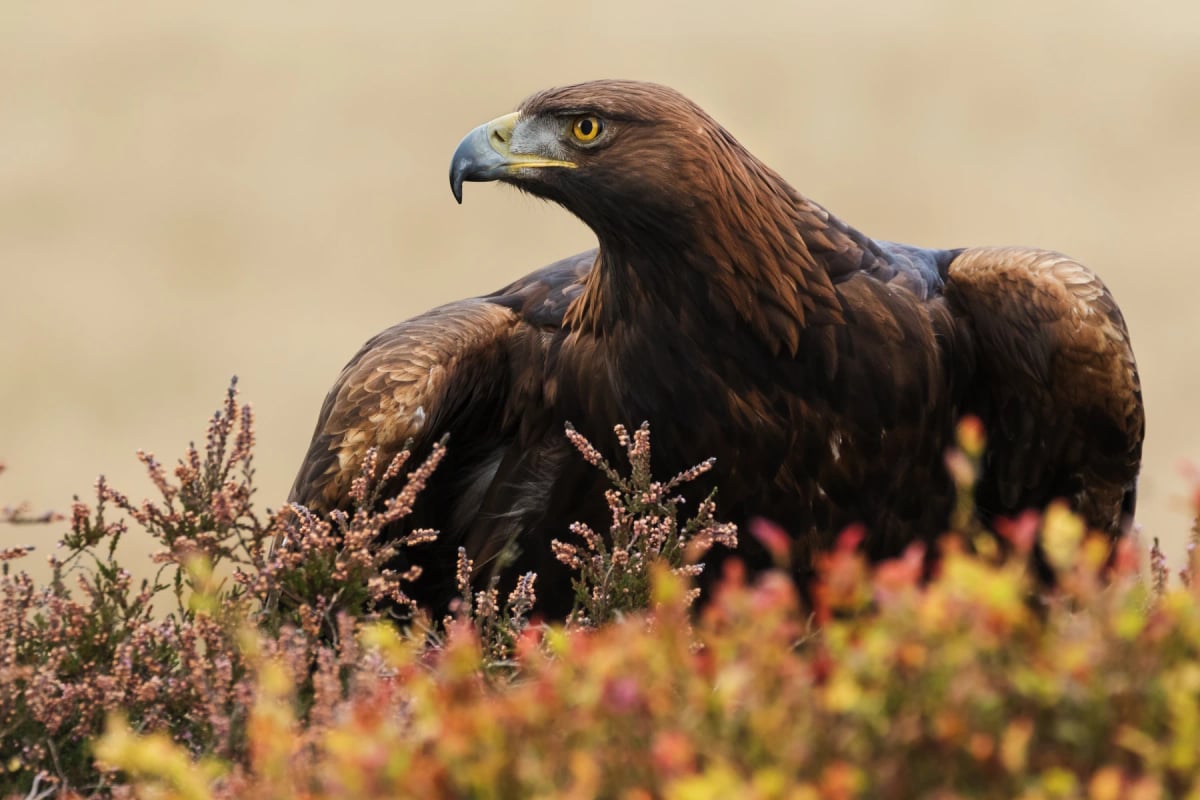
Golden Eagle
Aquila chrysaetos
The golden eagle is a long standing emblem in Montenegro. It nests on cliffs above high valleys and hunts over open slopes and forest edges. The bird appears in local crests and visitor displays, linking mountain life with national symbols. Seeing an eagle circle above Durmitor or Prokletije is a common image used to present the country’s wild character.
View details→Wildlife in Montenegro
Montenegro links high mountains, deep canyons and a short Adriatic coast. National parks like Durmitor and Biogradska Gora protect forests, alpine meadows and clear lakes. Wildlife includes red deer, chamois, brown bear and gray wolf inland, with dolphins offshore. Waymarked trails and boat routes make it easy to combine mountain walks with simple coastal wildlife watching.
Most Dangerous Animals in Montenegro
Risks in Montenegro depend more on terrain than animals. In forests and canyons live brown bears, wild boar and gray wolves, which avoid people but can react if surprised. European adders use sunny rocks in summer. Along the coast, large sharks are rare. Most reports involve steep paths, loose stone and sudden storms rather than wildlife itself.
Top 10 Animals in Montenegro
Our Top 10 brings together species that visitors ask about most and that guides report often. It balances fame and real chances to see animals, so red deer, brown bear, gray wolf and peregrine falcon lead the list, with a nod to sharks along the coast. The order is not final. We update it as seasons change and new records arrive from parks and local groups.
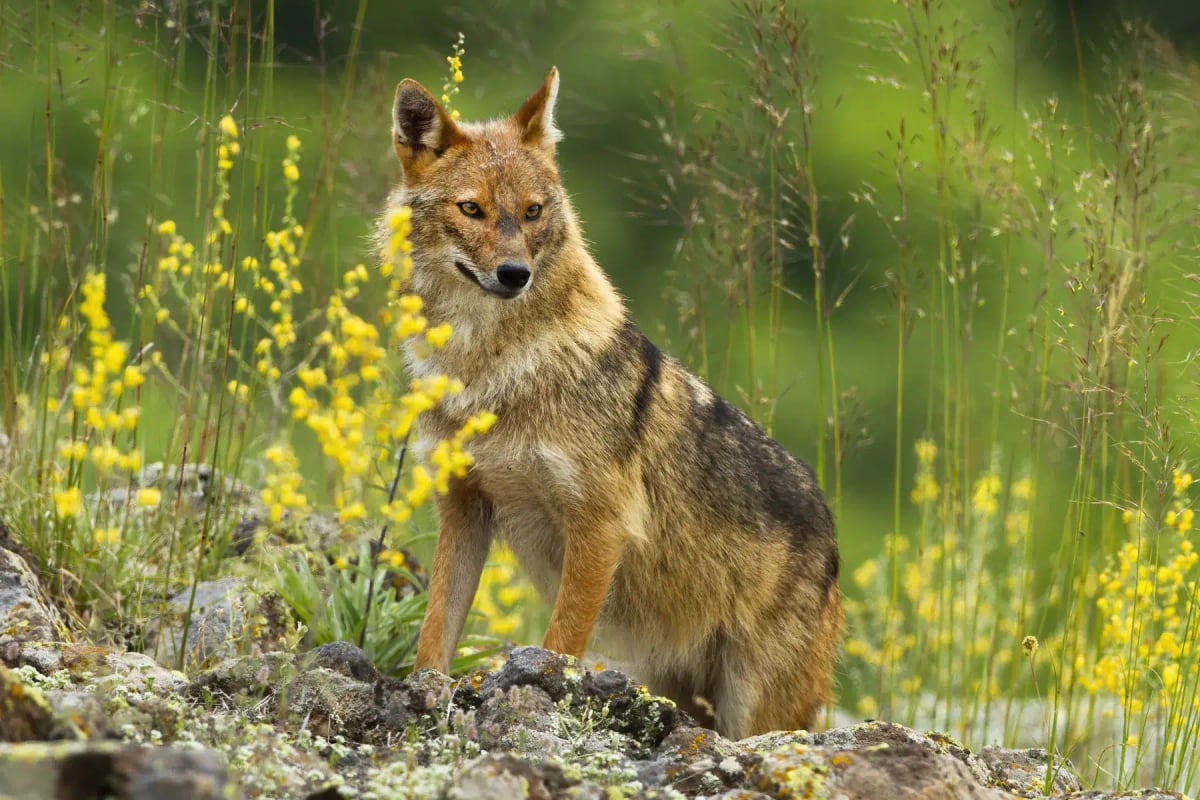
Golden Jackal
Canis aureus
Montenegro hosts golden jackals mainly in the coastal lowlands and the floodplains of the Bojana and Morača rivers, where dense vegetation and access to water provide reliable shelter and food. The country lies within the Balkan region where jackal populations have grown steadily over recent decades. It is a nocturnal forager, taking everything from rodents and lizards to fallen fruit. Its status is Least Concern.
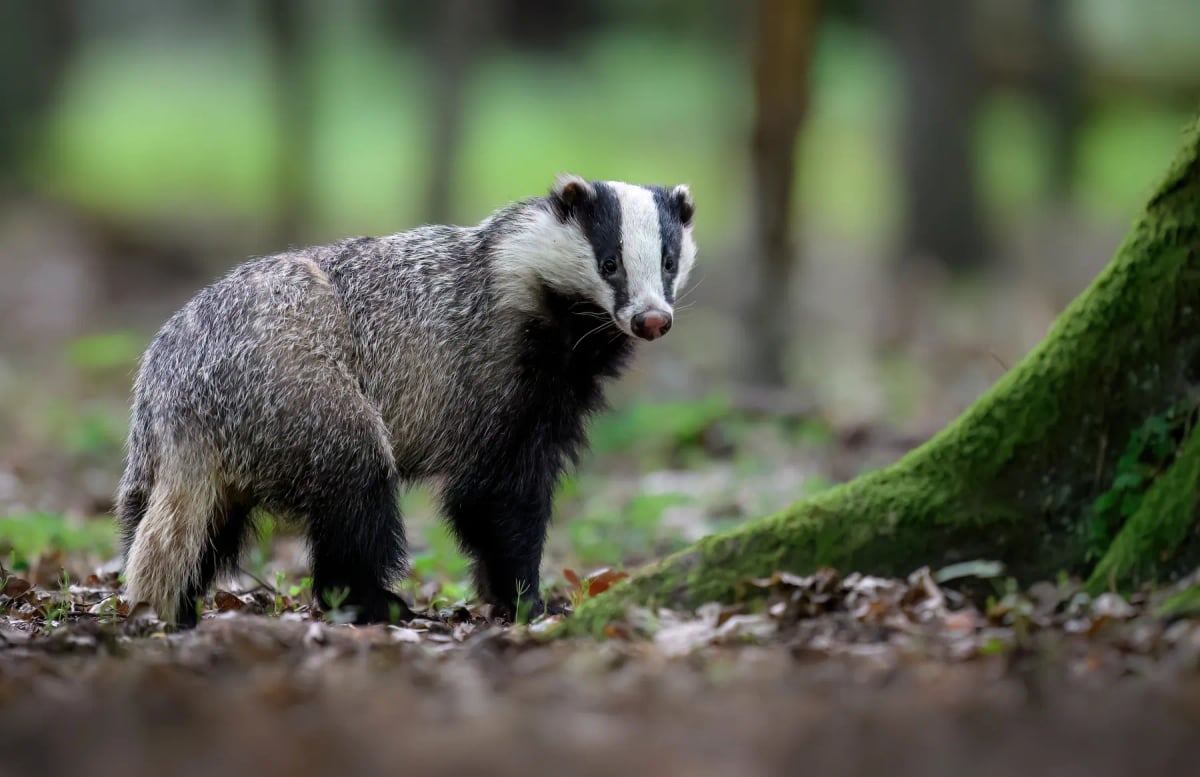
Badger
Meles meles
The Eurasian badger is present across Montenegro in mixed and deciduous woodland throughout the country's mountainous terrain. It digs its setts in well-drained slopes and forested hillsides and is active at night, feeding on earthworms, insects, fruit and small animals. Montenegro's varied landscape of forests, karst plateaus and river valleys provides suitable habitat across much of the country, and badger populations are considered stable.

Brown Bear
Ursus arctos
In Montenegro, brown bears inhabit the mountainous interior of the country, particularly the forests and highlands surrounding Biogradska Gora National Park and the Durmitor massif. The population is small and shares individuals with neighbouring Bosnia and Herzegovina and Serbia across largely unfenced terrain. Bears here face threats from poaching and habitat loss, though protected areas provide important refuges for the species.
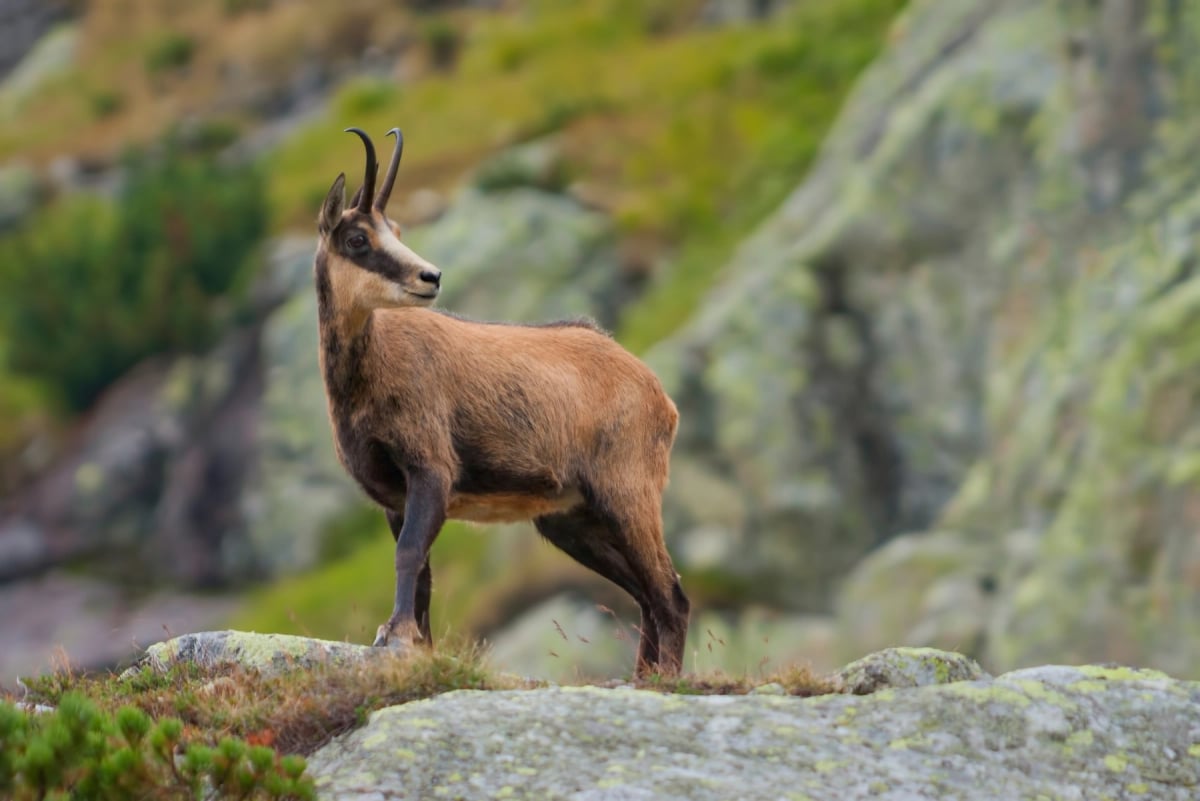
Chamois
Rupicapra rupicapra
In Montenegro, chamois inhabit the rugged peaks of the Durmitor massif and the highlands of Prokletije, both of which are protected as national parks. The dramatic karst terrain of these ranges provides ideal refuge for small herds. Populations face modest pressure from poaching and disturbance linked to growing ecotourism, though the protected status of key areas supports their continued presence. IUCN status: Least Concern.
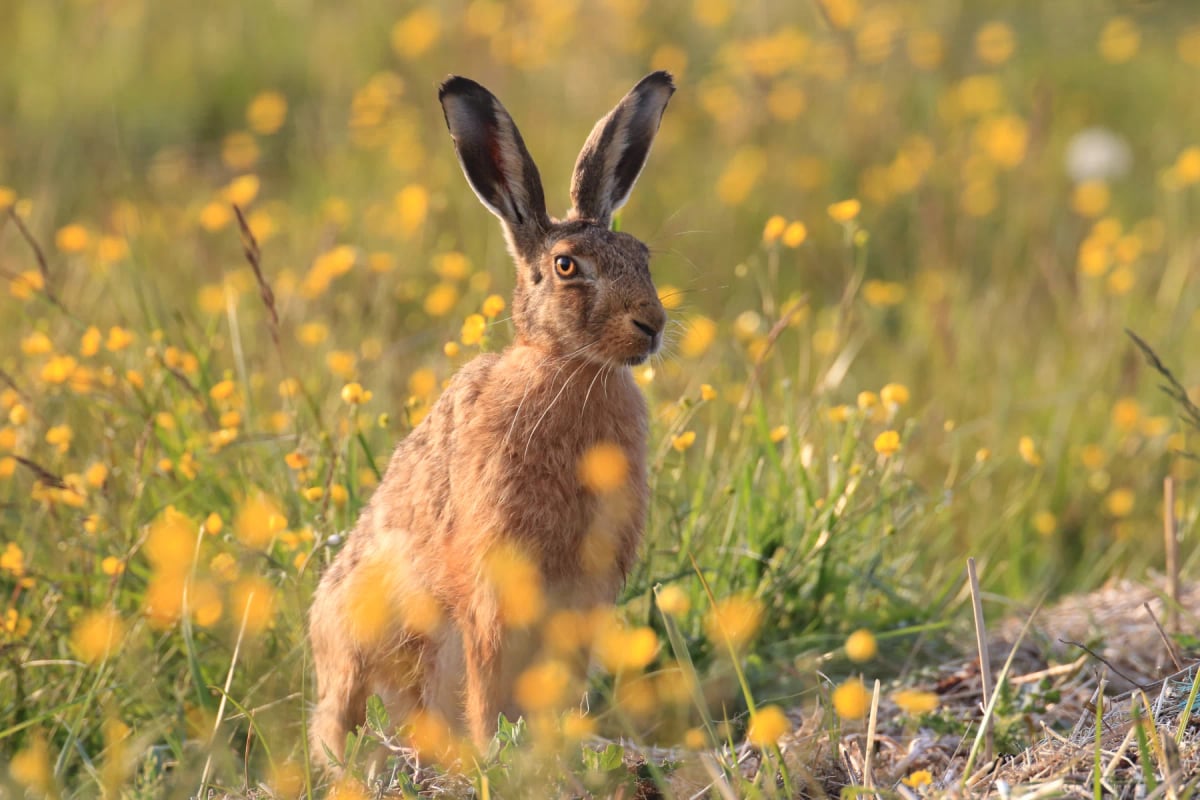
Hare
Lepus europaeus
In Montenegro, the European hare is found in the lowland agricultural areas and coastal plains, particularly around the Zeta Valley and the Lake Skadar basin. It avoids dense forest and high mountain terrain, preferring open ground for feeding and resting. The species is part of local hunting traditions and remains present across suitable habitats in the country. Its IUCN status is Least Concern.
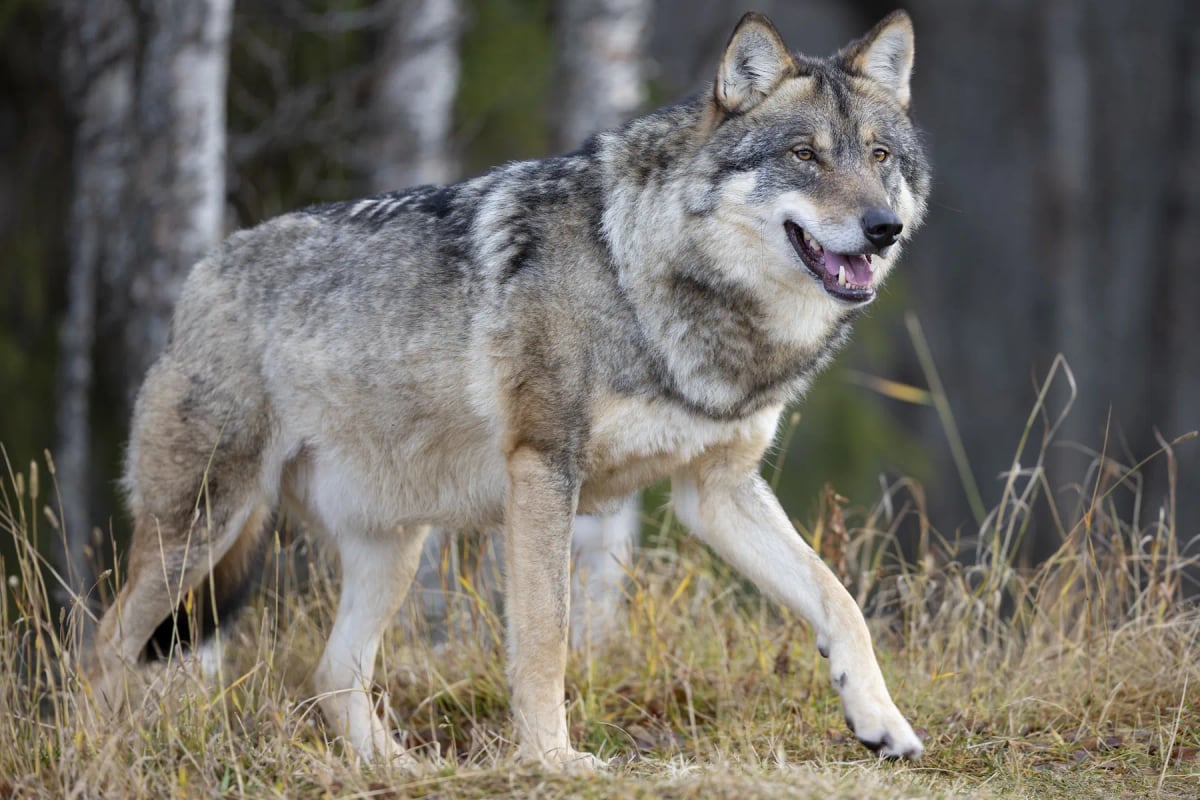
Gray Wolf
Canis lupus
Gray wolves inhabit the mountainous northern regions of Montenegro, particularly around the Prokletije and Durmitor massifs. The population is small but connected to wider packs in Albania and Bosnia and Herzegovina, which supports genetic flow across the western Balkans. Wolves prey on deer, wild boar and livestock, and illegal killing remains a pressure on the population. Montenegro has legal protections for the species in place. Its global IUCN status is Least Concern.
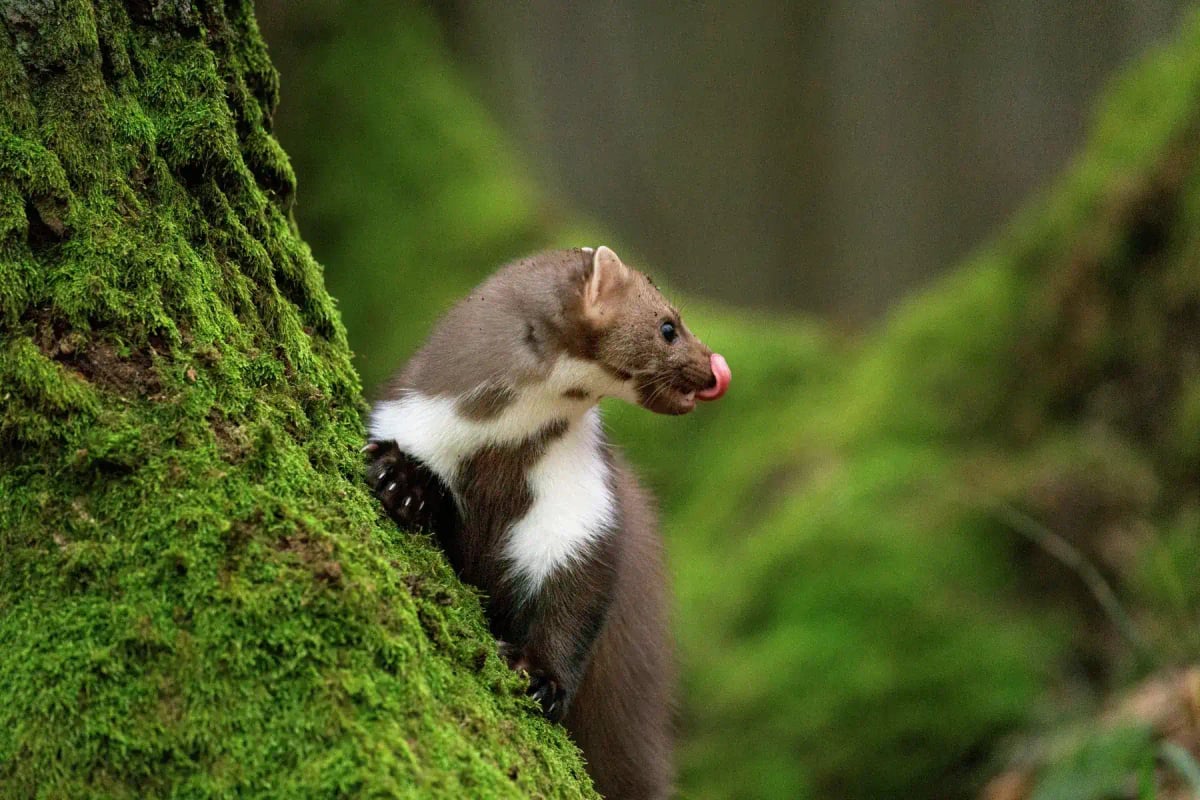
Marten
Martes martes / Martes foina
Montenegro's rugged terrain, from the forests of Biogradska Gora to the rocky slopes of its coastal mountains, supports both the pine marten and the stone marten. Pine martens keep to the dense upland forests, while stone martens occupy lower, rockier ground and areas near villages. Both are agile nocturnal hunters that feed on rodents, birds, and seasonal fruit. Montenegro's network of national parks provides important protection for both species. Their IUCN status is Least Concern.
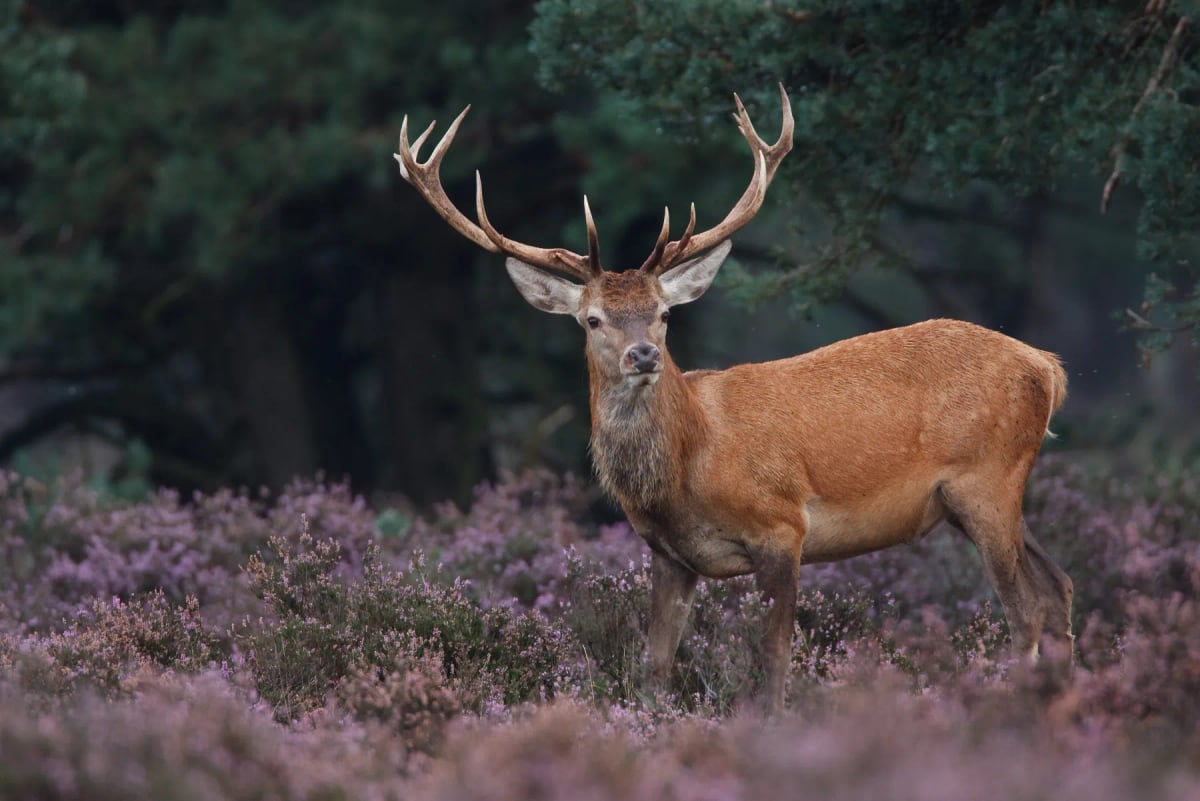
Red Deer
Cervus elaphus
Red deer (Cervus elaphus) are found across the mountainous forests of Montenegro, including within Biogradska Gora National Park, one of the last areas of old growth forest in Europe. The rugged terrain and dense woodland provide ideal conditions for this large deer. Stags produce their characteristic roaring calls each autumn during the rut. Hunting regulations and protected areas help support the population. The IUCN lists the species as Least Concern.
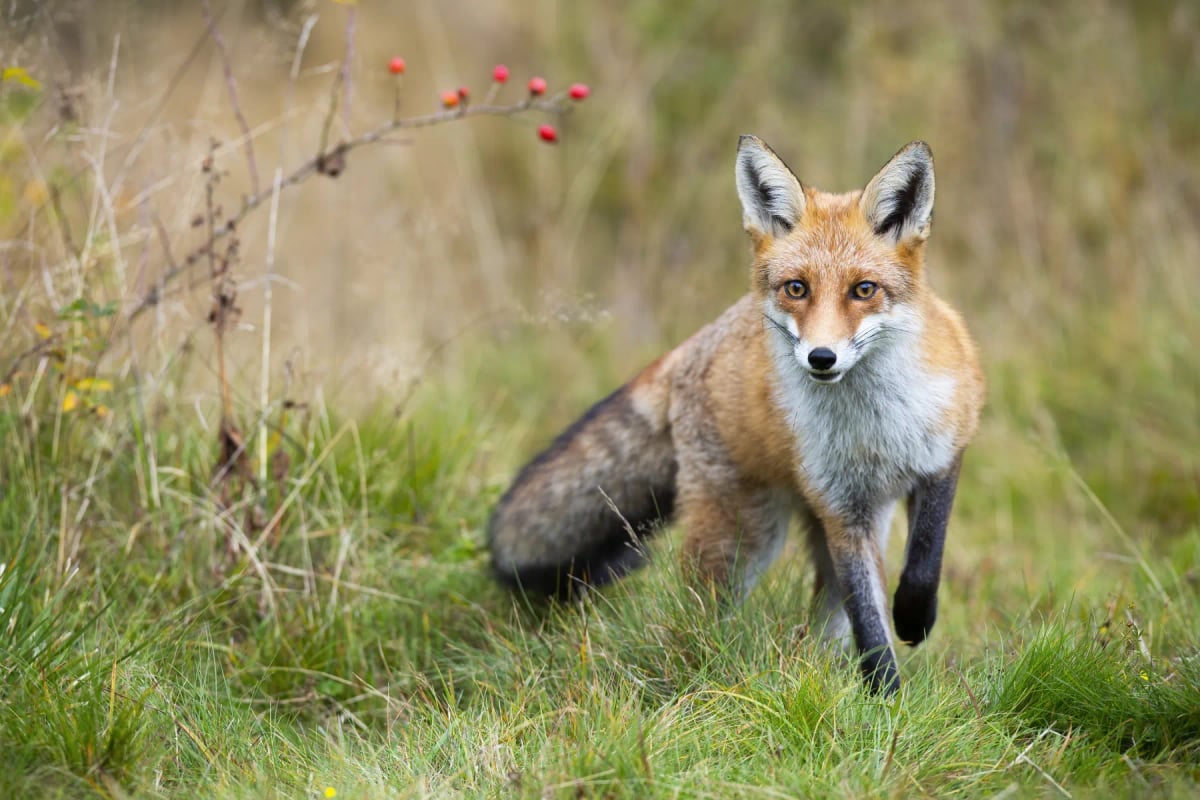
Red Fox
Vulpes vulpes
In Montenegro, the red fox inhabits a striking variety of landscapes, from the Adriatic coastal lowlands to the dense forests and karst highlands of the interior. It is one of the country's most adaptable predators, feeding on rodents, birds, fruit, and carrion depending on the season. Foxes are present in both rural and peri-urban areas. They are common throughout the country and hold Least Concern status globally.

Red Squirrel
Sciurus vulgaris
The red squirrel inhabits the mountain forests of Montenegro, where it is found across mixed and conifer woodland in areas such as Durmitor National Park and the forests of the Prokletije range. It feeds on seeds, nuts, and fungi throughout the year. Montenegro's rugged terrain and well preserved forests provide good conditions for the species, which remains a natural part of the Balkan mountain ecosystem.
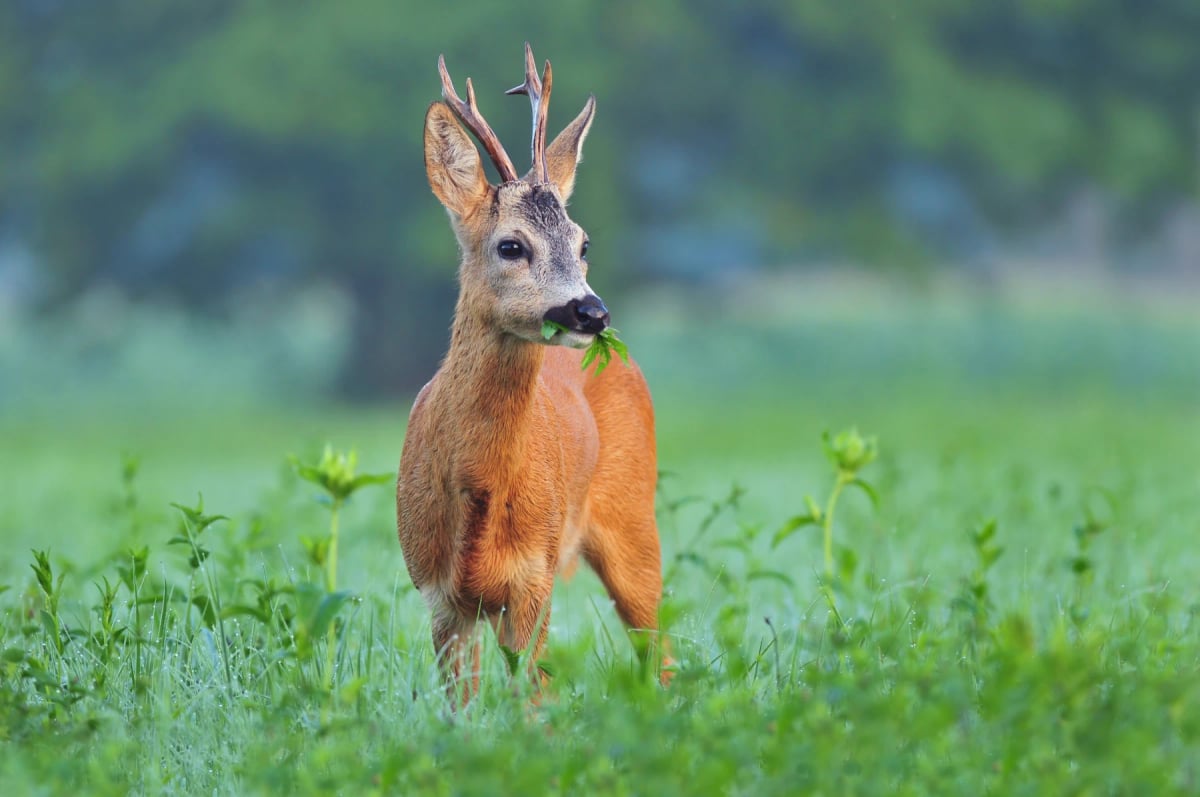
Roe Deer
Capreolus capreolus
The roe deer is found across the lowland and hilly areas of Montenegro, particularly in the forests and farmland of the coastal region and the valleys of the interior. It tends to avoid the highest and most rugged mountain terrain, preferring mixed woodland and shrubby edges at lower elevations. The species shares its habitat with other deer in the country's forests. Montenegro's relatively intact rural landscapes provide good conditions for roe deer populations to remain stable.
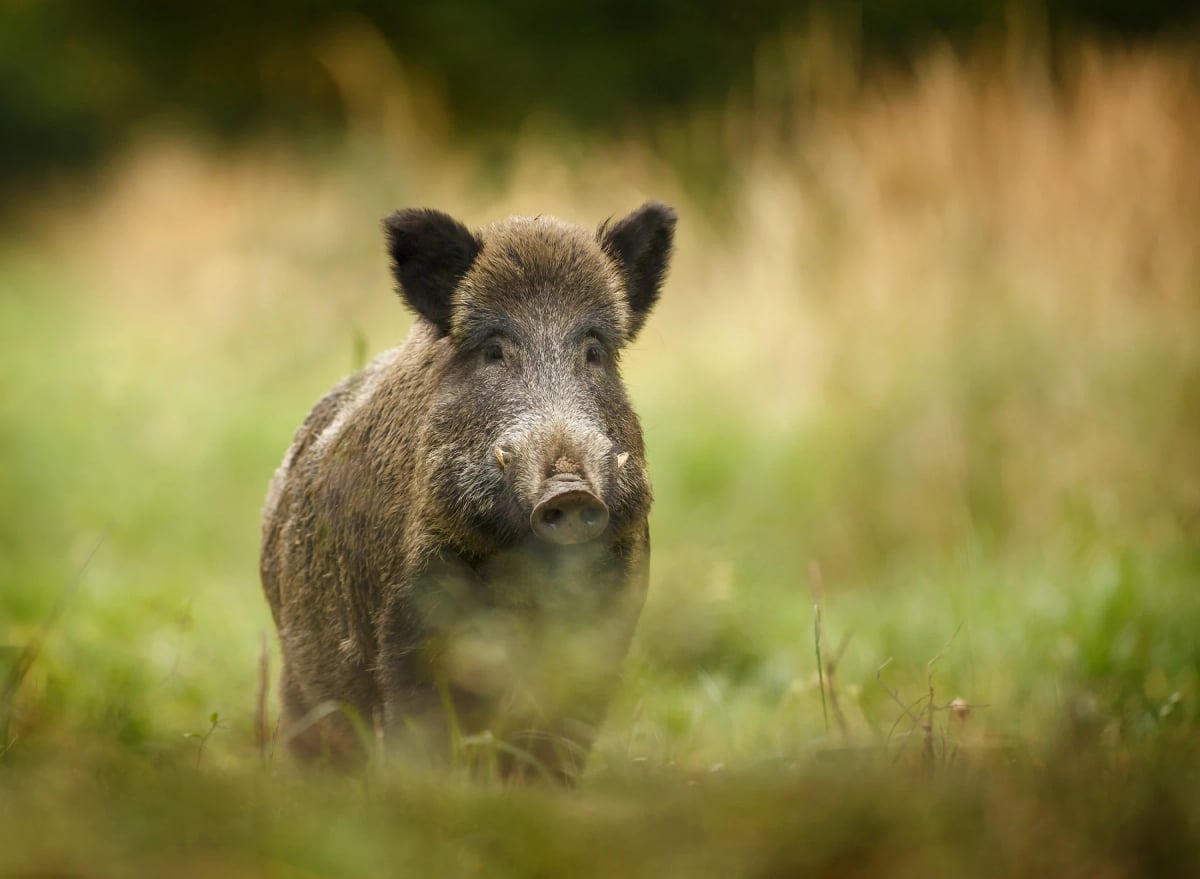
Wild Boar
Sus scrofa
Wild boars are widespread across the forested mountains that cover much of Montenegro, where dense woodland provides ample cover and food. The species is one of the country's most popular game animals, hunted under regulated seasons in many districts. Wild boars sometimes venture toward farmland at forest edges, occasionally causing damage to crops in rural communities.
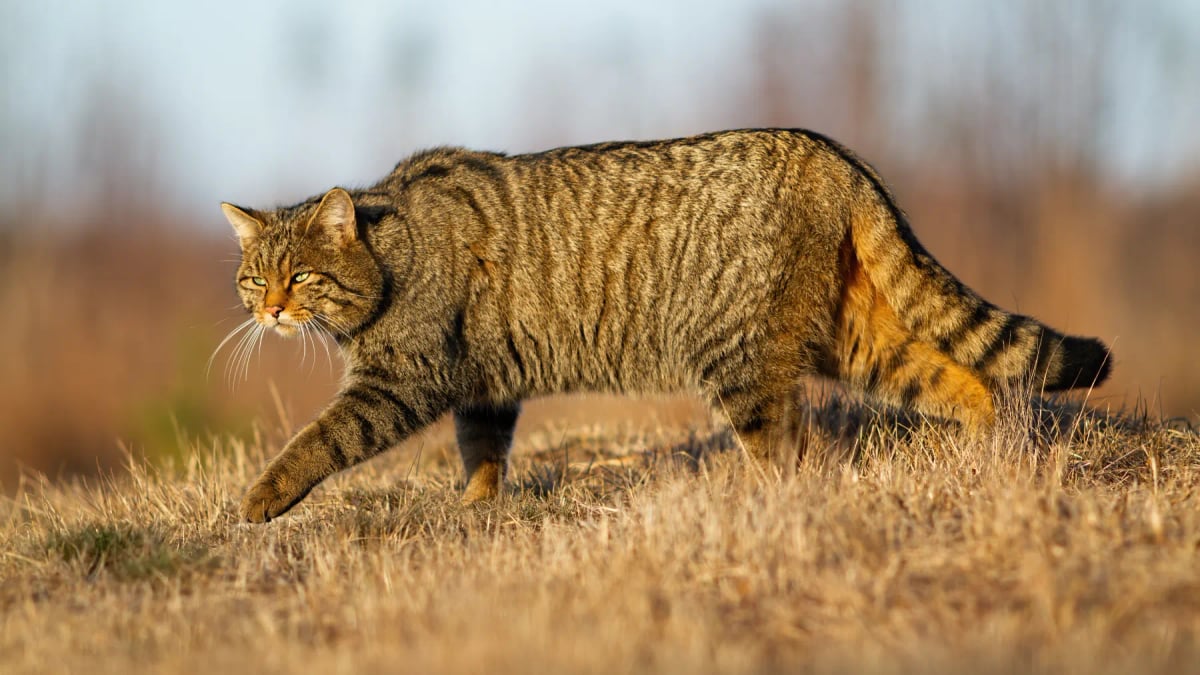
European Wildcat
Felis silvestris silvestris
Montenegro's rugged terrain and extensive forests make it well suited for the European wildcat. The species is present across various forested mountain zones, benefiting from the country's relatively low human population density and large areas of intact habitat. As in neighboring Balkan countries, hybridization with domestic and feral cats is a recognized threat. Conservation attention in the region is growing. IUCN status: Least Concern.
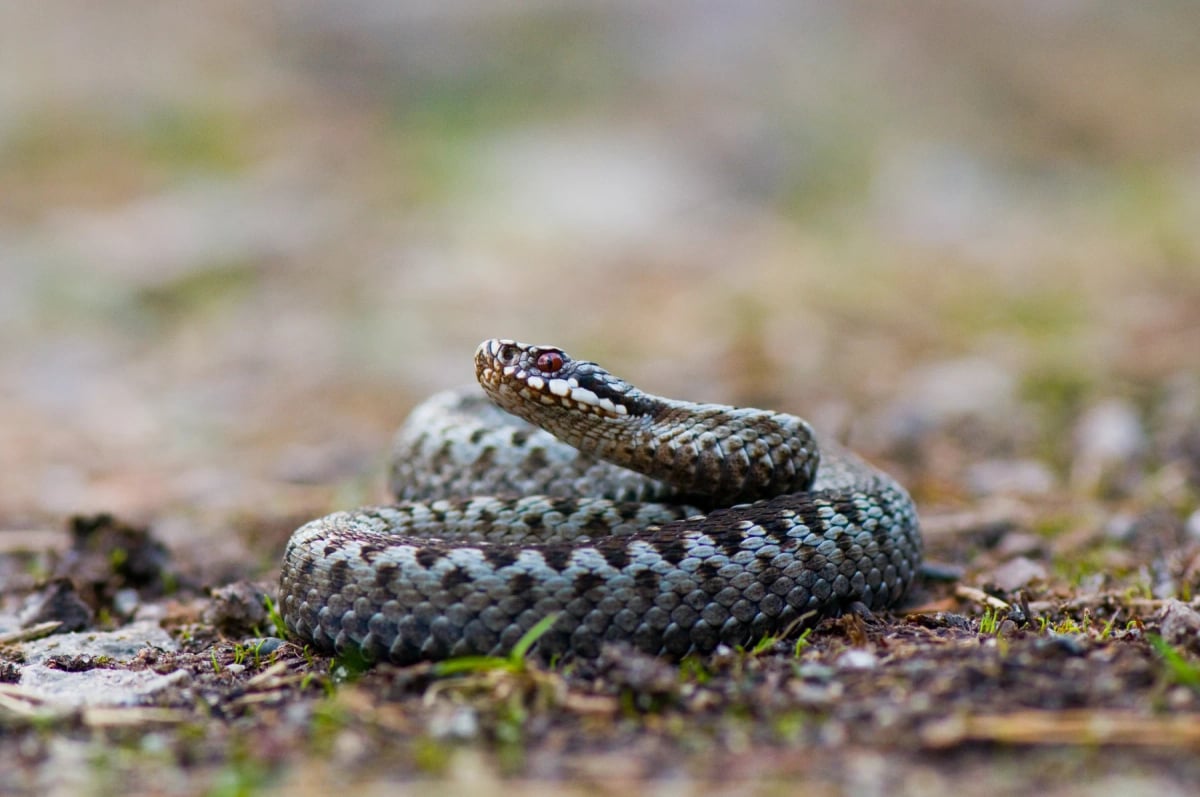
European Adder
Vipera berus
The European adder occurs in the highlands and mountain meadows of Montenegro, including areas around the Durmitor massif. It favors rocky terrain with low vegetation where it can warm itself in the sun. Like elsewhere, it is shy and avoids contact with people. It feeds on small mammals and lizards. Its IUCN status is Least Concern, though collection and persecution remain concerns in parts of the Balkans.
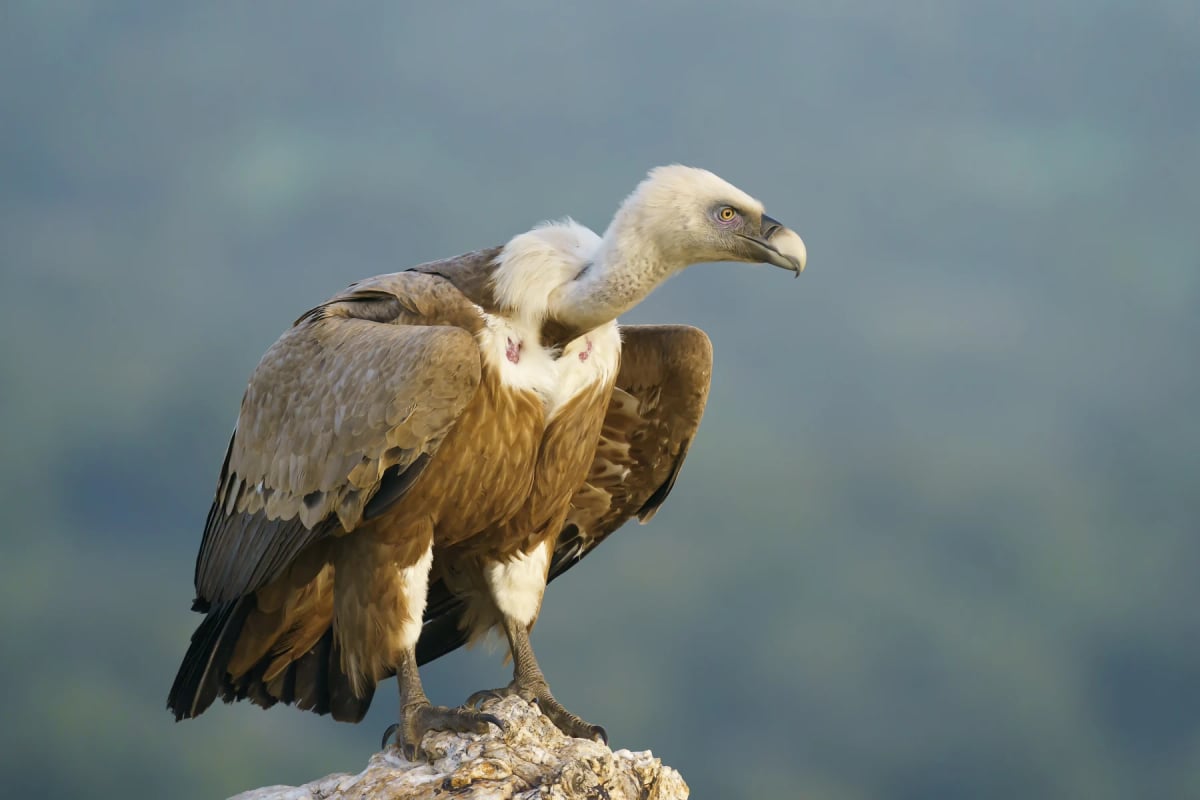
Griffon Vulture
Gyps fulvus
In Montenegro, the griffon vulture is present in the breeding season, soaring over the high karst plateaus and deep canyons of the north, such as the Tara and Piva. The country's colonies were lost in the last century, and the birds seen today mostly come from nearby colonies in Serbia. Its rugged, thinly populated mountains are some of the best places in the Balkans for this vulture to settle again. IUCN status: Least Concern.
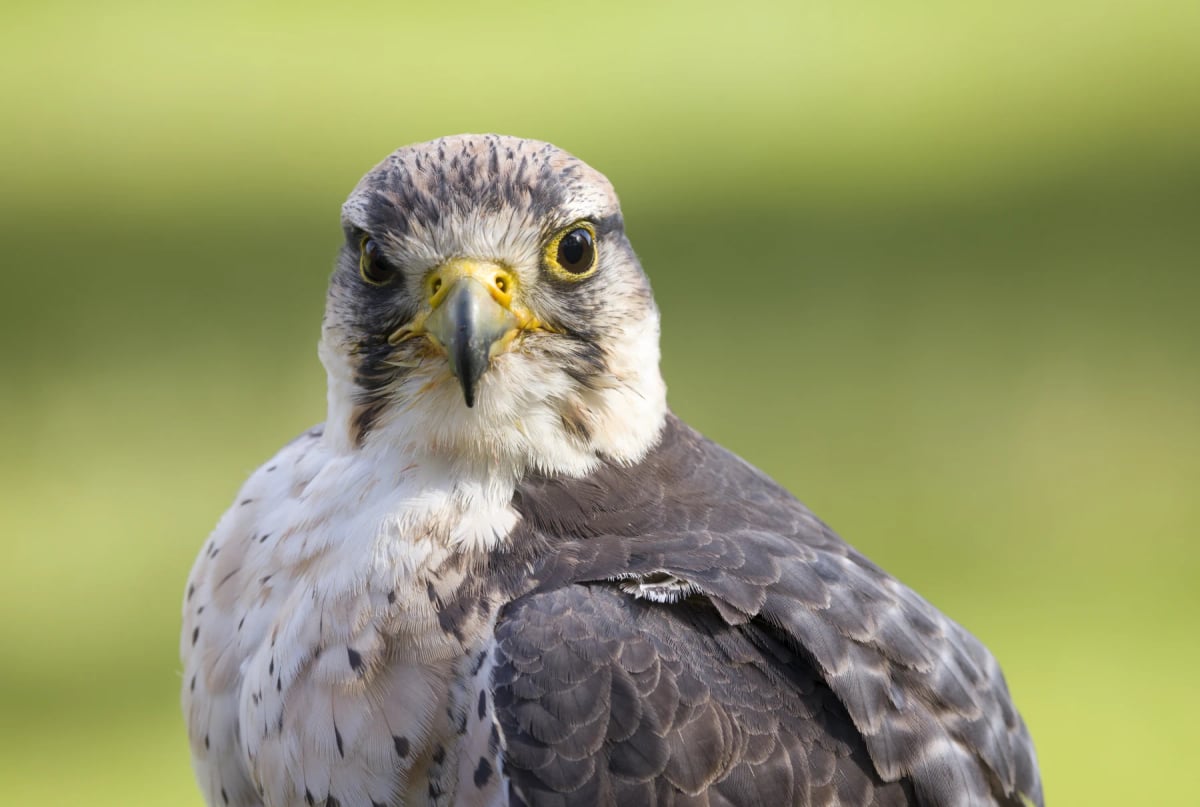
Lanner Falcon
Falco biarmicus
In Montenegro, the lanner falcon is associated with the rugged limestone cliffs and canyon systems, including those carved by the Tara and Morača rivers. It is a rare breeding bird in the country and one of the less common raptors in the western Balkans. Nesting pairs require undisturbed cliff sites, making them sensitive to human activity. Conservation awareness in the region is important for maintaining the small local population. IUCN status: Least Concern.
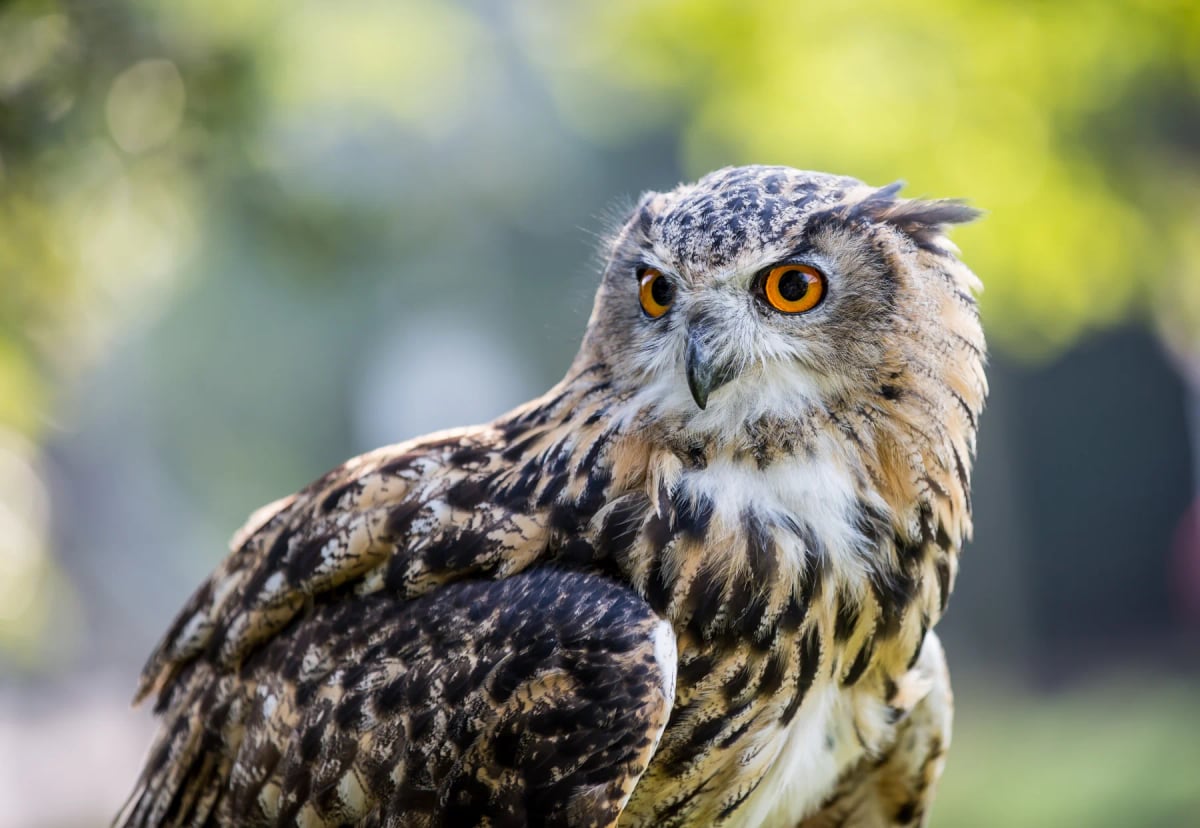
Eagle Owl
Bubo bubo
Montenegro's dramatic karst landscapes, limestone gorges, and mountain terrain make it well suited to the Eurasian eagle owl. The species nests on bare cliff ledges and rocky outcrops, with the Tara River Canyon and Durmitor region among the most suitable areas. It hunts at night across open ground and forest edges, taking hares, rodents, and birds. Its deep, booming call is often the first sign of its presence. The IUCN lists it as Least Concern.
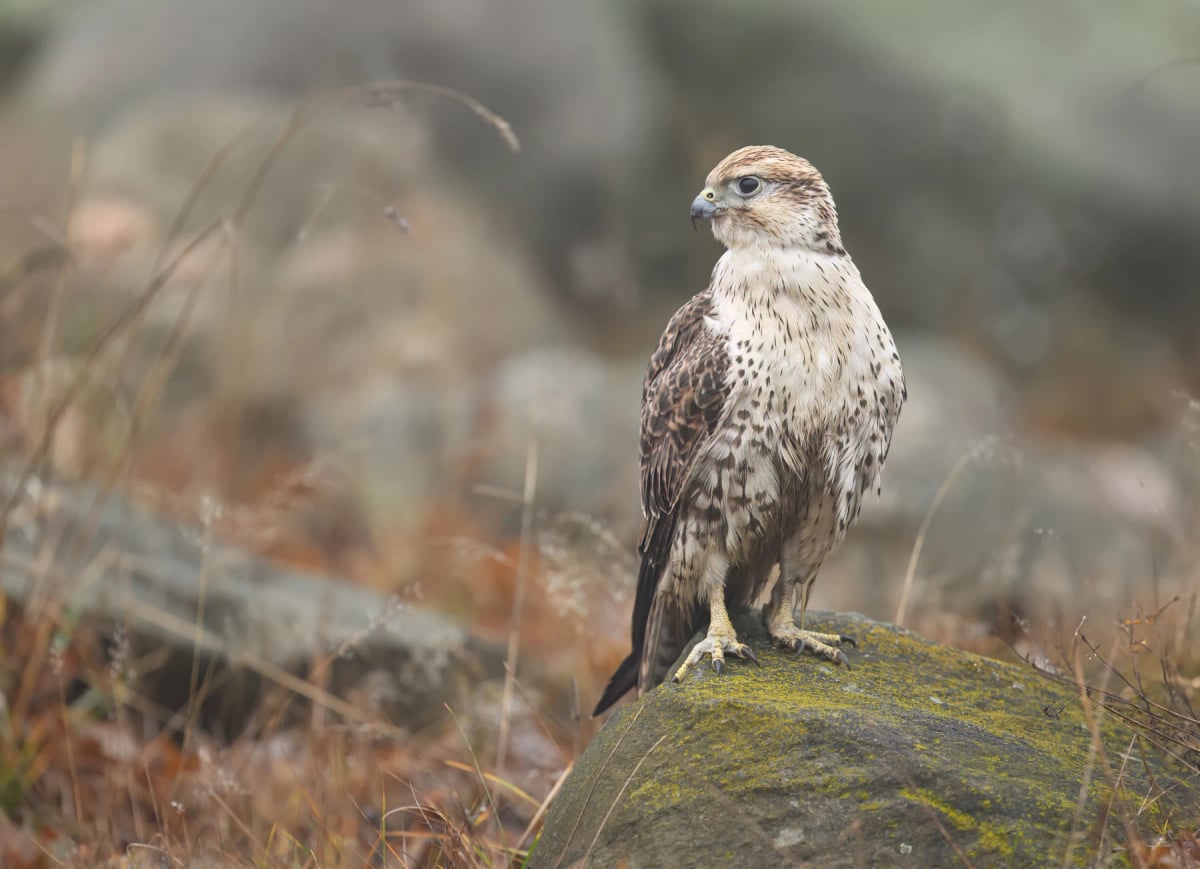
Saker Falcon
Falco cherrug
The saker falcon occurs in Montenegro primarily as a passage migrant moving through the Balkans between its Central Asian and Eastern European breeding grounds and its wintering areas further south. The open karst landscapes and agricultural plains of the country can provide temporary foraging habitat during migration. Montenegro forms part of a broader Balkan network where regional cooperation supports monitoring of this species. The IUCN currently lists the saker falcon as Endangered.
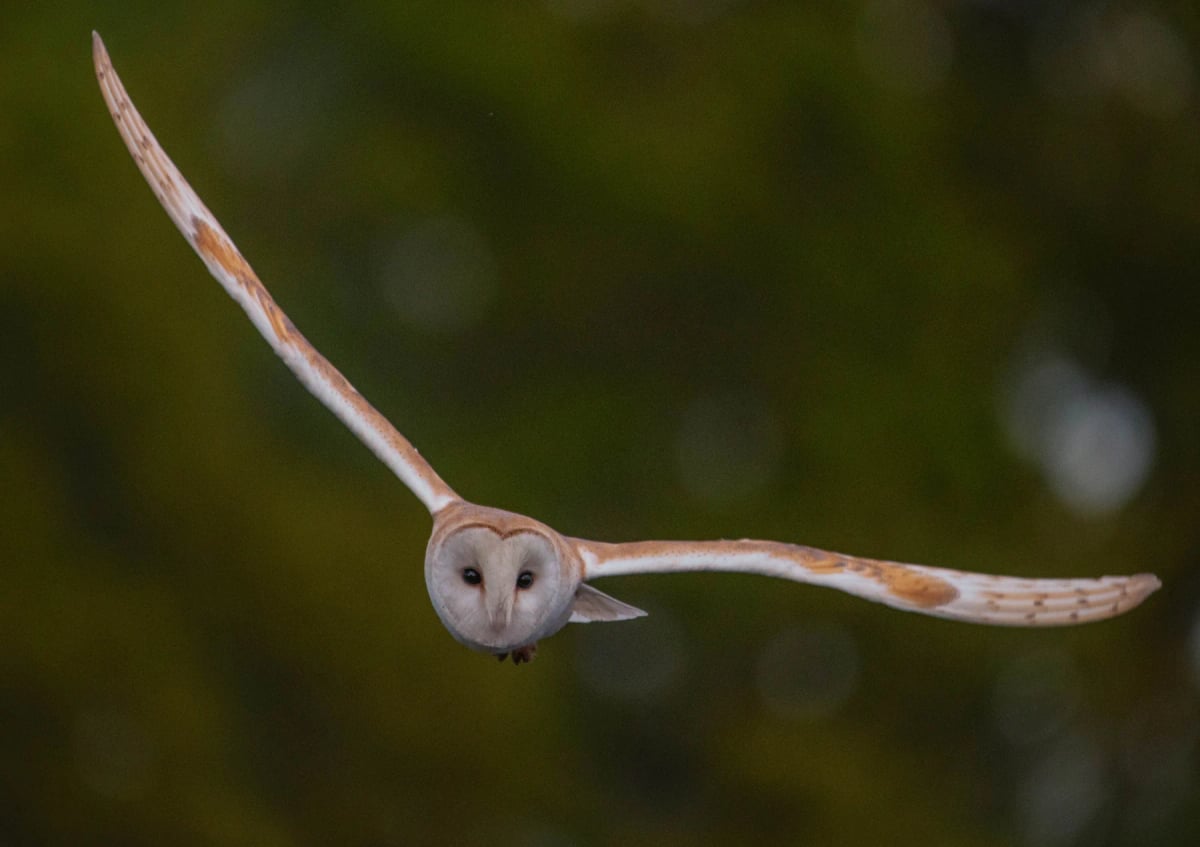
Barn Owl
Tyto alba
The barn owl is a resident of lowland and coastal Montenegro, found in open farmland, river valleys, and rural villages along the Adriatic coast and the Zeta plain. It nests in old stone buildings, church towers, and cliff faces in the karst landscape, and hunts mice and voles at night in open fields. Montenegro's rocky terrain with abundant old stone structures provides good nesting opportunities. It is less commonly encountered in the high Dinaric mountain zones of the interior, where cold winters limit its distribution.
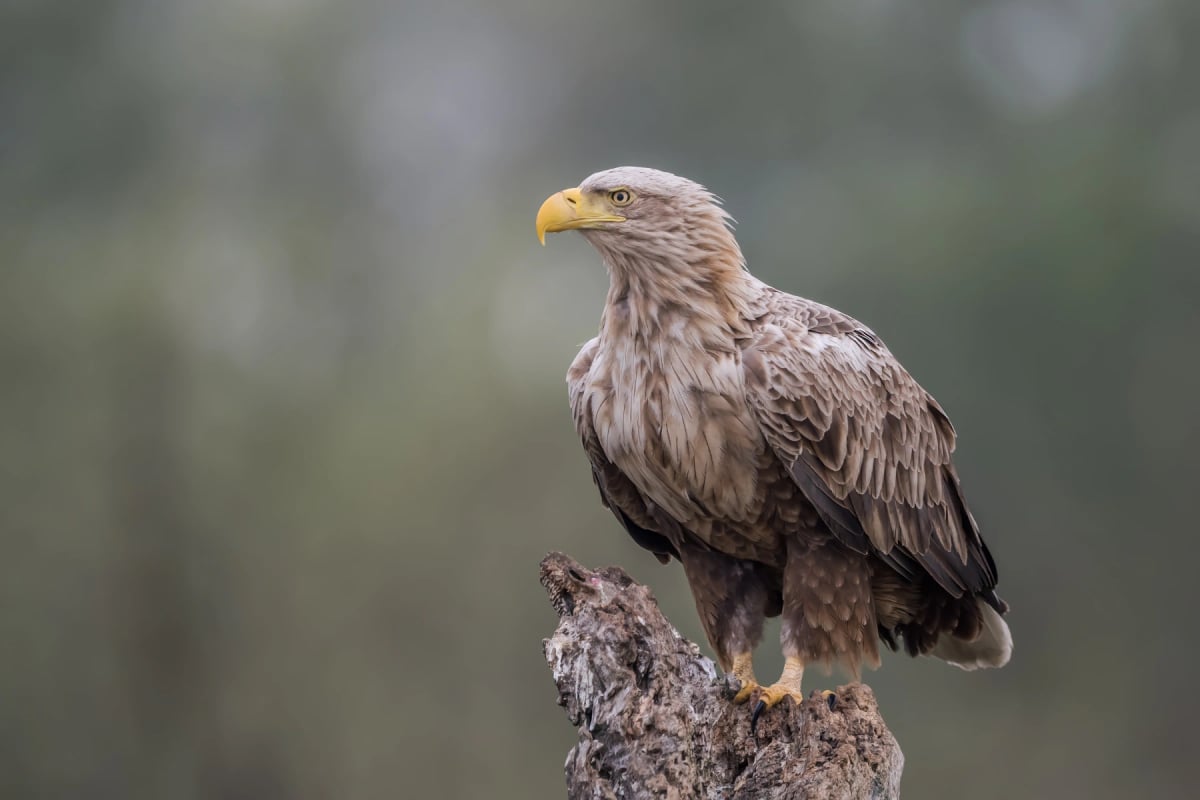
White tailed Eagle
Haliaeetus albicilla
The white tailed eagle occurs in Montenegro as a rare visitor and occasional winter resident, most often seen around Lake Skadar, the largest lake in the Balkans. This vast wetland on the border with Albania attracts fish and waterfowl in abundance, making it a suitable stopover. The lake is a national park and a Ramsar site, offering some level of protection to this impressive eagle during its visits.
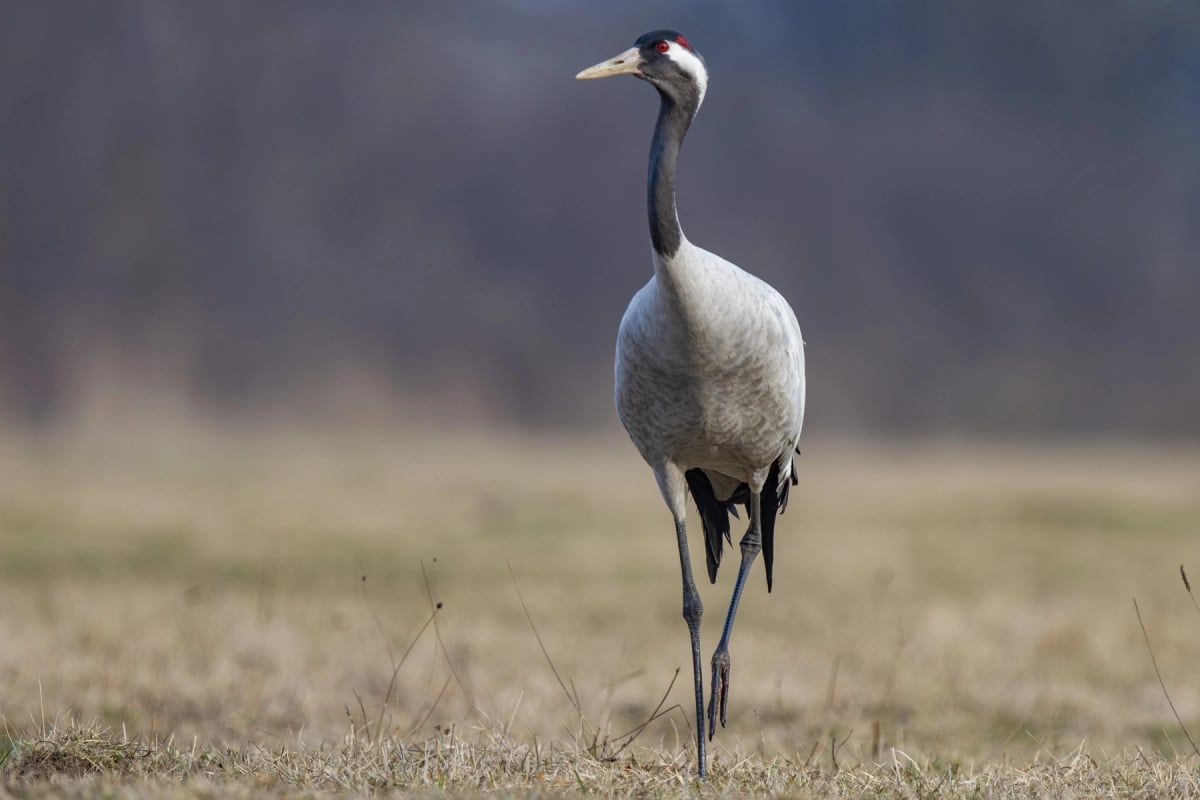
Crane
Grus grus
The common crane passes through Montenegro during its autumn and spring migrations, following flyways that cross the Balkans. Flocks can be spotted over open valleys and wetlands as they travel between northern breeding grounds and southern wintering areas. Standing up to 120 centimeters tall, with a grey body and a bold black and white head, the crane is one of the most striking birds to appear in Montenegrin skies. Its IUCN status is Least Concern.
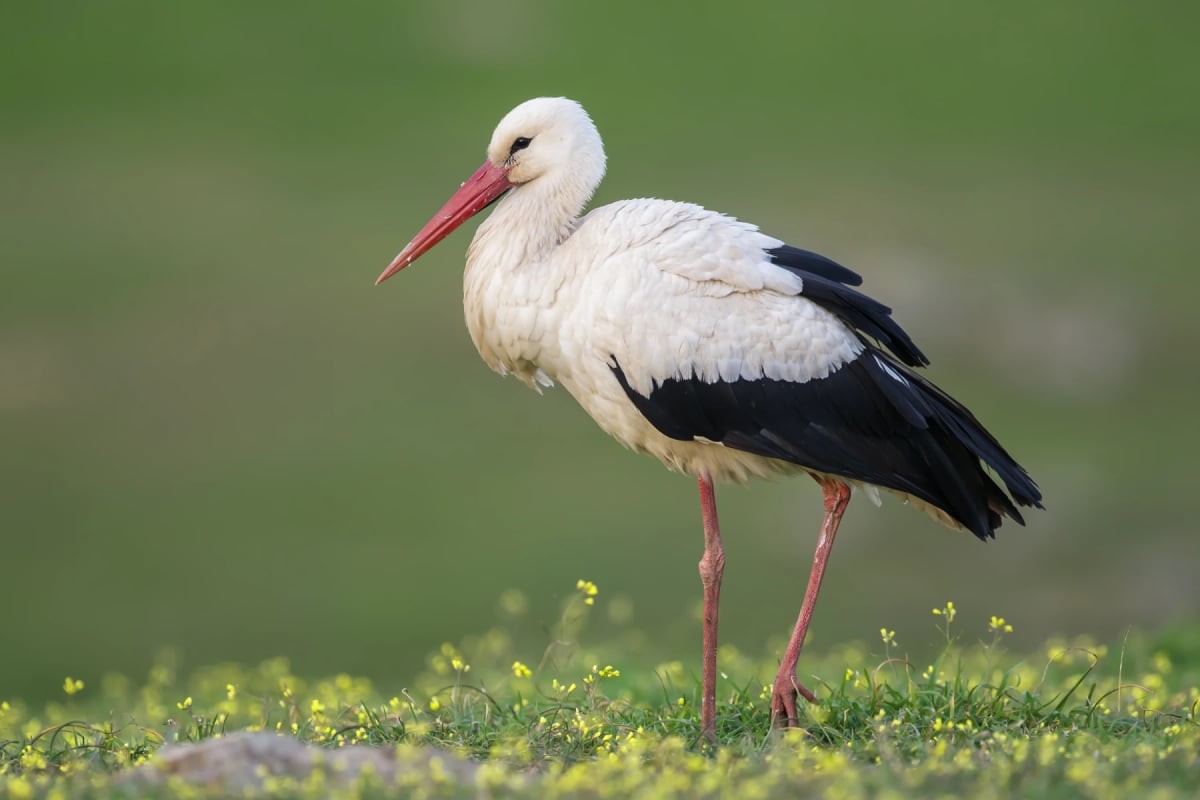
Stork
Ciconia ciconia
The white stork breeds in the lowland areas of Montenegro, particularly around the Zeta plain and the Skadar Lake basin, one of the largest lakes in the Balkans. These wetlands and surrounding farmland offer ideal foraging habitat. Storks nest on rooftops and tall structures in rural villages, returning to the same site each year. The IUCN lists the white stork as Least Concern.
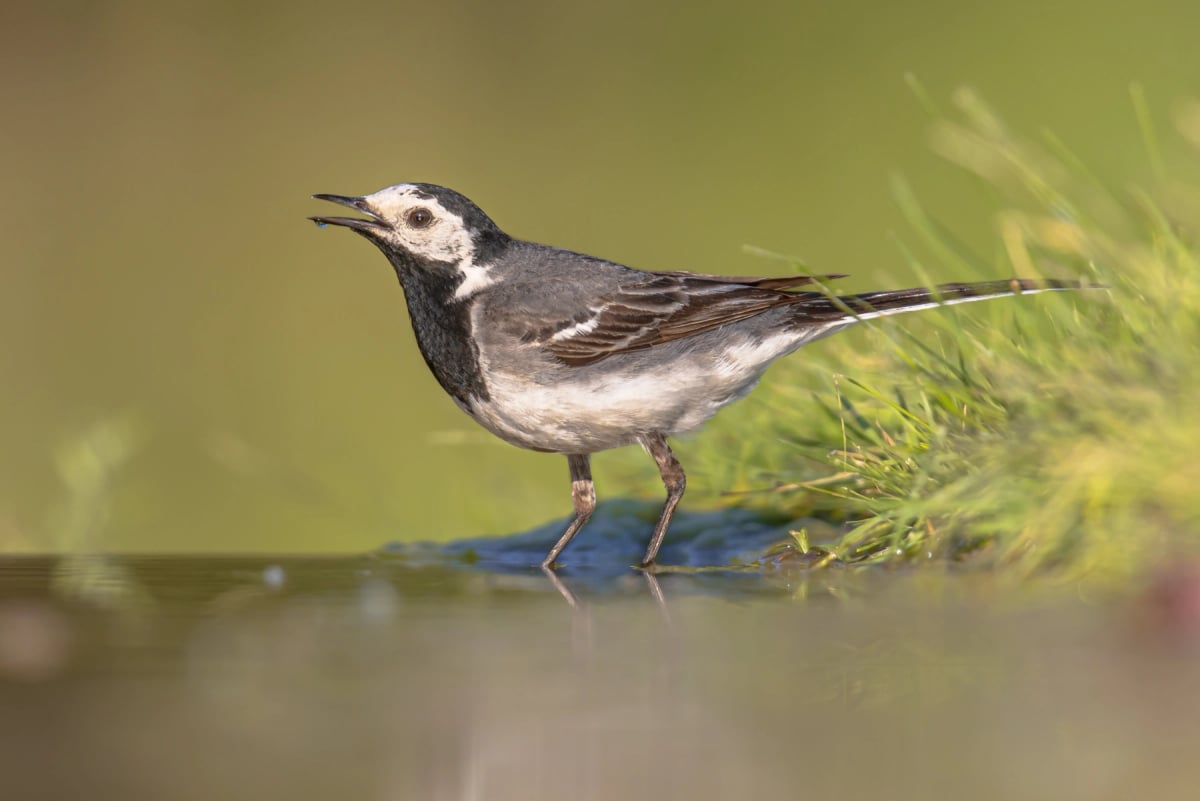
White Wagtail
Motacilla alba
The white wagtail breeds throughout Montenegro, along rivers such as the Tara, Morača and Lim, around Lake Skadar and in coastal towns, nesting in stone walls, bridges and old buildings. In winter, birds from central and eastern Europe join the residents in the lowlands, around Lake Skadar and along the Adriatic coast, where the mild climate keeps insects available. IUCN status: Least Concern.
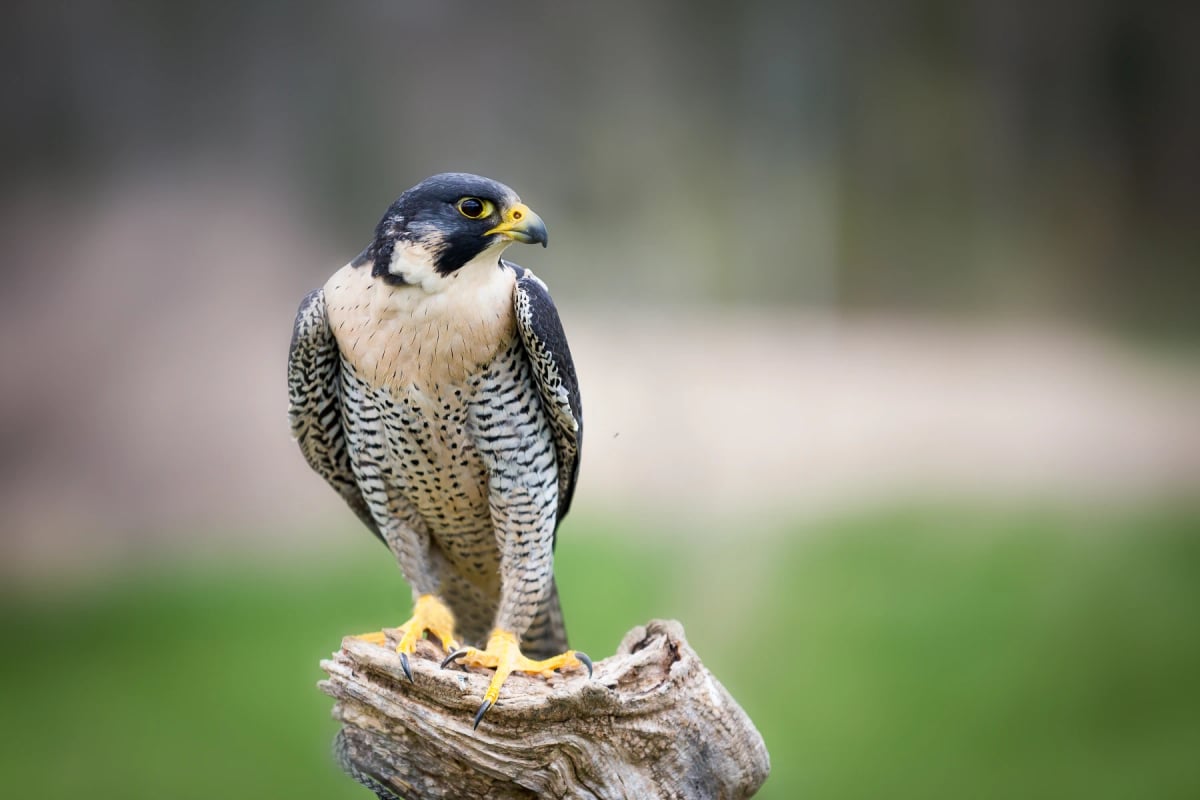
Peregrine Falcon
Falco peregrinus
Montenegro's dramatic landscape of limestone karst, deep canyons, and Adriatic sea cliffs makes it well suited to the peregrine falcon. The bird breeds on cliff faces in areas such as the Tara River Canyon, one of the deepest gorges in Europe. It is also recorded as a passage migrant moving through the western Balkans each season. Populations here are small but the species benefits from the protection of large national parks. Its IUCN status is Least Concern.
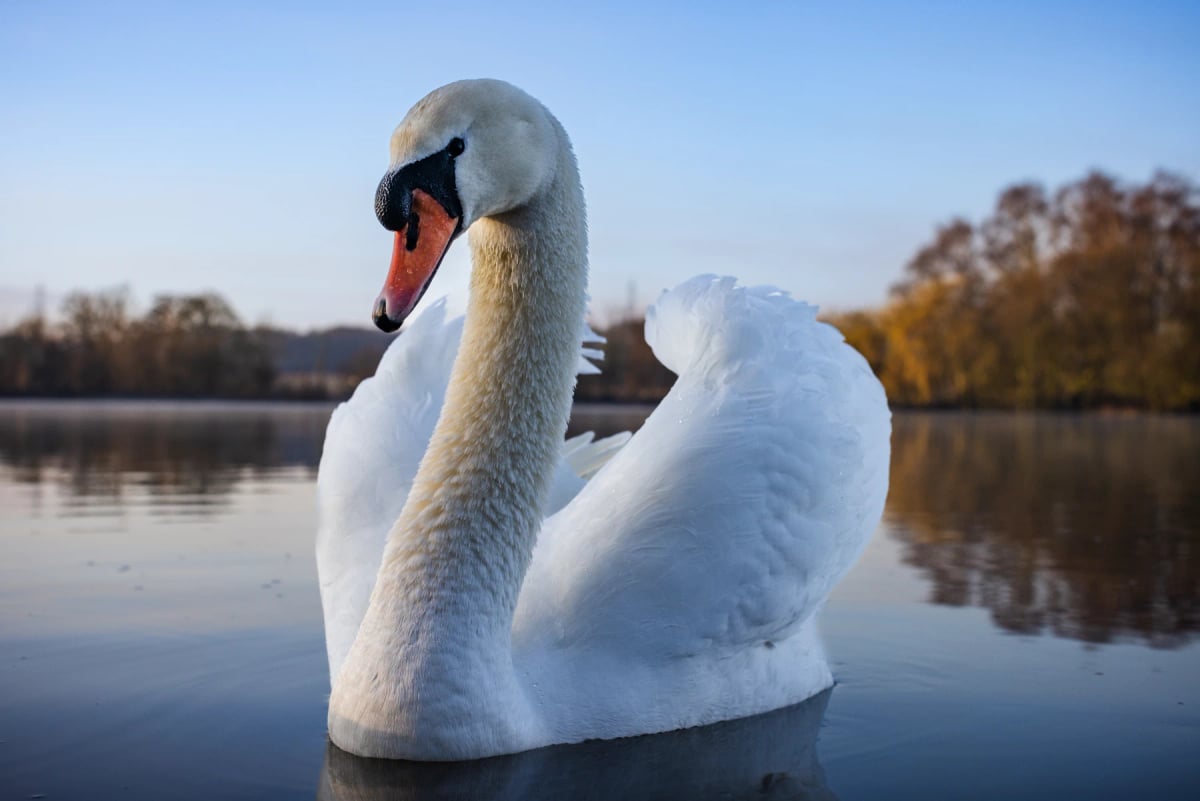
Mute Swan
Cygnus olor
The mute swan is seen in Montenegro mainly around Lake Skadar, one of the largest lakes in the Balkans and a site of great importance for waterbirds. It appears most regularly during winter and migration periods, when the lake's sheltered waters attract a wide range of species. The lake and its surrounding wetlands are protected within Skadar Lake National Park. The IUCN lists the mute swan as Least Concern.
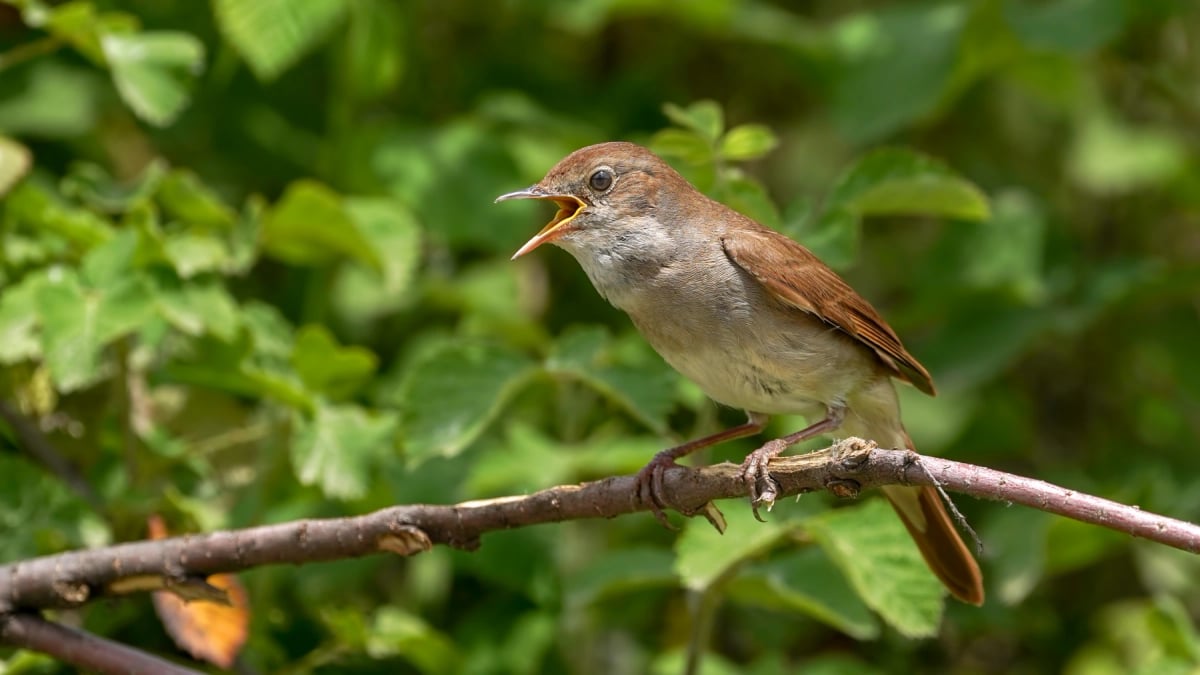
Nightingale
Luscinia megarhynchos
In Montenegro, the nightingale breeds in the lowland areas and river valleys, particularly along the Morača and Zeta rivers, where dense riparian scrub and thickets provide ideal nesting cover. It is less common in the rugged highland areas of the interior. The species is a familiar presence in parks and gardens in spring, when males sing persistently after dark. It migrates to Africa for the winter months. Its IUCN status is Least Concern.
Golden Eagle
Aquila chrysaetos
In Montenegro, the golden eagle inhabits the Dinaric Alps and the rugged mountains of the interior, including areas around Durmitor and Prokletije national parks. It nests on exposed cliff faces and hunts over open grasslands and scrubland. The species benefits from the protection offered by Montenegro's national park network. The IUCN lists the golden eagle as Least Concern worldwide.

Bottlenose Dolphin
Tursiops truncatus
Bottlenose dolphins inhabit the Adriatic Sea waters off Montenegro, a coastline characterized by clear, relatively shallow bays and inlets. They are among the most commonly spotted cetaceans in this part of the Mediterranean basin. Boat traffic and coastal development pose ongoing pressures on local populations. The IUCN lists the species as Least Concern globally, though Mediterranean subpopulations face additional regional threats.
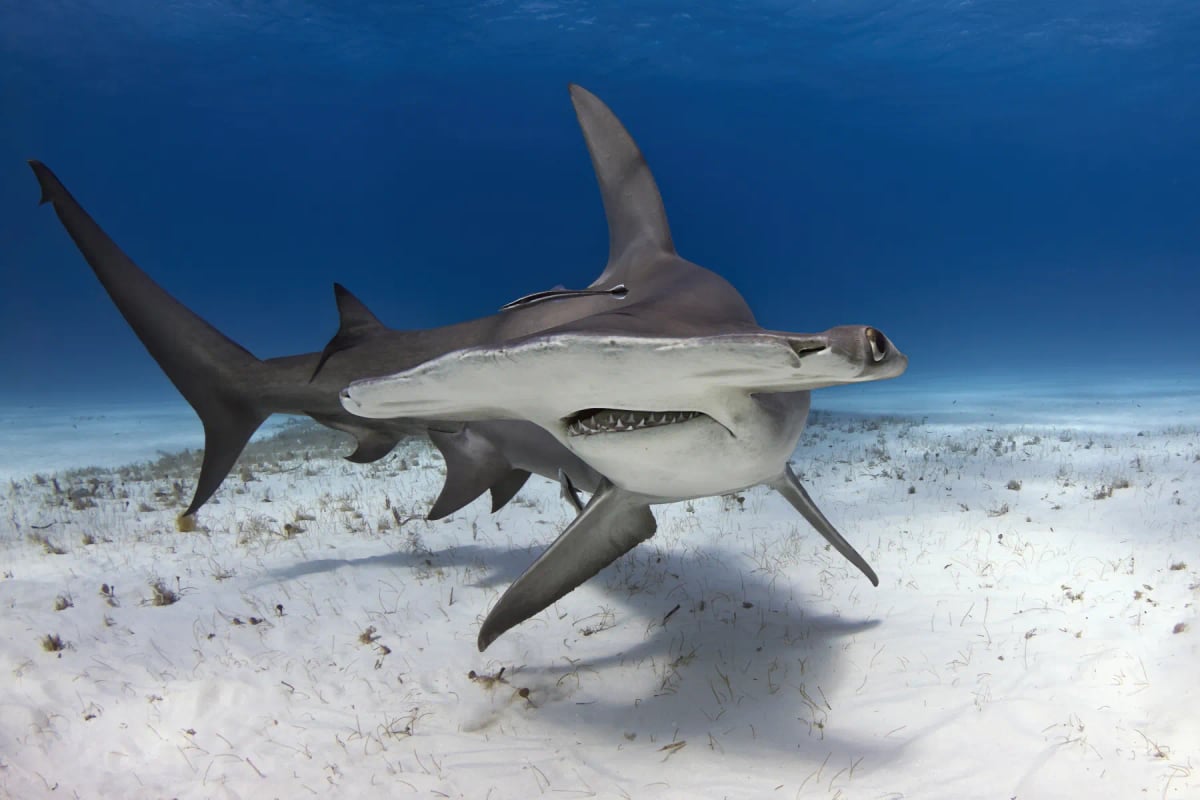
Hammerhead Shark
Sphyrna spp.
Hammerhead sharks have been recorded in the Adriatic Sea, which washes the coast of Montenegro, though sightings are rare today. Historically more common, their numbers in the Mediterranean have dropped sharply due to decades of overfishing across the region. Montenegro's Adriatic coastline sits within a sea that has lost much of its large shark diversity, making any confirmed sighting noteworthy.
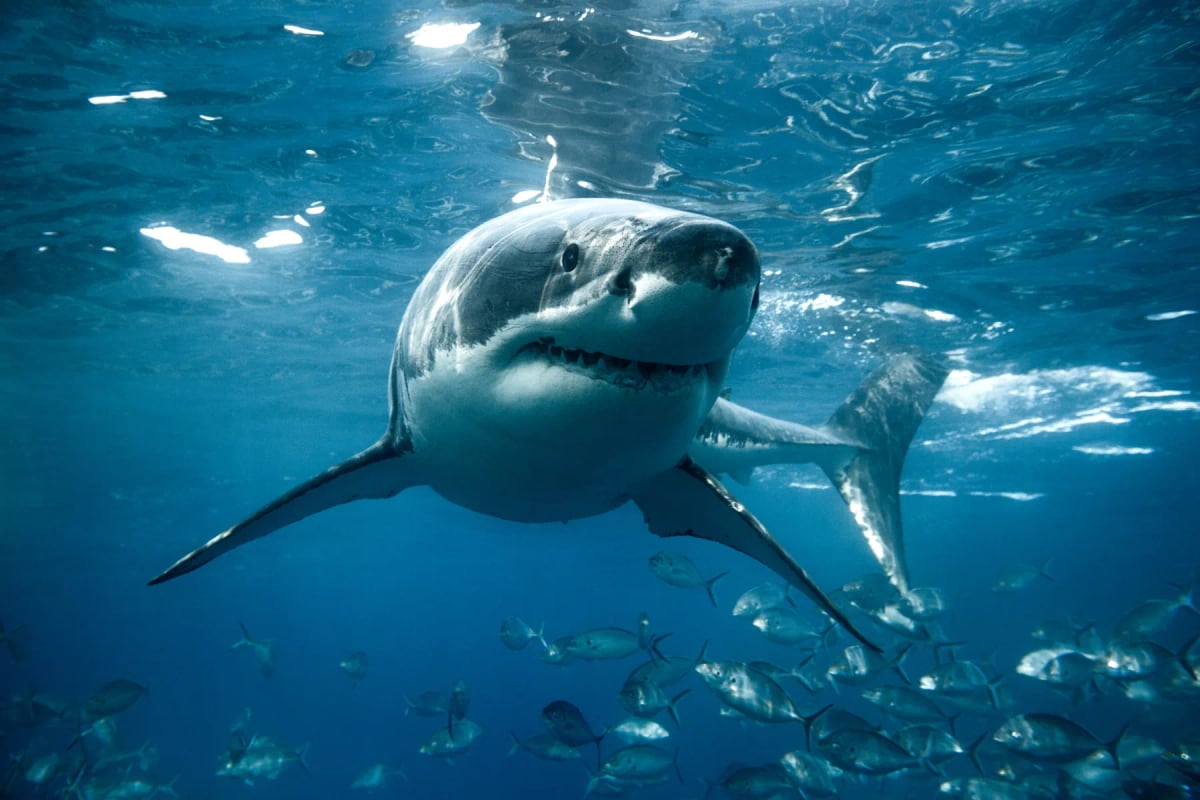
Great White Shark
Carcharodon carcharias
The great white shark has been documented in the Adriatic Sea, the narrow body of water that borders Montenegro's short but scenic coastline. Sightings in the Adriatic are very rare today, reflecting the serious decline this species has suffered across the Mediterranean over recent decades. Listed as Vulnerable globally, the great white receives growing attention from conservation organizations working to strengthen protections throughout the Mediterranean basin, including its northern reaches.
Researched and written by Juan Pablo. Sources: IUCN Red List, scientific literature and regional field guides. Last updated: .