Hare
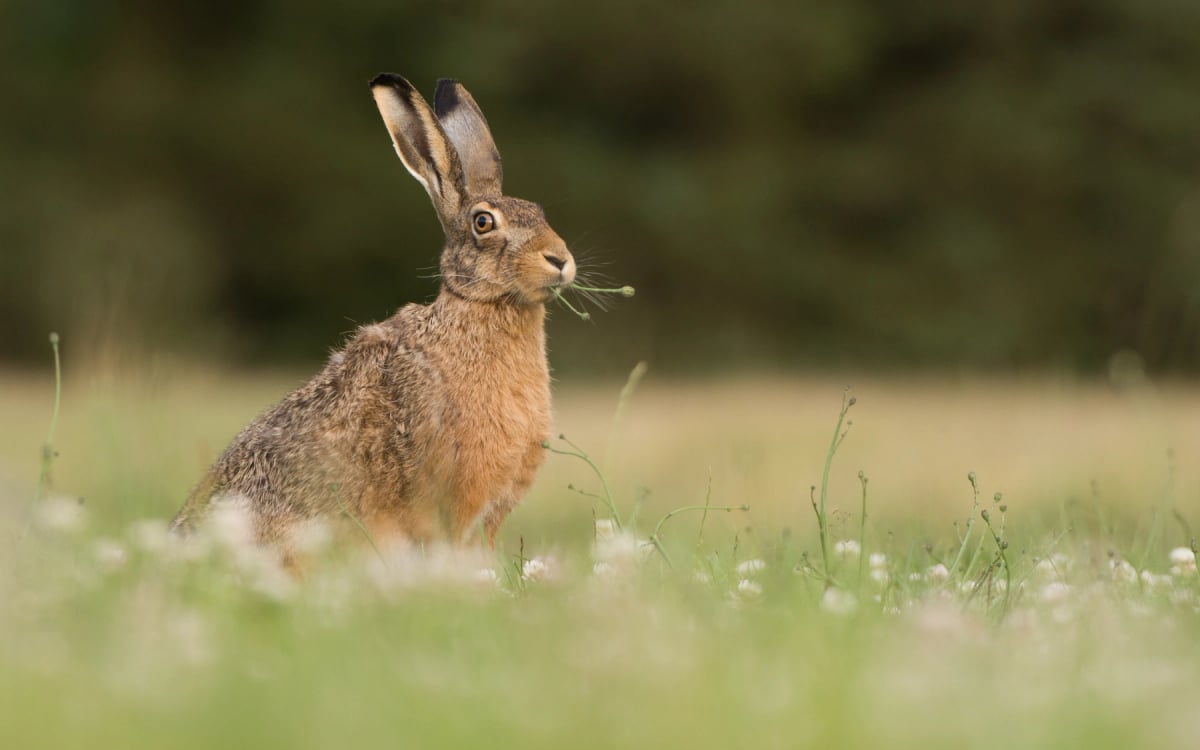
The European hare (Lepus europaeus) is one of the fastest land mammals in Europe, capable of reaching speeds of up to 70 km/h and escaping predators with sharp zigzag turns. It lives in open farmland, grasslands, and steppe, resting in shallow hollows in the ground known as forms rather than digging burrows. Its long ears and powerful hind legs are immediately recognisable. Born fully furred and with eyes open, young hares, called leverets, are active within hours of birth, which sets them apart from rabbits. Native to Europe and western Asia, the species has been introduced across South America, North America, and Oceania, where it has formed stable populations. In its native range, numbers have fallen in many areas due to intensive farming, mechanised harvesting, and the widespread use of pesticides.
Habitat and distribution
The European hare is at home in open country. It favours farmland, grassy meadows, and steppe, where it can spot predators from a distance and sprint away without obstruction. It is native to most of Europe and stretches east through Turkey, the Middle East, and into western Asia as far as parts of Iran and Iraq. Over the centuries, people introduced the species far beyond its original range. Today it is well established across much of South America, including Argentina, Chile, Uruguay, Brazil, and Bolivia, as well as in parts of North America, Australia, and New Zealand. It tends to avoid dense forests and prefers lower elevations, though it does occur in upland areas where the vegetation stays open. Populations in all these regions have generally settled and bred successfully.
Diet
Grasses and low herbs make up the bulk of the European hare's diet through most of the year. It grazes on whatever green plants are available, shifting to shoots, bark, and the dried stems of crops during winter when fresh growth is scarce. Cereals, root vegetables, and leafy field crops are all eaten readily, which puts hares in frequent conflict with farmers. They are most active at dawn and dusk, spending the cooler hours of the day grazing across fields before retreating to their forms to rest. Like rabbits, hares practise caecotrophy, re-ingesting certain droppings directly from the body to extract additional nutrients from plant material that was not fully digested on the first pass through the gut.
Behavior
Rather than digging burrows, the European hare rests in a form, a shallow scrape pressed into the soil or flattened grass that offers just enough cover to break up the animal's outline. When a predator gets too close, the hare relies on explosive speed, reaching up to 70 km/h, combined with sharp changes of direction that make it very difficult to follow. Hares are mostly solitary outside of the breeding season. In early spring, males chase females and engage in energetic boxing bouts, behaviour that gave rise to the phrase "mad as a March hare." Leverets are born in the open, already covered in fur and with their eyes fully open, and they scatter to hide individually within hours of birth, reducing the risk that a predator will find the whole litter at once.
Introductions worldwide
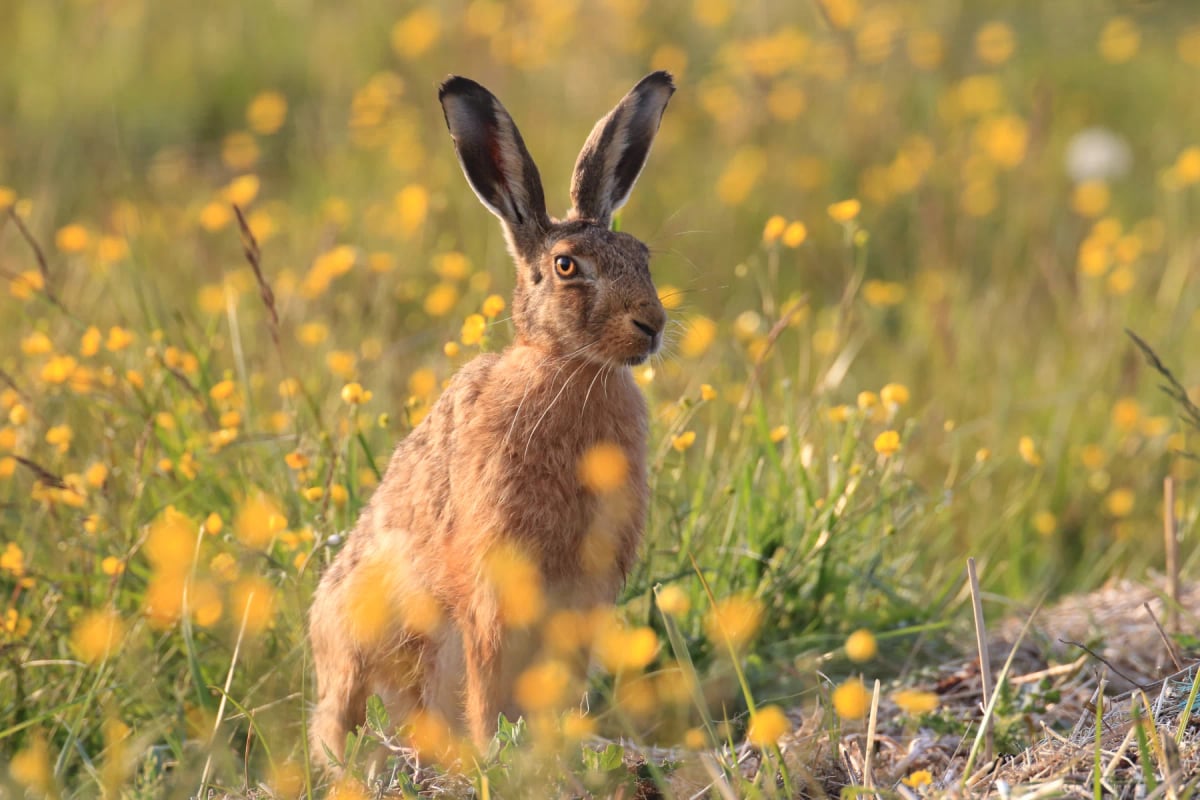
Few mammals have been transplanted as widely as the European hare. Introductions began in earnest during the nineteenth century, largely driven by hunters who wanted familiar quarry in new lands. South America received some of the largest numbers: Argentina became a stronghold, and the species spread from there into Chile, Uruguay, Brazil, Bolivia, and Paraguay. It also reached the Falkland Islands. In North America, populations exist in parts of Canada and the United States. Australia and New Zealand both have established groups descended from deliberate releases. In most of these regions the hare found open grassland that suited it well, and numbers grew quickly. In some areas it competes with native wildlife or damages crops, leading to culling programmes and ongoing debate about the long term impact of its presence outside its original range.
Conservation
Globally, the European hare is listed as Least Concern on the IUCN Red List, reflecting the size and spread of its overall population. Within Europe, however, the picture is more complicated. Numbers have dropped significantly across much of western and central Europe since the mid twentieth century. The shift toward intensive agriculture is the main driver: large fields with few hedgerows leave hares exposed, while mechanised harvesting equipment kills leverets that lie hidden in crops. Heavy use of pesticides reduces the diversity of plants and insects that hares depend on for food. Voluntary agri-environment schemes in several countries now encourage farmers to leave field margins uncut and to manage land in ways that benefit wildlife. Hunting is regulated across most of the native range, and in some regions closed seasons allow populations to recover.
Where it is found
The Hare can be found in places such as:
Researched and written by Juan Pablo. Sources: IUCN Red List, scientific literature and regional field guides. Last updated: .
Technical factsheet


Frequently Asked Questions
How fast can a European hare run?
European hares are among the fastest land animals in Europe, capable of reaching speeds of up to 70 km/h. What makes them even harder to catch is their ability to change direction in an instant, throwing off foxes, dogs, and birds of prey with sharp zigzag turns. Those powerful hind legs are built for exactly this kind of explosive, short burst of speed across open ground.
What do European hares eat?
Hares are herbivores and eat mostly grasses and low herbs throughout the year. In winter, when fresh plants are hard to find, they switch to bark, shoots, and dried crop stems. They also eat cereals, root vegetables, and leafy crops, which sometimes puts them at odds with farmers. To get the most nutrition from their food, they re-ingest certain droppings, a process that lets them digest plant matter a second time.
Where do hares sleep or rest?
Hares do not dig burrows like rabbits do. Instead, they rest in a form, which is simply a shallow hollow scraped into the soil or pressed into flattened grass. The form offers just enough cover to break up the hare's outline against the ground. When danger gets too close, the hare bursts out at full speed rather than hiding underground. They tend to rest during the middle of the day and are most active at dawn and dusk.
What is the difference between a hare and a rabbit?
Hares and rabbits look similar but are quite different. Hares are larger, with longer ears and bigger hind legs. The most striking difference is in how their young are born: leverets arrive already covered in fur, with their eyes open, and can move around within hours. Rabbit kits, by contrast, are born blind, hairless, and helpless. Hares also never dig burrows, while rabbits live in underground tunnel systems called warrens.
Why do hares box in spring?
The boxing you might see in spring is usually a female pushing back an overly persistent male during the breeding season. For a long time people assumed it was two males fighting over territory, but it is most often the female setting limits on a suitor she is not ready to accept. This energetic behavior, which happens mainly in March, is where the old phrase 'mad as a March hare' comes from.
Are European hares endangered?
Globally, the European hare is classified as Least Concern by the IUCN, meaning the species as a whole is not at risk of extinction. Within Europe, though, numbers have fallen sharply in many countries since the mid twentieth century. Intensive farming, the loss of hedgerows, mechanised harvesting, and pesticide use are the main causes. Several countries now run wildlife programs that encourage farmers to manage land in ways that give hares a better chance.
How did European hares end up in South America and Australia?
People brought them there deliberately. From the nineteenth century onward, hunters introduced European hares to new countries so they could continue pursuing familiar quarry. Argentina received large numbers and became a major stronghold, with the species later spreading into Chile, Uruguay, Brazil, Bolivia, and Paraguay. Australia and New Zealand also received deliberate releases. In most of these places the hare found open grassland that suited it well, and populations grew quickly.