Eurasian Beaver
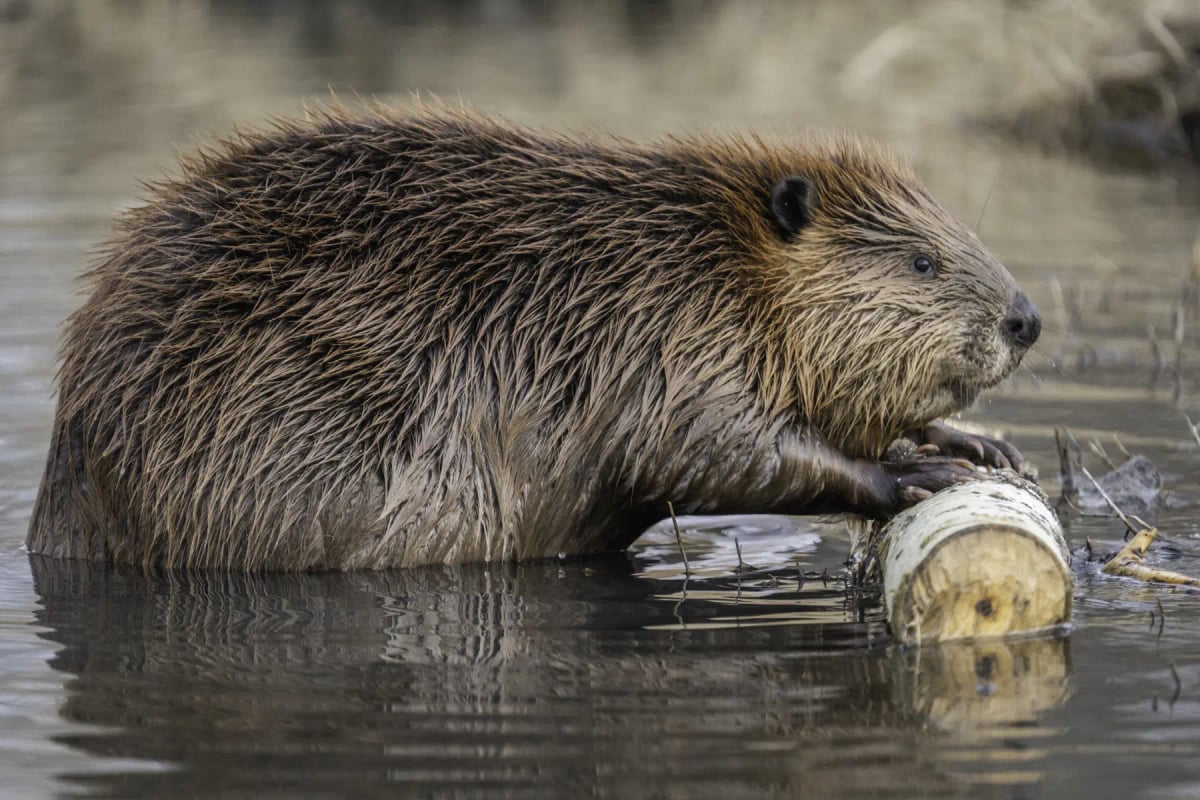
The Eurasian beaver (Castor fiber), also called the European beaver, is the largest rodent of Europe and Asia. Adults weigh 11 to 30 kilograms and have thick brown fur, webbed hind feet, strong orange front teeth and a broad, flat, scaly tail. It lives along rivers, streams, lakes and wetlands with willows and poplars, from Spain, France and Britain across Europe and Russia to Kazakhstan, western Mongolia and northwest China. Beavers are herbivores that eat water plants in summer and the bark and twigs of trees in winter. A family, made up of an adult pair and their young, lives in a burrow dug into the riverbank or in a lodge of sticks and mud, and may build dams that turn small streams into ponds full of life. Hunted for its fur, meat and castoreum, the species fell to about 1,200 animals around 1900. Protection and reintroductions brought it back to at least 1.5 million, and the IUCN lists it as Least Concern.
Names and Relatives
The Eurasian beaver, Castor fiber, is also known as the European beaver. It is one of only two living beaver species, together with the North American beaver, Castor canadensis. For a long time the two were thought to be the same animal, but their genes are different: the Eurasian beaver has 48 chromosomes and the North American has 40, so they cannot produce young together. They look almost identical, although the Eurasian beaver usually has a narrower tail and a longer, narrower skull. It also builds dams less often and more often lives in burrows dug into riverbanks. Scientists recognize several subspecies, which survived in separate pockets after centuries of hunting. One of the rarest is the Mongolian beaver, which lives only along the Bulgan River on the border between Mongolia and China. The scientific name is very old: fiber was a Latin word for beaver, and castor comes from the Greek name for the animal.
Size and Appearance
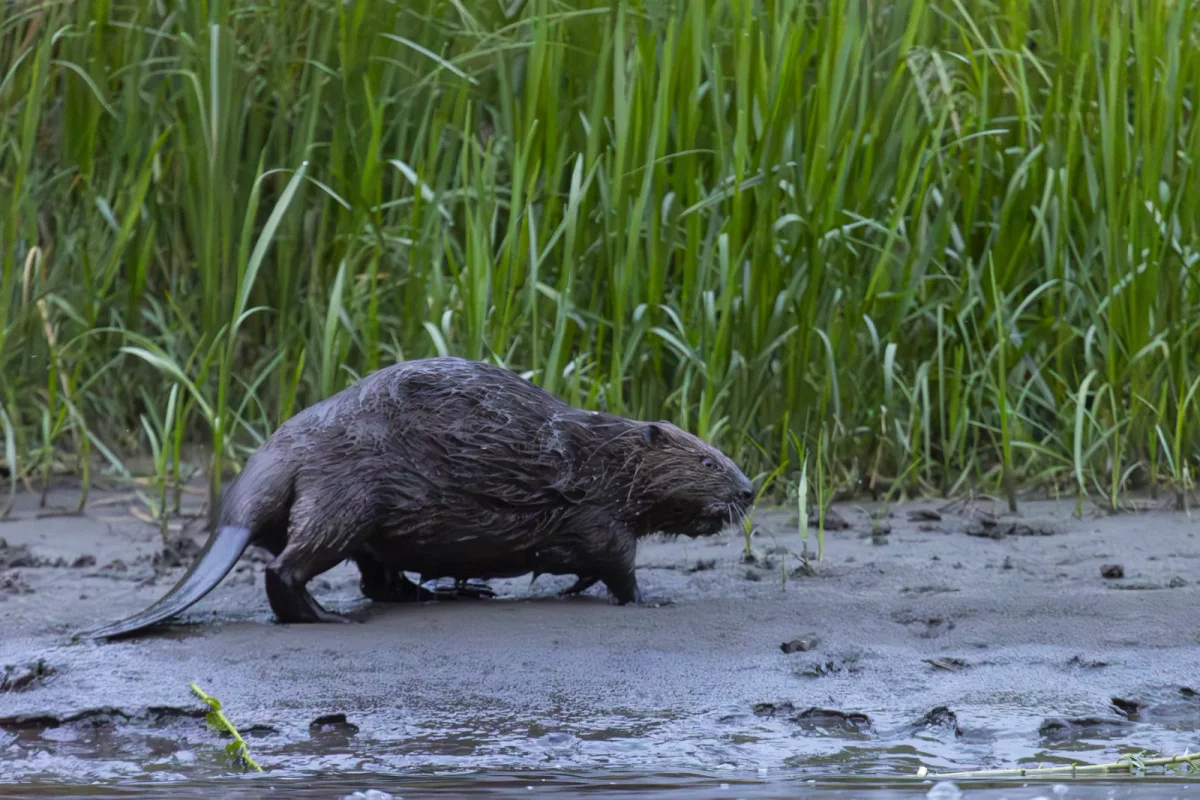
The Eurasian beaver is the largest rodent in Europe and Asia and, together with its North American relative, the second largest in the world after the capybara. Adults usually measure 80 to 100 centimeters from nose to rump, plus a flat tail of 25 to 50 centimeters, and weigh 11 to 30 kilograms. Males and females are the same size. The thick fur ranges from pale golden brown to dark brown and almost black, with long guard hairs over a dense, soft underfur that keeps the skin dry. The tail is broad, hairless and covered in black scales. The large hind feet are webbed for swimming, while the small front paws work like hands for carrying mud and holding food. The front teeth are orange because their enamel contains iron, which makes them hard enough to cut through wood. They never stop growing, so constant gnawing keeps them at the right length.
Diet
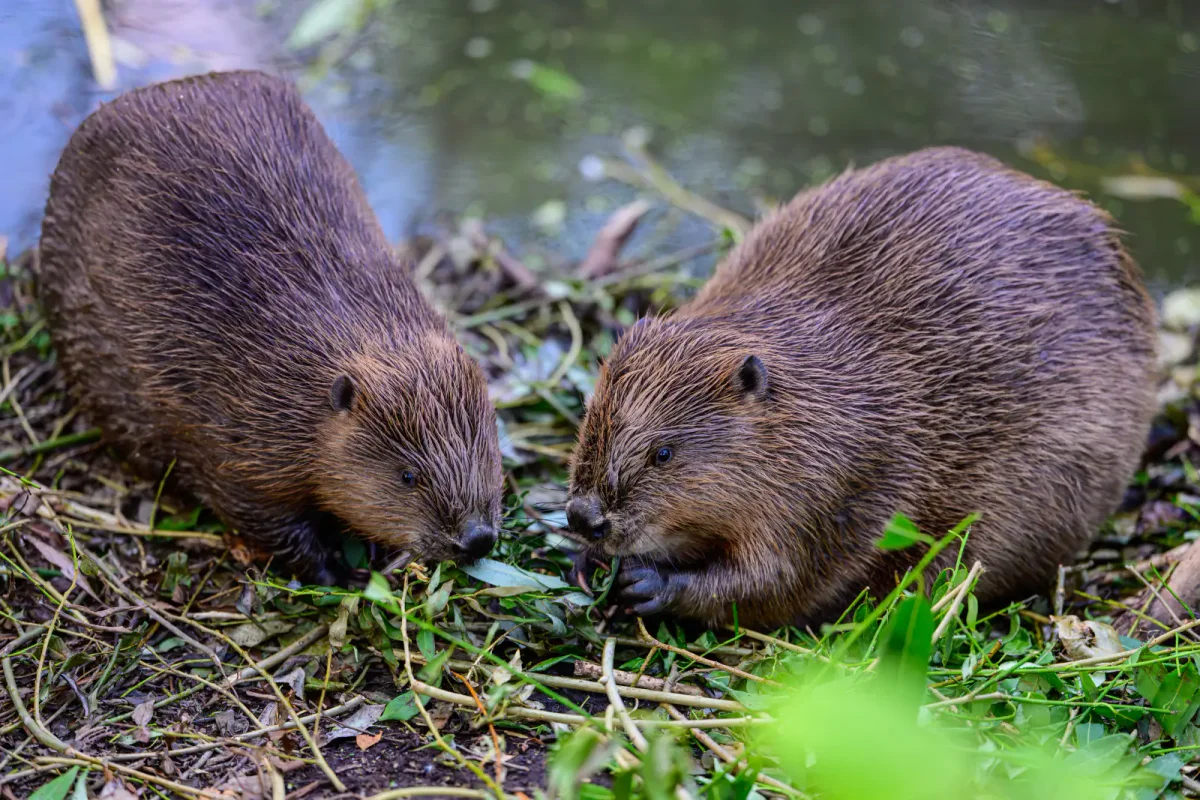
Beavers are strict herbivores. In spring and summer they eat mostly soft plants such as grasses, herbs, water lilies, reeds, leaves and young shoots, and they sometimes feed in farm fields close to the water. In autumn and winter they live mainly on the bark and twigs of trees. Willows, aspens and poplars are their favorites, followed by birch, while they usually avoid conifers. A beaver can bring down a tree much thicker than itself by gnawing around the trunk until it falls, and then it cuts the branches into pieces it can carry. Before winter, families in cold regions sink a large pile of branches in the water next to their home. When the surface freezes, they swim under the ice to the pile and bring branches back to eat inside. To get more out of such a tough diet, beavers have gut bacteria that break down wood fibers, and they eat some of their own soft droppings to digest them a second time.
Dams, Lodges and Burrows
Beavers need water deep enough to hide the entrances to their home and to keep their winter food store from freezing. Where a river is already deep, Eurasian beavers often just dig a burrow into the bank, with a tunnel that starts underwater and leads up to a dry chamber. On small streams and in shallow water they build dams of branches, stones and mud to raise the water level, and lodges, dome shaped piles of sticks and mud with a chamber inside, standing in the pond or against the bank. When a dam leaks, they repair it at night. These works change the whole landscape. Beaver ponds hold back water during floods and keep it during droughts, trap mud and pollution, and create wetlands full of insects, frogs, fish, ducks and bats. Dead trees standing in the water become homes for woodpeckers, and otters often use old beaver burrows. For this reason beavers are called ecosystem engineers.
Family Life and Young
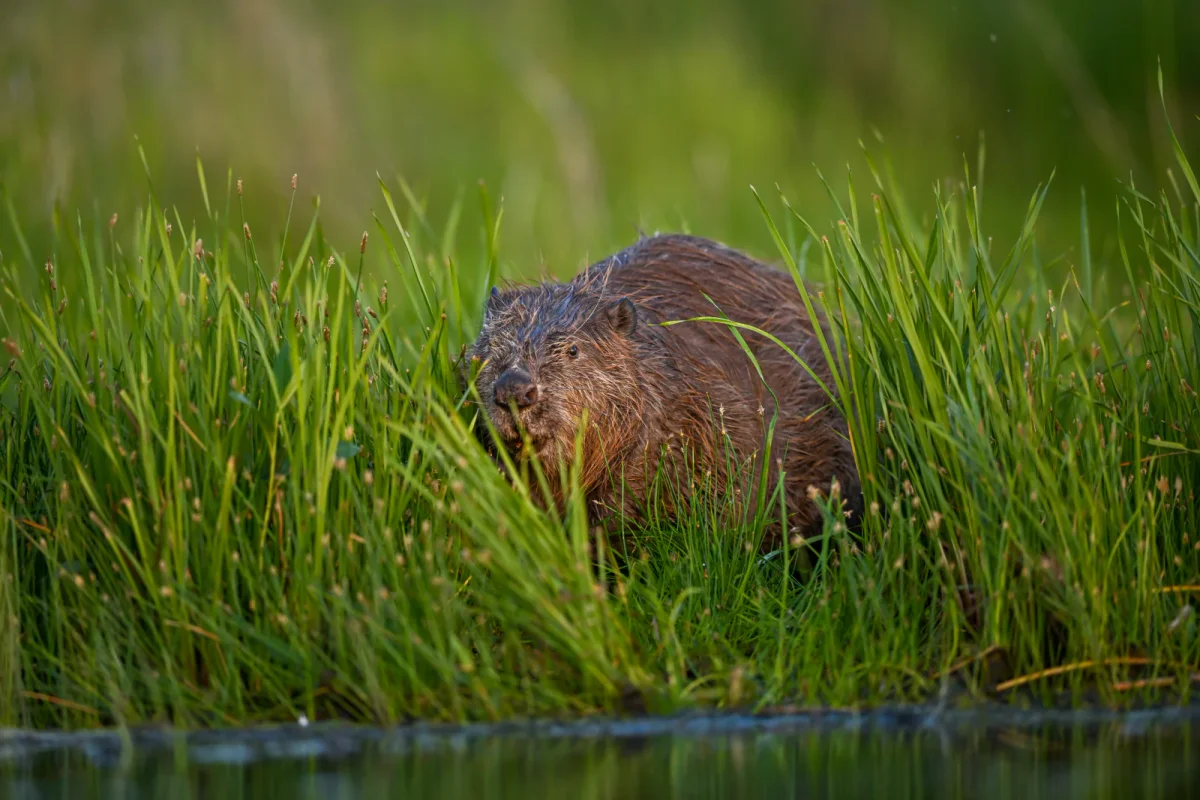
Eurasian beavers live in family groups made up of an adult pair, which usually stays together for years, and their young from the last two years. Each family holds a stretch of river and marks its borders with small mounds of mud scented with castoreum and oil from glands near the tail. Mating takes place in winter, often under the ice, and after a pregnancy of a little over 100 days the female gives birth in late spring. A litter usually has two or three kits, sometimes up to six. They are born furred and with open eyes, and they can swim within days, although at first they stay inside the lodge or burrow. The kits nurse for about two months and then start eating plants brought by the family. Young beavers help with work and with the next litter, and at around two years old they leave home to find a partner and a territory of their own, sometimes traveling tens of kilometers along rivers.
Habitat and Where to See Them
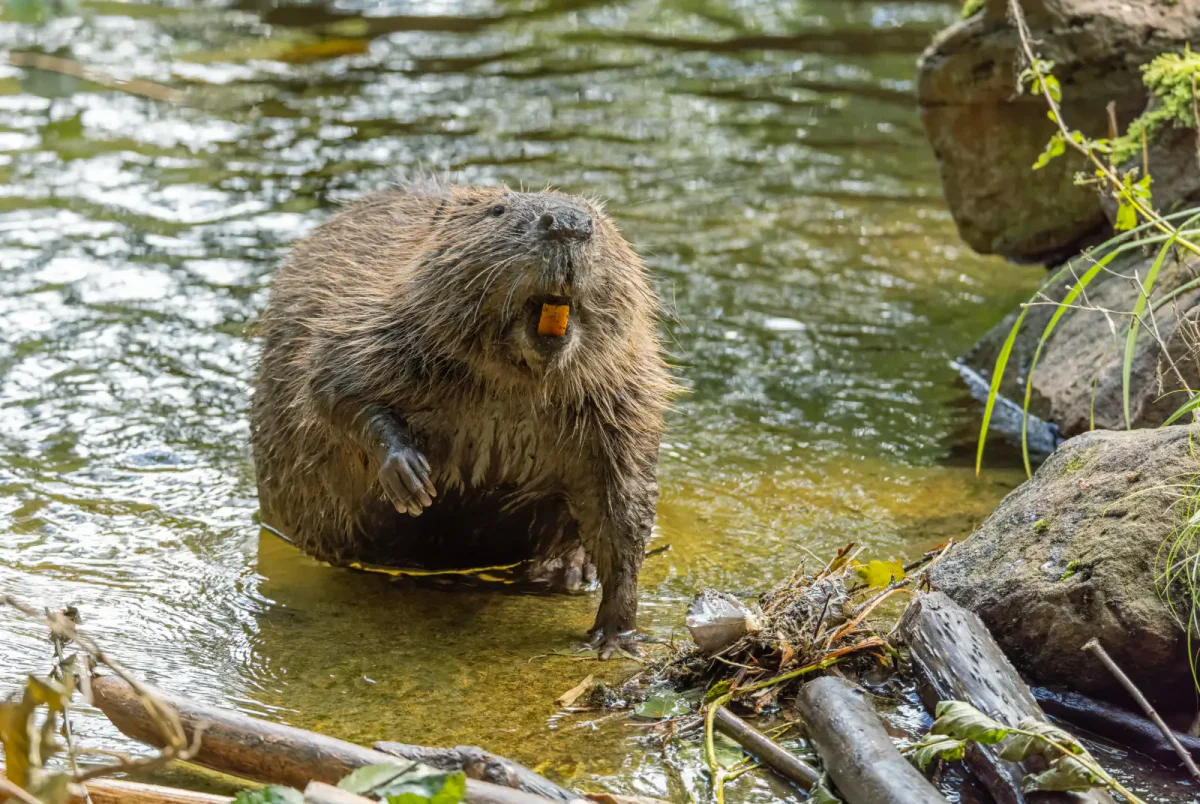
The Eurasian beaver lives along slow rivers, streams, lakes, ponds, marshes and even drainage ditches, as long as there are willows, poplars or other soft trees nearby. It once ranged from Britain and Spain across Europe and Siberia to Mongolia and China. Today it lives again in most European countries, from Spain, France and Britain to Scandinavia, the Balkans and Russia, and in Asia in Kazakhstan, Siberia and small areas of western Mongolia and northwest China. It is mostly active at dusk and during the night, so the best way to see one is to wait quietly by a pond or river in the evening. Good places include the Biesbosch in the Netherlands, the Elbe in Germany, the Danube floodplains near Vienna, Biebrza in Poland, Soomaa in Estonia, the rivers of Värmland in Sweden and the Tay in Scotland. Gnawed stumps shaped like pencil points are the easiest sign that beavers are near.
Near Extinction and Recovery
For centuries beavers were hunted for their warm fur, for their meat and for castoreum, a substance from scent glands used in medicine and perfume. By the end of the 19th century only about 1,200 Eurasian beavers were left, split into eight isolated groups in places such as France, Germany, Norway, Russia and Mongolia. Protection laws and moving beavers to new rivers, which began in Sweden in 1922 and spread to more than 20 countries, led to one of the great recoveries of European wildlife. A 2020 study estimated at least 1.5 million beavers, more than three times the number counted in 1998. The IUCN lists the species as Least Concern, with an increasing population. The comeback also brings conflicts, since dams can flood farmland, roads and forests, and some countries allow regulated hunting. The small populations of Mongolia and China remain the most vulnerable.
Where it is found
The Eurasian Beaver can be found in places such as: