Barn Owl
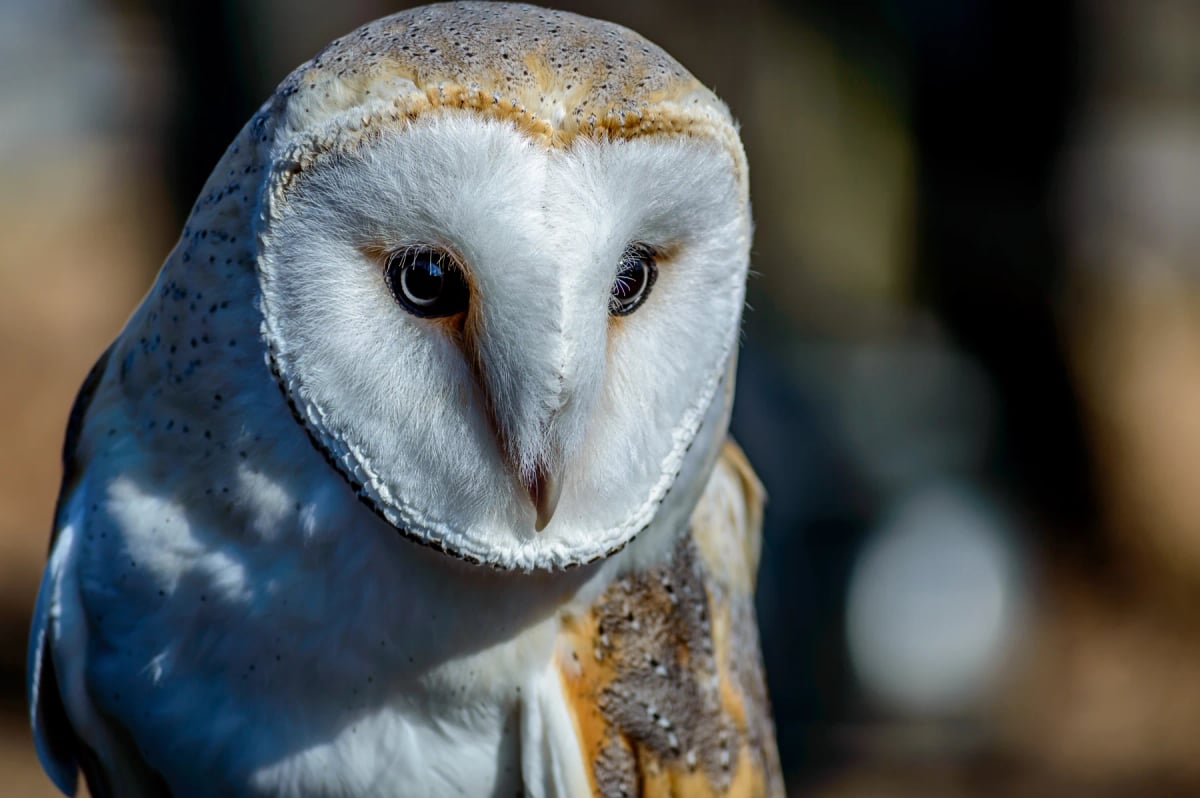
The barn owl is one of the most widespread birds on Earth, found on every continent except Antarctica. Its heart shaped facial disc, golden wings, and ghostly pale underside make it instantly recognizable. Specialized hearing allows it to detect rodents in complete darkness, making it one of the most effective natural pest controllers in agricultural landscapes worldwide. Its silent flight comes from unique feather adaptations that eliminate turbulence noise, and instead of hooting it gives a long, eerie screech. Though globally common and classified as Least Concern, populations have declined locally due to habitat loss, loss of nesting sites, and secondary poisoning from rodenticides.
What does a barn owl sound like?
Barn owls do not hoot. Their best known call is a long, harsh, rasping screech, a shriek of about two seconds that the male gives in flight around the nest site, especially in late winter and spring. Heard at night from an old barn or church tower, it is the sound that earned the species names such as screech owl, ghost owl and demon owl, and it is the reason many people find the barn owl creepy. When disturbed or threatened, barn owls hiss loudly, like a snake, often while swaying the head and spreading the wings to look bigger. At the nest, the chicks and the incubating female make a wheezing, snoring sound to beg for food, a noise that can be heard from outside the building and has frightened more than one farmer at night. Barn owls also make soft twittering and purring calls between partners, and they click their bills. The famous hoo hoo of owls in films belongs to other species, such as the tawny owl in Europe or the great horned owl in America.
Barn owl in flight: why it is silent
The barn owl's near silent flight results from several feather adaptations that together eliminate the turbulence noise most birds produce in flight. The leading edge of its primary feathers has a serrated fringe that breaks up airflow before it can generate sound. The trailing edge features a soft fringe that further dampens noise, and the entire plumage has a velvet texture that absorbs remaining sound waves. This acoustic stealth allows the owl to approach prey without detection and to hear rodents moving through grass below with exceptional clarity, giving it a significant hunting advantage over other birds of prey. In flight the barn owl looks long winged and pale, almost white from below, and it often quarters low and slowly over fields at dusk, hovering briefly before dropping onto prey.
Habitat and distribution
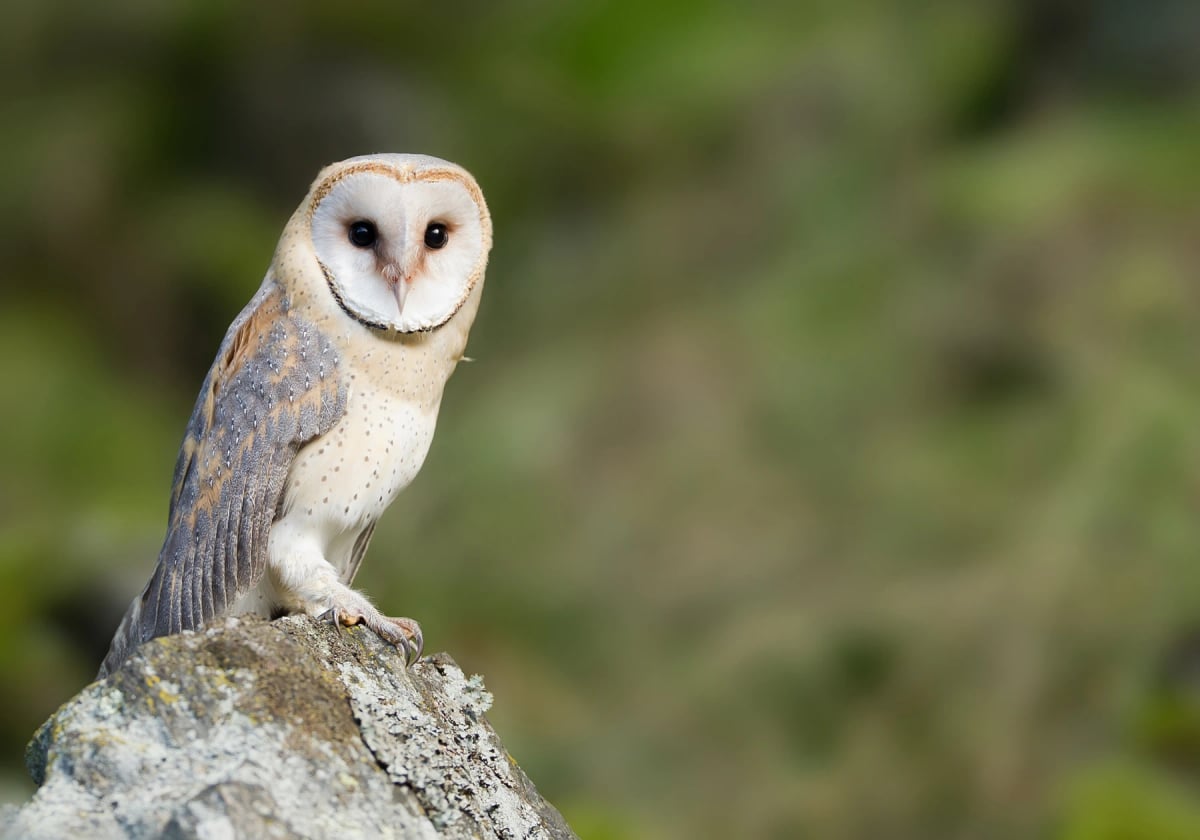
The barn owl is one of the most widely distributed birds on Earth, native to every continent except Antarctica. It thrives in open and semi-open landscapes including farmland, grassland, marshes, forest edges, and the outskirts of towns and villages. The species avoids dense forest and extremely cold regions, which explains its scarcity across most of Canada, Scandinavia, and Siberia. In tropical regions it often lives near rice fields and human settlements. Rather than building a nest, it relies on cavities for breeding, using old barns, church towers, cliff ledges, and hollow trees wherever they are available. It has also been introduced on some islands: it was brought to Hawaii between 1958 and 1963 to control rats in sugarcane fields and is now established there.
Diet
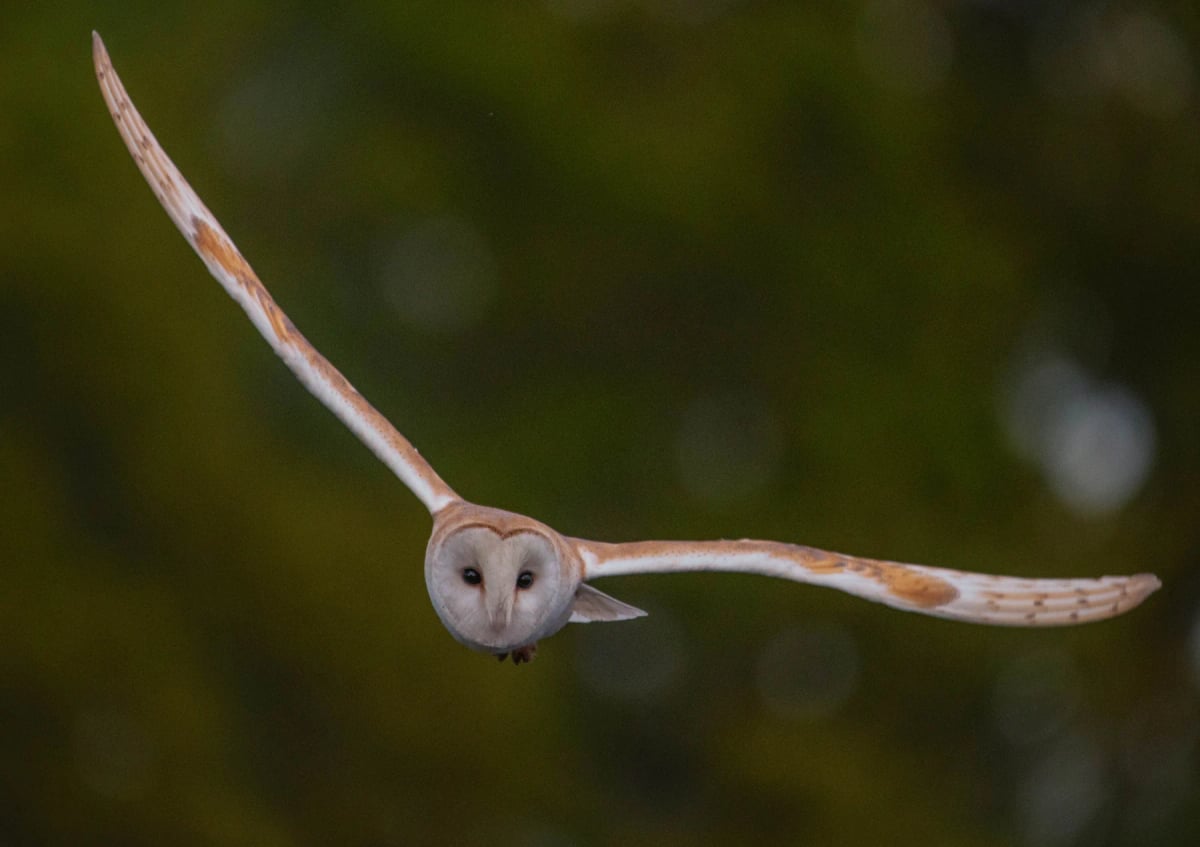
The barn owl is a specialist predator of small mammals, with voles, mice, shrews, and rats making up the vast majority of its diet. A single individual can consume between 1,000 and 1,500 rodents per year, making it one of the most valuable natural pest controllers in farming landscapes worldwide. It locates prey entirely by sound, using its heart shaped facial disc to channel sound waves toward its ears with extraordinary precision. Insects, small birds, and frogs are taken occasionally, particularly by young birds or when rodent populations are low. Its diet varies by region according to locally available prey.
Barn owl babies: eggs and owlets
A female barn owl lays about five eggs on average, and anywhere from two to nine, directly onto a bed of old pellets in a cavity, laying one every two or three days. She incubates alone for about 30 days while the male hunts and brings her food. Because incubation starts with the first egg, the chicks hatch days apart, and a single nest can hold owlets of very different sizes at the same time. The babies are covered in white down and look almost like cotton balls with dark eyes and a pale face, which is why barn owl baby is one of the most searched terms about the species. When food is short, the oldest and largest chicks get fed first and the smallest may not survive, a strategy that lets the parents raise at least some young in bad years. The owlets start to leave the nest and fly at around 8 to 10 weeks and become fully independent at about 13 weeks. In good vole years, pairs can raise two broods in a season, and in warm regions barn owls can breed at almost any time of year.
Behavior
Barn owls are strictly nocturnal and roost in dark, sheltered cavities during the day. They are monogamous and typically return each year to the same nest site. Unlike most birds, they do not build a nest but lay their eggs directly onto a bed of accumulated pellets inside a cavity. The female incubates the eggs alone while the male brings food, and both parents feed the chicks. When prey is abundant, barn owls can raise two broods in a single year. Chicks grow quickly and fledge in around eight to ten weeks, after which they disperse widely.
One barn owl or three?
For a long time the barn owl was treated as a single species, Tyto alba, found on every continent except Antarctica, and that is still how the IUCN and BirdLife International count it. Many ornithologists and some bird lists, however, now split it into three species based on DNA, size and voice. The western barn owl, Tyto alba in the strict sense, lives in Europe, Africa and western Asia and is the smallest and palest. The American barn owl, Tyto furcata, ranges from southern Canada to Tierra del Fuego and is larger and heavier. The eastern barn owl, Tyto javanica, lives from India and Southeast Asia to Australia and the Pacific islands. Within each group there are many subspecies that differ in color, from the almost pure white bellies of western European birds to the rich buff underparts of birds in central Europe. This page follows the IUCN and treats all of them together as the barn owl, which is why its range covers so much of the world.
Conservation
The barn owl is classified as Least Concern globally by the IUCN, but populations have declined significantly in many regions over recent decades. The main threats are the intensification of agriculture, which reduces rough grassland and prey availability; the loss of nesting sites as old farm buildings are renovated or demolished; and secondary poisoning from rodenticides used in pest control. Harsh winters can also cause severe mortality in northern populations. Conservation measures include the widespread installation of nest boxes, which barn owls accept readily and which are often called barn owl boxes or bird houses, management of field margins and rough grassland, and restrictions on certain rodenticide products in several countries. In Israel and Jordan, a joint project with farmers has put up thousands of boxes so that barn owls can replace pesticides in controlling rodents.
Where it is found
The Barn Owl can be found in places such as:
Researched and written by Juan Pablo. Sources: IUCN Red List, scientific literature and regional field guides. Last updated: .
Technical factsheet





Frequently Asked Questions
Do barn owls hoot?
No. Barn owls never give the classic hoot associated with owls. Instead they screech: a long, harsh, rasping shriek that can sound alarming at night. They also hiss like a snake when threatened, and their chicks make a loud snoring or wheezing sound when begging for food. The hooting owls people hear at night are other species, such as the tawny owl in Europe or the great horned owl and barred owl in North America. If you hear a scream coming from a barn or church tower at night, it is very likely a barn owl.
Why are barn owls considered creepy?
Several things combine to give the barn owl a spooky reputation. It is active at night, it flies without a sound, and its pale face and white underparts can make it look like a ghost when caught in a car's headlights. Its call is not a gentle hoot but a long, piercing scream, and it often lives in old barns, ruins and church towers. For centuries this led to names like ghost owl, church owl and demon owl, and in many cultures it was seen as an omen of death or bad weather. In reality it is harmless to people and very useful to farmers.
How long do barn owls live?
Barn owls live fast and die young. In the wild the average lifespan is only about four years, because many young birds die in their first winter, and adults face collisions with vehicles, cold weather and food shortages. Some individuals live much longer: the oldest known wild barn owl, a ringed bird in England, reached 18 years in 2025. In captivity, safe from predators and hunger, they can live more than 20 years, and one English barn owl passed 25. Their short lives are balanced by large clutches and, in good years, two broods.
Do barn owls use nest boxes?
Yes, very readily, and nest boxes are one of the most effective ways to help them. Barn owls need a dark, dry cavity to breed, and as old barns are renovated and hollow trees are cut down, suitable sites become scarce. A large wooden box mounted inside a barn or on a pole or tree at the edge of open grassland can be occupied within a season. Farmers in many countries, from California vineyards to Israel and the United Kingdom, install them because a single family of barn owls can remove thousands of rodents a year.
How big is a barn owl?
A barn owl is a medium-sized owl, 33 to 39 centimeters long, with a wingspan of about 80 to 95 centimeters, so it looks much bigger in flight than when perched. Weight varies a lot by region: the western barn owl of Europe weighs around 250 to 480 grams, while birds in the Americas are larger and can reach about 700 grams. Females are about 10 percent heavier than males and usually have more buff color and more dark spots on the breast. Its long legs, covered in short feathers, help it reach prey in tall grass.
How does the barn owl hunt in complete darkness?
The barn owl locates prey entirely by sound, without needing any light at all. Its heart shaped facial disc acts like a satellite dish, channeling sound waves toward its ears with extraordinary precision. Its ears are also asymmetrically placed on its skull, one slightly higher than the other, which allows it to calculate the exact position of a sound in three dimensions. This system is so accurate that a barn owl can catch a mouse moving under snow or dense grass without ever seeing it.
Why do barn owls fly silently?
Barn owls fly almost silently because of several specialized feather adaptations. The leading edge of their primary feathers has a fine serrated fringe that breaks up airflow before it can produce turbulence noise. The trailing edge has a soft fringe that dampens any remaining sound, and the entire plumage has a velvet texture that absorbs sound waves. Together these adaptations eliminate the noise most birds make in flight, allowing the barn owl to approach prey undetected and to hear rodents moving below with perfect clarity.
What does a barn owl eat?
Barn owls feed mainly on small mammals, with voles, mice, shrews, and rats making up the bulk of their diet in most parts of the world. A single barn owl can catch between 1,000 and 1,500 rodents in a year. They swallow prey whole and later regurgitate the bones, fur, and other indigestible parts as compact pellets. In tropical regions they also take small birds, frogs, and large insects, particularly when rodent populations are low. Their exact diet varies considerably depending on local prey availability.
Where do barn owls live?
Barn owls are found on every continent except Antarctica, making them one of the most widely distributed birds on Earth. They favor open and semi-open landscapes such as farmland, grassland, marshes, and the outskirts of towns. They avoid dense forests and very cold regions, which is why they are scarce across most of Canada, Scandinavia, and Siberia. Rather than building a nest, they use cavities for breeding, including old barns, church towers, cliff ledges, and hollow trees.
Are barn owls endangered?
Barn owls are classified as Least Concern globally by the IUCN, meaning they are not endangered as a species. However, populations have declined significantly in many regions, particularly in Western Europe and parts of North America. The main causes are the intensification of agriculture, the loss of nesting sites as old farm buildings are renovated, and secondary poisoning from rodenticides. In some countries, such as Ireland and parts of Canada, local populations are now considered rare and receive specific legal protection.
Do barn owls mate for life?
Barn owls are generally monogamous and tend to pair with the same mate for several seasons, often returning each year to the same nest site. However, they are not always lifelong partners in the strict sense: if one member of the pair dies or fails to return, the survivor will find a new mate. The female incubates the eggs alone while the male provides most of the food, and both parents feed the chicks. When food is plentiful they can raise two broods in a single year.
What is the difference between a barn owl and other owls?
The barn owl is immediately distinguished from most other owls by its heart shaped white facial disc, pale underparts, and golden brown upperparts. It belongs to the family Tytonidae, which is separate from all other owls, grouped in Strigidae. Barn owls have proportionally longer legs than most owls, an adaptation for hunting in long grass. They also rely more heavily on hearing than vision to hunt, and their silent flight is more pronounced than in most other owl species. Their call is a long, eerie shriek rather than a hoot.