Animals in Dominican Rep
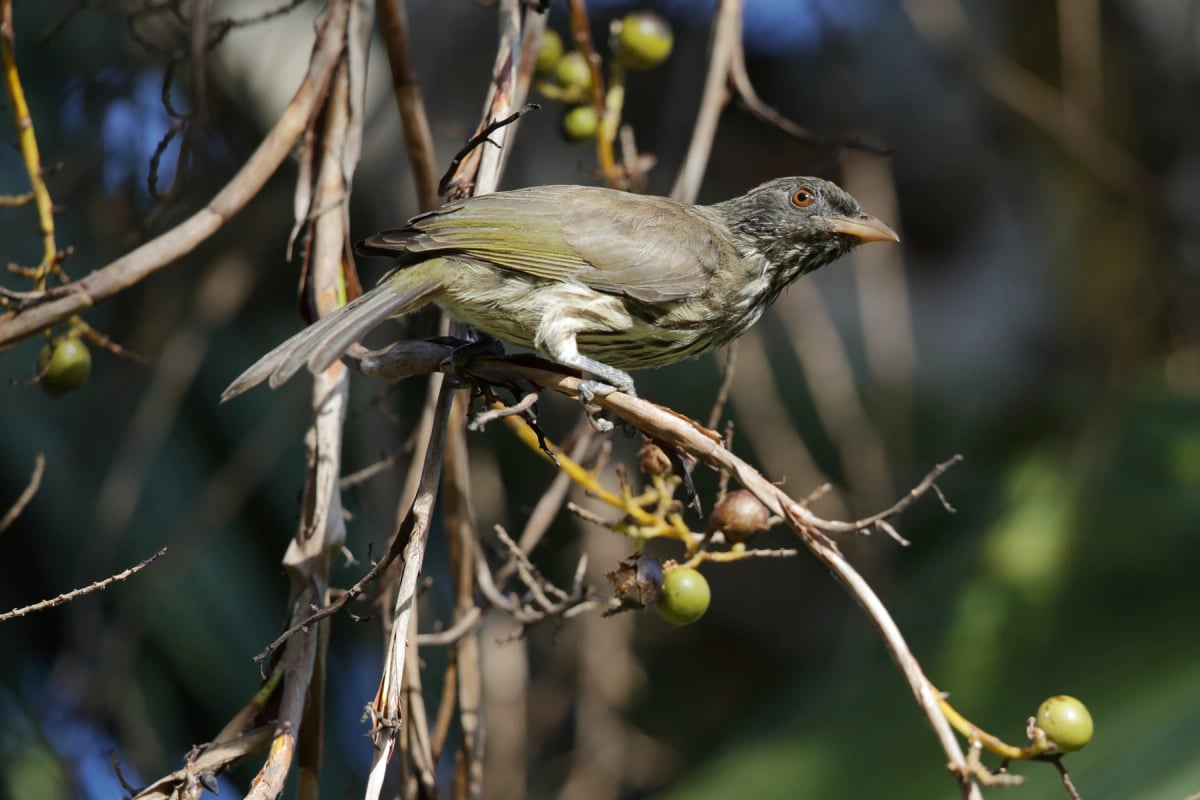
Palmchat
Dulus dominicus
The palmchat, called cigua palmera in the country, has been the national bird of the Dominican Republic since 1987. It is a brown and cream songbird that lives only on Hispaniola, and it is so unusual that scientists placed it in its own family, with no other species in the world. Palmchats live in noisy groups and build huge shared nests of twigs in royal palms, where each pair has its own room inside. They are common in parks, farms and towns all over the country, so almost every Dominican knows their chatter.
View details→Wildlife in Dominican Rep
The Dominican Republic shares the island of Hispaniola with Haiti, and its wildlife ranges from high mountain forests to salt lakes, coral reefs and one of the most important whale areas in the Atlantic. On land, the stars are birds found only on Hispaniola: the palmchat, the national bird, which lives in noisy groups in palm trees, and the Hispaniolan trogon, which lives in the cool forests of the Cordillera Central and the Sierra de Bahoruco. Flamingos feed in the salty waters of Lake Enriquillo and the lagoons of the southwest, while peregrine falcons arrive in winter. Wild boars roam the mountains, and green iguanas, brought as pets, now live wild in some areas. The sea is even richer. Every winter thousands of humpback whales gather in Samaná Bay and on the Silver Bank to mate and give birth, sperm whales dive in the deep channels offshore, and sea turtles, dolphins, barracudas and sharks live along the coasts, from Samaná to Punta Cana.
Most Dangerous Animals in Dominican Rep
The Dominican Republic is a safe place when it comes to wild animals, and serious accidents are rare. There are no large land predators, and none of the island's snakes is dangerous to people. On land, the wild boar is the one to respect: it lives in remote mountains and forests, usually runs away, but can charge if it is cornered or protecting its young. Most of the risk is in the sea. Tiger and bull sharks live in Dominican waters, and bull sharks can enter shallow bays and river mouths, especially when the water is murky after rain. Hammerhead sharks are usually calm around divers. Barracudas, common on the reefs of Punta Cana, Samaná and La Romana, may bite at shiny objects, so it is best not to wear jewelry when swimming. Humpback whales are not dangerous, but boats must keep their distance by law in Samaná Bay.
Top 10 Animals in Dominican Rep
The top 10 animals of the Dominican Republic are led by the giants of its sea. The sperm whale, the largest toothed animal on Earth, dives for squid in the deep waters offshore, and humpback whales turn Samaná Bay into one of the best whale watching places in the world every winter. Tiger, bull and hammerhead sharks live in Dominican waters, and bottlenose dolphins are often seen in Samaná Bay. In the air, the peregrine falcon, the fastest animal in the world, visits in winter. The palmchat, the national bird, and the flamingos of Lake Enriquillo bring color to the list. The barracuda, the wild boar, sea turtles and the Hispaniolan trogon are other Dominican Republic animals worth knowing, and together they show an island where the most amazing wildlife is often found just off the beach.
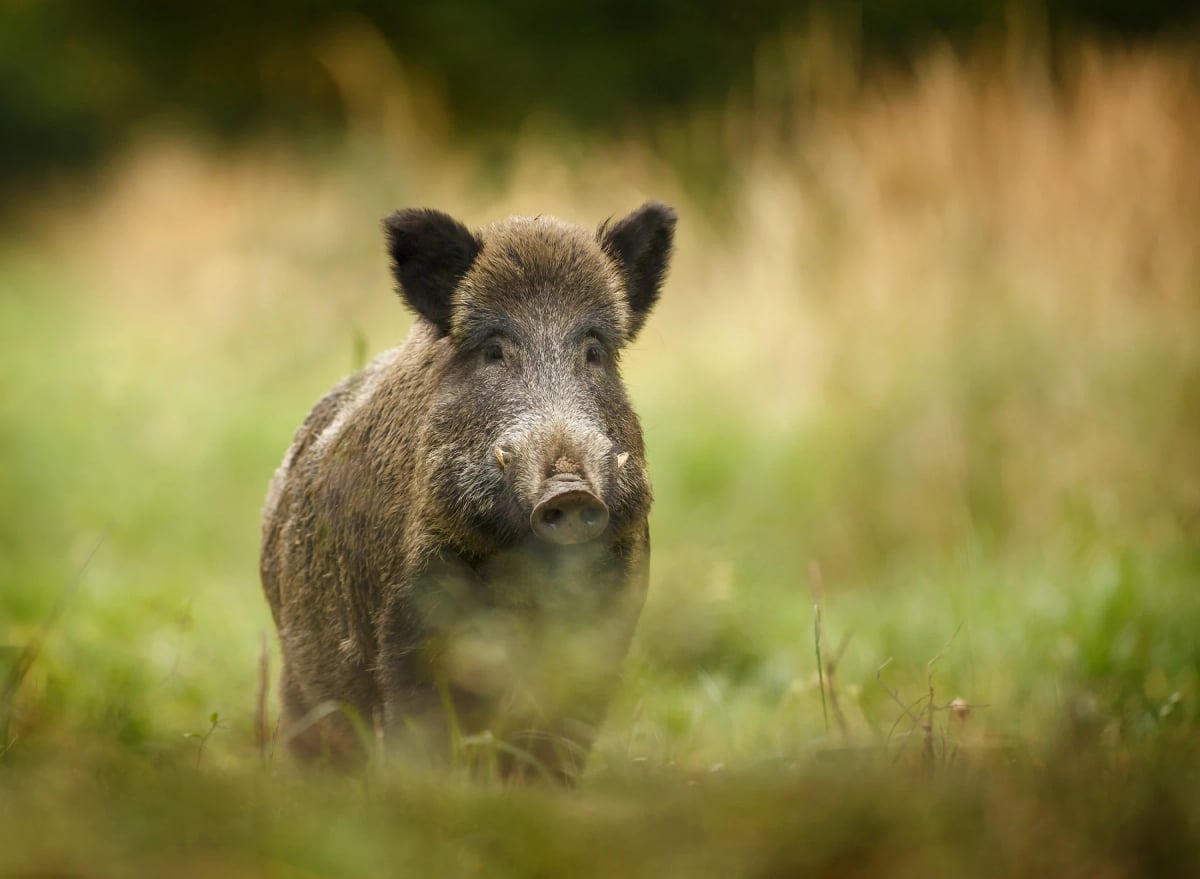
Wild Boar
Sus scrofa
Feral pigs descended from livestock brought during Spanish colonization live in the forested mountains of the Dominican Republic, including areas of the Cordillera Central and Los Haitises. They are a traditional source of meat for rural communities, who hunt them using long established methods, though their foraging can damage crops on farms near forest edges in agricultural regions.

Iguana
Iguana iguana
The green iguana was introduced to the Dominican Republic through the pet trade, with the first wild individuals recorded in the early 1990s. It has since spread to multiple locations across the country, where it inhabits riverside vegetation, hotel grounds and coastal areas. Unlike the native Hispaniolan rhinoceros iguana, the green iguana is not native here and its continued spread across Hispaniola is monitored by conservation managers.
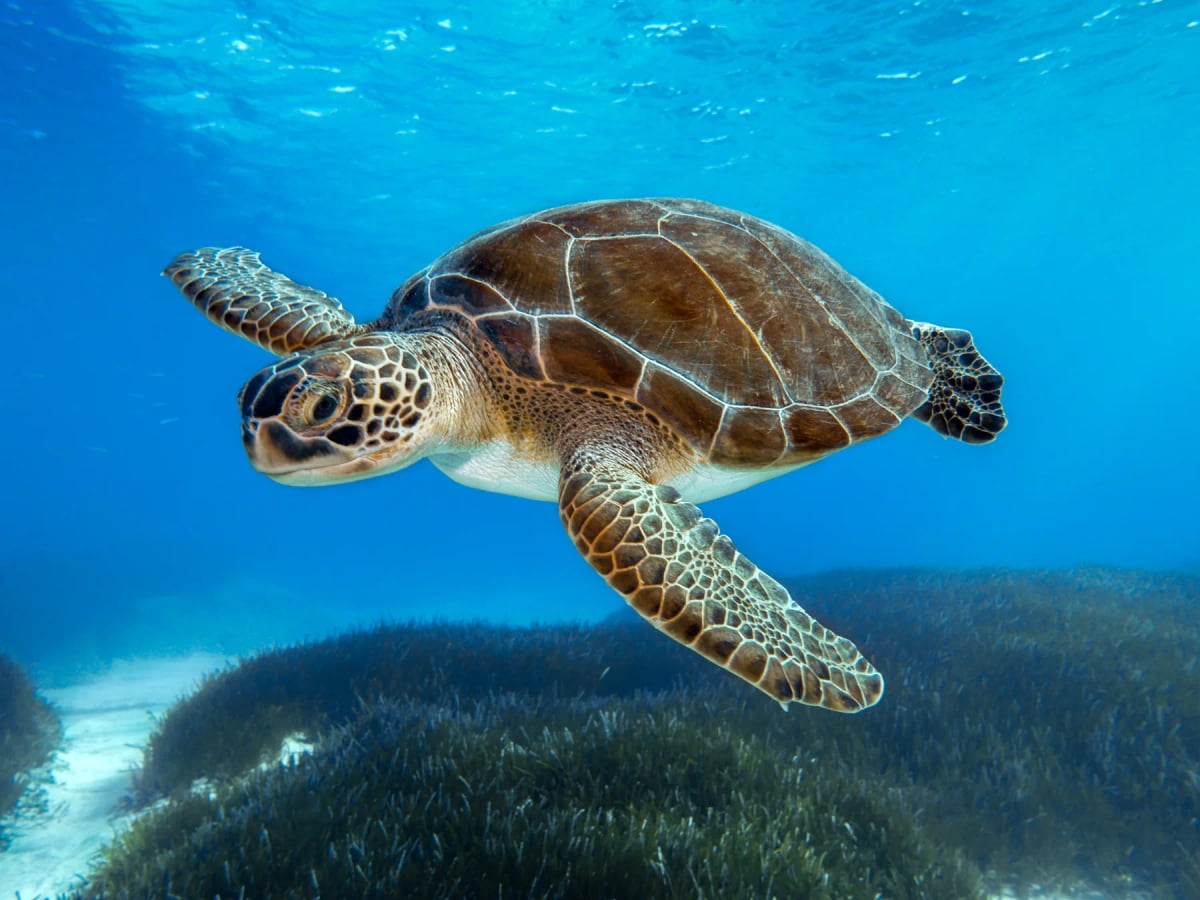
Sea Turtle
Cheloniidae & Dermochelyidae (families)
The Dominican Republic provides nesting and feeding habitat for several sea turtle species along its Caribbean and Atlantic coasts. Leatherback, loggerhead and hawksbill turtles nest on beaches across the island, with notable nesting activity in the Samaná Peninsula, Jaragua National Park and along the northern coast. Conservation organizations and community groups run nest protection programs during the nesting season, helping to reduce egg poaching in key areas.
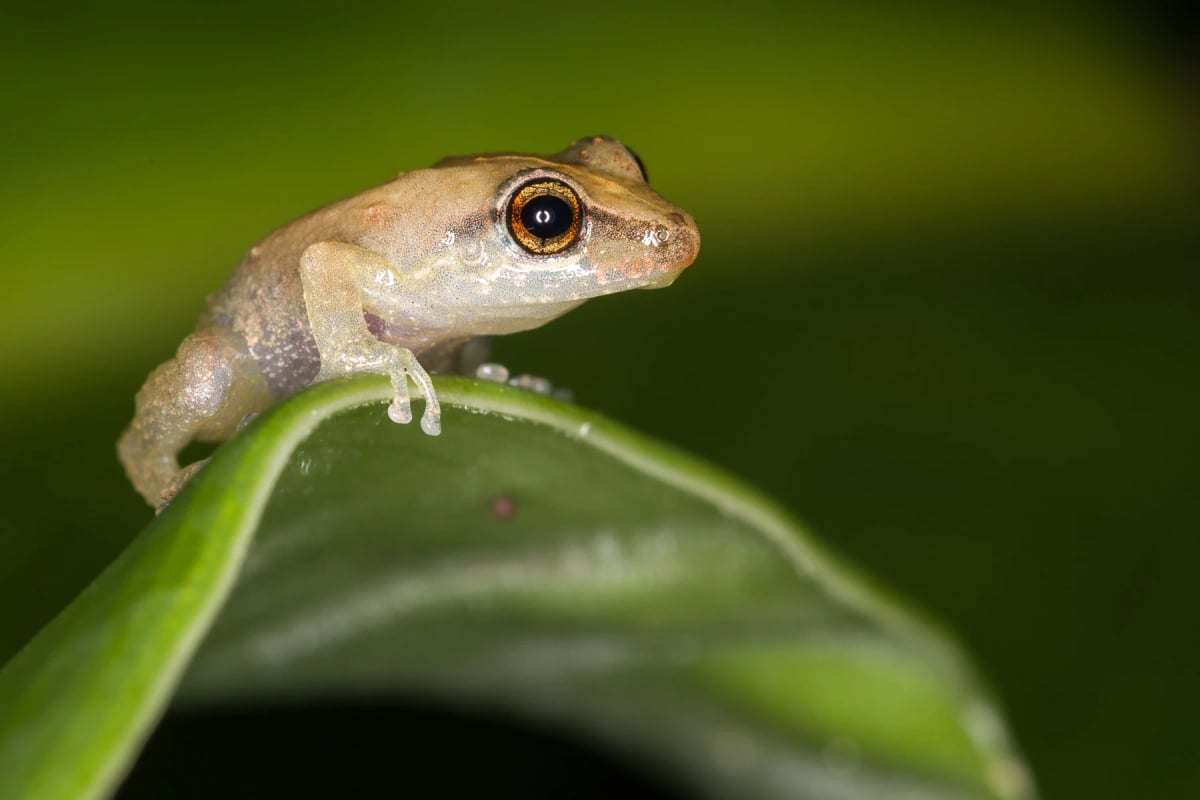
Coquí
Eleutherodactylus coqui
The coqui is an introduced species in the Dominican Republic, one of several Caribbean islands where this Puerto Rican frog has established itself outside its native range. It lives in gardens, plantations and humid wooded areas, sheltering by day in bromeliads and leaf litter and calling after dark. Like everywhere else it has reached, it skips the tadpole stage, so it does not need standing water to breed. That is a large part of why it settles in so easily.
Palmchat
Dulus dominicus
The palmchat is the national bird of the Dominican Republic and one of the most familiar birds across the country, from the Cibao Valley to the southern plains and Saona Island. It thrives in royal palm groves, city parks, and farmland, and its constant chattering is a defining sound of the Dominican countryside. Colonies build shared nests up to two meters wide in palm crowns, with each pair in its own chamber. IUCN status: Least Concern.
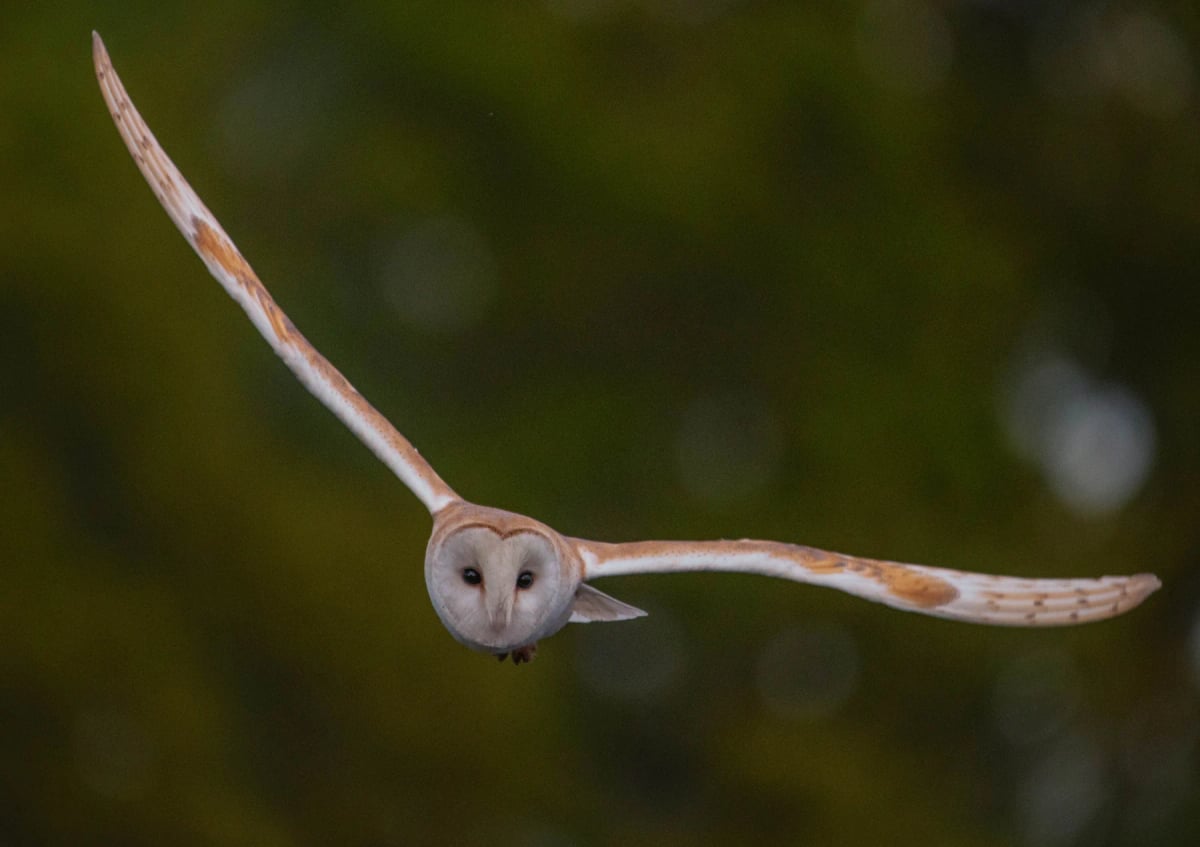
Barn Owl
Tyto alba
The barn owl is found across the Dominican Republic in open farmland, pastures, and the outskirts of towns and villages throughout the island. It nests in old buildings, cliff faces, caves, and hollow trees, and hunts rodents and other small prey at night. In agricultural areas it plays a useful role in controlling rat and mouse populations. It is one of the most widespread owls on Hispaniola and can be encountered from coastal lowlands to mid-elevation valleys.
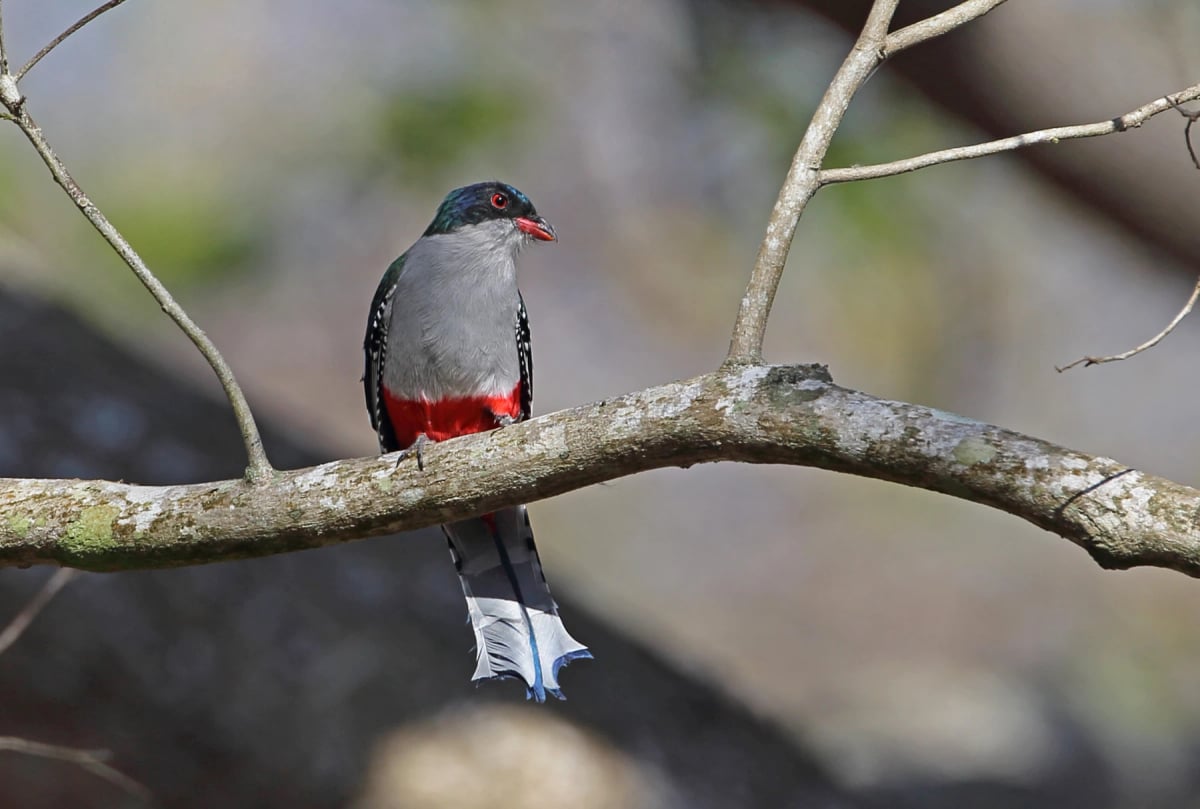
Hispaniolan Trogon
Priotelus roseigaster
In the Dominican Republic, the Hispaniolan Trogon lives in the mature mountain forests of ranges such as the Cordillera Central and Sierra de Bahoruco. It nests in tree cavities well above sea level and feeds on fruits and insects among the forest canopy. While forest cover is better preserved here than in neighboring Haiti, continued protection of these highland ecosystems remains vital for keeping this colorful species thriving.
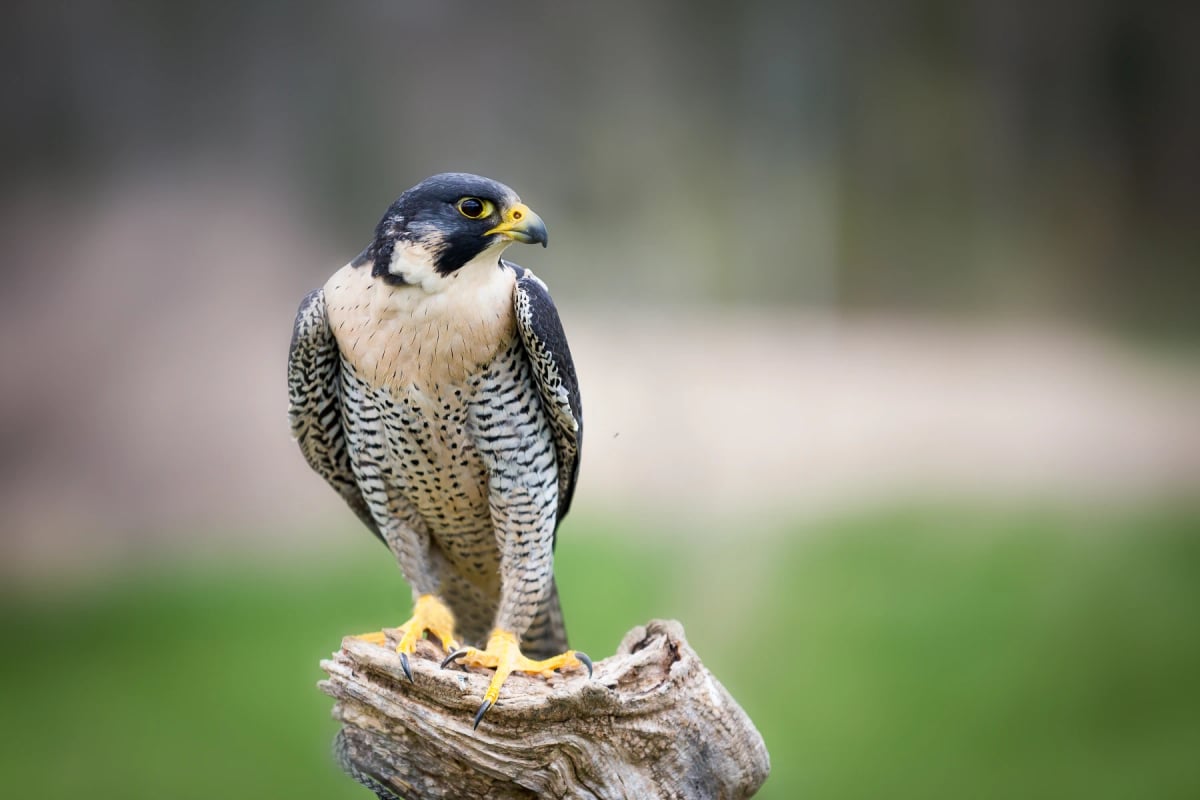
Peregrine Falcon
Falco peregrinus
The peregrine falcon visits the Dominican Republic each year as a migratory bird, passing through or wintering on the island of Hispaniola between autumn and early spring. It can be spotted along the coastline, over open agricultural plains, and around the mountain ranges of the Cordillera Central. Pigeons and shorebirds make up much of its diet during its stay. Its IUCN status is Least Concern.
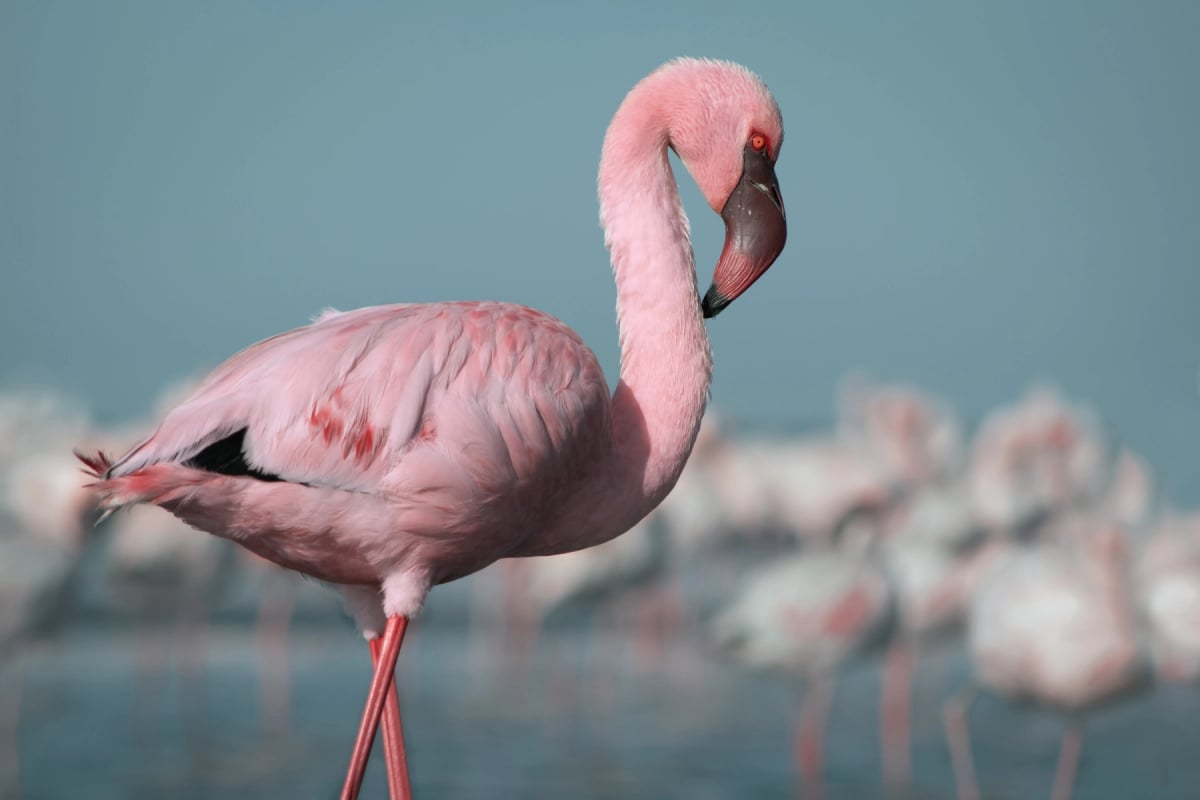
Flamingo
Phoenicopteridae (6 species)
In the Dominican Republic, Caribbean flamingos inhabit the salt lakes and coastal lagoons of the southwestern region, including the areas around Lago Enriquillo, one of the largest lakes in the Caribbean. This lake sits below sea level and has highly saline waters that attract flamingos in search of food. The species is listed as Least Concern by the IUCN. Lago Enriquillo and its surroundings form part of a national park that helps protect these birds.
Humpback Whale
Megaptera novaeangliae
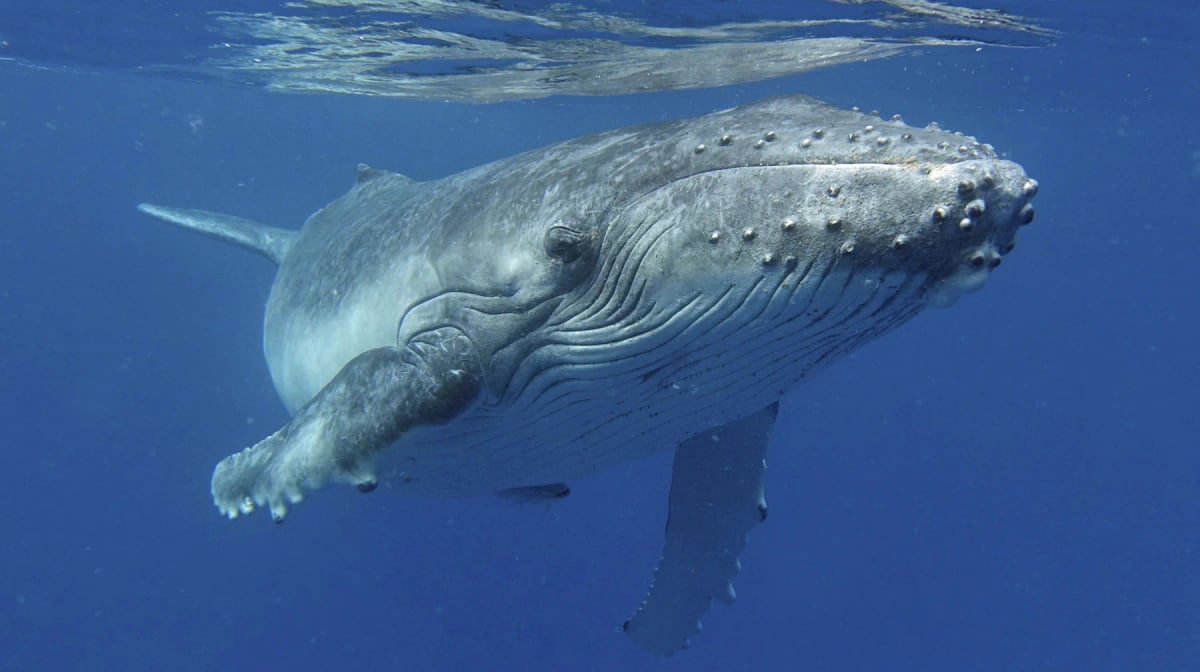
Samana Bay in the Dominican Republic is one of the most important humpback whale breeding and calving sites in the entire North Atlantic. Each winter, thousands of whales gather in these warm Caribbean waters to mate and give birth. The season runs roughly from January to March, drawing visitors from around the world. The Dominican Republic has built a responsible whale watching industry around this spectacular annual gathering, making Samaná famous among wildlife enthusiasts.
Bottlenose Dolphin
Tursiops truncatus
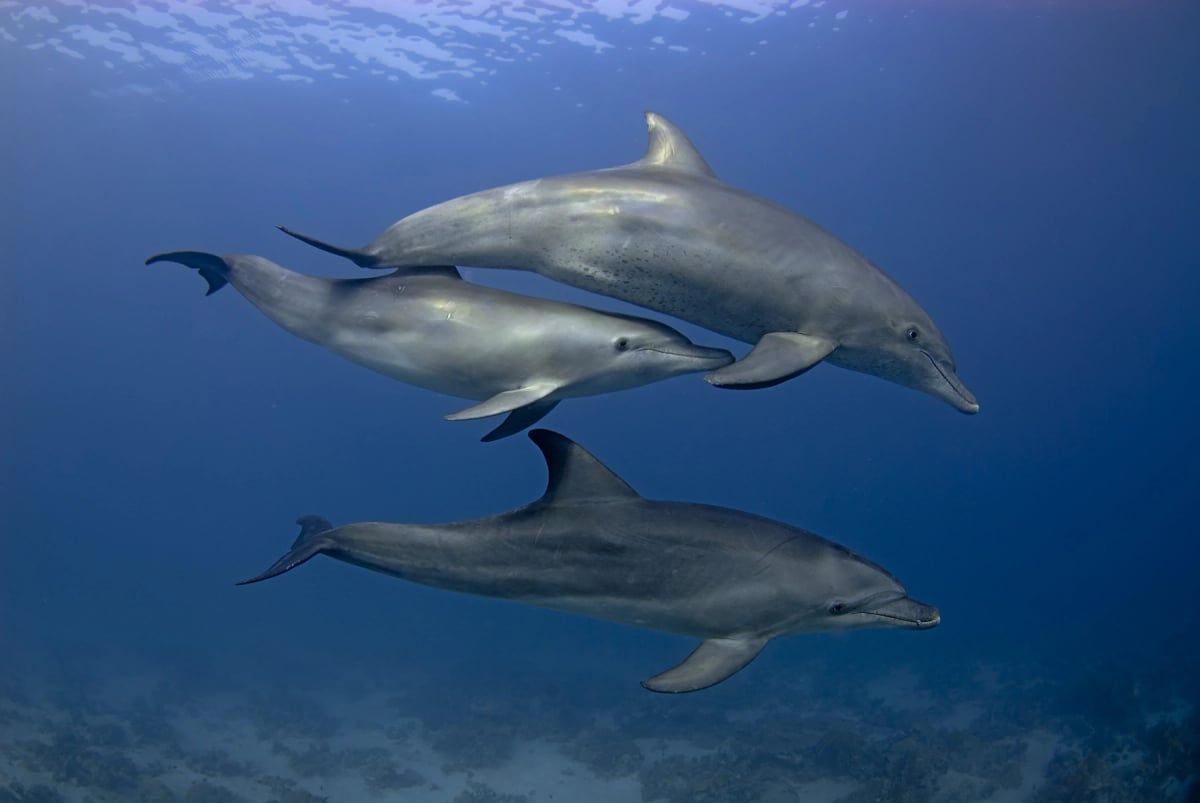
Bottlenose dolphins are a well known presence in Dominican waters, inhabiting the warm Caribbean Sea to the south and the Atlantic Ocean to the north. They are often spotted in Samaná Bay, particularly during the winter months when humpback whale activity also peaks in the region. Local dolphin watching tours operate along the northern coast, and the species benefits from several marine protected areas established around the country. IUCN status: Least Concern.
Sperm Whale
Physeter macrocephalus
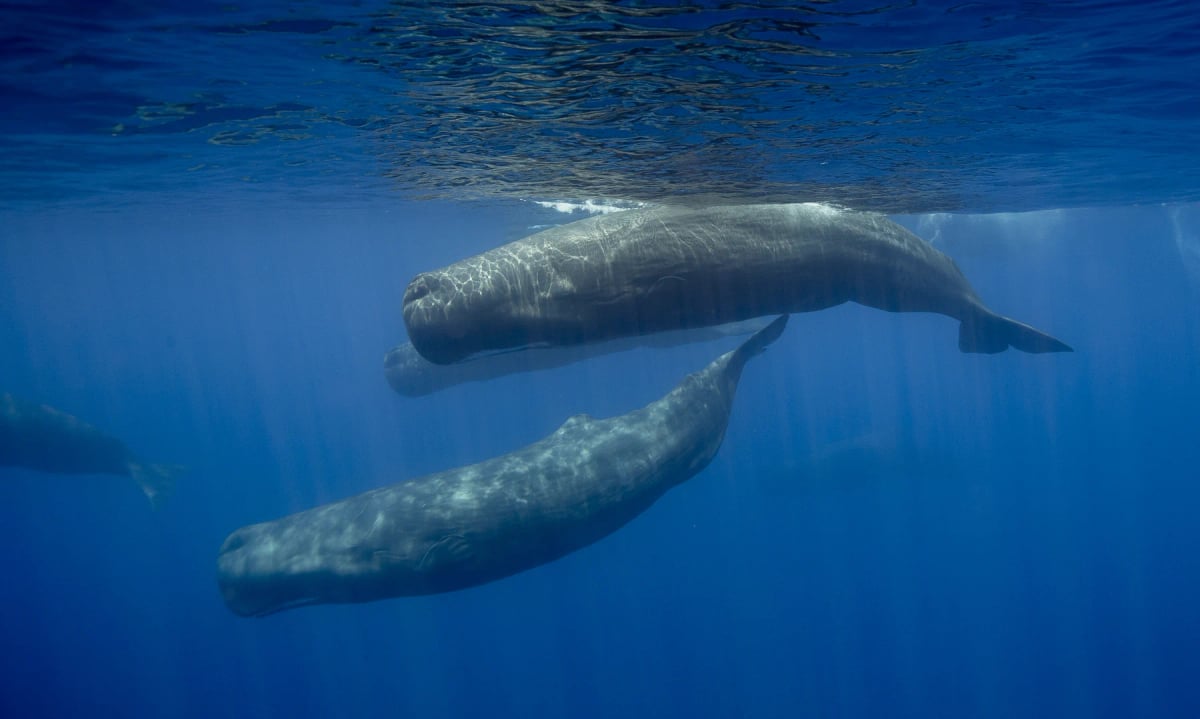
The waters off the Dominican Republic, particularly in the deep channels between Hispaniola and Puerto Rico, are important habitat for sperm whales in the Caribbean. The Puerto Rico Trench nearby is one of the deepest points in the Atlantic Ocean, offering ideal conditions for deep dives in search of squid. Vessel traffic and entanglement in gear remain key threats. The IUCN lists the species as Vulnerable.
Barracuda
Sphyraena spp.
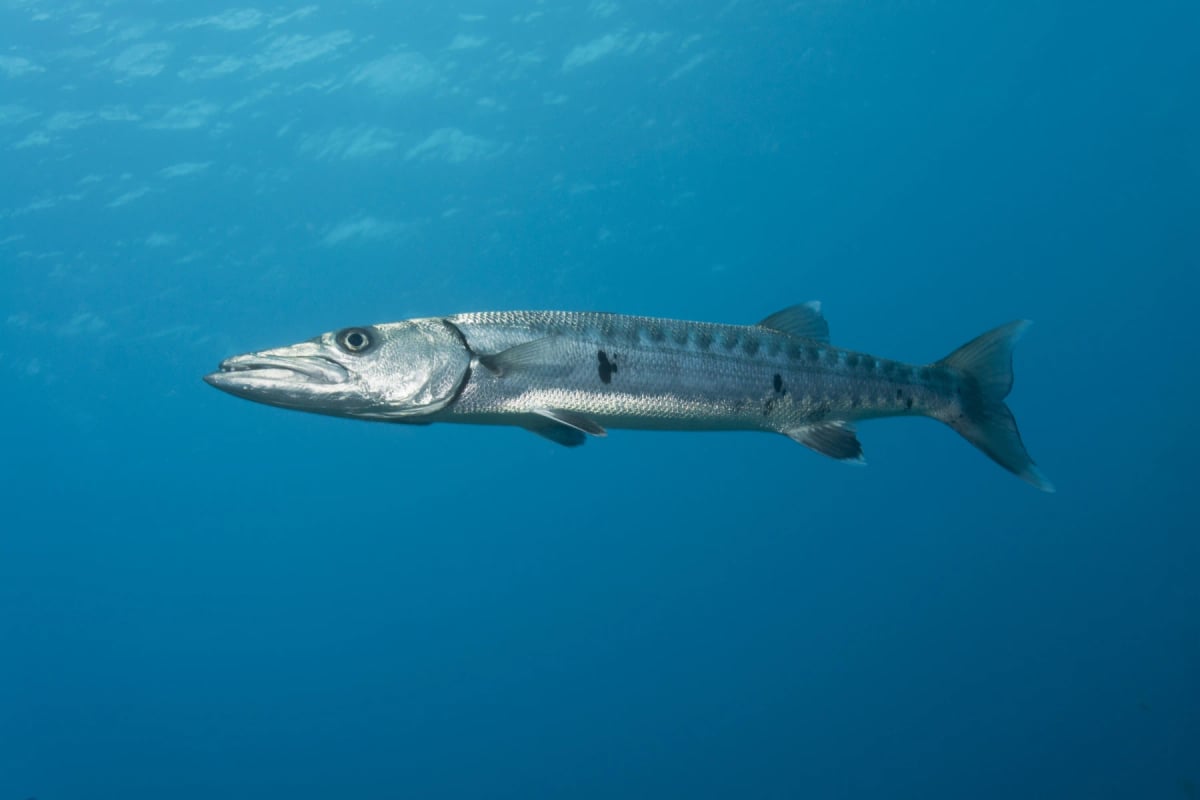
Barracudas are found throughout the coastal and reef waters of the Dominican Republic, inhabiting coral reefs, seagrass beds, and open coastal areas along both the north and south coasts. They are regularly encountered by divers and snorkelers at reef sites near Punta Cana, Samaná, and La Romana. The great barracuda is the most common species and is a familiar predator on Dominican reefs, often seen hovering at reef edges or in the open water above coral structures. Its striking appearance makes it a memorable part of any reef dive in the country.
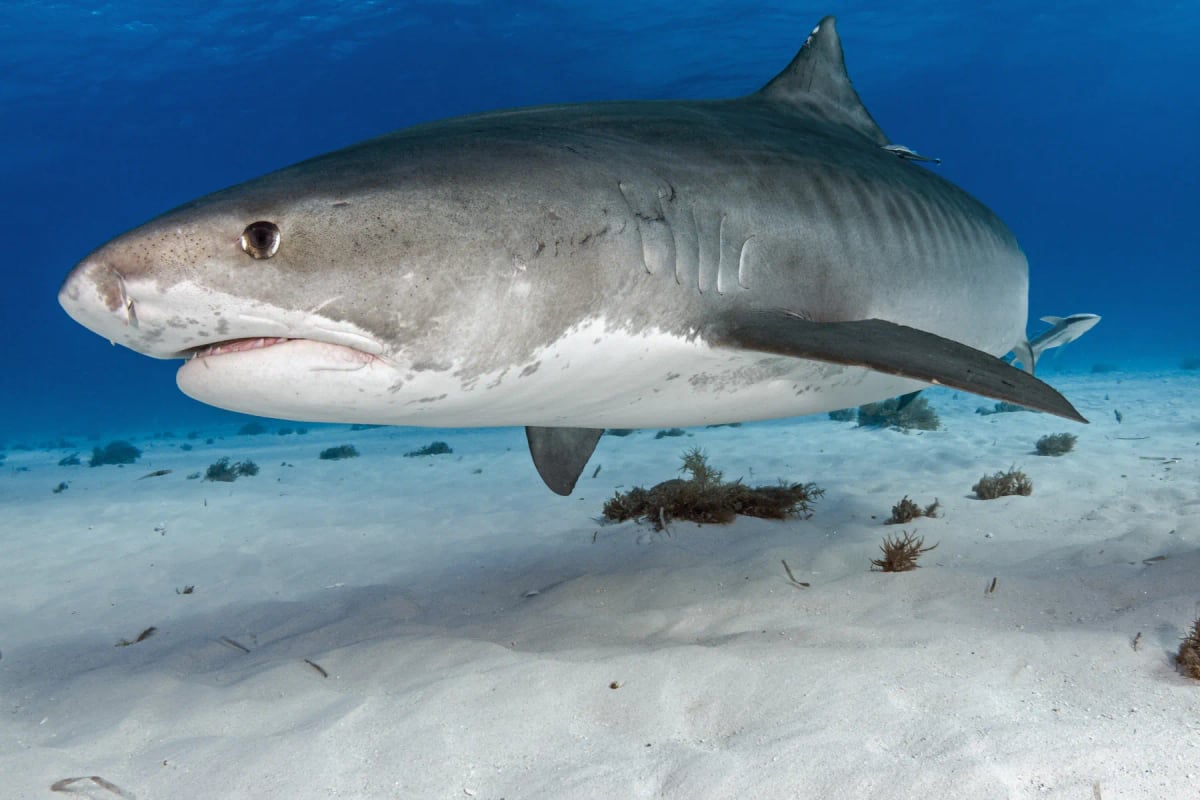
Tiger Shark
Galeocerdo cuvier
Tiger sharks are found in the Atlantic and Caribbean waters surrounding the Dominican Republic, including the Mona Passage and deeper offshore zones. They venture into coastal shallows and reef areas in search of food, feeding on sea turtles, fish, and rays. Fishing pressure in the region affects their numbers, and the IUCN lists the tiger shark as Near Threatened on a global scale.
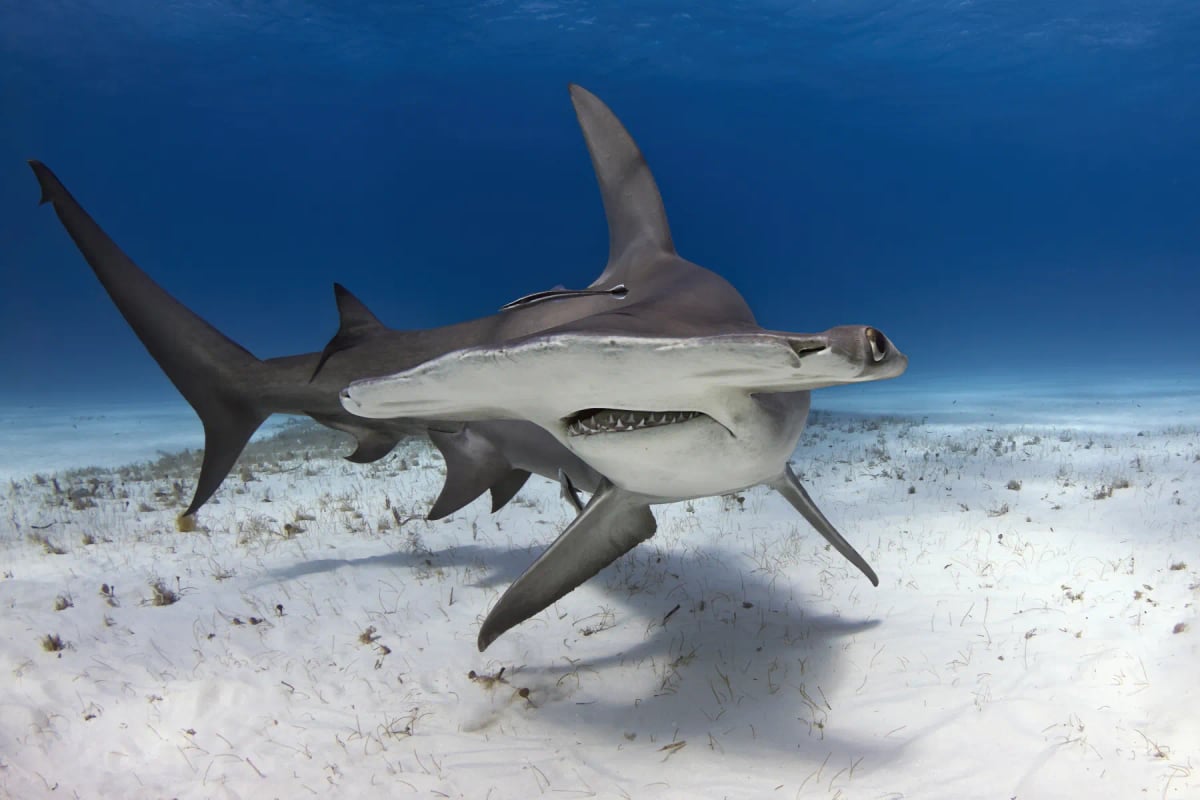
Hammerhead Shark
Sphyrna spp.
The Dominican Republic sits within the Caribbean range of the Hammerhead Shark, with these animals frequenting the deeper channels and coastal waters surrounding the island of Hispaniola. The Silver Bank area and the waters off the north coast are particularly notable marine zones. Hammerheads are vulnerable to bycatch from longline fishing in the region. Growing ecotourism interest in sharks offers a potential path toward greater protection.
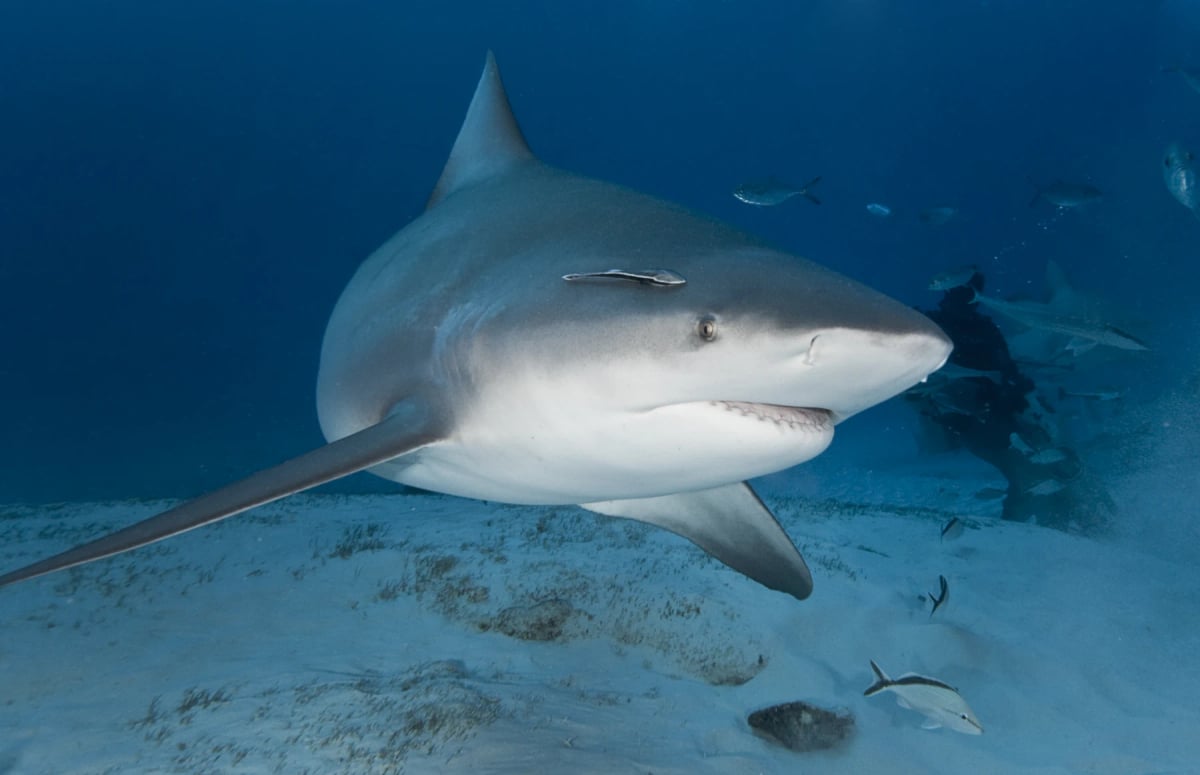
Bull Shark
Carcharhinus leucas
Bull sharks are present in the coastal waters surrounding the Dominican Republic, navigating the warm Caribbean and Atlantic shores of Hispaniola. Estuaries, river mouths, and shallow bays along the northern and southern coasts provide suitable habitat. Near Threatened at the global level, these sharks face risks from fishing and coastal tourism development. Encounters near popular beaches have occasionally been reported around the island.
Frequently Asked Questions
What animals live in the Dominican Republic?
The Dominican Republic's land animals include the palmchat, the national bird, and the Hispaniolan trogon, two birds found only on Hispaniola, as well as flamingos, peregrine falcons, barn owls, wild boars and green iguanas. The sea is even richer, with humpback whales that gather in Samaná Bay every winter, sperm whales, bottlenose dolphins, sea turtles, barracudas and tiger, bull and hammerhead sharks. Many of the island's smaller animals, especially birds, live nowhere else in the world.
What is the national animal of the Dominican Republic?
The Dominican Republic's national animal is usually said to be the palmchat, or cigua palmera, which has been the national bird since 1987. It lives only on Hispaniola and is the only species in its bird family. Palmchats are easy to see because they live in groups near people, in parks, farms and towns, and build big shared nests in royal palms. Their loud chatter is one of the most familiar sounds in the Dominican countryside.
Where can you see humpback whales in the Dominican Republic?
The best place is Samaná Bay, on the northeast coast, where thousands of humpback whales arrive from the North Atlantic every winter to mate and give birth. Official whale watching tours run from mid January to the end of March, and February is usually the best month. Boats leave from Santa Bárbara de Samaná and must follow rules to keep a safe distance. Farther north, the Silver Bank, a large marine sanctuary about 130 kilometers from Puerto Plata, is one of the few places in the world where people can legally snorkel with humpback whales, on longer boat trips.
What animals are native to the Dominican Republic?
Among the animals on this site, the palmchat and the Hispaniolan trogon are native to Hispaniola and live nowhere else in the world. Flamingos, peregrine falcons, barn owls, sea turtles, whales, dolphins, barracudas and sharks are native too, although they also live in other countries. Two common animals are not native: the wild boar, which descends from pigs brought by Spanish settlers, and the green iguana, which arrived through the pet trade and has lived wild in the country since the 1990s.
What wildlife can you see in Punta Cana?
Most of the wildlife around Punta Cana is in the sea. Snorkeling on the reefs can show barracudas, colorful reef fish and sometimes sea turtles, and dolphins are occasionally seen offshore. On land, palmchats are common in the palm trees of hotels and towns, and green iguanas often rest in gardens and near water. Punta Cana is also a good base for day trips to Samaná Bay in winter, when humpback whales arrive. Sharks are rarely seen near the beaches, and attacks in the area are extremely rare.
Researched and written by Juan Pablo. Sources: IUCN Red List, scientific literature and regional field guides. Last updated: .