Animals in United Arab Emirates
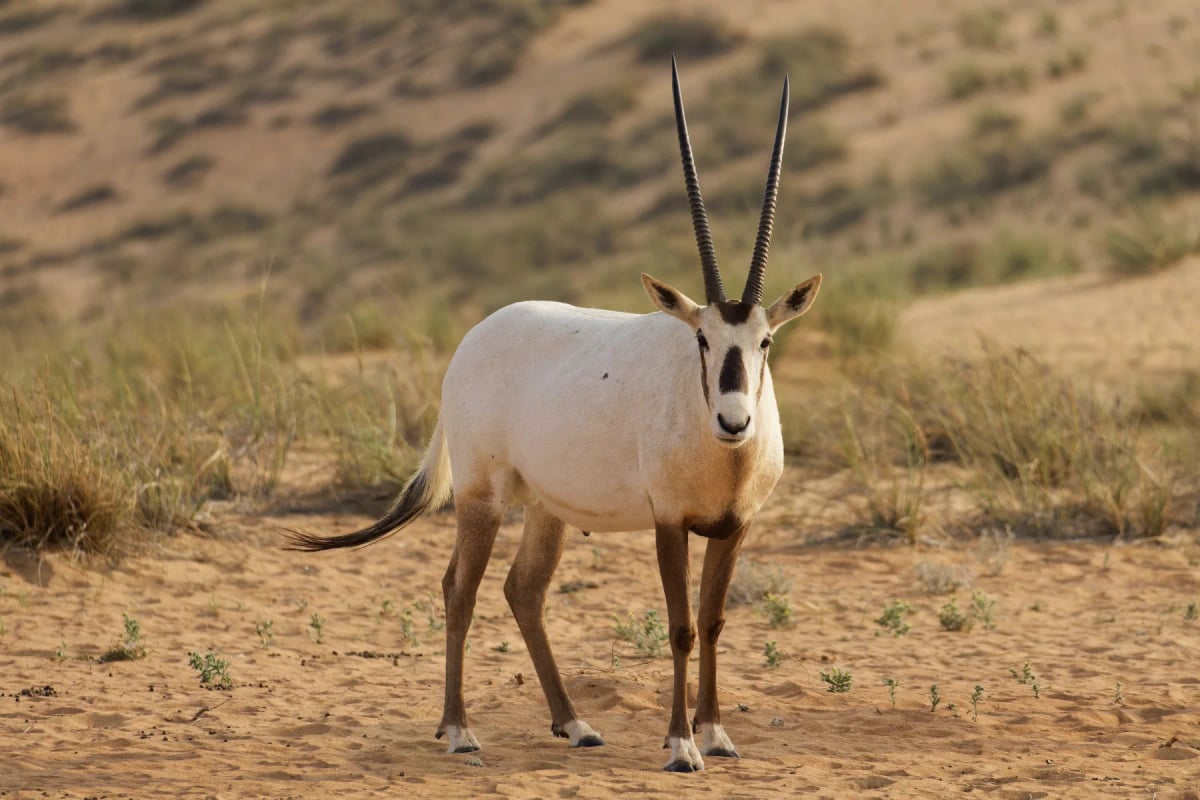
Arabian Oryx
Oryx leucoryx
The arabian oryx is the national animal of the United Arab Emirates and a strong desert symbol. It once almost disappears from the wild, but breeding programs and reserves in the country bring it back. Today its white body and long horns appear in logos, museums and school books as a calm image of desert life.
View details→Wildlife in United Arab Emirates
In the United Arab Emirates the desert meets warm coastal waters. Visitors explore dunes on guided drives and camel tours, walk along city wetlands and mangroves, and join boat trips to look for sea turtles, dolphins and sharks. Easy boardwalks and viewpoints near the main cities make wildlife watching simple even for short visits.
Most Dangerous Animals in United Arab Emirates
In the United Arab Emirates most wildlife stays far from people, but some species can be risky in the wrong place or time. Honey badgers and gray wolves defend themselves if surprised in quiet desert areas. In the sea, orca and large sharks such as hammerhead, bull and tiger sharks may hunt near deeper offshore waters used by boats.
Top 10 Animals in United Arab Emirates
The top 10 list for the United Arab Emirates highlights the dromedary camel, gray wolf and peregrine falcon. Camels are part of daily life and desert tours around many cities. Wolves are more secret and stay in remote desert and steppe areas. Peregrine falcons fly along the coast and tall city towers during migration seasons.
Arabian Oryx
Oryx leucoryx
The UAE is currently home to the largest Arabian oryx population in the world. An aerial survey of the Arabian Oryx Protected Area in Abu Dhabi recorded over 835 individuals, the result of a reintroduction program launched in 2007 with 160 founding animals. Abu Dhabi's Environment Agency manages this population across a protected area of approximately 6,000 square kilometers. The oryx also holds deep cultural significance in the UAE, where it appears in national emblems and symbols.
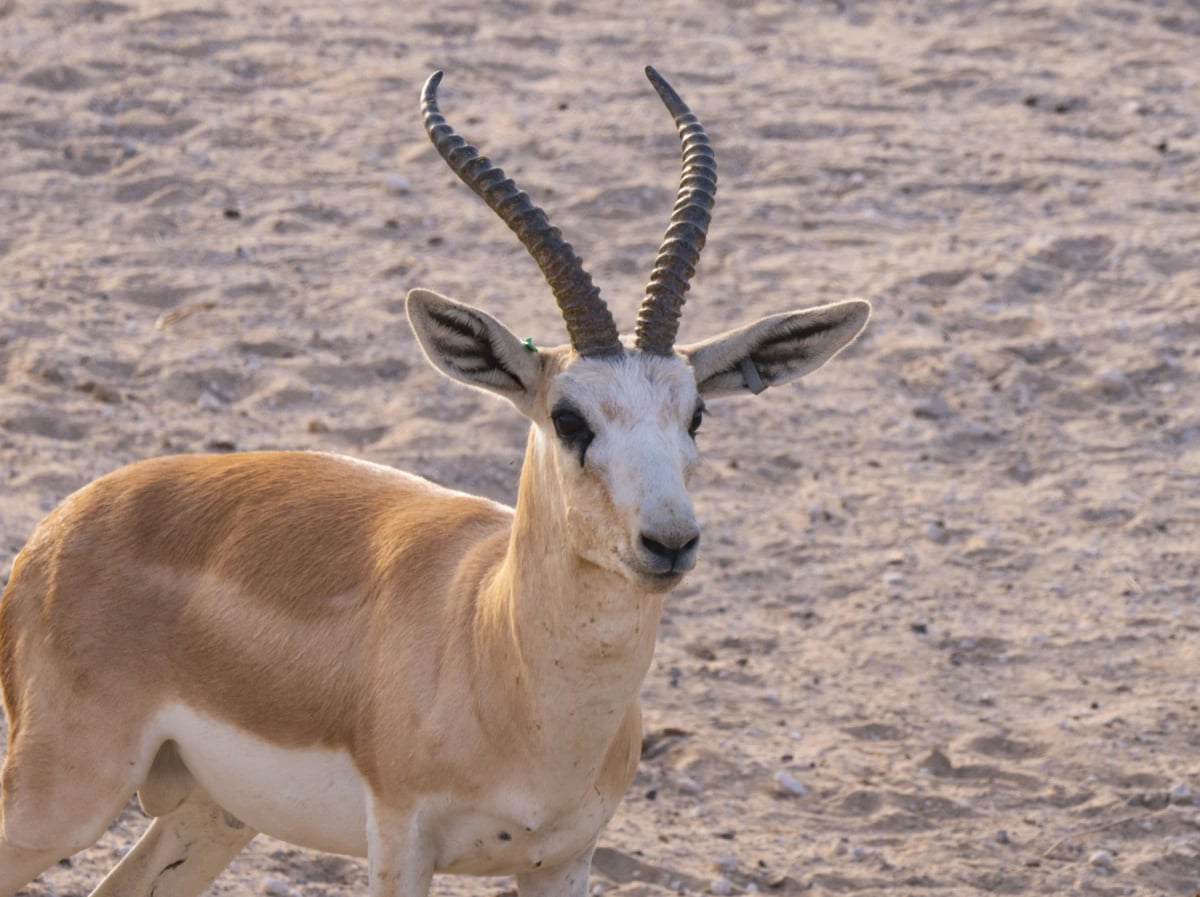
Sand Gazelle
Gazella marica
The United Arab Emirates has played a leading role in saving the sand gazelle from further decline. Sir Bani Yas Island off Abu Dhabi hosts one of the largest free-roaming populations in the world, established through a dedicated breeding and rewilding program. The Emirates Nature reserve network has been key to this success. The reem is now a symbol of the country's broader commitment to restoring native wildlife across its desert landscapes.
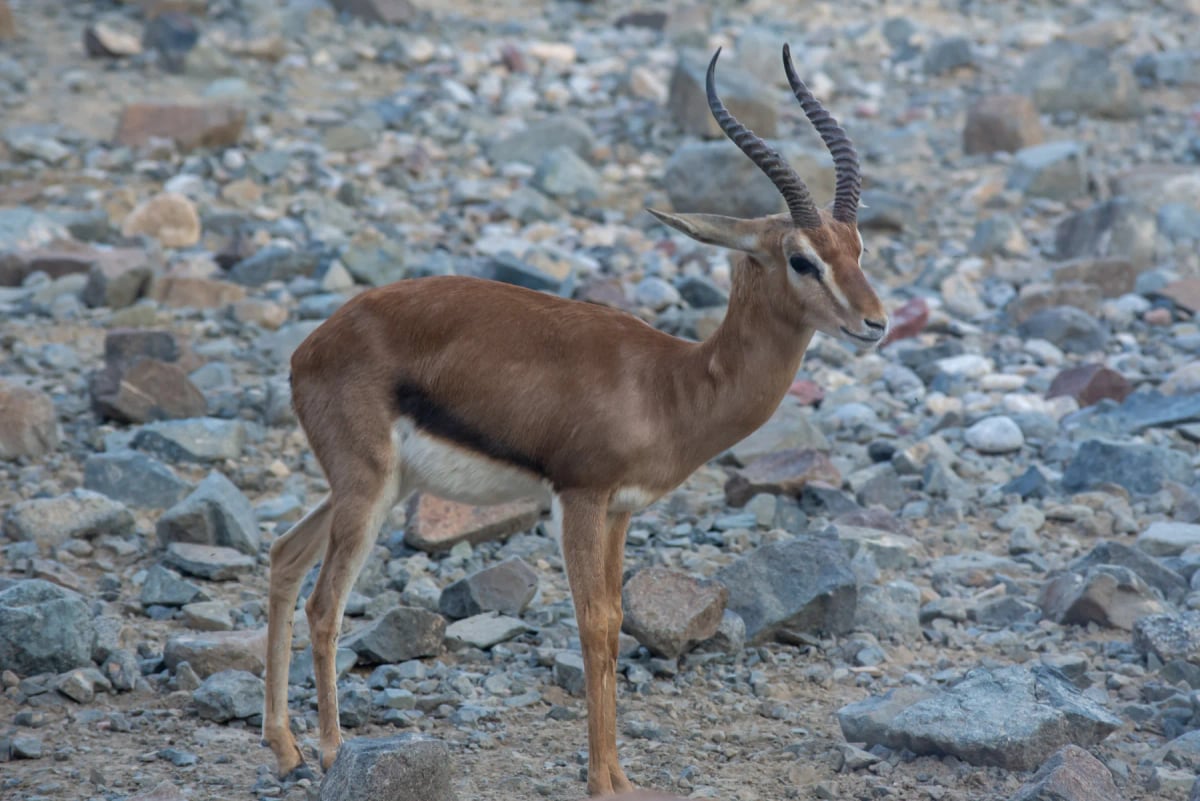
Arabian Gazelle
Gazella arabica
The UAE maintains one of the most carefully monitored populations of Arabian gazelle in the region. The Dubai Desert Conservation Reserve shelters hundreds of individuals on gravel plains and around managed water points, with recent annual counts showing steady growth. In a country where development has transformed much of the natural landscape, protected reserves are essential to keeping this species present in the wild.
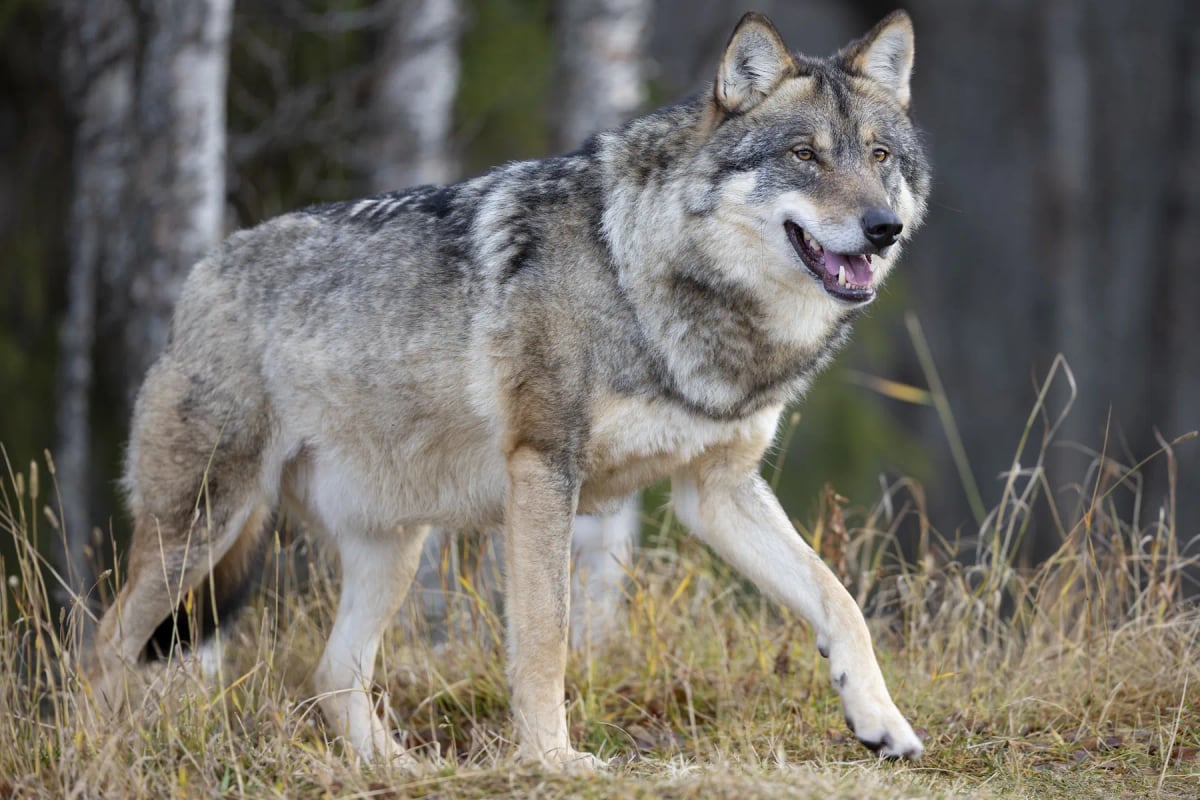
Gray Wolf
Canis lupus
The gray wolf has been recorded in the United Arab Emirates, primarily in the remote desert and mountain terrain of the Hajar Mountains shared with Oman. Sightings are rare and the population is thought to be very small. These wolves belong to the Arabian wolf subspecies, one of the smallest forms of the species. Habitat loss and human conflict put pressure on this already sparse population. The species is Least Concern globally.
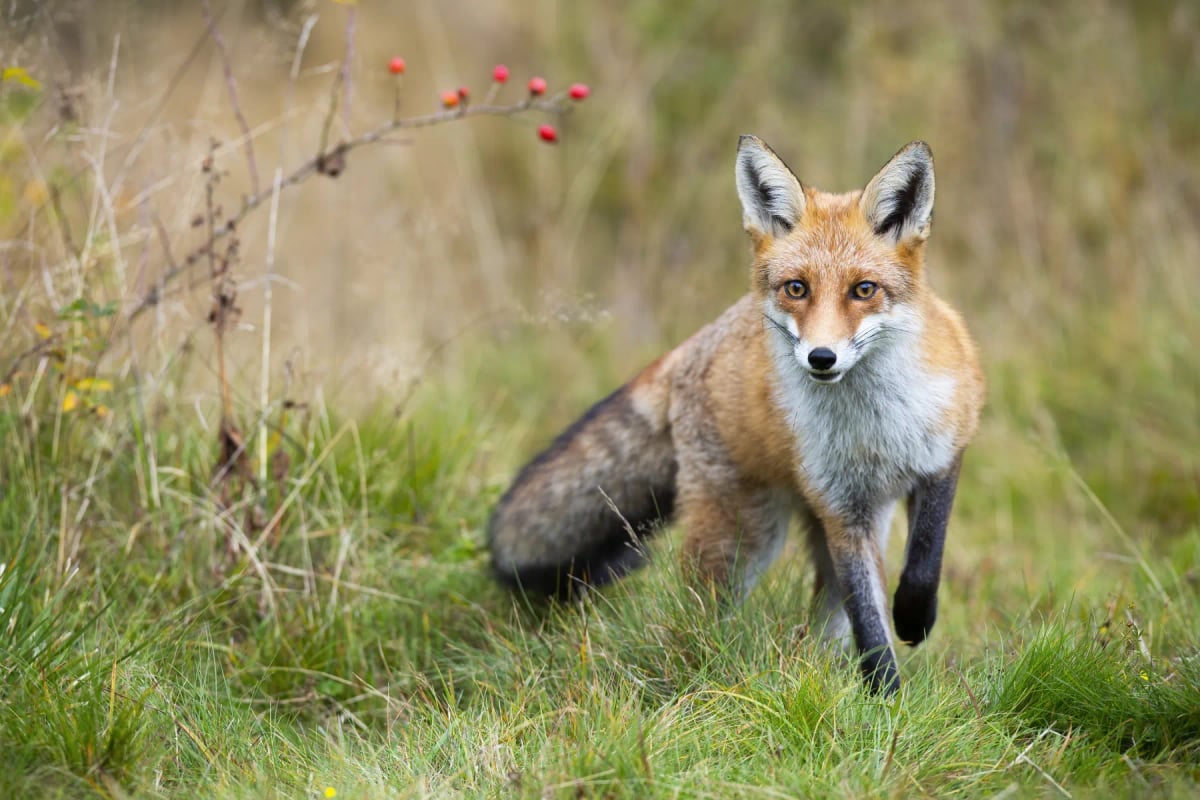
Red Fox
Vulpes vulpes
In the United Arab Emirates, the red fox inhabits desert terrain, mountain wadis, and areas near human settlements, particularly in the Hajar Mountains. It is one of the more adaptable predators in the region, active mostly at night to avoid the intense heat. It feeds on rodents, lizards, insects, and scraps near towns. Its pale, sandy coat in some individuals helps it blend into the desert landscape.
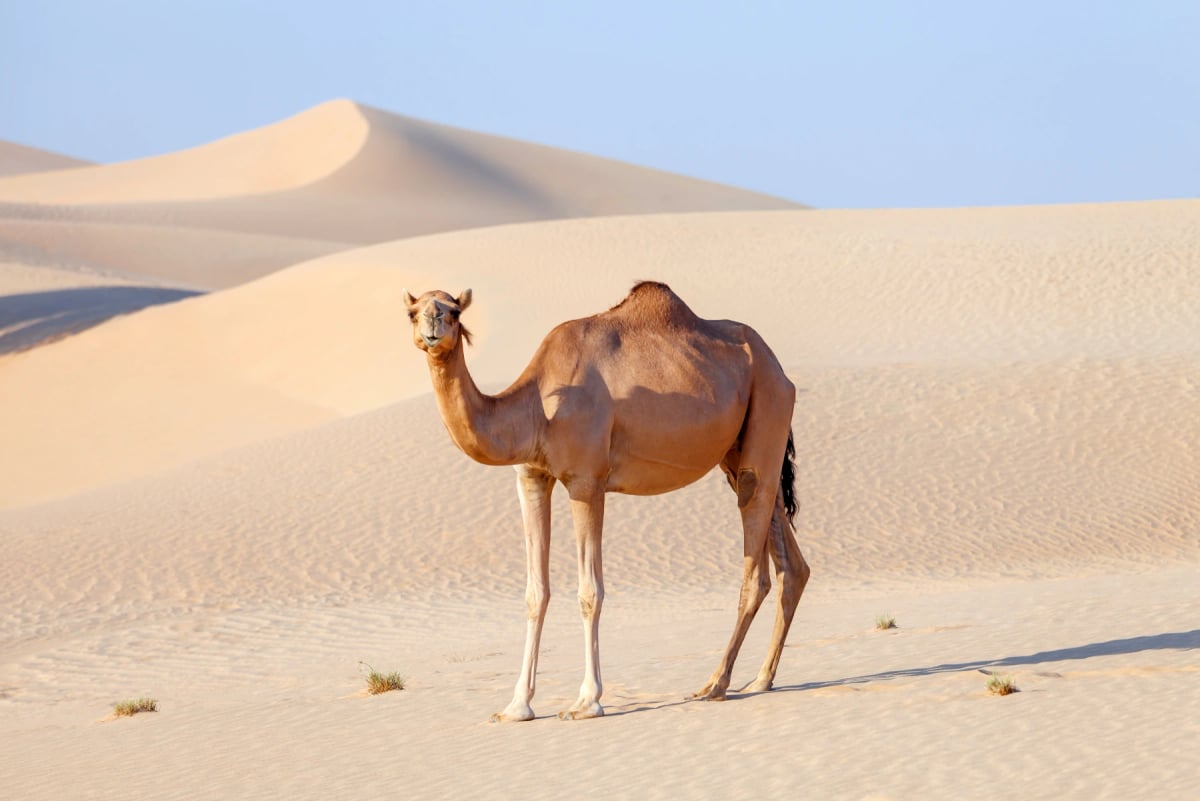
Dromedary Camel
Camelus dromedarius
The dromedary camel holds deep cultural significance in the United Arab Emirates. Camel racing is a major sport with a history stretching back generations, and dedicated tracks operate across the country. Camel beauty contests and camel milk products are also part of modern Emirati culture. Most camels in the UAE are kept and bred under managed conditions in the desert landscape of the Arabian Peninsula.
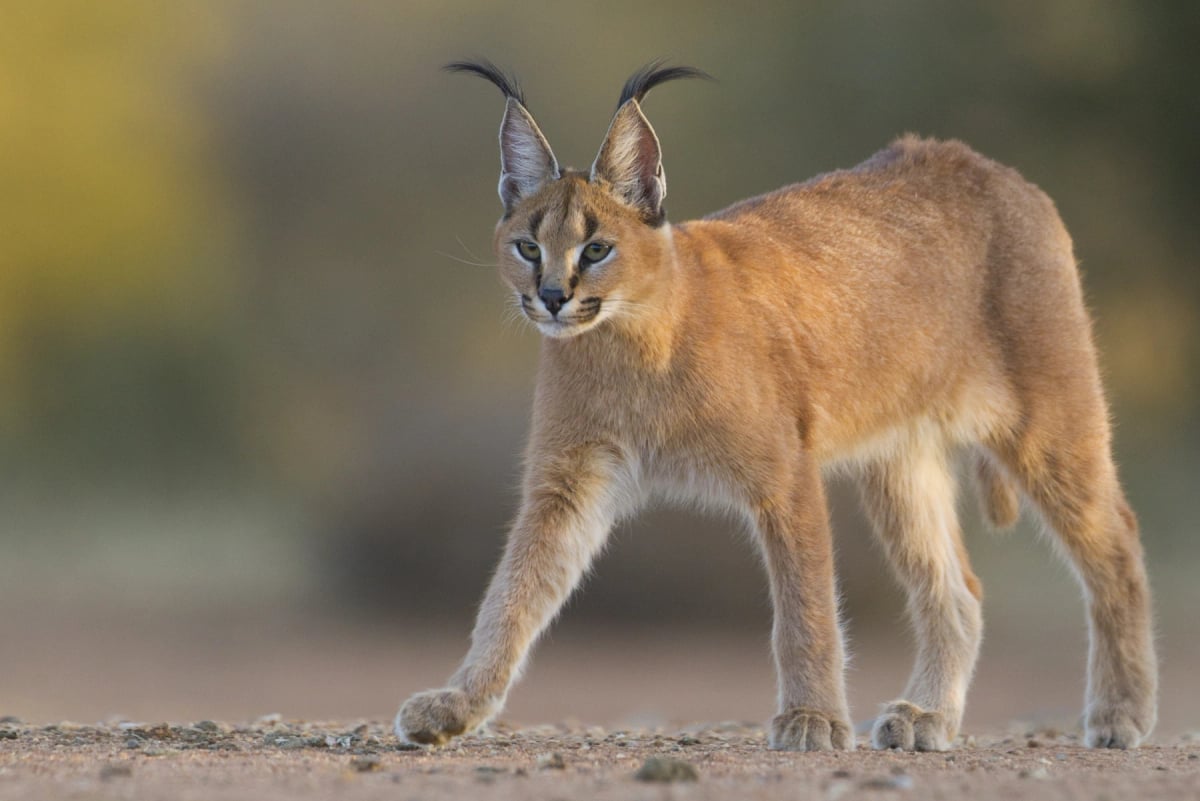
Caracal
Caracal caracal
In the United Arab Emirates, the caracal inhabits rocky mountain terrain and arid foothills, with records concentrated in the Hajar Mountains shared with Oman. The population is considered very small and is rarely observed. It is regarded as one of the rarest wild cats in the country. Conservation efforts in the UAE increasingly focus on protecting native wildlife, though verified data on caracal numbers remains scarce.

Honey Badger
Mellivora capensis
The honey badger occurs in the United Arab Emirates within the rocky Hajar Mountains in the east, part of a narrow presence on the Arabian Peninsula. Its numbers are low given the country's mostly flat desert terrain, which offers little shelter or prey compared to the mountainous areas it favors. It survives on small vertebrates and insects and is rarely encountered. The IUCN lists the species as Least Concern.
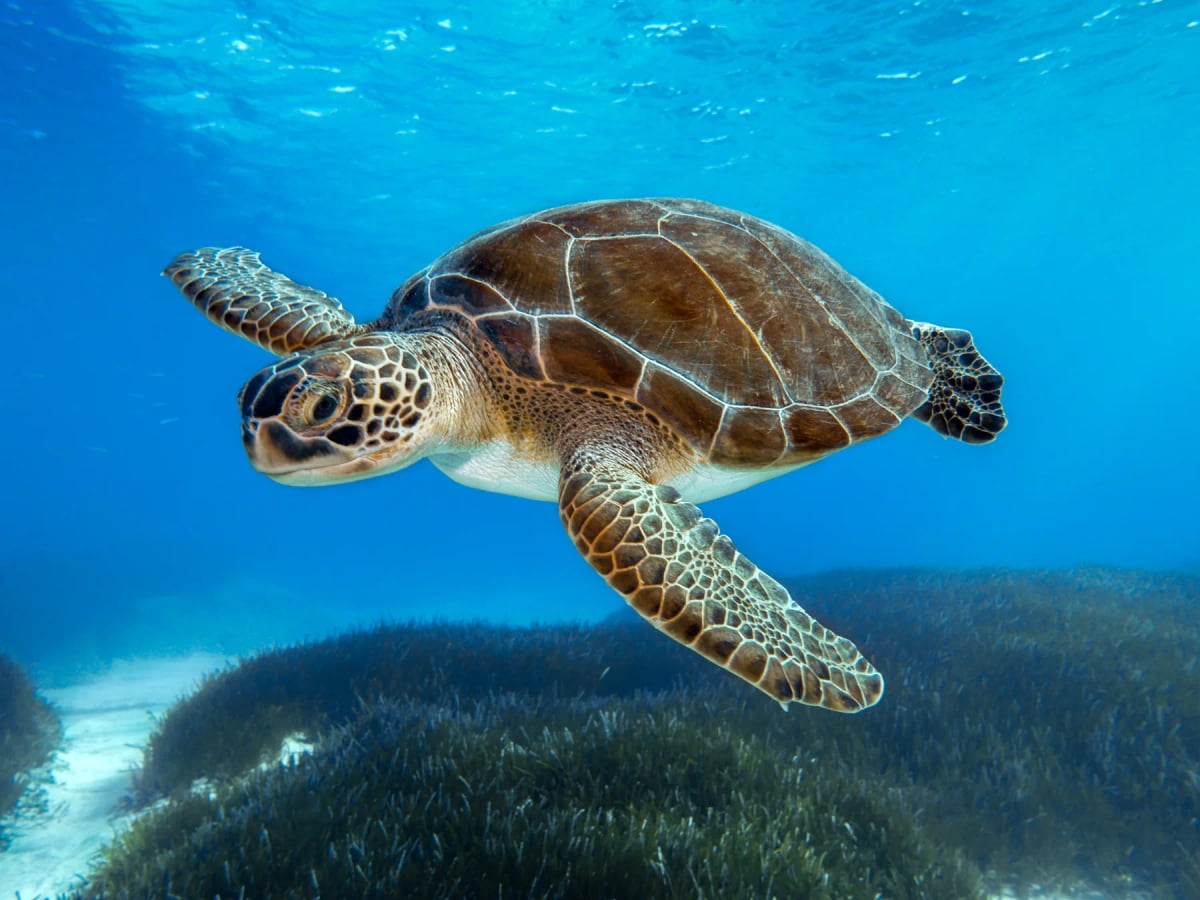
Sea Turtle
Cheloniidae & Dermochelyidae (families)
The United Arab Emirates provides nesting and foraging habitat for green and hawksbill sea turtles along its Persian Gulf and Gulf of Oman coastlines. Nesting takes place on beaches across the country, with sites on Abu Dhabi's offshore islands, particularly Al Yasat and the Sir Bani Yas area, among the most significant. The UAE has invested in sea turtle conservation programs, including rehabilitation centers and beach monitoring, as part of broader marine environmental commitments.
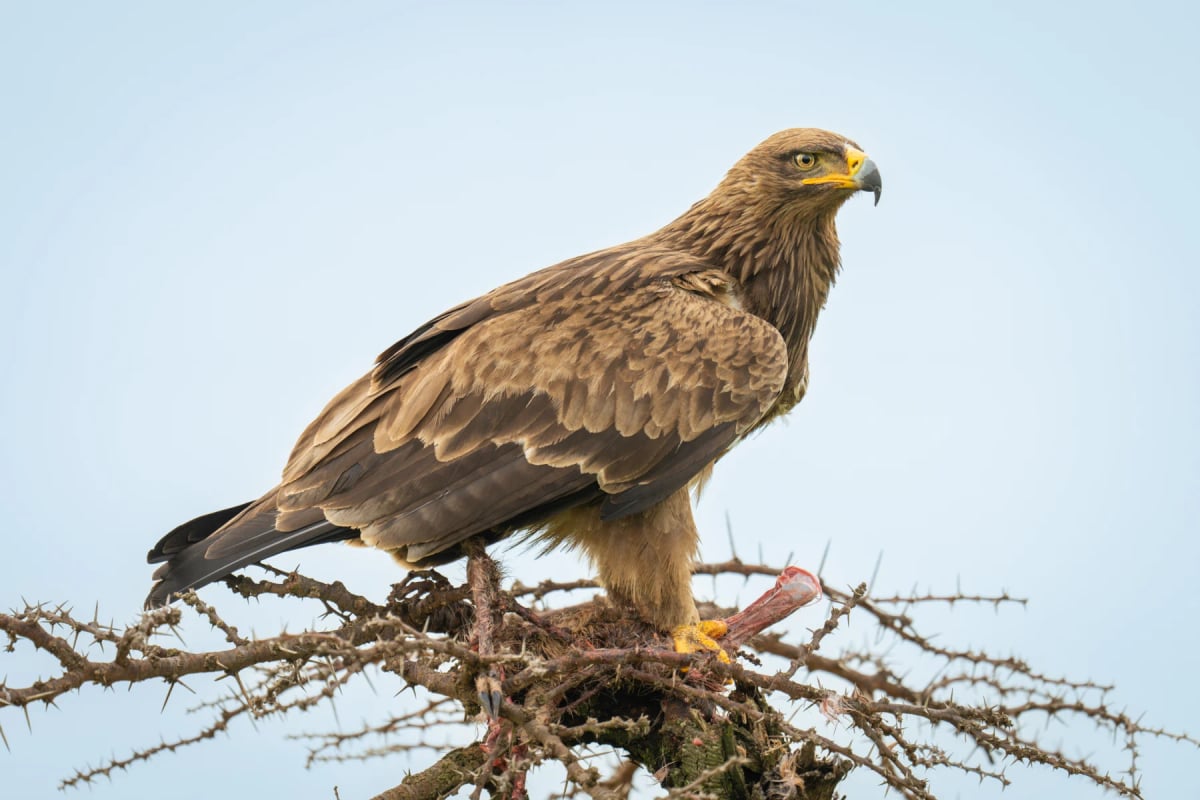
Steppe Eagle
Aquila nipalensis
The Steppe Eagle visits the United Arab Emirates as a passage migrant and winter visitor, moving through and sometimes settling in open desert and agricultural areas. It is among the larger raptors recorded regularly along the UAE coast and inland plains. Classified as Endangered by the IUCN, the species has declined sharply in recent decades due to electrocution on power lines and loss of nesting habitat far to the north.
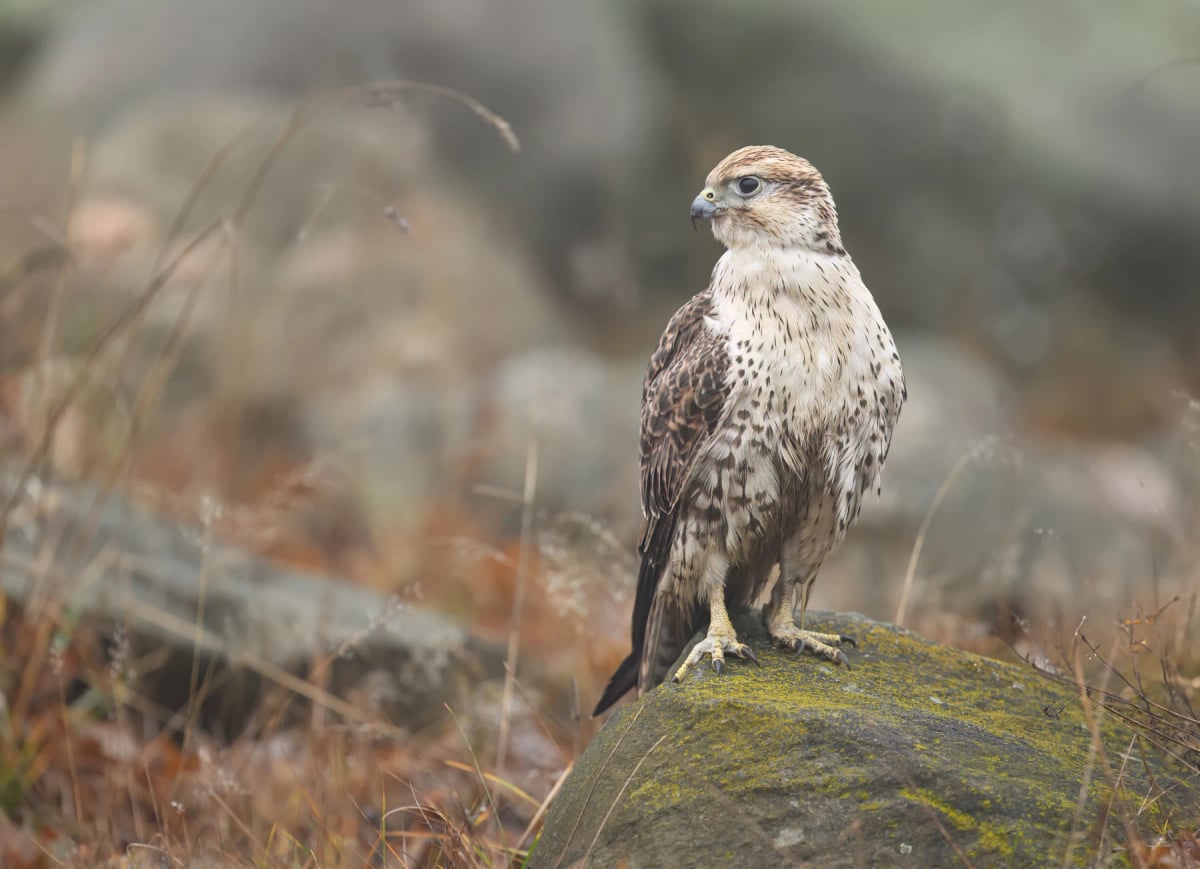
Saker Falcon
Falco cherrug
The United Arab Emirates is a major wintering destination for the saker falcon and a country with deep ties to the tradition of falconry, which is recognized by UNESCO as intangible cultural heritage. Falconry culture in the UAE drives both strong interest in the species and significant demand in the captive bird trade. The country has invested in falcon hospitals and breeding programs aimed at reducing pressure on wild populations. The saker falcon is Endangered globally.
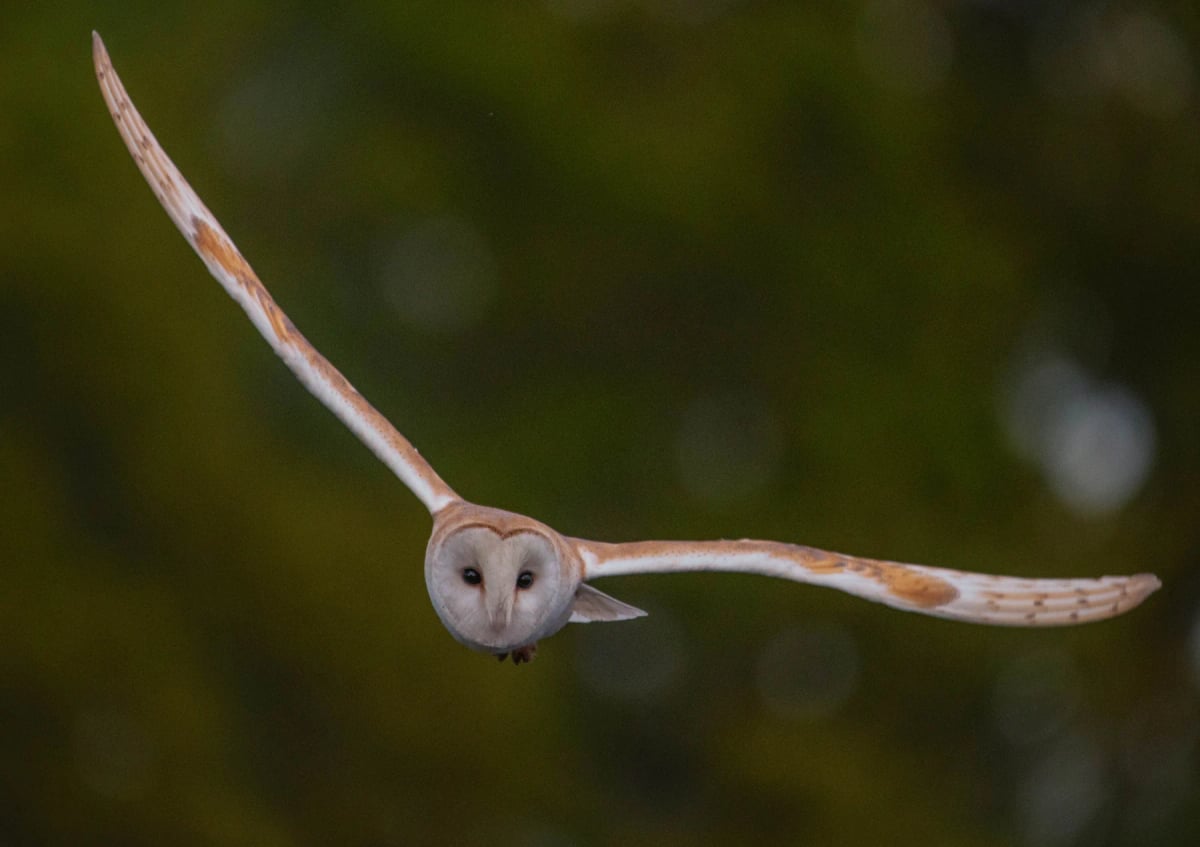
Barn Owl
Tyto alba
The barn owl is a rare resident and occasional visitor in the United Arab Emirates, found mainly near agricultural areas, date palm gardens, and the outskirts of towns where rodent prey is available. It nests in old buildings, cliff faces in the Hajar Mountains, and palm groves. The largely urban and desert environment of the UAE limits its distribution, and it is far less common here than in neighboring countries with more extensive farmland. Most sightings occur in the Al Ain region and in the northern emirates where some agricultural land remains.
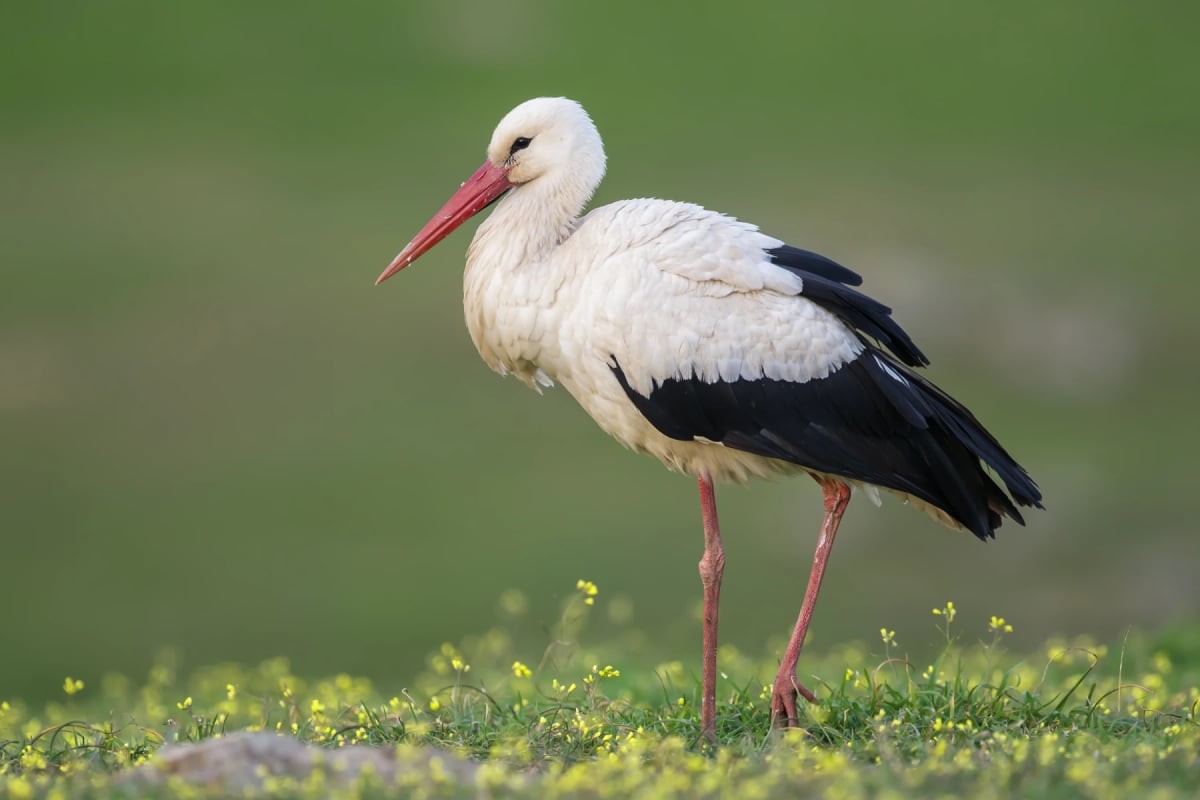
Stork
Ciconia ciconia
The white stork occurs in the United Arab Emirates as a passage migrant, recorded mostly during autumn and spring as birds travel between Europe and their wintering grounds in Africa. Sightings tend to cluster around coastal wetlands, parks, and irrigated farmland where the birds can rest and find food. Though not a resident species, the stork's impressive size and bright red bill make it instantly recognizable when it does appear across the Emirates. IUCN status: Least Concern.
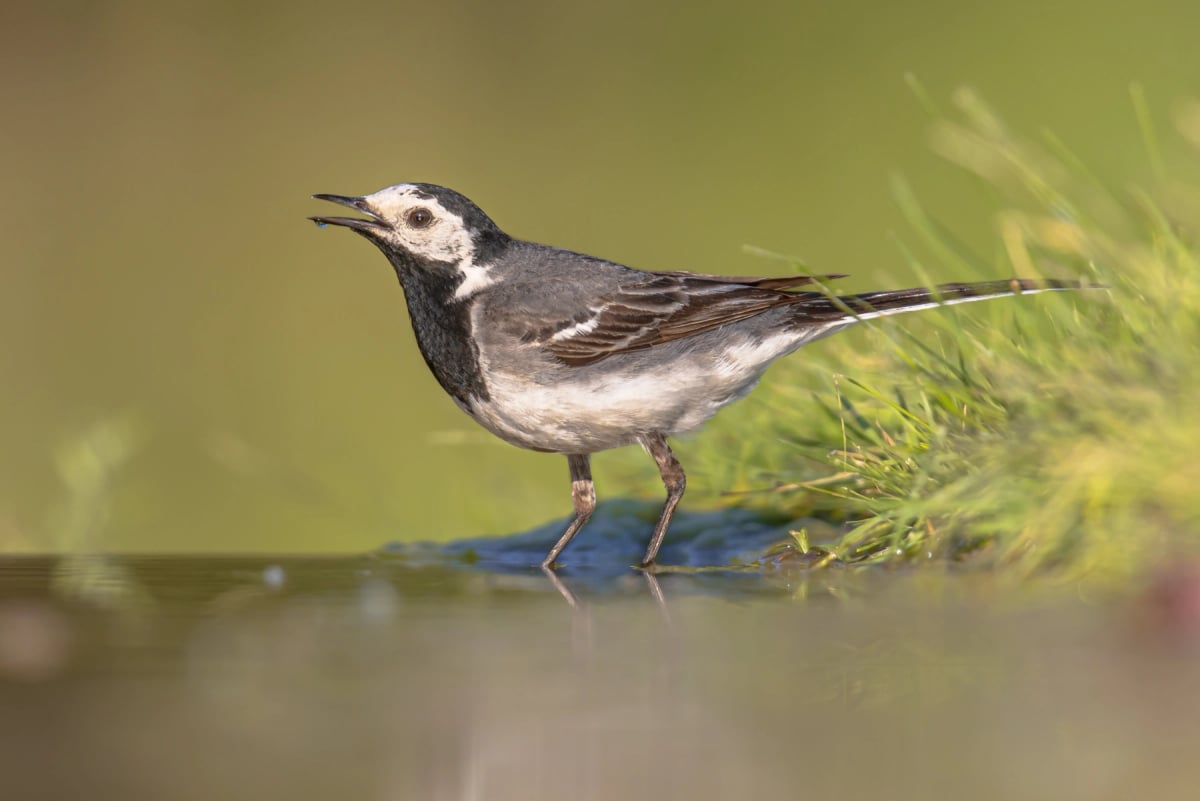
White Wagtail
Motacilla alba
In the United Arab Emirates the white wagtail is a common winter visitor from October to March, and many more birds pass through on migration. It thrives on the country's green spaces: parks, lawns, golf courses, irrigated farms and sewage lagoons, as well as beaches and coastal mudflats. In Dubai and Abu Dhabi it is one of the most familiar small birds of the winter months. IUCN status: Least Concern.
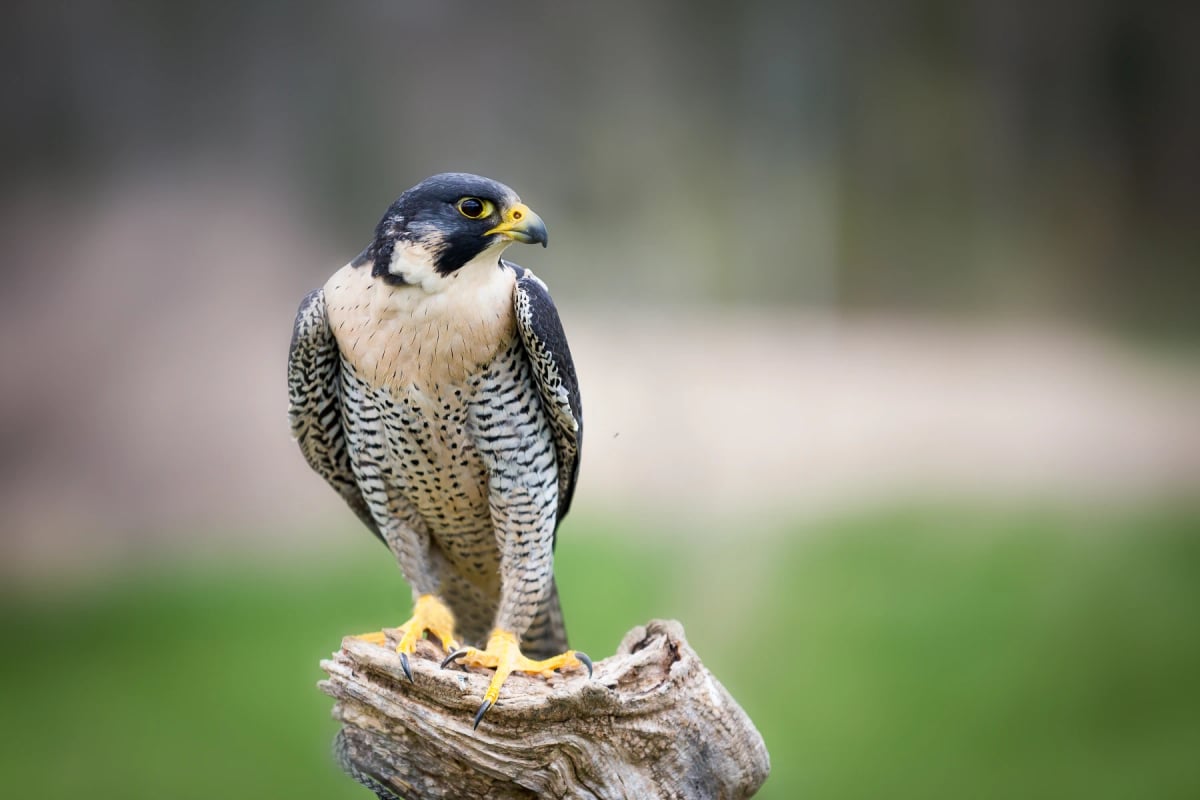
Peregrine Falcon
Falco peregrinus
The peregrine falcon holds deep cultural significance in the United Arab Emirates, where falconry has been practised for centuries and remains a living tradition recognised by UNESCO. Wild birds pass through during migration along the Arabian Gulf coast, and some winter in the country. The UAE also leads global efforts in falcon conservation and captive breeding, running specialist centres that have contributed to population studies across the wider region. IUCN status: Least Concern.
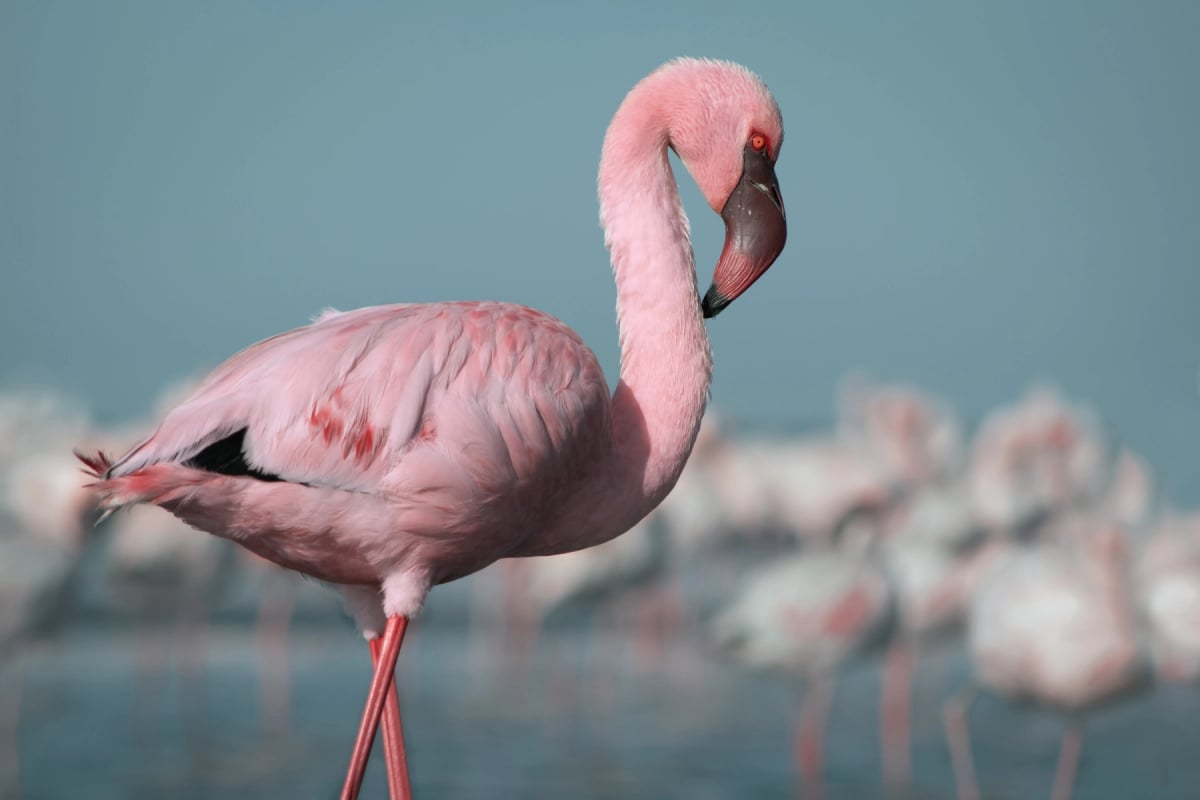
Flamingo
Phoenicopteridae (6 species)
The greater flamingo lives year round in the United Arab Emirates, and it even breeds there. Flocks feed at the Ras Al Khor Wildlife Sanctuary, a lagoon at the edge of Dubai with the city skyline behind, and at Al Wathba Wetland Reserve near Abu Dhabi, where flamingos have nested since the 1990s. The birds filter small crustaceans from the salty water, and numbers peak in winter. IUCN status: Least Concern.
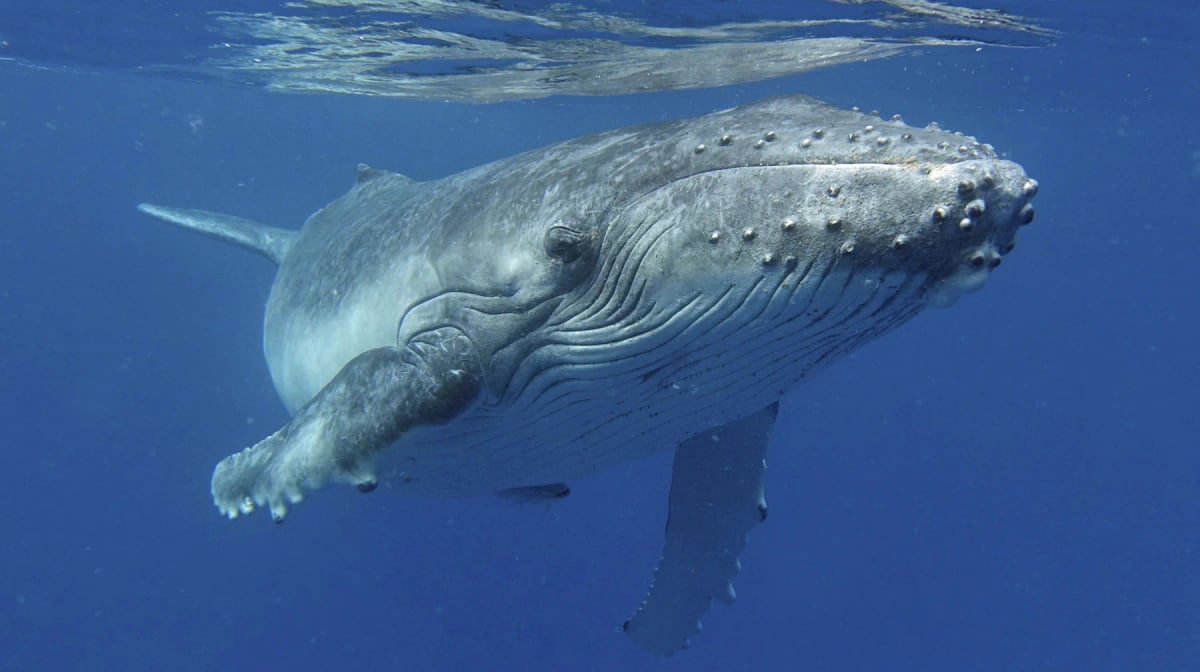
Humpback Whale
Megaptera novaeangliae
Humpback whale records from the Arabian Sea place this species within the broader waters surrounding the United Arab Emirates. The Arabian Sea population is considered a distinct and relatively small group that does not appear to migrate to polar feeding grounds as most other populations do. This makes them ecologically unusual among humpback whales. Conservation efforts across the region are important for their continued survival. Adults can reach up to 16 metres in length. The IUCN lists the species as Least Concern.
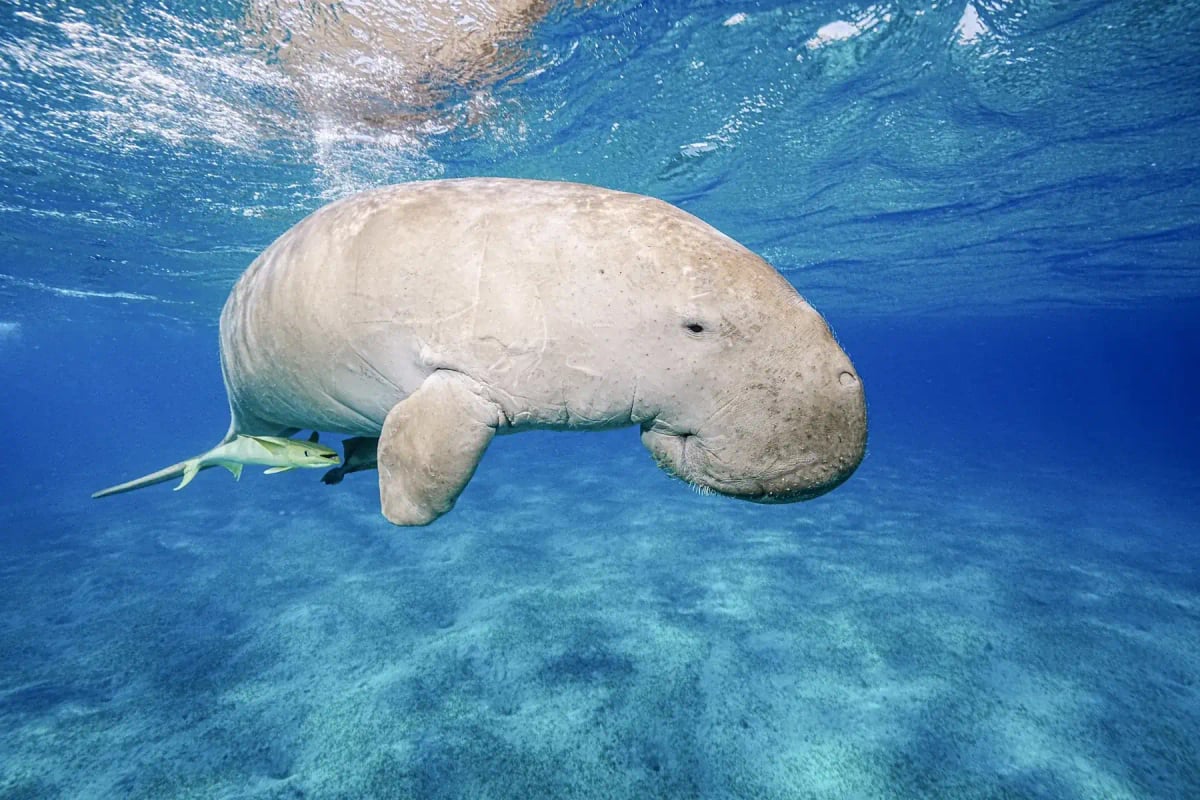
Dugong
Dugong dugon
The United Arab Emirates holds one of the largest dugong populations in the world outside of Australia, with thousands of individuals recorded in the waters of the Arabian Gulf. The shallow, warm bays along the UAE coast support extensive seagrass beds that dugongs rely on for food. Boat strikes and coastal development are serious concerns. The UAE has taken steps to protect key dugong habitats through marine protected areas.
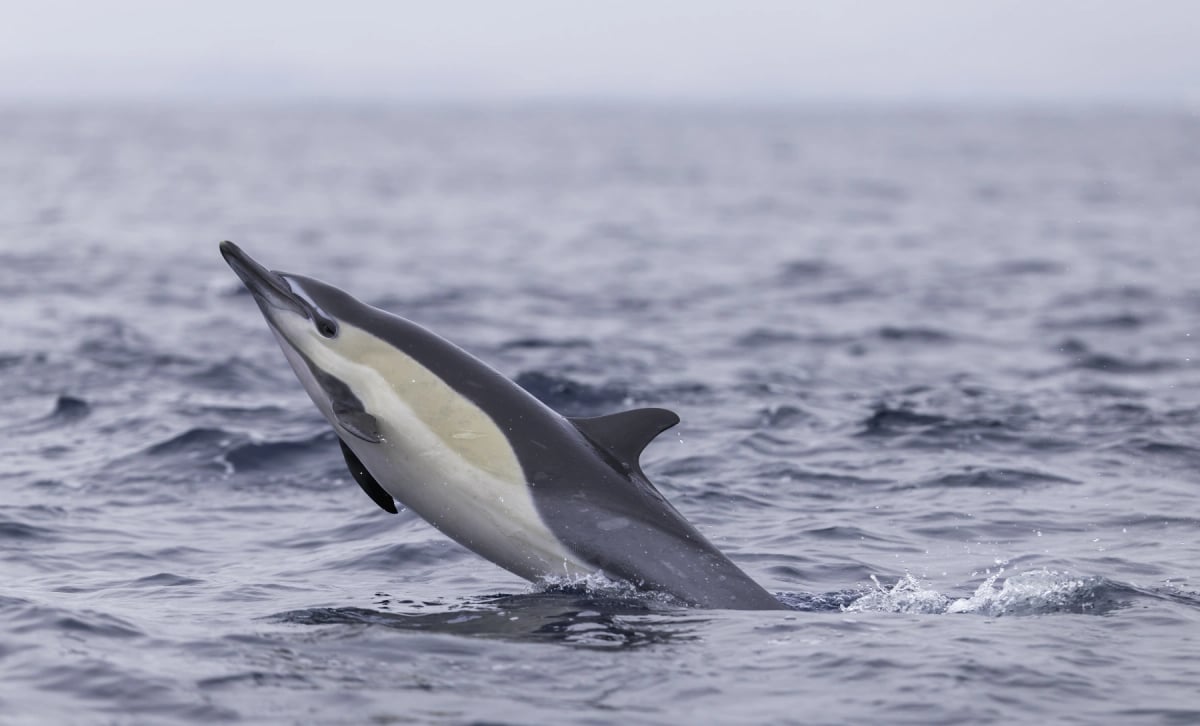
Common Dolphin
Delphinus delphis
Common dolphins occur in the waters off the United Arab Emirates, including the Gulf of Oman and parts of the Arabian Sea coastline. They tend to prefer deeper offshore waters rather than the shallow, warm Gulf itself. Sightings often involve small to mid sized groups feeding on fish and squid. Growing interest in marine ecotourism in the UAE has brought greater public attention to these cetaceans in recent years.
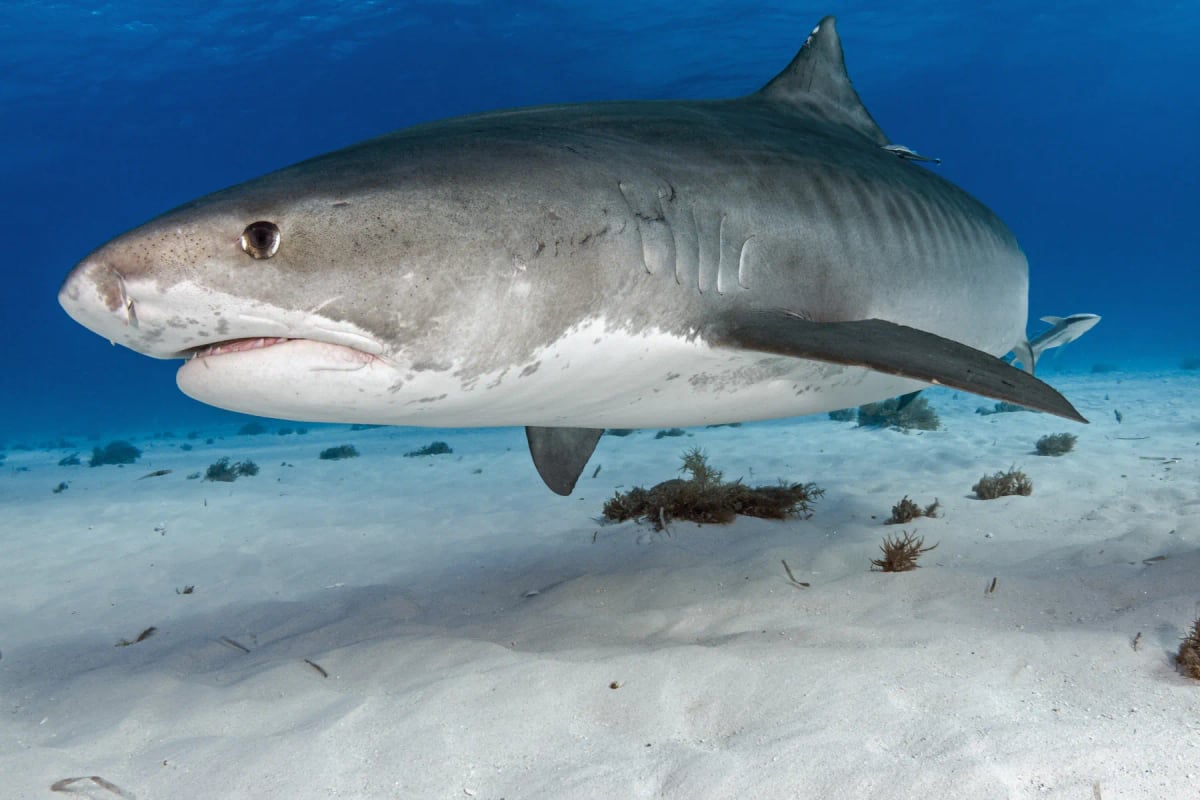
Tiger Shark
Galeocerdo cuvier
Tiger sharks are found in the warm, shallow waters of the Arabian Gulf and the Gulf of Oman bordering the United Arab Emirates. These seas, though partly enclosed and subject to high temperatures, support a variety of prey that attracts large sharks. Coastal development and fishing activity in the region affect shark populations, and the UAE has taken some steps toward marine conservation in recent years. Their IUCN status is Near Threatened.
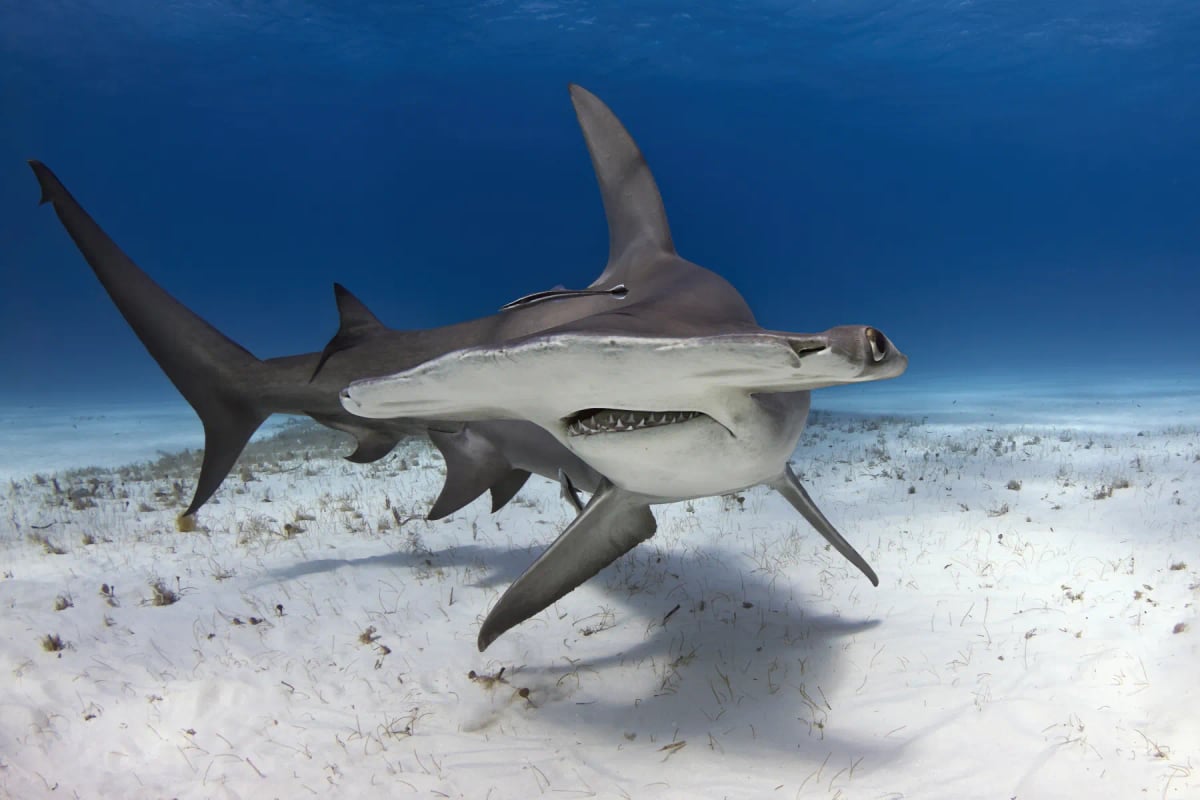
Hammerhead Shark
Sphyrna spp.
Hammerhead sharks inhabit the warm, shallow waters of the Arabian Gulf and the Gulf of Oman along the UAE's coastline. They feed on rays, fish, and squid in these productive seas. Unregulated fishing and the trade in fins have severely reduced their numbers across the region. Awareness campaigns and emerging marine protections in the UAE are beginning to address these threats.
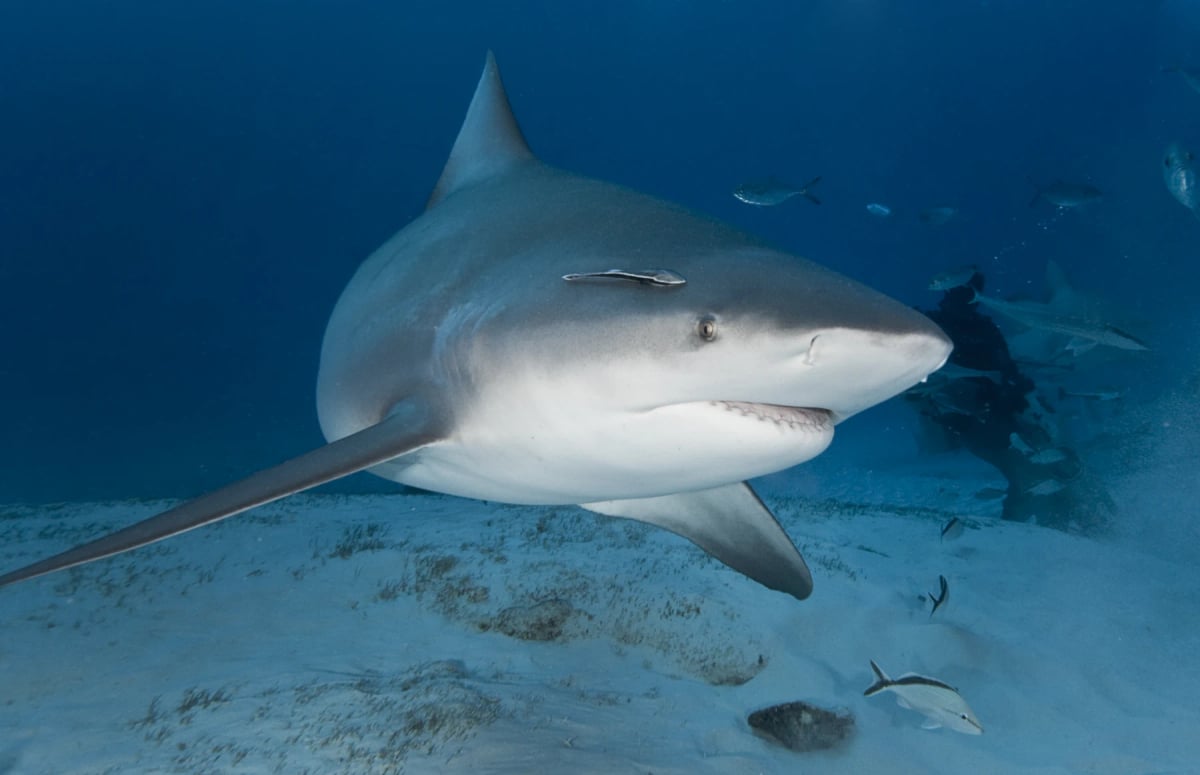
Bull Shark
Carcharhinus leucas
Bull sharks have been recorded in UAE waters, inhabiting the warm, shallow coastal zones of the Arabian Gulf and the Gulf of Oman. The region's rapid coastal development and heavy maritime traffic present challenges for inshore shark populations. As an opportunistic predator tolerant of variable salinity, the bull shark can exploit estuarine habitats near river and creek outlets. It holds Near Threatened status on the IUCN Red List.
Researched and written by Juan Pablo. Sources: IUCN Red List, scientific literature and regional field guides. Last updated: .