Animals in Tunisia
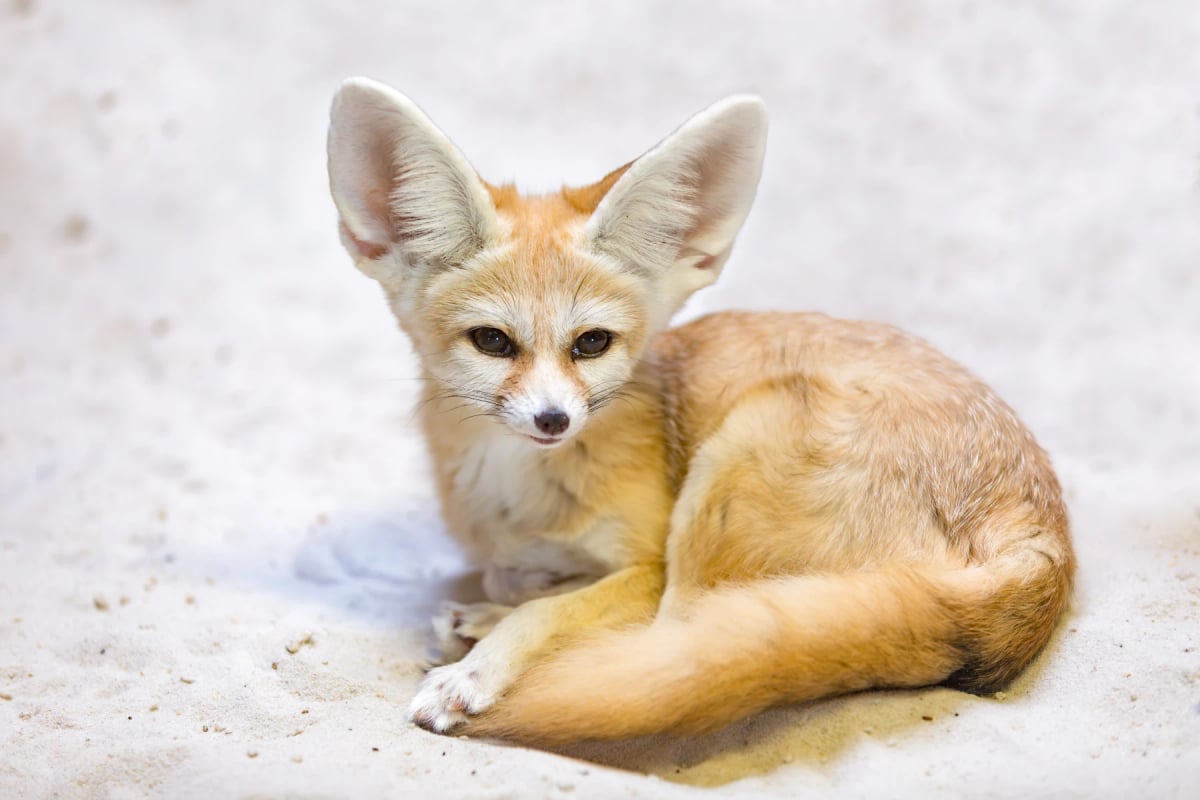
Fennec Fox
Vulpes zerda
The fennec fox, Tunisia’s national animal, is perfectly adapted to the desert. Its large ears help regulate heat and detect prey beneath the sand. This small nocturnal mammal symbolizes endurance and intelligence, reflecting the balance between fragility and survival in the harsh Sahara environment.
View details→Wildlife in Tunisia
Tunisia’s wildlife blends Mediterranean and Saharan influences, offering both coastal and desert biodiversity. Dolphins and puffins inhabit the northern waters, while fennec foxes and camels roam the arid south. Forested hills, wetlands and sandy dunes together form a landscape where life adapts to heat, wind and seasonal change.
Most Dangerous Animals in Tunisia
Tunisia hosts few dangerous species, yet caution is advised in wild areas. Wild boars in forests may behave aggressively when threatened, while sharks and orcas occasionally appear along the coast. Responsible tourism and guided observation ensure safety and respect for nature.
Top 10 Animals in Tunisia
Among Tunisia’s most emblematic animals are the fennec fox, camels, red deer and dolphins. Their distribution across deserts, forests and coasts illustrates the country’s diverse geography. Protected parks and reserves preserve these habitats and attract ecotourists seeking both Mediterranean and Saharan wildlife.
Fennec Fox
Vulpes zerda
The fennec fox is found in the southern Saharan regions of Tunisia, particularly around the Grand Erg Oriental and the areas near Douz, the gateway to the Tunisian Sahara. It is a popular symbol of desert wildlife in the country and is sometimes encountered on desert tours. Tunisia's Saharan zone supports a resident population of this iconic small fox.
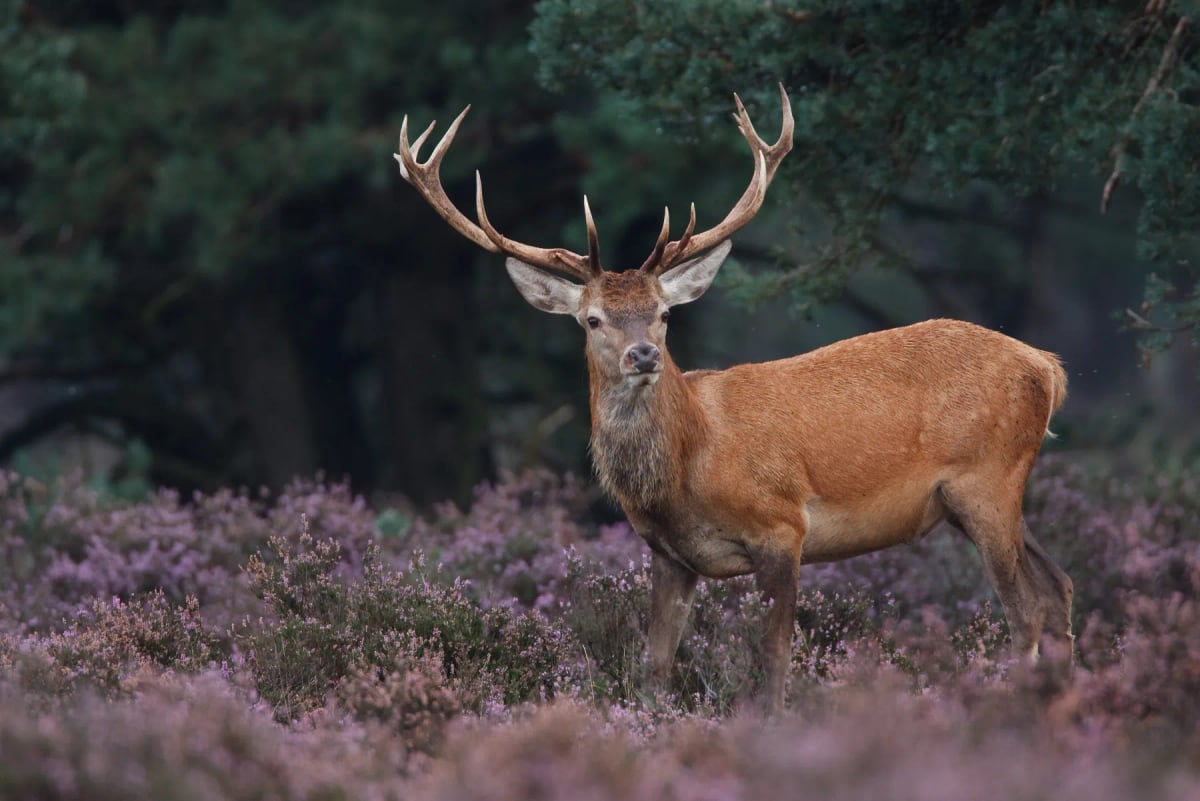
Red Deer
Cervus elaphus
The Barbary red deer, a subspecies of the red deer, survives in the cork oak forests of northwestern Tunisia, primarily within El Feija National Park. This is one of the last refuges for the subspecies in North Africa. Conservation efforts including protection from poaching and habitat management have helped stabilise a small but important population. The deer feed on acorns, grasses and shrubs in this Mediterranean forest habitat. Its IUCN status is Least Concern.
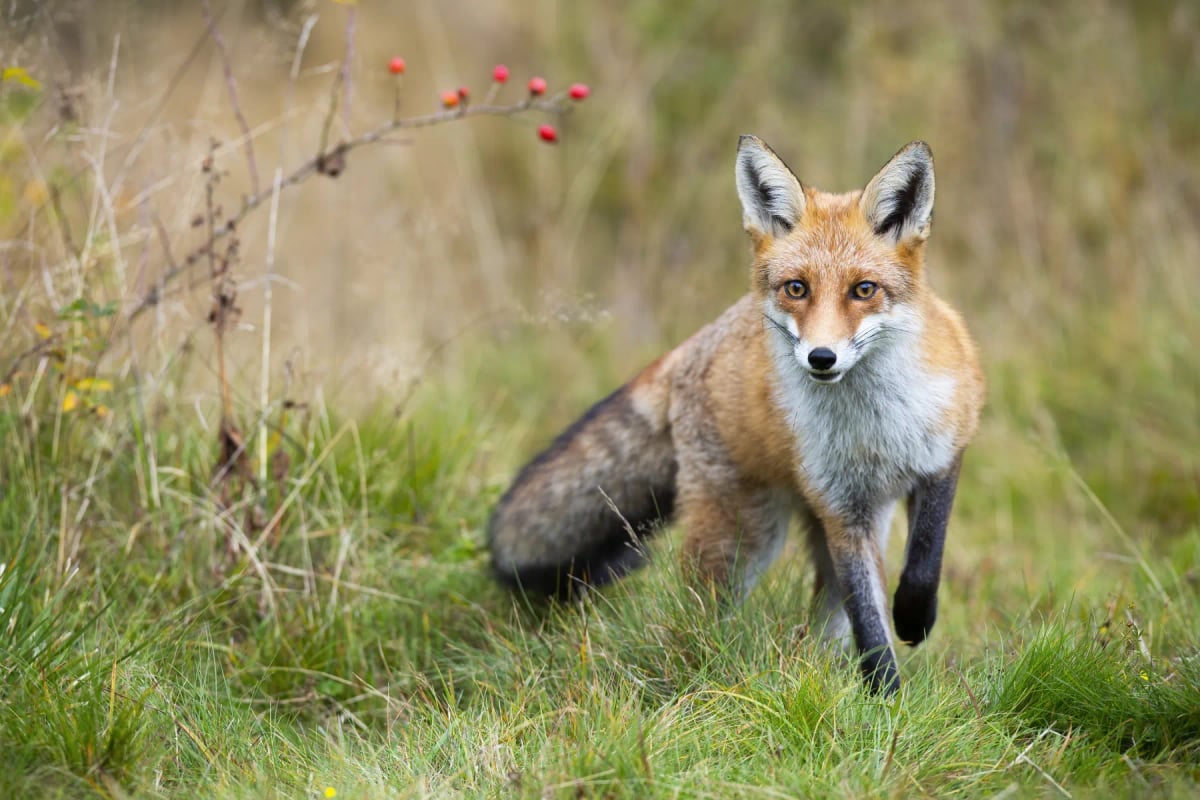
Red Fox
Vulpes vulpes
The red fox is found across much of Tunisia, from the green northern hills and the fertile Medjerda Valley to the semi-arid steppes that stretch toward the Sahara. It is an opportunistic and adaptable animal, able to survive in dry landscapes where food can be scarce. Near farming communities, it sometimes takes poultry, which brings it into conflict with local people. Its IUCN status is Least Concern.
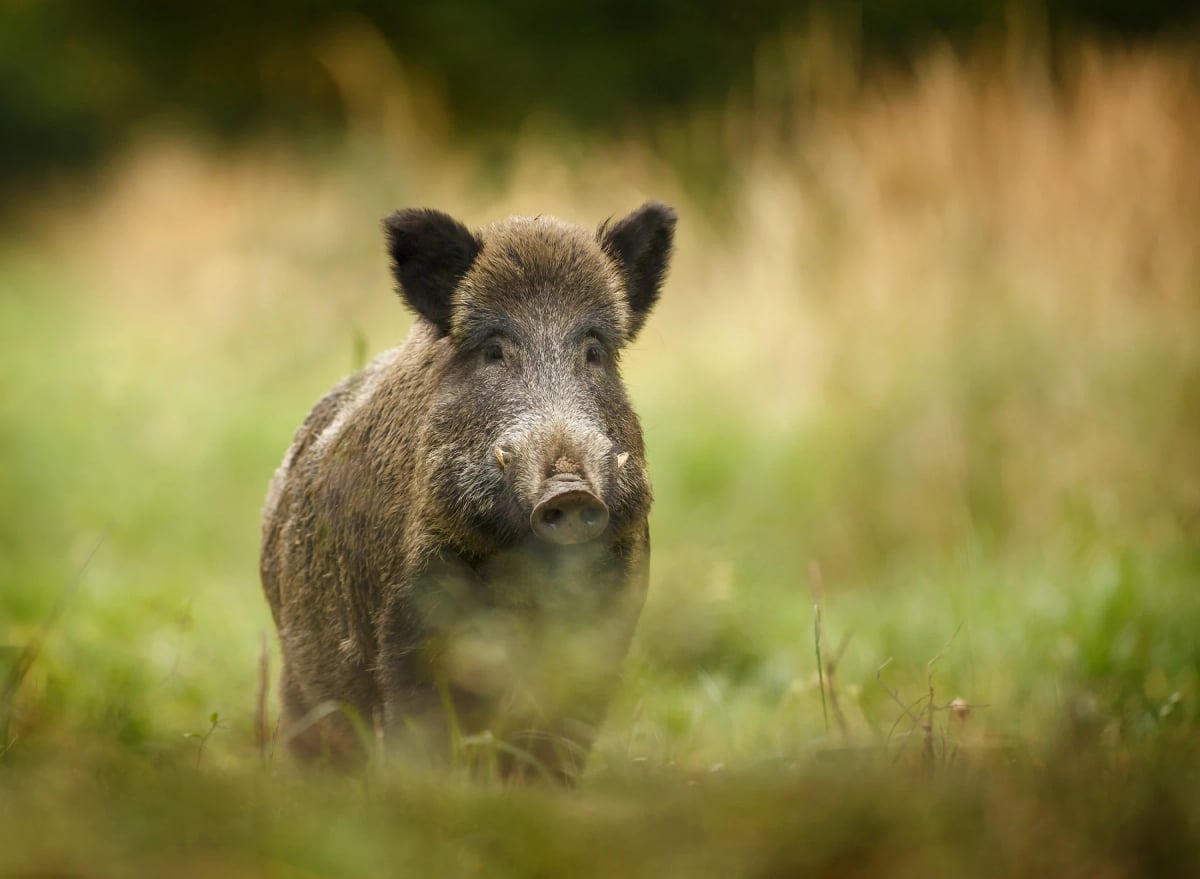
Wild Boar
Sus scrofa
Wild boars are found mainly in the forested mountains of northern Tunisia, including the Kroumirie hills near Tabarka and parts of the Atlas foothills. Because most Tunisians do not eat pork for religious reasons, boars face limited traditional hunting pressure, though regulated culling is used in some areas to control populations that damage crops near forested farmland.
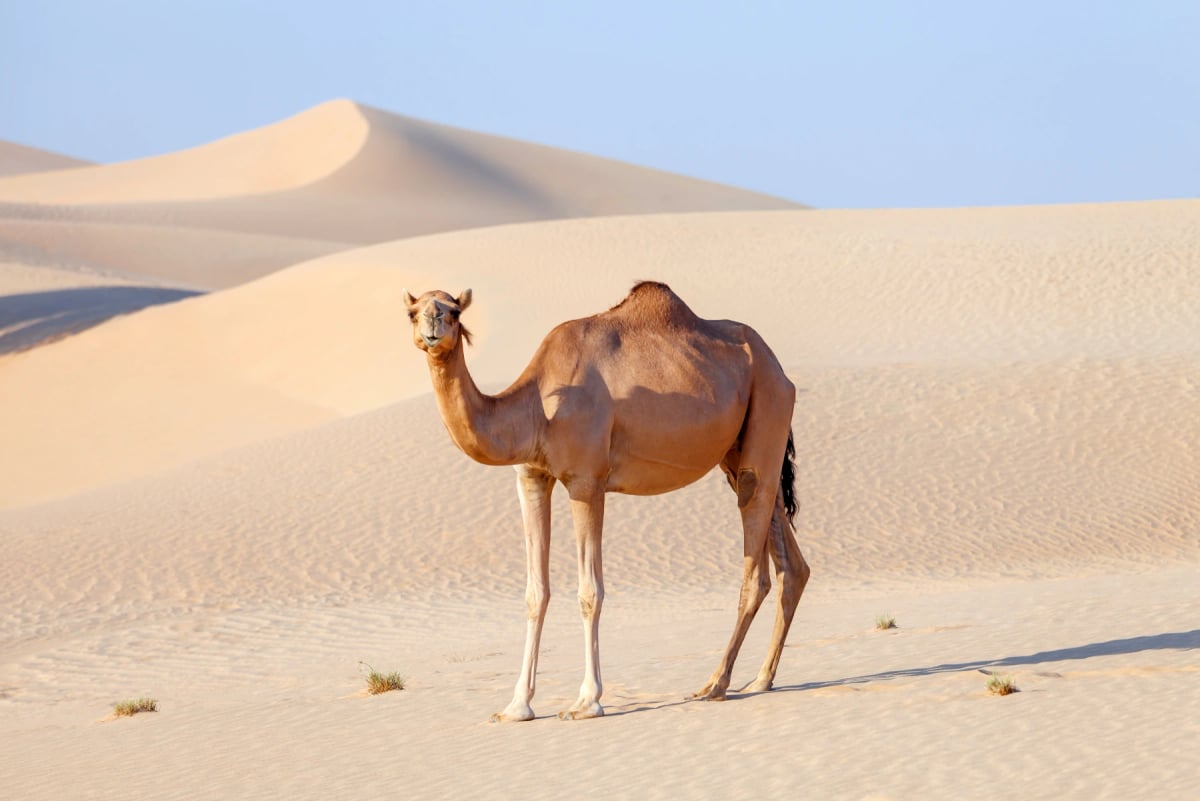
Dromedary Camel
Camelus dromedarius
In Tunisia, dromedary camels are concentrated in the arid south, particularly around the chotts, the vast salt flats near Douz and Tozeur. Douz itself is known as the gateway to the Sahara and hosts an annual camel festival celebrating Saharan culture. While camels play a smaller economic role here than in some neighboring countries, they remain important to southern pastoral communities and are a major draw for desert tourism.
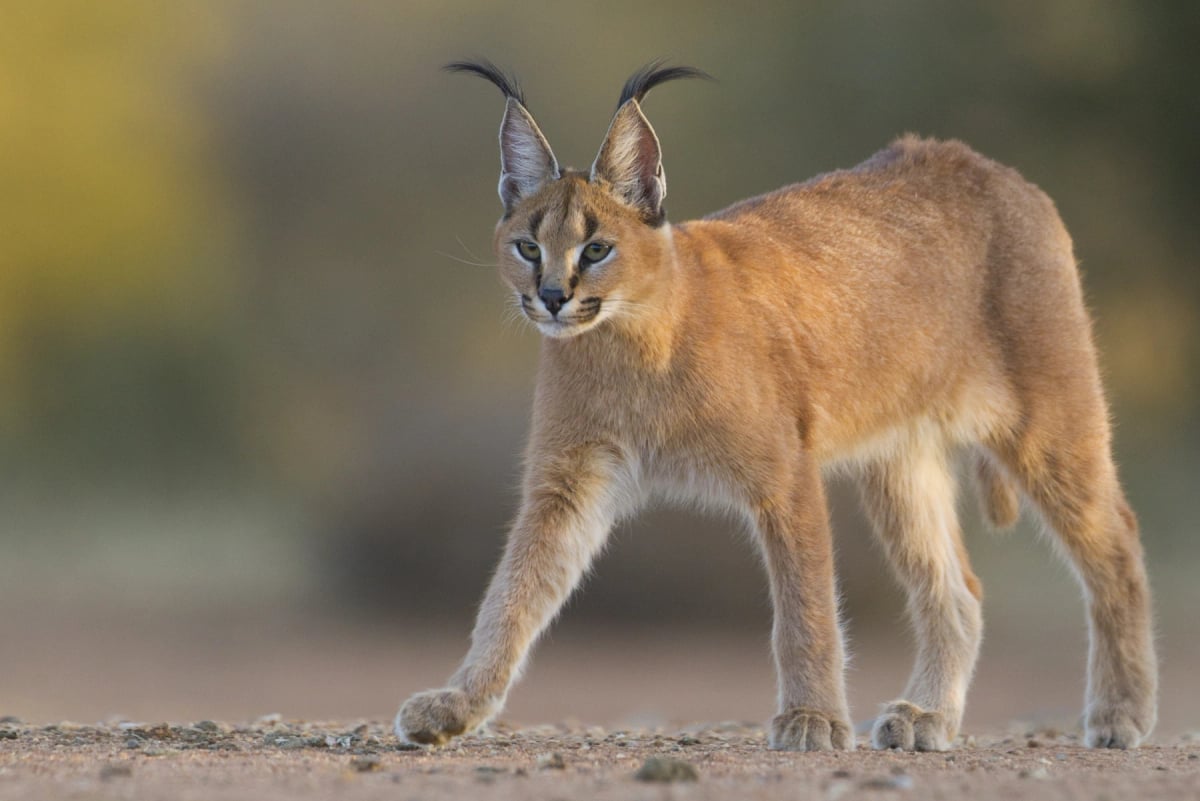
Caracal
Caracal caracal
In Tunisia, the caracal inhabits arid scrublands and rocky terrain across the northern and central regions, including areas bordering the Atlas foothills. Sightings are rare, and the population is thought to be small and thinly spread. Listed as Least Concern globally, the species faces local pressure from habitat degradation and occasional persecution by livestock farmers who view it as a threat to their animals.
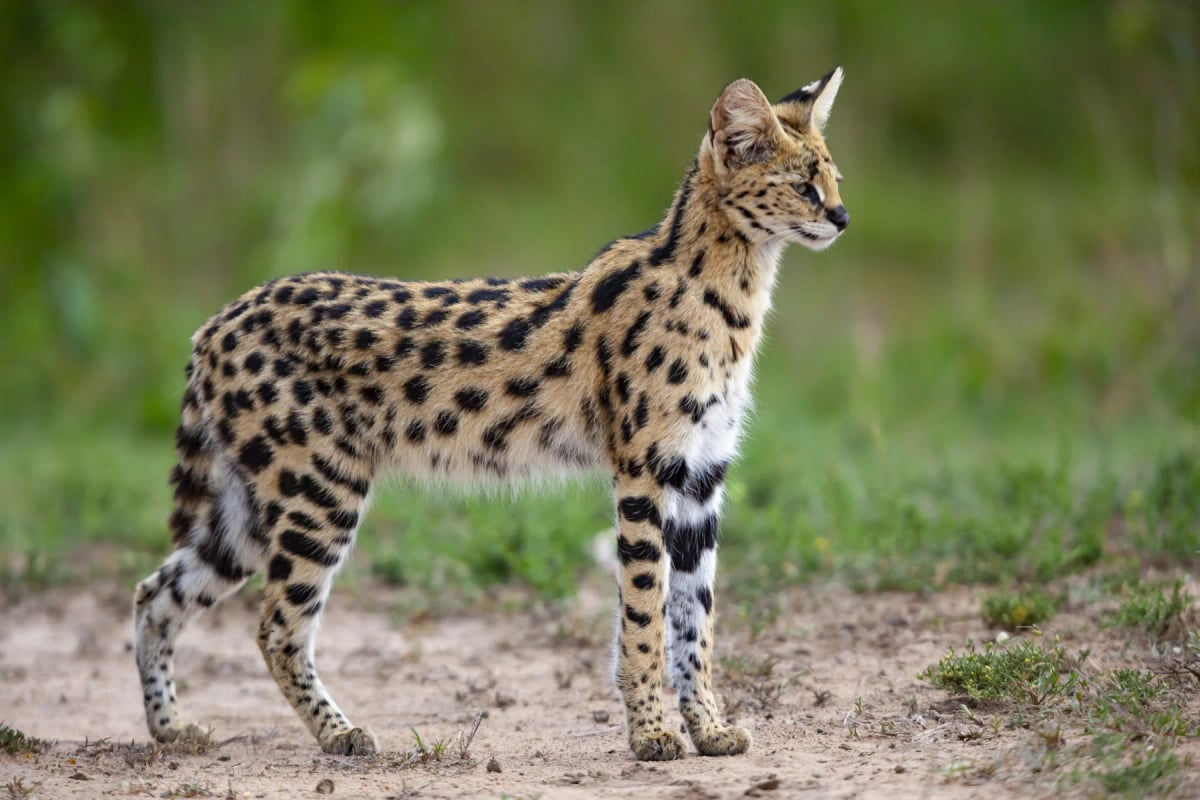
Serval
Leptailurus serval
Tunisia represents the northernmost edge of the serval's range in Africa, and the species is considered either extinct or extremely rare in the country today. Historically, it may have survived in the wetter areas of the north, such as the Kroumirie highlands. No confirmed recent sightings have been recorded. The IUCN lists the serval globally as Least Concern, but any remnant population in Tunisia would be critically isolated.
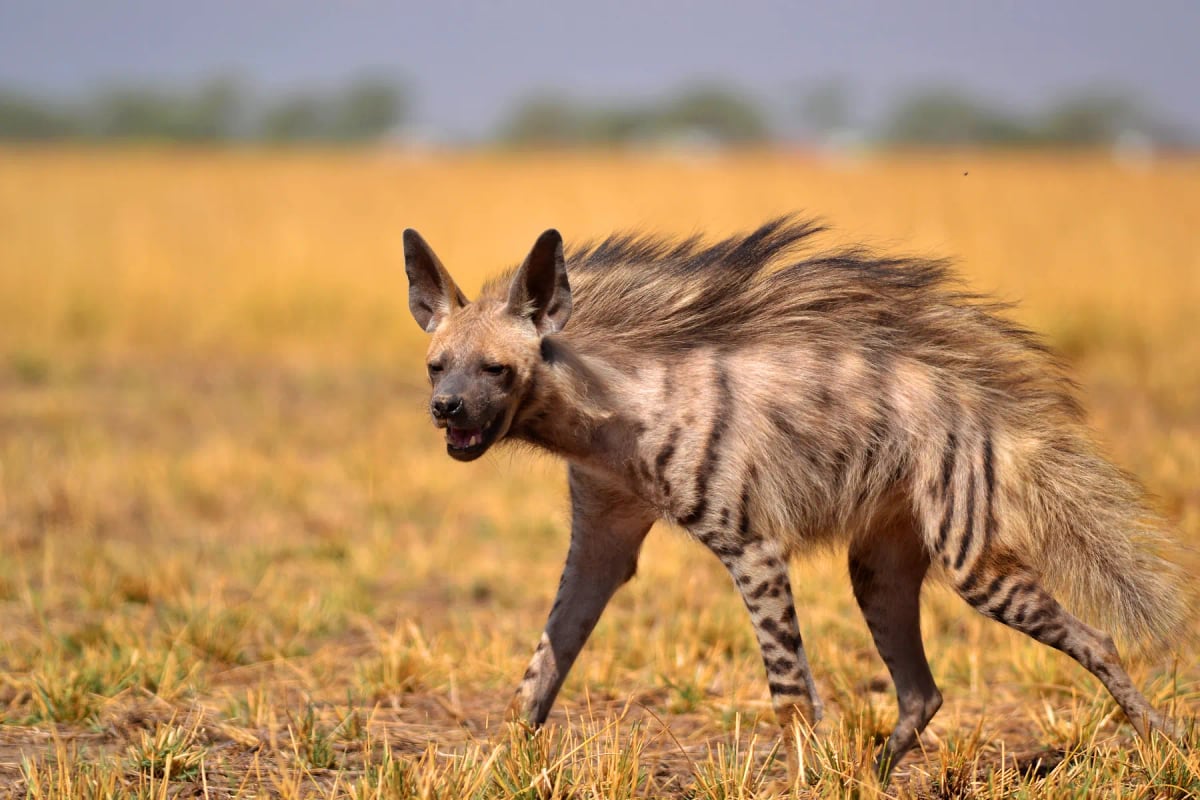
Striped Hyena
Hyaena hyaena
The striped hyena is found in Tunisia's arid interior, including the steppe and pre-desert zones that stretch toward the Sahara. It relies on caves and rocky outcrops for shelter and emerges at night to scavenge. Habitat degradation and conflict with farming communities have reduced its numbers across North Africa. The IUCN considers it Near Threatened, and it is rarely seen, making accurate population estimates for Tunisia difficult to establish.
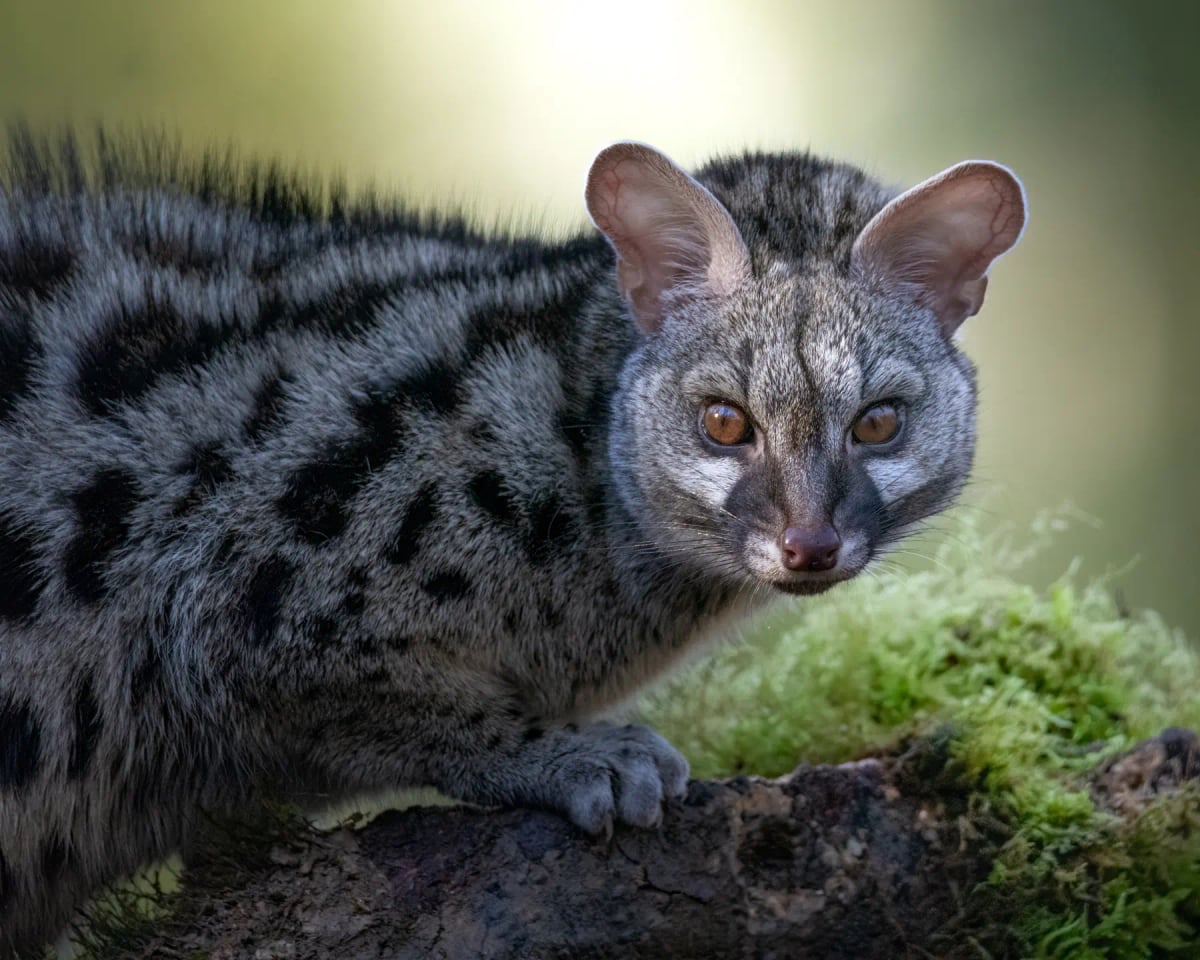
Common Genet
Genetta genetta
In Tunisia, the common genet is found in the northern and central parts of the country, particularly in cork oak forests and scrubland habitats of the Tell Atlas and Dorsale ranges. It avoids the arid south. This nocturnal hunter feeds on small vertebrates and insects. Tunisia represents part of the genet's North African range, and the species is considered Least Concern by the IUCN.
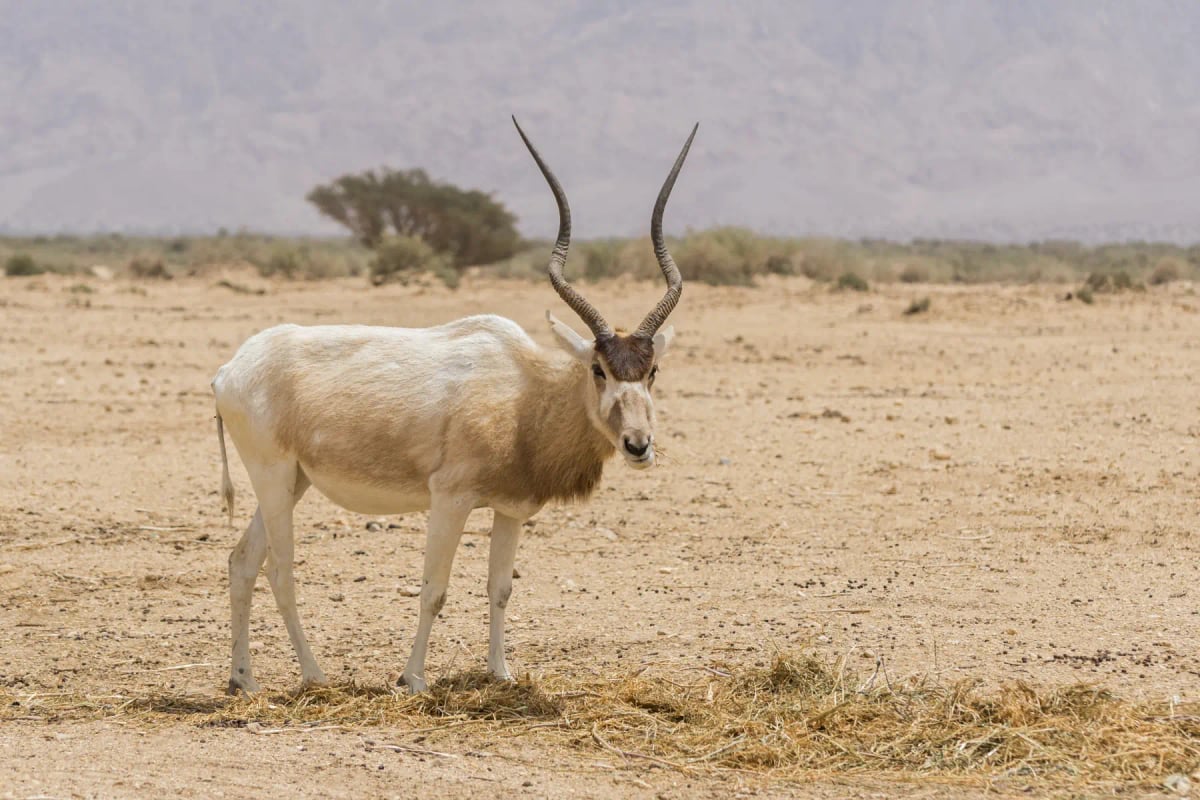
Addax
Addax nasomaculatus
Tunisia has run one of the world's oldest addax reintroduction programs, active since the mid-1980s. Animals have been released into protected areas in the south, including Sidi Toui and Jbil National Parks. The Tunisian population has been studied in depth for its genetics, and the data gathered here has played a direct role in shaping conservation strategies for the species globally.
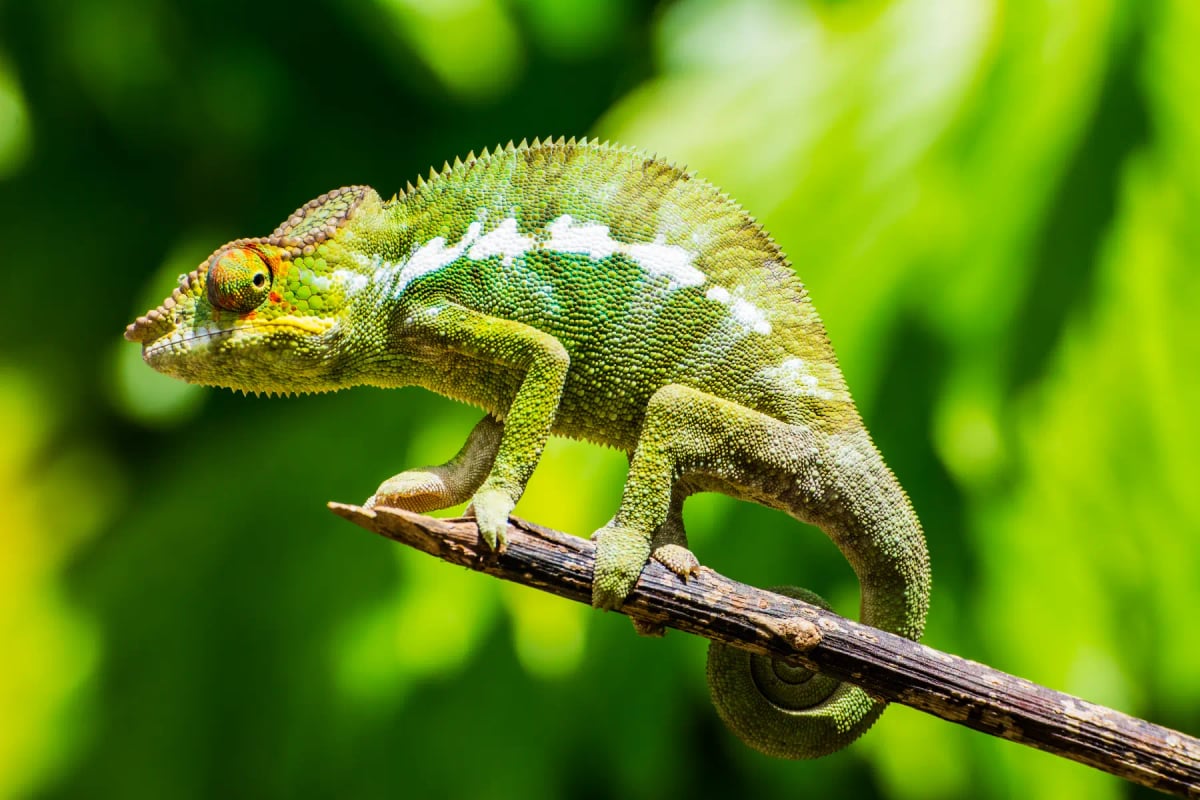
Chameleon
Chamaeleo chamaeleon
Tunisia hosts the common chameleon mainly in the northern and coastal regions, where Mediterranean scrubland, olive groves, and citrus plantations provide reliable food and cover. The species is less common in the arid south. Agricultural intensification and road traffic pose the greatest threats to individuals here. Local awareness of the chameleon as a beneficial insect predator has helped foster some tolerance toward it.
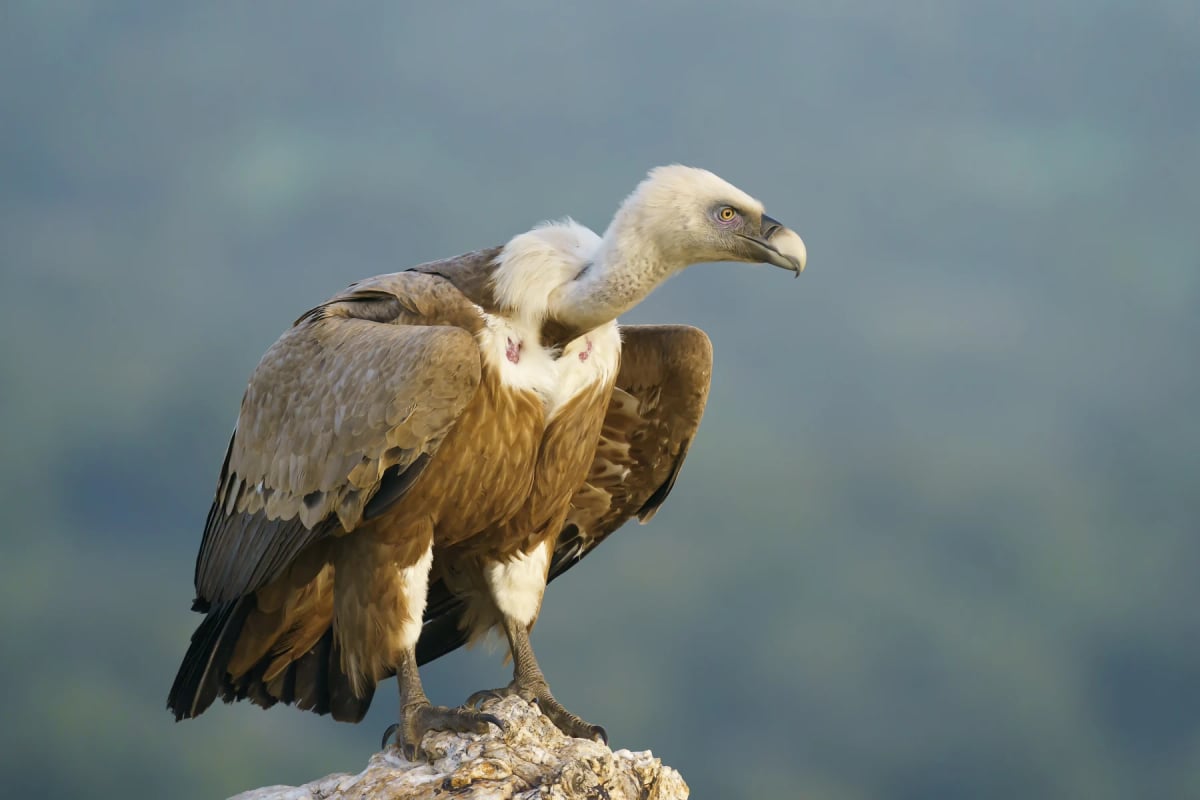
Griffon Vulture
Gyps fulvus
The griffon vulture was a common breeder in Tunisia in the 1880s, but it declined steeply through the twentieth century. Its last colonies were on mountains such as Jebel Zaghouan and Jebel Ressas in the north, and today the bird is scarce in the country. It still depends on open country with livestock carcasses and quiet cliffs, and it is seen mostly in the northern and central highlands. IUCN status: Least Concern.
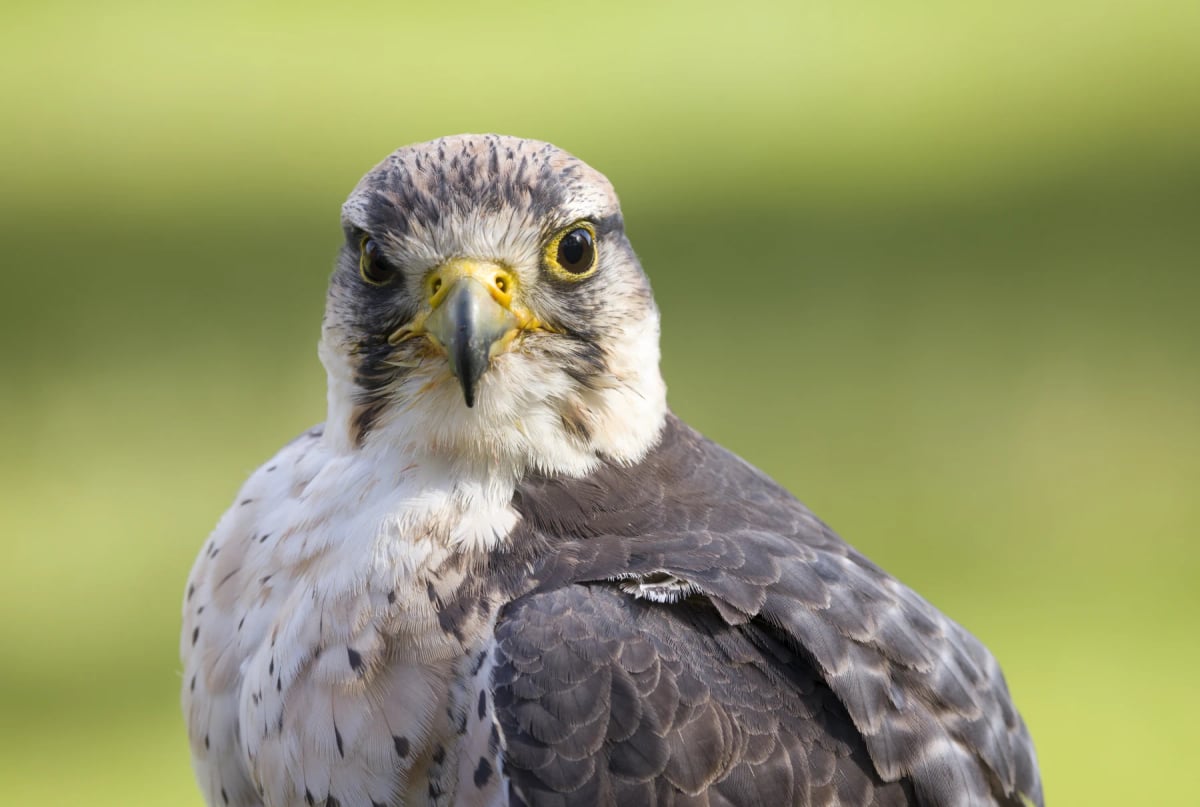
Lanner Falcon
Falco biarmicus
Tunisia sits within the northern part of the lanner falcon's range, where the bird is found in rocky gorges, semi-arid steppes, and areas around the Atlas foothills. It is one of the larger falcons present in the country and has a history in the regional falconry tradition. Pairs nest on cliff ledges and hunt birds across open terrain. Illegal capture for falconry remains a concern. The IUCN lists the species as Least Concern.
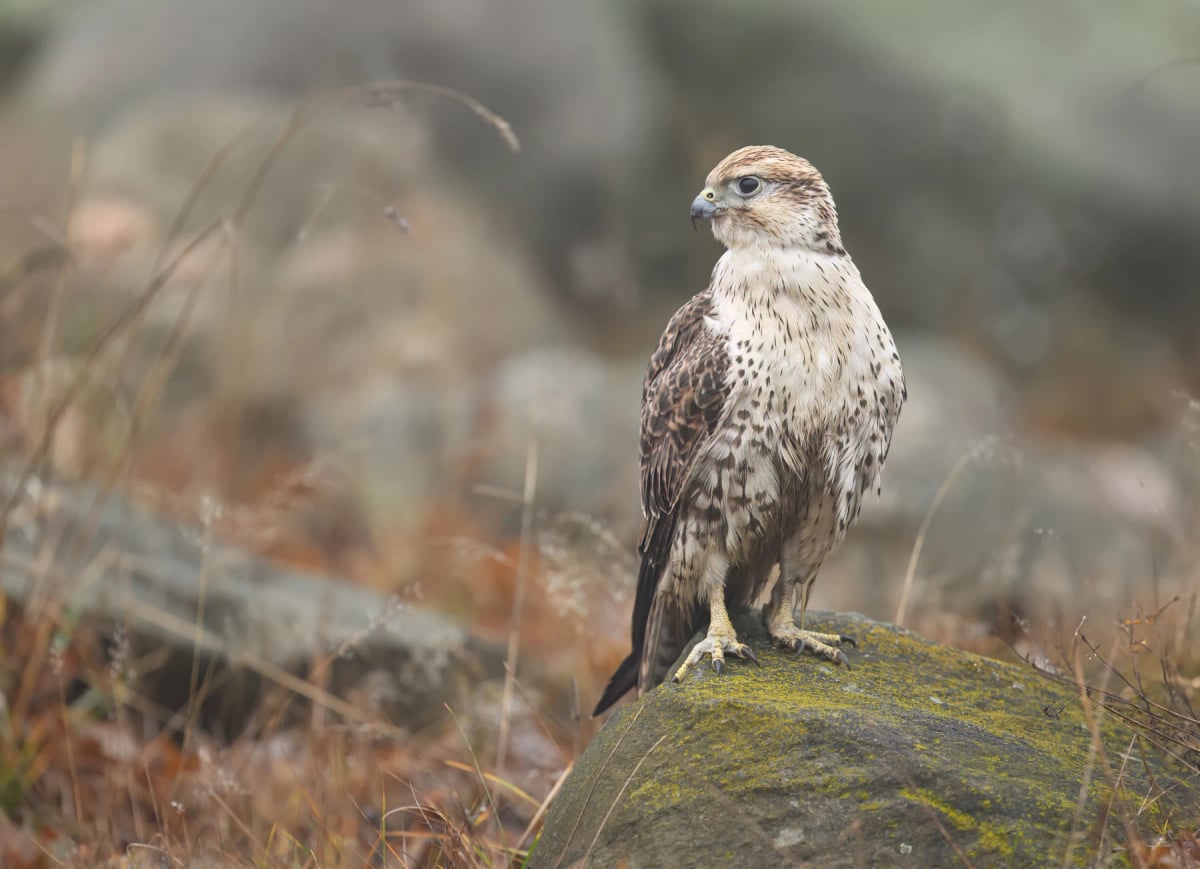
Saker Falcon
Falco cherrug
Tunisia sees saker falcons mainly on passage, as birds from Eastern Europe and Central Asia cross the Mediterranean in autumn and spring on their way to and from wintering areas south of the Sahara. The open steppes and semi-arid plains of central and southern Tunisia offer resting and hunting grounds along the way. Illegal trapping linked to falconry remains a concern across North Africa. The IUCN lists it as Endangered.
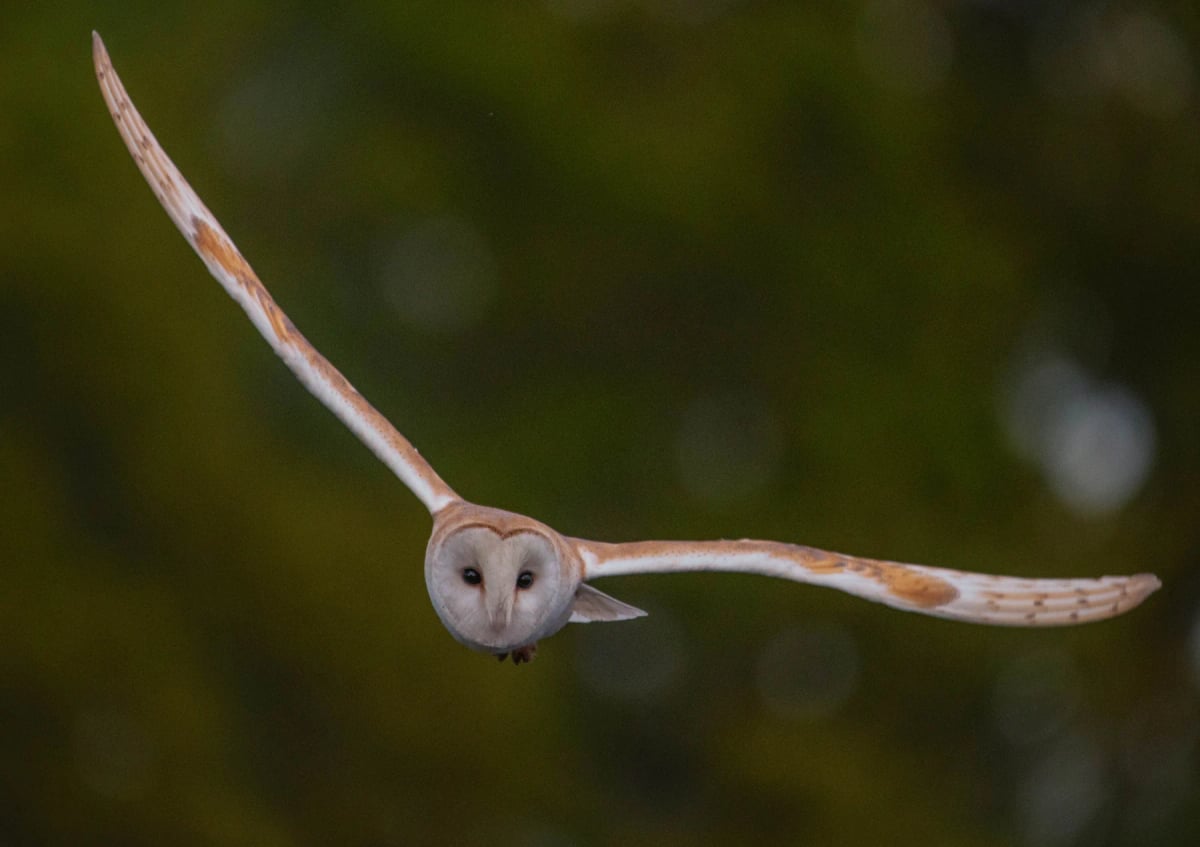
Barn Owl
Tyto alba
The barn owl is found across Tunisia in open farmland, scrubland, olive groves, and areas near villages from the fertile Tell region in the north to the Saharan fringe in the south. It nests in old buildings, ruins, cliff faces, and hollow trees, and hunts rodents at night. In the agricultural heartland of the northern highlands and the Medjerda valley it is a valuable natural controller of the small mammal populations that damage grain stores. Its association with old ruins and historic structures is a recurring feature of its presence throughout the country.
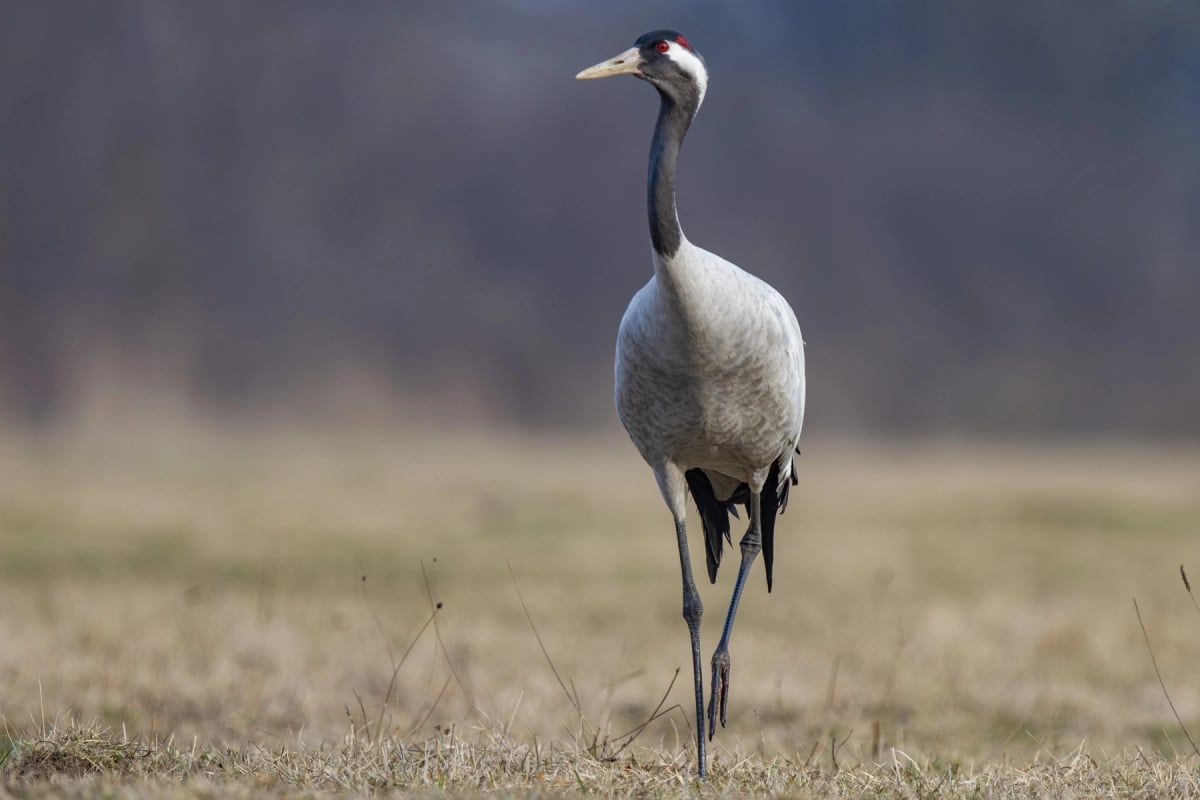
Crane
Grus grus
Tunisia is an important wintering country for common cranes of the Baltic and Hungarian flyway, which cross Italy and Sicily to reach North Africa. Several thousand birds spend the winter on the cereal plains and wetlands of the north and center, around places such as Lake Ichkeul and the plains near Kairouan, feeding on grain and roots until they return north in February and March. IUCN status: Least Concern.
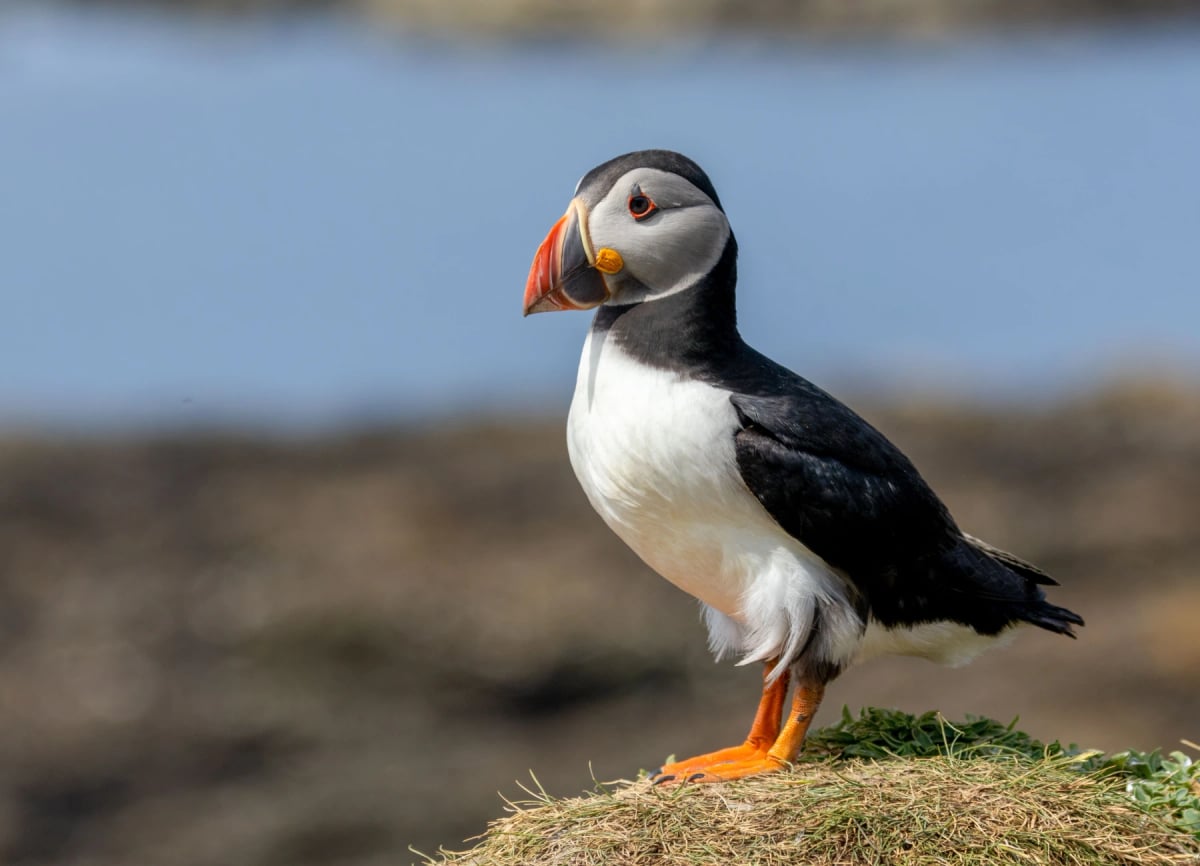
Puffin
Fratercula arctica
The Atlantic puffin reaches Tunisia as a winter visitor, at the eastern edge of its range in the Mediterranean. A few birds from the colonies of the British Isles and France winter at sea in the western Mediterranean and turn up off the Tunisian coast, usually far from land. Records are scarce and often involve birds found on beaches after storms. In spring they head back north to their colonies. IUCN status: Vulnerable.
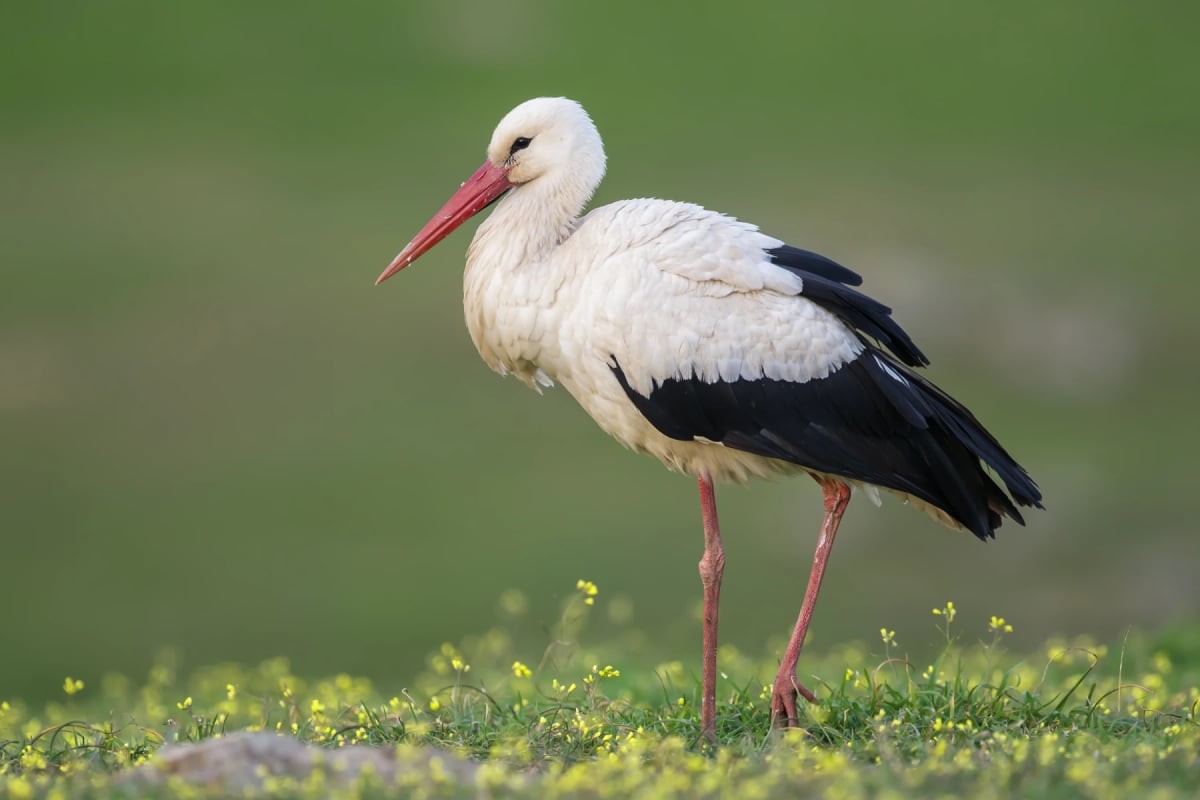
Stork
Ciconia ciconia
Tunisia is both a breeding ground and a major migration corridor for the white stork. Birds nesting in Tunisia favor wetlands and farmland in the north of the country, while vast numbers pass through each spring and autumn on their way between Europe and Africa. The northern coast and inland plains offer good feeding conditions. Tunisia's wetlands, some of them internationally protected, provide important stopover habitat. IUCN status: Least Concern.
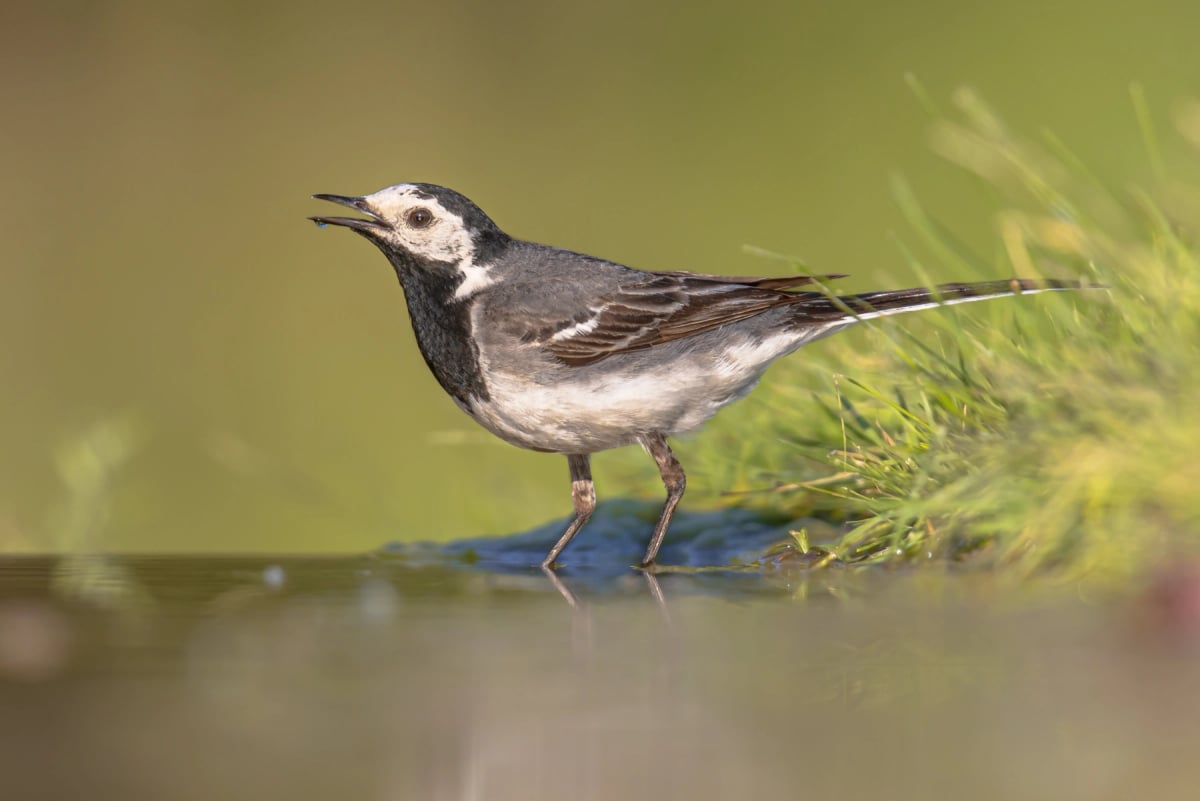
White Wagtail
Motacilla alba
Tunisia hosts large numbers of wintering white wagtails from Europe, which arrive in October and stay until March. They are common almost everywhere there is open ground and water: along wadis, in olive groves and cereal fields, around Lake Ichkeul and coastal lagoons, and on lawns and streets in towns. Many more cross the country on migration to and from the Sahel south of the Sahara. IUCN status: Least Concern.
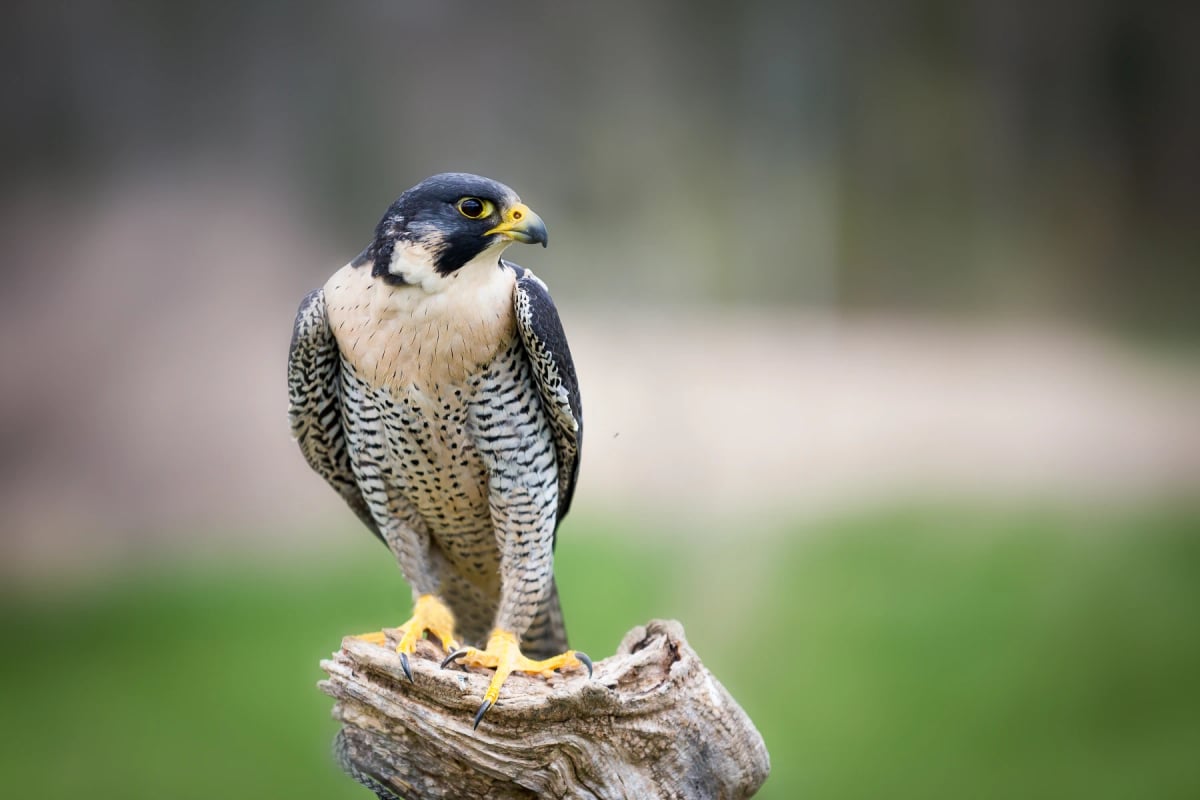
Peregrine Falcon
Falco peregrinus
The peregrine falcon passes through Tunisia during migration, using the country as a stepping stone between Europe and sub-Saharan Africa. It can be spotted along the northern coastline, over the Atlas ranges, and around wetlands such as Ichkeul National Park. Some individuals also winter here. With its extraordinary diving speed and bold dark hood, it is one of the most striking birds a visitor to Tunisia can encounter. IUCN status: Least Concern.
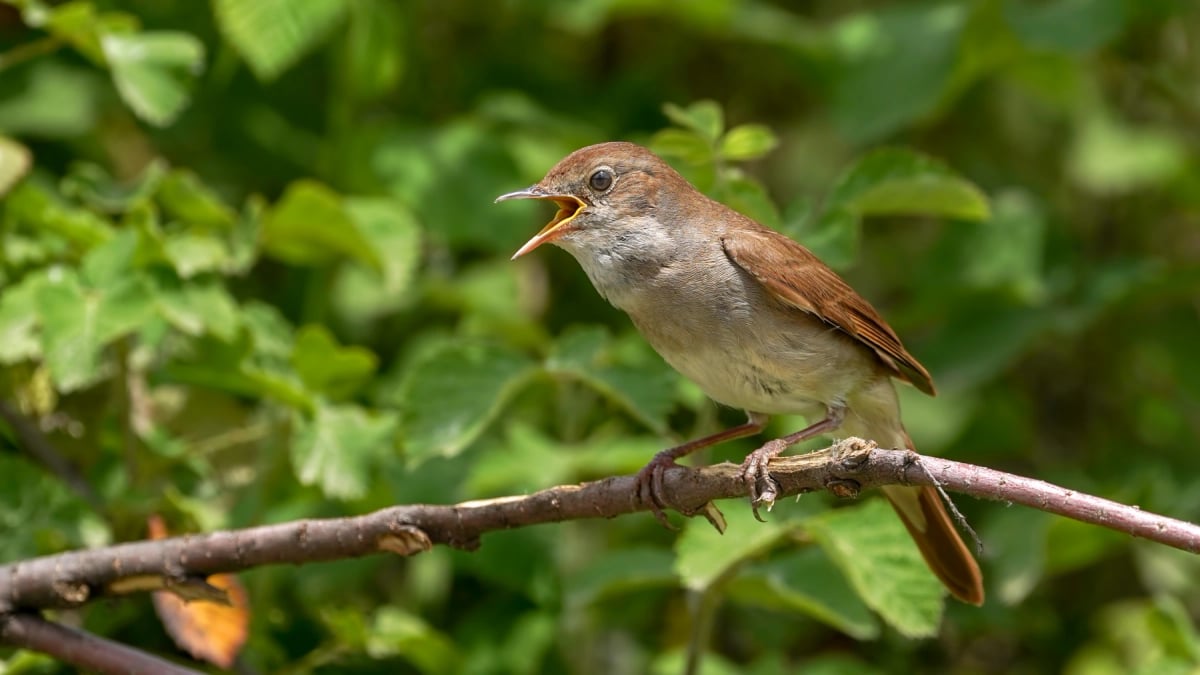
Nightingale
Luscinia megarhynchos
In Tunisia, the nightingale occurs as both a breeding bird in the north and a passage migrant moving between Europe and sub-Saharan Africa. It nests in dense riparian vegetation and shrubby thickets, particularly in the wetter northwestern regions. During migration, birds move through coastal areas and the Tell Atlas foothills. Tunisia's position on the southern Mediterranean shore makes it a key crossing point for this species. IUCN status: Least Concern.
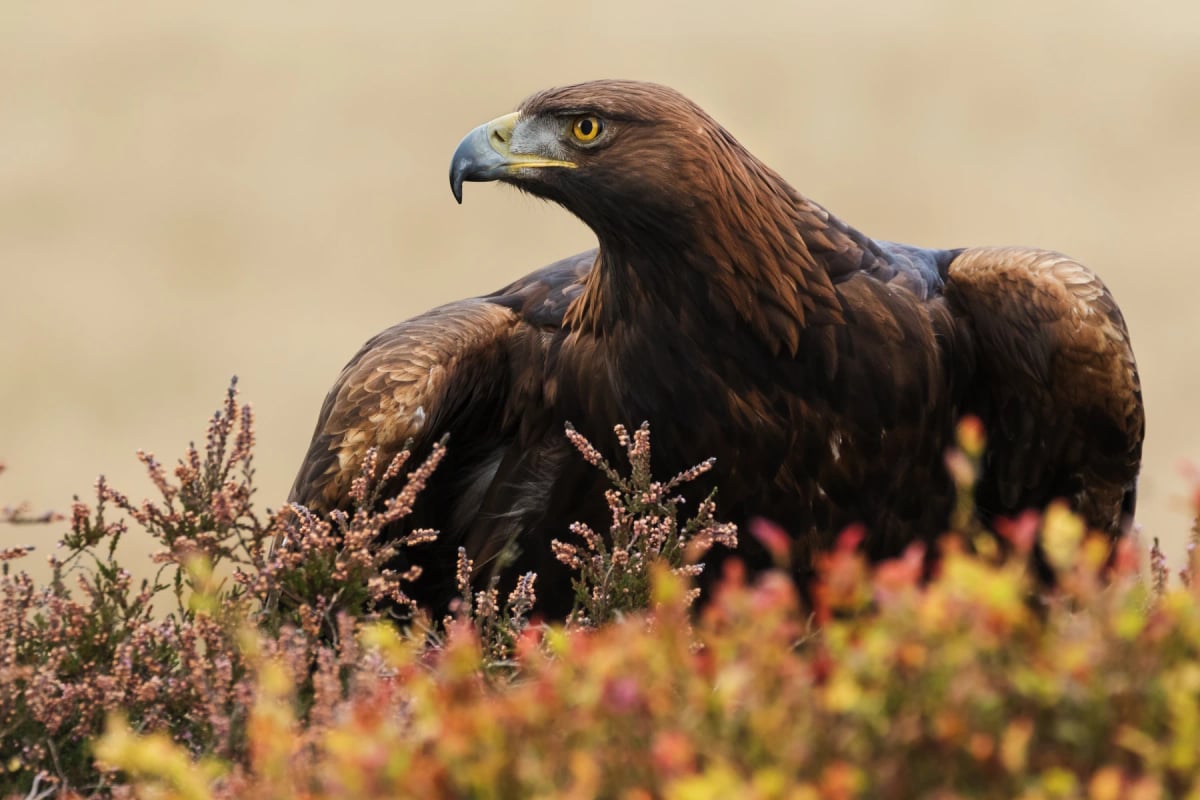
Golden Eagle
Aquila chrysaetos
In Tunisia, the golden eagle is a scarce resident of the mountains of the north and center, such as the Tunisian Dorsal and the hills near the Algerian border, with a few pairs also in the rocky south. It hunts hares, partridges and tortoises and nests on cliffs. The small population is threatened by shooting and disturbance. Pairs need huge territories here, because prey is thin on the ground. IUCN status: Least Concern.
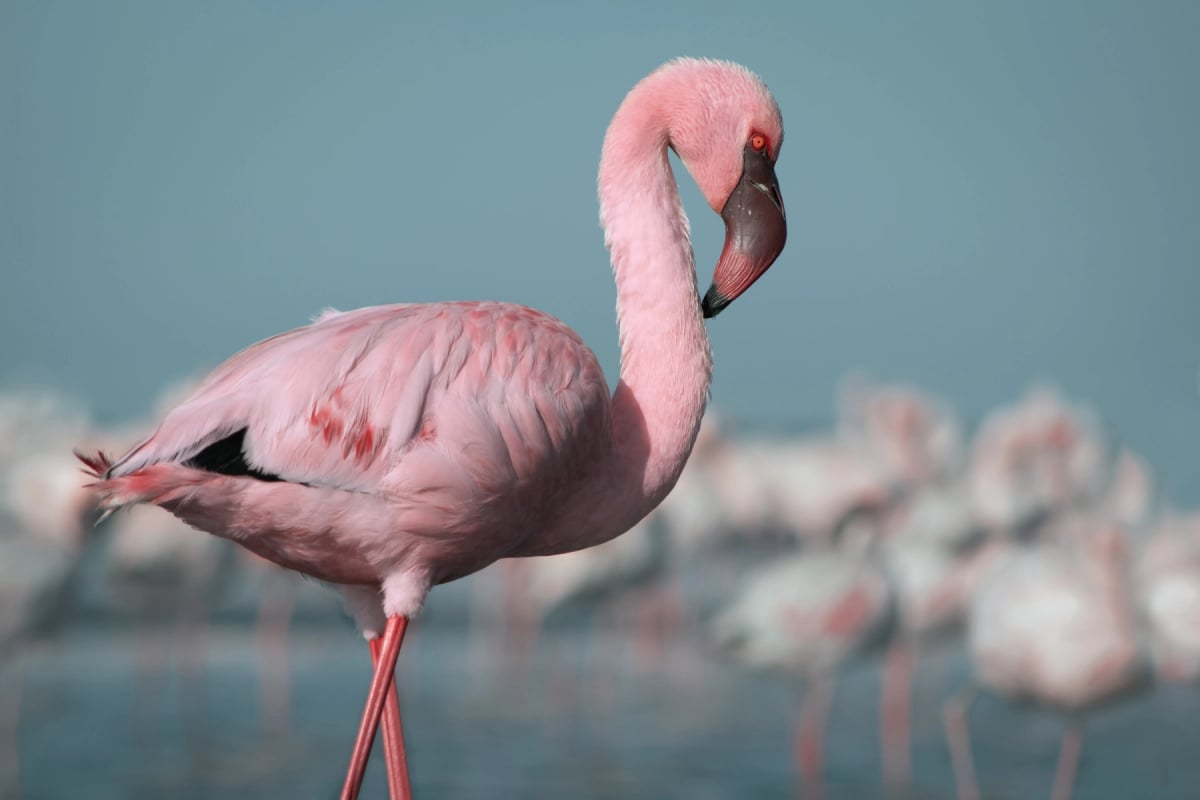
Flamingo
Phoenicopteridae (6 species)
The greater flamingo lives year round in Tunisia, one of the best countries to see it in North Africa. Flocks feed in the Lake of Tunis, right next to the capital, and in large salt lakes and lagoons such as Sebkhet Kelbia, where the species has bred in wet years. In winter, birds from France, Spain and Italy join the local ones, and tens of thousands can be counted across the country's wetlands. IUCN status: Least Concern.
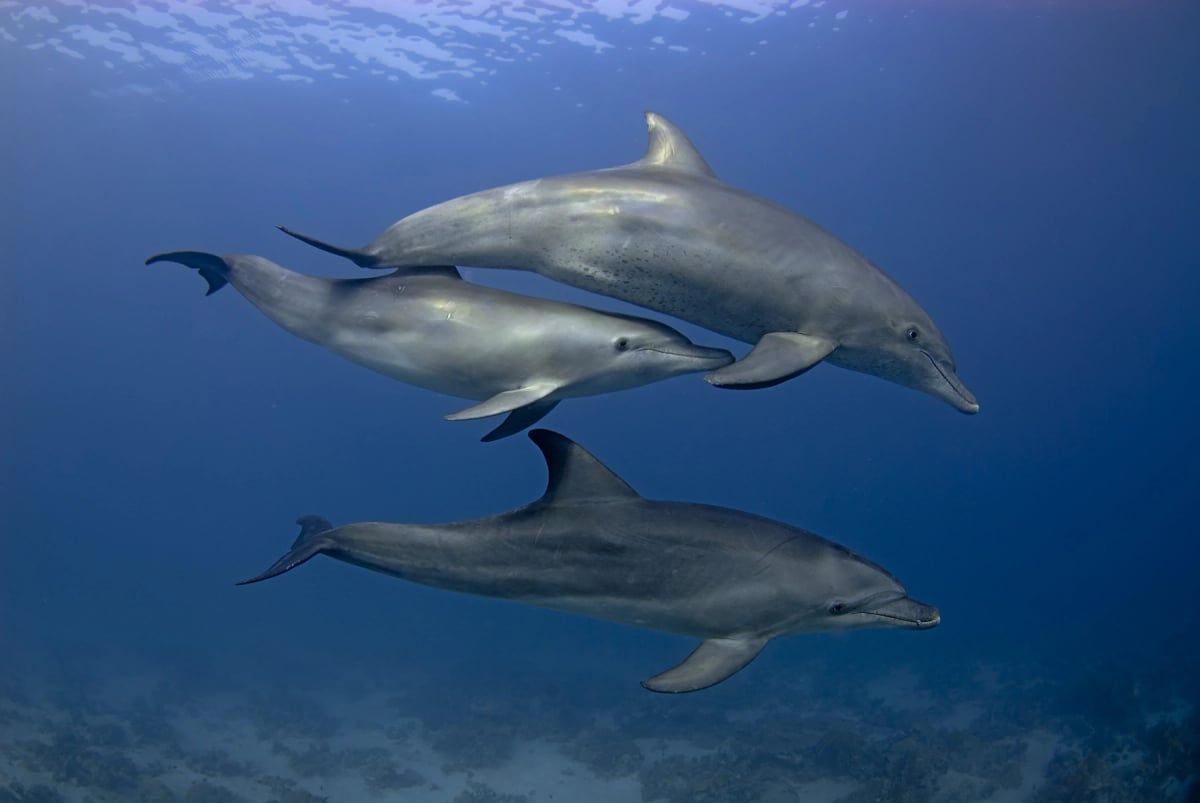
Bottlenose Dolphin
Tursiops truncatus
Bottlenose dolphins live along the coast of Tunisia, in the Gulf of Tunis, around the Kerkennah Islands and in the Gulf of Gabès, one of the shallowest areas of the Mediterranean. They often take fish from nets, which causes conflicts with fishermen, and some are caught by accident. Boat trips from Djerba and Monastir sometimes see them. The Mediterranean population is Vulnerable. IUCN status: Least Concern (Mediterranean population: Vulnerable).
Researched and written by Juan Pablo. Sources: IUCN Red List, scientific literature and regional field guides. Last updated: .