African Fish Eagle
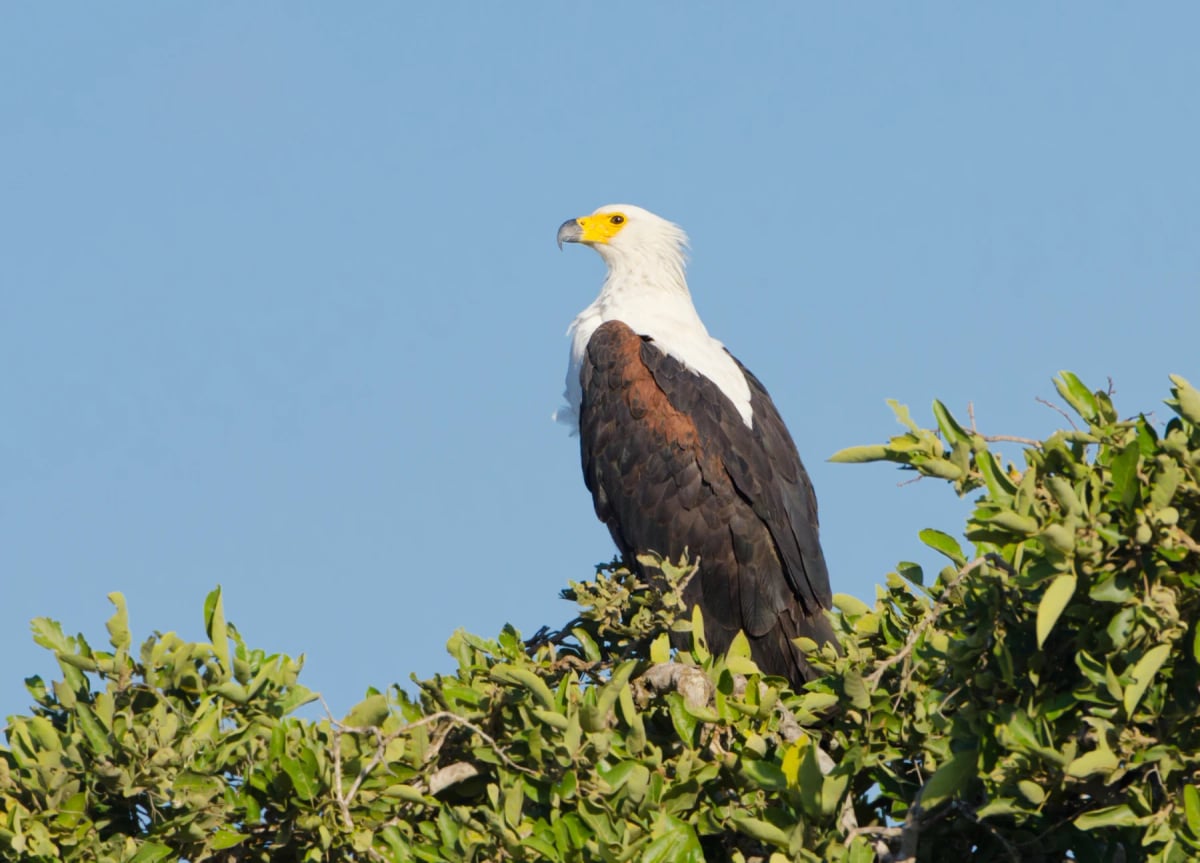
The African fish eagle is a large raptor found near lakes, rivers and wetlands throughout sub-Saharan Africa and along the Nile in Egypt. Recognizable by its white head and breast contrasting with a dark chestnut body, it is often heard by its loud, ringing call before it is seen. This eagle hunts mainly fish, swooping down from perches or while soaring, grasping prey with strong talons adapted for gripping slippery fish. It also takes waterbirds or carrion when fish are scarce. Despite being widespread and classified as Least Concern, the species faces local threats from water pollution, overfishing and habitat disturbance.
Appearance
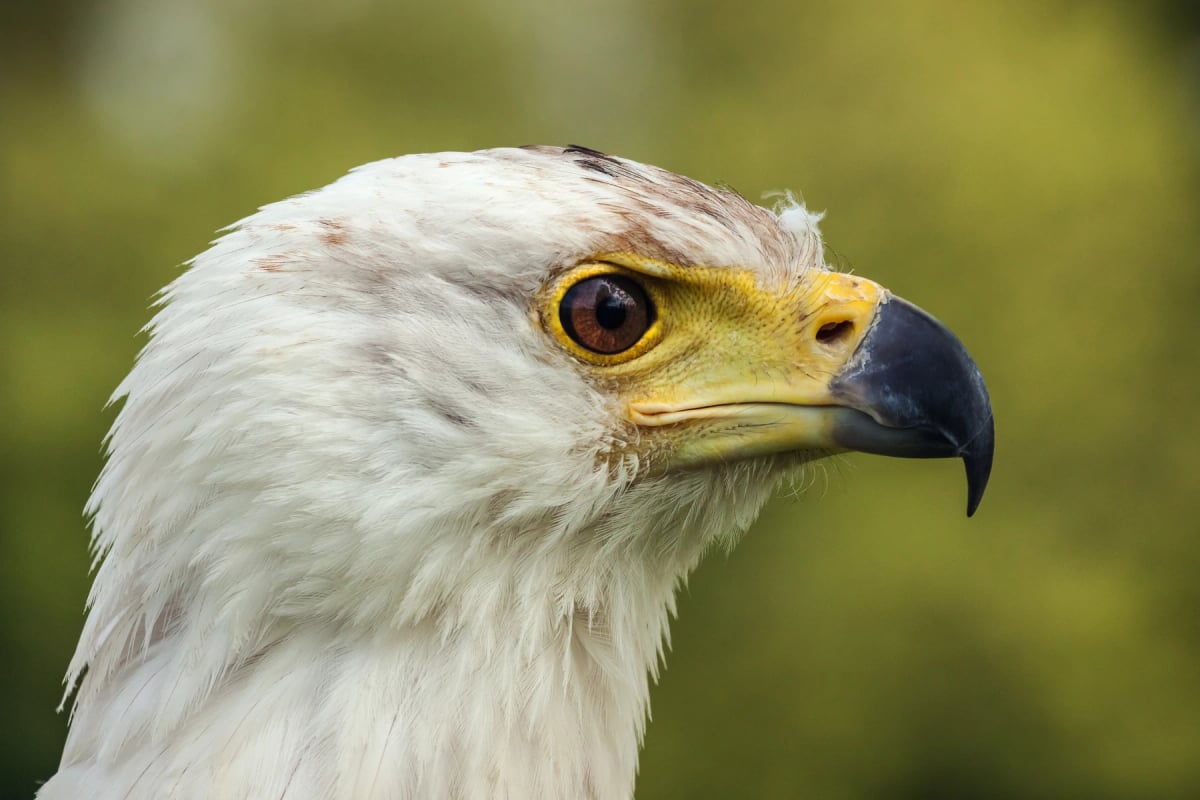
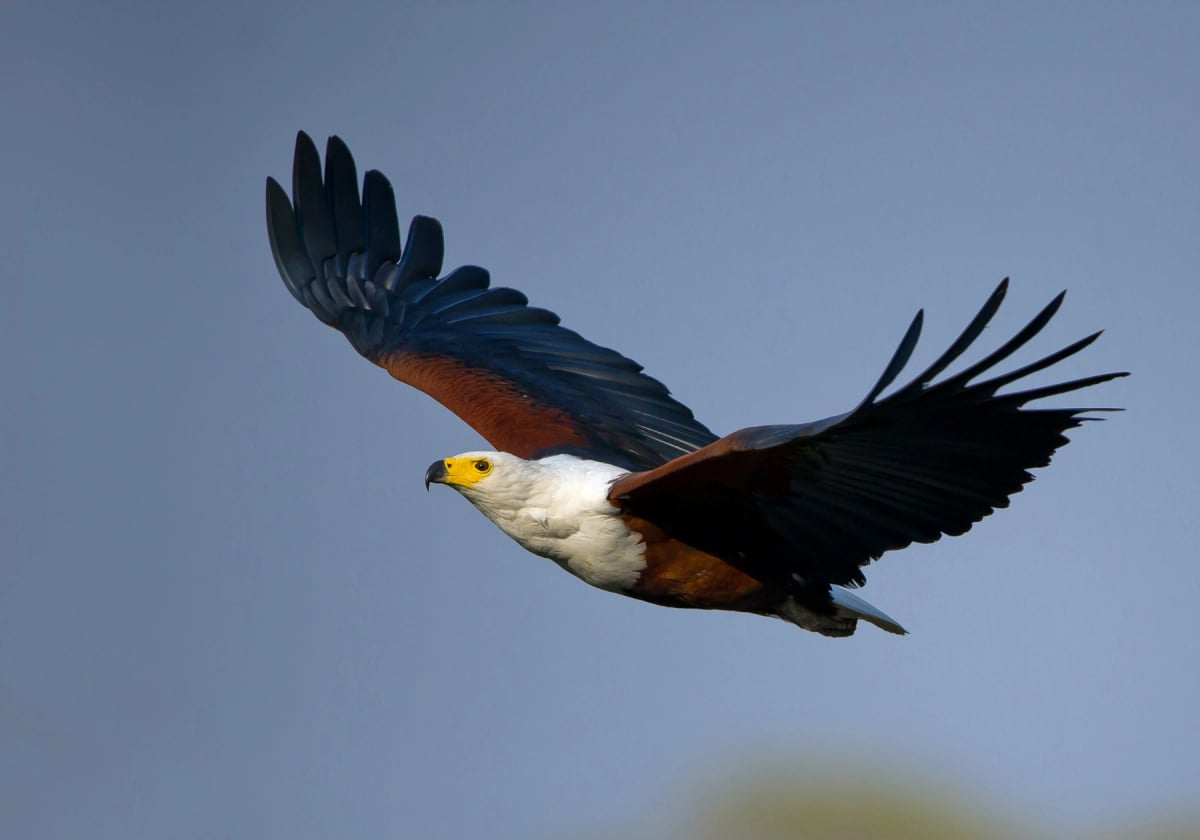
The African fish eagle has a bold white head, neck and breast that contrast with its dark chestnut body and black wings. The beak is yellow with a dark hook, and the eyes are deep amber. Females are noticeably larger than males, though both sexes share the same coloring. In flight, the short white tail and broad dark wings form a distinctive silhouette. Young birds are heavily mottled with brown and cream and take four or five years to develop full adult plumage. The color pattern is often compared to that of the American bald eagle.
Habitat and distribution
This eagle is closely tied to permanent freshwater environments. It prefers the margins of large lakes, rivers with slow currents, swamps, floodplains and reservoirs where fish are reliably abundant. Its range covers most of sub-Saharan Africa, from Senegal in the west to Somalia in the east and south to South Africa, as well as portions of the Nile in Egypt. It avoids dry areas far from water and dense forest interiors. The Rift Valley lakes of East Africa, Lake Victoria and the great rivers of central Africa support some of the densest populations.
Diet
Fish make up the core of this eagle's diet, typically weighing between 200 grams and 2 kilograms. It hunts by watching from a prominent perch or soaring over open water, then diving with its feet thrust forward to snatch prey just below the surface. Small sharp projections on the undersides of its toes help it grip wet, struggling fish. When fish are scarce it also takes waterbirds, small mammals and carrion. It sometimes steals food from other birds, chasing herons or cormorants until they drop their catches.
Behavior
African fish eagles are territorial and form lasting pairs that defend the same stretch of lake or river for many years. Mates reinforce their bond through duets of loud calling, often throwing their heads back as they vocalize together. Their call, a resonant rising cry, is one of the most recognized sounds across African landscapes. Most activity happens in the early morning when fish are closer to the surface. The rest of the day is spent perched at favored spots overlooking the water. Pairs defend their nesting sites aggressively against intruders.
Conservation
The African fish eagle is classified as Least Concern by the IUCN and remains widespread across much of its range. Even so, local populations face real pressure. Water pollution and the buildup of pesticides in fish tissue harm adults and reduce breeding success. Overfishing limits prey availability. Wetland drainage and the clearing of riverside trees removes nest sites and perches. Boat traffic and expanding human settlement near lakeshores disturb breeding pairs. Ongoing monitoring in East and southern Africa tracks population health in key lake systems and flags areas where declines are occurring.
Where it is found
The African Fish Eagle can be found in places such as:
Researched and written by Juan Pablo. Sources: IUCN Red List, scientific literature and regional field guides. Last updated: .
Technical factsheet


Frequently Asked Questions
What does the African fish eagle eat?
Fish make up the core of its diet, typically between 200 grams and 2 kilograms. It hunts from a prominent perch or while soaring, diving with feet thrust forward to snatch prey near the surface. Small projections on the undersides of its toes help grip wet, struggling fish. When fish are scarce, it also takes waterbirds, small mammals, and carrion, and sometimes steals prey by chasing herons or cormorants until they drop their catch.
Where does the African fish eagle live?
The African fish eagle is found near lakes, rivers, swamps, floodplains, and reservoirs throughout Africa south of the Sahara, from Senegal in the west to Somalia in the east and south to South Africa. It also occurs along the Nile in Egypt. The species needs permanent freshwater with fish and tall trees nearby for perching and nesting. It avoids true deserts and dense forest interiors far from open water.
What does the African fish eagle's call sound like?
The African fish eagle has one of the most recognized calls in Africa: a loud, ringing cry that carries far across open water. Pairs often call together in duets, throwing their heads back as they vocalize. The sound is so closely associated with African wilderness that it is frequently used in film and television to represent the continent, sometimes even replacing calls of other birds in productions filmed outside Africa.
How does the African fish eagle catch fish?
The African fish eagle hunts by watching from a high perch above the water, then swooping down and extending its feet forward to grab prey just below the surface. Small projections on the underside of its toes help it grip slippery fish. It rarely enters the water fully, instead snatching prey with brief contact at the surface. If the fish is too heavy to lift, the eagle may paddle to shore using its wings.
Is the African fish eagle endangered?
The African fish eagle is classified as Least Concern by the IUCN, with an estimated population of around 300,000 individuals. It remains widespread across Africa south of the Sahara. Even so, local populations face real pressure from water pollution, the buildup of pesticides in fish tissue, overfishing, wetland drainage, and growing human activity near lakeshores. Populations in heavily disturbed water bodies are declining, making ongoing monitoring important in key lake systems.
Which countries have the African fish eagle as their national bird?
The African fish eagle is the national bird of Zambia, Zimbabwe, and Namibia, three countries where its image appears on official emblems and coats of arms. In Malawi, it is also featured on the national coat of arms. This recognition across multiple countries reflects the bird's iconic status. Its striking appearance, distinctive call, and strong association with Africa's great lakes and rivers have made it one of the most celebrated birds on the continent.