Ring tailed Lemur

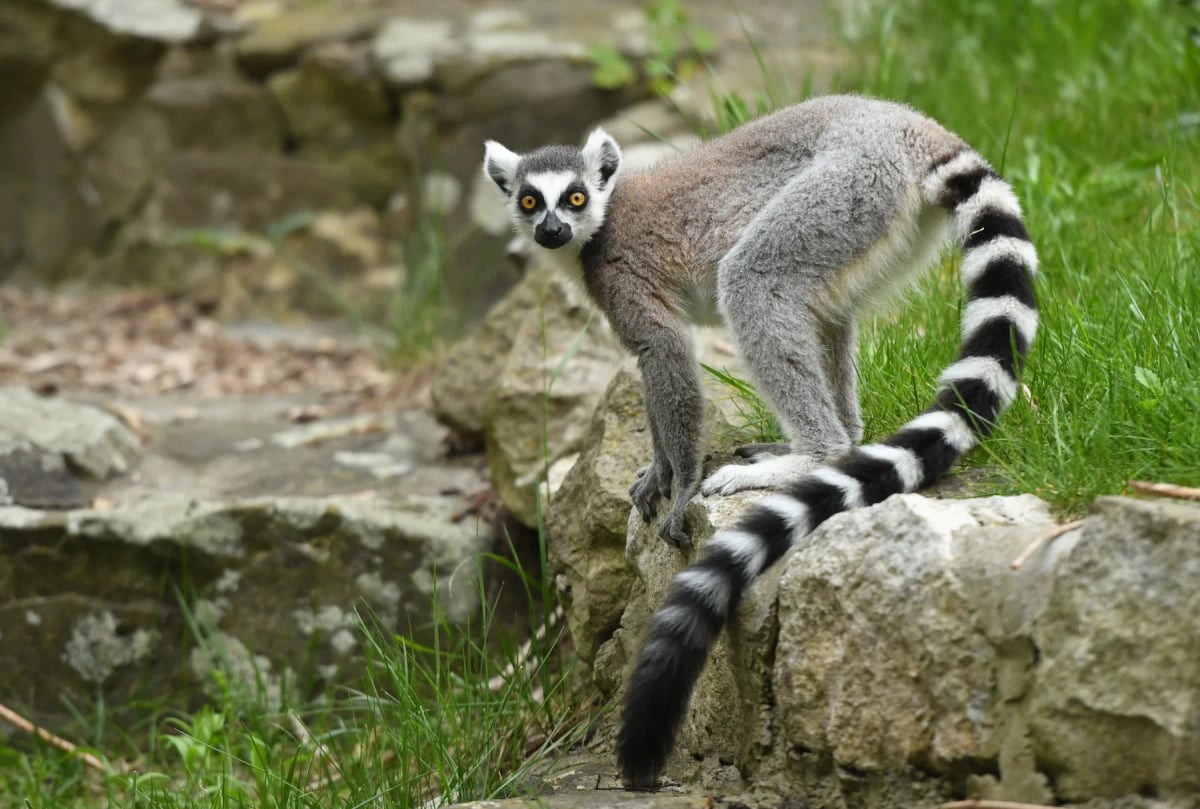
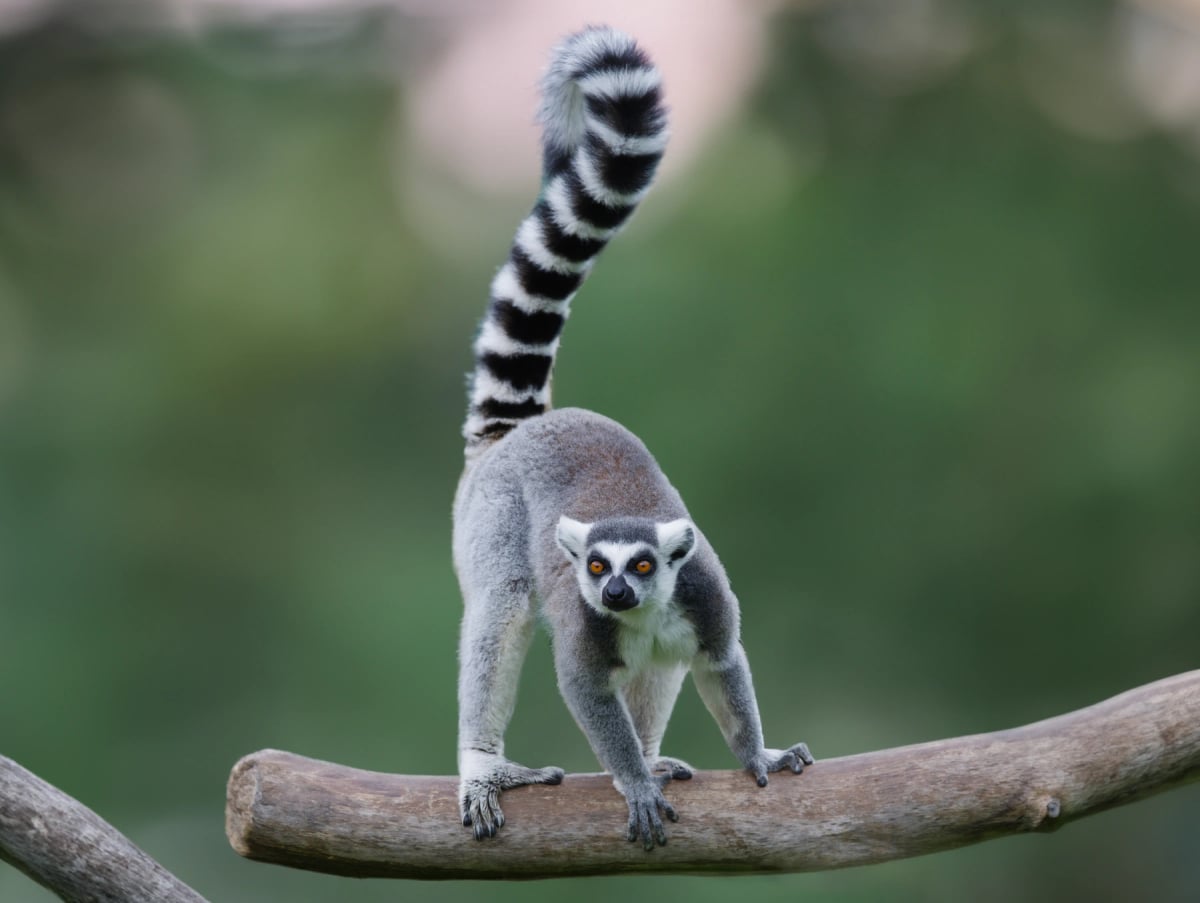
The ring tailed lemur is the most iconic primate of Madagascar, instantly recognizable by its tail marked with 13 alternating black and white rings. Unlike most lemurs, this species spends a great deal of time on the ground, moving through dry forests, scrublands, and rocky terrain in the south and southwest of the island. Groups of around 15 individuals are led by females, which is unusual among primates. They communicate through a rich mix of calls, scent markings produced by glands on the wrists and chest, and dramatic tail displays during confrontations. Their diet shifts with the seasons, covering fruits, leaves, flowers, and occasional insects. Listed as Endangered by the IUCN, this lemur faces serious pressure from habitat loss driven by slash and burn agriculture, charcoal production, and hunting. Its wild population has declined sharply in recent decades.
Habitat and distribution
Found nowhere else on Earth, the ring tailed lemur occupies the southern and southwestern regions of Madagascar. It thrives in a surprisingly wide range of environments for a single species, including dry deciduous forests, spiny thickets, gallery forests that line riverbanks, and open rocky terrain known as karst. These habitats receive very little rainfall and endure extreme seasonal temperatures, yet the ring tailed lemur has adapted well to such demanding conditions. It spends more time on the ground than almost any other lemur, moving confidently across open clearings and boulder fields. Some populations have also been recorded in highland areas at elevations above 2,000 meters, such as the Andringitra massif, showing a broader environmental tolerance than was previously understood.
Diet
Tamarind trees are central to what ring tailed lemurs eat, and the pods, leaves, and bark of this tree make up a large share of their annual diet in many areas. Beyond tamarind, they consume a wide variety of fruits, flowers, leaves, sap, and even soil on occasion, the latter likely providing minerals that are otherwise scarce in their food. Insects are also taken from time to time, adding protein to the mix. Because the dry forests of southern Madagascar go through a pronounced dry season, groups must adjust what they eat as different plants come into leaf or fruit at different times of year. This flexibility in diet is a key reason the species has managed to persist across such a challenging landscape.
Behavior and social life
Social life in ring tailed lemur groups revolves around the females. Unlike the vast majority of primates, females hold dominant rank over males and have first access to food and resting spots. Groups typically contain around 15 individuals and are tightly bonded, spending much of the day moving and foraging together. Communication is rich and varied. Loud calls alert the group to predators such as hawks and fossas. Scent glands on the wrists and chest are used to mark territories and signal reproductive status. During confrontations between males, the famous stink fights take place: males rub their tails against their scent glands and wave them toward rivals. The animal is also notably active during the day, making it easier to observe than many other lemur species.
Ecological role
Within the dry forests and scrublands of southern Madagascar, ring tailed lemurs play a genuine role in keeping plant communities healthy. As they move across large home ranges each day, they pass seeds through their digestive systems and deposit them in new locations, helping plants spread beyond where their parent trees stand. Their feeding habits also influence which plant species thrive, as they selectively browse flowers and fruits across many different species. In areas where lemur populations have collapsed, signs of reduced seed dispersal have been noted by researchers, pointing to a real consequence for forest regeneration. Because they are one of the few larger animals still moving through these fragmented habitats, their contribution to ecosystem function is proportionally greater than it might appear.
Conservation
The IUCN classifies the ring tailed lemur as Endangered, and the situation has grown more serious over recent decades. Slash and burn agriculture, known locally as tavy, has cleared vast stretches of the dry forests this species depends on. Charcoal production adds further pressure, while illegal hunting for bushmeat persists in parts of its range. Population surveys suggest the number of individuals remaining in the wild may be lower than 2,500, a steep drop from earlier estimates. Despite being one of the most recognizable animals on the planet, its survival over the long term is far from guaranteed. Protected areas such as Isalo National Park and Berenty Private Reserve shelter important populations, and the species is central to conservation awareness campaigns both within Madagascar and internationally.
Researched and written by Juan Pablo. Sources: IUCN Red List, scientific literature and regional field guides. Last updated: .
Technical factsheet





Frequently Asked Questions
What do ring tailed lemurs eat?
Ring tailed lemurs eat a wide variety of foods depending on the season. Tamarind pods, leaves, and bark are among their favorites, but they also consume fruits, flowers, sap, and occasional insects. They have even been seen eating soil, which likely provides minerals missing from their plant diet. This flexibility in what they eat helps them survive in the dry, seasonal forests of southern Madagascar.
Where do ring tailed lemurs live?
Ring tailed lemurs are found only in Madagascar, specifically in the southern and southwestern parts of the island. They live in dry forests, spiny thickets, rocky terrain, and even highland areas above 2,000 meters. Unlike most lemurs, they spend a lot of time on the ground, which makes them one of the most adaptable species in the whole lemur family.
Are ring tailed lemurs endangered?
Yes, the ring tailed lemur is classified as Endangered by the IUCN. Surveys suggest fewer than 2,500 individuals may remain in the wild, a dramatic drop from earlier estimates. The main threats are the clearing of forests for agriculture and charcoal production, as well as illegal hunting. Despite being one of the most recognized animals in the world, its survival is genuinely at risk.
Why do ring tailed lemurs wave their tails?
During confrontations between males, ring tailed lemurs perform what researchers call a stink fight. A male rubs his tail against the scent glands on his wrists and chest, then waves it toward his rival to spread the odor. It is essentially a competition to see whose smell is more overwhelming. These tail displays settle many disputes without any physical contact at all.
Who leads a ring tailed lemur group?
Female ring tailed lemurs are in charge. This is quite unusual among primates. The dominant female has first access to food and the best resting spots, and males generally defer to her. Groups typically consist of around 15 individuals. This female dominance is a defining characteristic of the species and sets it apart from most other primates studied around the world.
How do ring tailed lemurs communicate?
Ring tailed lemurs communicate in several ways. They use a range of loud calls to warn the group about nearby predators like hawks or fossas. Scent markings left by glands on the wrists and chest convey information about territory and reproductive status. Tail displays are used during face to face confrontations. This combination of sound, smell, and visual signals makes their communication system one of the richest among lemurs.
How many ring tailed lemurs are left in the wild?
Current population estimates are concerning. Some surveys point to fewer than 2,500 ring tailed lemurs remaining in the wild, though exact numbers are difficult to confirm across such a fragmented range. Decades of forest loss, hunting, and habitat degradation have caused a sharp decline. The species survives in protected areas such as Isalo National Park, but populations outside these zones face ongoing pressure.