African Forest Elephant
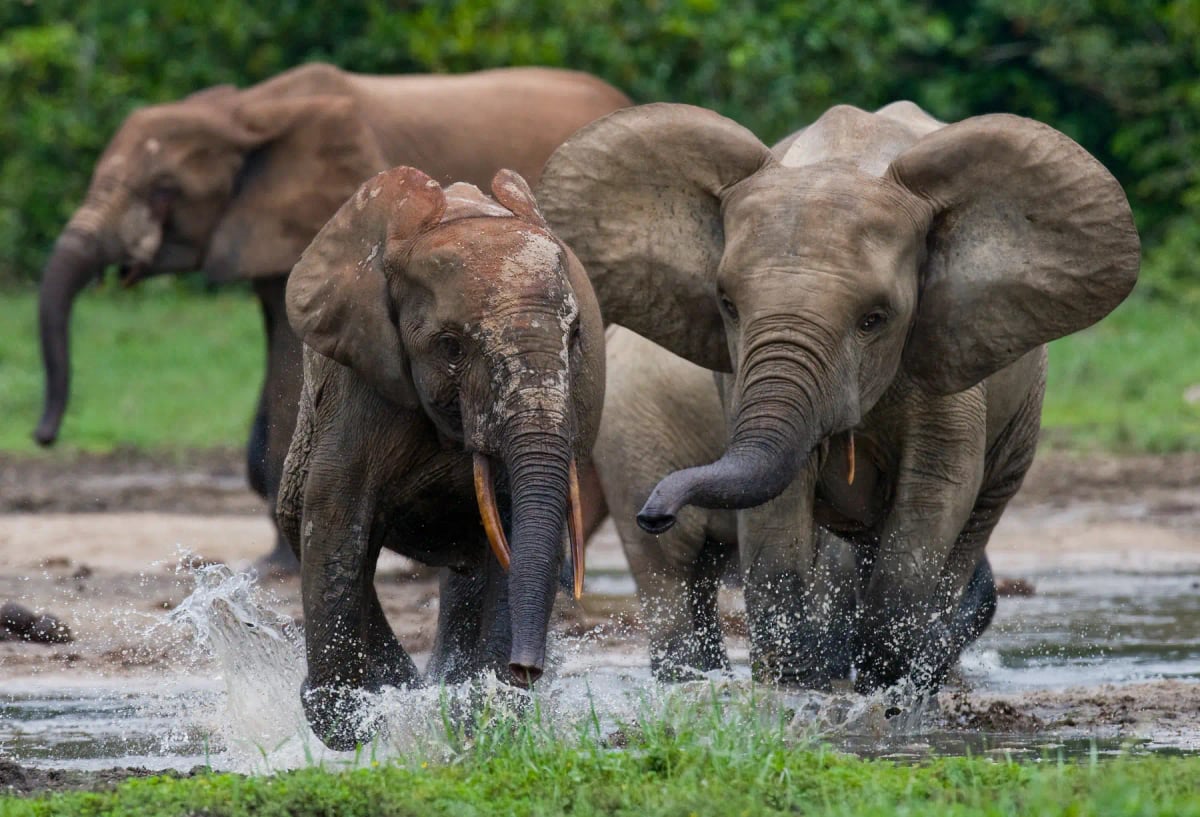
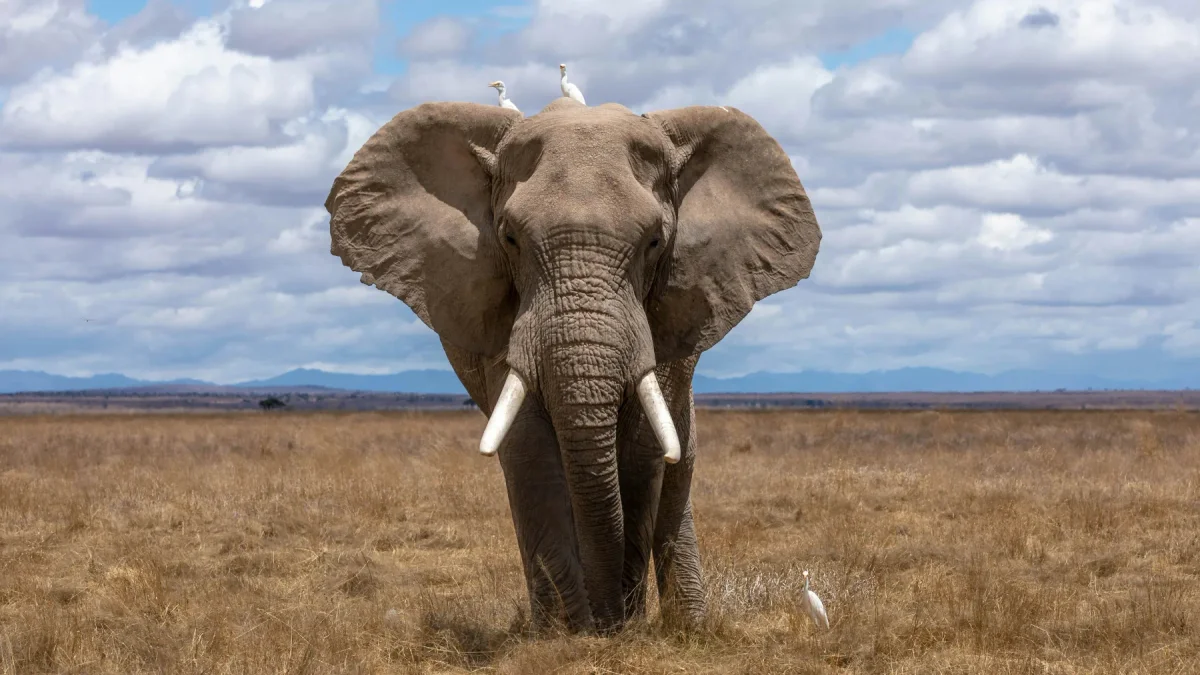
The African forest elephant is the smallest elephant species in Africa, shaped by life in dense tropical rainforest. Unlike its savanna relatives, it has straighter tusks that point downward and rounder ears suited to moving through thick vegetation. It carves trails through the undergrowth and plays a critical role in forest health by dispersing seeds across vast distances and maintaining clearings rich in minerals. Intense poaching for ivory and rapid deforestation have caused a population decline of more than 86 percent over three decades, driving this species to Critically Endangered status.
Habitat and distribution
The African forest elephant inhabits the dense tropical rainforests of Central and West Africa, with the Congo Basin and Gabon holding the largest remaining populations. It favors lowland evergreen forest, swamp forest and the areas around forest clearings known as bais, where water rich in minerals draws groups to gather. Unlike the savanna elephant, it follows ancient trail networks through thick vegetation and rarely moves into open areas. Its range once extended across a much larger portion of West Africa but has contracted sharply due to hunting pressure and deforestation over the past century.
Diet
Forest elephants are browsers and frugivores, feeding on leaves, bark, roots and a wide variety of fruit. Fruit makes up a larger proportion of their diet than in savanna elephants, and individuals travel considerable distances to reach fruiting trees. Their digestive system passes seeds largely intact, making them one of the most important seed dispersers in the African rainforest. Some tree species depend so heavily on elephant dispersal that their regeneration is threatened whenever elephants disappear from an area, with cascading effects on the entire forest ecosystem.
Behavior and social structure
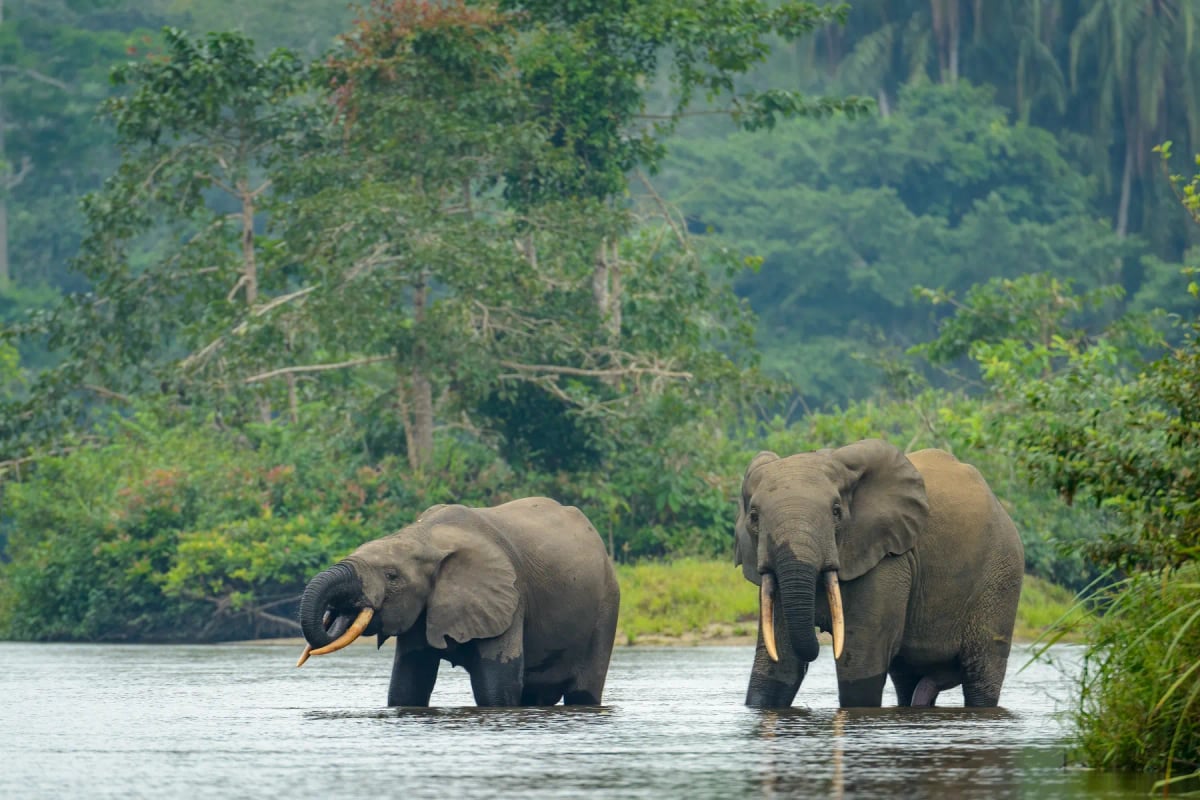
African forest elephants live in smaller family groups than their savanna relatives, typically a female and her young offspring. Adult males are mostly solitary and join groups only to mate. Communication relies heavily on infrasound at low frequencies that travels through dense forest where visibility is limited. Bais, the clearings rich in minerals scattered through the Congo Basin, serve as key social gathering points where large numbers of individuals come together to consume mineral salts and interact with elephants from other family groups, offering researchers rare opportunities to observe and study them.
Ecological importance
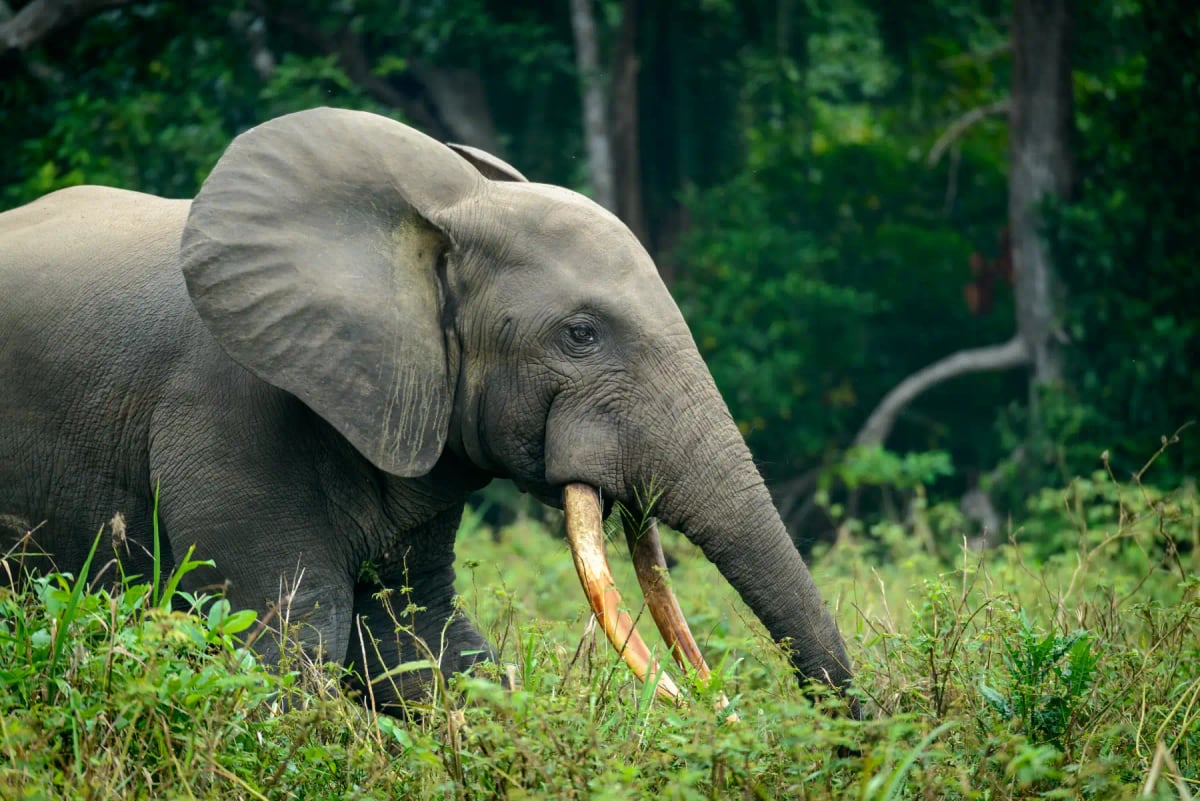
The African forest elephant is one of the most ecologically important animals on the planet. By consuming and transporting seeds across long distances, it maintains the diversity and structure of the tropical forest in ways no other animal can replicate. It also creates and maintains bais and forest trails that other species rely on for movement and access to water and minerals. The loss of forest elephants triggers a cascade of changes affecting tree composition, plant diversity and the carbon storage capacity of the forest, with consequences that extend well beyond the ecosystems they inhabit.
Conservation
The African forest elephant is classified as Critically Endangered by the IUCN. Populations have declined by more than 86 percent over 31 years, driven primarily by poaching for ivory and the loss and fragmentation of forest habitat. Because forest elephants reproduce slowly, with females producing a single calf every five to six years, populations recover very slowly even when hunting pressure eases. Conservation efforts focus on operations against poaching, protected area management and transboundary cooperation across the Congo Basin countries, where most of the remaining population is concentrated.
Where it is found
The African Forest Elephant can be found in places such as:
Researched and written by Juan Pablo. Sources: IUCN Red List, scientific literature and regional field guides. Last updated: .
Technical factsheet





Frequently Asked Questions
What is the difference between the African forest elephant and the African savanna elephant?
The African forest elephant is smaller than its savanna relative, with rounder ears and straighter tusks that point downward, both adaptations for moving through dense vegetation. It lives in rainforest rather than open grassland, travels in smaller family groups, and feeds more heavily on fruit. It was only recognized as a separate species in 2001. The IUCN classifies it as Critically Endangered, while the savanna elephant is listed as Endangered.
Why is the African forest elephant critically endangered?
The African forest elephant has declined by more than 86 percent over 31 years, driven by two main forces: intense poaching for ivory and the destruction and fragmentation of its rainforest habitat. Its recovery is exceptionally slow because females produce only one calf every five to six years. Even when hunting pressure eases, populations take decades to rebuild. Most of the remaining individuals are concentrated in Gabon and the Congo Basin, where forest cover is still largely intact.
Why is the African forest elephant important for the rainforest?
The African forest elephant is one of the most important animals for the health of tropical forests. It eats large quantities of fruit and disperses seeds across vast distances through its dung, helping many tree species regenerate far from the parent plant. Some tree species depend so heavily on elephant dispersal that they struggle to reproduce when elephants disappear. It also creates trails and mineral clearings called bais that other animals rely on for movement and access to water.
Where does the African forest elephant live?
The African forest elephant lives in the tropical rainforests of Central and West Africa. Gabon holds the largest share of the remaining population, estimated at around 60 percent of the world total. The Congo Basin countries, particularly the Republic of the Congo and the Democratic Republic of Congo, are also critical. Smaller and more fragmented populations survive in Cameroon, the Central African Republic, Côte d'Ivoire, Liberia, and several other West African countries where rainforest cover remains.
What do African forest elephants eat?
African forest elephants are browsers and fruit eaters, feeding on leaves, bark, roots, and a wide variety of fruit. Fruit makes up a larger share of their diet than in savanna elephants, and individuals travel considerable distances to reach fruiting trees. Their digestive system passes seeds largely intact, making them one of the most effective seed dispersers in the African rainforest. They also visit mineral clearings called bais to consume water and soil rich in minerals essential to their diet.
How do African forest elephants communicate?
African forest elephants communicate primarily through infrasound, producing low frequency calls that travel through dense rainforest where visibility is extremely limited. These sounds, below the range of human hearing, can carry several kilometers and allow individuals to stay in contact and coordinate movement without being seen. They also use touch, smell, and visual signals when in direct contact. Forest clearings called bais serve as key gathering points where social interaction between family groups takes place.