Alpine Marmot
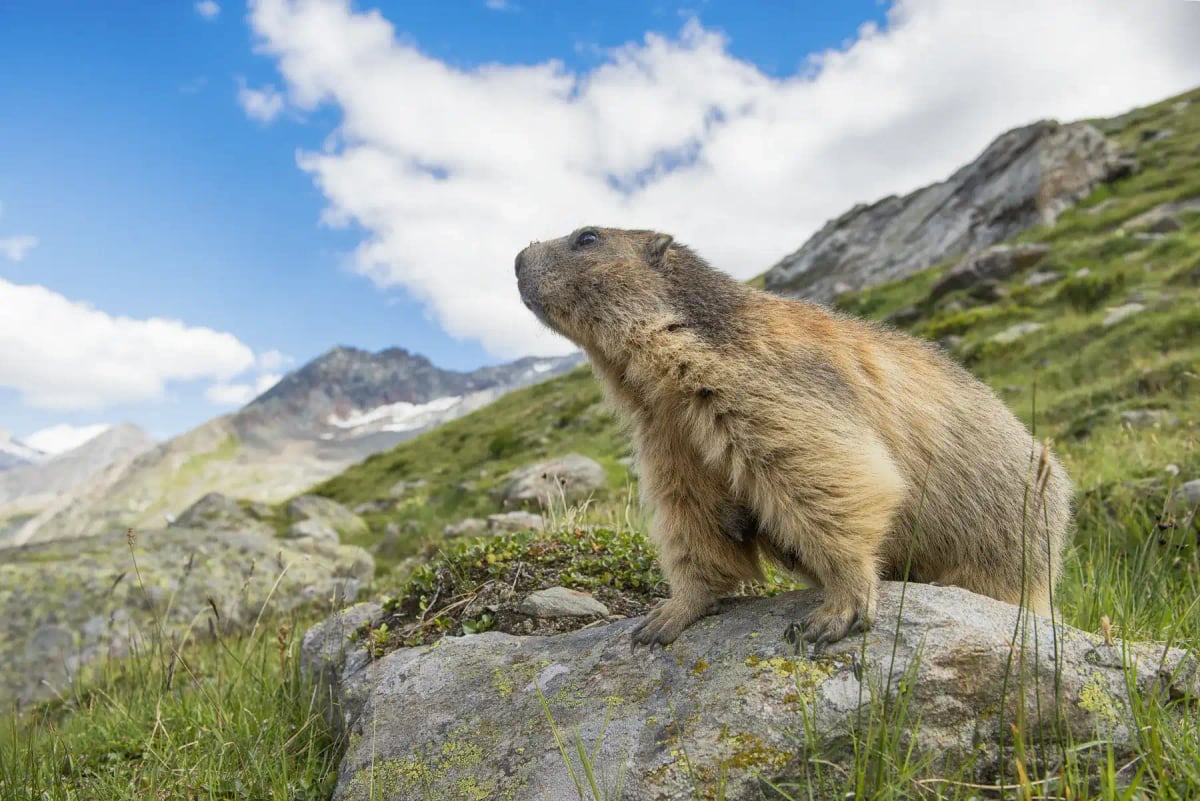
The Alpine marmot is a stocky rodent native to high mountain meadows across Europe. It lives in family colonies centered around complex burrow systems and is best known for its loud, piercing alarm whistle that warns the group of approaching predators. Active only in the warmer months, marmots spend summer grazing and building fat reserves before retreating underground for a hibernation that can last up to seven months each winter.
Habitat and distribution
The Alpine marmot is native to the mountain meadows and rocky slopes of the European Alps, where it lives at elevations typically between 1,500 and 3,000 meters above sea level. It prefers open terrain with short vegetation that allows clear sightlines for detecting predators. Burrow entrances are often positioned on slopes with good sun exposure to maximize warmth. Through reintroduction programs carried out in the twentieth century, populations were established in the Pyrenees and the Carpathian Mountains, extending the range well beyond the Alps into Spain, France, Poland, Slovakia, and Romania.
Diet
The Alpine marmot is a selective herbivore that feeds primarily on grasses, flowering herbs, roots, and bulbs found in alpine meadows. It does not drink water directly but obtains moisture from the plants it consumes. Feeding is most intense during summer and early autumn, when marmots must accumulate the fat reserves necessary to survive a hibernation of up to seven months. During this period body weight can increase by 50 percent or more. After emerging in spring, food resources are initially scarce and marmots rely on stored fat until fresh vegetation becomes available at higher elevations.

Hibernation
Alpine marmots hibernate from approximately October to April, spending up to seven months in underground burrows sealed with soil and plant material. Entire family groups hibernate together, huddling to share body heat and reduce individual energy expenditure. During hibernation, body temperature drops to just above freezing, heart rate falls to only a few beats per minute, and breathing slows dramatically. Young marmots born that summer rely on warmth from adults to survive the winter, as they have not yet accumulated enough fat on their own. Without this communal arrangement, few juveniles would survive to spring.
Communication
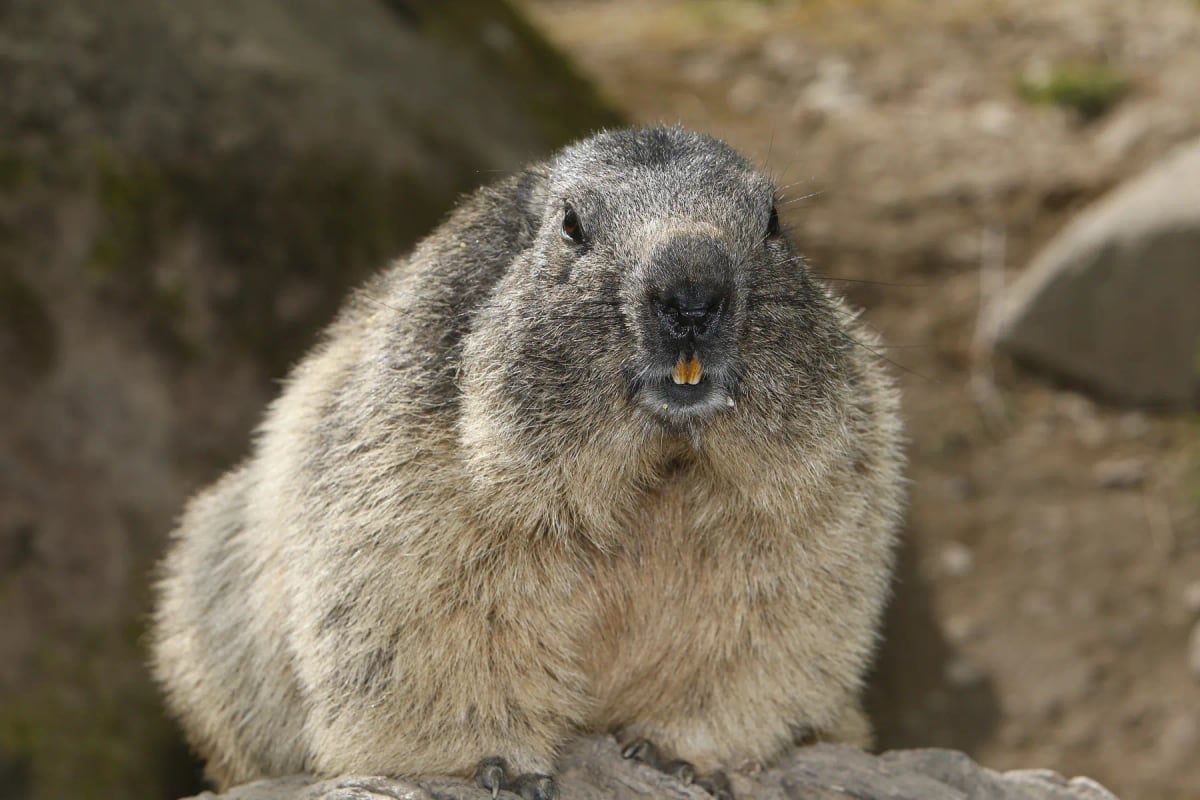
The Alpine marmot has a well-developed alarm system based on sharp whistles that carry across open mountain terrain. A single prolonged whistle typically signals a ground predator such as a fox, while short repeated calls indicate an aerial threat such as a golden eagle. Sentinel individuals stand upright near burrow entrances and scan the surroundings continuously. Upon hearing an alarm, the entire colony retreats underground within seconds. Communication also includes softer calls used between family members, and physical contact such as nose touching is common within the group as a form of social bonding.
Behavior with humans
In areas with regular human presence such as hiking trails in national parks, Alpine marmots often become habituated and allow close approach. While this makes them appealing to visitors, feeding marmots is strongly discouraged by wildlife managers because it alters natural foraging behavior, disrupts nutritional balance, and reduces their wariness of predators. Marmots are not aggressive toward people but will bite if handled. They are diurnal and most active in the morning and late afternoon. During the midday heat they often rest near burrow entrances or retreat underground to avoid high temperatures.
Conservation
The Alpine marmot is classified as Least Concern by the IUCN, with stable populations across the Alps and in areas where it has been successfully reintroduced. It benefits from legal protection in most countries where it occurs and from the preservation of mountain habitats within national parks and nature reserves. Climate change poses a growing concern, as rising temperatures in alpine zones affect vegetation patterns and the length of the active season. Shorter winters may disrupt hibernation cycles and affect survival rates among juveniles. Ongoing monitoring in protected areas helps track population trends and detect early signs of decline.
5 Curiosities
Here are five quick alpine marmot facts: • Alpine marmots hibernate for months, with body temperature and heart rate dropping dramatically to save energy. • Families often hibernate together in the same burrow, helping conserve warmth during winter. • Their loud whistle is an alarm call that warns the colony about predators such as eagles or foxes. • They build complex burrow systems with multiple entrances and chambers for sleeping and storing plant material. • Before winter, marmots gain large fat reserves and can lose a significant portion of their body weight during hibernation.
Where it is found
The Alpine Marmot can be found in places such as:
Researched and written by Juan Pablo. Sources: IUCN Red List, scientific literature and regional field guides. Last updated: .
Technical factsheet
















Frequently Asked Questions
How long do Alpine marmots hibernate?
Alpine marmots hibernate from approximately October to April, spending up to seven months underground in burrows sealed with soil and plant material. During this period, body temperature drops to just above freezing, heart rate falls to only a few beats per minute, and breathing slows dramatically. Entire family groups hibernate together, sharing body heat. Young marmots born that summer depend on warmth from adults to survive, as they have not yet accumulated enough fat on their own.
What does the Alpine marmot's whistle mean?
The Alpine marmot uses sharp whistles as an alarm system to warn its colony of approaching predators. A single prolonged whistle typically signals a ground predator such as a fox, while short repeated calls indicate an aerial threat such as a golden eagle. Sentinel individuals stand upright near burrow entrances scanning the surroundings continuously. Upon hearing an alarm, the entire colony retreats underground within seconds. The calls carry far across open mountain terrain, giving the group maximum warning time.
Where does the Alpine marmot live?
The Alpine marmot is native to the high mountain meadows and rocky slopes of the European Alps, where it lives between 1,500 and 3,000 meters above sea level. Through reintroduction programs in the twentieth century, populations were also established in the Pyrenees and the Carpathian Mountains, extending the range into Spain, France, Poland, Slovakia, Romania, and Ukraine. It prefers open terrain with short vegetation that allows clear sightlines for detecting predators from burrow entrances.
What do Alpine marmots eat?
Alpine marmots are selective herbivores that feed on grasses, flowering herbs, roots, and bulbs found in alpine meadows. They do not drink water directly but obtain moisture from the plants they consume. Feeding is most intense in summer and early autumn, when they must accumulate enough fat to survive hibernation. Body weight can increase by 50 percent or more before winter. After emerging in spring, they rely on stored fat until fresh vegetation becomes available again at high elevation.
Are Alpine marmots dangerous?
Alpine marmots pose no danger to people under normal circumstances. They are shy, diurnal animals that retreat underground at any sign of threat. In areas with frequent human presence, such as national park trails, they often become accustomed to hikers and allow close approach without fleeing. They will bite if handled, so direct contact should be avoided. Wildlife managers strongly discourage feeding marmots, as it alters their natural foraging behavior and reduces their wariness of genuine predators.