Blue Whale
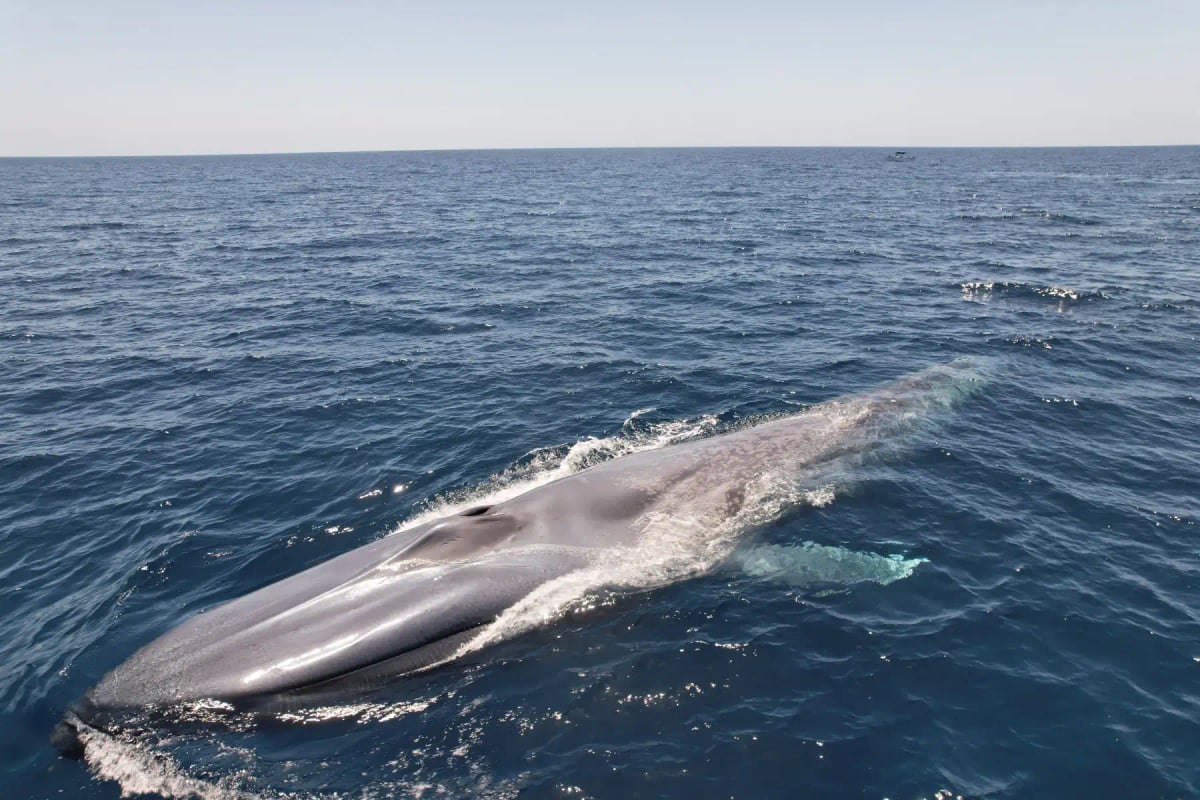
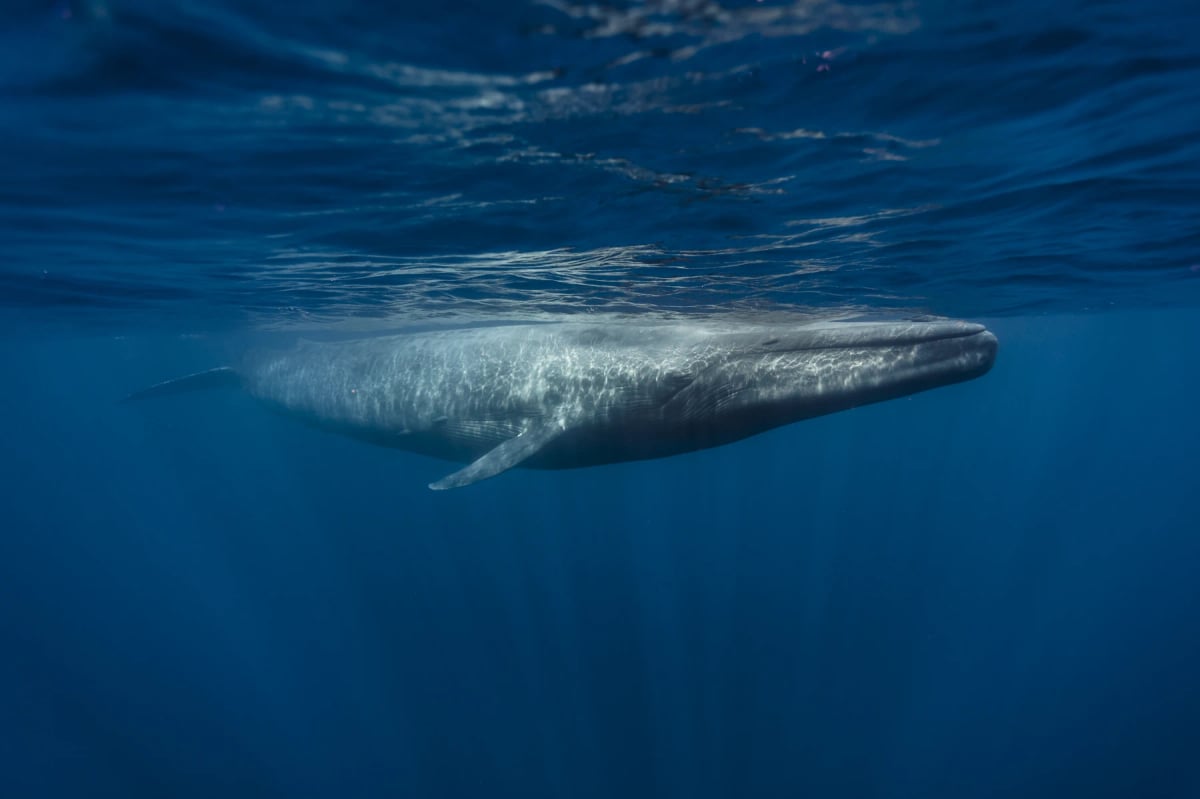
The blue whale is the largest animal known to have lived on Earth, reaching around 30 meters in length and more than 150 tonnes in the biggest individuals. Despite that size, it feeds almost entirely on krill, small crustaceans similar to shrimp that it swallows by the tonne using expandable throat pleats and plates of baleen instead of teeth. Its body is long and streamlined, mottled bluish grey, with a surprisingly small dorsal fin set far back. Blue whales range through every ocean, moving between cold feeding grounds in summer and warmer waters in winter, and their calls, produced at very low frequency, travel for hundreds of kilometers underwater. Commercial whaling in the twentieth century reduced the species to a fraction of its original numbers, and it remains endangered today.
Habitat and distribution
Blue whales occur in all major oceans, following a seasonal pattern that takes them to cold and productive waters in summer and toward warmer latitudes in winter. Feeding concentrations form where currents push nutrients toward the surface and krill gathers in dense swarms, as happens in the Southern Ocean around Antarctica, off the coast of California, in the Gulf of Corcovado in Chile and in the waters north of Iceland. Not every population moves the same way: the whales of the northern Indian Ocean stay near Sri Lanka and the Arabian Sea throughout the year, while the smaller pygmy blue whales follow their own routes through the tropical seas of Indonesia and Australia. Most sightings happen over deep water near the edge of the continental shelf, which is why only a handful of countries offer a realistic chance of seeing one from a boat.
Built for life at sea
Everything about the blue whale is shaped by the need to move an immense body through cold water on a diet of tiny prey. Its throat carries dozens of pleats that let the mouth balloon open, taking in a volume of water larger than the whale itself, which is then pushed out through hundreds of baleen plates that trap the krill inside. During the feeding season a single adult can eat several tonnes of krill in a day. A thick layer of blubber stores the energy needed for months of fasting and holds body heat in seas that sit close to freezing. Vision counts for little at depth, so communication relies on sound: blue whales produce some of the loudest calls of any animal, at frequencies so low that people can barely hear them, and those sounds carry across entire ocean basins.
Behavior and social life
Blue whales are usually seen alone or in loose pairs rather than in the tight groups formed by many other whales. Gatherings of several animals do occur, but they normally reflect a rich patch of krill instead of a lasting social bond. Dives typically last between five and fifteen minutes and can reach a hundred meters or more, followed by a series of breaths at the surface where the blow rises as a tall vertical column visible from a long distance. Mothers and calves stay together through most of the first year, the strongest social tie in the species. Males produce long repeated song patterns that are thought to play a part in breeding, and researchers now use those sounds to track populations that would otherwise be almost impossible to follow across open ocean.
Conservation
Industrial whaling nearly erased the blue whale. Across the twentieth century more than three hundred thousand were killed in the Southern Ocean alone, and by the time full protection arrived in 1966 several populations had lost well over ninety percent of their numbers. Recovery since then has been slow and uneven: the population off California has rebuilt substantially, while the Antarctic subspecies remains at a small fraction of its original size. The species is listed as endangered, with an estimated five thousand to fifteen thousand mature individuals worldwide. The main threats today are collisions with large ships, entanglement in fishing gear, underwater noise that masks communication between animals, and changes in krill availability driven by warming seas.
Where it is found
The Blue Whale can be found in places such as:
Researched and written by Juan Pablo. Sources: IUCN Red List, scientific literature and regional field guides. Last updated: .
Technical factsheet


Frequently Asked Questions
How big is a blue whale?
Adult blue whales usually measure between 24 and 27 meters long, and the largest reliably measured individuals approached 30 meters. Weight ranges from roughly 100 to 150 tonnes, with exceptional animals estimated near 190 tonnes. Females grow larger than males. No animal in the fossil record, including the largest dinosaurs, is known to have reached this combination of length and mass.
What do blue whales eat?
Almost exclusively krill, small crustaceans a few centimeters long that gather in dense swarms. The whale lunges into a swarm with its mouth wide open, takes in an enormous volume of water and then forces it out through its baleen plates, keeping the krill behind. During the feeding season an adult can consume several tonnes a day, building fat reserves for months when food is scarce.
Where can you see blue whales?
Only a few places offer a realistic chance. The most reliable are Mirissa and Trincomalee in Sri Lanka, the coast of California, the Gulf of California in Mexico, southern Chile around the Gulf of Corcovado, Skjálfandi Bay in Iceland and the Azores in spring. Elsewhere the species lives far offshore in deep water, so sightings depend on dedicated trips rather than luck from the coast.
Are blue whales dangerous to humans?
No. Blue whales have no teeth, feed on krill and show no aggression toward people. Their baleen filters prey a few centimeters long, so a human is simply not something they can eat. The only real risk comes from their size and from boats approaching too closely, which is why whale watching operations keep a legal distance. The danger in this relationship runs the other way.
How long do blue whales live?
Estimates place their lifespan between 80 and 90 years, and some individuals may live longer. Age is calculated from growth layers in earplugs of wax that accumulate through life, a method that also revealed how heavily whaling skewed populations toward younger animals. Females reach sexual maturity at around five to ten years and give birth to a single calf every two or three years.
How many blue whales are left in the world?
Current estimates point to somewhere between 5,000 and 15,000 mature individuals worldwide, spread across populations that differ greatly in their state of recovery. The eastern North Pacific group off California is the healthiest and numbers in the low thousands, while the Antarctic subspecies, once by far the most abundant, remains at a very small share of its original size.
Why is the blue whale endangered?
Because industrial whaling killed hundreds of thousands of them during the twentieth century, and a species that reproduces this slowly needs generations to recover. Hunting stopped in 1966, but new pressures replaced it: collisions with cargo ships along busy routes, entanglement in fishing gear, underwater noise that interferes with communication, and shifts in krill abundance linked to warming oceans.