Elephant Seal
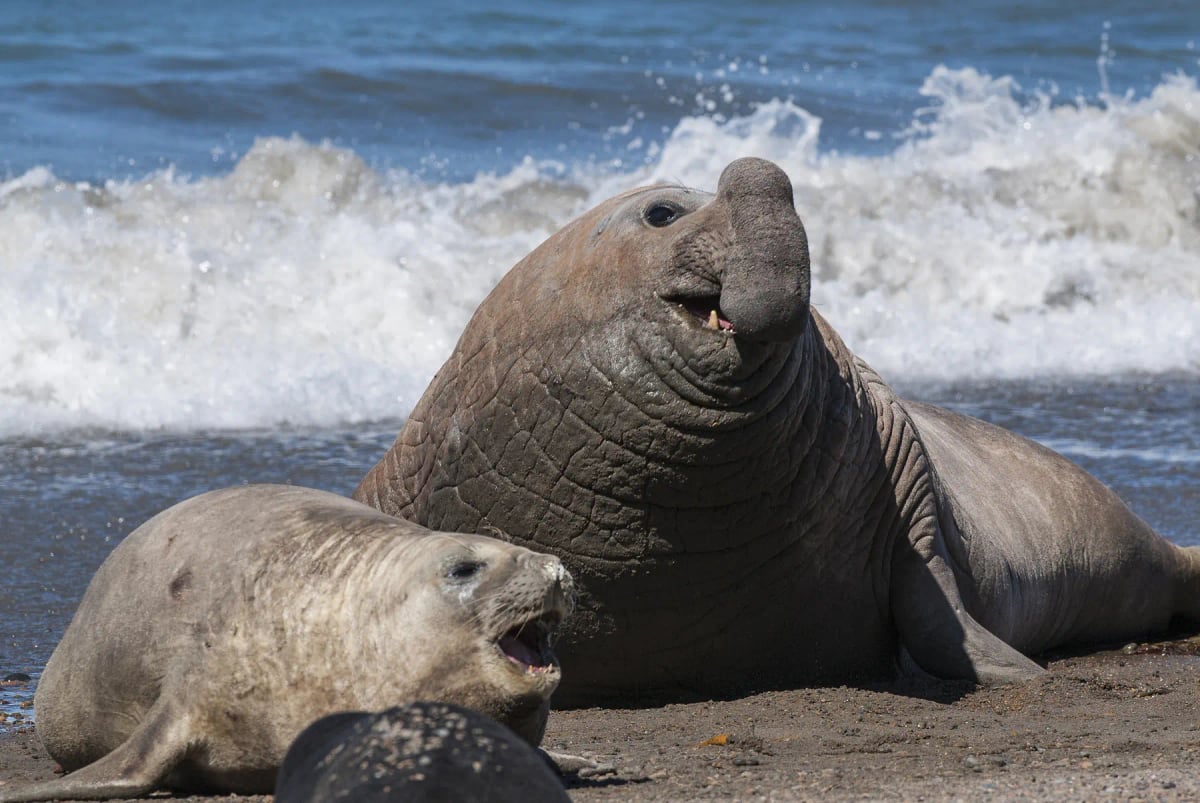
Elephant seals are the largest pinnipeds on Earth, split into two species: the northern elephant seal, which breeds along the coast of California and Baja California, and the southern elephant seal, found around South America, subantarctic islands, southern Africa, Australia, and Antarctica. Adult males are among the heaviest carnivores alive, with a large inflatable nose they use to produce booming roars and intimidate rivals during the breeding season. At sea, these animals are extraordinary divers. The southern elephant seal holds the record for the deepest dive by any pinniped, reaching beyond 1,500 meters. Both species can hold their breath for well over an hour while chasing squid, fish, and rays in the open ocean. After near extinction from hunting in the 19th century, both species have recovered strongly under legal protection.
Two species
Elephant seals belong to the genus Mirounga and come in two distinct species. The northern elephant seal breeds along the coastline of California and Baja California, with large colonies at places like Año Nuevo State Park and the Farallon Islands. The southern elephant seal is considerably larger and ranges across subantarctic islands, the coasts of South America, southern Africa, and the waters around Antarctica. Though the two species share many traits, they have been evolving separately for millions of years and occupy very different corners of the world. The southern species holds most of the size records, while the northern species is better studied due to its proximity to research institutions along the coast of California.
Size and appearance
Few animals on Earth come close to the sheer bulk of a fully grown male elephant seal. Adult males of the southern species can weigh more than 2,200 kilograms on average, with exceptional individuals recorded above 4,000 kilograms and stretching beyond five meters in length. Northern males are somewhat smaller but still dwarf almost every other carnivore on land or in the sea. Females of both species are dramatically smaller, typically weighing between 400 and 900 kilograms. The most recognizable feature of the adult male is the large inflatable nose, known as a proboscis, which can grow to around 30 centimeters. It amplifies the loud vocalizations males use to assert dominance, and it continues to grow throughout a male's life.
Breeding behavior
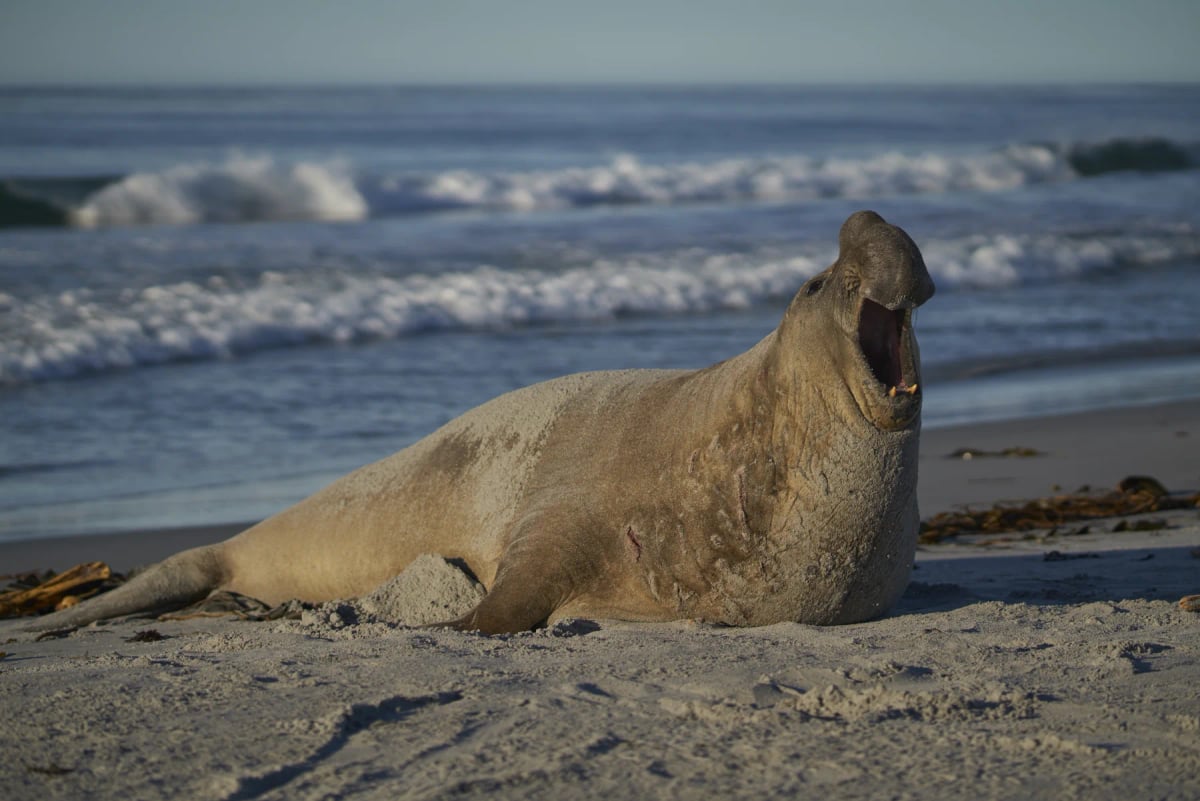
Every year, elephant seals gather in large numbers on beaches to breed, and the competition among males is fierce. Dominant males, called beachmasters, use their size and booming calls to defend groups of females from rivals. Fights do occur, and the wounds from these clashes can be severe, though most confrontations are settled through posturing and noise alone. Females arrive already pregnant, give birth to a single pup within days, and nurse it for roughly four weeks. During that nursing period, the pup grows at a remarkable rate, fed by milk that is extremely rich in fat. Once the pup is weaned, the female mates again before returning to the ocean. A male lucky enough to secure a large group may father dozens of pups in a single season.
Diving ability
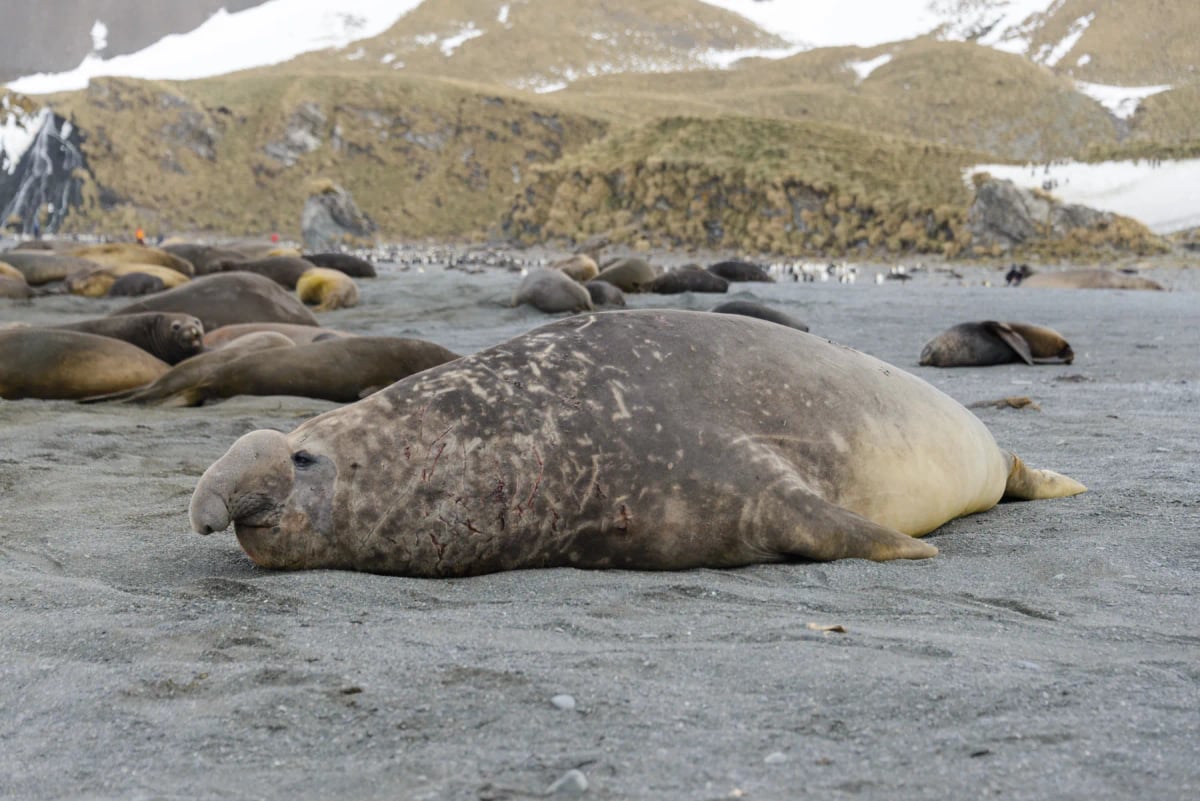
Spend time watching an elephant seal on the beach and it is hard to imagine the animal as one of the most capable divers on the planet. Yet once at sea, these animals plunge to extraordinary depths in pursuit of squid, fish, and rays. The southern elephant seal holds the record for the deepest dive ever recorded for any pinniped, with confirmed dives beyond 1,500 meters. Both species can remain submerged for well over an hour on a single breath. Their bodies are adapted for this lifestyle in several ways: blood rich in oxygen-carrying hemoglobin, a slowed heart rate during dives, and muscles that store large amounts of myoglobin. Satellite tracking studies have shown that elephant seals spend around 90 percent of their time at sea underwater, surfacing only briefly between dives.
Conservation
The story of the elephant seal is one of the most striking recoveries in the history of wildlife conservation. By the late 1800s, hunting for the oil found in their thick blubber had pushed both species to the edge of extinction. The northern elephant seal was reduced to perhaps as few as 100 individuals. Legal protections introduced in the 20th century allowed populations to rebound, and today the northern species numbers around 170,000 animals, while the southern species population is estimated at roughly 750,000. Both are currently listed as Preocupación menor by the IUCN. Despite this success, threats remain. Warming oceans linked to climate change are altering the distribution of prey, and growing human activity near breeding beaches can disrupt the critical weeks when females are raising their pups.
Where it is found
The Elephant Seal can be found in places such as:
Researched and written by Juan Pablo. Sources: IUCN Red List, scientific literature and regional field guides. Last updated: .
Technical factsheet




Frequently Asked Questions
What do elephant seals eat?
Elephant seals feed mainly on squid, fish, and rays, hunting in deep, open water far from shore. They are pursuit predators, meaning they chase prey rather than waiting for it. Because they spend so much time underwater, they do most of their eating during long dives in the open ocean, sometimes hundreds of kilometers from the nearest beach.
Where do elephant seals live?
The two species occupy very different parts of the world. The northern elephant seal lives along the coast of California and Baja California, in Mexico. The southern elephant seal is found around subantarctic islands, the coasts of Argentina and Chile, southern Africa, Australia, New Zealand, and Antarctica. Both species spend the majority of their lives at sea and only come ashore to breed and molt.
How long can an elephant seal hold its breath?
Elephant seals are exceptional breath holders. Both species can stay underwater for well over an hour on a single breath, and they dive repeatedly with only short breaks at the surface in between. Their bodies produce blood rich in hemoglobin and muscles packed with myoglobin, both of which store large amounts of oxygen. Studies show they spend roughly 90 percent of their time at sea completely submerged.
Why do male elephant seals have a big nose?
The large, fleshy nose of an adult male, called a proboscis, works like a resonating chamber that amplifies his vocalizations. During the breeding season, males use these booming calls to intimidate rivals and signal their dominance to females. The proboscis keeps growing throughout a male's life, so the largest nose generally belongs to the oldest and most experienced males, which tend to be the most successful breeders.
Are elephant seals dangerous to humans?
Elephant seals are generally not aggressive toward people, but they are very large animals and should never be approached. A startled adult male can move surprisingly fast on land and is capable of causing serious injury. Females guarding newborn pups can also react defensively if they feel threatened. Wildlife authorities recommend keeping a distance of at least 50 feet from any elephant seal on a public beach.
How do elephant seal pups grow so fast?
Elephant seal mothers produce milk with an extraordinarily high fat content, sometimes exceeding 50 percent fat. This allows pups to gain several kilograms per day during the nursing period of around four weeks. By the time the mother returns to the ocean, the pup has already quadrupled its birth weight. After weaning, pups are left on their own and must learn to swim and hunt entirely by themselves.
Are elephant seals endangered?
Both species are currently listed as Least Concern by the IUCN, which reflects a remarkable recovery from near extinction. Hunting in the 1800s reduced the northern elephant seal to perhaps just 100 animals. Today the northern population has grown to around 170,000 and the southern to roughly 750,000. Even so, climate change is shifting prey availability at sea, and disturbance near breeding beaches remains a real concern for their future.