Bushbuck
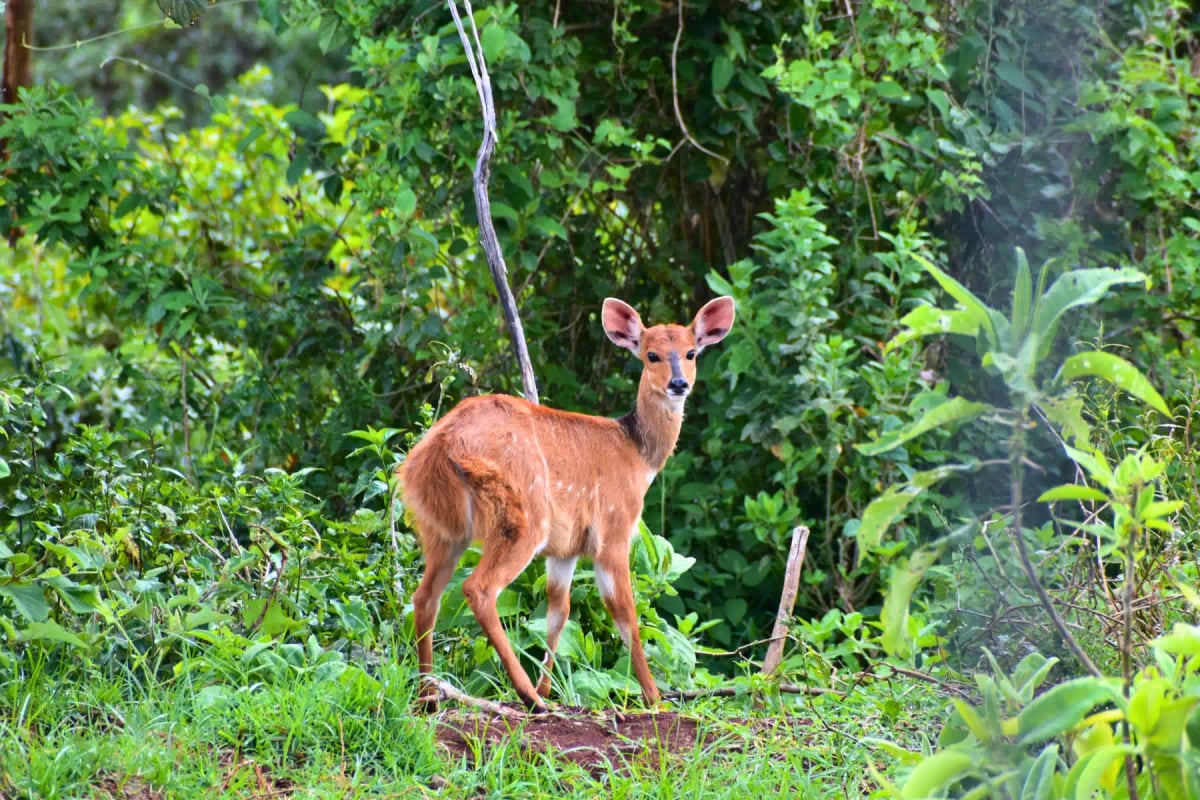
The bushbuck (Tragelaphus scriptus) is a shy, medium sized antelope found throughout much of sub-Saharan Africa. These solitary browsers inhabit dense woodlands, forest edges and riverine zones where dense vegetation provides protection from predators. Their reddish brown coat carries distinctive white spots and stripes, though the exact pattern varies by region and subspecies. Males develop short, tightly spiraled horns, while females remain hornless. Bushbucks are primarily nocturnal and crepuscular, feeding on a varied diet of leaves, shoots, fruits and bark. Despite their wide geographical distribution across Africa, they remain difficult to observe in the wild because they are naturally wary and prefer to stay hidden within thick cover. When threatened, bushbucks can be surprisingly aggressive for their size. They typically live solitary lives or in small family units, with females raising offspring until they are mature enough to disperse.
Habitat and distribution
From Senegal in the west to Somalia in the east, bushbucks occupy a vast range across sub-Saharan Africa. These antelope thrive in diverse woodland settings, particularly where dense vegetation provides shelter from predators. They favour areas with thick cover, including riverine forests where water remains accessible throughout the year and forest margins where open grassland meets tree cover. The species shows remarkable adaptability to different vegetation types, from moist savanna to lowland forests. Their preference for areas with refuge means they often avoid open terrain, instead concentrating in landscapes that offer protection. This habitat specialization has allowed bushbucks to maintain populations across their wide geographic range, though they remain patchily distributed within suitable zones.
Diet
As dedicated browsers, bushbucks feed selectively on vegetation available within their preferred habitats. They consume leaves from shrubs and trees, tender shoots, twigs and fallen fruits, adjusting their choices based on seasonal availability. This flexible approach to feeding allows them to survive in varied woodland settings where plant composition changes throughout the year. During periods of fruit abundance, they may feed more heavily on fallen seeds and fruit, while in drier seasons they rely more on browse material. Bushbucks appear to favour certain plant species over others, showing dietary preferences that vary by region. Their browsing habits mean they rarely compete directly with grazing antelope species, allowing them to coexist in shared habitats.
Behavior
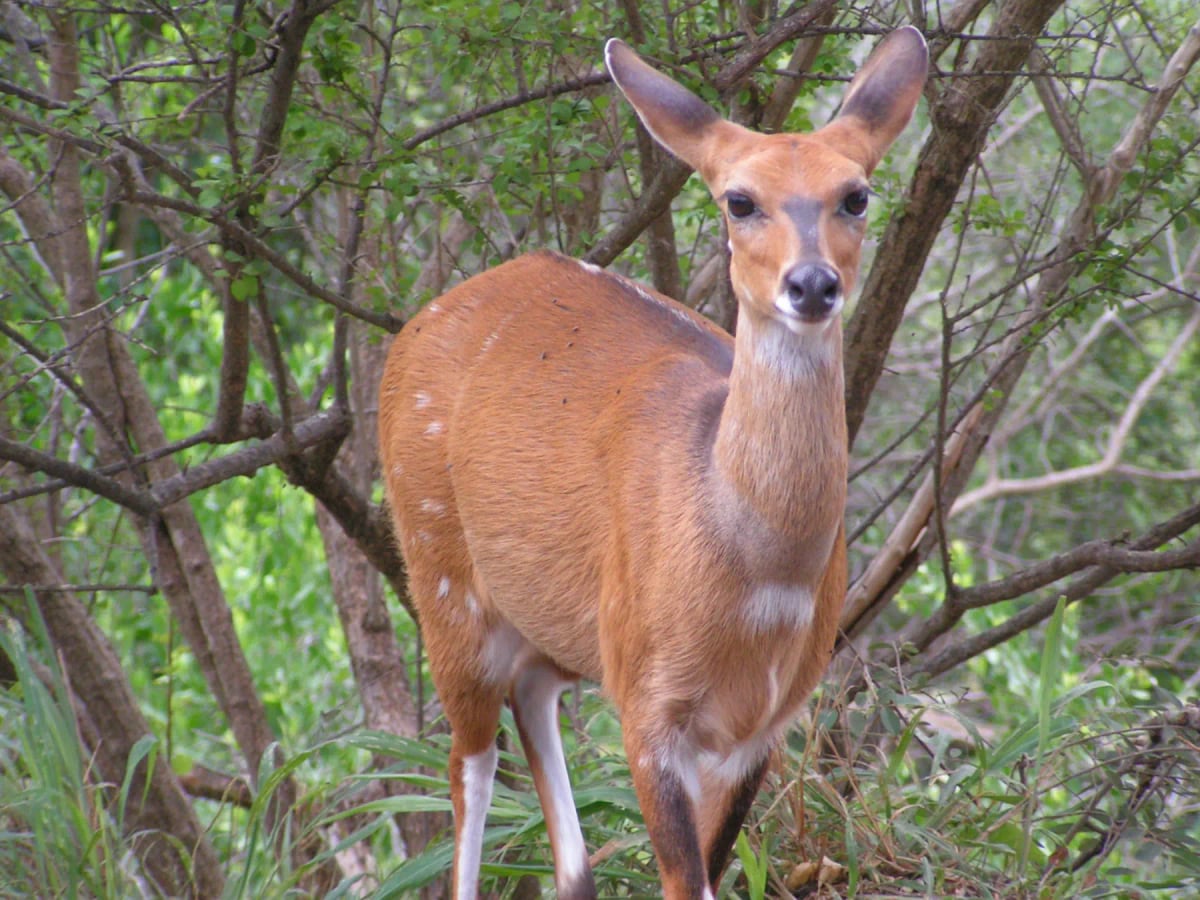
Characteristically wary, these antelope have adapted their daily rhythm to minimize exposure to predators. They are primarily active during night hours and around dawn and dusk, spending daylight hours concealed within dense vegetation where they can monitor their surroundings. Most individuals maintain solitary lifestyles, moving quietly through their territories in search of food. Only females accompanied by young offspring temporarily form family groups. When startled or threatened, bushbucks display surprising aggression for creatures of their modest size, barking loudly and sometimes using their horns defensively. Their escape strategy relies on explosive bursts of speed through thick vegetation rather than sustained running. This combination of wariness, nocturnal behaviour and preference for dense cover makes them extremely difficult to encounter in the wild despite their widespread presence across Africa.
Appearance
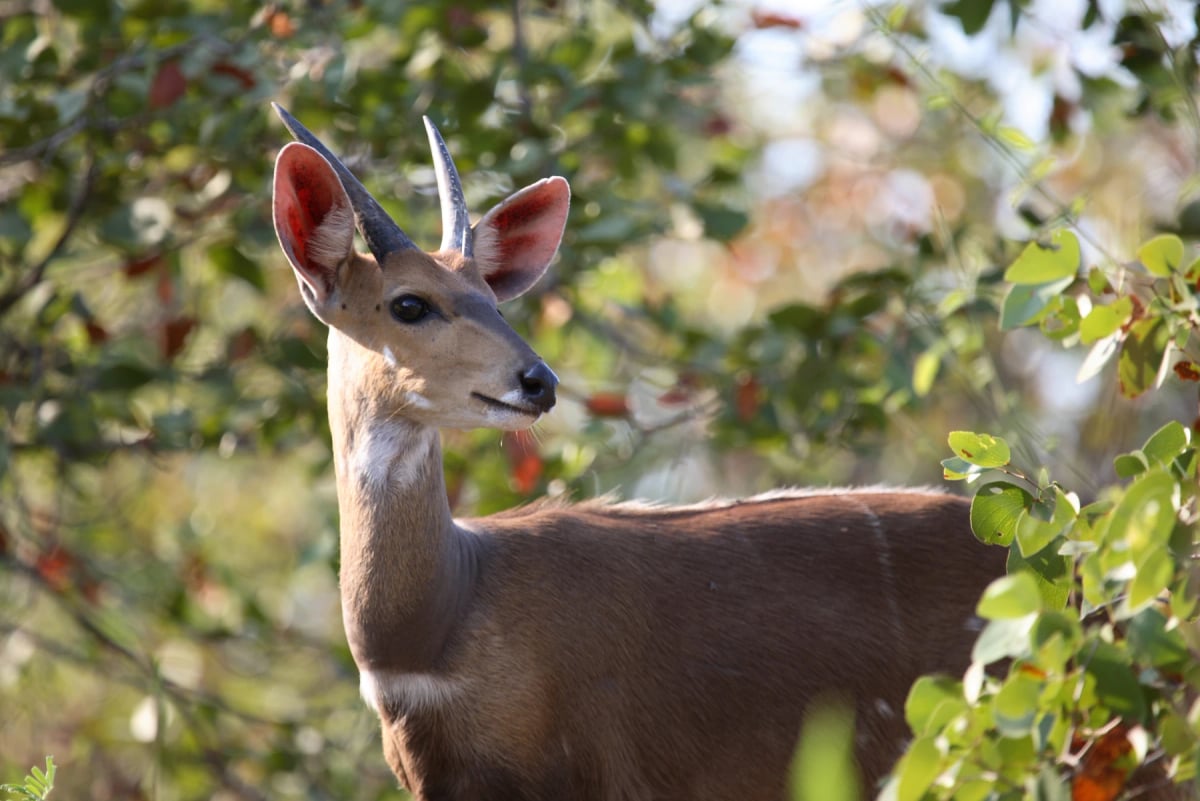
A striking reddish brown coat marked with white spots and vertical stripes defines this antelope's appearance across much of its range. The exact pattern and intensity of these markings varies considerably between subspecies and geographic regions, creating considerable visual diversity. Some populations display particularly bold white stripes and spots, while others show more subtle patterning. Males typically measure around 60 to 80 centimetres in height and develop short horns with a tight spiral structure, which they use in territorial disputes and defence. Females remain hornless and generally lighter in weight, typically ranging from 30 to 35 kilograms. Both sexes possess a compact, athletic build suited to navigating dense vegetation, with relatively slender legs that allow for silent movement through their woodland habitats.
Conservation
Listed as Least Concern on the IUCN Red List, this species persists across a vast geographic range and adapts well to varied woodland habitats. Populations remain relatively stable across much of sub-Saharan Africa, though they face localised pressures that merit attention. Hunting for bushmeat continues in many regions, reducing populations in areas with significant human activity. Habitat conversion and loss through deforestation and land development poses threats in certain localities, particularly near expanding human settlements. Despite these challenges, their preference for dense vegetation that often proves difficult for humans to exploit means that suitable habitat remains available in many regions. Conservation efforts focus on maintaining landscape connectivity and protecting key riverine zones that serve as crucial wildlife corridors across fragmented terrain.
Where it is found
The Bushbuck can be found in places such as:
Researched and written by Juan Pablo. Sources: IUCN Red List, scientific literature and regional field guides. Last updated: .
Technical factsheet

Frequently Asked Questions
What do bushbucks eat?
Bushbucks are selective browsers that feed on leaves, shoots, twigs and fallen fruits from various plant species. Their diet adapts seasonally based on plant availability in their woodland habitats. Unlike grazing antelope, they don't compete for grass. Instead, they focus on browse material from shrubs and trees, showing clear preferences for certain plant species depending on their geographic region.
Where are bushbucks found?
Bushbucks inhabit sub-Saharan Africa from Senegal in the west to Somalia in the east, spanning across 39 countries. They thrive in woodlands, forest edges and riverine zones where dense vegetation offers protection. Their preference for thick cover means they concentrate in specific habitats rather than spreading evenly across their wide range. They are notably absent from open grasslands and arid regions.
Are bushbucks aggressive?
Bushbucks are typically shy and wary, spending daylight hours hidden in dense vegetation. However, when threatened or startled, they can display surprising aggression for their modest size. They bark loudly, use their horns defensively and may charge. Their usual escape strategy involves explosive bursts of speed through thick cover rather than confrontation, but they will defend themselves when cornered.
Why are bushbucks hard to see?
Bushbucks are extremely difficult to observe in the wild because they are primarily nocturnal and crepuscular, remaining hidden during daylight hours. They possess an instinctive wariness toward open spaces and naturally prefer staying concealed within thick vegetation. Their quiet movement through dense cover, combined with their solitary lifestyle and excellent camouflage through white spotting and reddish colouration, makes encounters rare despite their widespread presence across Africa.
How do bushbucks differ by region?
Bushbucks show significant variation across their geographic range through multiple subspecies. The most noticeable differences appear in coat markings, with some populations displaying bold white stripes and spots while others show subtle patterning. Size and colouration intensity also vary by region. These adaptations reflect evolutionary responses to different woodland types, vegetation patterns and environmental conditions across sub-Saharan Africa.
What are bushbuck threats?
Bushbucks face threats from hunting for bushmeat in regions with significant human activity, which reduces local populations. Habitat loss through deforestation and land conversion near expanding human settlements also poses challenges in certain areas. However, their preference for dense vegetation that proves difficult for humans to exploit means suitable habitat remains available across much of their range. They maintain a stable conservation status overall.
How do male and female bushbucks differ?
Male bushbucks develop short, tightly spiraled horns that they use in territorial disputes and defence, while females remain hornless. Males typically stand around 60 to 80 centimetres tall, whereas females are generally smaller and lighter, weighing between 30 to 35 kilograms. Both sexes share the distinctive reddish brown coat with white spots and stripes, though male colouration is often deeper and more vibrant than females.