Oryx
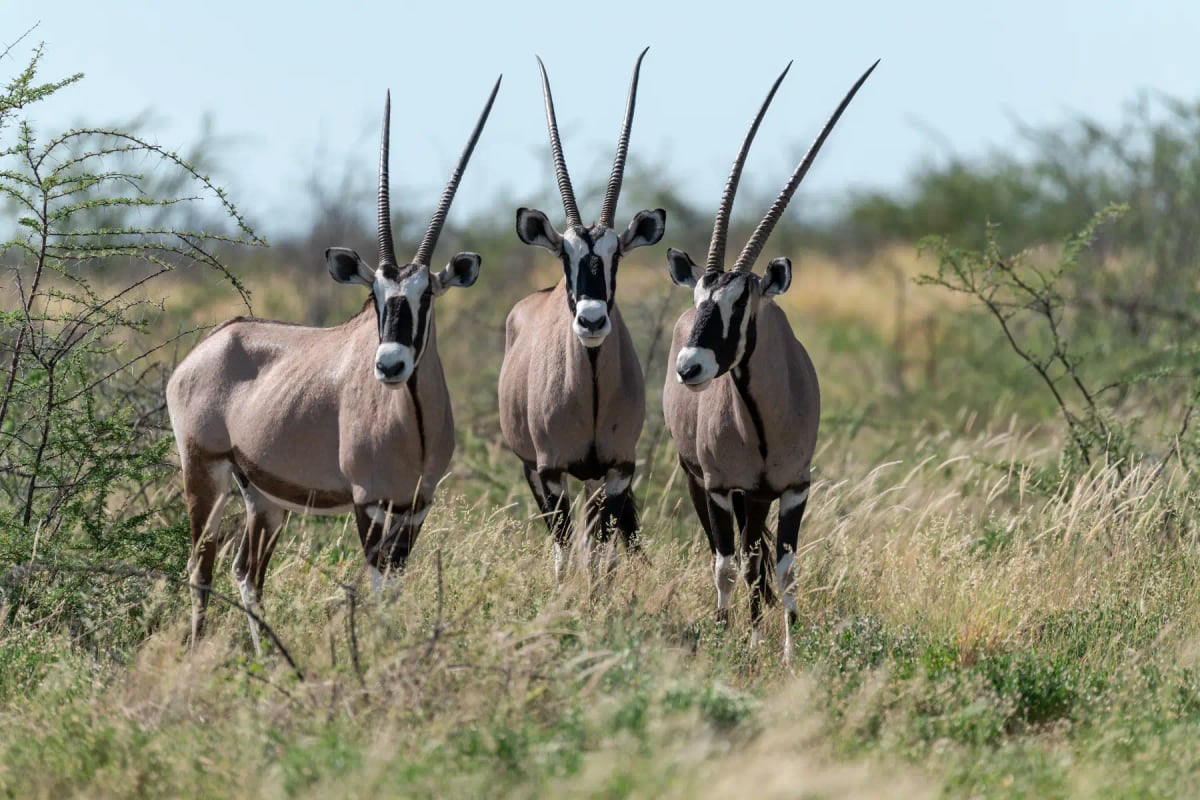
Oryx are large antelopes built for life in some of Africa's harshest environments. Several species are found across the continent, including the gemsbok of southern Africa and the beisa oryx of eastern Africa. Both males and females carry long, straight horns that can exceed one meter. Their sand-colored coats, bold black and white facial markings, and lean bodies help them cope with intense heat. Rather than panting or seeking shade constantly, oryx can raise their body temperature by several degrees during the day, storing heat and releasing it at night. This remarkable ability reduces water loss significantly. They obtain most of their moisture from the grasses, roots, and wild melons they eat, allowing them to go days without drinking. Herds range widely across arid plains and deserts in search of food. Conservation status varies by species, from Least Concern to Vulnerable.
Appearance
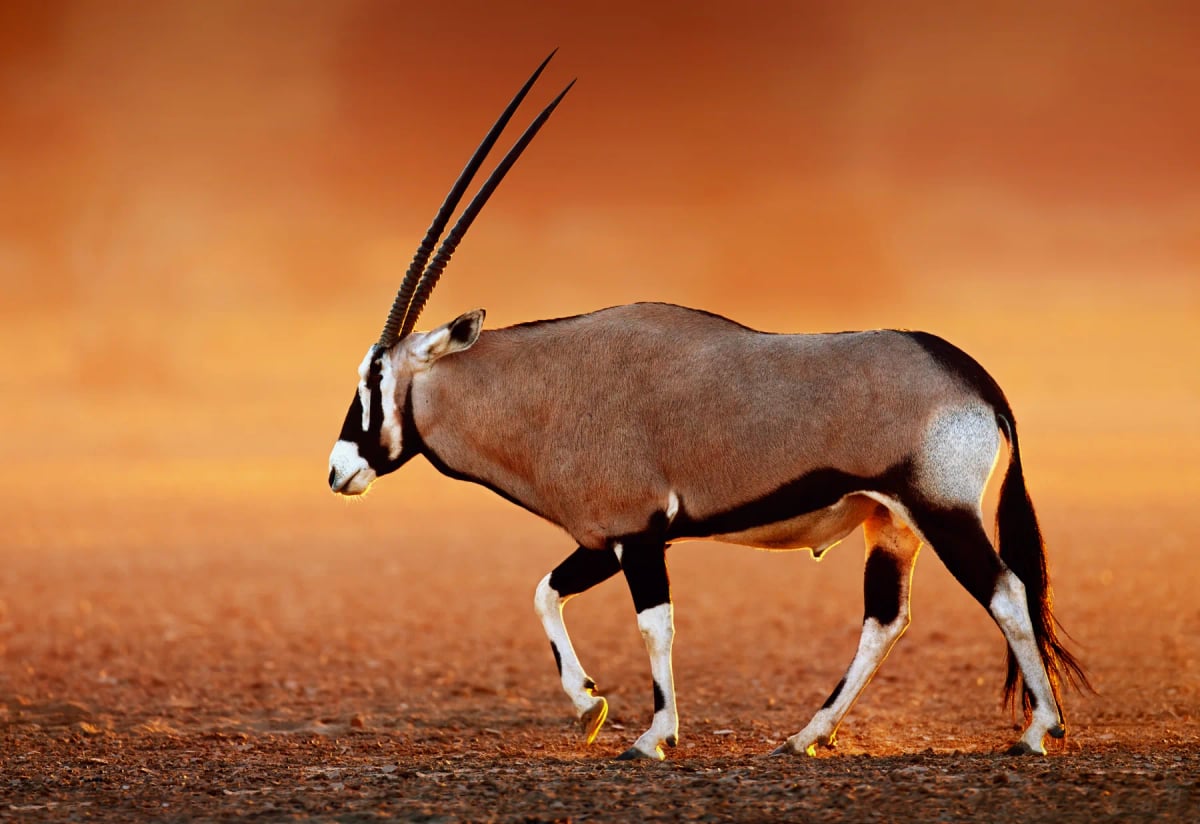
Few African antelopes are as visually striking as the oryx. Both males and females carry long, straight horns that can reach well over a meter in length, making them look almost prehistoric from a distance. The coat is a pale sandy or buff color across most of the body, which reflects sunlight and helps manage heat. Bold patches of black and white mark the face, legs, and belly, creating a pattern that is unmistakable even at a distance. The gemsbok of southern Africa tends to have especially vivid markings, while the beisa oryx of eastern Africa is slightly more muted in tone. Despite the variation between species, all oryx share the same lean, muscular build that suits life in open, arid landscapes.
Desert adaptations
What truly sets the oryx apart is its extraordinary ability to cope with extreme heat. Rather than spending energy seeking shade or panting constantly, an oryx allows its body temperature to rise by several degrees during the hottest part of the day, storing heat that it then releases once temperatures drop at night. This process, known as adaptive heterothermy, dramatically reduces the amount of water lost through sweating and breathing. A network of fine blood vessels near the nose also cools the blood flowing to the brain, protecting it even when the rest of the body is very warm. These animals can go for many days without drinking free water at all, surviving on moisture drawn from the grasses, roots, and wild melons that make up their diet.
Diet
Oryx are opportunistic grazers and browsers that adjust what they eat depending on the season and what the land offers. Grasses make up a large part of their diet during wetter periods, while dry seasons push them toward roots, tubers, wild melons such as the tsamma melon, and other moisture rich plants. The tsamma melon is particularly valuable because it provides both nutrition and water at the same time. Oryx will also dig with their hooves to uncover underground plant parts when surface vegetation is scarce. This flexibility allows them to survive in habitats where most other large herbivores would struggle. They tend to feed during the cooler hours of early morning and late afternoon, resting in whatever shade is available during the midday heat.
Behavior
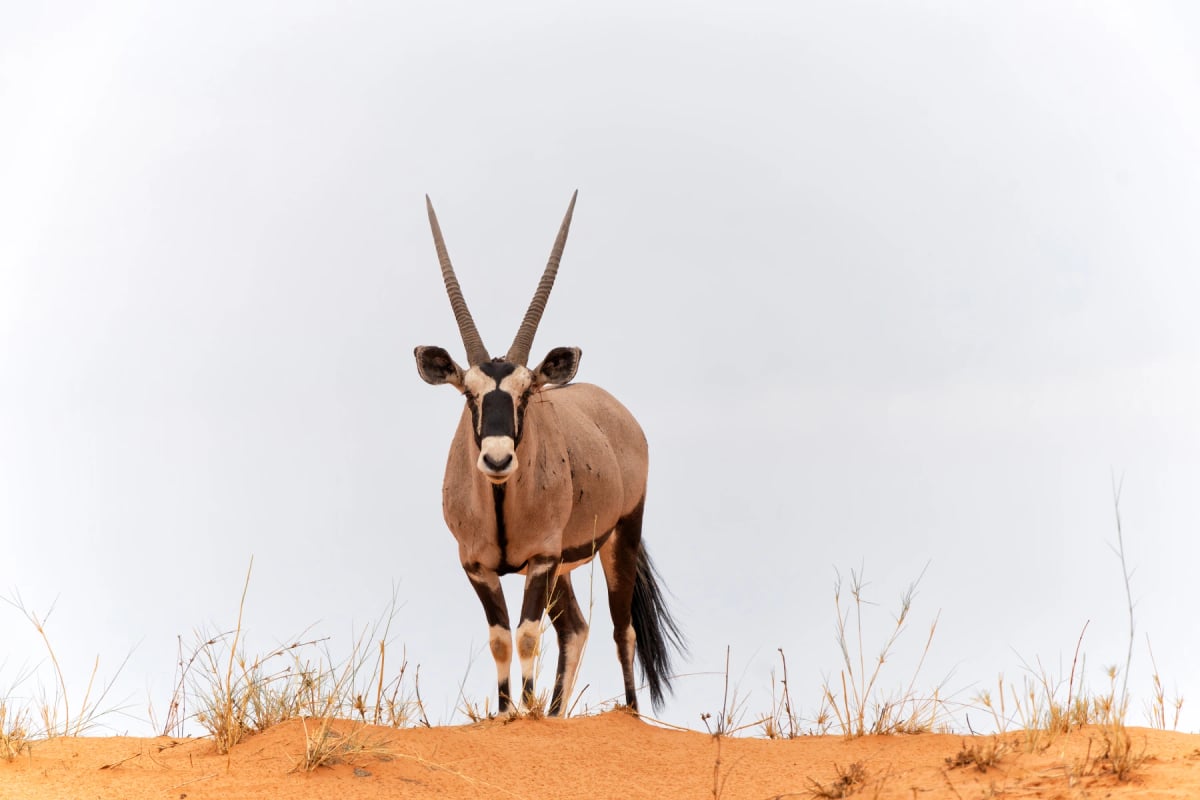
Oryx typically gather in herds ranging from around ten to forty individuals, though groups of several hundred have been recorded when rainfall draws animals to the same area. Herds are often mixed, including both males and females of various ages, though older males sometimes live alone or in small bachelor groups. These animals are highly nomadic, covering large distances across arid plains in search of fresh grazing following rain. When threatened by predators such as lions or spotted hyenas, oryx do not rely solely on speed. They are known to stand their ground and use their long horns to defend themselves, and there are recorded cases of oryx killing lions in self defense. Within the herd, individuals communicate through posture and movement rather than loud vocalizations.
Conservation
Conservation outcomes for oryx vary considerably depending on the species. The gemsbok remains relatively common across southern Africa and is listed as Least Concern by the IUCN. The beisa oryx, found in eastern Africa, is classified as Vulnerable due to ongoing pressure from hunting and competition with livestock for grazing land. Habitat loss driven by agricultural expansion and the spread of human settlement has reduced the range of several species over recent decades. One of the most dramatic conservation stories involves the scimitar horned oryx, which was declared extinct in the wild but has been successfully reintroduced into Chad through a coordinated international effort. Game reserves and national parks across the continent play a key role in protecting remaining populations and giving oryx the space they need to move and feed.
Where it is found
The Oryx can be found in places such as:
Researched and written by Juan Pablo. Sources: IUCN Red List, scientific literature and regional field guides. Last updated: .
Technical factsheet





Frequently Asked Questions
What do oryx eat?
Oryx eat grasses, roots, tubers, and moisture-rich plants like the tsamma melon. During dry seasons, they shift away from grass and focus on plants that hold water inside them. They will even dig with their hooves to reach underground plant parts. This flexible diet lets them survive in deserts and arid plains where most large herbivores simply could not find enough food or water to get by.
Where do oryx live?
Oryx live across large parts of Africa, from the arid plains and deserts of southern Africa to the drier regions of eastern Africa. The gemsbok is found in Namibia, Botswana, and South Africa, while the beisa oryx ranges across Kenya, Tanzania, Ethiopia, Somalia, and nearby countries. They thrive in open, dry landscapes and are highly nomadic, moving over long distances to follow rainfall and find fresh grazing.
How do oryx survive without water?
Oryx have a remarkable ability to let their body temperature rise during the day instead of sweating constantly to stay cool. This saves a huge amount of water. A network of tiny blood vessels near the nose also keeps the brain cool even when the body is very warm. On top of that, they get most of the moisture they need from the plants they eat, allowing them to go several days without drinking.
Are oryx dangerous?
Oryx are not aggressive toward people by nature, but they are far from defenseless. Their horns can exceed one meter in length and are sharp enough to cause serious injury. When cornered by predators, oryx stand their ground and fight back hard. There are documented cases of oryx killing lions during attacks. For this reason, even large predators approach them with caution, and humans should always keep a safe distance from wild individuals.
What are the main threats to oryx?
The biggest threats facing oryx today are hunting, competition with livestock for grazing land, and the loss of habitat due to agricultural expansion and the spread of human settlements. These pressures have reduced the range of several species over recent decades. The beisa oryx of eastern Africa is now listed as Vulnerable because of these combined pressures. National parks and game reserves play a vital role in giving oryx the protected space they need to survive.
How do oryx use their horns?
Oryx horns serve more than one purpose. Both males and females carry them, and they are used for defense against predators as well as for establishing dominance within the herd. During confrontations between individuals, oryx lower their heads and fence with their horns in a ritualized way that rarely causes serious injury. Against predators, however, the horns become a genuine weapon. Their length and sharpness make an oryx a risky target even for large carnivores.
Do oryx live in groups?
Yes, oryx typically live in mixed herds of around ten to forty animals, made up of both males and females of different ages. When rains arrive and food becomes more plentiful, much larger gatherings of several hundred individuals can form. Some older males choose to live alone or in small groups away from the main herd. Oryx are nomadic animals and these herds move constantly across wide stretches of dry land in search of grazing.