Honey Badger

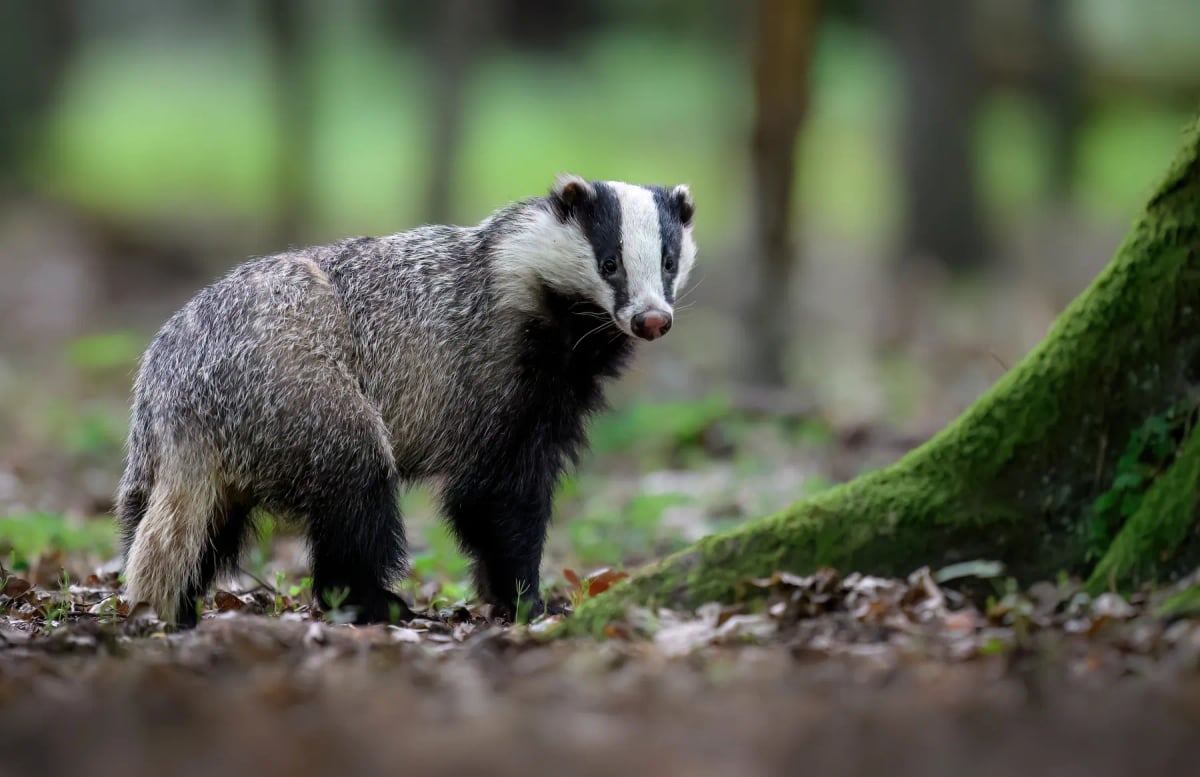
The honey badger (Mellivora capensis) is a stocky carnivore in the weasel family, known across Africa, the Middle East, and South Asia for its remarkable toughness. It weighs up to 16 kg and carries a coat that is silver on top and jet black below, with a thick, loosely attached skin that gives it remarkable protection against bites and stings. Its claws are built for powerful digging, letting it break open beehives, extract prey from burrows, and create new shelters within minutes. It eats almost anything: rodents, snakes, scorpions, frogs, insects, eggs, roots, and honey. Few animals of its size will stand their ground against a lion or a leopard, but the honey badger does so with regularity. It is listed as Least Concern by the IUCN, though numbers are falling in parts of its range due to habitat loss and conflict with farmers.
Habitat and distribution
Few mammals match the honey badger when it comes to adapting to different environments. It lives in arid deserts, open grasslands, thorny scrublands, and tropical forests across sub-Saharan Africa, North Africa, and much of the Middle East. Its range continues east through Iran, Iraq, and the Arabian Peninsula into Pakistan, India, and Nepal. Within this vast territory, it tends to prefer areas with loose or sandy soil that is easy to dig, though it manages just as well in rocky hillsides and dense woodland. It does not migrate and can survive in places that receive very little rainfall each year. This flexibility in habitat use is one of the main reasons the species has managed to persist across such a broad and varied stretch of the world.
Diet
Arguably the most varied diet of any carnivore its size, the honey badger's menu shifts with whatever the season and landscape offer. Rodents, lizards, snakes, frogs, scorpions, and beetle larvae all end up as meals. It is a skilled snake hunter, regularly tackling species that are highly venomous, including cobras and puff adders. Raiding beehives is a well-documented habit: it tears through comb to reach honey and the protein-rich larvae inside, absorbing hundreds of stings in the process thanks to its thick, tough skin. It will also eat wild fruit, roots, and carrion when the opportunity arises. This willingness to eat almost anything gives the honey badger a real advantage in environments where food can be scarce for months at a time.
Behavior
Mostly solitary by nature, the honey badger spends its days and nights roaming large territories in search of food. Males cover considerably more ground than females, sometimes traveling more than 25 km in a single night. When a female raises cubs, she stays with them for up to a year and a half, teaching them how to hunt and dig. The animal is famous for refusing to back down. It has been recorded confronting lions, leopards, and crocodiles, often emerging unharmed thanks to its loose, rubbery skin, which allows it to twist and bite even when held in a predator's grip. It communicates through a series of grunts, growls, and rattling sounds, and releases a strong scent from glands near the tail when alarmed.

Conservation
The IUCN lists the honey badger as Least Concern, reflecting the fact that it still occupies a broad range and maintains viable populations in many countries. Even so, numbers are declining in several parts of Africa and Asia. Farmers who keep chickens or beehives often see the honey badger as a pest and resort to trapping or poisoning, which is one of the most serious threats the species faces today. Habitat loss through agriculture and human settlement is another ongoing pressure. Accidental poisoning from carcasses left out to kill other predators also takes a toll. Efforts to protect the species focus on teaching communities about its ecological value and promoting methods that protect livestock without harming wildlife.
Cultural significance
Across its range, the honey badger carries a strong reputation built on centuries of observation. In many African communities it is respected, and sometimes feared, as a creature of unusual courage and cunning. Traditional stories from parts of sub-Saharan Africa describe it as an animal that cannot be defeated, a reflection of behavior people have witnessed firsthand. In the early 21st century it became a global sensation through a viral online video that celebrated its defiant attitude, turning it into a symbol of stubbornness and resilience in popular culture worldwide. Wildlife documentaries have also brought wider attention to its remarkable hunting skills and its resistance to venom. That combination of real natural history and cultural legend has made the honey badger one of the most recognized small carnivores on the planet.
Where it is found
The Honey Badger can be found in places such as:
Researched and written by Juan Pablo. Sources: IUCN Red List, scientific literature and regional field guides. Last updated: .
Technical factsheet










Frequently Asked Questions
What does a honey badger eat?
Honey badgers eat a little of almost everything. Rodents, frogs, lizards, scorpions, beetle larvae, eggs, wild fruit, and carrion are all fair game. They are particularly skilled at hunting venomous snakes, including cobras and puff adders. They also raid beehives to reach honey and the larvae inside, enduring hundreds of stings at a time. This extraordinarily varied diet helps them survive in places where food is hard to find.
Are honey badgers really immune to snake venom?
Not fully immune, but remarkably resistant. Honey badgers have been observed collapsing after a venomous snake bite, only to recover and continue eating the snake within hours. Scientists believe they carry genetic adaptations in their cells that reduce the effect of certain venoms, similar to mutations seen in other venom-resistant mammals. Their thick skin also helps by making it harder for fangs to reach deep tissue in the first place.
Where do honey badgers live?
Honey badgers are found across a huge stretch of the world, from sub-Saharan and North Africa through the Middle East and into South Asia, reaching as far as India and Nepal. They thrive in deserts, grasslands, forests, and scrublands. They prefer areas with soil that is easy to dig, though rocky terrain is no obstacle either. Their ability to adapt to so many different environments is one of the reasons they remain widespread today.
How dangerous is a honey badger?
Honey badgers are considered one of the most fearless animals in the world. They will stand their ground against lions, leopards, and even crocodiles. Their skin is thick and loose, which lets them twist around and bite an attacker even while being held. They also release a powerful smell from glands near the tail when threatened. While they rarely seek out conflict with humans, they will defend themselves aggressively if cornered or provoked.
How big is a honey badger?
Honey badgers are stocky and low to the ground, typically weighing between 7 and 16 kg, with males being noticeably larger than females. Their body length usually falls between 55 and 77 cm, not counting the tail. Despite their relatively modest size, they punch well above their weight when it comes to confrontations with much larger predators, which has earned them a reputation as one of nature's most determined fighters.
Is the honey badger endangered?
The honey badger is currently listed as Least Concern by the IUCN, meaning it is not considered at risk of extinction. However, populations are declining in several parts of Africa and Asia. The main threats are conflict with farmers who keep chickens or beehives, habitat loss due to agriculture, and accidental poisoning. Conservation efforts focus on helping local communities protect their livestock in ways that do not involve harming wildlife.
Do honey badgers really seek out honey?
Yes, and it is where their common name comes from. Honey badgers actively search for and raid beehives, both wild ones in trees and rocks and domestic ones kept by beekeepers. They use their powerful claws to tear the hive apart and go straight for the honey and the larvae inside. Their thick skin protects them from most stings. This habit has put them in direct conflict with beekeepers across Africa and parts of Asia.