White Stallion
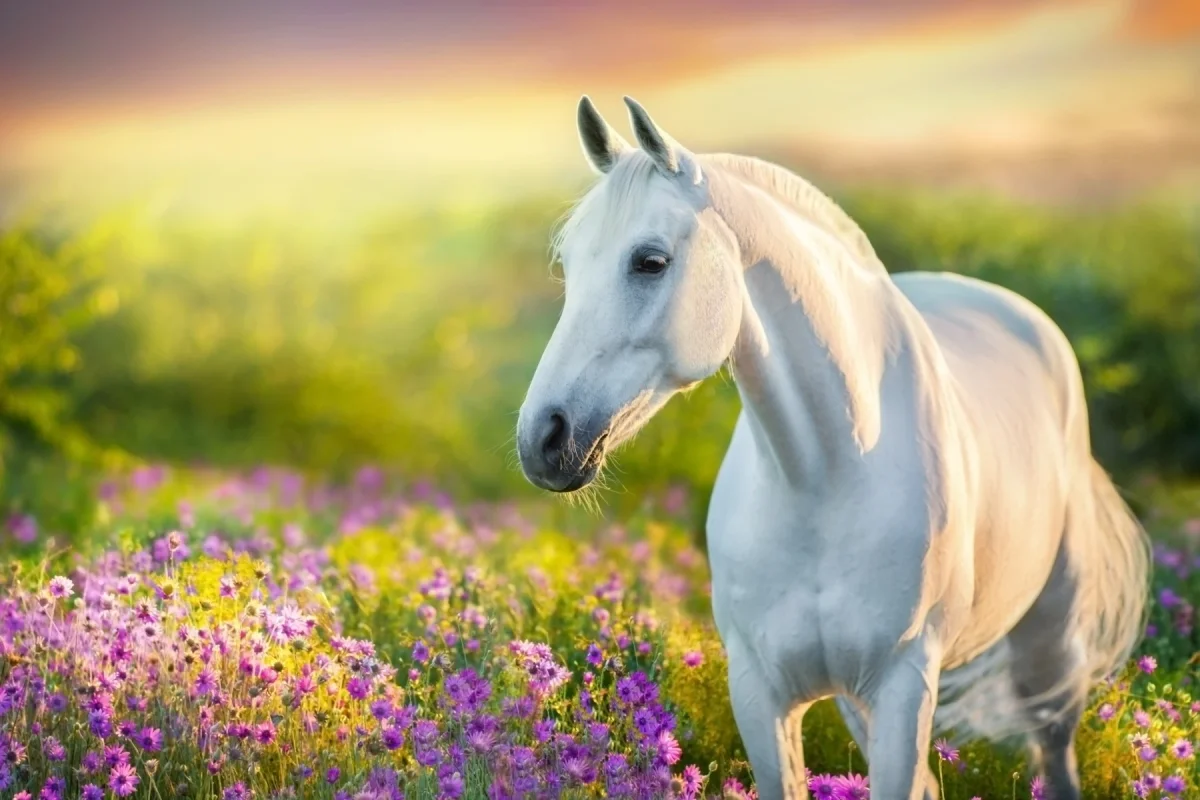
The white stallion is not a wild species but a domesticated horse, Equus ferus caballus, bred and kept by people for thousands of years. In Burkina Faso it holds a special place as a national cultural symbol, appearing in royal ceremonies, festivals, parades, and cinema. The pale coat has long been associated with prestige and spiritual purity across West African traditions. Physically, domestic horses of this type stand between 140 and 160 cm at the shoulder and weigh between 400 and 600 kg. They are herbivores that graze on grasses and browse on hay and other plant matter. Active during the day, they are naturally social animals that thrive in groups. Their lifespan in domestic care reaches 25 to 30 years. For the Burkinabé people, the white stallion is a living emblem of courage, endurance, and national pride.
Cultural symbol
Few animals carry as much meaning in Burkina Faso as the white stallion. Its pale coat has been linked for centuries to spiritual purity, royal authority, and the virtues of courage and endurance. In the traditions of the Mossi people, who make up the largest ethnic group in the country, horses have historically been the companions of chiefs and warriors. The white coat in particular came to represent something beyond ordinary horsemanship. It signals prestige and a connection to the sacred. This symbolism lives on today in royal ceremonies, community festivals, and cultural parades across the country. The animal is not simply admired for its appearance. It is treated as a living reminder of the values that Burkinabé society holds dear, a four-legged expression of pride in shared history and identity.
Representation
Beyond ceremony and tradition, the white stallion has found a place in Burkinabé arts and popular culture. The most celebrated example is the 1982 film Wend Kuuni, directed by Gaston Kaboré, which brought Burkinabé cinema to international attention and featured imagery deeply rooted in local tradition. More broadly, horses appear in oral literature, sculpture, and textile art throughout the region, often depicted as noble companions rather than mere working animals. In national celebrations such as the Semaine Nationale de la Culture, held in Bobo-Dioulasso, horses and riders take part in colorful displays that draw crowds from across the country. These moments reinforce the stallion as a unifying emblem, one that connects rural and urban Burkinabé alike to a sense of shared heritage and collective pride.
Biology
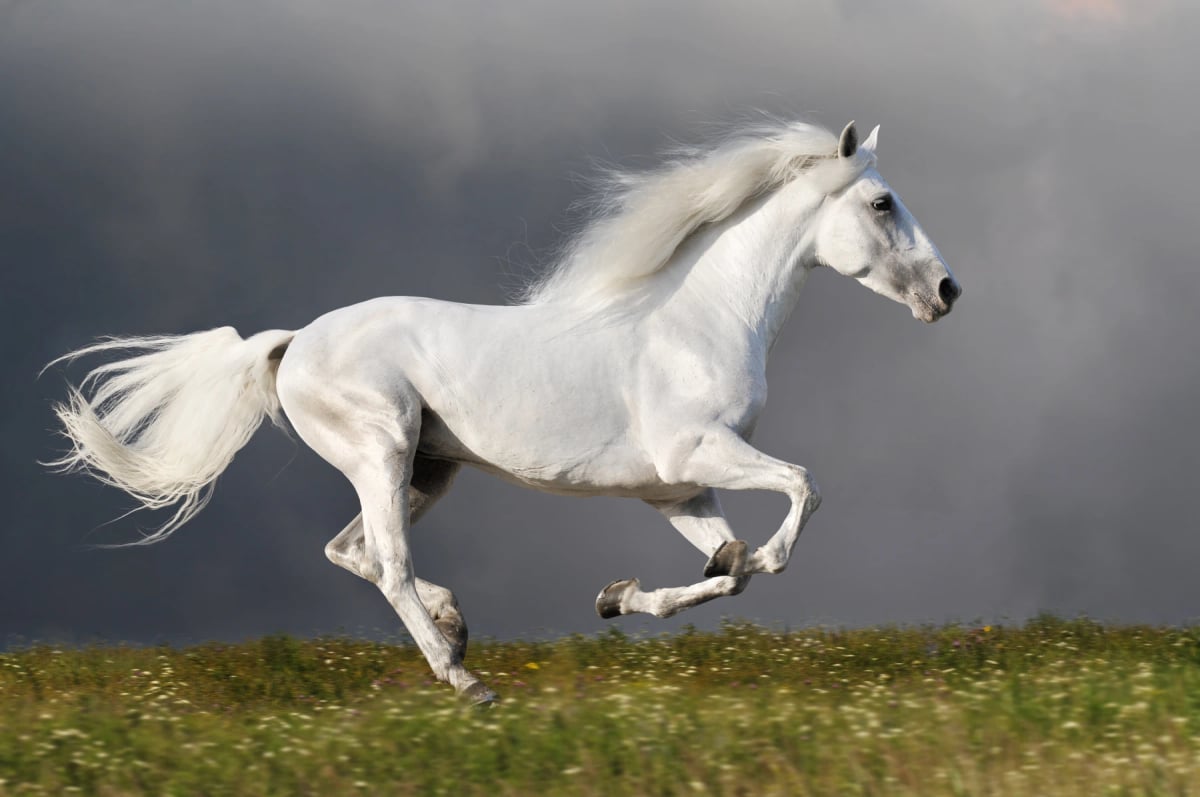
Domestic horses belong to the species Equus ferus caballus and have lived alongside humans for roughly 5,500 years. The white coat that gives the stallion its name is produced by specific genetic variants that reduce pigmentation in the hair, skin, and sometimes the eyes. There is no wild population of this animal. The white stallion found in Burkina Faso is a product of careful breeding and domestic care, not a distinct subspecies or a creature of the wild. Adults typically stand between 140 and 160 cm at the shoulder and weigh between 400 and 600 kg. They are herbivores, feeding mainly on grasses, hay, and other plant matter. Social by nature, horses thrive in groups and are active during daylight hours. Under good care, they can live between 25 and 30 years.
Researched and written by Juan Pablo. Sources: IUCN Red List, scientific literature and regional field guides. Last updated: .
Technical factsheet




Frequently Asked Questions
What do white stallions eat?
White stallions are herbivores, meaning they eat only plant matter. Their main food is grass, which they graze on throughout the day. In domestic settings like those in Burkina Faso, they are also fed hay, grains, and other plant-based supplements to keep them healthy and strong. Because they have a digestive system that works best with small, frequent meals, horses spend a large part of each day eating.
Where do white stallions live?
White stallions are not wild animals. They live wherever people keep and care for them. In Burkina Faso, they are found in villages, royal compounds, and urban stables, especially in areas with strong cultural traditions around horsemanship. They do well in warm, open environments where grazing land is available. There is no wild population of white stallions anywhere in the world. They depend entirely on human care to survive.
How long do white stallions live?
With proper care, a white stallion can live between 25 and 30 years. The quality of their diet, veterinary attention, and living conditions all play a big role in how long they live. Horses that receive regular checkups, a balanced diet, and enough space to move tend to live longer and healthier lives. In Burkina Faso, well-kept stallions used in ceremonies are often cared for with great attention.
Are white stallions a separate breed or species?
No. White stallions are not a distinct breed or species. They belong to the domestic horse species, Equus ferus caballus, and their pale coat is the result of specific genetic variants that reduce pigmentation. Any breed of horse can potentially carry these genes. In Burkina Faso, the white coat holds deep cultural meaning, but the animal itself is a domesticated horse like any other, shaped by thousands of years of breeding.
Are white stallions social animals?
Yes, horses are naturally social animals. In the wild, their ancestors lived in herds, and domestic horses have kept that instinct. They feel more comfortable and secure when they are around other horses. A horse kept in isolation can develop stress-related behaviors. In Burkina Faso, stallions used in parades and ceremonies are typically stabled alongside other horses, which helps keep them calm, healthy, and well-behaved.
Why is the white stallion so important in Burkina Faso?
The white stallion is a national cultural symbol in Burkina Faso. For centuries, its pale coat has been connected to spiritual purity, royal power, and values like courage and endurance. Among the Mossi people, horses were historically the companions of chiefs and warriors. Today, white stallions appear in royal ceremonies, cultural festivals, and national parades. For many Burkinabé people, the animal represents a shared sense of history and pride.
What is the IUCN conservation status of the white stallion?
The white stallion, as a domestic horse, has not been evaluated by the IUCN. Conservation assessments are designed for wild species, and since domestic horses have no wild population, they fall outside that framework. There are hundreds of millions of domestic horses around the world, so there is no concern about their survival as a group. In Burkina Faso, the focus is on preserving the cultural traditions tied to these animals rather than protecting them from extinction.