Mountain Gazelle
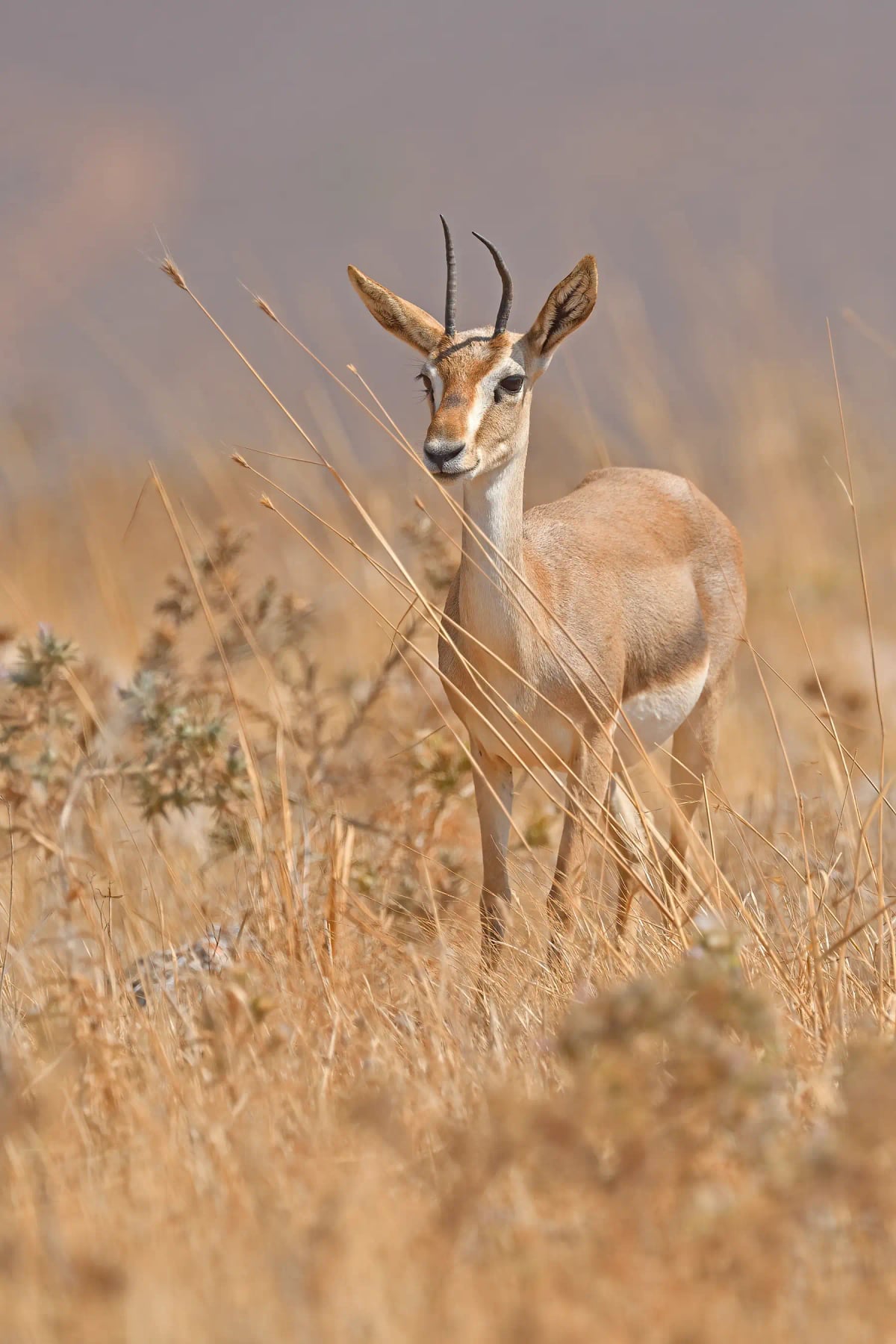
The mountain gazelle is a slender, graceful antelope native to the Levant. It ranges across Israel, Palestine, Jordan, and parts of southern Turkey, where it favors rocky hillsides, open scrublands, and light woodland. Its coat is sandy brown on the back with a pale belly and a dark stripe running along each flank. Males carry a pair of slender horns that curve gently backward and are absent or much shorter in females. This gazelle grazes on grasses, herbs, and low shrubs, shifting its diet with the seasons to make the most of what is available. During the breeding season, males mark and defend territories with determination. The species is classified as Endangered. Habitat loss from urban growth, roads cutting through its range, attacks by feral dogs, and illegal hunting have all pushed populations into isolated pockets, many of which now rely on the protection of nature reserves.
Habitat and distribution
Mountain gazelles are found across a relatively narrow stretch of the Middle East, covering Israel, the Palestinian territories, Jordan, and a small pocket of southern Turkey. Within this range, they tend to seek out rocky hillsides, open scrublands, and patches of light woodland where cover and food are both within reach. Elevations vary considerably, and the gazelle moves through valleys and slopes with equal ease. Population numbers have dropped sharply over the decades, and the animals that remain are largely concentrated inside nature reserves. Outside protected land, suitable habitat has been broken up by roads and expanding towns, leaving many groups cut off from one another. Israel holds the largest remaining population, where ongoing monitoring efforts help track how individual herds are faring across different habitats.
Diet
Grasses make up the core of the mountain gazelle's diet, but the animal is far from a fussy eater. Throughout the year it supplements grasses with herbs, leaves, and low shrubs, shifting its focus as plants come into season or dry out under the summer heat. In the wetter months, fresh green growth is plentiful, and the gazelle takes full advantage of the variety on offer. As the dry season sets in, it relies more heavily on coarser vegetation and may travel further to find enough food. This flexibility in feeding allows it to survive in landscapes that go through strong seasonal swings. Like other gazelles, it can extract moisture from the plants it eats, which reduces its dependence on open water sources in arid and semi-arid parts of its range.
Distinctive features
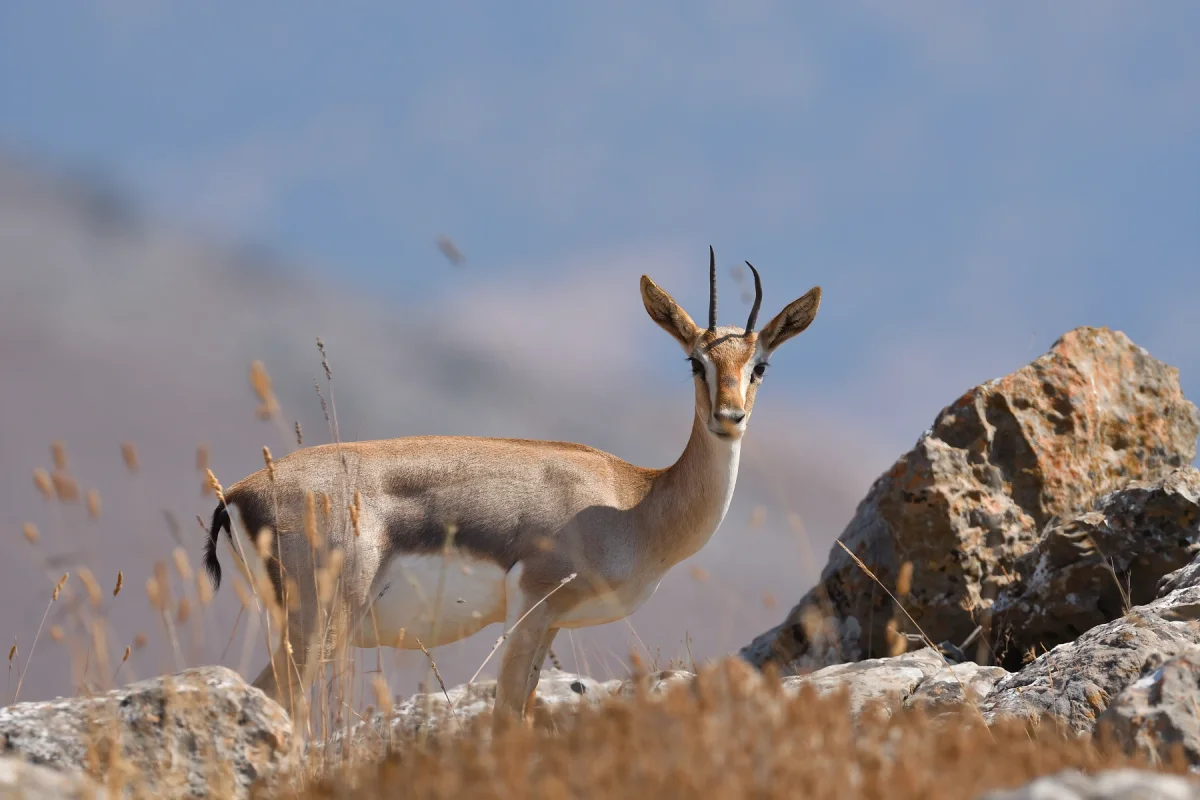
At first glance, the mountain gazelle looks built for speed. Its legs are slender and its body is lean, giving it the kind of lightness that serves it well on uneven, rocky ground. The coat is sandy brown across the back and sides, fading to a pale cream on the belly, with a darker stripe running along each flank where the two tones meet. This coloring blends well with the dry, stony landscapes it calls home. One of the clearest ways to tell the sexes apart is by the horns. Males carry a pair of slender, gently curved horns that can reach around 25 to 30 centimeters in length. Females either lack horns entirely or carry much shorter, straighter ones. Both sexes have large, dark eyes set wide on the head, which give them a wide field of vision.
Behavior
Social life for the mountain gazelle tends to be organized around small, loosely structured groups. Females and their young typically move together, while adult males spend much of the year in separate bachelor groups or alone. During the breeding season, which peaks in autumn and early winter, males become noticeably more active. They patrol and mark out territories using dung piles and secretions from glands near their eyes, and they will challenge and chase away rival males that stray too close. Females give birth to a single fawn after a gestation of around six months, usually in spring. For the first few weeks, the fawn lies hidden in vegetation while its mother grazes nearby and returns regularly to nurse it. This strategy of staying still and out of sight gives the young animal its best chance of avoiding predators.
Conservation
The IUCN lists the mountain gazelle as Endangered, and the pressures behind that status are not hard to identify. Urban growth has eaten into large areas of habitat across the Levant, while roads slice through landscapes that were once continuous, making it difficult for animals to move between populations. Feral dogs pose a serious and direct threat, particularly to fawns and females. Illegal hunting has historically reduced numbers in several parts of the range. Nature reserves in Israel, including Mount Carmel and the Golan Heights, now provide critical refuge for some of the healthiest remaining groups. Conservation work in the region includes population monitoring, fencing in key areas to limit dog attacks, and efforts to connect fragmented patches of habitat. The survival of the species over the long term will depend on how well these measures can be maintained and expanded across the range.
Researched and written by Juan Pablo. Sources: IUCN Red List, scientific literature and regional field guides. Last updated: .
Technical factsheet




Frequently Asked Questions
Why is the mountain gazelle endangered?
The mountain gazelle is classified as Endangered mainly because urban growth and road construction have fragmented its habitat across the Levant, isolating populations from one another. Feral dogs pose a serious direct threat, especially to fawns and females, while illegal hunting has historically reduced numbers in several areas. With an estimated population of only twenty five thousand to thirty five thousand individuals, most surviving groups now depend heavily on nature reserves for protection.
Where do mountain gazelles live?
Mountain gazelles live across a relatively narrow stretch of the Middle East, covering Israel, the Palestinian territories, Jordan, and a small pocket of southern Turkey near the Syrian border. Within this range they favor rocky hillsides, open scrublands, and patches of light woodland, moving easily between valleys and slopes. Israel holds the largest remaining population, much of it concentrated within protected nature reserves.
How can you tell a male mountain gazelle from a female?
Males are the easiest to identify by their horns, a pair of slender, gently curved structures that reach around twenty five to thirty centimeters in length. Females either lack horns entirely or carry much shorter, straighter versions. Both sexes share the same sandy brown coat with a pale belly and a dark stripe along each flank, so the horns remain the clearest way to distinguish between them at a glance.
What does a mountain gazelle eat?
Mountain gazelles feed mainly on grasses, supplementing their diet with herbs, leaves, and low shrubs depending on the season. In wetter months they take advantage of plentiful fresh growth, while in drier periods they rely more on coarser vegetation and may travel farther to find enough food. Like other gazelles, they can extract moisture from the plants they eat, which reduces how often they need to drink from open water sources.
How fast can a mountain gazelle run?
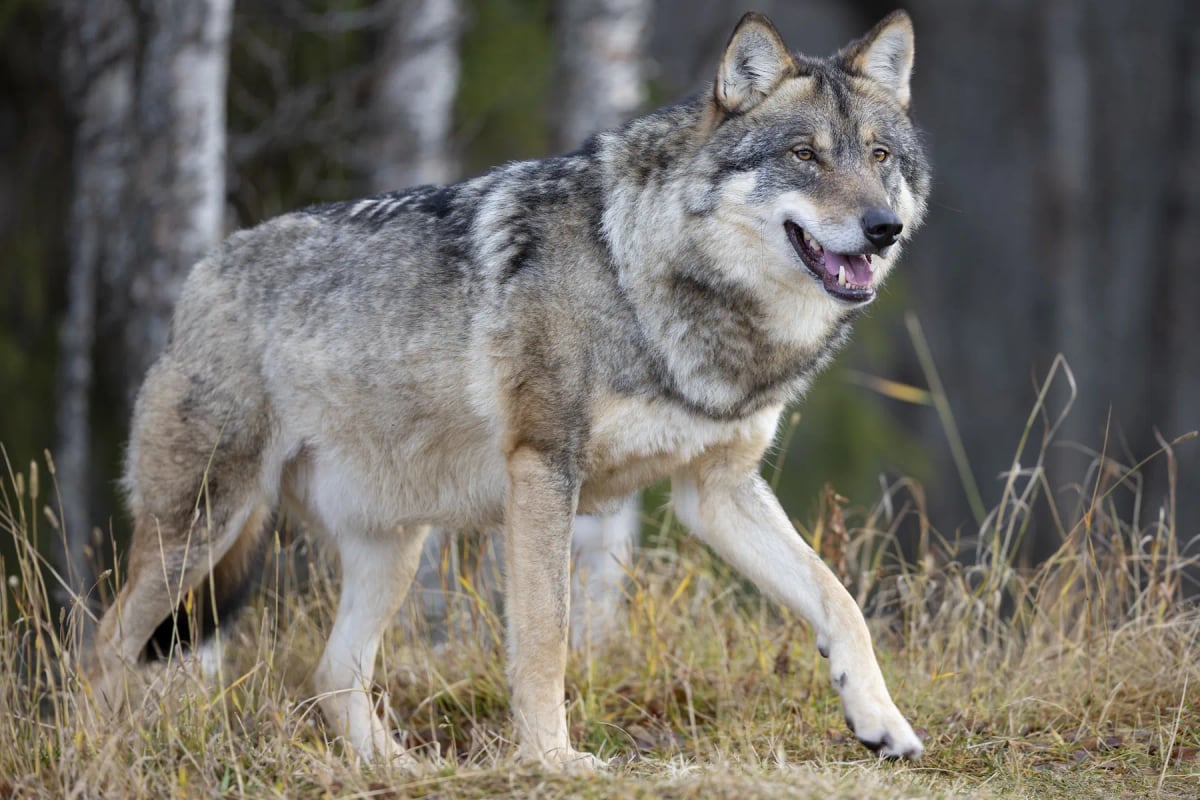
Mountain gazelles are built for speed and agility rather than raw power, with slender legs and a lean body suited to navigating uneven, rocky terrain. They rely on quick bursts of speed combined with sharp, twisting turns to escape predators such as wolves and feral dogs, rather than sustained long distance running. This combination of acceleration and agility is their main defense in open, exposed landscapes.
Do mountain gazelles live in herds?
Mountain gazelles live in small, loosely structured groups rather than large herds. Females and their young typically move together, while adult males spend much of the year alone or in separate bachelor groups. During the breeding season in autumn and early winter, males become territorial, marking and defending preferred areas using dung piles and scent from glands near their eyes.
How long does a mountain gazelle live?
Mountain gazelles typically live between ten and twelve years in the wild, though survival depends heavily on avoiding predators, feral dogs, and vehicle collisions near roads cutting through their habitat. Fawns face the highest risk in their first weeks of life, when they rely on staying hidden in vegetation while their mother grazes nearby. Individuals in well managed nature reserves tend to have better survival odds than those in fragmented, unprotected habitat.