Rufous bellied Thrush
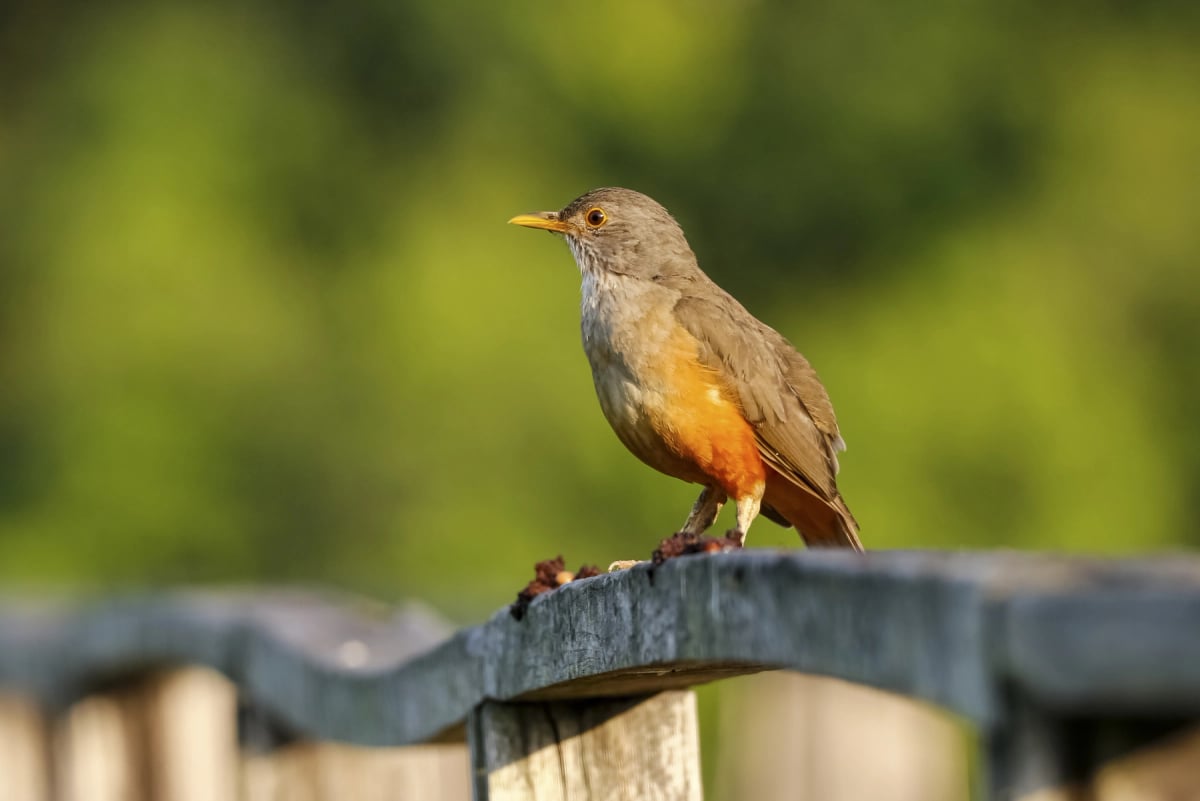
The rufous bellied thrush is a medium-sized songbird native to eastern and central South America, and the national bird of Brazil. Its upperparts are warm brown, its throat is streaked white and black, and its belly glows with a deep rufous orange. Few birds in the region match its voice: a series of rich, fluting phrases delivered with remarkable clarity from treetops, rooftops and garden fences. It thrives in a wide range of settings, from gallery forests and woodland edges to city parks, suburban yards and roadside plantings. On the ground it moves in short hops, pausing to flip leaf litter in search of earthworms and beetles. It also eats a variety of small fruits and berries. Pairs bond during the breeding season and defend territories through song. Its song is so deeply woven into Brazilian daily life that the species carries genuine cultural weight beyond its biology.
Habitat and distribution
Across eastern and central South America, the rufous bellied thrush occupies one of the broadest ranges of any bird in the region. It is resident in Brazil, Argentina, Uruguay, Paraguay, and Bolivia, appearing from humid Atlantic Forest fragments and gallery forests along river corridors all the way to dry woodland edges and cerrado scrub. What makes this species particularly remarkable is its ease with human settlements. City parks, suburban gardens, roadside trees, and school courtyards suit it just as well as any natural forest patch. In urban Brazil especially, it is one of the most commonly encountered birds, equally at home perched on a rooftop antenna as on a forest branch. Seasonal movements occur in the southern parts of its range, where birds may shift to lower elevations or warmer areas during the cooler months.
Song
Few sounds define the Brazilian soundscape as clearly as the song of the rufous bellied thrush. The male sings from exposed perches, including treetops, rooftops, and fence posts, delivering a series of rich, fluting phrases that carry far across open ground. Each phrase is clear and unhurried, with brief pauses between bursts that give the song an almost conversational rhythm. Singing is most intense around dawn and again toward dusk, though birds will vocalize at other hours when conditions are calm. The song serves to attract a mate and to warn rival males away from a defended territory. Individual males develop slight variations in their phrasing, meaning no two birds sound exactly alike. This vocal complexity is part of what has made the species so beloved and so deeply associated with everyday life in Brazil.
Diet
On the ground is where this thrush does much of its foraging. It moves in short, confident hops across leaf litter and bare soil, pausing frequently to tilt its head and listen for movement beneath the surface before plunging its bill down to pull out an earthworm or beetle larva. Invertebrates form an important part of the diet, particularly during the breeding season when protein demands are highest for growing chicks. Fruit rounds out the menu for much of the year. The thrush takes a wide variety of small berries and fleshy fruits from native and introduced plants alike, which makes it an effective seed disperser across disturbed habitats. In gardens and parks it readily visits fruiting ornamental shrubs, a habit that has helped it flourish alongside expanding cities throughout its range.
Behavior
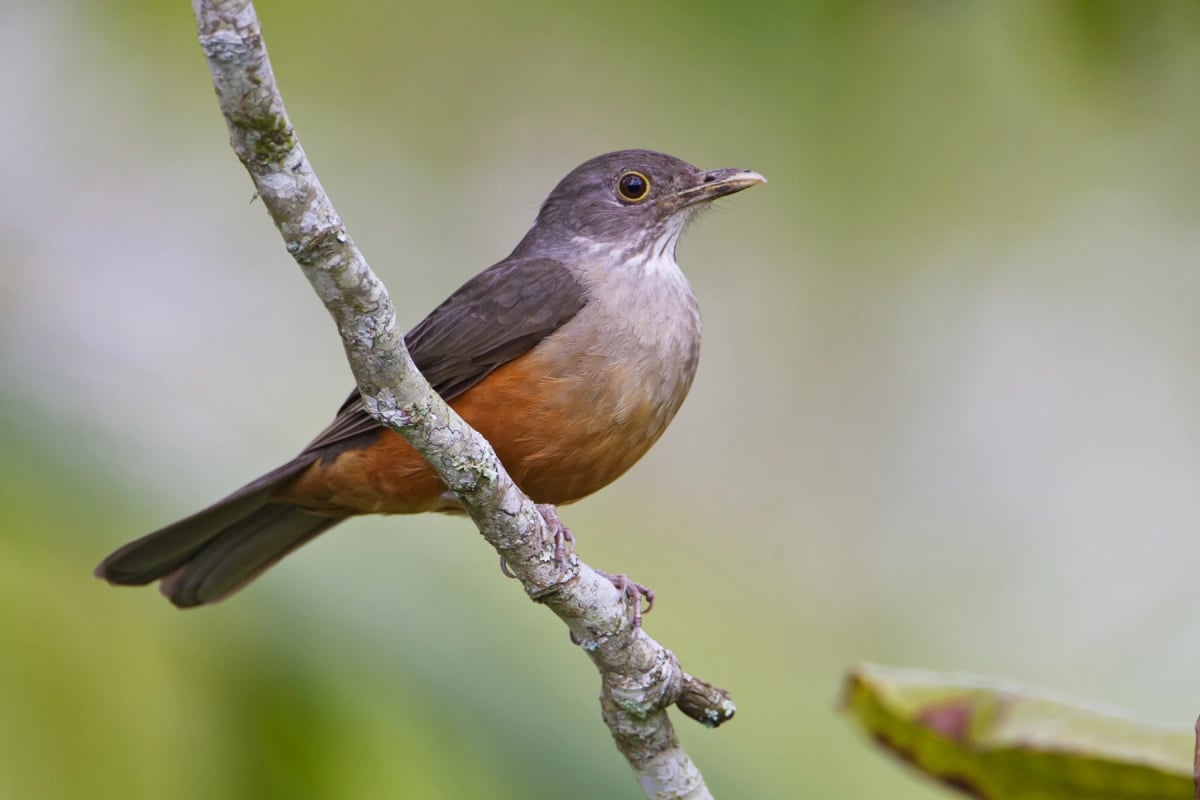
Outside the breeding season, the rufous bellied thrush tends to be a solitary bird. It moves quietly through its home range, foraging on the ground and resting in the cover of dense shrubs or low branches. Come breeding season, males become noticeably more assertive. A resident male will sing persistently from the same favored perches day after day, making clear to any rival that the territory is occupied. Pairs form bonds during this period and cooperate to build a cup nest, typically placed in the fork of a tree or on a sturdy ledge. The female incubates the eggs, and both parents share the task of feeding the nestlings. Despite this territorial side, the species shows a striking comfort with people. Birds often nest on window ledges, garden walls, and even in flower pots on balconies throughout urban Brazil.
Cultural importance
Brazil officially designated the rufous bellied thrush as its national bird in 2002, a choice that resonated widely because the species was already so familiar to ordinary Brazilians. Known locally as the sabiá laranjeira, it had long been celebrated in the country's literature before that formal recognition. The poet Gonçalves Dias immortalized it in his 1843 poem Canção do Exílio, in which the song of the sabiá becomes a symbol of longing for the homeland. That image took root in Brazilian culture and has been revisited by writers, musicians, and artists ever since. The bird also appears in popular music and in regional folklore across different parts of the country. Its presence in backyards and city parks means that for most Brazilians, the sabiá is not a distant symbol but a daily companion whose morning song marks the start of a new day.
Where it is found
The Rufous bellied Thrush can be found in places such as:
Researched and written by Juan Pablo. Sources: IUCN Red List, scientific literature and regional field guides. Last updated: .
Technical factsheet









Frequently Asked Questions
What does the rufous bellied thrush eat?
This thrush eats both invertebrates and fruit. On the ground, it hops through leaf litter hunting earthworms, beetles, and larvae. It also feeds on a wide variety of small berries and fleshy fruits throughout the year. In gardens and parks it regularly visits fruiting shrubs. This mix of animal and plant food makes it an important seed disperser, helping native plants spread across disturbed and urban habitats.
Where does the rufous bellied thrush live?
The rufous bellied thrush is found across eastern and central South America, including Brazil, Argentina, Uruguay, Paraguay, and Bolivia. It adapts to a remarkable range of environments, from Atlantic Forest fragments and gallery forests to dry woodland edges and cerrado scrub. It also thrives in cities, nesting and foraging in parks, gardens, and roadside trees. In some southern areas, birds move to warmer spots during cooler months.
Is the rufous bellied thrush endangered?
No, the rufous bellied thrush is classified as Least Concern on the IUCN Red List. Its population is large and stable, and its ability to thrive in urban and disturbed environments gives it a big advantage over species that depend strictly on intact forest. Habitat loss is a pressure across South America, but this thrush adapts well enough that it remains one of the most common and widespread birds in the region.
Why is the rufous bellied thrush the national bird of Brazil?
Brazil officially named it the national bird in 2002, but the connection runs much deeper than that date. Known as the sabiá laranjeira, it was already famous from Gonçalves Dias's 1843 poem Canção do Exílio, where its song stood for longing and homeland. Most Brazilians grow up hearing it every morning in their own backyards, so the choice felt natural. It represents a living piece of everyday Brazilian culture.
How does the rufous bellied thrush behave during breeding season?
During the breeding season, males become much more active and vocal, singing persistently from the same perches each day to defend their territory. Pairs work together to build a cup shaped nest in a tree fork or on a ledge, and females handle most of the incubation. Both parents feed the chicks. The species is famously comfortable nesting near people, often choosing window ledges, garden walls, or flower pots on balconies.
What does the rufous bellied thrush sound like?
The song is one of the most recognized sounds in Brazil. Males sing from high, open perches in a series of rich, fluting phrases with short pauses in between, giving it an almost conversational feel. The voice is clear and melodic, carrying easily across open ground. Singing peaks at dawn and dusk, though birds vocalize at other times too. Each male develops slight personal variations in phrasing, so no two individuals sound exactly the same.
Does the rufous bellied thrush migrate?
The rufous bellied thrush is mainly a resident bird, meaning it stays in the same general area throughout the year. However, populations in the southern parts of its range, particularly in Argentina and Uruguay, may make short seasonal movements to lower elevations or warmer areas when temperatures drop in winter. These are not long distance migrations like those of many North American birds, but rather local adjustments in response to seasonal conditions.