Topi
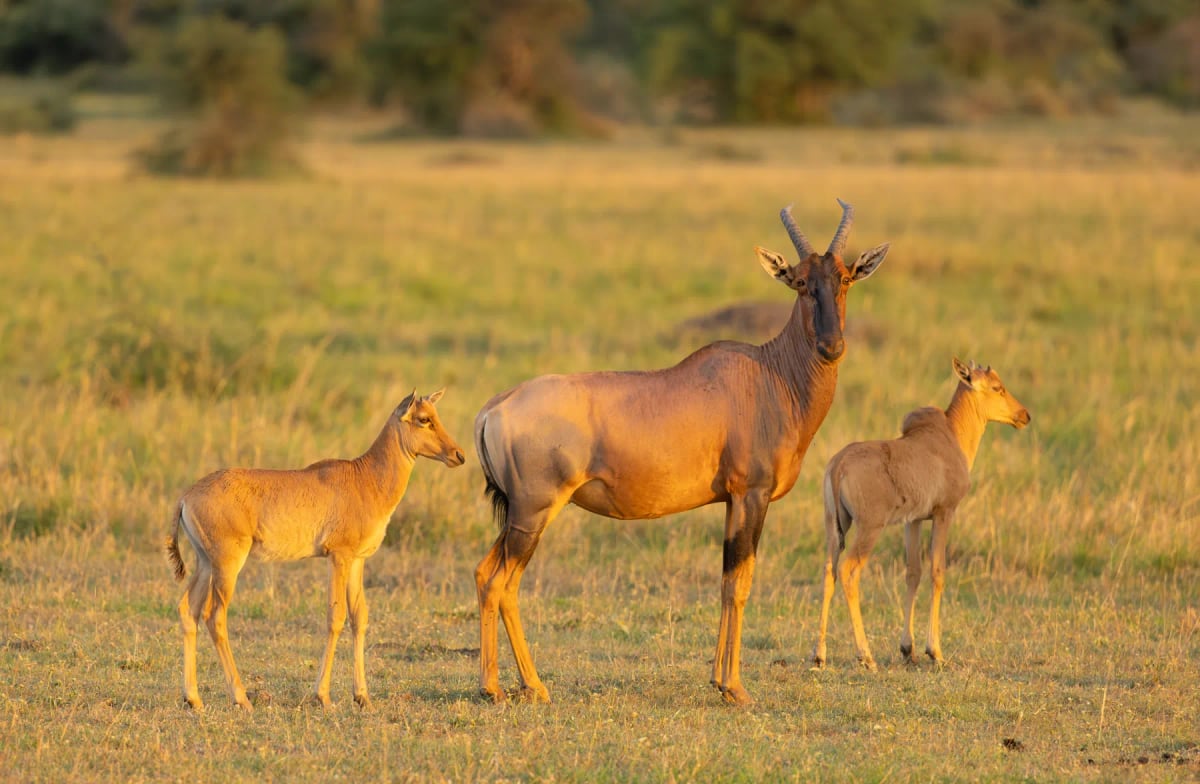
The topi (Damaliscus lunatus) is a large antelope native to the savannas and floodplains of sub-Saharan Africa. Its coat is a rich reddish brown, with distinctive dark patches on the upper legs and face that give it a striking, almost painted look. Both males and females carry curved, ridged horns that sweep back in a lyre shape. Topis are among the fastest antelopes on the continent, capable of reaching speeds close to 70 km/h. They are highly social and typically move in herds, though males claim and defend small territories during the breeding season, often using termite mounds as raised lookout posts. Their diet consists almost entirely of grasses, and they track seasonal rains across East and Central Africa to stay close to the freshest growth. They are most numerous in Kenya's Maasai Mara and Tanzania's Serengeti.
Habitat and distribution
Topis range across a broad sweep of sub-Saharan Africa, from Senegal and Chad in the west to Ethiopia and Kenya in the east, and south into Tanzania, Zambia, and parts of southern Africa. They favour open savannas, floodplains, and grasslands with reliable access to water, where grasses stay green for much of the year. Areas like Kenya's Maasai Mara and Tanzania's Serengeti hold the largest concentrations. Topis are not well suited to dense woodland or very arid terrain, so their distribution closely mirrors the patchwork of seasonal wetlands and short-grass plains that stretch across the continent. Populations have become fragmented in some areas due to the conversion of grassland to farmland, though large protected areas continue to support healthy numbers.
Diet
Grass makes up virtually the entire diet of the topi. Rather than grazing randomly, topis actively seek out the freshest, most nutritious growth, which means they follow seasonal rains with remarkable precision. When dry conditions cause grasses to wither, herds may travel considerable distances to reach areas where recent rainfall has triggered new growth. Topis are selective grazers, preferring shorter, leafier grasses over tall, coarse stems. This preference puts them in direct competition with wildebeest and zebra in some parts of their range, though each species tends to target slightly different grass types. Because they depend so heavily on green vegetation, topis are particularly sensitive to droughts and to any land use changes that reduce the availability of quality grazing.
Behavior
Few antelopes are as socially complex as the topi. Outside the breeding season, individuals gather in herds that can number in the hundreds, providing safety through numbers against lions, cheetahs, and spotted hyenas. When the breeding season arrives, males shift strategy entirely. Each male claims a small patch of ground and defends it vigorously, frequently standing on termite mounds to gain height and a better view over the surrounding grassland. From these raised positions, they watch for rival males and approaching predators alike. Topis communicate through posture and scent as well as sound. Females move freely between male territories and select their own mates. The species is also notably alert, and a single topi that spots danger will adopt a rigid, stiff-legged stance that alerts the rest of the herd immediately.
Appearance
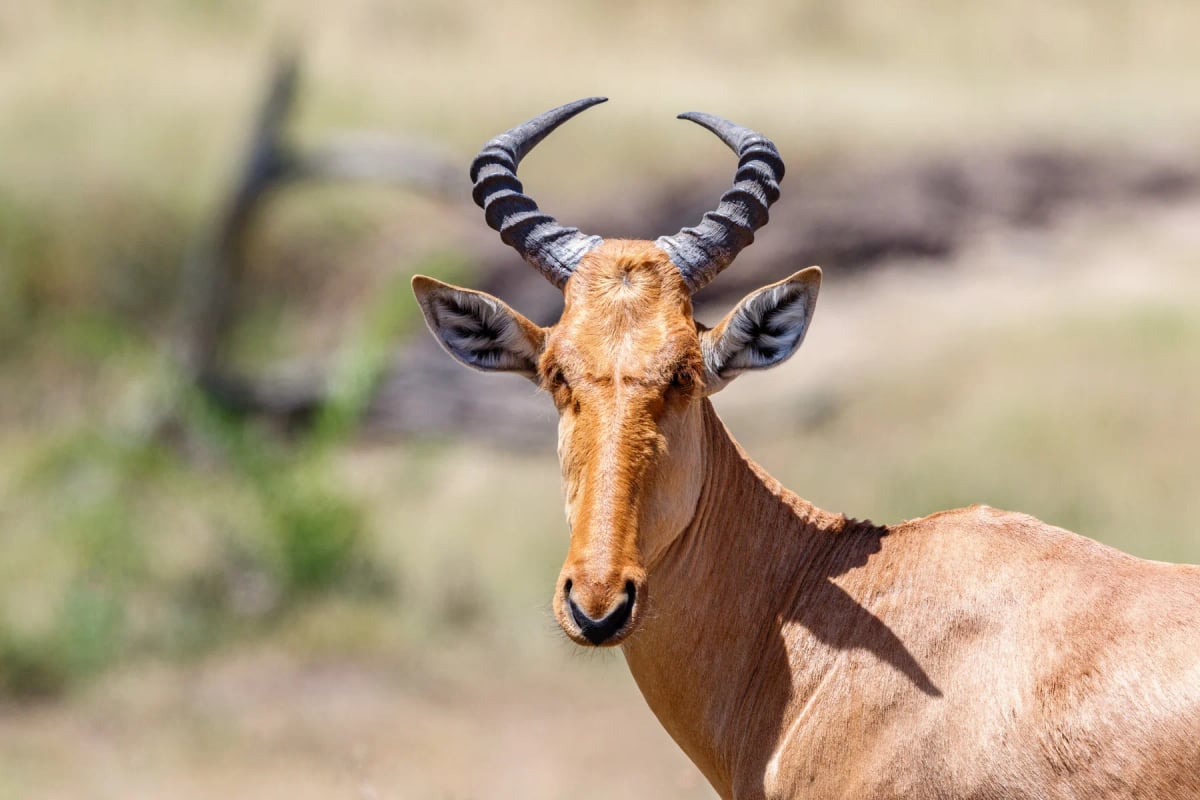
Among Africa's antelopes, the topi stands out for its unusually rich colouring. The body is covered in a coat of deep reddish brown, which contrasts sharply with large, dark patches on the upper legs, shoulders, and face. This pattern gives the animal a look that many observers describe as painted. Both males and females carry horns that curve backwards and then upwards in a lyre shape, with clear ridges running along their length. Adult topis stand around 100 to 130 cm at the shoulder and typically weigh between 75 and 160 kg, with males being noticeably larger. The back slopes slightly downward from the shoulders to the hindquarters, which is a distinctive feature shared with other members of the genus. The legs are long and built for speed.
Conservation
The IUCN currently lists the topi as Least Concern, reflecting the fact that the global population remains relatively large and that the species continues to thrive in several well-protected areas. That said, the overall trend is one of decline. Habitat loss driven by the expansion of agriculture is the biggest pressure the species faces, as grasslands across sub-Saharan Africa are converted to fields and pasture for livestock. Unregulated hunting adds further strain in areas where enforcement is limited. In some parts of its range, such as West Africa, the topi has disappeared almost entirely from places it once occupied. Conservation efforts focus on protecting key ecosystems like the Serengeti and Maasai Mara, maintaining wildlife corridors between habitats, and working with local communities to reduce conflict between topis and farming interests.
Where it is found
The Topi can be found in places such as:
Researched and written by Juan Pablo. Sources: IUCN Red List, scientific literature and regional field guides. Last updated: .
Technical factsheet





Frequently Asked Questions
How fast can a topi run?
Topis are among the fastest antelopes in Africa, capable of reaching speeds close to 70 km/h. That kind of pace is enough to outrun most predators over a short distance. Their long legs and sloping back are built for bursts of speed, which makes them hard to catch once they get going. Lions, cheetahs, and spotted hyenas are their main predators, so speed is one of their best defenses.
Why do topis stand on termite mounds?
During the breeding season, male topis claim small territories and use termite mounds as natural lookout posts. Standing on top of one gives them a clear view over the surrounding grassland, which helps them spot rival males and predators alike. It also makes them more visible to females passing through, which matters a great deal since females choose their own mates and will only linger where they feel safe.
What do topis eat?
Topis feed almost entirely on grass, but they are selective about it. They prefer shorter, leafier grasses over tall, tough stems, actively seeking out areas where recent rain has triggered fresh growth. This means herds sometimes travel long distances to find the most nutritious grazing. Because of this dependence on green vegetation, topis are very sensitive to drought and to any changes in land use that reduce the availability of good grazing.
Where do topis live?
Topis are found across a wide stretch of sub-Saharan Africa, from Chad and Cameroon in the west to Kenya and Ethiopia in the east, and south into Tanzania, Zambia, and parts of southern Africa. They prefer open savannas and floodplains where grasses stay green for much of the year. The largest populations are concentrated in Kenya's Maasai Mara and Tanzania's Serengeti, both of which offer ideal conditions for this species.
Are topis endangered?
The IUCN lists the topi as Least Concern, meaning the species is not currently at risk of extinction as a whole. However, numbers have been falling steadily across much of its range. The biggest threat is the loss of grassland habitat to farming. In parts of West Africa, topis have vanished from areas they once occupied in large numbers. Strong protection in places like the Serengeti and Maasai Mara keeps the overall population stable for now.
How do topis warn each other about danger?
Topis have a very effective warning system. When one individual spots a predator, it freezes in a rigid, stiff-legged stance that the rest of the herd notices immediately. This posture acts as a visual alarm signal, putting every nearby animal on high alert without making a sound. They also communicate through scent and body posture in other social situations. This kind of group vigilance is one of the main advantages of living in large herds.
Do male and female topis look the same?
Males and females share the same rich reddish-brown coat with dark patches on the face and upper legs, and both carry curved, ridged horns that sweep back in a lyre shape. The clearest difference is size. Males are noticeably larger, typically weighing between 100 and 160 kg, while females tend to be lighter. At a glance, the two sexes look very similar, which sets topis apart from many other antelope species where males and females look quite different.