Asiatic Black Bear
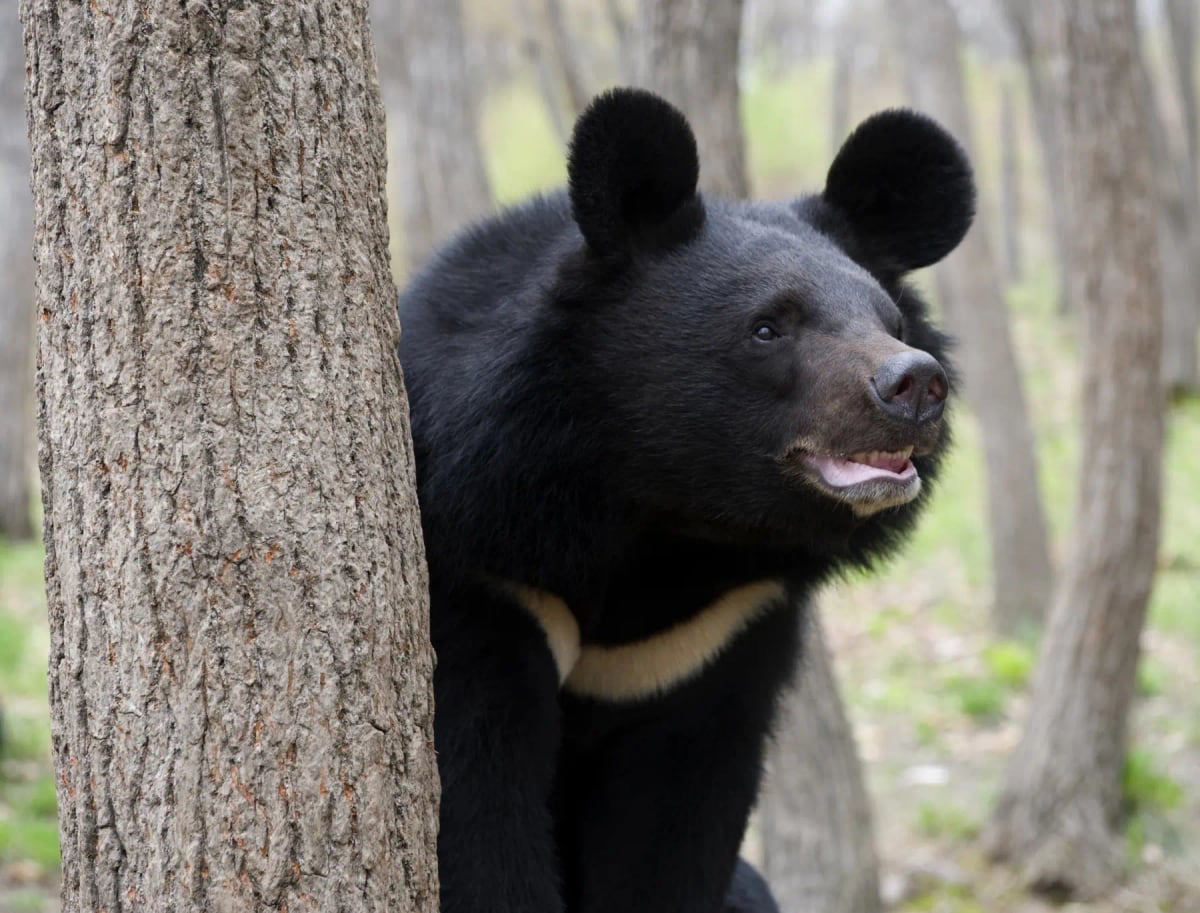
The Asiatic black bear (Ursus thibetanus), also known as the moon bear, is a medium-sized omnivore found across a broad arc of Asia, from Iran and Afghanistan through the Himalayas, Southeast Asia, China, the Russian Far East, and as far as Japan and Taiwan. It is recognizable by its glossy black fur and the distinctive white crescent marking on its chest that gives it its common name. A skilled tree climber, it rests in nests made from bent branches and retreats to the canopy when threatened. It is classified as Vulnerable by the IUCN, under ongoing pressure from deforestation, conflict with farmers, and illegal hunting for body parts used in traditional medicine, particularly bile.
Habitat and distribution
The Asiatic black bear has one of the broadest ranges of any bear species in Asia, extending from the mountains of northeastern Iran and Afghanistan through the Himalayas, the forests of the Indian subcontinent, Southeast Asia, China, and the Russian Far East, reaching Japan and Taiwan at its eastern limit. It favors forested mountain slopes and broadleaf forests at elevations between 1,500 and 3,700 meters, descending to lower altitudes in winter in some parts of its range. Populations across this vast area are increasingly fragmented due to deforestation and human settlement.
Diet
The Asiatic black bear is an opportunistic omnivore whose diet shifts considerably with the seasons. In spring and early summer it feeds mainly on fresh vegetation, insects, and carrion. As summer progresses, it shifts toward fruit, berries, and honey. In autumn, nuts and acorns become the primary food source, and bears consume large quantities to build fat reserves before winter. In some parts of its range it hibernates, while in warmer areas it remains active year round. It occasionally raids crops and beehives, which brings it into conflict with farming communities.
Appearance
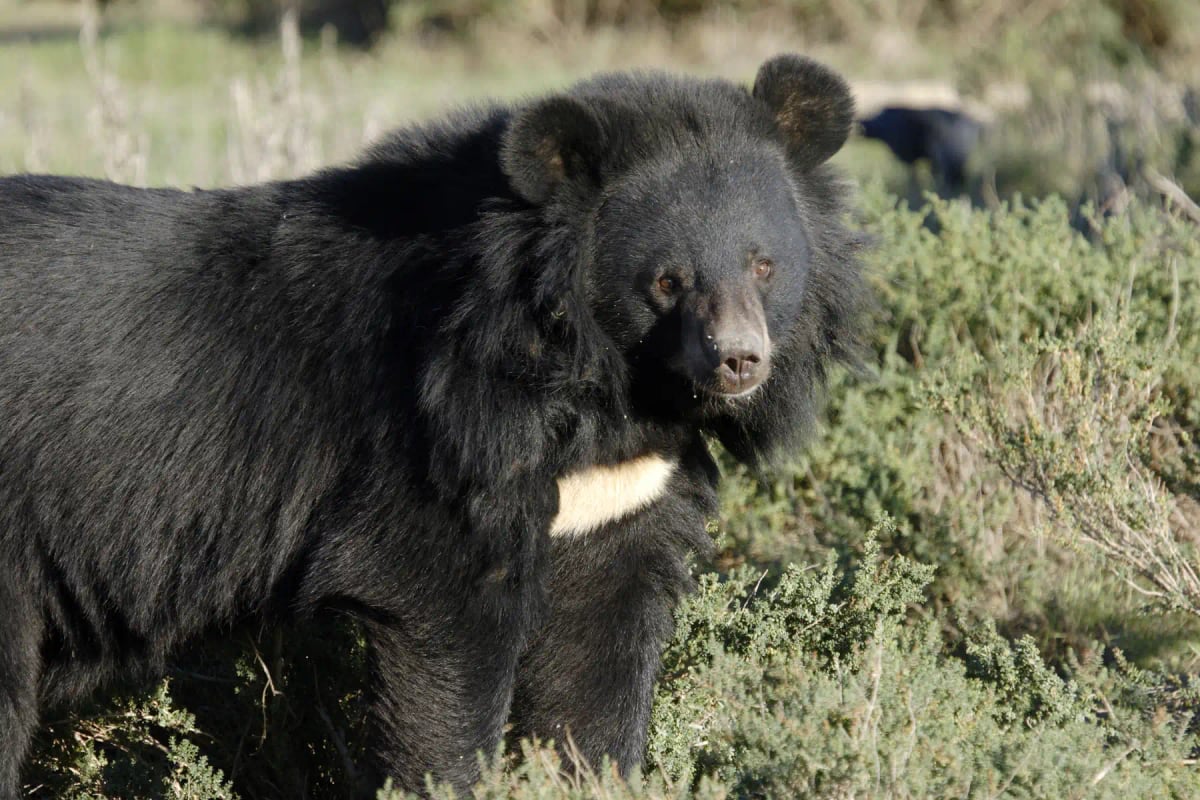
The Asiatic black bear is immediately recognizable by its glossy black coat and the distinctive white or cream crescent marking on its chest, which gives rise to its other common name, the moon bear. It has a robust build, a broad head, large round ears, and strong curved claws suited for climbing trees. Males are considerably larger than females, with some individuals in northern parts of the range exceeding 200 kilograms. Its fur is thicker and longer around the neck and shoulders, forming a noticeable mane that adds to its imposing appearance.
Behavior
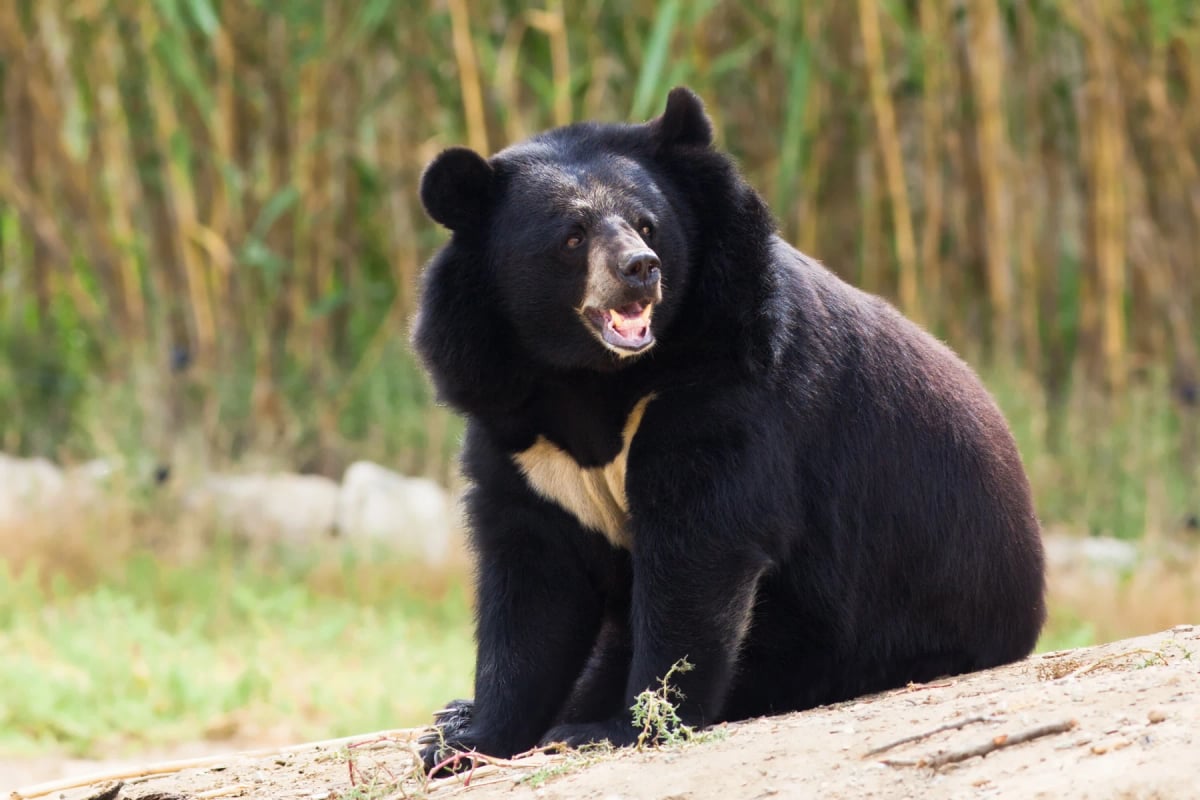
The Asiatic black bear is mainly nocturnal and solitary outside of the breeding season. It is one of the most arboreal of all bear species, spending considerable time in trees searching for food, resting, and avoiding predators. It builds platforms of bent branches high in the canopy where it sleeps and feeds. Although generally avoiding humans, it can be aggressive when surprised, cornered, or when a female is with cubs. In northern parts of its range it enters a period of winter dormancy, retreating to a den in a cave, tree hollow, or dense thicket.
Conservation
The Asiatic black bear is classified as Vulnerable on the IUCN Red List, with populations declining across much of its range. The main threats are deforestation and habitat fragmentation, which reduce food availability and isolate populations. Conflict with farmers over crop damage leads to retaliatory killings. Poaching for body parts used in traditional medicine, particularly bile, remains a significant threat across Asia. Bear bile farming, practiced mainly in China and Vietnam, raises serious animal welfare concerns. Conservation efforts focus on habitat protection, anti-poaching enforcement, and campaigns to reduce demand for bear products.
Where it is found
The Asiatic Black Bear can be found in places such as:
Researched and written by Juan Pablo. Sources: IUCN Red List, scientific literature and regional field guides. Last updated: .
Technical factsheet




Frequently Asked Questions
Why is the Asiatic black bear called the moon bear?
The Asiatic black bear gets its nickname from the white marking on its chest in the shape of a crescent moon. This distinctive patch is one of the most recognizable features of the species and sets it apart from other bears in Asia. Its size and shape vary slightly between individuals, but it is present in virtually all members of the species. The name moon bear is widely used alongside its formal common name across its entire range.
What do Asiatic black bears eat?
Asiatic black bears are omnivores with a diet that changes significantly with the seasons. In spring they eat vegetation, insects, and carrion. During summer they shift to fruit, berries, and honey, and in autumn they focus on nuts and acorns to build fat reserves before winter. They occasionally raid crops and beehives, which brings them into conflict with farmers. Despite being omnivores, plant matter makes up the majority of their diet throughout the year.
Are Asiatic black bears dangerous to humans?
Asiatic black bears are considered one of the more dangerous bear species in terms of human encounters. They can be aggressive when surprised at close range, cornered, or when a female is protecting cubs. Attacks on people have been recorded across their range, particularly in Japan, India, and parts of China, often near forest edges. Most incidents occur when encounters are sudden and the bear feels threatened rather than from predatory intent.
Why is the Asiatic black bear classified as Vulnerable?
The Asiatic black bear is classified as Vulnerable on the IUCN Red List due to ongoing population declines. The main drivers are deforestation and habitat fragmentation, which reduce food availability and isolate populations. Poaching for body parts used in traditional medicine, particularly bile, remains a significant threat. Conflict with farmers over crop damage also leads to retaliatory killings. The combination of habitat loss and direct persecution has caused the species to disappear from parts of its former range.
Where do Asiatic black bears live?
Asiatic black bears range across a wide arc of Asia, from northeastern Iran and Afghanistan through the Himalayas, India, Southeast Asia, China, and the Russian Far East, reaching Japan and Taiwan at the eastern edge of their distribution. They favor forested mountain slopes and broadleaf forests, typically between 1,500 and 3,700 meters in elevation, descending to lower altitudes in winter in some areas. Their range has contracted considerably over the past century due to deforestation and human encroachment.
What is bear bile farming and why is it a concern?
Bear bile farming involves keeping bears, mainly Asiatic black bears, in small cages to extract bile from their gallbladders for use in traditional medicine. The practice is most widespread in China and Vietnam. The conditions cause severe physical and psychological suffering. Animal welfare organizations and some governments have campaigned to end it, and plant-based alternatives exist for all the compounds found in bear bile. It is one of the main reasons the species continues to face pressure across its range.
Do Asiatic black bears hibernate?
Asiatic black bears in northern parts of their range, such as Russia, northern China, and Japan, enter a period of winter dormancy, retreating to dens in caves, tree hollows, or dense vegetation when food becomes scarce. Bears in warmer regions, including Southeast Asia and southern China, may remain active year round if food is available. Pregnant females tend to den regardless of climate, giving birth to cubs during this rest period.