Red Squirrel
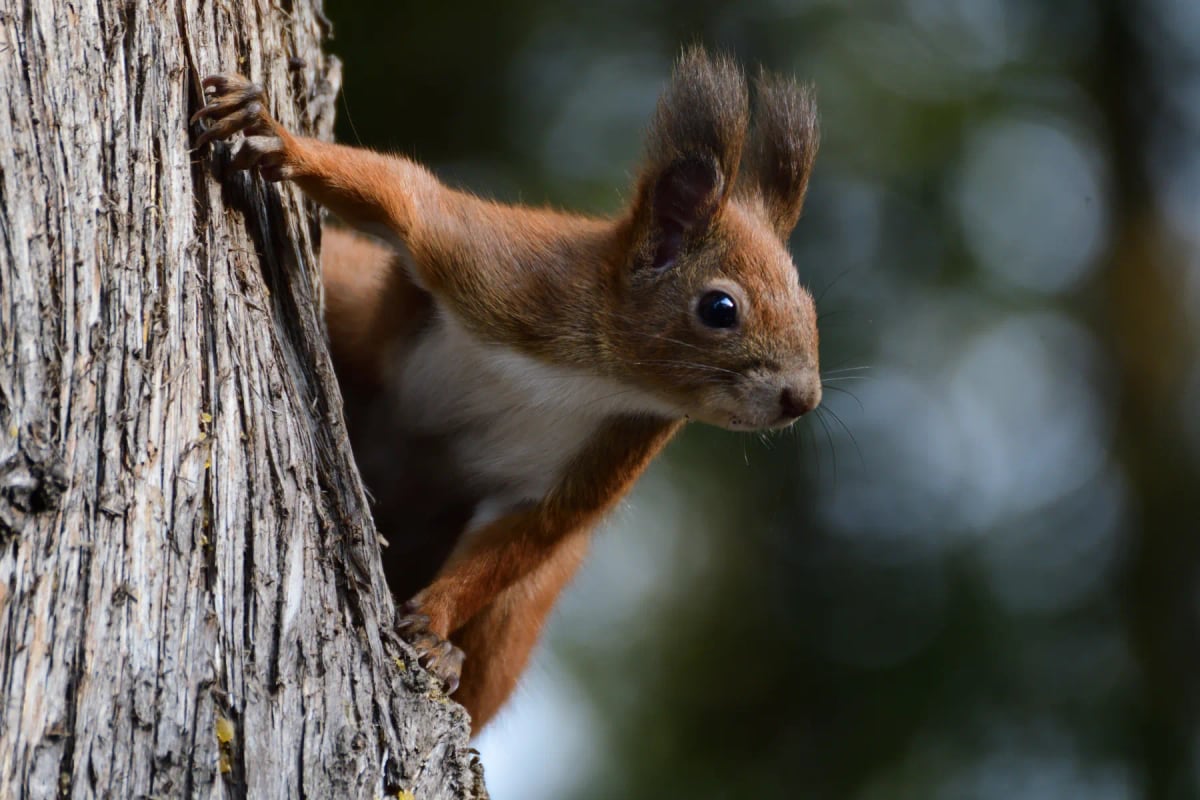
The red squirrel (Sciurus vulgaris) is a small, nimble rodent native to Europe and Asia, instantly recognizable by its warm russet coat, prominent ear tufts and a full, bushy tail that helps it balance in the tree canopy. It feeds mainly on seeds from conifers, nuts, berries and fungi, and its habit of burying surplus food in the ground makes it an accidental planter of trees. Coat color can vary considerably across its range, from bright orange red in western Europe to much darker brown or even near black in some parts of Asia. It does not hibernate, but it does slow down during the coldest weeks and relies heavily on cached food to get through winter. Populations have declined across western Europe due to competition from the introduced grey squirrel, but the species remains widespread and common across northern and eastern Europe and throughout much of Asia.
Habitat and distribution
Across its enormous range, the red squirrel occupies coniferous, broadleaf, and mixed forests from the British Isles and western Europe all the way through Russia to Japan and the Korean Peninsula. It thrives especially in mature pine, spruce, and larch woodlands, where cone crops are reliable and the canopy offers good cover from predators. Densities tend to be highest in undisturbed forests of Scandinavia and Russia. In parts of western Europe, populations have been pushed into fragmented woodland patches by habitat loss and competition from the introduced grey squirrel. Despite these regional pressures, the species as a whole occupies one of the broadest ranges of any tree squirrel in the world, spanning boreal forests, mountain slopes, and temperate woodland belts across two continents.
Diet
Food choices shift with the seasons, but seeds from conifers form the backbone of the red squirrel's diet throughout much of the year. It extracts seeds from pine, spruce, and larch cones with remarkable precision, stripping scales cleanly to reach the kernel inside. Hazelnuts, acorns, beech mast, berries, tree bark, and the fruiting bodies of fungi all supplement its intake depending on what is available. In autumn, red squirrels cache large quantities of food by burying it in shallow scrapes across the forest floor. They relocate many of these stores by memory and smell, but forgotten caches can germinate and grow into new trees, making the squirrel an unintentional contributor to forest renewal. Young shoots and bird eggs are also taken on occasion.
Behavior
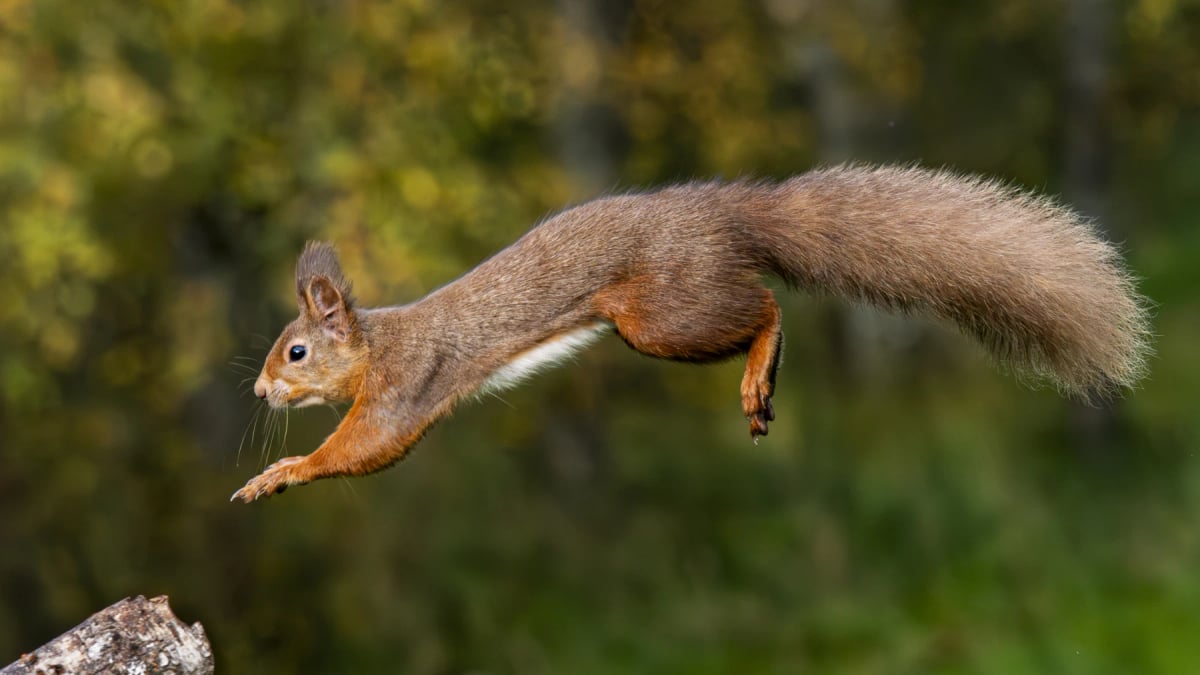
For the most part, red squirrels lead solitary lives, coming together only to mate or when food sources briefly concentrate them in the same area. They are active during daylight hours, with peaks of foraging in the early morning and again before dusk. Each individual constructs one or more dreys, spherical nests built from interwoven twigs and lined with soft moss, grass, and bark strips, typically wedged into a fork high in a tree. These serve as sleeping quarters and, for females, as nurseries for raising young. Red squirrels do not hibernate, but in severe winter cold they may remain in the drey for several days at a time, drawing on cached food reserves. Their agility in the canopy is exceptional, allowing them to leap distances of up to two metres between branches.
Competition with grey squirrel
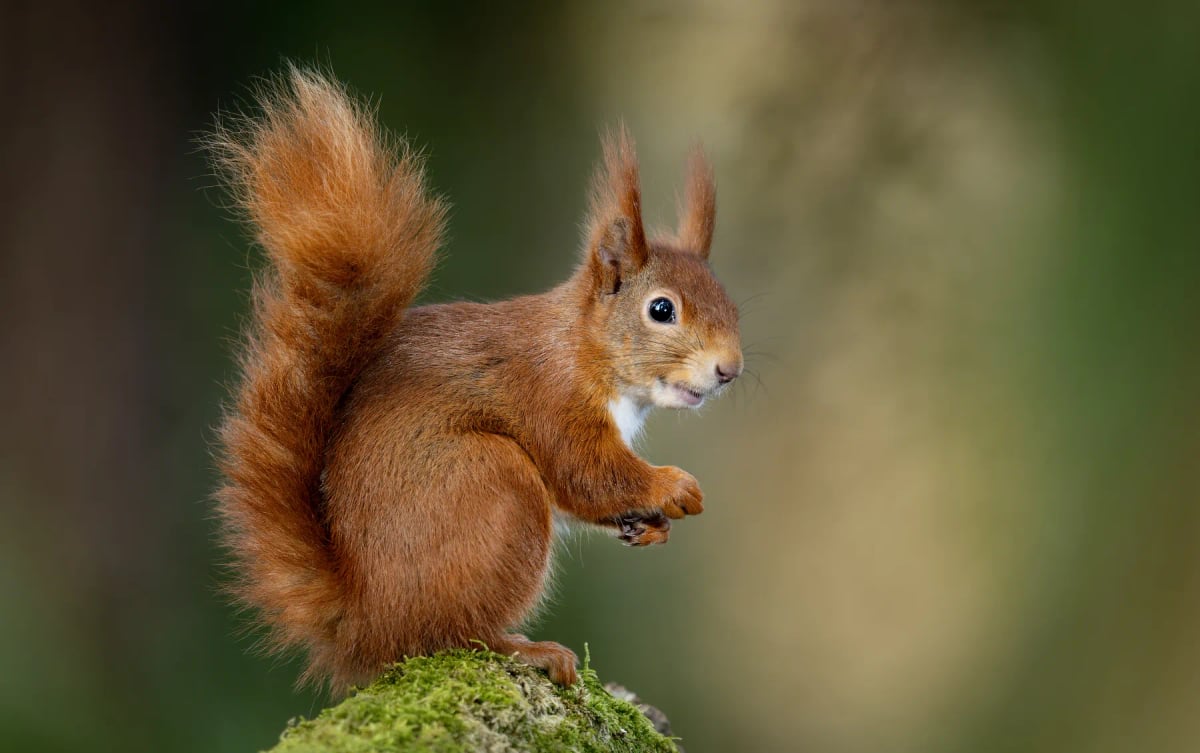
Since the grey squirrel was introduced to Britain from North America in the 1870s, red squirrel populations across England and Wales have collapsed, and the species now survives in those countries only in scattered strongholds. The grey squirrel is larger, more adaptable in broadleaf woodland, and able to digest acorns that the red squirrel cannot process efficiently. It also carries squirrelpox virus, a disease that is lethal to red squirrels but causes no visible illness in grey squirrels themselves. Similar introductions in Italy have produced the same pattern, with grey squirrels spreading steadily across the north of the country. Ireland faces a comparable situation. The result is that a native species with no behavioral or physiological defense against this combination of pressures is steadily losing ground across its western range.
Conservation
Globally, the red squirrel is assessed as Least Concern on the IUCN Red List, reflecting its vast range and large overall population across northern Europe and Asia. At the regional level, however, the picture is more complicated. In the United Kingdom, red squirrels are legally protected under the Wildlife and Countryside Act 1981, and dedicated programs work to manage grey squirrel numbers in buffer zones around key red squirrel habitats. In Italy, an EU funded project has focused on controlling grey squirrel expansion to prevent the loss repeating itself as it did in Britain. Planting of conifer corridors to connect isolated woodland patches is another tool conservationists use. In countries where grey squirrels have not been introduced, such as most of Scandinavia and Russia, the red squirrel remains abundant and faces no immediate threat.
Where it is found
The Red Squirrel can be found in places such as:
Researched and written by Juan Pablo. Sources: IUCN Red List, scientific literature and regional field guides. Last updated: .
Technical factsheet

Frequently Asked Questions
What do red squirrels eat?
Red squirrels rely mainly on seeds from conifer cones, which they strip open with great precision. They also eat hazelnuts, acorns, beech mast, berries, fungi, and occasionally tree bark or bird eggs. In autumn they bury large amounts of food across the forest floor to get through winter. Many of these hidden stores are never recovered, and the seeds end up germinating into new trees.
Where do red squirrels live?
Red squirrels are found across a huge area stretching from western Europe all the way to Japan and the Korean Peninsula. They prefer mature conifer forests with reliable cone crops, but also live in broadleaf and mixed woodlands. The largest, most stable populations are in the forests of Scandinavia and Russia. In western Europe, habitat loss and competition from grey squirrels have pushed them into smaller, fragmented woodland patches.
Do red squirrels hibernate?
No, red squirrels do not hibernate. During the coldest weeks they may stay inside their nest, called a drey, for several days at a time, but they do not enter a true state of hibernation. Instead, they survive winter by relying on food they buried in autumn. On milder days they come out to forage and to dig up their stored supplies of nuts, seeds, and fungi.
Why are red squirrels endangered in the UK?
Red squirrels in the UK have suffered mainly because of the grey squirrel, introduced from North America in the 1870s. Grey squirrels are larger, compete for the same food, and carry squirrelpox virus, which is fatal to red squirrels but harmless to grey ones. This combination has driven red squirrels out of most of England and Wales, leaving them only in a few protected strongholds, mostly in northern England and Scotland.
How do red squirrels build their nests?
Red squirrels build nests called dreys, which are roughly spherical structures made from interwoven twigs and lined inside with soft moss, grass, and strips of bark. They are usually built high up in a tree, wedged securely into a fork between branches. A squirrel may have more than one drey within its territory. Females use them as nurseries when raising their young, as well as for sleeping throughout the year.
Can red squirrel coat color vary?
Yes, quite a lot. Red squirrels in western Europe tend to have the bright orange coat that gives them their name, but further east the fur can shift toward darker brown or even near black. This variation is completely natural and occurs across the species' range from Europe to Asia. The bushy tail and the distinctive ear tufts, which are most prominent in winter, remain recognizable features regardless of coat color.
What is the conservation status of the red squirrel?
Globally, the red squirrel is listed as Least Concern on the IUCN Red List because its overall population across northern Europe and Asia remains large. At a regional level, though, the situation is more serious. In the UK and Italy, where the grey squirrel has been introduced, numbers have fallen sharply. Several conservation programs focus on controlling grey squirrel populations and connecting woodland areas to give red squirrels a better chance of recovery.