Mugger Crocodile
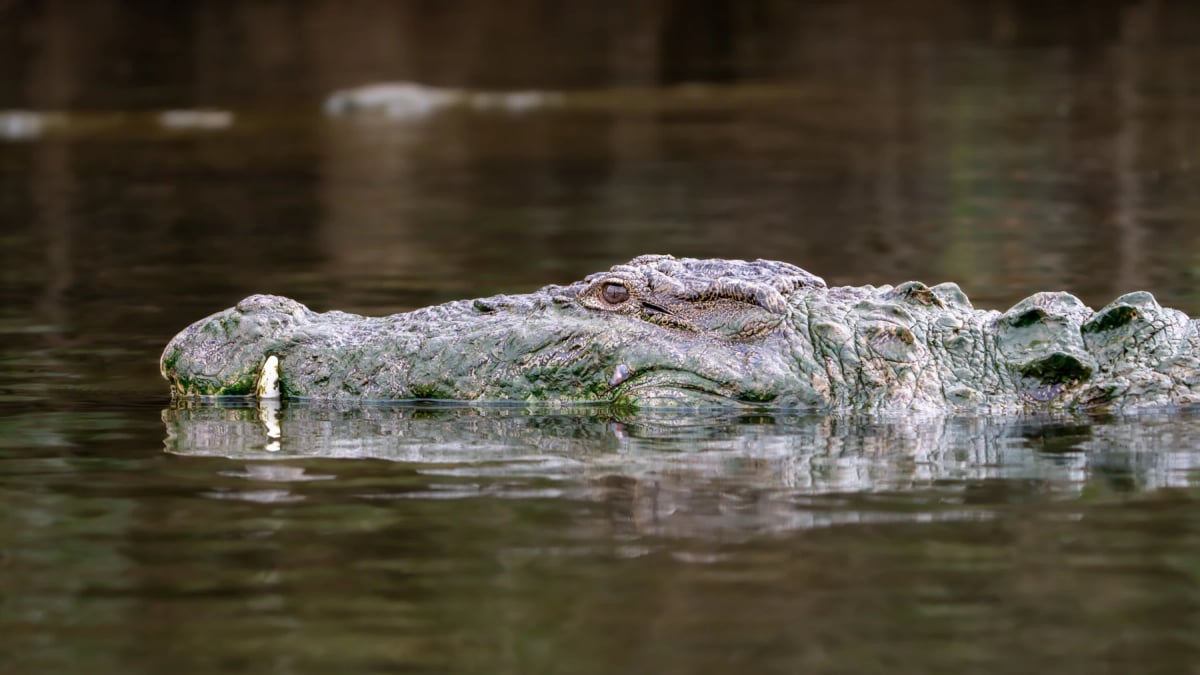
The mugger crocodile, also called the marsh crocodile, is a broad snouted freshwater species found across rivers, lakes, marshes and reservoirs of the Indian subcontinent, with a westernmost population in southeastern Iran. Adult males usually measure 3 to 3.5 meters and a few reach 5 meters; they ambush fish, birds and mammals such as deer, goats or dogs that approach the water's edge. Opportunistic and highly adaptable, it also uses man made ponds, irrigation canals and even rivers inside cities. Populations have grown in some reserves due to protection, but habitat loss, human conflict and entanglement in fishing gear continue to threaten the species. It is currently listed as Vulnerable by the IUCN.
What is a mugger crocodile?
The mugger crocodile, Crocodylus palustris, is a medium to large crocodile of the Indian subcontinent and southeastern Iran, recognizable by its very broad, heavy snout, the widest of any living crocodile. The name mugger comes from magar, the Hindi and Urdu word for crocodile, which goes back to the Sanskrit makara, a mythical water creature. In English it is also called the marsh crocodile and the broad snouted crocodile, and its scientific name palustris means of the marshes. In Iran it is known as the gando, a Balochi word. It is mainly a freshwater animal: unlike the saltwater crocodile, which lives in estuaries and on the coast, the mugger prefers rivers, lakes, marshes and reservoirs, and it is the crocodile that people across India, Sri Lanka, Nepal and Pakistan are most likely to see. It is also one of the most adaptable crocodiles in the world, able to live in irrigation canals, village ponds and even rivers that run through big cities.
Where do mugger crocodiles live?
The mugger crocodile lives in India, Sri Lanka, Nepal, Pakistan and southeastern Iran, its westernmost outpost. India holds most of the world's muggers, spread from Gujarat and Rajasthan to the south of the peninsula; Sri Lanka has one of the largest populations, in the reservoirs and lagoons of the dry zone. It has disappeared from Bhutan and Myanmar, and the IUCN considers it possibly extinct in Bangladesh. It lives in rivers, lakes, marshes, seasonal pools, reservoirs and irrigation canals, preferring still or slow water no deeper than about 5 meters, with sandy or muddy banks for basking and nesting. Good places to see one in the wild are Yala, Wilpattu and Bundala in Sri Lanka, Ranthambore and the Chambal River in India, Chitwan and Bardia in Nepal, the Nara Desert Wildlife Sanctuary in Pakistan and the Vishwamitri River, which runs through the city of Vadodara in Gujarat.
How big do mugger crocodiles get?
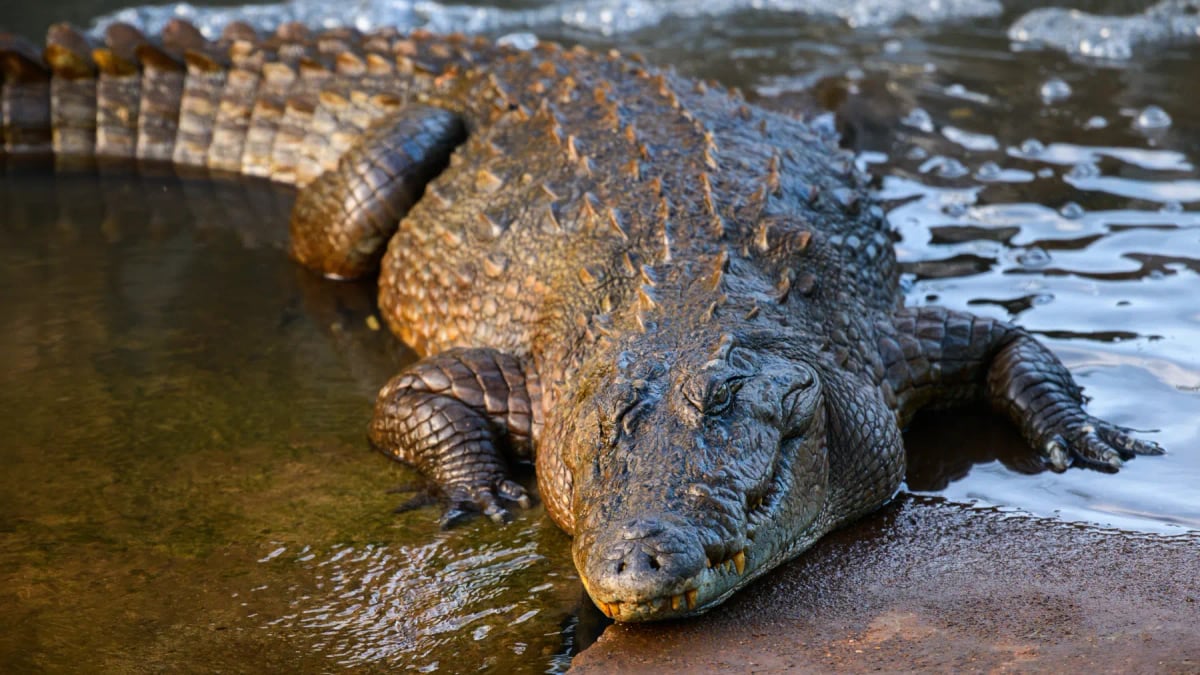
The mugger is a medium to large crocodile. Adult males usually measure 3 to 3.5 meters, and only a few old males reach 4 to 5 meters. Females are smaller, usually 2 to 2.5 meters long. A large male typically weighs 200 to 450 kilograms, and its broad head and heavy body make it look bulkier than other crocodiles of the same length. The largest mugger crocodiles on record measured 5.63 meters, and both were killed in Sri Lanka, which has long been known for big muggers. Today an animal over 4 meters is unusual anywhere in the range. Compared with its neighbors, the mugger is clearly smaller than the saltwater crocodile, whose males pass 6 meters, and about as long as the gharial, though much heavier, since the gharial is slender with a thin snout. Like other crocodiles, muggers keep growing slowly for much of their lives, so the largest animals are usually also the oldest.
What do mugger crocodiles eat?
The mugger crocodile is an opportunistic predator whose diet changes as it grows. Juveniles feed mainly on insects, crabs, frogs and small fish. Adults eat fish, turtles, snakes, waterbirds and mammals that come to the water to drink, including monkeys, chital and sambar deer, wild pigs, goats and occasionally cattle. It also eats carrion, and several muggers may gather where food is concentrated, such as a drying pool full of fish or a large carcass. Like other crocodiles it hunts by ambush, waiting still near the surface or on the bank before lunging, and it can go weeks between large meals. The mugger also shows one of the most surprising behaviors known in reptiles: in India, muggers have been seen lying in shallow water near heron and egret colonies with small sticks balanced on their snouts during the nesting season. Birds looking for nest material come close to collect the sticks, and the crocodile lunges. This study by Vladimir Dinets, published in 2013, was the first report of tool use in a reptile.
Are mugger crocodiles dangerous to humans?
Yes, mugger crocodiles can be dangerous, although they are less deadly than the saltwater and Nile crocodiles. Because they live in the same rivers, lakes, ponds and canals that people use every day, they attack bathers, fishers, people washing clothes or collecting water, and livestock at the water's edge. Most attacks happen in India, especially in Gujarat and Maharashtra, and in Sri Lanka, with fewer in Pakistan, Nepal and Iran, and fewer of them are fatal than attacks by the larger crocodiles. Crocodiles of all species are estimated to attack around a thousand people a year worldwide, most of them in Africa and Asia, so the mugger accounts for only part of that number. Attacks rise in the nesting season, when females guard their nests, and during floods and droughts, when crocodiles move into villages and towns. In crocodile areas the basic rules are to avoid bathing or washing in rivers and ponds, keep children and animals away from the edge and never approach a basking crocodile.
Behavior: walking overland and digging burrows
The mugger is active by day and by night depending on temperature and season, and spends long periods basking on banks and sandbars. It is more tolerant of other muggers than most large crocodiles, and groups of dozens can be seen basking together where water and food are concentrated, especially as pools shrink in the dry season. It is also a strong walker: when its pool dries up, it can travel overland for long distances in search of water, which is how muggers turn up in farm ponds, wells, villages and even city streets. To escape heat and drought, it digs burrows in riverbanks that can be several meters deep, where it stays cool and moist until the rains return. Its tolerance for modified habitats is remarkable: hundreds of muggers live in the Vishwamitri River in the middle of Vadodara, and during the floods of August 2024, 24 crocodiles were rescued from the city's residential areas. Males become territorial in the breeding season and defend stretches of bank with displays, loud bellows and slaps of the head against the water.
Nests and babies
Mugger crocodiles mate in the cool season and nest in the dry season, usually between February and April. Unlike the saltwater crocodile, which builds a mound of plants, the mugger is a hole nester: the female digs a pit about half a meter deep in a sandy bank, often near the place where she nested before, and lays about 25 to 30 eggs. Incubation lasts around 55 to 75 days, so the young hatch just before or at the start of the monsoon, when water levels rise and food is plentiful. The temperature in the nest decides the sex of the hatchlings. The female guards the nest throughout, since monitor lizards, jackals, wild boars and mongooses dig up eggs. When she hears the babies calling from inside the eggs, she opens the nest and may carry the hatchlings to the water in her mouth. Young muggers stay close to their mother and to each other for several weeks or even months, and in captivity males have been seen helping to guard them.
Is the mugger crocodile endangered?
The IUCN lists the mugger crocodile as Vulnerable, mainly because of past declines and the loss of part of its range. The Crocodile Specialist Group estimates the wild population at roughly 5,400 to 7,100 crocodiles, not counting hatchlings, most of them in India and Sri Lanka. Pakistan has an estimated 700 to 1,500 and Iran a few hundred, and the species is gone from Bhutan and Myanmar and possibly from Bangladesh. Skin hunting reduced it sharply in the twentieth century. India's crocodile conservation project, launched in 1975, bred and released muggers into many reserves, and today numbers are stable or growing in several of them. The main threats now are the drainage and pollution of wetlands, sand mining in riverbeds where they nest, drowning in fishing nets, killings after attacks on people or livestock, and, in Iran and Pakistan, droughts that dry up the last pools. The mugger is listed in CITES Appendix I, which bans international commercial trade in the species.
Where it is found
The Mugger Crocodile can be found in places such as:
Researched and written by Juan Pablo. Sources: IUCN Red List, scientific literature and regional field guides. Last updated: .
Technical factsheet




Frequently Asked Questions
Do mugger crocodiles use tools?
Yes, in a way. Researcher Vladimir Dinets saw mugger crocodiles in India lying still in shallow water near bird colonies with small sticks balanced on their snouts. Herons and egrets building nests need sticks, so when one came close to pick them up, the crocodile lunged. The behavior was seen mostly in the nesting season of the birds, which suggests the crocodiles time it. Published in 2013 together with similar observations in American alligators, it was the first report of tool use in any reptile.
How can you tell a mugger from a saltwater crocodile?
The easiest clue is the snout: the mugger's is very broad and short, while the saltwater crocodile's is longer and narrower, with two ridges running from the eyes toward the nose. The mugger also has larger, more prominent scales on the back of the neck and is smaller, rarely passing 4 meters. Habitat helps too: the mugger lives mostly in fresh water, in rivers, lakes and reservoirs, while the saltwater crocodile prefers estuaries, mangroves and coasts. Both live in India and Sri Lanka, and in a few places they can meet.
Can mugger crocodiles live in cities?
Yes. The mugger is one of the few crocodiles that can live alongside big cities. The best known case is the Vishwamitri River in Vadodara, Gujarat, where about 440 crocodiles share the river with a city of more than two million people; during the floods of August 2024, 24 of them were rescued from residential areas. In Karachi, more than a hundred muggers live in the pond of the Manghopir shrine, where pilgrims feed them. They also thrive in village ponds and irrigation canals in Gujarat's Charotar region.
Are mugger crocodiles sacred?
In some places, yes. In Hindu tradition the makara, a water creature often linked to the crocodile, is the mount of the river goddess Ganga and of Varuna, god of the waters. In Pakistan, the muggers of the Manghopir shrine near Karachi are considered blessed, and legend says they were a gift from a Sufi saint. In parts of Gujarat, villagers tolerate muggers in their ponds and some worship them. This respect has helped the species survive near people in places where it might otherwise have been killed.
What animals eat mugger crocodiles?
Adult muggers have few enemies besides people, although tigers have been seen killing them at the lakes of Ranthambore. Eggs and young are another story: monitor lizards, jackals, wild boars, and mongooses dig up nests, and hatchlings are eaten by herons, storks, birds of prey, large fish and even adult muggers. That is why the female guards the nest and stays with her young for weeks after they hatch.
What is the difference between a mugger crocodile and a gharial?
The mugger crocodile has a broad, rounded snout suited to a varied diet that includes fish, birds and mammals, while the gharial has a long, narrow snout adapted almost exclusively for catching fish. Muggers also tolerate a wider range of habitats, including ponds and irrigation canals, whereas gharials depend on deep, fast flowing rivers with sandbanks. In Nepal and India the two species sometimes share the same river systems despite these differences in shape and behavior.
How long do mugger crocodiles live?
Mugger crocodiles are long lived reptiles. In the wild they are thought to live 40 years or more, and they keep growing slowly for much of that time, which is why the biggest males are also the oldest. Exact ages of wild muggers are rarely known, since they are hard to follow for decades. Very few reach old age: most die as eggs or hatchlings, and adults are lost to drowning in fishing nets, the drying of wetlands and conflict with people.