Black backed Jackal
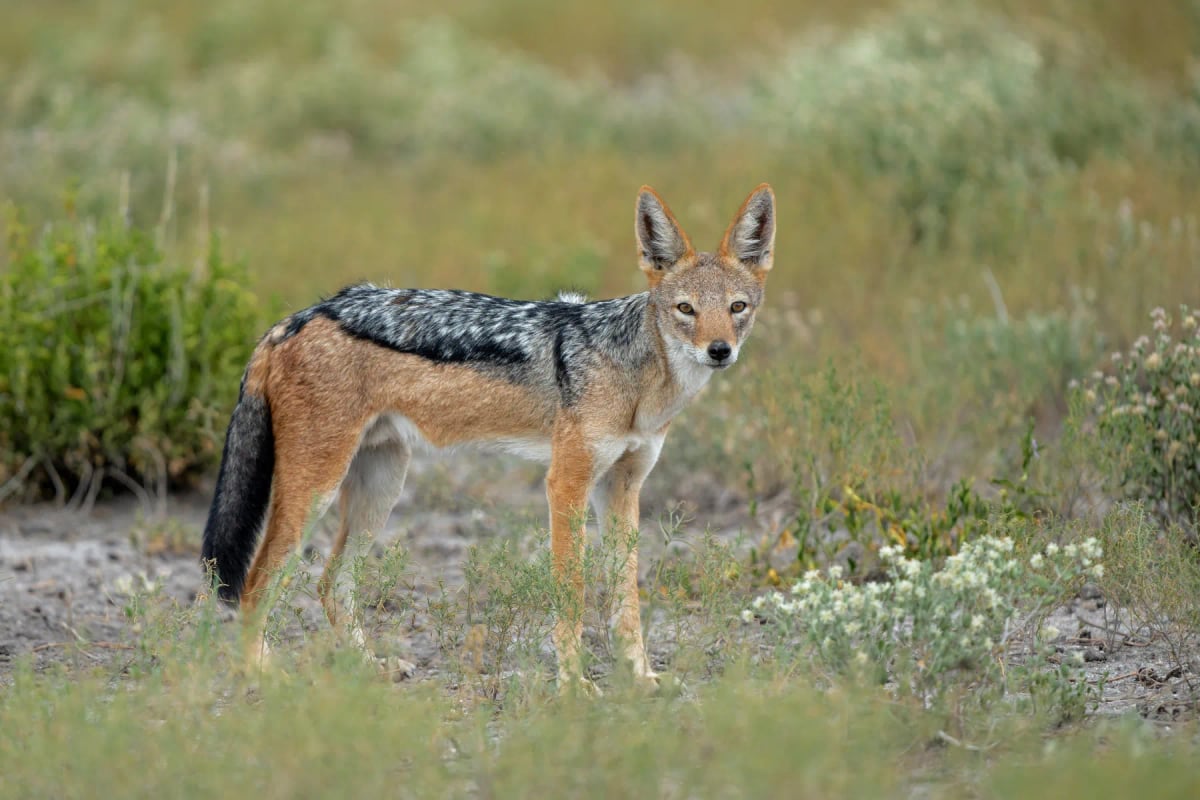
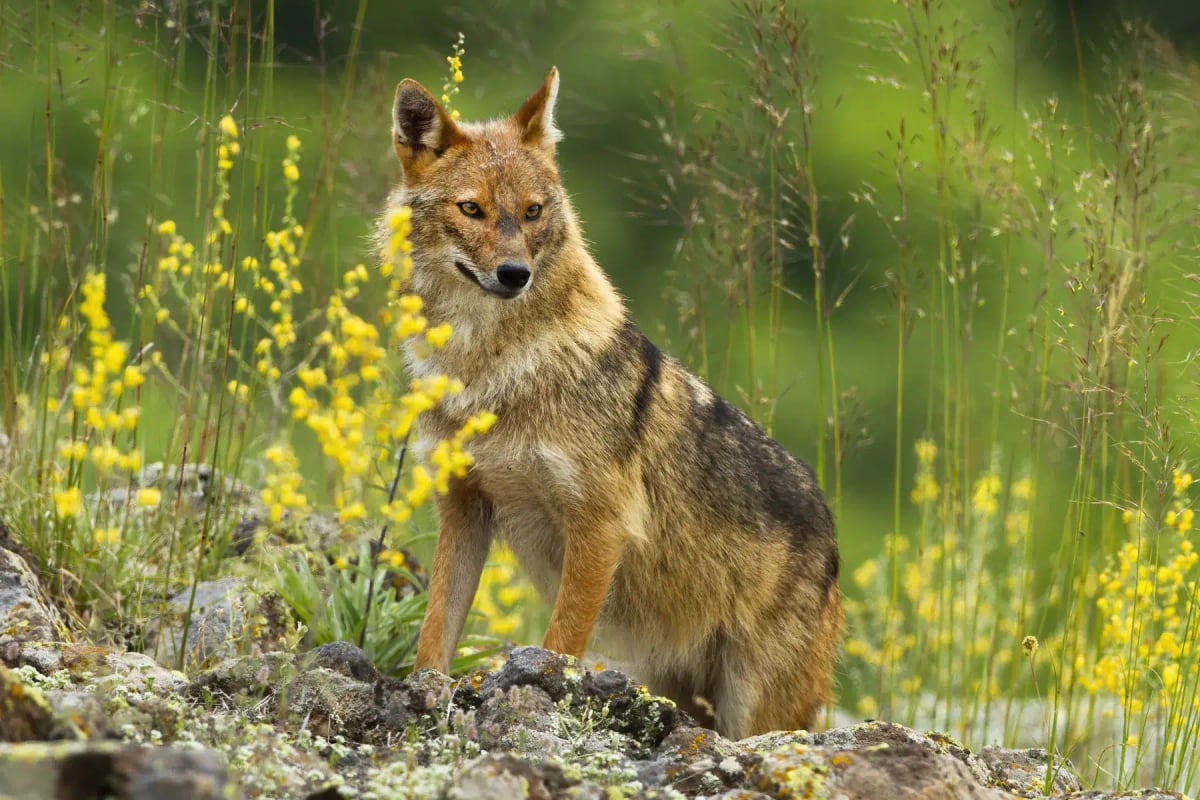
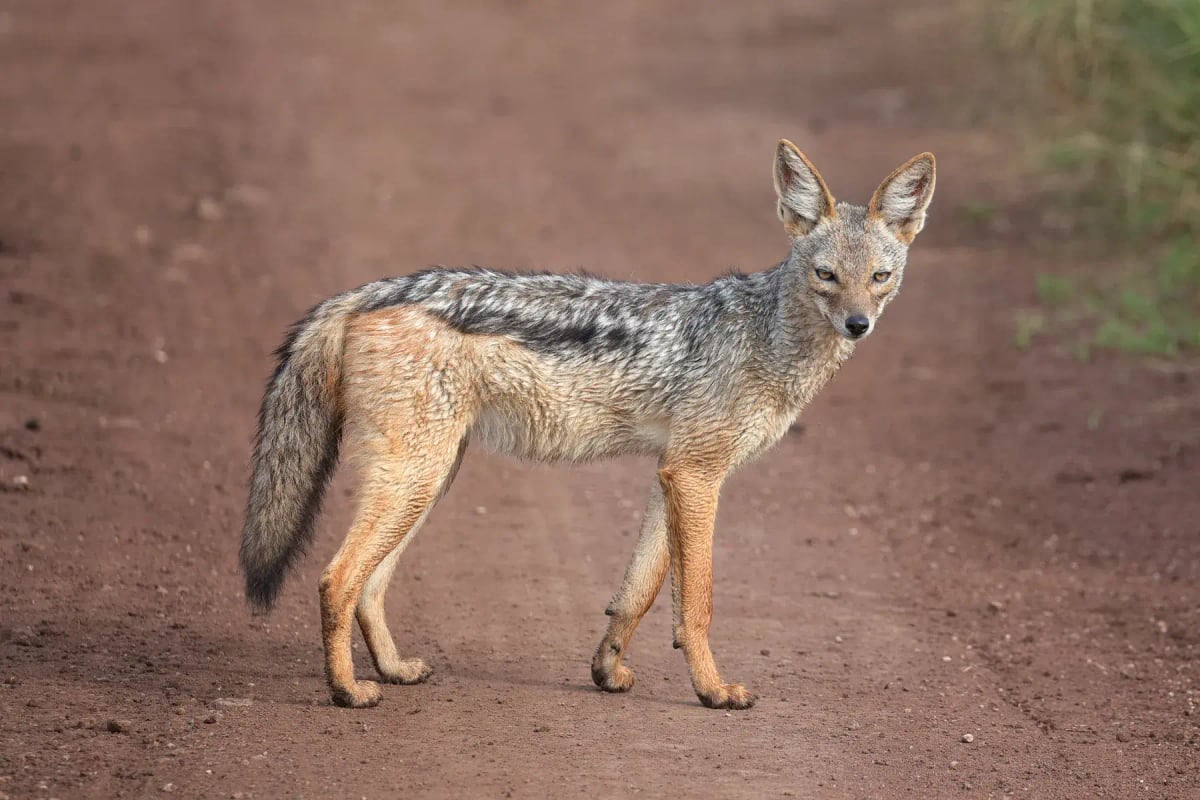
The black backed jackal (Lupulella mesomelas), also called the silver backed jackal, is a slender canid of eastern and southern Africa. Its coat is a warm reddish brown on the sides and legs, with a saddle of black and silver hair that runs from the neck to the base of the tail and gives the species its name. It is one of the oldest living members of the dog family, and fossils show it has lived in Africa for more than two million years. Highly adaptable, it occupies savannas, dry scrublands, coastal deserts and farmland, and it often lives close to people. It eats a wide range of foods, including rodents, birds, reptiles, insects, wild fruits and carrion, and on the Namibian coast it even hunts seal pups. Pairs bond for life and raise their young together, often with help from older offspring. Its wailing call is one of the best known sounds of the African bush at dusk and dawn.
What is a black backed jackal?
The black backed jackal is a small wild member of the dog family that lives in eastern and southern Africa. It is also called the silver backed jackal, because the dark saddle on its back is sprinkled with white and silver hairs that shine in the sun. For a long time it was placed in the genus Canis, with wolves, coyotes and dogs, but in 2017 a review of the family recommended moving it, together with the side striped jackal, to its own genus, Lupulella, since DNA shows the two split from the wolf line very early. Two subspecies are recognized: the Cape jackal of southern Africa and the East African jackal, separated by a gap of about 900 to 1,000 kilometers between central Tanzania and Zimbabwe where the species is absent. When people talk about the African jackal they can mean several animals: besides the black backed and side striped jackals, the jackal of North and East Africa long called the golden jackal was shown in 2015 to be a separate species, now known as the African golden wolf.
Size and appearance
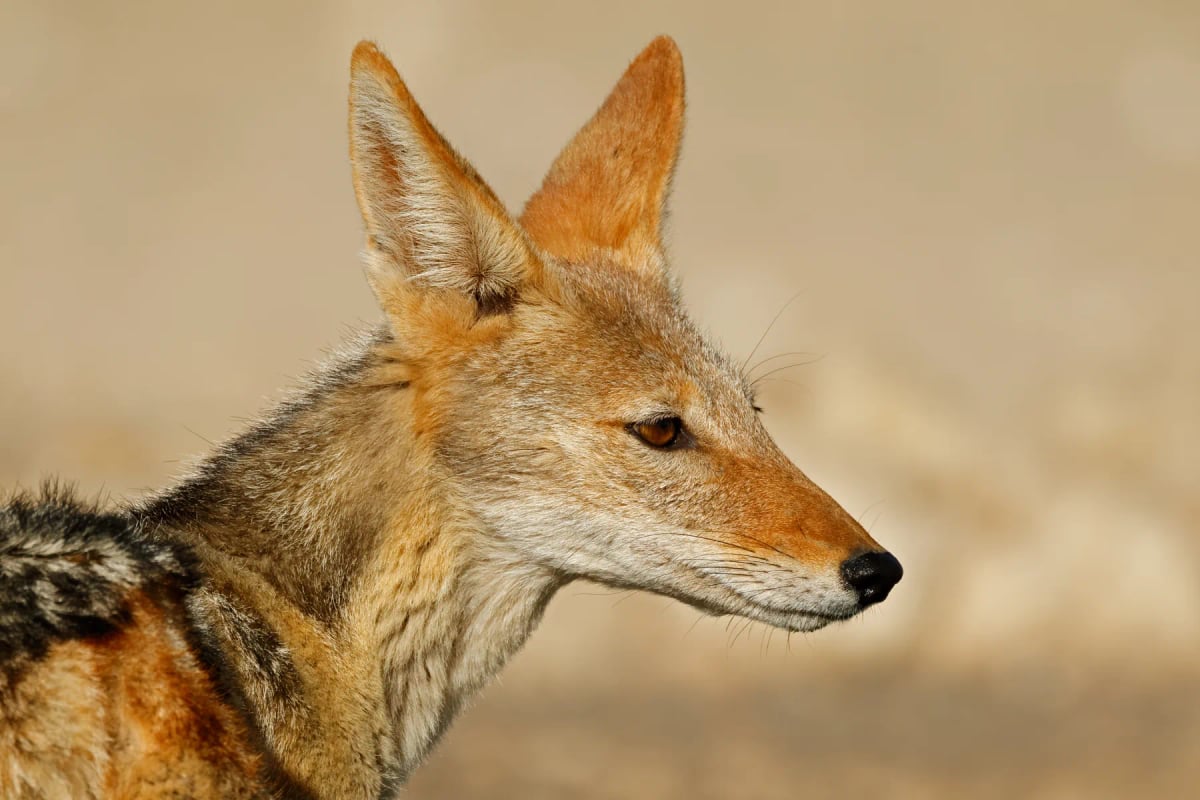
The black backed jackal is about the size of a small, lean dog or a large fox. Adults usually stand 38 to 48 centimeters at the shoulder and weigh between 6 and 13 kilograms, with males slightly larger and heavier than females. Animals from southern Africa tend to be bigger than those of East Africa. The body is slim, with long legs, large pointed ears and a narrow, foxlike muzzle. The sides, legs and head are reddish or ginger brown, the throat and belly are pale, and the black saddle on the back is edged with a thin dark line and sprinkled with silver hairs. The bushy tail is dark and ends in a black tip. The winter coat is thicker and redder in the south. Its long legs let it trot for hours across open country, and it can sprint fast over short distances when chasing prey or escaping danger. Pups are born gray and woolly and start to show the dark saddle at a few weeks old.
Where do black backed jackals live?
The black backed jackal has two separate populations in Africa. The southern population covers South Africa, Lesotho, Eswatini, Namibia, Botswana, Zimbabwe, southern Mozambique and southern Angola. The eastern population lives in the Horn of Africa and East Africa, from Sudan, South Sudan, Eritrea, Djibouti, Ethiopia and Somalia to Uganda, Kenya and northern Tanzania. Between them lies a gap of about 900 to 1,000 kilometers with no black backed jackals at all. Both groups live in similar places: open savannas, dry scrublands, grasslands and coastal regions, and they also appear on farmland and on the edges of towns. The species copes with a wide range of rainfall and altitude, from the coast of the Namib Desert, where jackals live around the seal colonies, to highland plateaus above 2,000 meters. In southern Africa it is often more common on livestock farms than in parks, because farms have fewer lions and hyenas and plenty of food, which is one reason it adapts so well to landscapes changed by people.
What do black backed jackals eat?
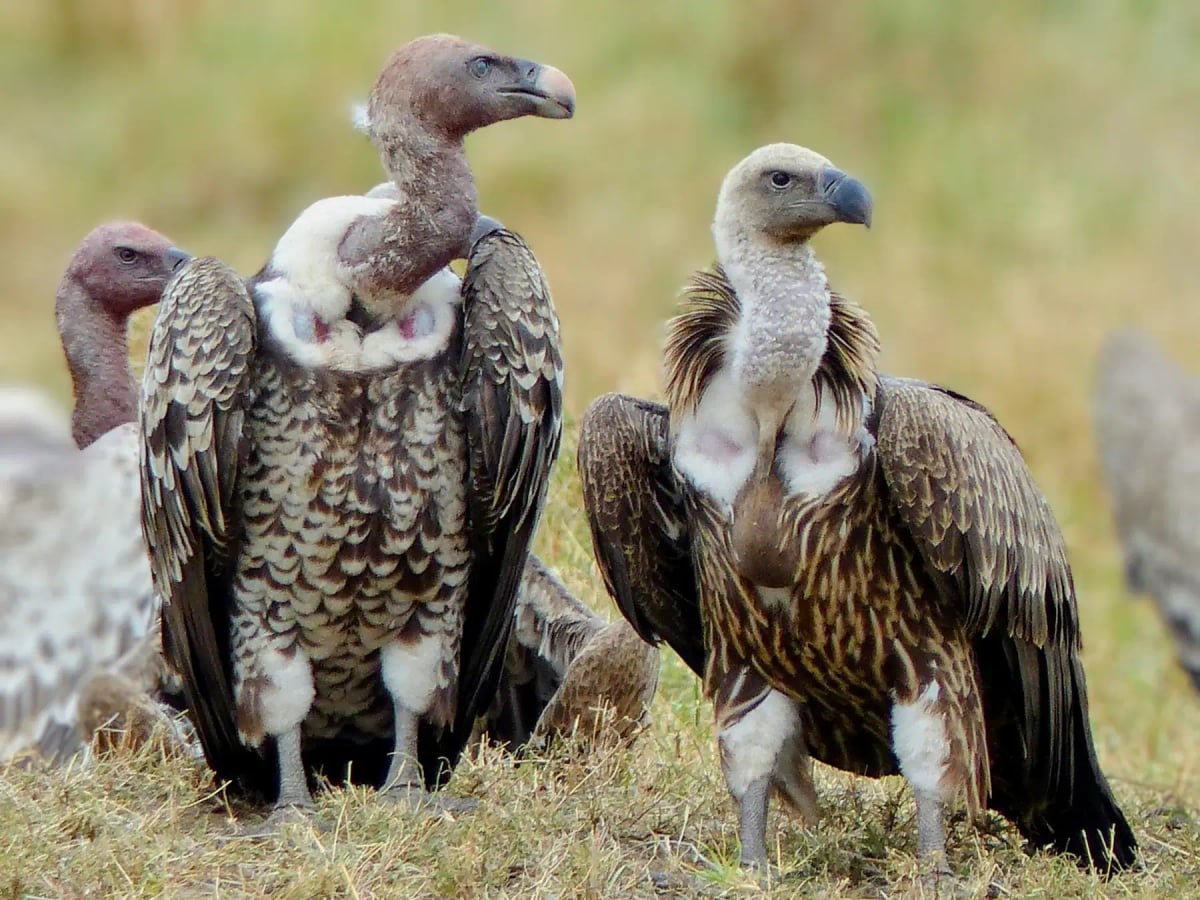
Black backed jackals are true omnivores and eat almost anything they can find. Small mammals such as rats, mice and hares are a big part of the diet, and pairs working together can kill young antelopes such as springbok, impala and duiker lambs. They also take birds and their eggs, lizards, snakes, beetles, termites and grasshoppers, and in some seasons they eat a lot of wild fruit and berries. Carrion is a reliable source of food, and jackals often follow lions, hyenas and vultures to feed on leftovers at a kill, darting in for scraps. On the coast of Namibia, jackals live around the Cape fur seal colonies and feed on seal pups and dead seals: a study at the Van Reenen Bay colony estimated that jackals killed or scavenged around 1,770 pups a year, about a third of all births there. Near farms, they also take lambs and young goats, which brings them into constant conflict with livestock farmers. Like many dogs, jackals bury extra food to eat later.
A survivor's toolkit: senses, diet and resilience
Few African carnivores match the black backed jackal when it comes to adaptability. Its hearing and sense of smell are very sharp, and its large ears let it pinpoint rodents moving under the grass before it pounces on them like a fox. Its teeth handle both meat and plants, which supports a diet that changes with the seasons and with whatever each place offers. It can go a long time without drinking water by getting moisture from its food, a big advantage in the dry places where it often lives. Its lean, long legged build lets it trot steadily across large territories. Pairs hold and defend their home range all year, which keeps other jackals away from their food. It is also quick to learn: jackals that are hunted become wary of traps, poison and people, change their habits and breed more when their numbers drop. These traits make the species one of the most successful carnivores of its size in Africa.
Behavior and social life
Black backed jackals form lifelong monogamous pairs, which is the core of their social life. Both parents share the work of raising pups, and young from the year before often stay with the family to help guard the den and bring food to their younger brothers and sisters. Studies in the Serengeti and southern Africa showed that these helpers raise the number of pups that survive. Litters usually have one to six pups, born after a pregnancy of about 60 days, often in an old aardvark or termite mound burrow. The parents and helpers feed the pups by bringing back food in their stomachs and bringing it up for them. The species is most active at dusk and dawn, though it changes its schedule with local conditions and with how much it is disturbed by people. Communication relies on many sounds: a high wailing howl, often answered by neighbors, which keeps the pair in touch and marks territory, along with yelps, growls and a sharp alarm bark.
Jackals and farmers
In southern Africa, the black backed jackal is one of the most persecuted animals of all. On sheep and goat farms it kills lambs and kids, most of them in their first month of life, and studies by the University of the Free State estimated that predators cost South African small livestock farmers more than 1.3 billion rand a year, with jackals and caracals behind most of the losses. Farmers have fought jackals for well over a century with bounties, poison, traps, hunting dogs and shooting, and some areas built special jackal proof fences. Yet the species is still common, partly because when jackals are killed, the remaining ones breed more and newcomers move into the empty territories. Many researchers now recommend nonlethal tools instead, such as guard dogs, livestock guarding donkeys or alpacas, protective collars and keeping lambs in enclosures at night. Jackals also matter for human health, because they can carry rabies, and in parts of northern South Africa they have been a key wildlife source of outbreaks.
Conservation
The black backed jackal is listed as Least Concern on the IUCN Red List, because it is widespread, common in many areas and able to live alongside people. There is no global population estimate, but it is regularly seen in most parks and reserves within its range, from the Serengeti and the Maasai Mara to Etosha, the Kalahari and Kruger. It has no major threats at the species level, and its adaptability to farmland and other changed landscapes means it often survives where more specialized predators have disappeared. However, it is heavily persecuted in farming areas across southern Africa, where trapping, poisoning and shooting are used on a large scale. Poison put out for jackals also kills many other animals, such as vultures, eagles and bat eared foxes. Diseases such as rabies and distemper can cause local die offs. The species is protected in national parks and game reserves throughout its range, where it plays an important role as a scavenger that cleans up carcasses and as a predator of rodents.