Toucan
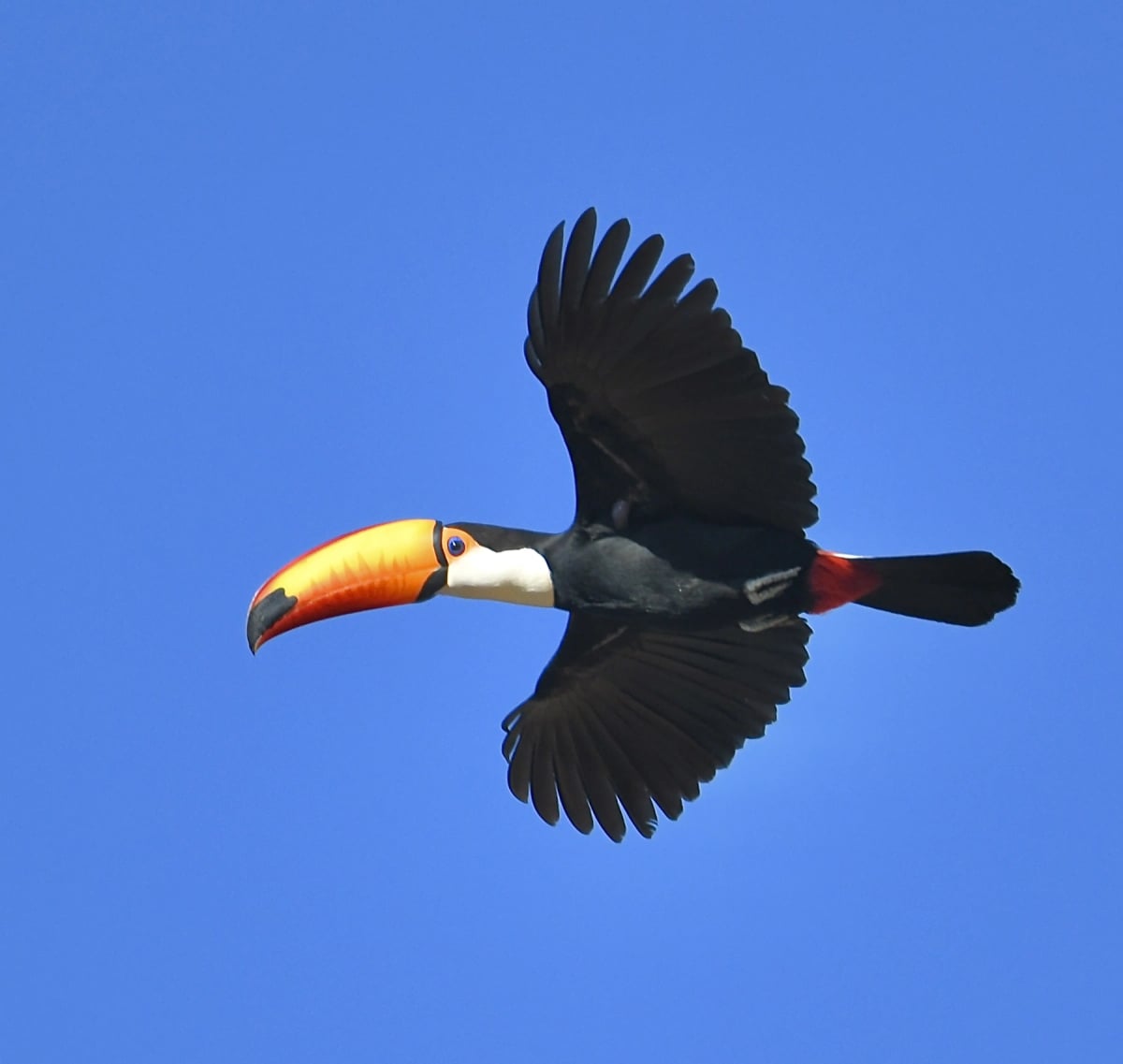
Toucans are among the most recognizable birds in the Americas, best known for their enormous bills that can reach nearly half their total body length. Despite their size, those bills are hollow and surprisingly light, built from a bony network filled with air pockets. The family ranges from southern Mexico to northern Argentina, living mostly in the canopy of tropical and subtropical forests. Fruit makes up the bulk of their diet, though they also take insects, lizards, eggs, and small nestlings when the opportunity arises. By swallowing fruit whole and depositing seeds far from the parent plant, toucans help maintain the diversity of the forests they call home. They nest in tree cavities, often old woodpecker holes, and raise small clutches of two to four eggs. Most species travel and roost in small, noisy groups throughout the year.
Habitat and distribution
Toucans occupy a broad stretch of the Americas, from the forests of southern Mexico all the way down through Central America and into South America as far as northern Argentina. They are most at home in the canopy of tropical and subtropical rainforests, where tall trees provide both food and shelter. Many species also turn up at forest edges, in secondary growth, and even in gardens or plantations where fruiting trees are plentiful. Elevation matters too: while most toucans stick to lowland forests, some species push well into the foothills of the Andes. What all these habitats share is a steady supply of ripe fruit and enough large trees to offer suitable nesting cavities. Toucans are rarely found far from closed or partially closed forest cover.
Diet
Fruit sits at the center of the toucan diet, and these birds consume an impressive range of species across the forest canopy. They use their long bills to reach fruit at the tips of branches that would be difficult for other birds to access, then toss pieces back into their throats by flicking their heads. Beyond fruit, toucans are opportunistic feeders. They raid the nests of other birds for eggs and chicks, snap up insects and spiders, and occasionally catch small lizards or frogs. Protein from these animal sources becomes especially important during the breeding season, when adults need to feed growing chicks. Toucans do not digest seeds, so the seeds pass through them intact and are deposited well away from the parent plant, making these birds effective agents of forest regeneration.
Appearance
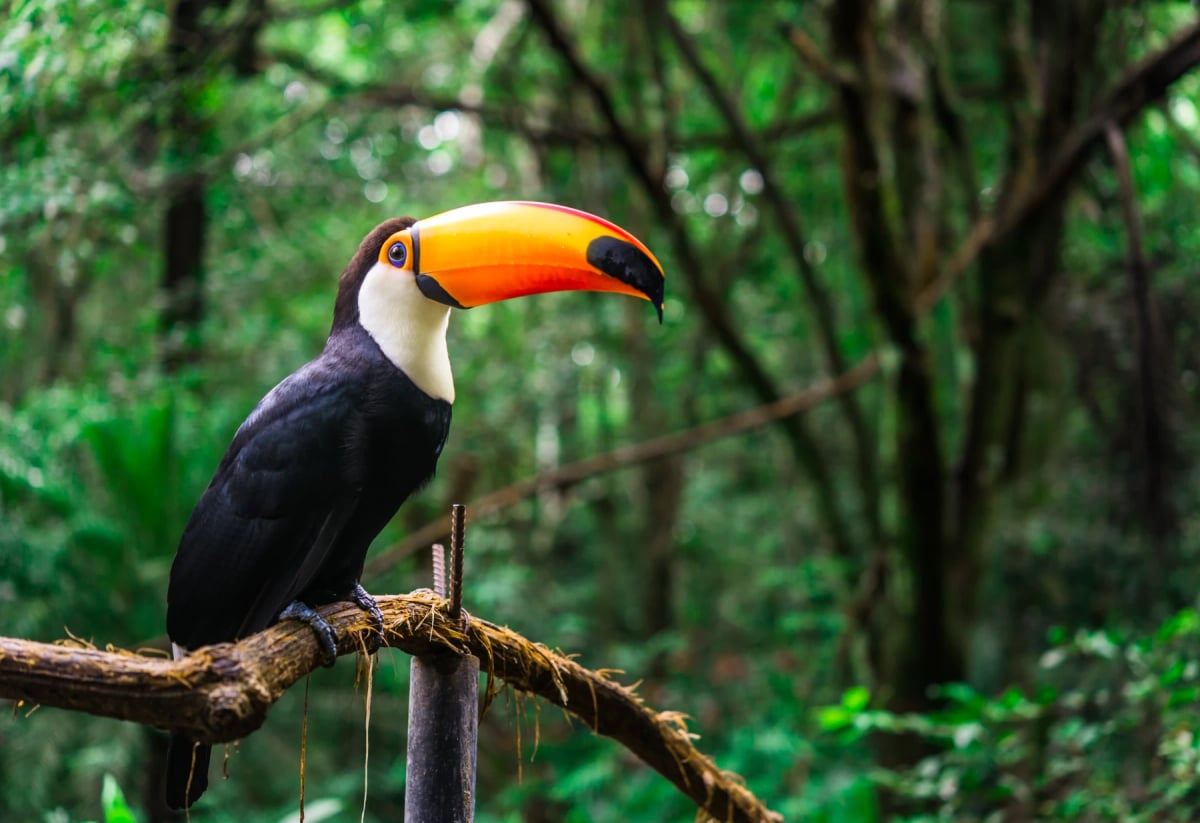
Few birds anywhere in the world are as immediately recognizable as a toucan. The bill is the defining feature: enormously long relative to the body, yet surprisingly light because the interior is made up of a bony lattice filled with air pockets rather than solid bone. Bill colors vary widely by species and can include vivid combinations of orange, red, yellow, green, and black. The plumage of most species in the genus Ramphastos is predominantly black, offset by a bright white, yellow, or red throat patch and a splash of color near the tail. The skin around the eye is often bare and brightly colored as well. Males and females look very similar in most species, making it difficult to tell them apart without behavioral cues or genetic testing.
Behavior
Social life is important to toucans. Outside the breeding season they move through the forest in small flocks, usually of fewer than ten individuals, foraging together and keeping in contact through loud, repetitive calls. Those calls carry well through dense forest and are one of the most distinctive sounds of the Neotropical canopy. When two toucans interact closely, they sometimes fence with their bills in a behavior that appears to strengthen social bonds rather than settle conflicts. Toucans roost together in tree cavities at night, tucking their bills under their wings and folding their tails up over their backs to fit several birds into a tight space. Breeding pairs are territorial around their nest site, defending it actively against rivals and potential predators alike.
Ecological role
Within the forests they inhabit, toucans function as some of the most productive seed dispersers of large fruiting trees. Because they swallow fruits whole and travel considerable distances before excreting the seeds, they move genetic material far beyond the shadow of the parent plant. This is particularly valuable for trees with large seeds that few other animals can transport effectively. Some tree species depend almost entirely on large birds like toucans to spread their seeds across the landscape. Beyond seed dispersal, toucans also shape bird communities by raiding nests and limiting the reproductive success of certain species. Their own nesting cavities, once abandoned, become homes for other cavity users. All of these interactions make toucans a genuinely important thread in the fabric of tropical forest ecosystems.
Where it is found
The Toucan can be found in places such as:
Researched and written by Juan Pablo. Sources: IUCN Red List, scientific literature and regional field guides. Last updated: .
Technical factsheet







Frequently Asked Questions
What do toucans eat?
Fruit makes up most of a toucan's diet. They pluck it from the tips of branches using their long bills and toss it back into their throats. They also eat insects, spiders, small lizards, frogs, and the eggs or chicks of other birds. Animal protein becomes especially important when they are raising young. Because seeds pass through their digestive system intact, toucans also act as important seed dispersers across the forest.
Where do toucans live?
Toucans are found across a wide stretch of the Americas, from southern Mexico through Central America and down into South America as far as northern Argentina. They thrive in tropical and subtropical forests, but also show up at forest edges, in gardens, and on plantations where fruiting trees are available. Most species prefer lowland areas, though some are found in the foothills of the Andes at higher elevations.
Why do toucans have such big bills?
The toucan's bill is one of nature's most fascinating structures. Despite its impressive size, it is very light because the inside is made of a bony lattice filled with air pockets rather than solid bone. It helps toucans reach fruit at the tips of branches, peel and toss food, and regulate body temperature by releasing heat through the bill's surface. It also plays a role in attracting mates and communicating with other toucans.
Are toucans endangered?
As a group, toucans are currently listed as Least Concern by the IUCN, meaning they are not considered at risk of extinction overall. However, some individual species within the family face greater pressure. Habitat loss from deforestation is the biggest threat, as toucans depend on forests with large trees for both food and nesting. The illegal pet trade also affects certain populations, particularly where birds are captured for sale in local markets.
How do toucans nest?
Toucans nest inside tree cavities, most often holes left behind by woodpeckers. They do not excavate their own cavities. A typical clutch contains two to four eggs, and both parents take turns incubating them. The chicks hatch blind and featherless and take several weeks to develop. Because the nest space is tight, adult toucans tuck their bills under their wings and fold their tails up over their backs to fit comfortably inside.
Do toucans make good pets?
Toucans are wild animals with very specific needs that are extremely difficult to meet in a home environment. They require large spaces, a varied diet of fresh fruit, and the social company of other birds. In many countries, keeping a toucan as a pet is illegal without special permits. Capturing wild toucans for the pet trade puts pressure on wild populations and causes significant stress and harm to the birds themselves. They are best appreciated in the wild.
Are toucans noisy birds?
Yes, toucans are famously loud. They produce repetitive, carrying calls that travel long distances through dense forest and are one of the most recognizable sounds of tropical America. These calls help flocks stay in contact while moving through the canopy and may also serve to defend territories during the breeding season. Different species have distinct calls, ranging from deep croaking sounds to high rattling notes, and groups can keep up a lively chorus for extended periods.