Barracuda
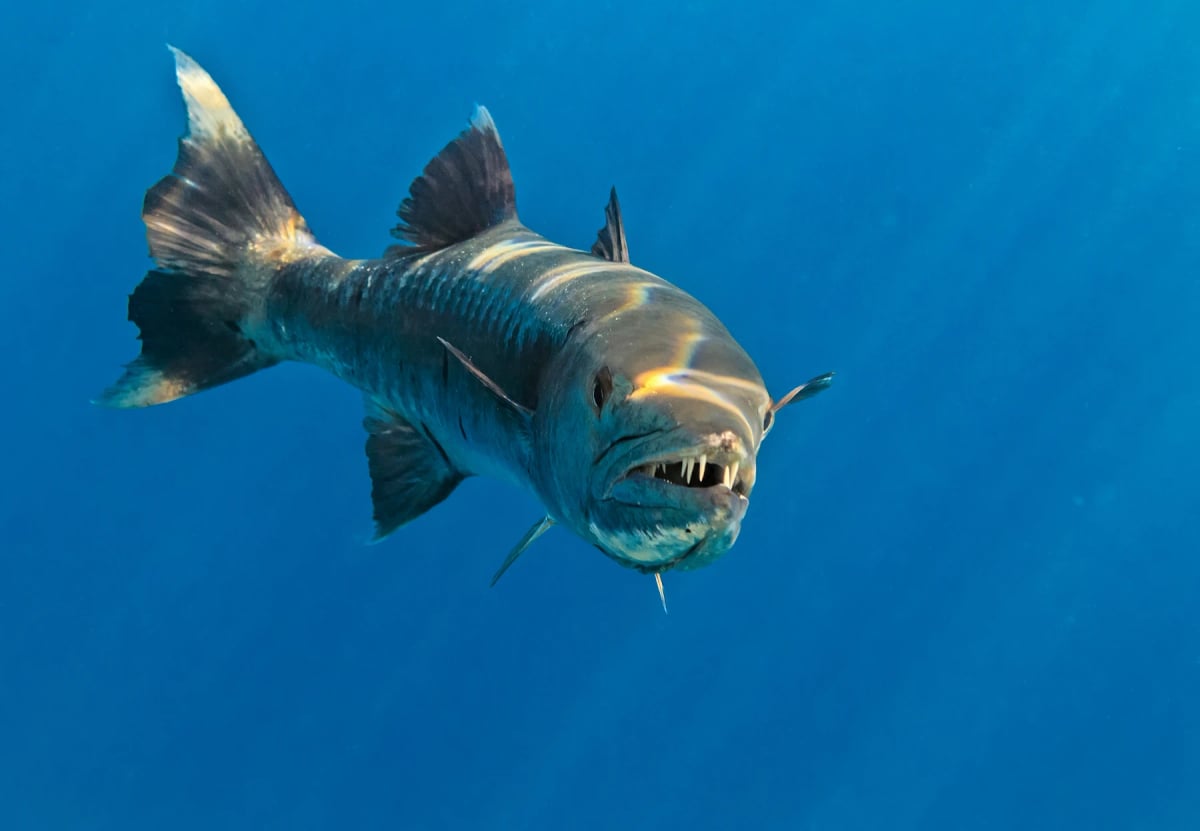
The barracuda (genus Sphyraena) comprises around 26 species of fast, predatory fish found in tropical and subtropical oceans worldwide. The great barracuda is the largest, reaching up to 1.8 meters in length. Recognizable by its elongated body, jutting lower jaw, and teeth like daggers, it is built for explosive bursts of speed to ambush prey. It typically hunts alone, relying on stealth and sudden acceleration rather than pursuit. Barracudas play an important role in reef ecosystems by regulating populations of smaller fish, and despite their fearsome appearance, unprovoked attacks on humans are extremely rare.
Habitat and distribution
Barracudas are found in tropical and subtropical oceans around the world, from the Caribbean and the Atlantic coasts of Africa and Europe to the Indo-Pacific and the Red Sea. They inhabit a wide range of marine environments, including coral reefs, seagrass beds, mangrove edges, open coastal waters, and offshore reef walls. Juveniles tend to remain in sheltered, shallow areas such as estuaries and lagoons, while adults roam reef edges and open water. The great barracuda is one of the most widely distributed species and can be encountered at depths from the surface to around 100 meters.
Diet
Barracudas are specialist predators of fish, using a combination of stealth and explosive speed to ambush prey rather than pursuing it over distance. They feed primarily on smaller reef fish, including sardines, anchovies, groupers, and mullet, targeting the most abundant species in their habitat. Their large, sharp teeth are designed to grip slippery prey and deliver a fast, lethal bite. Barracudas also scavenge injured or dying fish when the opportunity arises. Juveniles feed on shrimp and small fish, gradually shifting to larger prey as they grow. Hunting typically takes place in open water near reef edges.
Behavior
Adult barracudas are typically solitary hunters that patrol reef edges and open water, relying on stillness and sudden acceleration to ambush prey. Juveniles and younger fish often form schools of hundreds for protection. Barracudas are known for their curiosity and may approach divers and snorkelers closely, hovering and observing without aggression. Attacks on humans are very rare and almost always occur in murky water conditions, where the fish may mistake a shiny object such as jewelry or a watch for a prey fish. In clear water, encounters are generally uneventful and the fish will move away calmly.
Speed
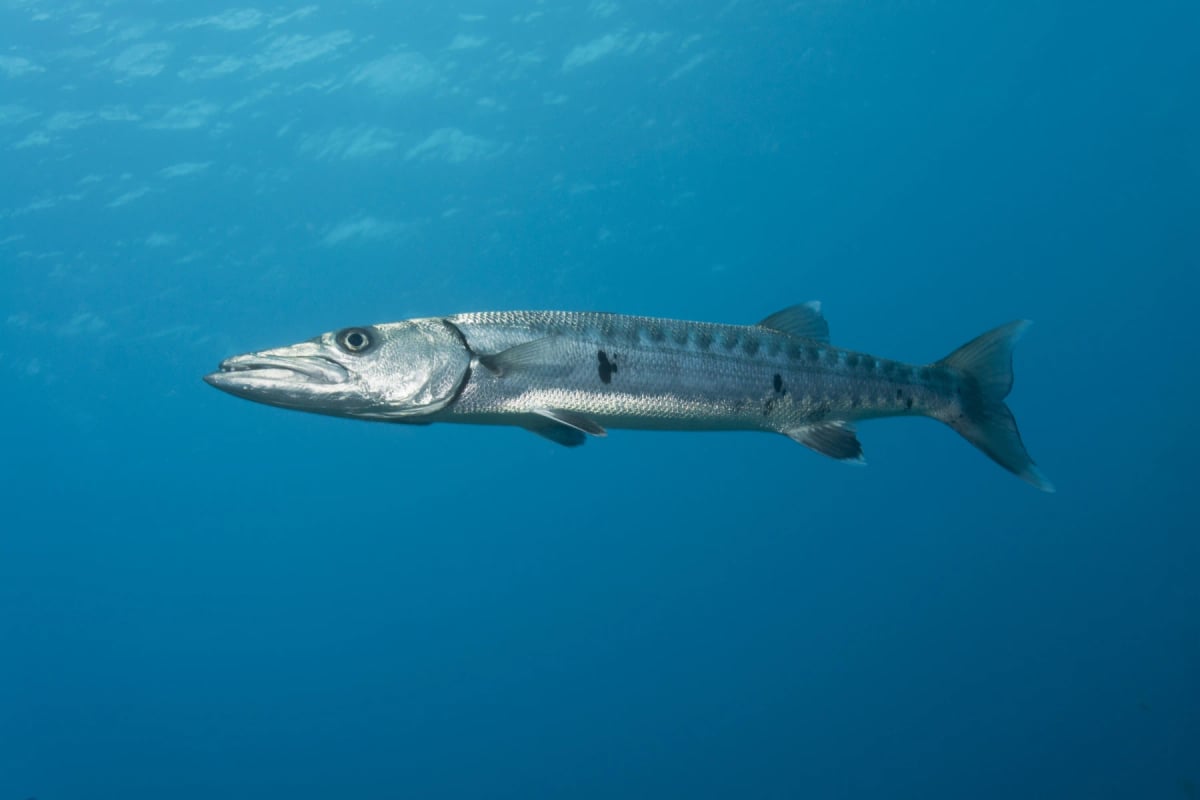
The barracuda is one of the fastest fish in the ocean over short distances, capable of bursting to speeds of around 40 to 55 kilometers per hour. This acceleration is made possible by a powerful body and a large tail fin that generates rapid propulsion. Barracudas do not typically pursue prey over long distances; instead they rely on a single explosive burst to close the gap from ambush. This strategy makes them extremely effective hunters even against agile reef fish. Their speed is also used defensively to escape larger predators such as sharks, tuna, and dolphins that share their range.
Conservation
Most barracuda species are classified as Least Concern by the IUCN, with populations that remain generally stable across their global range. However, some species face pressure from commercial and recreational fishing, as barracudas are targeted by anglers for sport and consumed as food in many coastal communities. In certain regions, eating large barracuda carries a risk of ciguatera poisoning, a form of seafood toxicity caused by toxins that accumulate through the food chain from reef algae. Habitat degradation, particularly the decline of coral reefs, also reduces the hunting grounds and prey availability that barracudas depend on.
Where it is found
The Barracuda can be found in places such as:
Researched and written by Juan Pablo. Sources: IUCN Red List, scientific literature and regional field guides. Last updated: .
Technical factsheet









Frequently Asked Questions
Are barracudas dangerous to humans?
Barracudas are rarely dangerous to humans. Unprovoked attacks are extremely uncommon and almost always occur in murky water, where the fish may mistake a shiny object such as jewelry, a watch, or a metallic lure for a prey fish. In clear water, barracudas typically approach divers out of curiosity and then move away calmly. They are powerful fish with sharp teeth and should be respected, but experienced divers encounter them regularly without incident throughout the tropics.
How fast can a barracuda swim?
Barracudas can reach burst speeds of around 40 to 55 kilometers per hour over short distances, making them among the fastest fish on coral reefs. They do not typically chase prey over long distances but instead rely on stealth and a single explosive burst of acceleration to ambush fish before they can react. This strategy makes them highly effective hunters even against agile reef species. Their speed is also used to escape larger predators such as sharks, tuna, and dolphins.
What do barracudas eat?
Barracudas are specialist predators of fish. They feed mainly on smaller reef fish, including sardines, anchovies, mullet, and grouper, targeting whatever species are most abundant in their habitat. Their hunting strategy relies on explosive speed to ambush prey rather than prolonged pursuit. They also scavenge injured or dying fish when the opportunity arises. Juveniles feed on shrimp and very small fish, gradually shifting to larger prey as they grow into adults capable of taking substantial prey in a single strike.
Where do barracudas live?
Barracudas are found in tropical and subtropical oceans around the world. The great barracuda, the largest and most widespread species, is common throughout the Caribbean, the Gulf of Mexico, the Red Sea, the Indo-Pacific, and the coastal waters of Africa, Asia, and Oceania. They inhabit coral reefs, seagrass beds, mangrove edges, and open coastal waters. Juveniles prefer shallow, sheltered areas such as estuaries and lagoons, while adults patrol reef edges and open water from the surface to around 100 meters depth.
Is it safe to eat barracuda?
Eating small barracuda is generally considered safe, but consuming large individuals carries a risk of ciguatera poisoning, a form of seafood toxicity caused by toxins that accumulate through the food chain from reef algae. Large, older barracudas at the top of the reef food chain concentrate these toxins in their flesh. Ciguatera causes neurological and gastrointestinal symptoms that can last for months and has no antidote. In many tropical regions, local fishermen avoid eating large barracuda for this reason, even when the fish looks and smells completely normal.
How many species of barracuda are there?
There are around 26 recognized species in the genus Sphyraena, the only genus in the family Sphyraenidae. The great barracuda (Sphyraena barracuda) is the largest and most widely distributed species and the one most associated with the barracuda's reputation. Other notable species include the European barracuda, common in the Mediterranean; the yellowmouth barracuda, found across the Indo-Pacific; and the pickhandle barracuda, a schooling species common on Indo-Pacific reefs. Different species vary considerably in size, behavior, and preferred habitat.