Southern Caracara
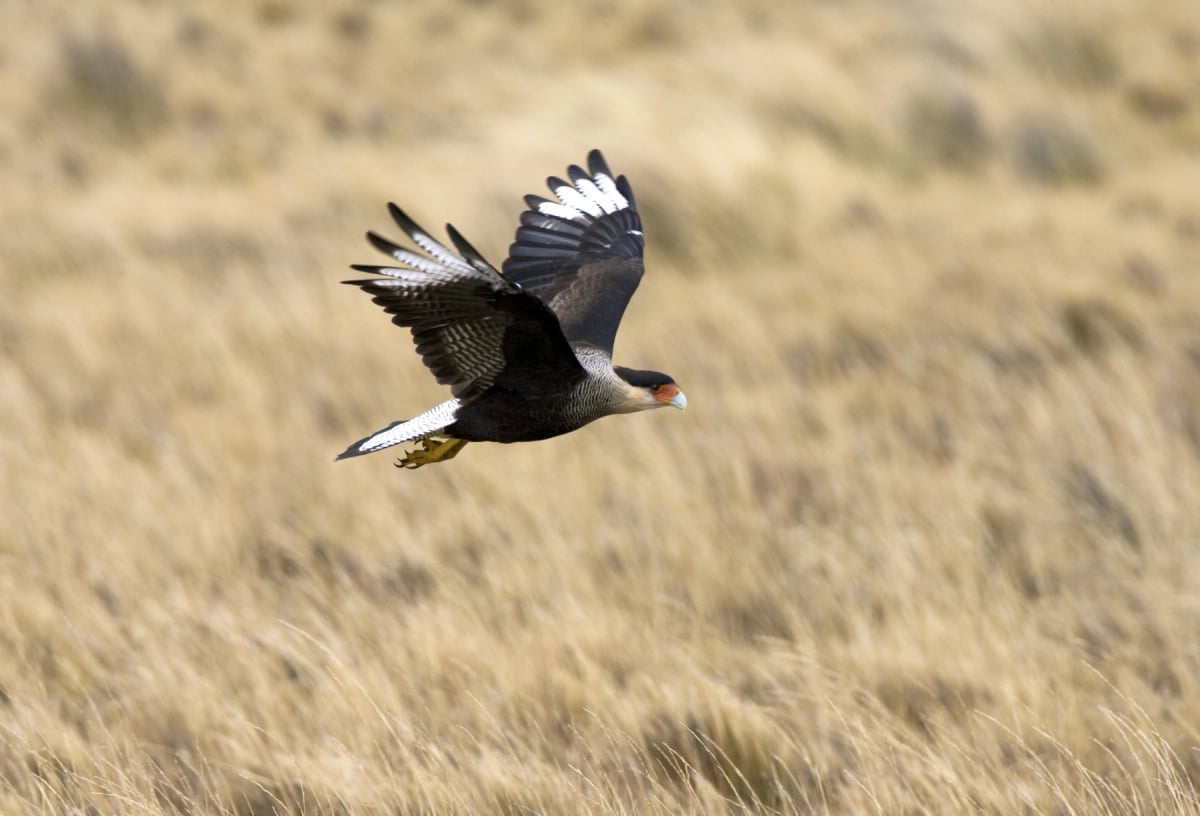
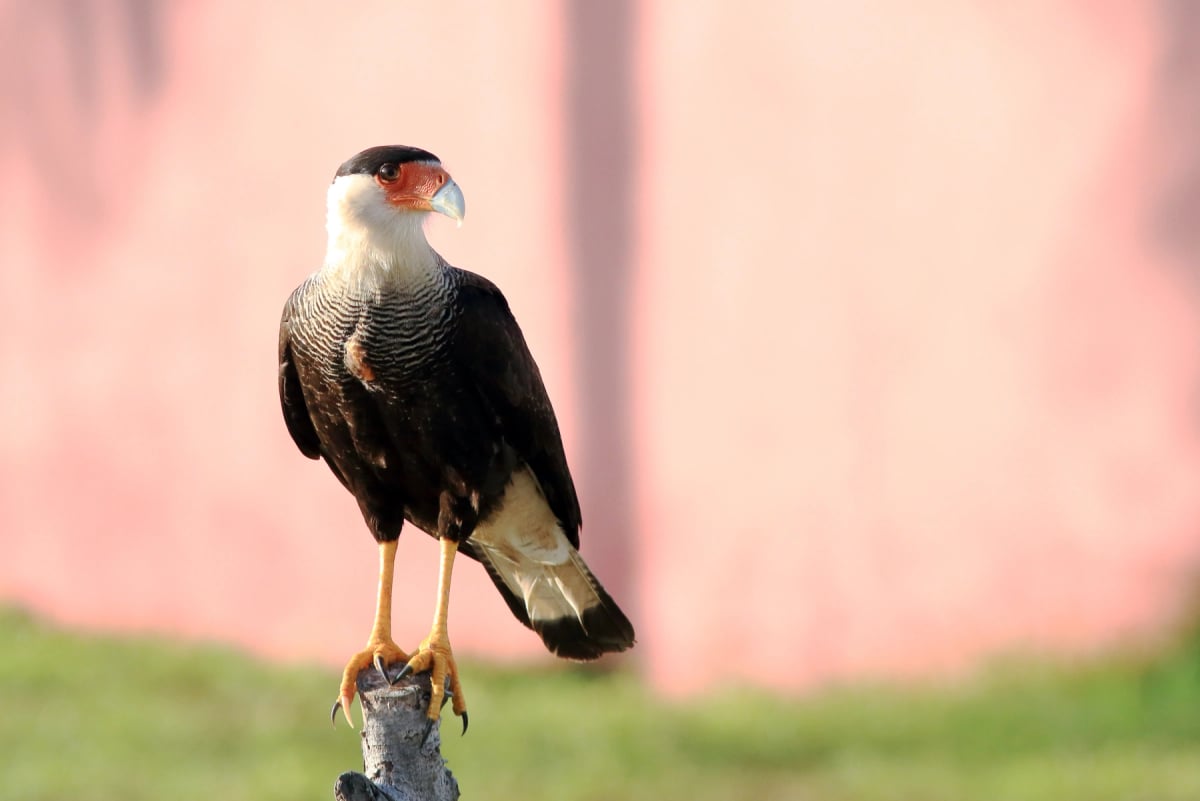
The southern caracara is a large bird of prey that lives in open country across much of South America. It belongs to the falcon family, but it doesn't act much like a falcon. Instead of chasing prey through the air, it spends a lot of its day walking on the ground looking for food. It is easy to recognize by its dark cap, pale cheeks and throat, and a bare face that can change from yellow to bright orange or red. It eats almost anything, from dead animals and insects to lizards, frogs, small mammals and bird eggs, and it often steals food from other birds. Ranchers have mixed feelings about it, since it cleans up dead animals but sometimes attacks newborn lambs. The IUCN lists it as Least Concern.
Habitat and distribution
The southern caracara covers a huge part of South America. It lives from Tierra del Fuego and the Falkland Islands in the far south up to Colombia and the Guianas in the north. Birds in the north look a little different, and some experts treat them as a separate species, the northern caracara. It likes open land where it can walk and see far, such as grasslands, flooded savannas, cattle ranches, riverbanks and the edges of wetlands. It also visits beaches, plowed fields and roadsides. Thick forest is about the only place it avoids. Clearing land for farms and ranches has helped it, because pastures give it room to search for food and a steady supply of dead animals.
Diet
Dead animals are the main part of the southern caracara's diet. It shows up quickly at carcasses and roadkill, and it is not shy about pushing in among vultures to get its share. But it eats much more than carrion. It catches insects, frogs, lizards, snakes, small mammals and crabs, and it raids nests for eggs and chicks. It also steals food from other birds, chasing them until they drop what they are carrying. On farms it follows tractors and plows to grab worms and insects dug up from the soil. Because it can eat so many different things, it does well in very different places, from the cold steppes of Patagonia to tropical savannas.
Behavior
The southern caracara is as comfortable walking as it is flying. It strides across pastures and mudflats with its body held upright, something few other birds of prey do. It is bold and curious, and it often lets people get quite close. Pairs and family groups search for food together, and larger groups can gather at big carcasses or garbage dumps. When it calls, it throws its head all the way back and makes a loud, rattling sound. The name caracara is believed to come from an Indigenous word that imitates this call. Pairs build big stick nests in trees and palms or on rocky ledges, and they often use the same nest again year after year.
Ecological role
The southern caracara does a useful cleanup job in the open country where it lives. By eating dead animals in fields and along roads, it gets rid of carcasses that would otherwise be left to rot. It also eats lots of insects, including beetles and grubs turned up by plows, and it catches rodents and other small animals. Its relationship with people is mixed. Many rural families are happy to have it around because of this work. But sheep ranchers in some areas see it as a pest, since it can attack newborn lambs or animals that are sick or weak.
Conservation
The IUCN lists the southern caracara as Least Concern. It lives across a huge area, it is common in many countries, and it copes very well with the changes people make to the land. Clearing forest for pastures has even opened up new places for it to live. Still, it has some problems in certain areas. Some ranchers shoot it or put out poisoned bait because they blame it for killing lambs. Birds that feed on roadkill are often hit by cars and trucks. And when native grasslands are turned into big crop fields, it has less space to find food. These problems are local, and for now the species as a whole is doing well.
Where it is found
The Southern Caracara can be found in places such as:
Researched and written by Juan Pablo. Sources: IUCN Red List, scientific literature and regional field guides. Last updated: .
Technical factsheet

Frequently Asked Questions
What does the southern caracara eat?
The southern caracara eats almost anything it can find. Its main food is carrion, but it also catches insects, lizards, frogs, small mammals and birds. It raids nests for eggs and often steals food from other birds of prey. Near farms and roads it feeds on roadkill and dead livestock, which makes it one of the most flexible eaters in South America.
Where does the southern caracara live?
It lives across a huge part of South America, from Colombia and the Guianas in the north down to Tierra del Fuego and the Falkland Islands in the south. It prefers open places such as grasslands, wetlands, ranches and coasts. It avoids thick forest, but it does well along forest edges and on land that has been cleared for farming.
Is the southern caracara an eagle or a falcon?
Even though it looks a bit like an eagle, the southern caracara belongs to the falcon family, Falconidae. It is more closely related to falcons than to eagles or hawks. Still, it acts very differently from most falcons. It rarely dives after prey at high speed and spends a lot of time walking on the ground. Its long legs and upright stance give it a look all its own.
Is the southern caracara dangerous to humans or livestock?
The southern caracara is not a danger to people. It rarely attacks healthy livestock, but it sometimes goes after newborn lambs or weak animals, so some ranchers don't like it. Many farmers still put up with it because it cleans up dead animals and eats insects. It is a confident bird that may come fairly close to people, but it is not aggressive toward them.
Why does the southern caracara walk so much instead of flying?
Walking is simply a good way for this bird to find food. Its legs are longer than those of most birds of prey, so it can move easily across open ground looking for insects, carrion and small animals. It is a strong flier when it needs to be, but much of its food is found on the ground. This habit is one of the things that makes it stand out among birds of prey.
Is the southern caracara at risk of extinction?
No. The IUCN lists the southern caracara as Least Concern, which means it is not considered threatened. It lives in many countries, it is common in much of its range, and it adapts well to farmland and places changed by people. In some areas, though, it is still shot or poisoned by people who see it as a pest, and the loss of native grasslands can affect local populations.
Does the southern caracara steal food from other birds?
Yes, and it can be quite bold about it. The southern caracara often chases vultures and other birds until they drop or leave their food. Scientists call this kleptoparasitism, which simply means stealing food from other animals. It also follows cattle and farm machinery to catch insects and small animals that get stirred up. Thanks to these tricks, it often gets a meal without much effort.