Gray Fox
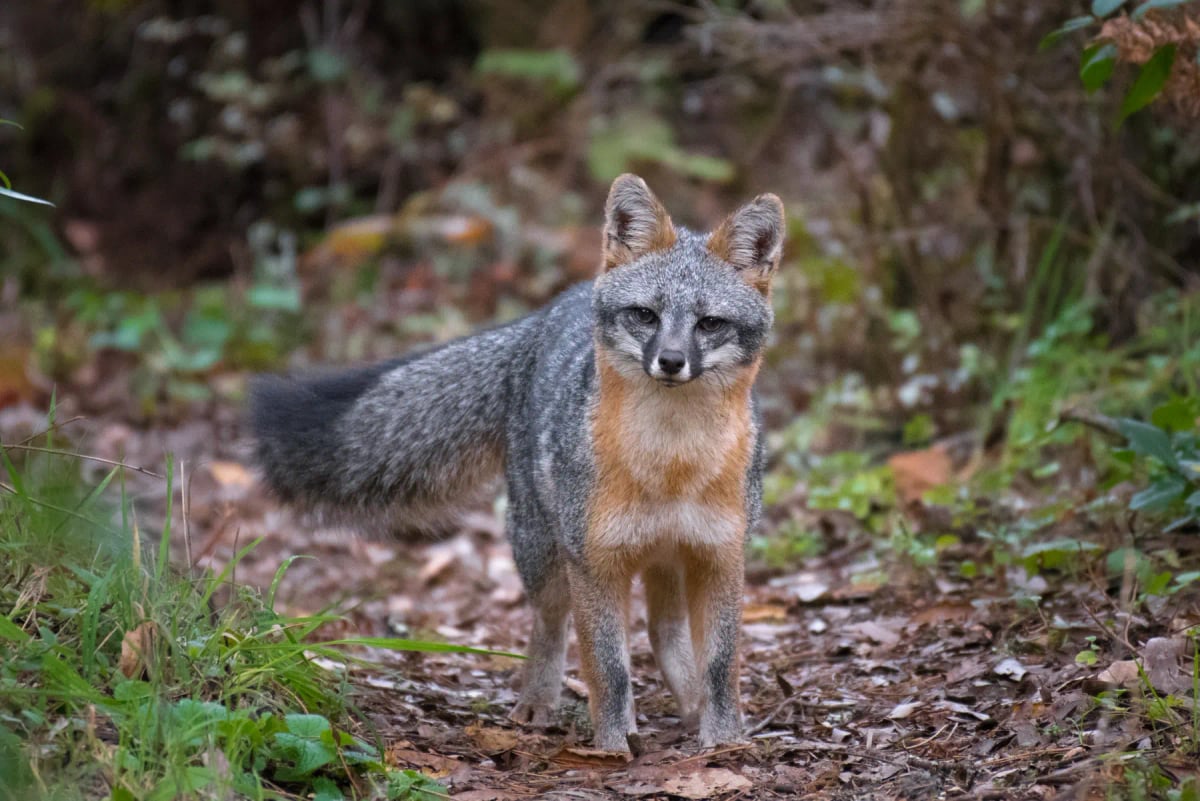
The gray fox is a medium-sized canid native to North and Central America, easily recognized by its grizzled gray coat, reddish fur along the neck and flanks, and a tail with a black stripe running along the top to a dark tip. It is the only member of the dog family in the Americas capable of climbing trees, pulling itself up trunks with strong, hooked claws to escape predators or find food. It hunts small mammals, birds, and insects, and rounds out its diet with fruit and other plant material depending on the season. Primarily active at night, it shelters in hollow logs, rock crevices, or dense brush. The species ranges from southern Canada through Mexico and Central America all the way to Panama, adapting to forests, scrublands, and areas at the edge of woodland.
Habitat and distribution
Few wild canids cover as much ground as the gray fox. Its range stretches from the southern edge of Canada, across most of the United States, through Mexico, and down through every country in Central America to Panama. Within that broad range, it shows a clear preference for wooded environments: deciduous and mixed forests, brushy hillsides, and the edges where woodland meets open ground. Rocky terrain is especially favored, since boulders and crevices provide ready shelter. Unlike the red fox, which thrives in open fields and suburban parks, the gray fox tends to keep to areas with dense cover. In the United States it is absent from parts of the northern Great Plains and the Rocky Mountain region, where open grassland and high elevation limit suitable habitat.
Diet
Across the seasons, the gray fox adjusts its menu considerably. Small mammals make up the core of its diet, with cottontail rabbits and mice topping the list, but it is far from a strict meat eater. Insects, birds, and eggs are taken whenever the opportunity arises. In late summer and autumn, wild fruits, berries, and even corn become important food sources, sometimes accounting for a large share of what the fox eats during those months. This flexibility is one of the reasons the species does so well across such varied landscapes. Studies from the eastern United States show that plant material can represent more than thirty percent of stomach contents in some seasons, a proportion that would surprise anyone who thinks of foxes purely as hunters.
Behavior
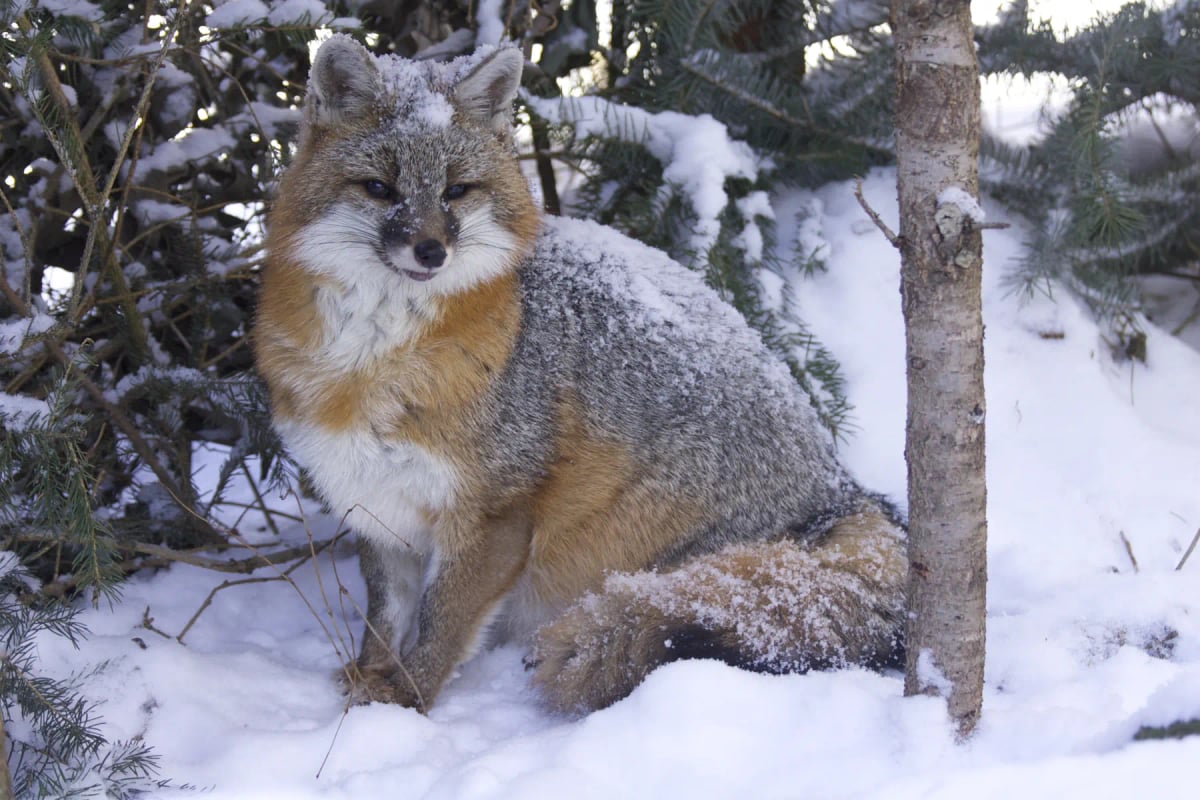
Nighttime is when the gray fox is most active, though individuals living in areas with little human disturbance will sometimes move around at dawn and dusk as well. Outside the breeding season, adults generally live alone, each holding a home range they advertise with scent markings from glands near the base of the tail and on the feet. These scent posts communicate information to neighboring foxes without the need for direct contact. Dens are set up in hollow logs, rock crevices, dense brush piles, or even abandoned burrows dug by other animals. Mated pairs come together in late winter, and both parents take part in raising the pups through the summer. By autumn the young foxes disperse and establish territories of their own.
Tree climbing ability
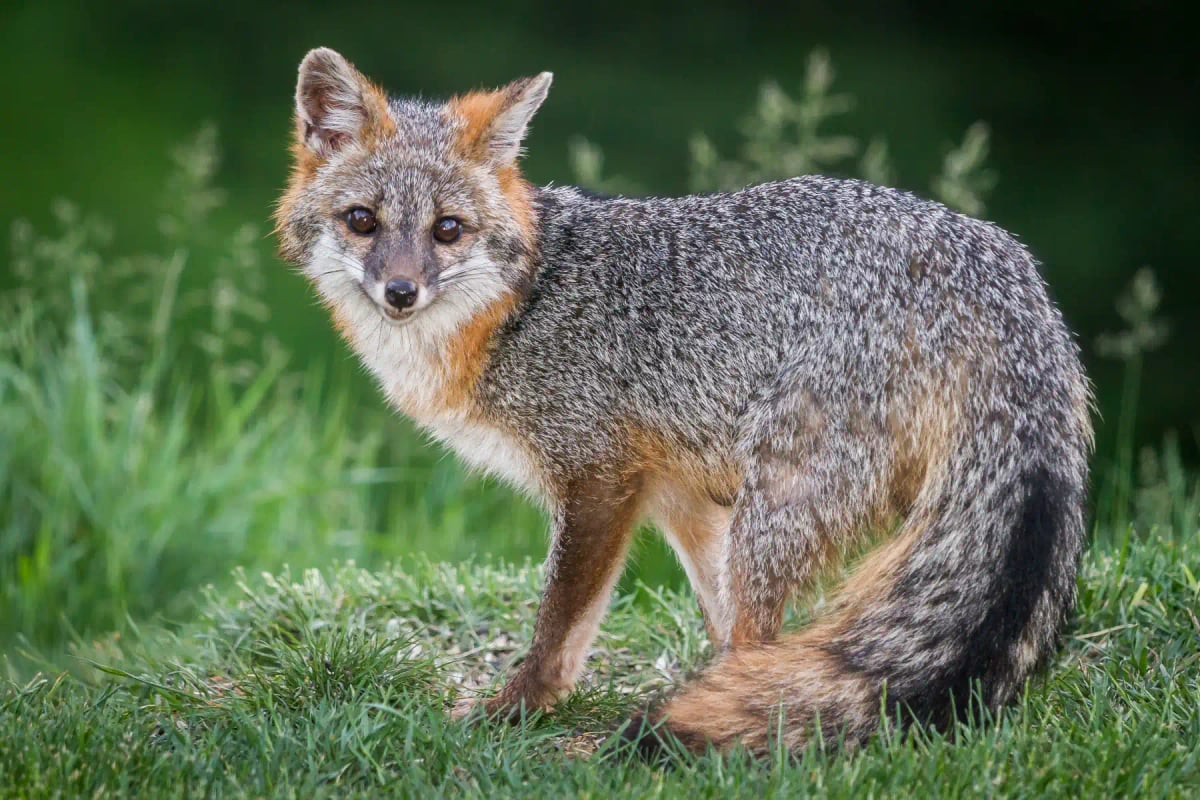
Of all the members of the dog family found in the Americas, the gray fox stands alone as a capable tree climber. Its secret lies in a set of strong, curved claws that grip bark far more effectively than the straighter claws seen in other foxes. To move up a trunk, the fox wraps its front legs around the bark and pushes upward with powerful kicks from its hind legs, a technique that looks more like a cat than a dog. Once in the canopy, it can move along branches with surprising confidence. This skill serves several purposes: it allows the fox to escape coyotes and other ground predators, to raid bird nests for eggs, and occasionally to rest on a broad limb well above the forest floor.
Conservation
The IUCN currently rates the gray fox as Least Concern, reflecting its wide distribution and stable numbers across most of its range. That said, the picture is not uniform everywhere. Habitat loss driven by urban expansion and agricultural conversion reduces the woodland cover the species depends on. Roads pose a real threat, as foxes crossing at night are frequently struck by vehicles. Hunting and trapping for fur have historically reduced numbers in some areas, though pressure of this kind has lessened in recent decades. Canine diseases such as mange and rabies can cause local population dips. On the whole, the gray fox remains a resilient species, and its ability to use a wide variety of food sources and den sites gives it a degree of flexibility that helps it persist even in landscapes shaped by human activity.
Where it is found
The Gray Fox can be found in places such as:
Researched and written by Juan Pablo. Sources: IUCN Red List, scientific literature and regional field guides. Last updated: .
Technical factsheet







Frequently Asked Questions
Can gray foxes really climb trees?
Yes, and they are the only members of the dog family in the Americas that can do it. They use strong, curved claws to grip bark and push themselves up with powerful kicks from their back legs. Once up there, they move along branches with real confidence. They climb mainly to escape predators like coyotes, to reach bird nests, and sometimes just to rest above the forest floor.
What do gray foxes eat?
Gray foxes eat a wide variety of things depending on the season. Small mammals like rabbits and mice are their main prey, but they also hunt birds, insects, and eggs. In late summer and autumn, wild fruits, berries, and even corn become a big part of their diet. This flexibility is one of the main reasons they do well across so many different landscapes throughout North and Central America.
Where do gray foxes live?
Gray foxes are found from southern Canada all the way down through the United States, Mexico, and every country in Central America to Panama. They prefer wooded areas, brushy hillsides, and rocky terrain where they can shelter easily. Unlike red foxes, they tend to avoid wide open spaces. In the United States, they are mostly absent from the northern Great Plains and the higher parts of the Rocky Mountain region.
Are gray foxes dangerous to humans or pets?
Gray foxes are naturally shy and will almost always avoid contact with people. Attacks on humans are extremely rare. That said, like any wild animal, they can carry rabies, so a fox that approaches people without fear should be treated with caution. Small pets left outside at night could occasionally attract a fox, but this is uncommon. The best approach is to admire them from a distance and never feed them.
How is the gray fox different from the red fox?
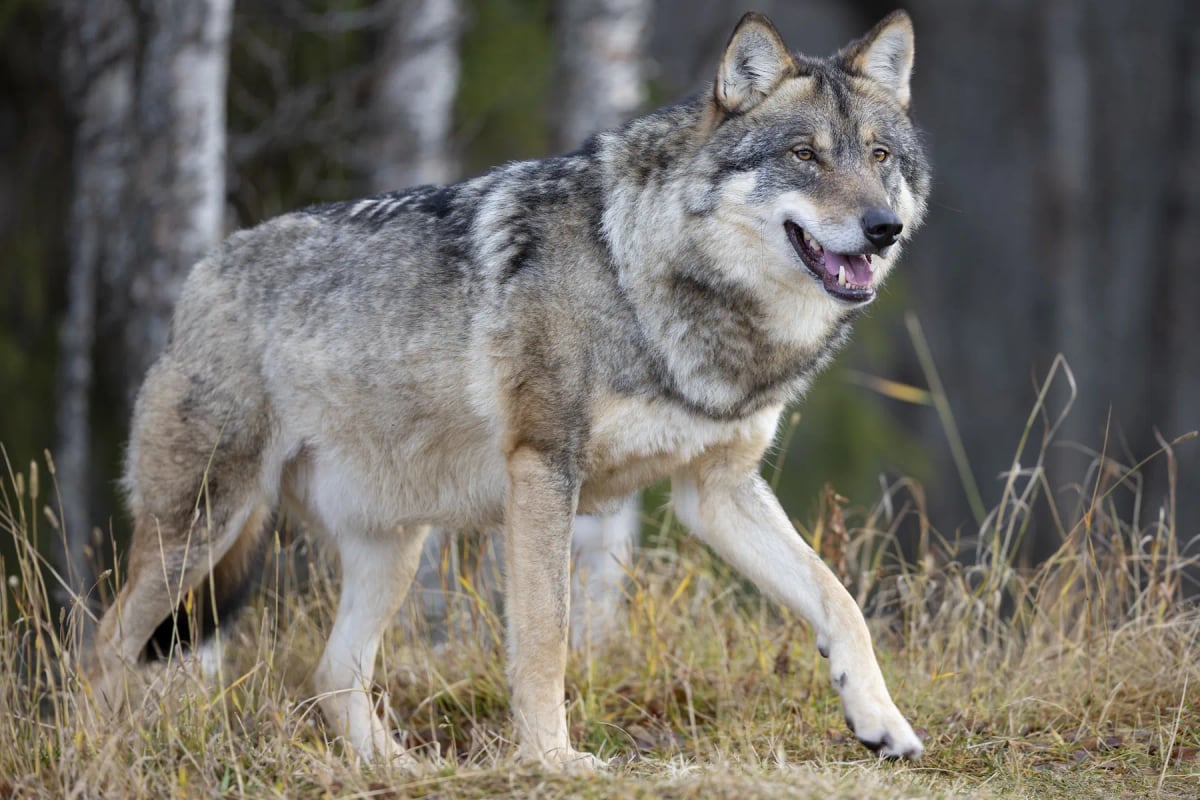
The gray fox has a grizzled gray coat with reddish fur along its neck and sides, while the red fox is mostly orange with a white belly and white tail tip. The biggest difference in behavior is that gray foxes climb trees and red foxes do not. Gray foxes also stick to wooded and rocky areas, whereas red foxes are comfortable in open fields and even suburban neighborhoods. The two species rarely share the same habitat.
Is the gray fox endangered?
No. The IUCN lists it as Least Concern, meaning its population is stable across most of its range. Still, it faces real pressures in some areas. The loss of woodland habitat, roads that cut through fox territory, and diseases like mange and rabies can cause local population drops. Hunting and trapping for fur have had an impact in the past, though that pressure has decreased. Overall, the gray fox is a resilient species.
Do gray foxes live alone or in groups?
For most of the year, gray foxes live on their own. Each adult holds a home range and marks it with scent so neighboring foxes know to keep their distance. In late winter, mated pairs come together to raise a litter of pups, and both parents help care for the young. By autumn, the pups leave to find territories of their own. Outside of family groups during the breeding season, these are largely solitary animals.