White tailed Deer
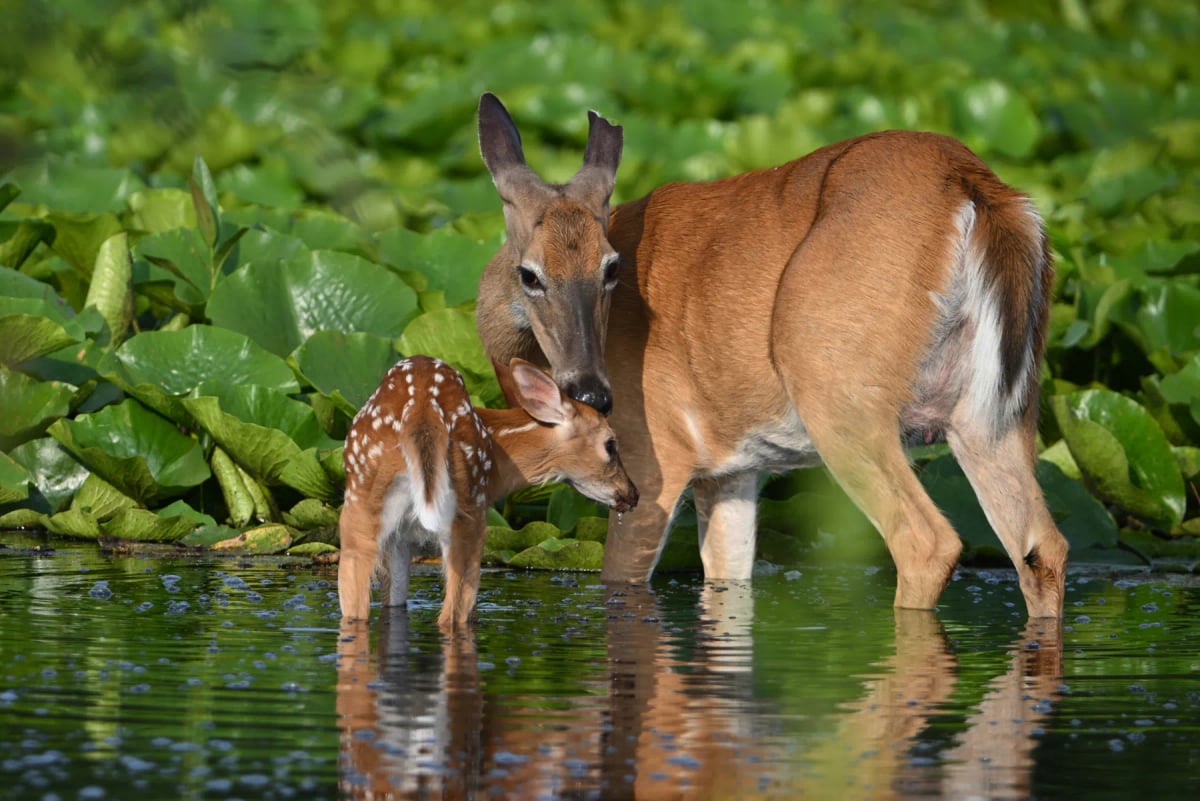
The white tailed deer (Odocoileus virginianus) is one of the most recognizable large mammals in the Americas. Adults carry a reddish coat in summer that fades to a grey or brownish tone in winter, helping them blend into seasonal landscapes. The white underside of the tail gives the species its name and serves as a visual alarm signal: when threatened, a deer flips its tail upward to warn others nearby. Males grow a fresh set of antlers every year, shedding them after the breeding season ends in late autumn or early winter. Antler size depends on age and nutritional condition. Females, called does, raise one or two fawns each spring. Fawns are born with white spots that fade within a few months. This deer adapts readily to forests, farmland, and suburban edges, making it one of the most frequently seen wild mammals across its vast range.
Habitat and distribution
Few mammals in the Americas match the white tailed deer for adaptability. Its range stretches from the southern edge of Canada through nearly all of the contiguous United States, continuing south through Mexico, Central America, and into parts of South America as far as Peru and northern Brazil. Across this enormous territory, the species occupies an impressive variety of environments: dense deciduous forests, open grasslands, scrublands, river valleys, agricultural fields, and the leafy fringes of towns and suburbs. In the United States alone, populations exist in almost every state. The deer tends to favor areas where forest and open land meet, known as edge habitat, because these zones provide both cover for shelter and open ground for feeding. Elevation is rarely a limiting factor, and the species has been recorded at considerable altitude in parts of Mexico and the Andes.
Diet
White tailed deer are browsers rather than grazers, meaning they prefer to feed on the leaves, stems, and shoots of woody plants rather than grasses. Their diet shifts considerably throughout the year. In spring and summer, they target young leafy growth, clover, and garden plants when available. As autumn arrives, acorns, beechnuts, and other hard mast become a critical food source, providing the energy reserves needed for the breeding season and the cold months ahead. In winter, when food is scarce, deer survive on woody browse such as twigs and bark. They also visit agricultural fields, feeding on corn, soybeans, and similar crops. White tailed deer are ruminants, digesting their food in multiple stomach chambers, which allows them to extract nutrients from plant material that many other animals cannot process.
Antlers
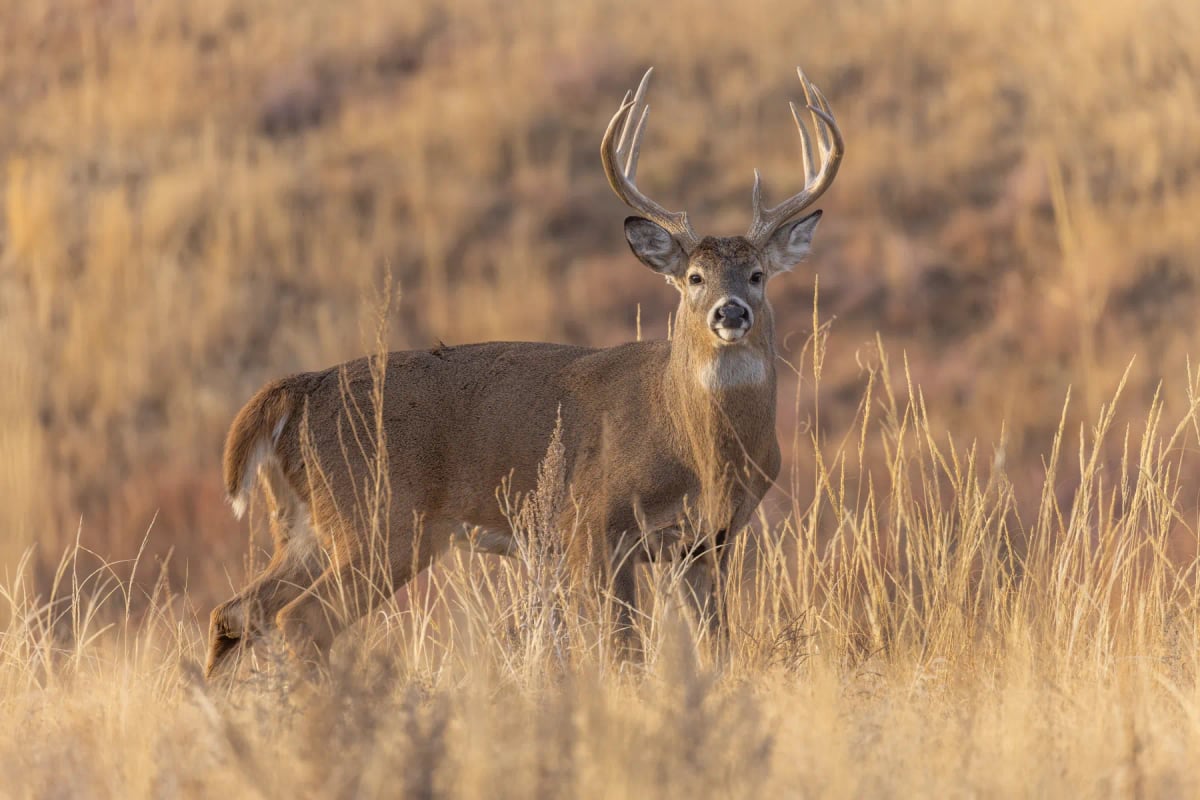
Only male white tailed deer, called bucks, grow antlers, and they do so from scratch every single year. Growth begins in spring under a soft skin called velvet, which supplies blood and nutrients to the developing bone. By late summer the antlers have hardened, and bucks rub them against trees to strip away the dried velvet. The antlers are then used during the rut, the autumn breeding season, when males clash to establish dominance and access to females. After the rut ends, usually by late winter, bucks shed their antlers and the cycle begins again. The size and complexity of a buck's antlers depend largely on its age and overall nutritional condition. A young deer with access to food rich in minerals will typically produce more impressive antlers than a malnourished animal of the same age.
Behavior
White tailed deer are most active at dawn and dusk, a pattern described as crepuscular. During the heat of the day they typically rest in dense cover, emerging again as light fades. They are generally solitary or found in small groups, though does often stay near their offspring for extended periods. Communication is varied: deer use scent glands located on the legs and face to mark territory and exchange information with others. Vocalizations include snorts, grunts, and bleats. The raised tail display is perhaps the most recognizable behavior in the species. When a deer senses danger, it lifts its tail to expose the bright white underside, providing a visual alert to nearby animals. This signal is often accompanied by a sharp snort and a bounding run, with the white tail flagging visibly as the deer flees through vegetation.
Conservation
The IUCN classifies the white tailed deer as Least Concern, a reflection of its broad range and strong overall numbers. Across much of North America, populations are healthy and in some regions have grown substantially over recent decades, partly because hunting regulations and reforestation have created favorable conditions. In the United States, wildlife managers actively monitor deer numbers to balance ecological impact with hunting traditions. However, the picture is not uniform everywhere. Some isolated populations in parts of South America face pressure from habitat loss due to agricultural expansion and from unregulated hunting. Chronic wasting disease, a neurological illness affecting deer and related species, is also a growing concern in North America. Ongoing research and coordinated management across state, national, and international levels are essential to the health of this species over the long term.
Where it is found
The White tailed Deer can be found in places such as:
Researched and written by Juan Pablo. Sources: IUCN Red List, scientific literature and regional field guides. Last updated: .
Technical factsheet





Frequently Asked Questions
What do white tailed deer eat?
White tailed deer feed mainly on leaves, twigs, shoots, and fruit. In autumn, acorns and other nuts become a favorite food. During winter, when fresh plants are hard to find, they survive on bark and woody stems. They also raid agricultural fields for corn and soybeans. Because they are ruminants, they digest tough plant material through multiple stomach chambers, which makes them very efficient feeders across all seasons.
Where do white tailed deer live?
White tailed deer are found across an enormous range, from southern Canada through the United States, Mexico, Central America, and into South America as far as Peru and northern Brazil. They thrive in forests, grasslands, river valleys, farmland, and even suburban neighborhoods. They tend to favor spots where forest meets open land, since those areas offer both shelter and food. Altitude is rarely a problem, and they have been found high in the Andes.
Why do white tailed deer raise their tail?
When a white tailed deer senses danger, it lifts its tail to reveal the bright white underside, sending a visual warning to other deer nearby. This signal is usually combined with a sharp snort and a fast bounding run, with the white tail visible as the deer moves through trees and brush. It is one of the most recognizable alarm behaviors in North American wildlife and helps the whole group react quickly to a potential threat.
How fast can a white tailed deer run?
White tailed deer are impressive runners, capable of reaching speeds of around 30 miles per hour, roughly 48 kilometers per hour, over short distances. They are also strong jumpers and can clear fences nearly 2.5 meters tall. This speed and agility are their main defenses against predators like wolves, coyotes, and mountain lions. When fleeing, they combine speed with sharp turns and that distinctive raised tail to confuse and outpace anything chasing them.
Are white tailed deer dangerous to humans?
White tailed deer are generally calm around people, especially in suburban areas where they have grown used to human presence. However, bucks can become aggressive during the autumn breeding season. Does with newborn fawns will also defend their young if they feel cornered. The bigger concern for humans is deer on roads, as vehicle collisions involving deer cause thousands of accidents every year across North America. Keeping a safe distance is always the wisest approach.
What is chronic wasting disease in deer?
Chronic wasting disease is a neurological illness that affects white tailed deer and other related species. It attacks the brain and nervous system, causing the animal to lose weight, become disoriented, and eventually die. There is no known cure. The disease spreads through direct contact between animals and through contaminated soil and water. It has been detected across a growing number of regions in North America and is closely monitored by wildlife health agencies because of its impact on deer populations.
How long do white tailed deer live?
In the wild, white tailed deer typically live between 6 and 14 years, though most do not reach old age due to hunting, predation, and disease. Does tend to live longer than bucks, partly because the physical demands of the breeding season take a serious toll on males. In captivity, where threats are minimal, deer have been known to live past 20 years. Nutrition, habitat quality, and the presence of predators all play a role in how long an individual deer survives.