Tasmanian Devil
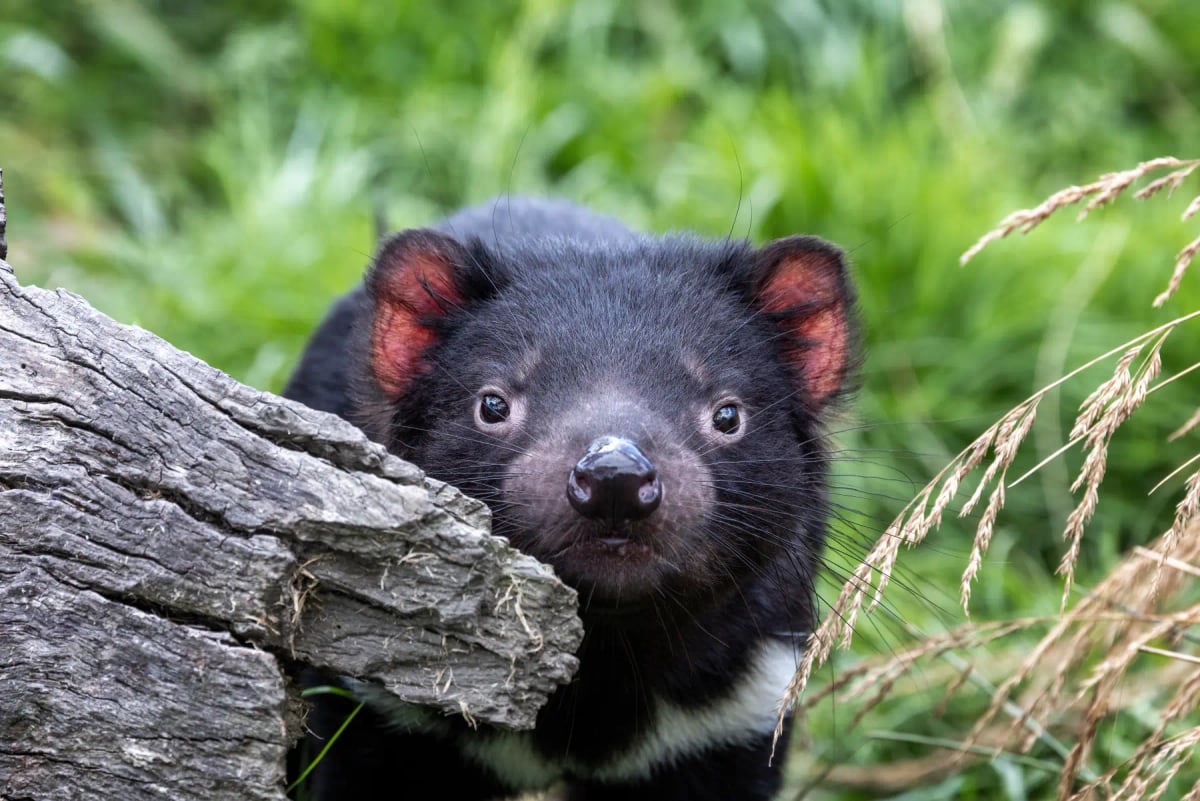
The Tasmanian devil is the largest carnivorous marsupial alive today and lives only on the island of Tasmania. It has a stocky, muscular body covered in coarse black fur, often marked with a white patch across the chest. Its jaws are extraordinarily powerful for its size, strong enough to crush bone, which allows it to consume an entire carcass, leaving almost nothing behind. This makes the devil a vital cleaner of the bush, helping to limit the spread of disease among other wildlife. Active mostly at night, it can cover several kilometers in a single outing while searching for food. Young are born tiny and undeveloped, completing their early growth inside the mother's pouch. Sadly, a contagious facial tumor disease has wiped out more than half of the wild population since the 1990s, pushing the species onto the endangered list.
Habitat and distribution
Tasmania is the only place on Earth where Tasmanian devils live in the wild. The island sits off the southeastern tip of Australia, and its varied landscapes suit the devil well. It occupies dry sclerophyll forests, coastal heathland, open woodland, and the grassy edges of farmland, showing a preference for areas where shelter and food are both easy to find. During the day, individuals rest in hollow logs, rock crevices, or burrows dug by other animals. They are found across much of the island, from sea level up into the highland interior, though they tend to be more common in the north and east where prey is more abundant. A small, carefully managed population has also been established on Maria Island, off Tasmania's east coast, as part of conservation efforts.
Diet
Carrion forms the backbone of the Tasmanian devil's diet, though it will also hunt live prey when the opportunity arises. Wallabies, possums, wombats, birds, reptiles, and insects all appear on the menu depending on what is available. What makes this animal remarkable as a feeder is the strength of its jaws. Relative to its body size, the Tasmanian devil produces one of the most powerful bites of any living mammal, enough to crack through the thickest bones. It can consume an entire carcass, fur and all, wasting almost nothing. This behavior makes it an important part of the Tasmanian ecosystem, removing decaying animals from the environment and reducing the risk of disease spreading to other wildlife. A single devil can eat up to 40 percent of its body weight in one sitting.
Behavior
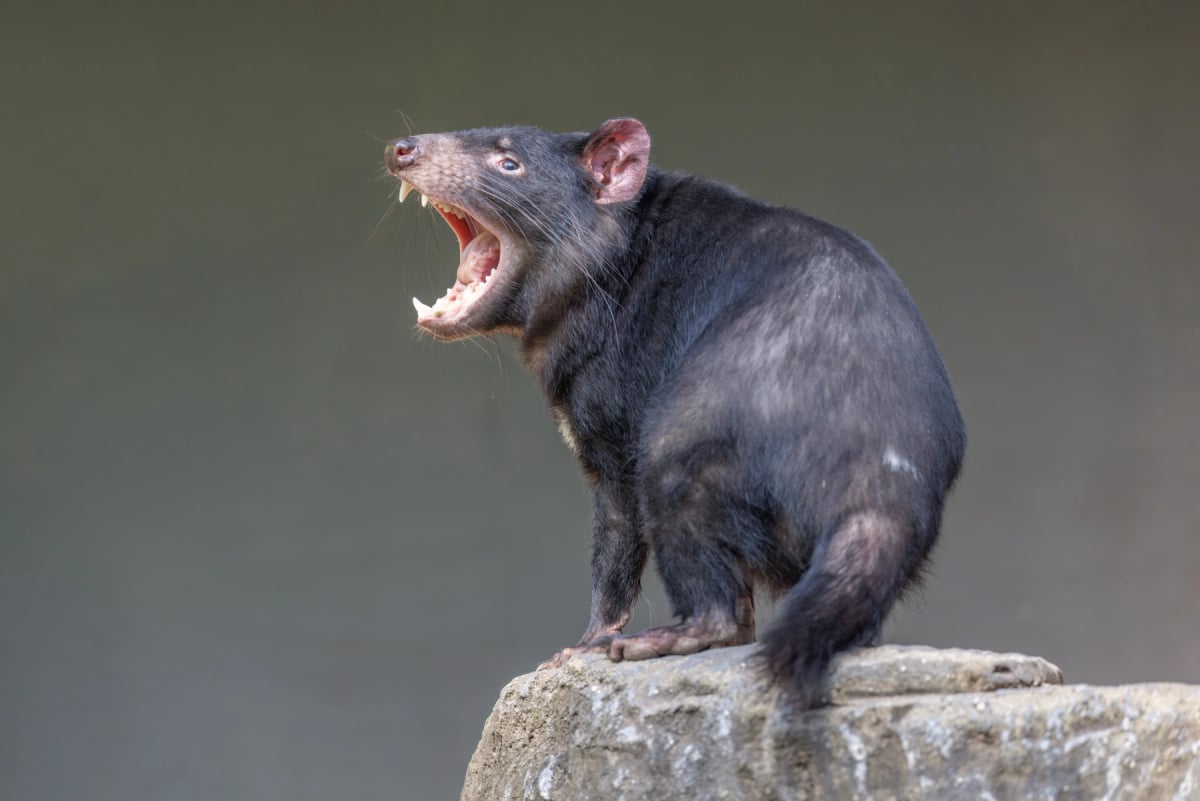
Once the sun goes down, the Tasmanian devil gets to work. It is largely solitary outside of feeding time, spending its nights covering up to 16 kilometers in search of a meal. Its sense of smell is its most important hunting tool, capable of detecting a carcass from a considerable distance. When several devils arrive at the same food source, things get loud. The screaming, growling, and snapping that erupts at a shared carcass can sound alarming, but these displays are mostly a form of communication to establish who eats first rather than genuine attacks. Younger or smaller individuals typically give way to larger ones. During daylight hours, devils rest quietly in dens. Despite their fierce reputation, they are generally shy around humans and will retreat rather than confront.
Threats
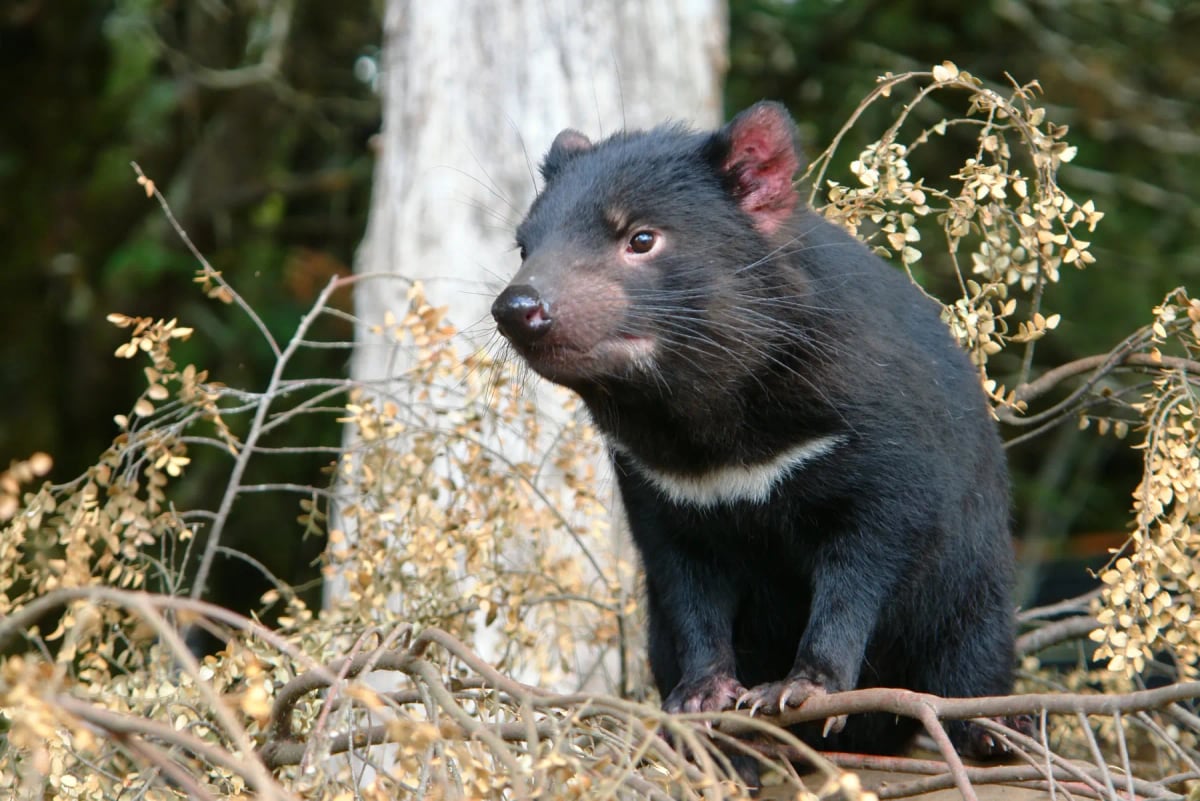
Devil Facial Tumor Disease is by far the most serious threat this species faces. It is a rare form of transmissible cancer, spread when devils bite each other during feeding disputes or mating. Tumors grow around the face and mouth, eventually preventing the animal from eating, leading to starvation within months of infection. Since the disease was first recorded in the mid 1990s, it has reduced wild populations by more than 80 percent in some parts of Tasmania. Beyond the disease, Tasmanian devils also face pressure from vehicle strikes on roads, which kill a significant number of individuals each year, particularly in areas where roads cut through suitable habitat. Historical persecution by farmers, who once considered them a threat to livestock, wiped the species out on mainland Australia long before the tumor disease appeared.
Conservation
Saving the Tasmanian devil has required a coordinated effort across government agencies, zoos, and research institutions. The Save the Tasmanian Devil Program, run by the Australian and Tasmanian governments, leads much of this work. A key part of the strategy is the Insurance Population, a network of zoos and wildlife facilities across Australia that maintain a disease free population of several thousand devils to act as a genetic safety net. Researchers are also working on vaccine development, with trials showing some early promise. On Maria Island, a population was established without the disease present, and this group has bred successfully in the wild. In 2020, Tasmanian devils were reintroduced to a wildlife sanctuary in New South Wales, marking the first time the species had lived on mainland Australia in roughly 3,000 years.
Researched and written by Juan Pablo. Sources: IUCN Red List, scientific literature and regional field guides. Last updated: .
Technical factsheet

Frequently Asked Questions
Are Tasmanian devils dangerous to humans?
Tasmanian devils are not a real threat to people. Despite their fierce reputation, they are naturally shy and will almost always flee rather than stand their ground when a human approaches. Their powerful bite is reserved for carcasses and squabbles with other devils. There are very few recorded cases of one biting a person, and those usually involved an animal that felt cornered or was being handled.
How powerful is a Tasmanian devil's bite?
The bite of a Tasmanian devil is extraordinary for an animal of its size. It generates enough force to crush through bone completely, which allows it to consume an entire carcass, including the skeleton. Relative to body size, it produces one of the strongest bites of any living mammal. This ability means almost nothing goes to waste when a devil feeds, making it one of nature's most efficient scavengers.
Why do Tasmanian devils scream?
Those loud, unsettling screams are mostly a form of communication, not signs of violence. When several devils gather around a shared carcass, they use screaming, growling, and snapping to work out who gets to eat first. It sounds terrifying, but serious injuries are rare. The noise is a way of sorting out the social order without too much actual fighting. Devils also make sounds during the breeding season to attract or warn off potential partners.
What disease is killing Tasmanian devils?
Devil Facial Tumor Disease is a contagious cancer spread through bites between individuals. Tumors develop around the face and mouth, eventually stopping the animal from being able to eat, which leads to starvation. Since it was first detected in the mid 1990s, the disease has wiped out more than 80 percent of the population in some parts of Tasmania. It is one of only a handful of cancers in the world known to spread from animal to animal.
How do Tasmanian devil joeys develop?
Newborn Tasmanian devils are incredibly tiny, roughly the size of a grain of rice. They are born at a very early stage of development and must crawl unaided into the mother's pouch, where they latch onto a nipple and continue growing. They stay in the pouch for around four months. After leaving the pouch, the young devils are carried on the mother's back for a few more months before they become fully independent.
Where do Tasmanian devils live today?
Wild Tasmanian devils are found only on the island of Tasmania, off the southern coast of Australia. They once lived across the entire Australian continent but disappeared from the mainland thousands of years ago, likely due to competition with dingoes and pressure from humans. Today, a small managed population also lives on Maria Island, off Tasmania's east coast, and in 2020 a group was reintroduced to a wildlife sanctuary in New South Wales on the mainland.
Are Tasmanian devils good for the ecosystem?
Tasmanian devils play a genuinely important role in keeping the environment healthy. By consuming carcasses completely, bones and all, they remove decaying animals from the bush before the remains can spread disease to other wildlife. This natural cleanup service helps maintain the balance of the broader ecosystem. Some researchers also suggest that the presence of devils helps keep populations of feral cats and foxes in check, which benefits smaller native animals.