Red Kangaroo
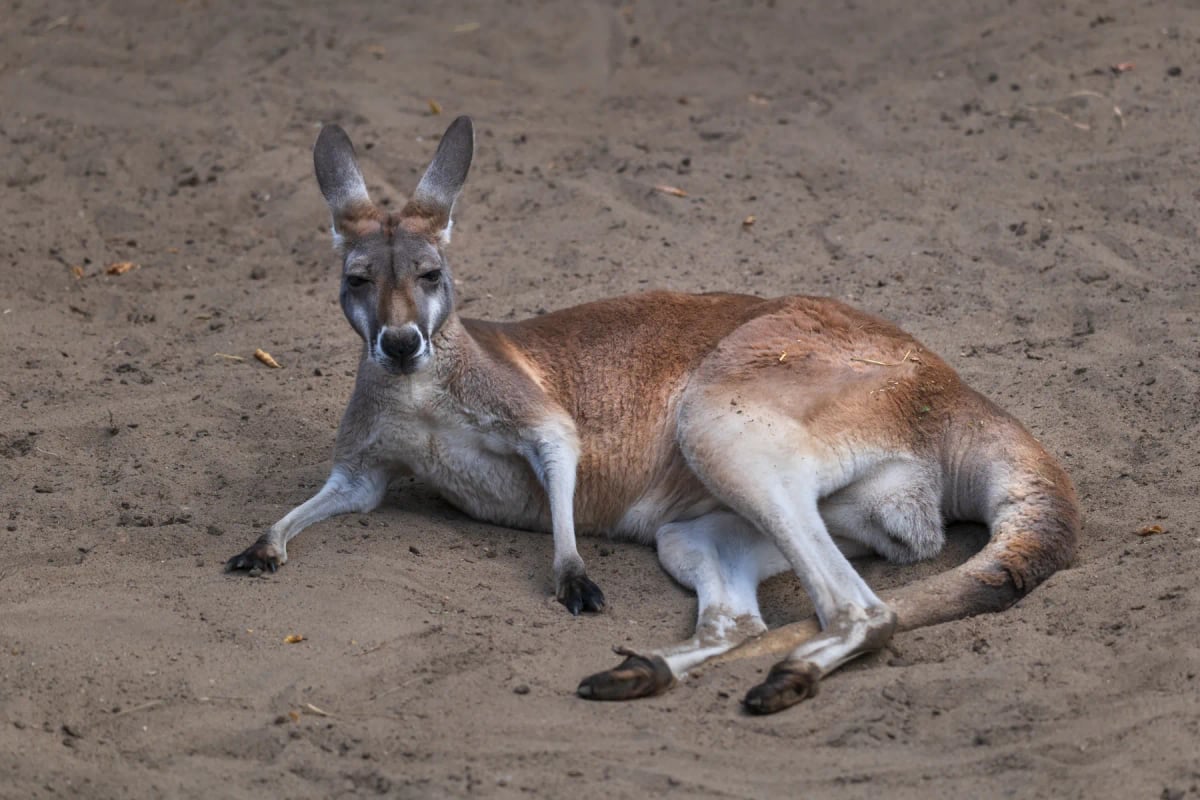
The red kangaroo (Osphranter rufus) is the largest marsupial on Earth and a true icon of the Australian outback. Males grow much bigger than females and wear a rich reddish coat, while females are smaller and bluish grey. Both sexes travel in loose social groups called mobs, grazing on grasses and shrubs across open plains and arid landscapes. Their hind legs act like springs, storing energy in elastic tendons and releasing it with each powerful bound. This makes hopping surprisingly efficient at speed, far cheaper in terms of energy than running is for most mammals. To handle the intense heat of the interior, red kangaroos rest in the shade during the hottest part of the day and become more active in the cooler hours around dusk and dawn. They get much of their water from the plants they eat, allowing them to go for long periods without drinking.
Habitat and range
Red kangaroos are found across most of inland Australia, making them one of the most widespread large mammals on the continent. They favour open grasslands, shrublands, and lightly wooded plains where visibility is good and grasses are plentiful. The arid and semi-arid zones of the interior are their stronghold, including much of the outback that stretches across Queensland, New South Wales, South Australia, Western Australia, and the Northern Territory. They tend to avoid the wetter forests along the coast and areas where dense vegetation blocks easy movement. When drought reduces food and water in one area, mobs will shift across large distances to find better conditions, showing a strong capacity to move with the landscape rather than stay tied to a fixed territory.
Diet
Grass makes up the bulk of the red kangaroo's diet, with a strong preference for green shoots that appear after rain. When fresh grass is limited, they will also eat flowering plants, forbs, and the leaves of shrubs to meet their nutritional needs. Because their digestive system is well suited to breaking down tough, dry plant material, they can get by on forage that would be too poor in quality for many other large herbivores. One of their most remarkable abilities is extracting enough moisture from the plants they eat to go for extended periods without drinking standing water. During droughts, this ability is critical. They are most active at dusk, through the night, and around dawn, timing their grazing to avoid the worst of the midday heat.
Movement and speed
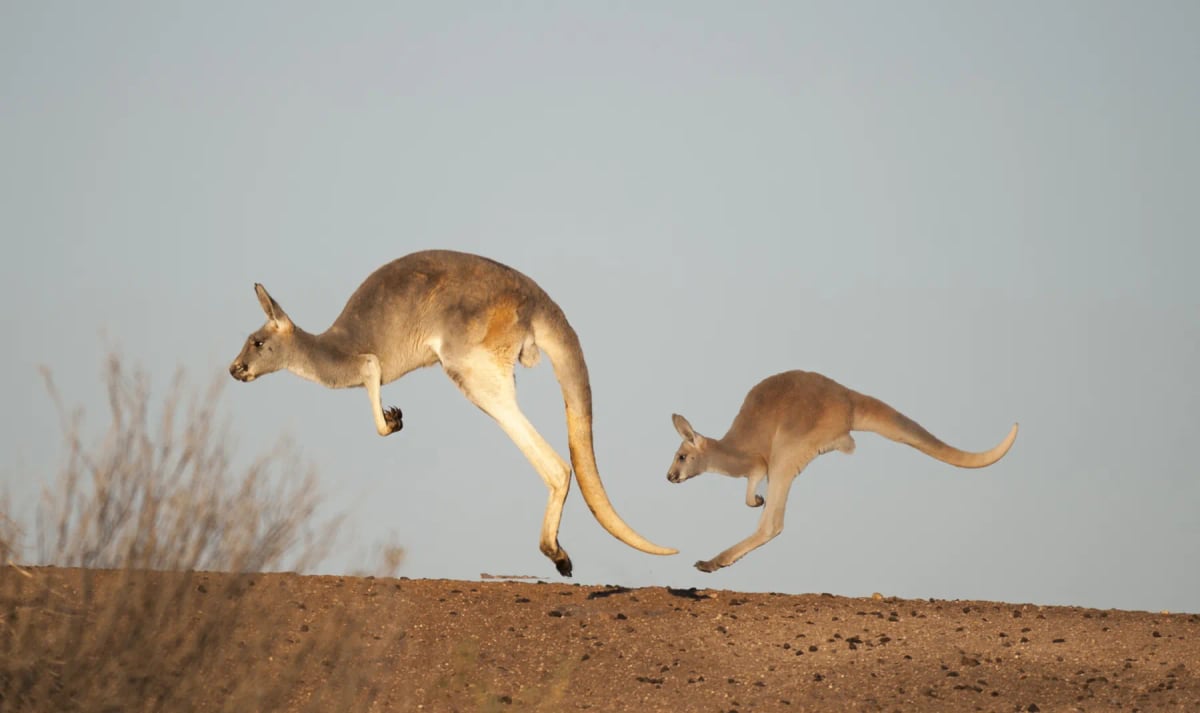
Few animals move quite like the red kangaroo. Rather than walking or running, it travels entirely by hopping, using a system of elastic tendons in its hind legs that work like springs. Energy is stored as the foot hits the ground and released again with each new bound, making hopping at speed far more efficient in terms of energy use than running is for most mammals of a similar size. At a comfortable cruising pace, red kangaroos move at around 20 to 25 km/h, but when pushed they can reach speeds above 55 km/h and cover up to nine metres in a single leap. Their thick, muscular tail acts as a counterbalance in motion and also props the animal up when it stands still or moves slowly.
Social structure
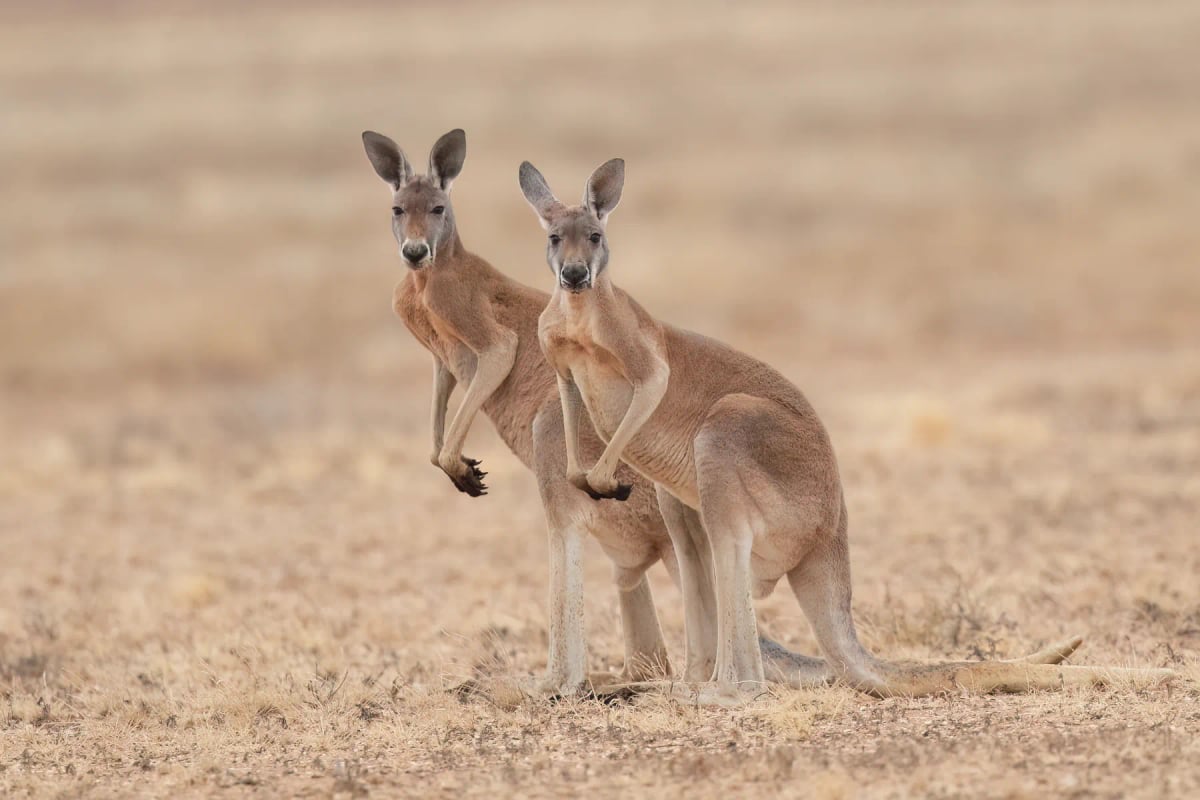
Red kangaroos live in loose social groups known as mobs, which typically include a dominant male, a number of females, and young animals at various stages of development. Membership within a mob is flexible. Individuals come and go freely, and the composition of any given group can shift considerably from one week to the next. The dominant male, often called a boomer, is usually the largest animal in the group and has priority access to females during the breeding season. Young males that have left their mothers tend to form smaller bachelor groups on the edges of larger mobs. Communication between individuals involves a range of signals, including foot thumping to warn of danger, which carries clearly across open ground.
Boxing behavior
Among male red kangaroos, physical competition is a regular part of life. Rivals size each other up before a contest begins, often standing tall to display their full height and bulk. When a fight breaks out, the males grapple with their forelimbs, lock onto each other's shoulders, and deliver powerful kicks with their large hind feet. These kicks can cause serious injury, and the thick skin and tough abdominal muscles of adult males offer some protection against them. Contests like these determine which male holds dominance within a mob, and the winner earns priority access to females. Younger or smaller males rarely challenge a well established boomer directly, though as they grow larger they will eventually try their luck.
Conservation
The IUCN classifies the red kangaroo as Least Concern, reflecting a population that is both large and stable. Estimates place the total number of red kangaroos in Australia at several tens of millions, though the count fluctuates considerably with rainfall and drought cycles. Good rains bring a surge in food and reproduction, while prolonged dry periods can cause numbers to fall sharply. The species has in some ways benefited from changes brought about by farming, since artificial water points and cleared land have expanded the areas it can use. Hunting is legally managed across several states, with quotas set each year based on population surveys. At present, the red kangaroo faces no major threat to its overall survival as a species.
Researched and written by Juan Pablo. Sources: IUCN Red List, scientific literature and regional field guides. Last updated: .
Technical factsheet

Frequently Asked Questions
How big do red kangaroos get?
Male red kangaroos are the largest marsupials on Earth. A big male can stand around 1.8 metres tall and weigh up to 90 kilograms. Females are considerably smaller, usually reaching about 35 kilograms. This size difference between the sexes is one of the most striking things about the species, and the biggest males tend to be the ones that win fights and lead mobs.
What do red kangaroos eat?
Red kangaroos are grazers that feed mainly on grasses, with a clear preference for fresh green shoots after rainfall. When grass is scarce, they turn to shrubs, forbs, and flowering plants to fill the gap. Their digestive system handles tough, dry plant material very well, which lets them thrive in arid conditions where food quality is generally low.
How fast can a red kangaroo hop?
Red kangaroos can reach speeds above 55 km/h when they need to escape a threat. At a relaxed pace they cruise at around 20 to 25 km/h. A single leap can cover up to nine metres. What makes this even more impressive is that hopping at speed actually costs less energy than running does for most mammals of a similar size, thanks to the spring-like tendons in their hind legs.
How do red kangaroos survive without much water?
Red kangaroos get a large part of the water they need directly from the plants they eat, which allows them to go for long stretches without drinking from a water source. They also rest in the shade during the hottest part of the day to reduce water loss. In extreme heat they lick their forearms, where blood vessels sit close to the skin, to cool themselves down.
Are red kangaroos dangerous to humans?
Red kangaroos are generally not aggressive toward people, but a large male that feels cornered or threatened can cause serious injury. Their hind legs are extremely powerful, and a kick from an adult male is strong enough to break bones. Encounters in the wild are rarely dangerous as long as people keep a respectful distance and do not try to feed or approach them.
How do baby red kangaroos develop?
A newborn red kangaroo is tiny, roughly the size of a jellybean, and is born after just about 33 days of pregnancy. It crawls through its mother's fur and into her pouch, where it attaches to a teat and continues developing for several months. Joeys begin poking their heads out at around six months and eventually leave the pouch for good at around eight months, though they still return to nurse.
Is the red kangaroo endangered?
No. The IUCN lists the red kangaroo as Least Concern, and its population across Australia numbers in the tens of millions. Numbers do rise and fall with rainfall patterns, jumping after good rains and dropping during prolonged droughts. Hunting is legally managed through annual quotas, but at present the species faces no serious threat to its survival as a whole.