Capybara

The capybara holds the title of the largest living rodent on Earth, with adults commonly reaching 50 kg or more. A native of South America, it inhabits flooded grasslands, riverbanks, and wetlands from Venezuela to Argentina. Its body is built for water: the eyes, ears, and nostrils sit high on the skull so the animal can breathe and stay alert while almost entirely submerged. Partially webbed feet make it a capable swimmer, and it can hold its breath for up to five minutes to evade predators such as jaguars, caimans, and anacondas. Capybaras are highly social and live in groups that typically number between 10 and 20 individuals, though gatherings of over 100 have been recorded during dry seasons when resources concentrate around shrinking water bodies. They graze mostly on grasses and aquatic plants, and like other cavies they practice coprophagy, re-ingesting their own droppings to extract additional nutrients.
The largest rodent in the world
An adult capybara measures 106 to 134 centimeters from nose to rump, stands about 60 centimeters at the shoulder and weighs between 35 and 66 kilograms, with females heavier than males and the record holders passing 90. That is roughly the size of a large dog, built like a barrel on short legs, with a blunt head, a tail so small it is easy to miss and slightly webbed feet. It is the biggest rodent alive, but not the biggest that ever lived: Josephoartigasia monesi, a relative that walked what is now Uruguay two to three million years ago, reached about three meters long and an estimated one thousand kilograms, the size of a bull. The teeth tell the family story better than the body does. Like every rodent, a capybara has incisors that never stop growing and are worn down daily by grazing on abrasive grass.
Habitat: Why do they need water?
Water is not simply a convenience for the capybara. It is a core requirement of daily life. Across South America, these animals settle along riverbanks, flooded grasslands, marshes, and the edges of lakes, always staying close to a reliable water source. Their skin dries out quickly under direct sun, so regular submersion helps them regulate body temperature and keep their skin in good condition. The skull is shaped so that the eyes, ears, and nostrils all sit near the top, allowing a capybara to breathe, hear, and scan for threats while nearly its entire body remains below the surface. When a jaguar, caiman, or anaconda approaches, the animal can slip underwater and hold its breath for up to five minutes, making rivers and wetlands both a home and a refuge.

Diet: Grass and special digestion
Grasses make up the bulk of the capybara's diet, supplemented by aquatic plants, fruit, and bark when the dry season reduces the availability of fresh pasture. Like all members of the cavy family, capybaras practice coprophagy, consuming their own droppings to recover nutrients that the digestive system did not fully absorb during the first pass. This behavior is not a sign of poor health. It is an efficient strategy shared with rabbits and several other herbivores. The front incisors grow continuously throughout the animal's life, keeping pace with the wear that comes from grazing on coarse vegetation. Capybaras also have a large fermentation chamber in the gut that helps break down the cellulose in plant material, a feature that makes their digestion surprisingly effective for an animal of their size.
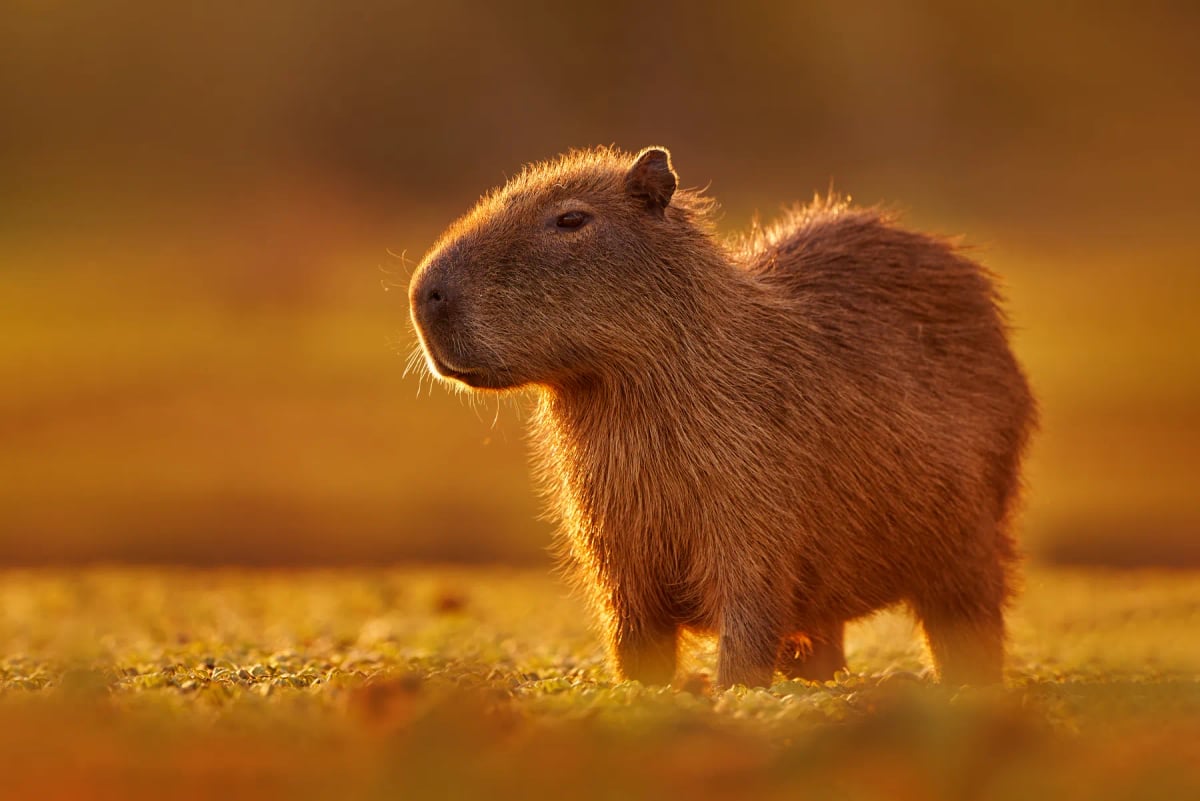
Behavior: A very social animal
Few mammals are as consistently social as the capybara. Groups typically range from 10 to 20 individuals led by a dominant male, though during dry seasons, when shrinking water bodies concentrate both food and animals, gatherings of over 100 have been recorded. Living in a group offers real protection: more eyes and ears mean earlier warnings of approaching predators. Several bird species, including cattle tyrants and yellow-headed caracaras, routinely perch on capybaras and pick ticks and flies from their coats, a relationship that benefits both parties. Communication within the group relies on a range of vocalizations, including purrs, barks, and whistles, each carrying a different meaning. Females in a group will nurse one another's young, a behavior known as communal nursing that improves the survival of pups across the whole group.
Why the internet loves the capybara
No animal has had a better decade online. The capybara became a meme because of what it does not do: it does not startle, does not chase, does not seem to mind who sits next to it, and photographs of one sharing a riverbank with birds, turtles, monkeys or a caiman circulate endlessly as proof that it gets along with everyone. The calm is real but it is not friendliness. A capybara in the open is a prey animal doing the arithmetic of a prey animal: staying still costs nothing, running costs energy, and the birds picking ticks off its back are doing it a favor. Japan added the other half of the legend. In 1982 keepers at the Izu Shaboten Zoo in Shizuoka were cleaning the enclosure with hot water and noticed the capybaras settling into the puddles; the zoo built them a proper hot bath, and today more than twenty Japanese zoos run capybara onsen through the winter, floating yuzu fruit in the water.
Can you keep a capybara as a pet?
Legally, sometimes; sensibly, almost never. A capybara is a 50 kilogram semi aquatic herbivore that needs constant access to water deep enough to swim in, a grazing area, and at least one other capybara, because a single animal kept alone becomes stressed and depressed. They are not house trainable in any reliable sense, they chew through wiring and furniture with teeth built to cut tough grass, and a frightened or cornered adult can inflict a serious bite. They live 8 to 12 years in captivity, and very few veterinarians know how to treat one. The law varies: several US states allow ownership with a permit, others ban it outright, and most countries in the capybara's native range prohibit keeping wild specimens. The animals offered online for a few thousand dollars are mostly from breeders whose stock ends up surrendered, which is why capybara rescues exist at all.
Curiosities and History
The most repeated capybara story is that missionaries in Venezuela once asked Rome to classify it as a fish, on the grounds that it lives in water, so its meat could be eaten during Lent. The story is told with dates anywhere from the 16th to the 18th century and nobody has ever produced the document, so treat the papal part with caution. What is not in doubt is the custom: capybara is still eaten during Lent in Venezuela and Colombia, where it is salted and dried, and demand climbs every year in the weeks before Easter. Today, capybaras have become a genuine internet phenomenon, celebrated for their calm temperament and their apparent willingness to share space with other species. In several cities in Brazil, populations have adapted to urban green spaces and are regularly seen in parks alongside humans. In some rural areas they are farmed legally for meat and leather, while in others they are protected as part of local wetland conservation efforts.
Where it is found
The Capybara can be found in places such as:
Researched and written by Juan Pablo. Sources: IUCN Red List, scientific literature and regional field guides. Last updated: .
Technical factsheet










Frequently Asked Questions
Why do birds and other animals sit on capybaras?
Because the capybara lets them, and because it is worth it. Cattle tyrants, yellow headed caracaras and other birds ride on capybaras to pick ticks and flies off a back the animal cannot reach itself, so both sides gain. Turtles, monkeys, ducks and even young caimans turn up in photographs alongside capybaras for a duller reason: they all want the same riverbank, and a capybara eats grass, so it has no reason to chase anyone off. It is tolerance built on indifference rather than friendship, which is exactly why it photographs so well.
How fast can a capybara run?
Up to about 35 kilometers per hour, roughly the speed of a running horse over a short distance, which surprises most people who have only seen one lying in the mud. The gallop is a burst, not a marathon, and it is a second choice: the first instinct when a jaguar or a person gets too close is to head for water, where a capybara swims well, dives and can stay under for up to five minutes with only its nostrils showing.
What sounds do capybaras make?
More than most people expect from an animal that looks so quiet. Capybaras purr when they are content, and a mother's purr keeps her pups close; they bark, sharp and dog like, to warn the group that something is coming; they whistle, click and squeal in exchanges between individuals; and they grind or chatter their teeth as a threat before an actual fight. Pups are the noisiest of all, keeping up an almost constant contact call so the group knows where they are.
How long do capybaras live?
Six to ten years in the wild, and 8 to 12 in captivity where there are no jaguars. Wild life expectancy is dragged down by predation: jaguars, pumas, caimans, anacondas and, for the young, ocelots and large birds of prey all take capybaras, and a pup's first year is the dangerous one. Females can breed from about 18 months and produce litters of around four pups after a five month pregnancy, often twice a year where the grass is good, which is how the population absorbs those losses.
What animal is the capybara related to?
Guinea pigs, and the resemblance is not a coincidence. The capybara belongs to the cavy family, Caviidae, the same branch of South American rodents as the guinea pig, the mara and the rock cavies, and a capybara is essentially a guinea pig scaled up about fifty times, down to the blunt face, the tiny tail and the habit of eating its own droppings to pass food through twice. Its closest relative is the lesser capybara, a smaller species that lives in Panama, western Colombia and Venezuela.
Where do capybaras live?
Capybaras are found across most of South America, from Venezuela and Colombia in the north down to Argentina and Uruguay in the south. They always settle near water: riverbanks, flooded grasslands, marshes, and lake edges are their preferred habitats. They cannot survive far from a permanent water source, as they rely on it for cooling, escaping predators, and finding much of their food. Some urban populations have also established themselves in parks in Brazilian cities.
What do capybaras eat?
Capybaras are herbivores that feed mainly on grasses. They also eat aquatic plants, fruit, and bark, especially during the dry season when fresh grass becomes scarce. Their continuously growing incisors handle coarse vegetation with ease, and a large fermentation chamber in their gut helps break down tough plant fibers. They also practice coprophagy, re-ingesting their own droppings to recover nutrients the digestive system did not fully absorb on the first pass.
What are the main predators of the capybara?
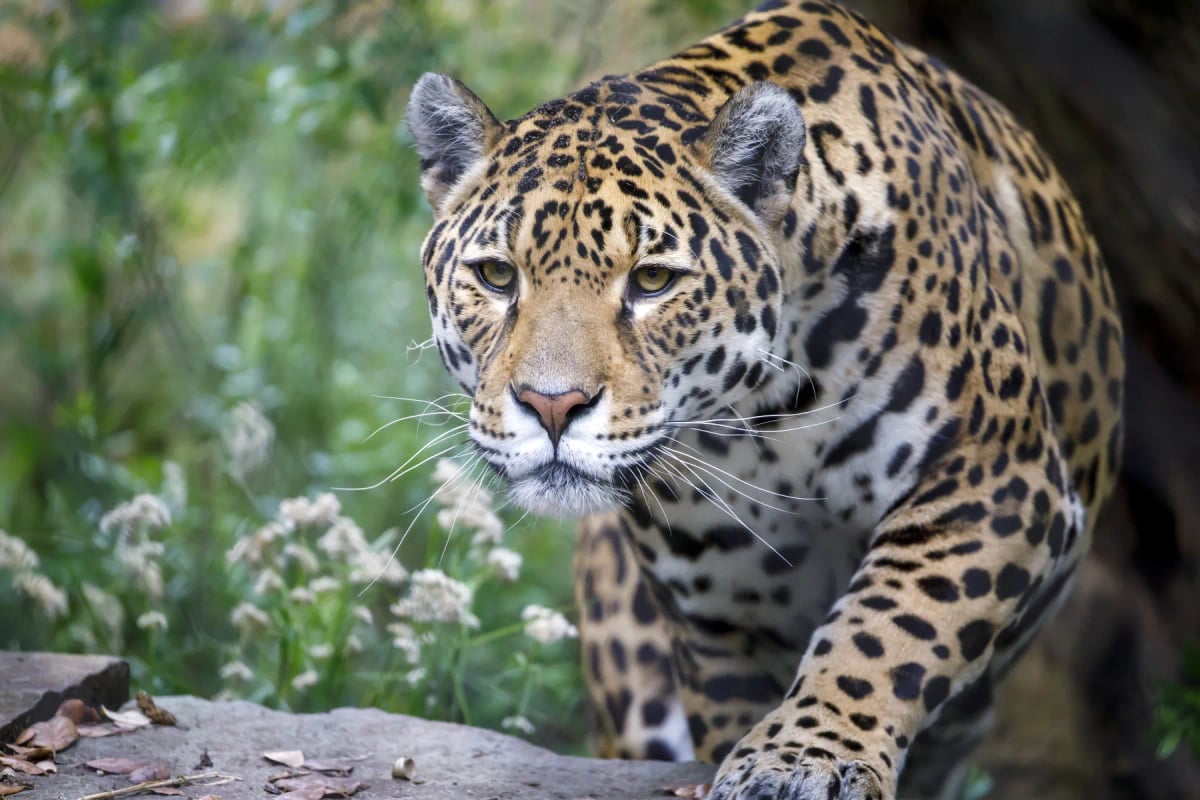
Capybaras face threats from several large predators across their range. Jaguars, caimans, and anacondas are their most significant natural enemies. Green anacondas, in particular, are well suited to ambushing capybaras near the water's edge. Pumas and ocelots also prey on them occasionally. Young capybaras are especially vulnerable and are targeted by birds of prey as well. Living in a group and staying close to water are the two main strategies capybaras use to stay safe.
Are capybaras dangerous to humans?
Capybaras are generally calm and non-aggressive toward people. In areas where they have grown accustomed to human presence, such as urban parks in Brazil, they often show little concern when people walk nearby. However, like any wild animal, they can bite if they feel cornered or threatened, and their teeth are strong enough to cause a serious injury. It is always best to observe them from a respectful distance rather than attempting to feed or touch them.
Are capybaras endangered?
The capybara is currently listed as Least Concern on the IUCN Red List, meaning the species as a whole is not at risk of extinction. Its wide distribution across South America and its ability to adapt to a range of wetland environments help maintain healthy populations. However, habitat loss due to agriculture and hunting for meat and leather do put pressure on local populations in some regions. In others, capybaras thrive and are even considered abundant.