Southern Red Muntjac
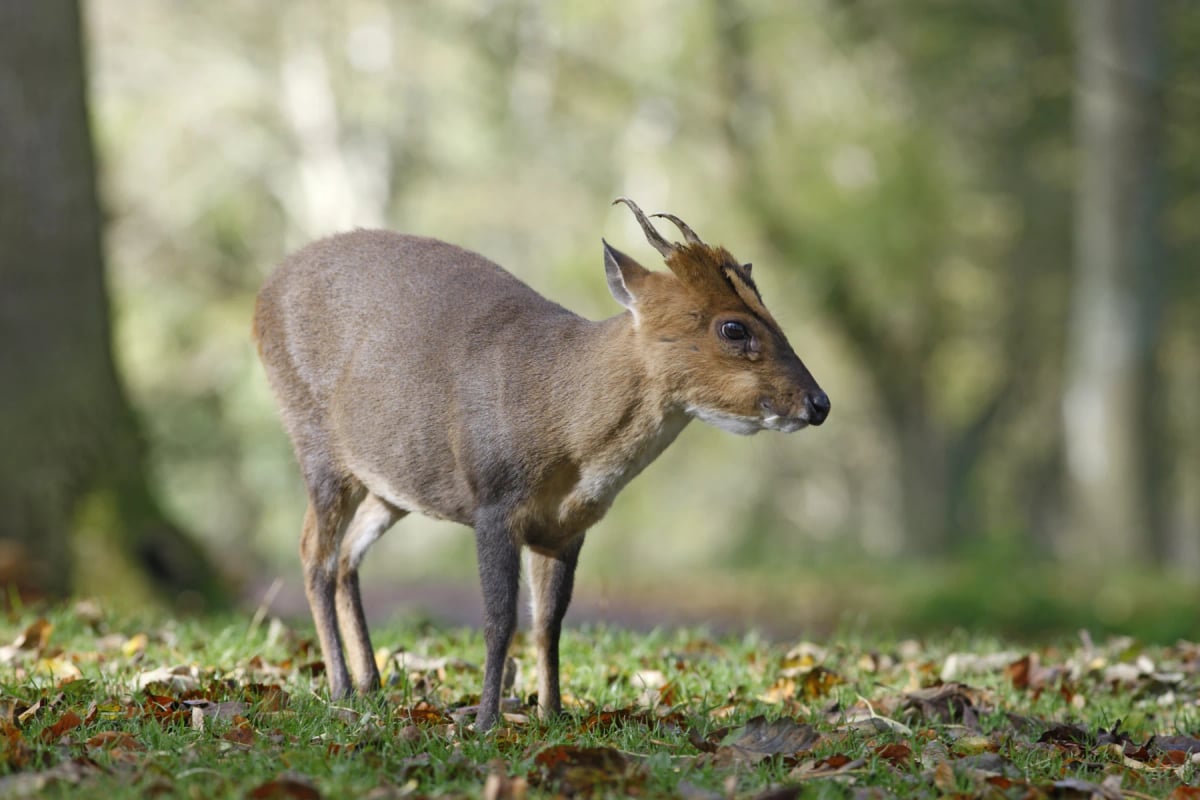
The southern red muntjac (Muntiacus muntjak), widely known as the barking deer, is a small, stocky deer native to South and Southeast Asia. Males carry short, unbranched antlers and a pair of elongated upper canines that jut from the mouth like small tusks, both used during fights over territory. The coat is warm reddish brown, and the animal's sharp, dog-like alarm call echoes through forests well before the deer itself is spotted. Despite the alternative name Indian muntjac, the species has largely vanished from most of India and is now far more common in countries such as Indonesia, Malaysia and Thailand. It thrives in a range of habitats from dense rainforest to scrubland and the edges of farmland, browsing on leaves, fruits, shoots and grasses. Solitary by nature and most active at dawn and dusk, it is listed as Least Concern by the IUCN.
Habitat and distribution
The southern red muntjac ranges across a broad sweep of South and Southeast Asia. Its core range today covers Indonesia, Malaysia, Thailand and Brunei, with populations also present in Sri Lanka, Bangladesh and parts of southern China. Despite its older common name, the species has declined sharply across most of India. It is one of the more adaptable deer in the region, equally at home in dense tropical rainforest, secondary growth, bamboo thickets and scrubland. It also ventures into the edges of farmland and plantations where cover remains nearby. Elevation is not much of a barrier either: it has been recorded from lowland coastal forests up to roughly 3,000 metres in some parts of its range, making it one of the most widely distributed deer in Asia.
Diet
Feeding occupies a large part of the southern red muntjac's daily routine. It is a browser rather than a grazer, favouring tender leaves, young shoots and fallen fruits over grass. Bark, fungi, seeds and even the occasional bird egg or small vertebrate have also been recorded in its diet, pointing to a more flexible appetite than many deer. It tends to feed in areas with thick understorey vegetation, which offers both food and protection from predators. Because it relies on scattered resources rather than open pasture, it moves through a territory methodically, returning to productive patches when fresh growth appears. This flexibility allows it to get through periods of seasonal scarcity when certain plant foods are unavailable.
Behavior
Solitary living is the norm for the southern red muntjac. Adults come together mainly to mate, and outside of that they each patrol a personal territory marked with scent from glands below the eyes and between the hooves. Activity peaks around dawn and dusk, though individuals in quieter areas may also move about at night. The species owes one of its common names, barking deer, to the sharp, repetitive call it produces when alarmed or when a rival male is nearby. These calls can continue for an hour or more. Males also use their short antlers and elongated upper canine teeth when disputes turn physical. Females can breed throughout the year rather than following a fixed season, which is unusual among deer and contributes to the species' resilience.
Appearance
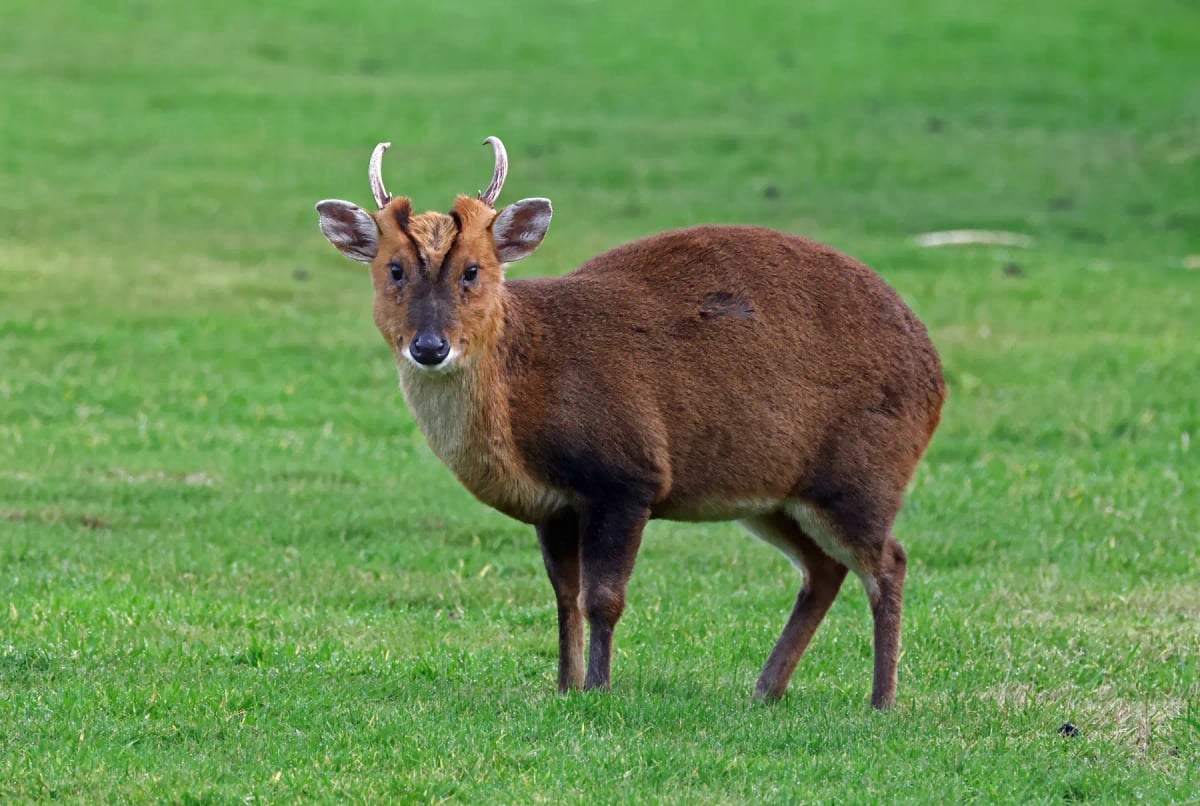
In build, the southern red muntjac is compact and low to the ground, with a rounded back that arches slightly toward the hindquarters. The coat is a rich reddish brown across most of the body, fading to paler tones on the underside and throat. Males carry a distinctive set of features not found in most other deer: a pair of short, unbranched antlers that grow from long bony bases covered in skin, and a pair of elongated upper canine teeth that protrude visibly from the lips. These canines can reach several centimetres in length and are used as weapons during fights. Facial glands create dark lines running down from the eyes, giving males in particular a slightly furrowed, expressive look. Adults typically weigh between 15 and 35 kilograms.
Conservation
The IUCN currently lists the southern red muntjac as Least Concern, reflecting its wide distribution and ability to persist in a variety of habitats. That broad status, however, does not mean the species is without pressure. Hunting for meat is widespread across much of its range, and in some areas snaring is intensive enough to cause local population declines. Loss of forest cover through logging and conversion to agriculture reduces available habitat and breaks up the connected patches of woodland the species depends on. It tends to disappear from areas where human disturbance is constant. Fortunately, it is present in many protected areas across Southeast Asia, and its adaptability to secondary and disturbed habitats gives it a better chance of persisting than many more specialist forest species.
Where it is found
The Southern Red Muntjac can be found in places such as:
Researched and written by Juan Pablo. Sources: IUCN Red List, scientific literature and regional field guides. Last updated: .
Technical factsheet


Frequently Asked Questions
Why is the southern red muntjac called a barking deer?
The southern red muntjac earned the nickname "barking deer" because of its alarm call, which sounds remarkably like a dog's bark. Males repeat this call for several minutes when they sense a predator nearby or want to warn rivals away from their territory. It is one of the most recognizable sounds in the forests of Southeast Asia.
What does the southern red muntjac eat?
Southern red muntjacs are herbivores that feed mainly on leaves, young shoots, fruits and grasses. They are opportunistic feeders and adjust what they eat depending on the season and what is available in their habitat. They also occasionally eat bark and fallen fruit, which makes them quite adaptable compared to many other deer species.
Where does the southern red muntjac live?
This species is found across a wide range in South and Southeast Asia, including countries such as Indonesia, Malaysia, Thailand and Brunei. It thrives in forests, scrublands and even the edges of agricultural land. It is a highly adaptable animal and can survive in disturbed habitats as long as some vegetation cover remains.
Is the southern red muntjac endangered?
No, it is currently listed as Least Concern on the IUCN Red List, meaning the population is stable enough not to qualify as threatened. However, it does face local pressures such as hunting for meat and the loss of forest habitat. In some parts of its range, numbers have declined noticeably due to these ongoing threats.
Do male muntjacs really have fangs?
Yes, male southern red muntjacs have elongated upper canine teeth that protrude from their mouths like small tusks. They use these teeth, along with their short antlers, during fights with rival males over territory and mating rights. It is an unusual trait for a deer, and it makes the muntjac one of the more distinctive members of the deer family.
Is the southern red muntjac a solitary animal?
For the most part, yes. Southern red muntjacs live alone or occasionally in pairs. They are crepuscular, meaning they are most active around dawn and dusk. Males hold territories and mark them using scent glands located near their eyes. They tend to avoid other individuals outside of the breeding season, which is typical behavior among smaller deer species.
Why does the southern red muntjac no longer live in most of India?
Despite being called the Indian muntjac, this species has largely disappeared from most of India due to centuries of hunting and widespread habitat loss. Its current stronghold is in Southeast Asia, where forest cover is more extensive in parts of its range. The common name has stuck historically, even though the species is now far more associated with countries like Indonesia and Malaysia.