King Penguin
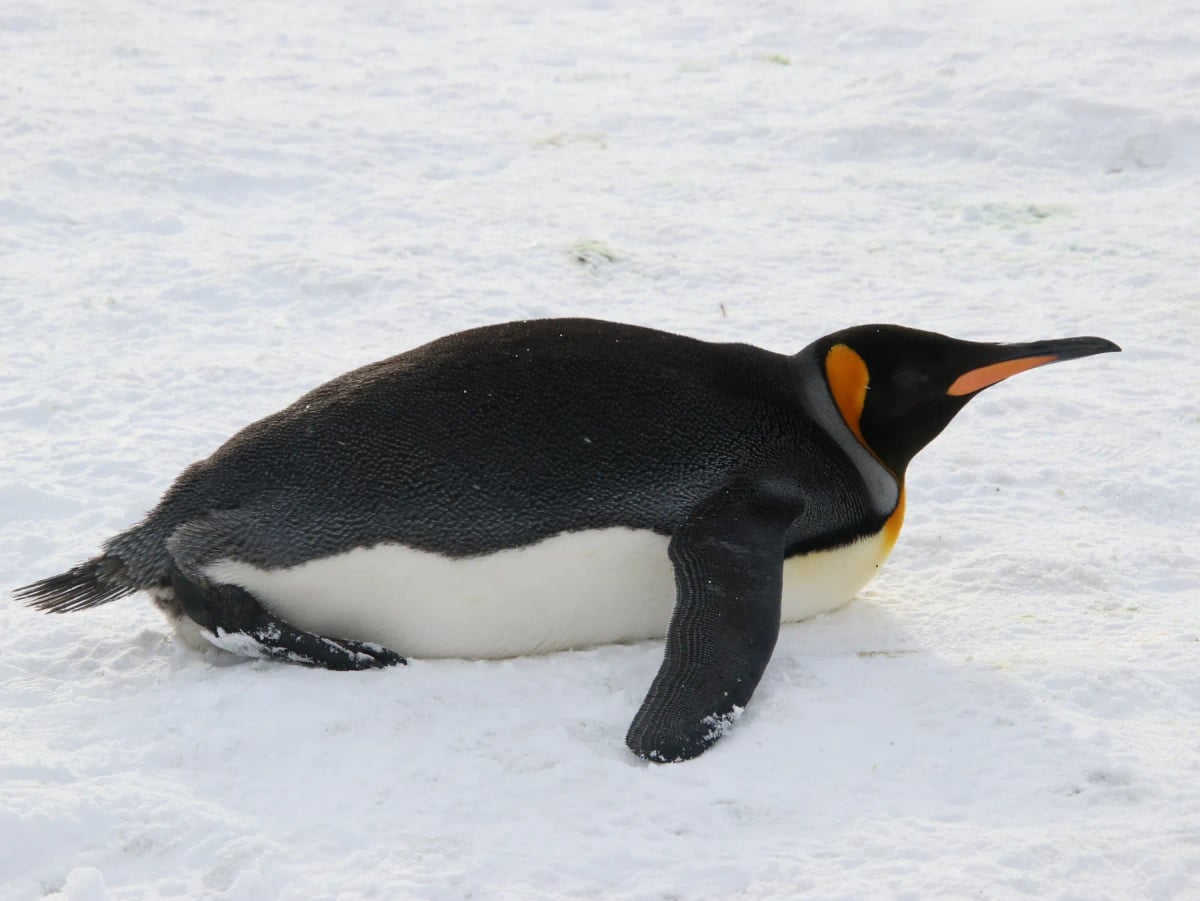
The king penguin is the second largest penguin in the world, standing 70 to 100 cm tall and weighing between about 9 and 18 kg. Only the emperor penguin is bigger. Its most striking feature is the vivid patch of orange and yellow that sweeps across each side of its head and down onto its chest. Unlike most birds, it does not build a nest. Instead, it balances its single egg on top of its feet and covers it with a fold of warm belly skin. Breeding colonies gather on subantarctic islands, often numbering in the tens or even hundreds of thousands. To find food, king penguins dive to depths beyond 300 meters, pursuing lanternfish and squid with remarkable precision. Chicks take around 14 to 16 months to fledge, one of the longest rearing periods of any bird. With about 2.2 million breeding pairs, the species is listed as Least Concern, though warming oceans pose a growing threat to its food supply.
Where do king penguins live?
King penguins breed on subantarctic islands scattered across the Southern Ocean, roughly between 45 and 55 degrees south, where cold, nutrient rich waters support the dense fish populations the species depends on. The biggest population is on the Crozet Islands, with about 455,000 pairs, followed by the Kerguelen Islands with 240,000 to 280,000 pairs; both belong to the French Southern Territories. South Africa's Prince Edward Islands, including Marion Island, hold about 228,000 pairs. South Georgia has huge colonies at places like St Andrews Bay and Salisbury Plain, and there are more on Heard Island and on Australia's Macquarie Island, with around 70,000 pairs. Much smaller groups live in the Falkland Islands, where about 1,500 pairs nest at Volunteer Point, and at Bahía Inútil, on the Chilean side of Tierra del Fuego, where a small colony settled in 2010. Colonies form on flat, ice free coastal ground, often near beaches or gently sloping plains. They do not live on the Antarctic continent: birds seen there or in New Zealand are wanderers. Outside the breeding season, king penguins range widely across the open ocean, sometimes hundreds of kilometers from land, and their trips bring them into the waters off Argentina and Chile.
Diet
Lanternfish make up the bulk of the king penguin's diet, and fish as a whole are roughly 80 percent of what it eats, supplemented by squid and some krill found in deep, open water. To reach these animals, king penguins are among the most capable divers of any bird: most feeding dives go to between 100 and 300 meters, and the deepest dive on record reached 343 meters. A single dive can last more than five minutes. Their eyes are adapted to detect contrast in near darkness, which helps them spot the faint glow of lanternfish at depth. Much of the foraging takes place by day, when birds dive deepest to follow prey, while at night they make shallower dives because lanternfish rise closer to the surface. During the breeding season, adults must travel far from the colony to find sufficient food, often to the Antarctic Polar Front hundreds of kilometers away, sometimes spending weeks at sea before returning to relieve their partner.
Breeding and colonies
Few birds invest as much in raising a single chick as the king penguin does. Each pair lays one egg and balances it on their feet, tucked beneath a fold of warm abdominal skin called a brood pouch. Both parents take turns incubating, swapping roles after fasting periods that can stretch to several weeks. Chicks hatch after about 55 days and remain dependent on their parents for 14 to 16 months, one of the longest rearing periods of any bird on Earth. Through the winter, chicks huddle in crèches and are fed only now and then, so they can lose a large part of their weight before food becomes plentiful again in spring. Because of this extended cycle, king penguins cannot breed every year on a fixed schedule: a pair usually raises a chick successfully once every two years, or at best two years out of three. Colonies can number in the hundreds of thousands and are among the most visually spectacular gatherings of wildlife anywhere in the Southern Hemisphere. The noise and activity within these colonies is constant throughout the season.
Behavior
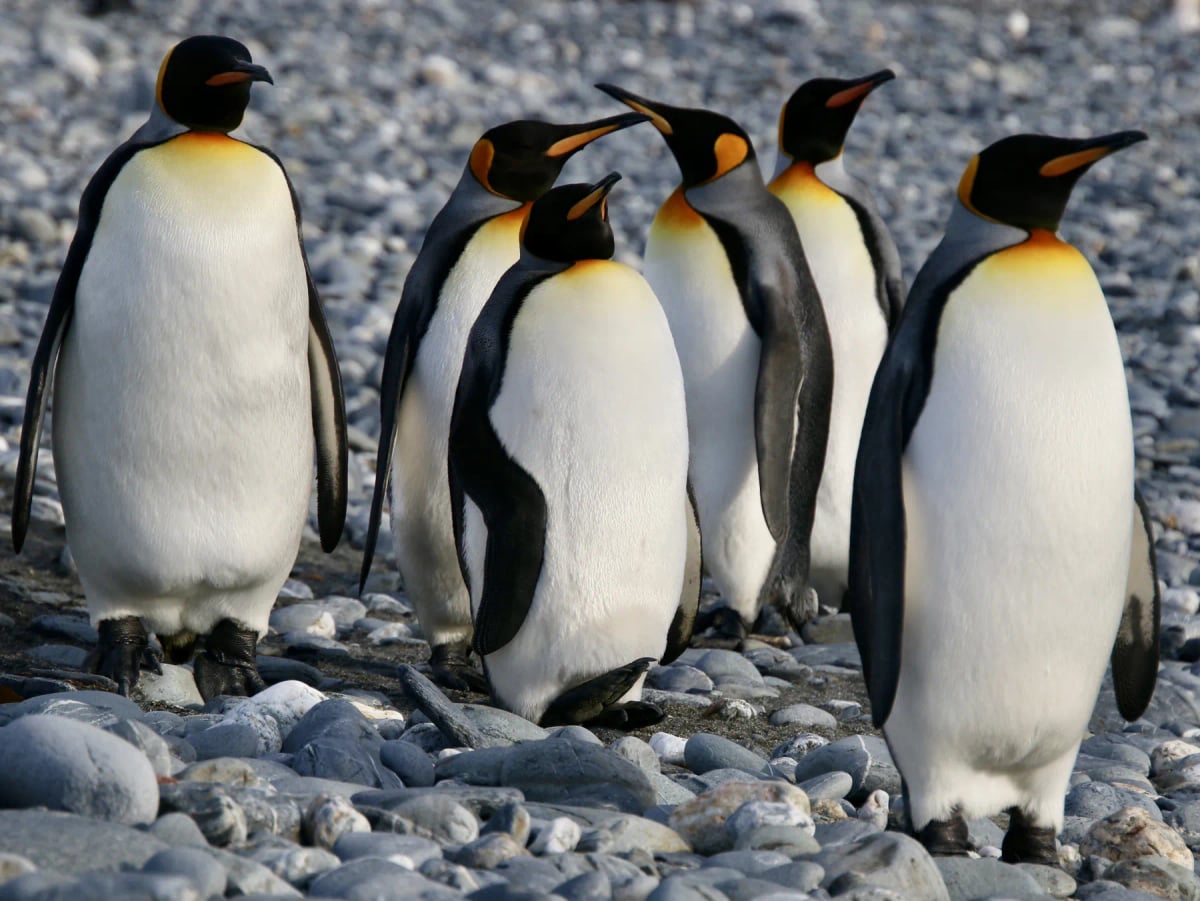
At sea, king penguins are built for performance. They swim at speeds of around 10 kilometers per hour and use a technique called porpoising, briefly leaping clear of the water, to breathe without slowing down. On land, the picture changes considerably. Adults move with a slow, upright walk and tend to huddle in groups, a behavior that reduces heat loss in the fierce winds common to subantarctic shores. Chicks gather in large groups called crèches, where they stay warm together while both parents are away foraging. King penguins communicate through calls that are unique to each individual, allowing parents and chicks to find each other among thousands of identical looking neighbors. Aggression does occur within colonies, particularly when birds compete for space on the breeding ground.
King penguin vs emperor penguin
The king penguin and the emperor penguin are the only two members of the genus Aptenodytes, and they are easy to confuse at first glance: both are tall, with black backs, white bellies and orange and yellow on the head. Size is the first difference. The emperor is the largest penguin on Earth, around 25 percent taller and much heavier, often 22 to 45 kg against the king's 9 to 18 kg. The colors help too. The king has bright orange, spoon shaped patches on the sides of the head and a strong orange glow on the upper chest, while the emperor's ear patches are pale yellow fading into white. Where they live is the biggest contrast. Emperors breed on the sea ice around the Antarctic continent, in the middle of the polar winter, and the male alone holds the egg for about two months while the female feeds at sea. Kings breed on ice free subantarctic islands much farther north, and both parents share the incubation, which lasts about 55 days. The chicks are different as well: an emperor chick leaves for the sea after about five months, while a king chick needs 14 to 16 months. In the wild the two species almost never meet.
Sir Nils Olav, the king penguin who became a general
The most famous king penguin in the world lives at Edinburgh Zoo, in Scotland, and holds the rank of major general in the Norwegian Army. The story began in 1972, when the Norwegian King's Guard visited the zoo during a military tattoo in Edinburgh and adopted one of its king penguins as the regiment's mascot. They named him Nils Olav, after Nils Egelien, the officer behind the idea, and King Olav V of Norway. Every time the guard returned to Scotland, the penguin was promoted: lance corporal in 1972, corporal in 1982, sergeant in 1987 and regimental sergeant major in 1993. In 2005 he became colonel in chief, and in 2008 he was knighted, the first penguin to receive that honor in the Norwegian Army, inspecting the guard of honor in front of hundreds of people. He was promoted to brigadier in 2016 and to major general in 2023, and Guinness World Records lists him as the highest ranking penguin. The name and the ranks have passed through three different king penguins since 1972; the current bird is Nils Olav III. A bronze statue of him stands at Edinburgh Zoo, and another at the King's Guard base in Oslo.
Conservation
The IUCN classifies the king penguin as Least Concern. The global population is estimated at about 2.23 million breeding pairs and, taken as a whole, it is growing, helped by the recovery of colonies that were hunted for their oil in the 1800s and early 1900s. Even so, the species faces real pressures that scientists are monitoring closely. The most striking warning comes from Île aux Cochons, in the Crozet Islands, once the largest king penguin colony on Earth: it fell from about half a million breeding pairs in the 1980s to around 60,000 pairs in 2017, a collapse of almost 90 percent whose causes are still not fully clear. Warming waters in the Southern Ocean are also shifting the Antarctic Polar Front southward, and with it the lanternfish, forcing penguins to travel greater distances to feed. Longer foraging trips mean chicks go without food for extended periods, which reduces survival rates among young birds. Oil pollution, introduced predators on island breeding grounds, and disturbance near colonies add further strain. The king penguin's future depends heavily on how quickly and severely ocean temperatures rise over the coming decades.
Where it is found
The King Penguin can be found in places such as:
Researched and written by Juan Pablo. Sources: IUCN Red List, scientific literature and regional field guides. Last updated: .
Technical factsheet


Frequently Asked Questions
How long do king penguins live?
King penguins usually live about 15 to 20 years in the wild, and some reach 25 years or a little more. In zoos, where there are no predators and food is always available, they can live past 30. The riskiest time is the first year: chicks must survive a long winter with little food and then learn to hunt on their own at sea. Because each chick takes more than a year to raise, a pair produces relatively few young over its lifetime, so a long life is key for the species.
How big is a king penguin?
A king penguin stands about 70 to 100 cm tall and weighs roughly 9 to 18 kg, which makes it the second largest penguin in the world after the emperor. Its weight changes a lot during the year. Adults are heaviest before the breeding season and the molt, when they build up fat to survive weeks on land without eating, and they can lose a large part of that weight while fasting. Chicks are surprisingly big too: wrapped in thick brown down, they can look larger than their parents before winter.
Why is it called the king penguin?
When European explorers first described it, the king penguin was the largest penguin they knew, so it was given a royal name. The emperor penguin, which is even bigger, was described later and got an even grander title. Its scientific name, Aptenodytes patagonicus, was given in 1778 and refers to Patagonia, because early specimens came from the South Atlantic, although the species does not breed on the Patagonian mainland. Aptenodytes means something like "wingless diver" in Greek, a reference to its small, stiff wings.
Where can you see king penguins in the wild?
The easiest places to see them are in South America. In the Falkland Islands, about 1,500 pairs nest at Volunteer Point, on East Falkland. On the Chilean side of Tierra del Fuego, the King Penguin Park at Bahía Inútil protects a small colony that settled there in 2010; its first chick hatched in 2013. For the biggest colonies, with hundreds of thousands of birds, you need an expedition cruise to South Georgia, where St Andrews Bay and Salisbury Plain are famous, or a trip to Macquarie Island. The Crozet, Kerguelen and Marion colonies are closed to tourism.
What are the predators of king penguins?
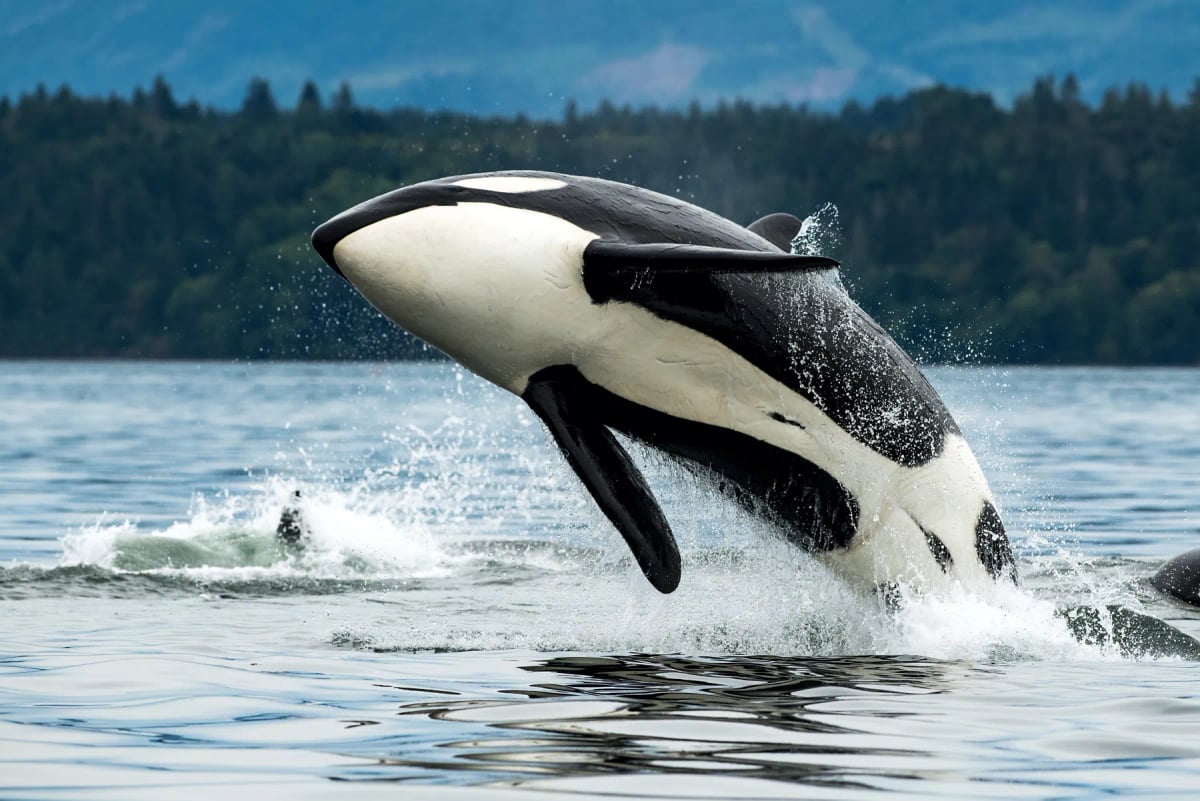
At sea, adult king penguins are hunted mainly by leopard seals and orcas, which sometimes wait offshore from busy colonies. On land, adults are fairly safe, but eggs and chicks are at risk. Giant petrels and skuas take eggs, small chicks and weak birds, especially at the edges of the colony. Chicks are most vulnerable during the long winter, when they are left alone in crèches for long periods while their parents search for food far out at sea.
How deep can a king penguin dive?
King penguins are extraordinary divers. Most of their feeding dives go to between 100 and 300 meters, and the deepest one on record reached 343 meters. A single dive can last more than five minutes. Their eyes are specially adapted to spot prey in near darkness, which helps them hunt lanternfish that emit a faint glow in the deep ocean.
What do king penguins eat?
The core of the king penguin's diet is lanternfish, a small deep water species found across the Southern Ocean. They also eat squid and other small prey. They hunt both day and night, diving deepest in daylight and staying shallower after dark, when lanternfish rise closer to the surface. Adults foraging during the breeding season may spend weeks at sea before returning to their partner and chick.
How do king penguins keep their egg warm without a nest?
King penguins never build a nest. Instead, each bird balances its single egg on top of its feet and tucks it beneath a warm fold of belly skin called a brood pouch. Both parents take turns holding the egg this way, trading off after fasting periods that can last several weeks. It is one of the most remarkable forms of incubation found in any bird.
How long does it take for a king penguin chick to grow up?
King penguin chicks take around 14 to 16 months to fully fledge, which is one of the longest rearing periods of any bird in the world. Because of this extended timeline, parents cannot breed on a strict yearly cycle. Chicks spend much of this time in large groups called crèches, huddling together for warmth while both parents are out at sea finding food.
Are king penguins endangered?
No. King penguins are listed as Least Concern by the IUCN, with about 2.23 million breeding pairs worldwide, and the total is growing. However, some colonies are in trouble: Île aux Cochons, in the Crozet Islands, lost almost 90 percent of its pairs between the 1980s and 2017. Warming oceans are also pushing lanternfish further from the breeding islands, forcing adults to travel greater distances to feed. Scientists are watching the species closely, as rising ocean temperatures remain the biggest threat to its future.
How do king penguins recognize each other in a huge colony?
Each king penguin has a unique call, much like a vocal fingerprint. In a colony that can hold hundreds of thousands of birds, this is the main way parents and chicks find one another. Despite looking nearly identical to human eyes, these penguins can pick out their own partner or offspring from the constant noise of the crowd with impressive accuracy.