Eurasian Lynx
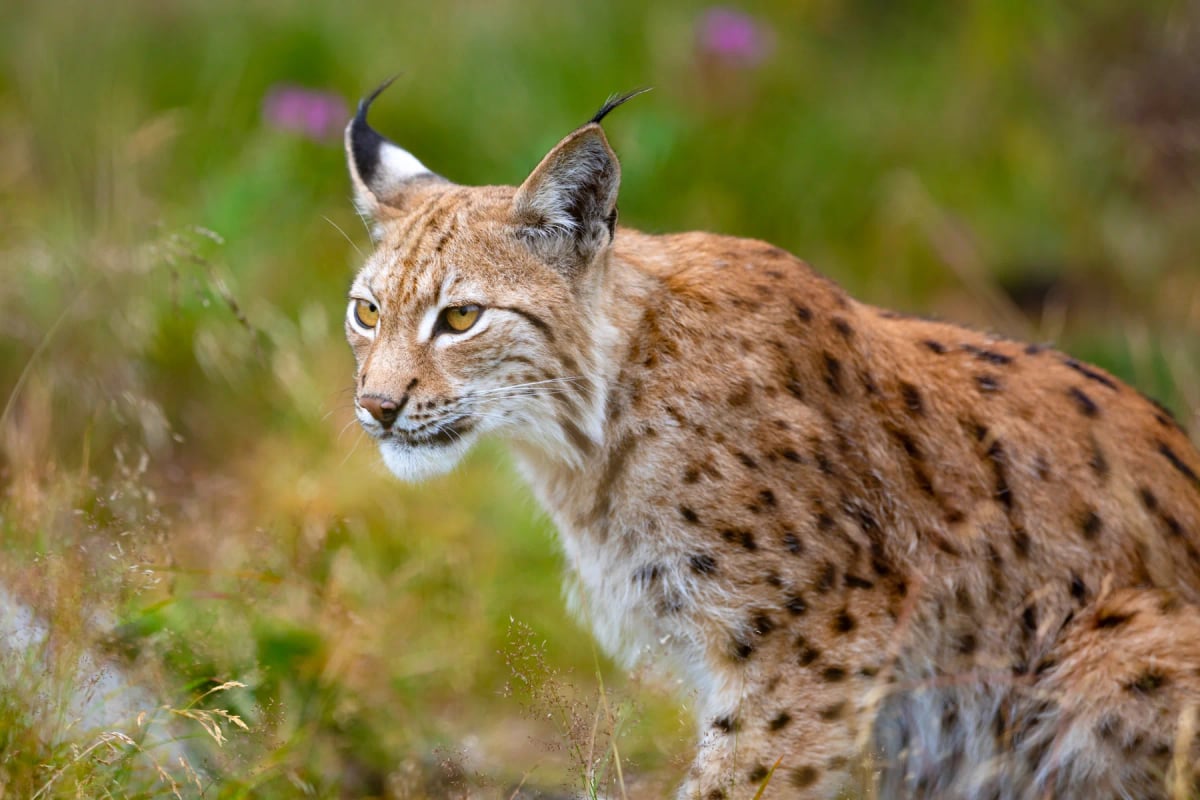
The Eurasian Lynx (Lynx lynx) is the largest of the four lynx species, with adults reaching up to 30 kg and standing around 70 cm at the shoulder. It lives across a vast range of forest and mountain habitat, from Scandinavia and the Alps through Russia to Central Asia and the Far East. Its coat is typically spotted or streaked, and its broad paws act like natural snowshoes, helping it move through deep snow with ease. Large, tufted ears give it exceptional hearing. Roe deer form the core of its diet across most of its range, though it also takes hares, chamois and other prey depending on availability. Active mainly at dusk and during the night, it hunts alone, relying on stealth rather than speed. Reintroduced to parts of Western Europe after local extinction, it is listed as Least Concern by the IUCN.
Habitat and range
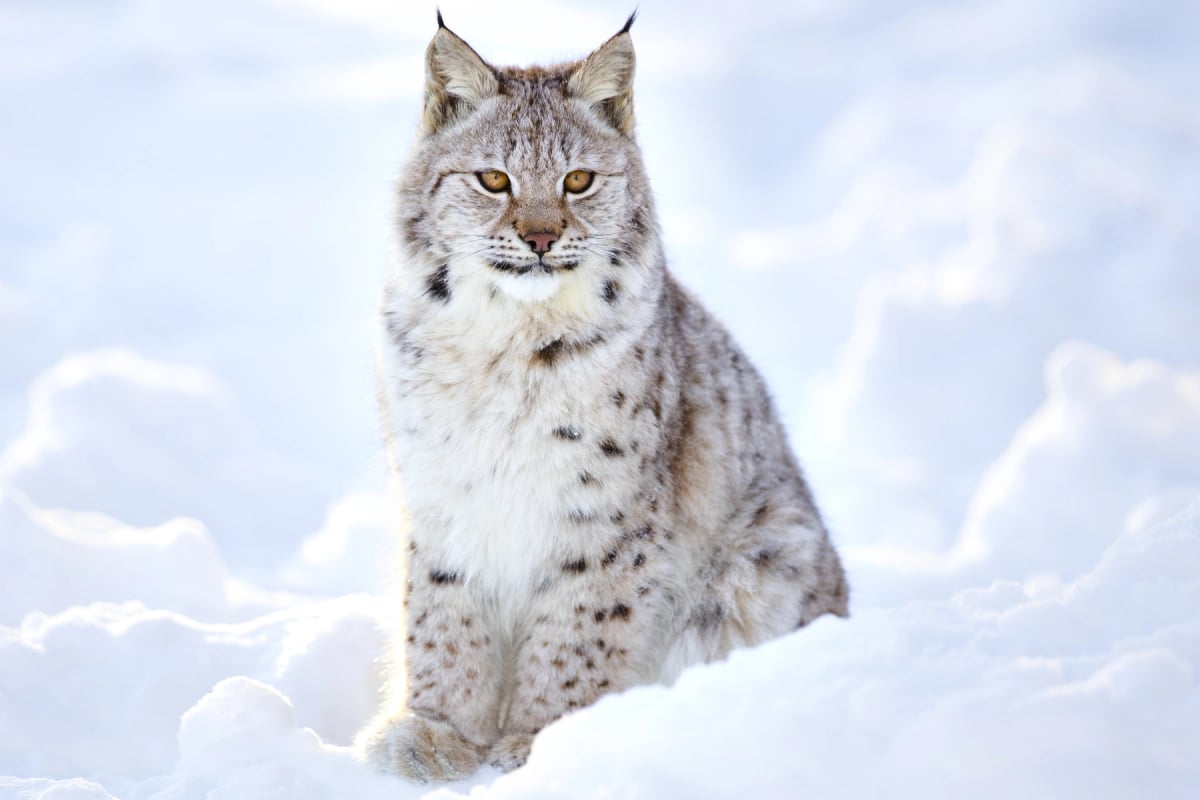
The Eurasian Lynx holds the largest range of any wild cat in the world. It occupies a broad sweep of territory stretching from Scandinavia and the Alps eastward through Russia, Mongolia, and into Central and East Asia. Across this range, it favors dense boreal and temperate forests, particularly where terrain is rugged and human presence is low. In mountainous regions such as the Carpathians and the Altai, it moves comfortably above the treeline and through rocky terrain. Broad, heavily furred paws distribute its weight across snow, allowing it to travel efficiently through deep winter drifts that would slow other predators. While it can tolerate fragmented landscapes to a degree, large contiguous forest blocks remain essential to support stable populations and allow individuals to establish wide home territories.
Diet
Across most of its range in Europe, the Eurasian Lynx feeds primarily on roe deer, which can make up the majority of its annual diet where these animals are common. In areas where roe deer are scarce, it shifts readily to chamois, red deer calves, mountain hares, and other available prey. This flexibility is one of the reasons the species has managed to persist across such varied environments. Hunting alone and at night, the lynx relies on a careful stalk followed by a short, explosive rush rather than a prolonged chase. It typically kills with a bite to the throat or the back of the neck. After a large kill, it may return to the carcass over several days, covering it loosely with vegetation or snow to keep it from scavengers.
Behavior
Solitary by nature, the Eurasian Lynx spends most of its life alone, coming together with others only to mate. Each individual holds a home range that it marks regularly with scent, scrapes, and scratch marks on trees. These ranges can cover hundreds of square kilometers, especially for males, whose territories often overlap with those of several females. Most activity takes place during the twilight hours of dusk and dawn, though nocturnal movement is also common. Cubs are born in late spring, typically in a litter of two or three, and remain with their mother for about ten months. During this time she teaches them to stalk and kill prey. Once they disperse, young lynxes must travel considerable distances to find unoccupied ground of their own, a journey that exposes them to roads, snares, and conflict with humans.
Reintroduction
By the twentieth century, hunting and the loss of forest cover had wiped out lynx populations across much of Western and Central Europe. Beginning in the 1970s, conservation programs began returning the species to parts of its former range. Switzerland received some of the earliest reintroductions, followed by efforts in Germany, France, Slovenia, and the Dinaric region of the Balkans. More recently, small numbers have been released in parts of Italy and the Bohemian Forest on the border of Czechia and Germany. These programs have produced mixed results. Some populations have grown steadily, while others remain small and vulnerable due to low genetic diversity, poaching, and road casualties. Connectivity between separate groups is a priority for conservationists, who recognize that isolated pockets of lynx are unlikely to survive over the long term without the ability to exchange individuals with neighboring populations.
Conservation
The IUCN lists the Eurasian Lynx as Least Concern, reflecting the overall size and stability of its global population, which is estimated at around 50,000 individuals. However, this global picture masks significant regional differences. In Western and Central Europe, most populations are small, fragmented, and partially isolated from one another. Illegal killing remains one of the greatest threats across the species' range, driven by conflicts with livestock farmers and hunters who see the lynx as competition for deer. Habitat loss, road infrastructure that cuts through forest, and declining prey numbers add further pressure. Across Asia, populations in places such as China and Mongolia are less well studied, and true numbers in those regions are uncertain. Continued monitoring, legal protection, and efforts to reduce conflict with rural communities are all essential to keeping existing populations secure.
Where it is found
The Eurasian Lynx can be found in places such as:
Researched and written by Juan Pablo. Sources: IUCN Red List, scientific literature and regional field guides. Last updated: .
Technical factsheet





Frequently Asked Questions
What does the Eurasian Lynx eat?
Roe deer are the main prey across most of Europe, but the lynx adapts well to what is available. In some areas it hunts chamois, mountain hares, or young red deer. It stalks its prey quietly and finishes the hunt with a short burst of speed, killing with a bite to the throat. After a large kill, it may return to feed from the same carcass for several days.
Where does the Eurasian Lynx live?
The Eurasian Lynx has the largest range of any wild cat on Earth, stretching from Scandinavia and the Alps all the way through Russia and into Central and East Asia. It prefers dense forests, especially in rugged terrain with little human activity. It also lives in mountainous areas well above the treeline. Several countries in Western Europe have reintroduced it after it was hunted to local extinction during the twentieth century.
How big is the Eurasian Lynx?
It is the largest of the four lynx species in the world. Adults can weigh up to 30 kilograms and stand around 70 centimetres at the shoulder, making them roughly the size of a large dog. Males tend to be noticeably bigger than females. Despite their size, they are agile and move quietly through dense forest and deep snow thanks to their broad, well-furred paws.
Is the Eurasian Lynx endangered?
Globally, the IUCN classifies it as Least Concern, with an estimated population of around 50,000 individuals. However, in Western and Central Europe the situation is much more delicate. Many populations there are small and cut off from one another, making them vulnerable to poaching, road accidents, and loss of genetic diversity. So while the species as a whole is not endangered, several regional groups are genuinely at risk.
Why does the Eurasian Lynx have tufts on its ears?
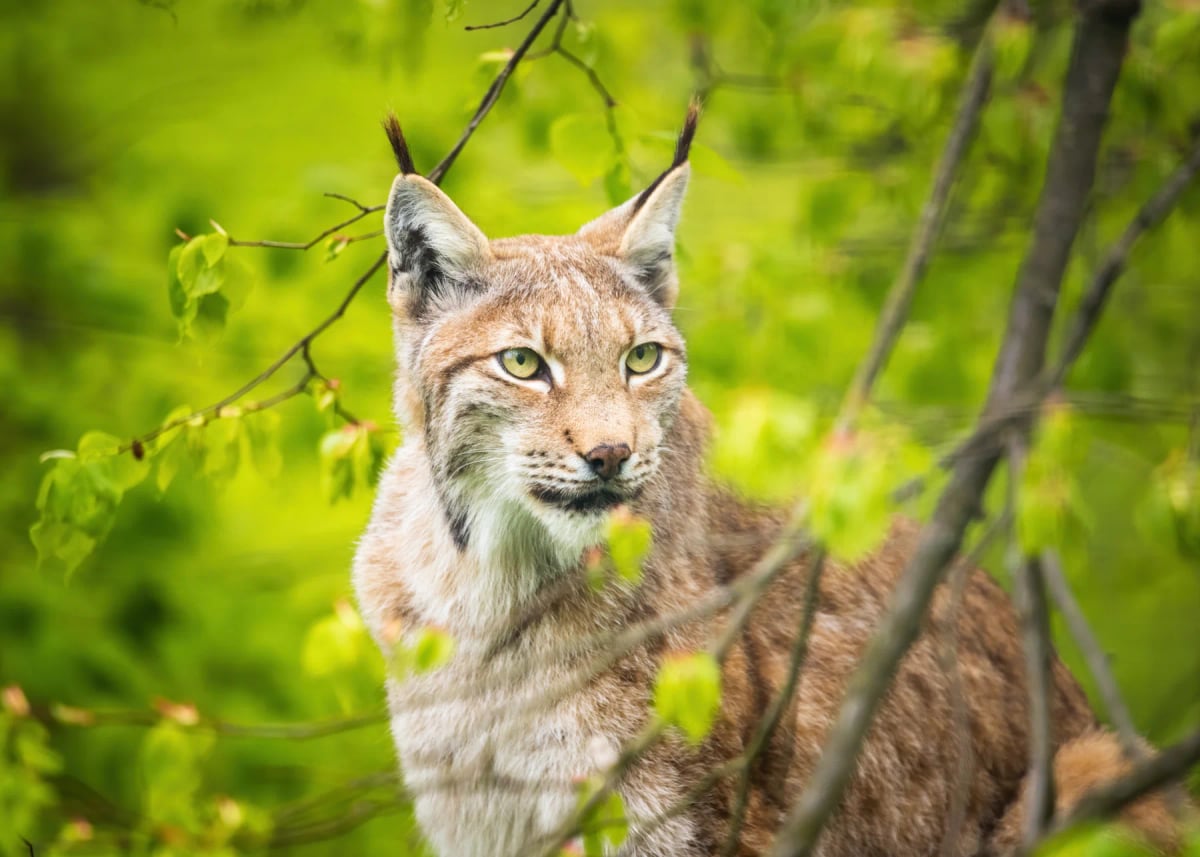
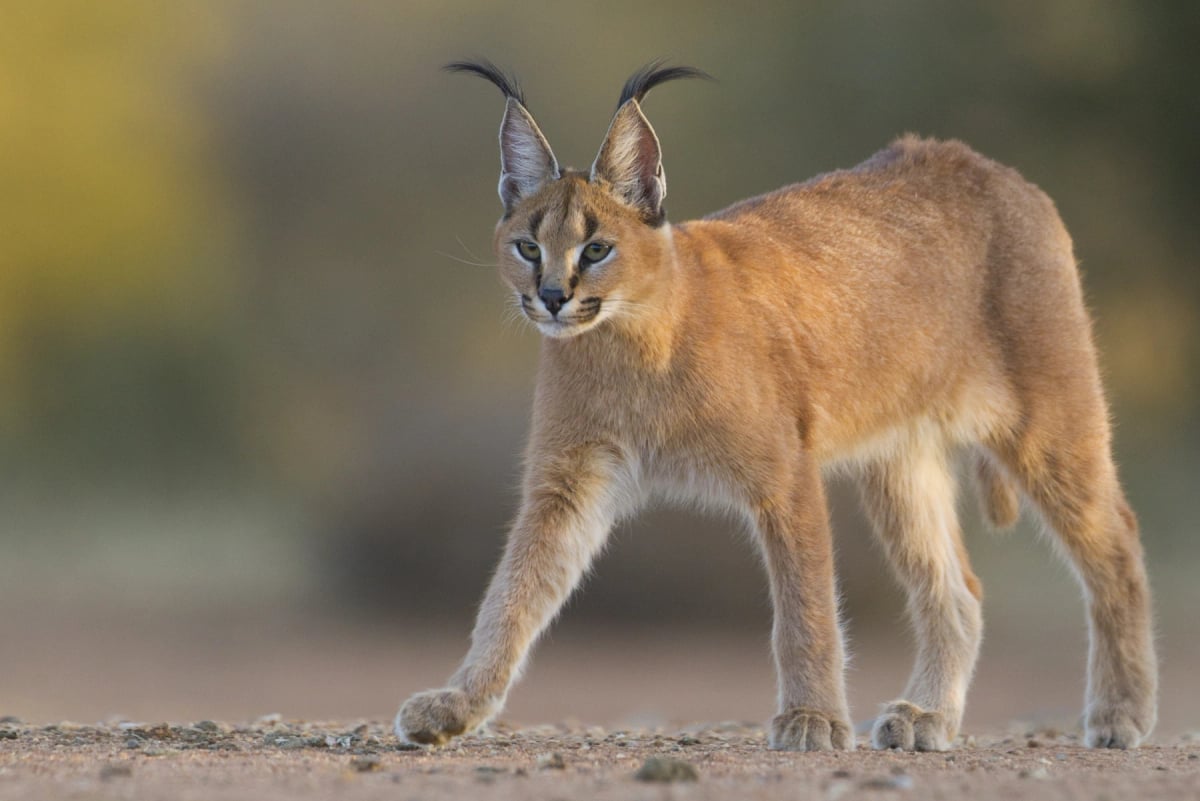
Those distinctive black tufts are thought to help sharpen the lynx's already excellent hearing. Acting almost like antennae, they may help direct sound toward the ears, making it easier to detect the faint movements of prey in dense undergrowth or under snow. The lynx also has a short, broad facial ruff that may work in a similar way, helping to funnel sounds toward its ears from different directions.
How does the Eurasian Lynx hunt?
The lynx is a patient, stealthy hunter that relies on getting as close to its prey as possible before striking. It moves quietly through cover, watches and waits, then launches a short and powerful rush. It is not built for long chases. Once it catches its prey, it delivers a killing bite to the throat or the back of the neck. It hunts alone, almost always at dusk, during the night, or just before dawn.
How many cubs does a Eurasian Lynx have?
A female typically gives birth to two or three cubs in late spring, usually in a sheltered den tucked among rocks or fallen trees. The cubs stay with their mother for about ten months, during which she teaches them how to hunt. After that, young lynxes set off on their own to find unoccupied territory, sometimes travelling very long distances. This dispersal period is one of the most dangerous times in their lives.